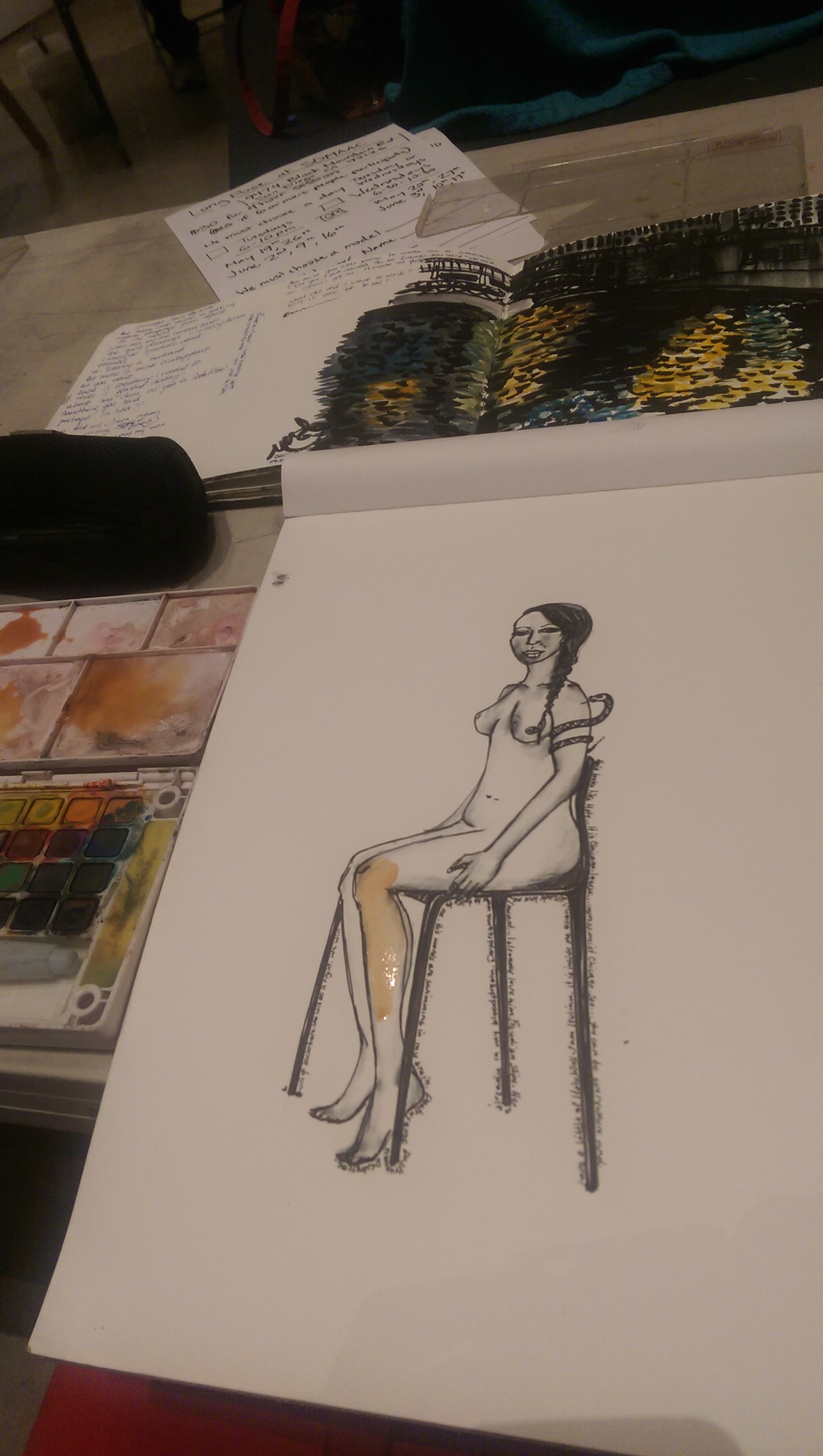
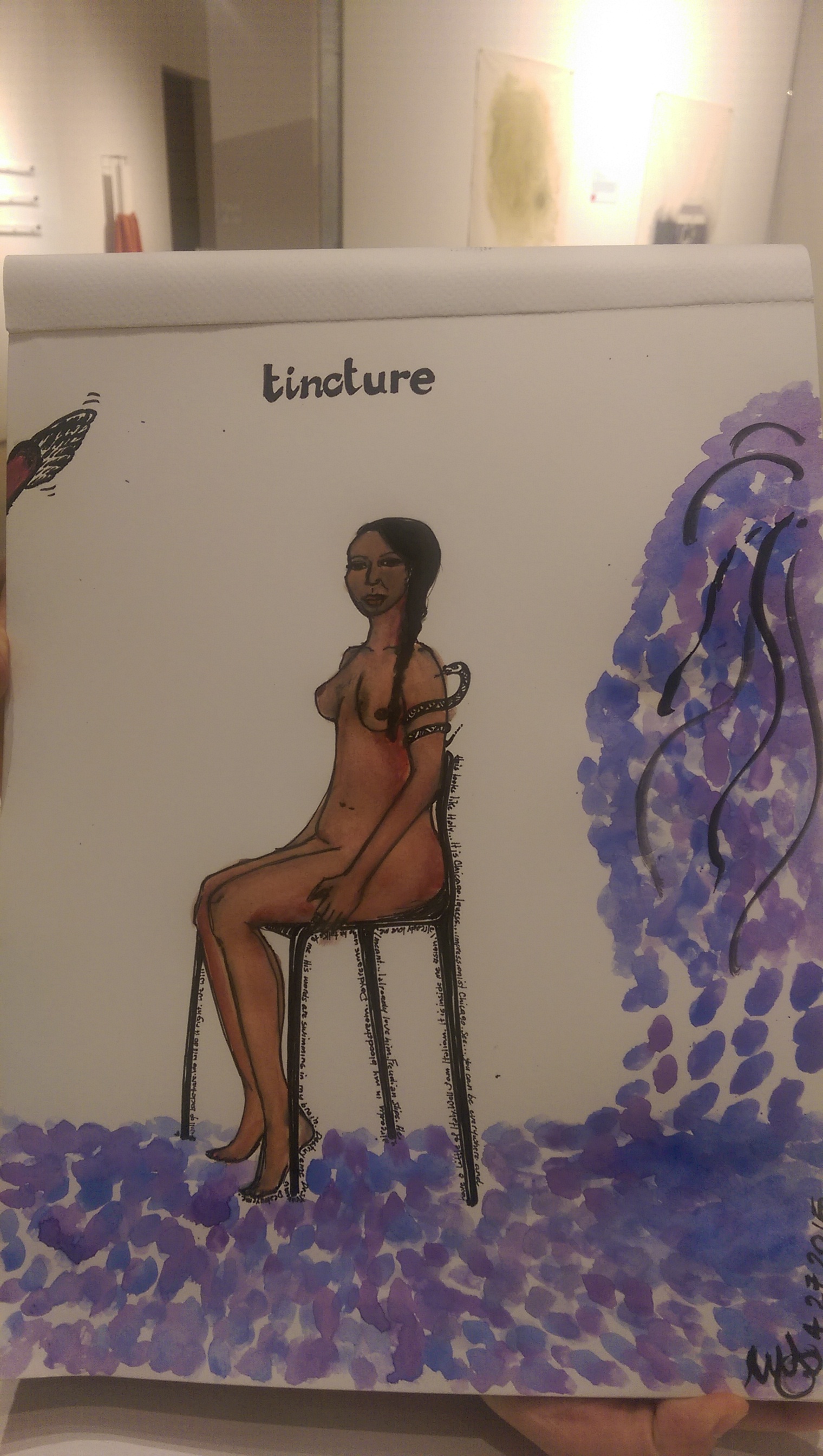
Feeds:
Posts
Comments

Archive for the ‘Writing’ Category

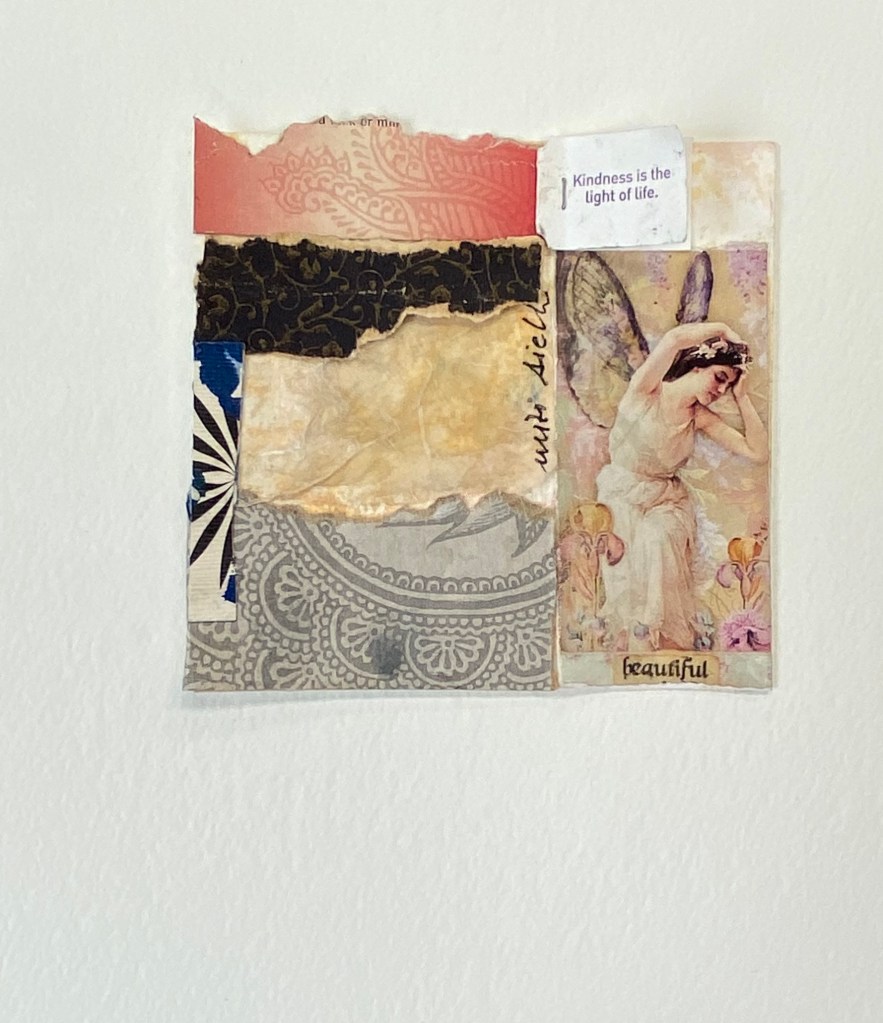
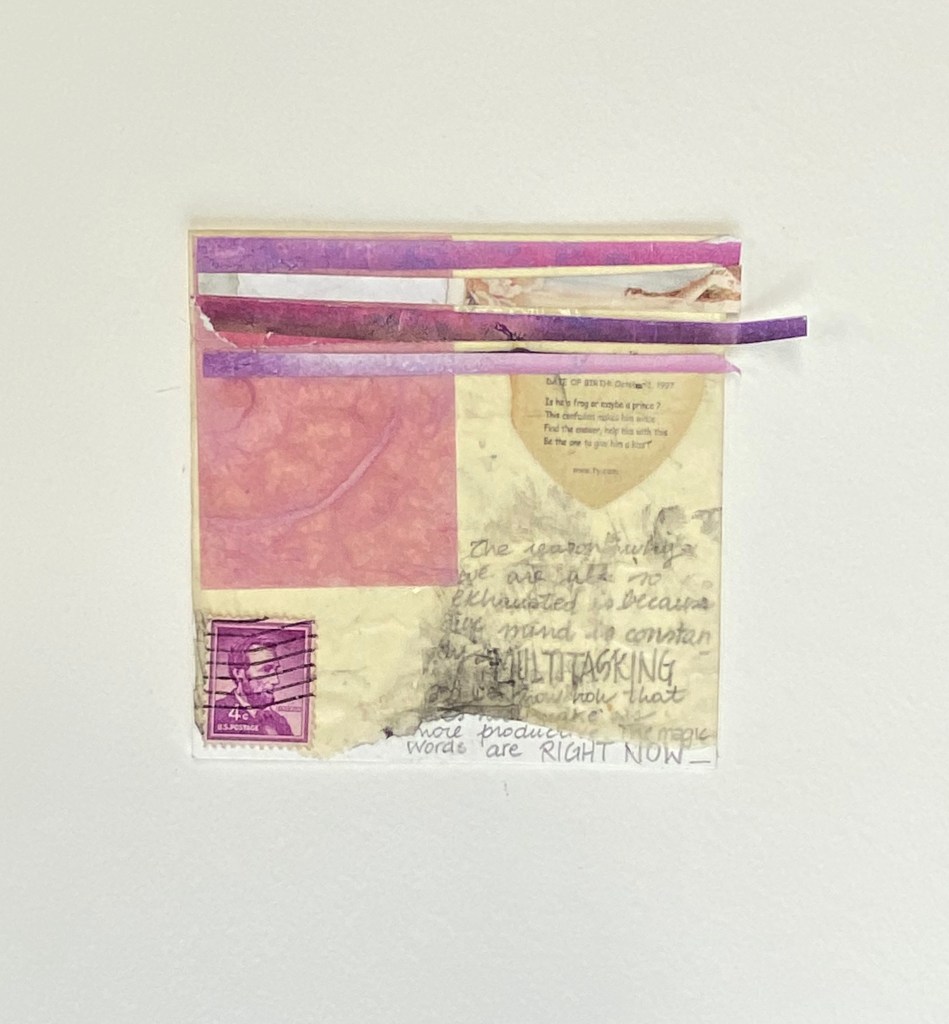
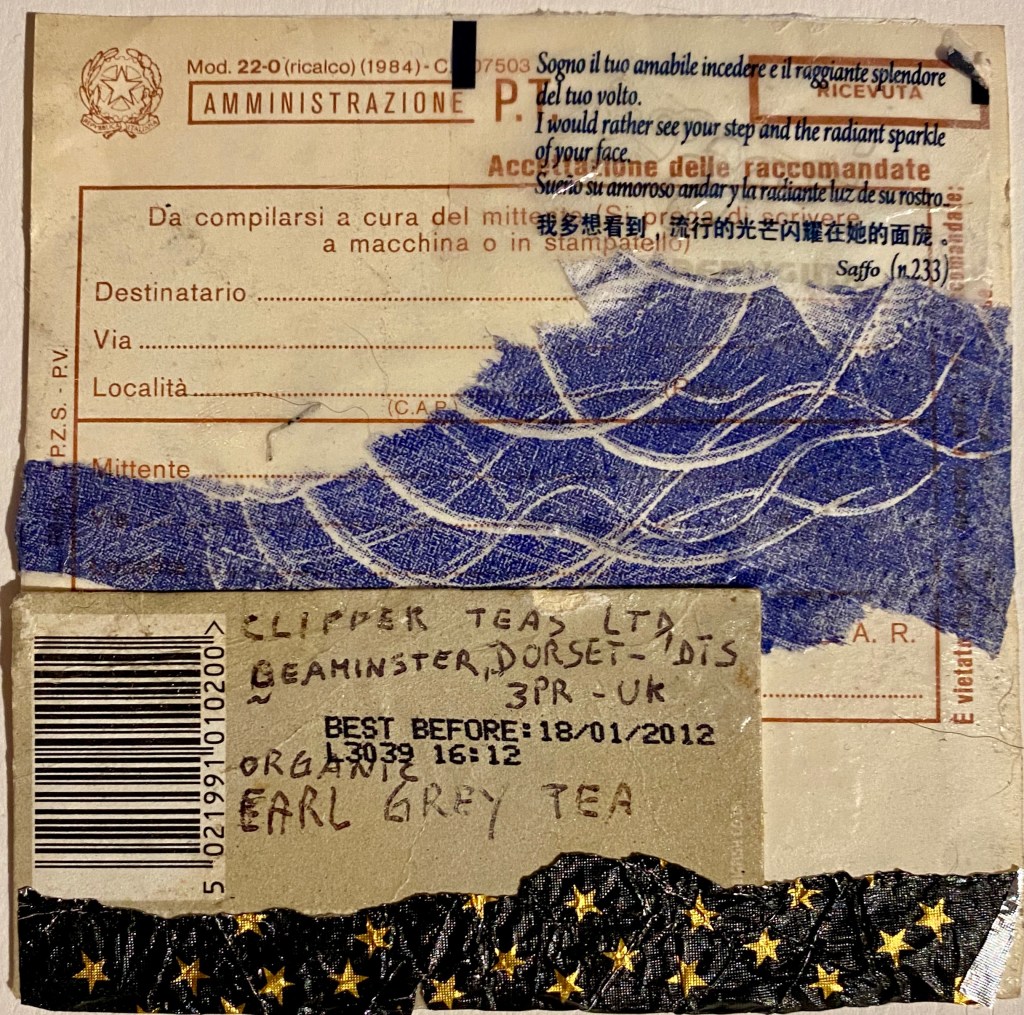
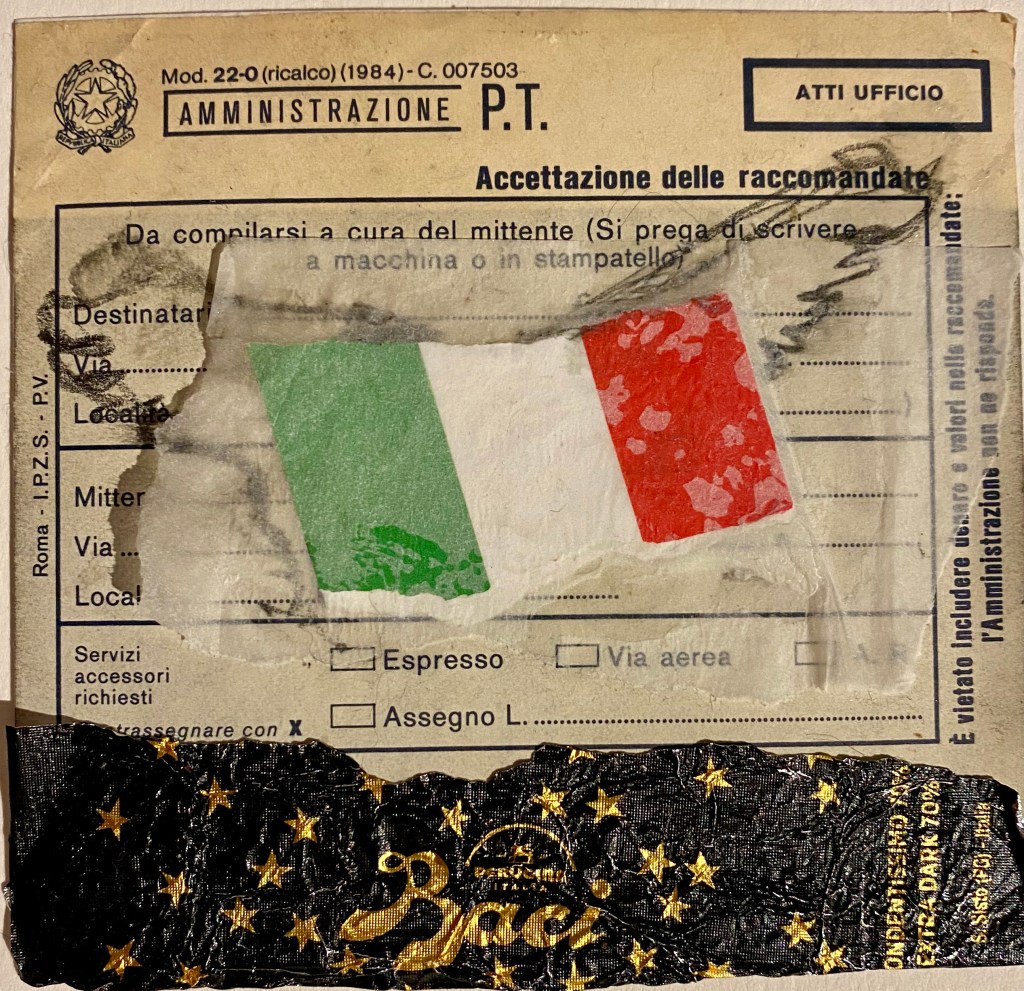
[ENG/ITA]


In times of wars


what did we save

from the fire

what survived 

the strong southern winds 

come to bring me back home

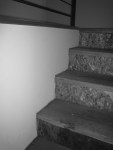
— all my things are still 

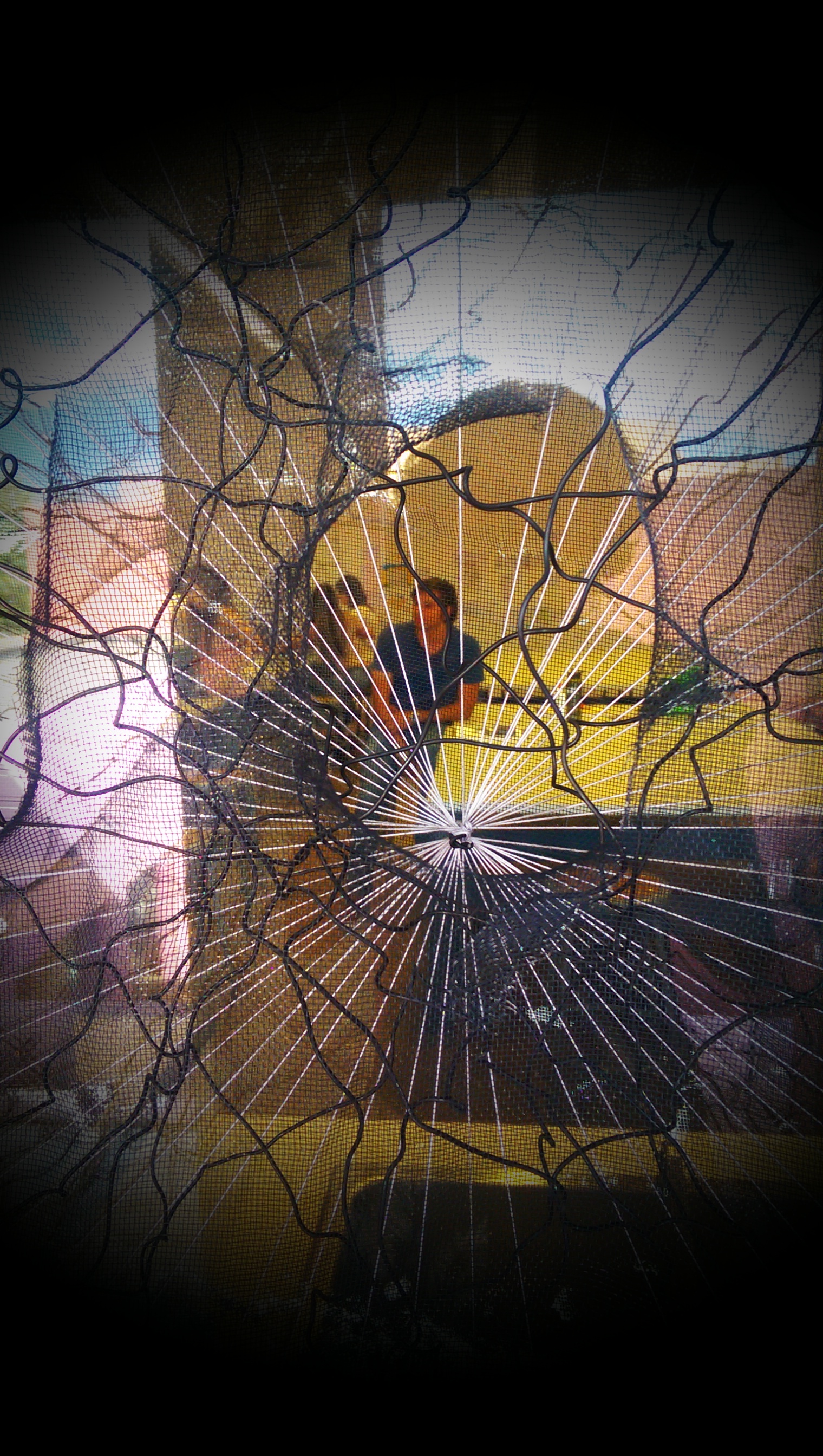
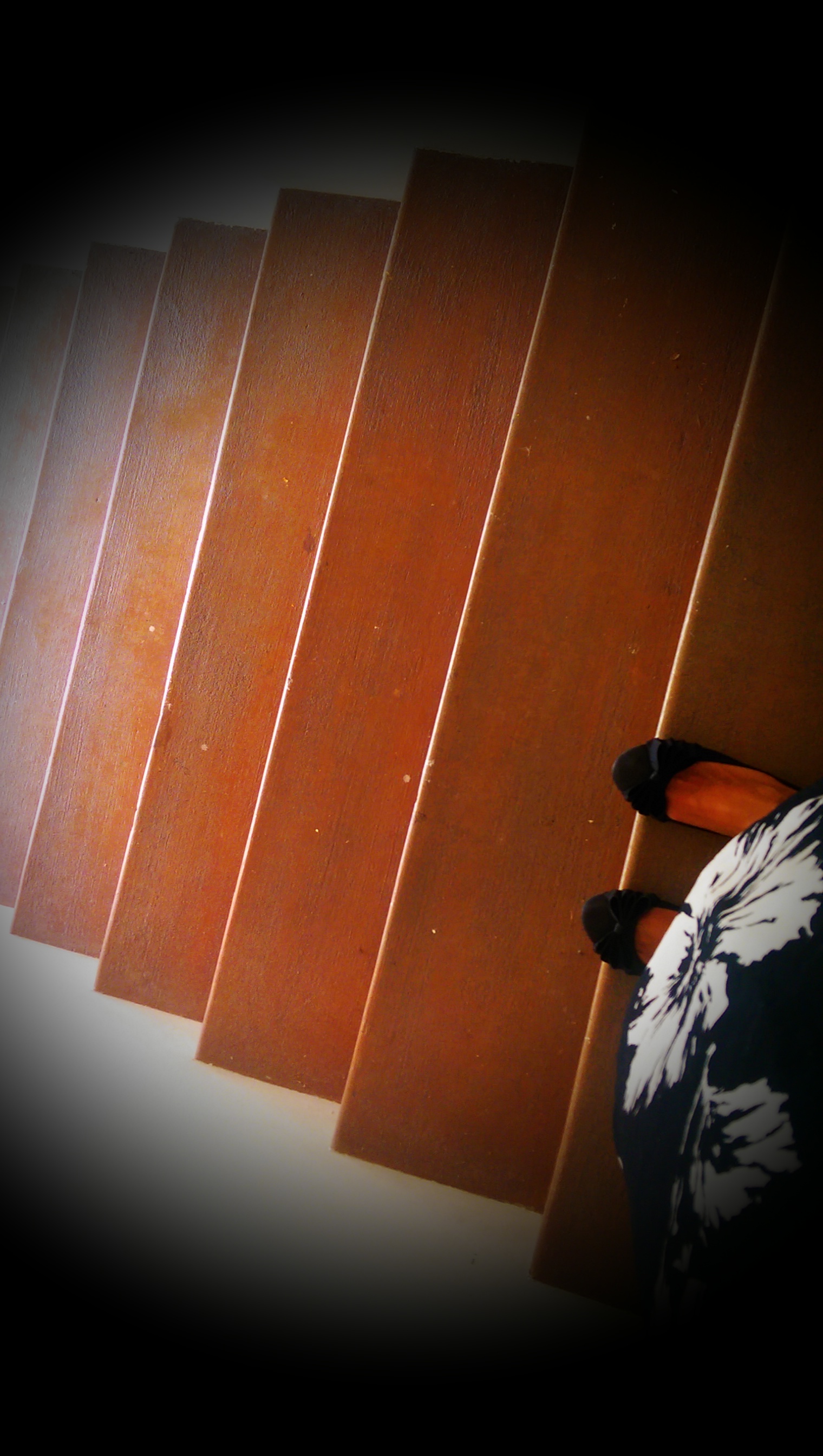
lining the staircase.


fools that we were, 

thinking we could find love

in times of wars.

like painting with sea water. 


i did not know

moves are made of 

dozens of cuts.

if you’re going to leave, 

leave fast, she wrote, 

and don’t look back. 


books were hard—

the poetry books the hardest.

dear drawings and notebooks

ephemera, possible futures

a Ganesha statue 

—all the beloved housethings

that made up a tender home.


Let go. 

moves are made of pyres

and mournings.

blow it all away

the intricate sand mandala 

of that life

everything is different now, and brand new


‘evolution requires elimination’

erykah says. 

yet, why do things left behind

still rip through me at times?


we donated, we sorted, 

i packed and shipped

i packed and shipped

i packed and shipped


it was not enough.

delusional about the weight of things, and time 

in the mad last day 

a lot was left in the motel room

a u-haul worth of beauty in the dumpsters, 

unpretty side of town.

I deserved better but

— then only planes. 


in another life

i would carry

heapfuls in my arms, 

as mothers carry their children 

out of a burning building. 

i would have more time,

i could save more.

but my back needed heat to function

my shoulder was injured

and my hands, 

the same long fingers made for art,

swollen and painful, nails down to nubs.

it took three months to recover.

i did not know moves and possessions

could destroy a body

this way. 


don’t tell me you know

if you have not emptied a home 

and a storage  

of thirteen years

If you haven’t been away

for twenty-eight

if you never lost 

one thousand books


these days I tell myself

it couldn’t have gone any different 

(and how can i speak of loss

in times of wars and genocide) 

I look at what made it and 

i’m grateful. 

i forgive me.

thirty-one boxes.

the rest, i imagine, was lost in a shipwreck,

containers flying into the sea, north atlantic.

i have my hands. and all my art.


my life was never american

but my leaving town yes

messy, hurried, 

few loose ends

a fugitive 


quick, before california the sweet 

— a siren —

sinks her claws into you again

quick, before california the beautiful 

sings ‘but you can never leave


i made it out

not enough is written about how difficult it is

to leave what is easy for what is real

living in paradise could cost

your soul 


in a movie I would drive off with sunglasses

never look in the rear-view mirror 

cowboy boots, miniskirt, cigarette 

I would cross into Mexico.

I would never come back.


In tempi di Guerra


cosa abbiamo salvato

dal fuoco

cosa e’ sopravvissuto

ai forti venti meridionali

venuti a riportarmi a casa

— tutte le mie cose sono ancora

allineate sulla scala.


sciocchi che eravamo,

pensando di poter trovare amore

in tempi di guerre.

come dipingere con acqua di mare.


non sapevo

che I traslochi fossero fatti di

dozzine di tagli.

se te ne vai,

vai veloce, scrisse lei,

e non guardare indietro.


i libri sono stati duri —

 i libri di poesia ancora di piu.

cari disegni e quaderni

materiale per collage, futuri possibili

una statua di Ganesha

— tutte le amate cose domestiche

che costituivano una tenera casa.


Lascia andare.

i traslochi sono fatti di roghi

e lutti.

soffia via tutto!

l’ intricato mandala di sabbia

di quella vita

ora tutto è diverso e completamente nuovo


‘l’evoluzione richiede eliminazione’

dice erykah.

eppure, perché le cose lasciate alle spalle

mi squarciano ancora, a volte?


abbiamo donato, abbiamo ordinato,

ho imballato e spedito

ho imballato e spedito

ho imballato e spedito


non è stato sufficiente.

Ignara e illusa riguardo al peso delle cose, al tempo

nel folle ultimo giorno

molto è stato lasciato nella stanza del motel

un furgone pieno di bellezza nei cassonetti,

lato poco attraente della città.

meritavo di meglio ma

— poi solo aerei.


in un’altra vita

porterei le mie cose. tra le braccia,

come le madri portano i loro bambini

fuori da un edificio in fiamme.

avrei più tempo,

potrei salvare di più.

ma la mia schiena aveva bisogno di calore per funzionare

la mia spalla era ferita

e le mie mani,

le stesse dita lunghe fatte per l’arte, gonfie e doloranti,

unghie ridotte a moncherini.

ci sono voluti tre mesi per riprendermii.

non sapevo che i traslochi, e cio’ che uno possiede

potessero distruggere un corpo

in questo modo.


non dirmi che lo sai

se non hai svuotato una casa

e uno scantinato

di tredici anni

se non sei tornato

dopo ventotto,

se non hai mai perso

mille libri


in questi giorni mi dico

non poteva andare diversamente

guardo cosa è sopravvissuto e

sono grata.

mi perdono.

trentuno scatole.

il resto, immagino, è stato perso in un naufragio,

containers che volavano in mare, nord atlantico.

ho le mie mani. e tutta la mia arte.


la mia vita non è mai stata americana

ma la mia partenza sì

confusa, frettolosa,

alcune cose da sistemare

una fuggiasca


veloce, prima che la dolce california

— una sirena —

ti affondi di nuovo le unghie addosso

veloce, prima che la bella california

canti ‘ma non potrai mai andare via’


ce l’ho fatta ad uscire

non si scrive abbastanza su quanto sia difficile

lasciare ciò che è facile per ciò che è reale

vivere in un paradiso potrebbe costare

l’anima


in un film guiderei via con gli occhiali da sole

non guarderei mai nello specchietto retrovisore

stivali da cowboy, minigonna, sigaretta

attraverserei il confine con il Messico.

non tornerei mai più.


Miti Aiello, Calalunga di Montauro, March 5th, 2024


Katherine Graham writes in her Pulitzer Prize-winning memoir, Personal History:

“There are certain experiences — childbirth is one; moving is another — that nature and time definitely draw a curtain on, so you forget in between times how painful they are.”

As Graham highlights for us, moving is one of life’s great “pains.”

Huff Post

Poetry is a form of confession.

This poem processes an oversea move after twenty-eight years, a return home and inherent metamorphoses. In tectonic life shifts there are bound to be casualties.

Moving is the start of “a new history” (New York Times), and the end of an era.

Moving is so much more than packing, purging, losses, exhaustion, burnout and overwhelm, then unpacking and settling.

It’s about self-compassion.

It’s about surrendering to, and managing, negative perfectionism.

It’s about the gentle dance of needing space and time to process, while seeking and desiring new networks, new sights.

In its highest expression, releasing is cathartic.

My move involved countless cuts; it was funeral pyre. It required mournings.

The innermost workings – and bargaining- required in one of the major tests of our life are invisible and unknowable to even our close family members. As for us, each layer of learning is peeled and revealed over time.

Time- the greatest balm to our sore bodies and minds, covering all aches in welcome veils of forgetfulness.

In short, moving it’s a whole process.

Moves are enormous external work, before, during, and after – yet the massive labor is internal.

I had no idea — and, while the fruit and the rewards are sweet indeed, it was an ordeal- and the most physically Demanding backbreaking work i had to do in my life.

Part of me wishes I prepared myself better but, I realize it was all a demonstration on the impermanence of things (isn’t all of life ?), necessary to teach me about non-attachment.

As with all major life events, life gives you the test first, then the lesson..

Moving is a death experience, Rosemary Beavis writes in her ‘Poem About Moving’. She talks about a ‘process to establish a new root system’’, and how we are given careful instructions for transplanting seedlings, but not ourselves. Michael Walker in Moving House talks about a traveler who may not say goodbye.

I had a faint idea idea that moving was ranked alongside divorce as one of the most stressful life events one will ever go through — now I fully, fully understand. I just learned about moving/ transitional trauma, and there is even such a thing as relocation stress syndrome.

In moves we must leave behind “the stuff that has our souls built in “ (anonymous).

‘Saying goodbye to stuff’ and simplifying can be part of a spiritual test of endurance, it is the spring cleaning of our entire lives.

On the other side of the fire, a new life, and fresh energies.

There is something glorious in escaping the past, and certain futures — movies you have seen before. Here is the alternate ending.

Moves, more or less traumatic, are a right of passage in life’s journey. A lot is lost.. but much more is gained- along with resilience and fortitude.

As for me, in the next life I will hire a move manager. Or become a move manager 🤭 so I never have to go through the terrible thing.

“The move manager is part psychologist, part mediator, part daughter, who swoops in with a positive, informed attitude and takes the stress off the entire situation.”

Huff Post

What is your experience with moving?

Is there a line in my poem that resonates with you?

Let me know in the comments!
Read Full Post »

Colors of the Fall…
Birches. Watercolor. September 19, 2020.

Happy Fall!

Is it “oh my God” or “Finally?”

How has your summer been?

Mine was a summer that wasn’t, between the lockdown on international flights and non-stop fulltime teaching plus fulltime academic duties. More work, adjustments, screentime and zoomed/voiced out feelings than i care to admit.

Still, there is gratitude for being able to work, pride in the results achieved with colleagues this summer, and beautiful moments of connections with my students, as we thankfully learn, adapt and evolve to communicate solely through these new media. It was a summer of intense learning, yet the curve was gentler than in the terrible Spring.

The closeness of the human voice substitutes the immediacy of vision – and this whole business of teaching and working remotely is getting a little less painful/ more bearable.

Have patience. All things are difficult before they become easy.

Saadi of Shiraz, Persian Poet, 1210

We are learning, fast, multiple new ways to transmit knowledge, of being there for someone, new ways to stay present, engaging and caring. We are growing and expanding- and this growth will stay with us even when “things return to normal”…whenever and whatever that is. I’m thankful for the enormous adaptability we possess as human beings.

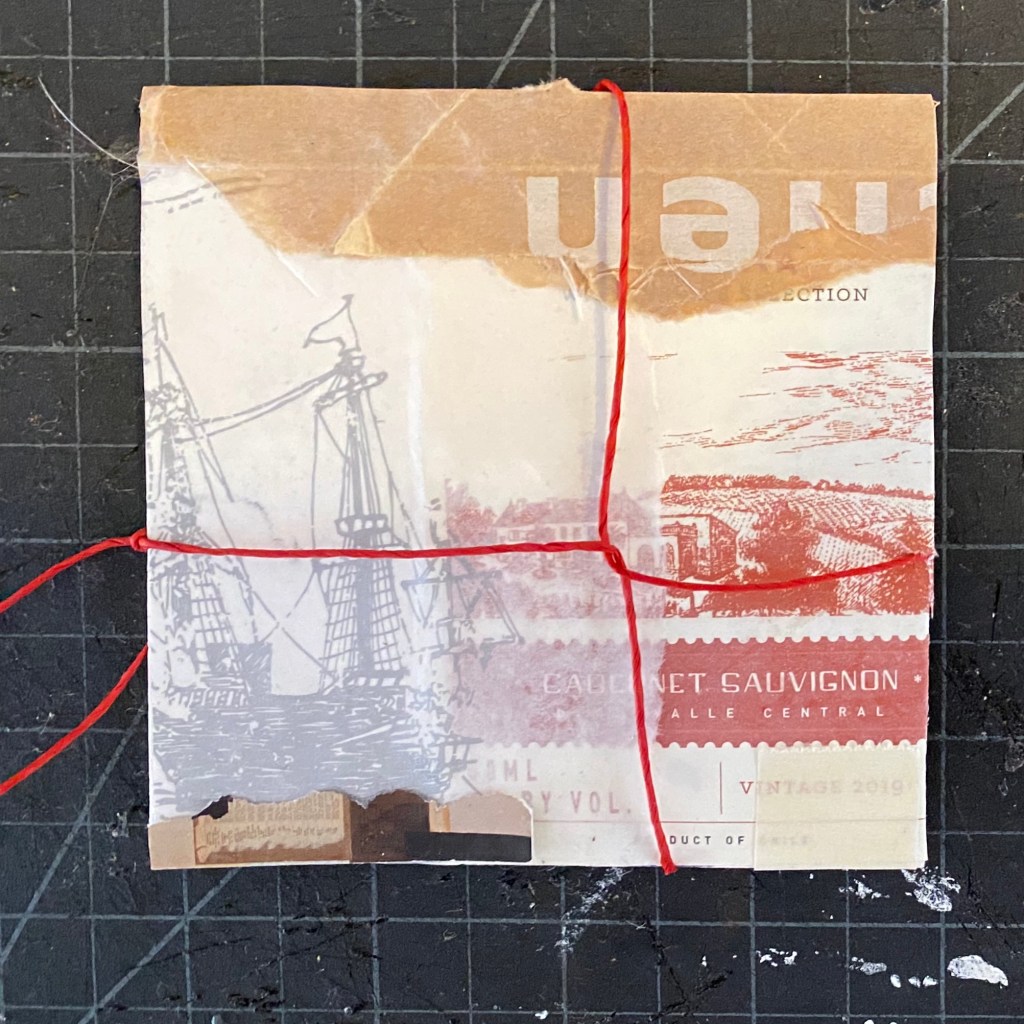
Voyages – Collage June 2020

With more Covid-related uncertainty, rightful continued political protests and unrest against police brutality and killings in the U.S, waves of closures and reopenings here in San Diego, the California/ West Coast fires, alarming news from Lebanon, immense trepidation for the upcoming U.S elections –and these are just the top things that come to mind – the summer of 2020 continued the general trend of this year’s suckiness (yes I just used that term) and moments of poignant glory.

(just added, since drafting this on the first day of Fall, the passing of the indomitable US Supreme Court Judge Ruth Bader Ginsburg, a tremendous loss and the terrifying prospect of trump nominating a third judge to the highest court of the land, with multigenerational repercussions)

—- b. r. e. a. t. h. e. —

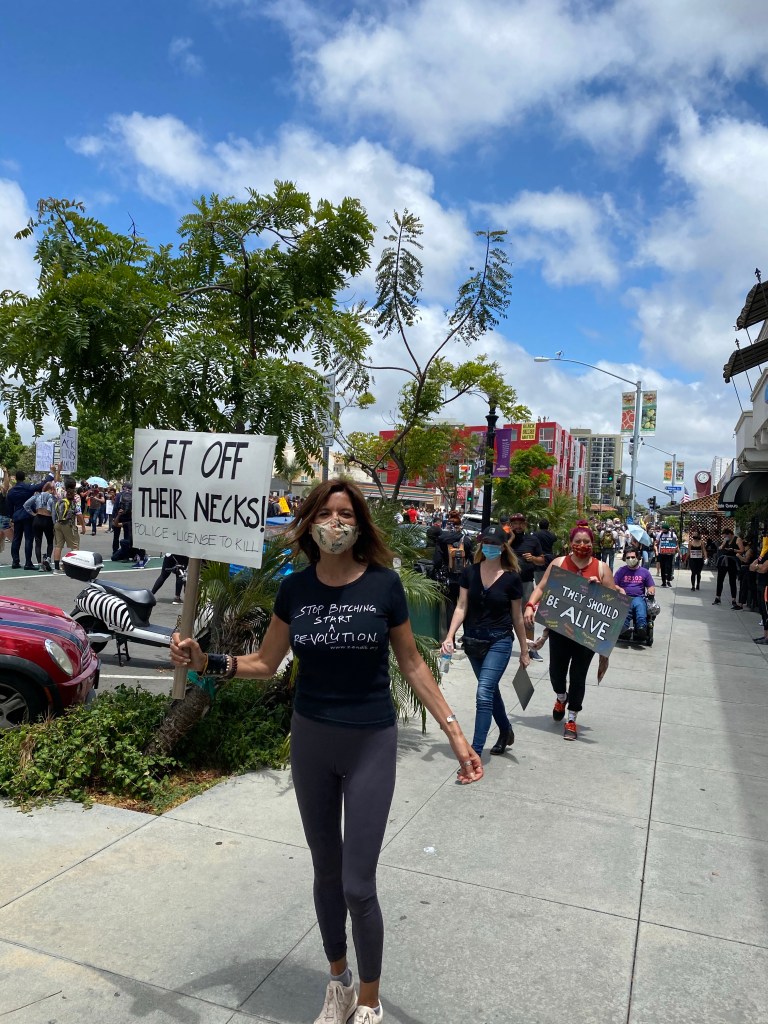
Protesting in the streets of San Diego after the killing of George Floyd at the hands of the state. Black Lives Matter ✊🏿 – and that’s just a start. June 2020

Personally, there was heartbreak and loss, hope, and gentle local travel in my beautiful state of California and the West Coast.

Endings and beginnings.

Graphite and Derwent Inktense pencils on paper. August 2020

As ever, the lovely friends and helpful spirits, old and new, God /Universe put in my path —along with a renewed spiritual practice— saved the day.

San Clemente Pier, California. August 2020.

I hope you were able to find moments of peace and beauty in the storms of your life, the nation.. the world. I hope you my readers found oases of joy in nature, friends, loved ones, cooking, yoga, joyful movement….art and spiritual practices. Time for yourself, to learn from solitude and silence. I hope, more than ever, you are taking better care of yourselves physically, mentally, spiritually and emotionally – for we are asked to function normally- and, some of us, to work even more, while there is a war going on.

The Surface and the Deep. Watercolor. July 2020.
“When under, remember the surface. When on the surface, remember the deep”. When our days are turbulent and troubled, our challenge is to remember the wave is not the sea. Though it pounds us, the pounding will pass. Though it tosses us about, the tossing will pass, if we don’t fight it. Often our fear misleads us to stay in close to shore, when the safest place is in the deep, if we can get there. Any swimmer knows: stay too close to shore and you will be battered by the surf and undertow. We must swim out past the breakers if we are to know the hammock of the deep. Stay on the land or make it to the deep. It is the in-between that kills.” 

Mark Nepo, The Book of Awakening.

I, ever the optimist, even started a running list of “silver linings” which resulted from this uncertain 2020.

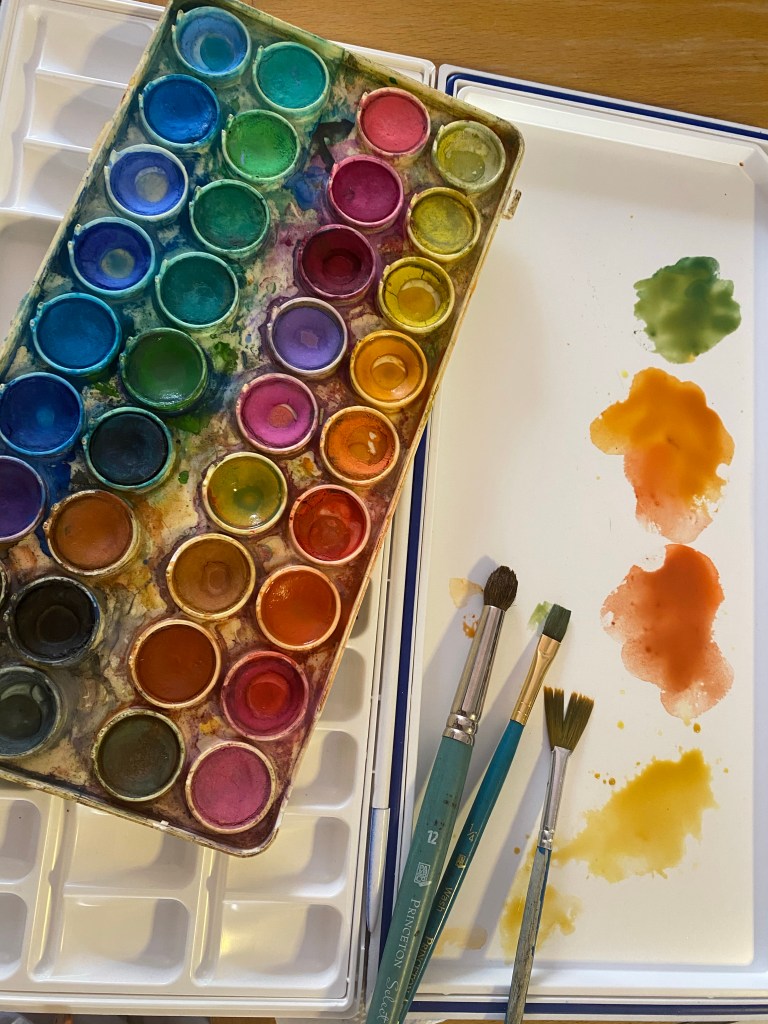
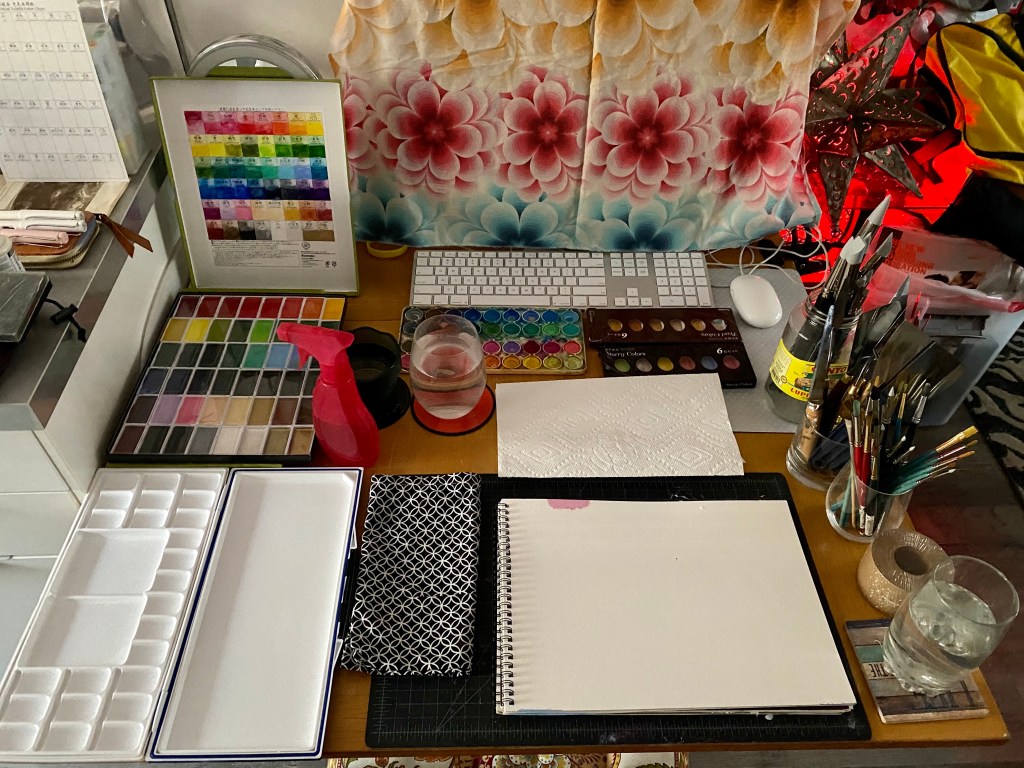
Art will save us. Setup for my watercolor classes. One of the good things to come out of this year is my return to art, in form of art classes, and now I can join anywhere in the world, since everything is online!
My first watercolor with Escuela Alda con Limón in Madrid. My teacher was Ana Grasset. An attempt at a monochromatic studies when I still could not tell the difference in my Kuretake Japanese watercolor pans.
Second watercolor with Escuela Alda con Limón in Madrid – Ana Grasset’s workshop.

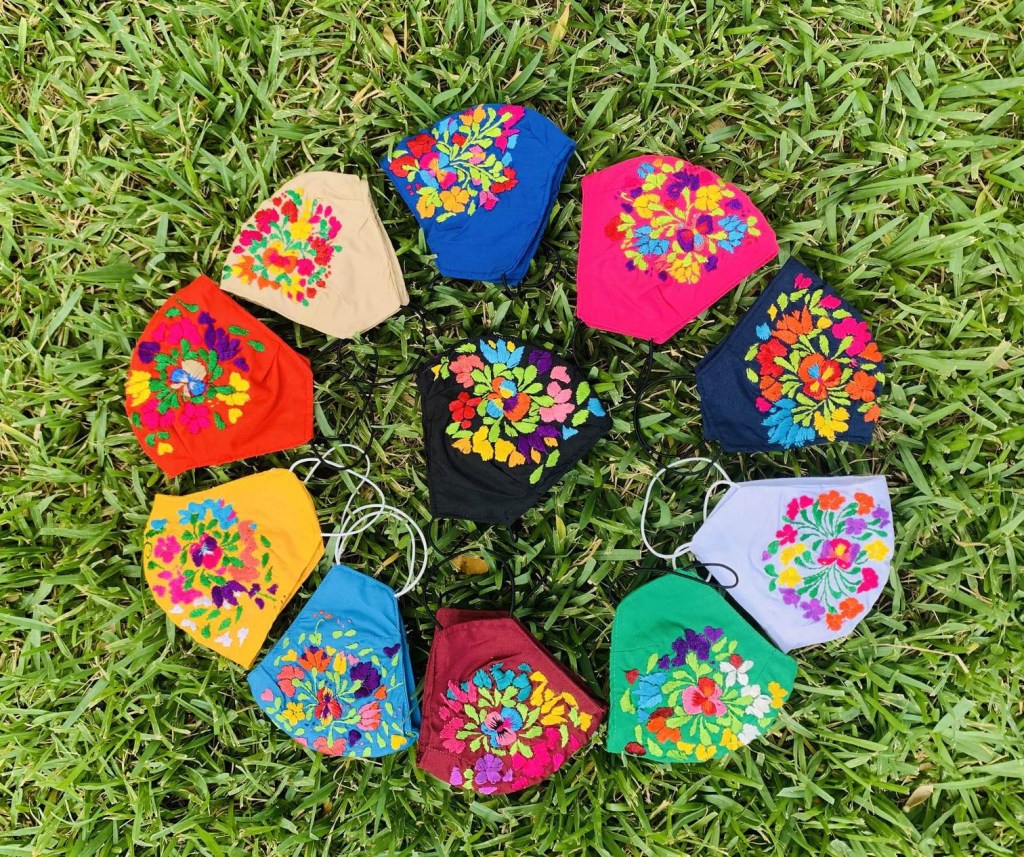
Six months into the new reality, and with a full collection of artful masks to wear each day before I step outside —and to remind me of our strange time —these are things I know for sure:

Image from lolomercadito.com

I know right now the good is even better because we all stopped taking things for granted months ago.

Rumi

I know the Global Pause ( as a colleague called it) is a chance for all of us to reassess the “ busyness” a lot of us identified with — and perhaps were distracted by. I know this is a chance for all of us to go deeper, to interiorize, and find the center of calm and stillness inside of us. This is life changing.

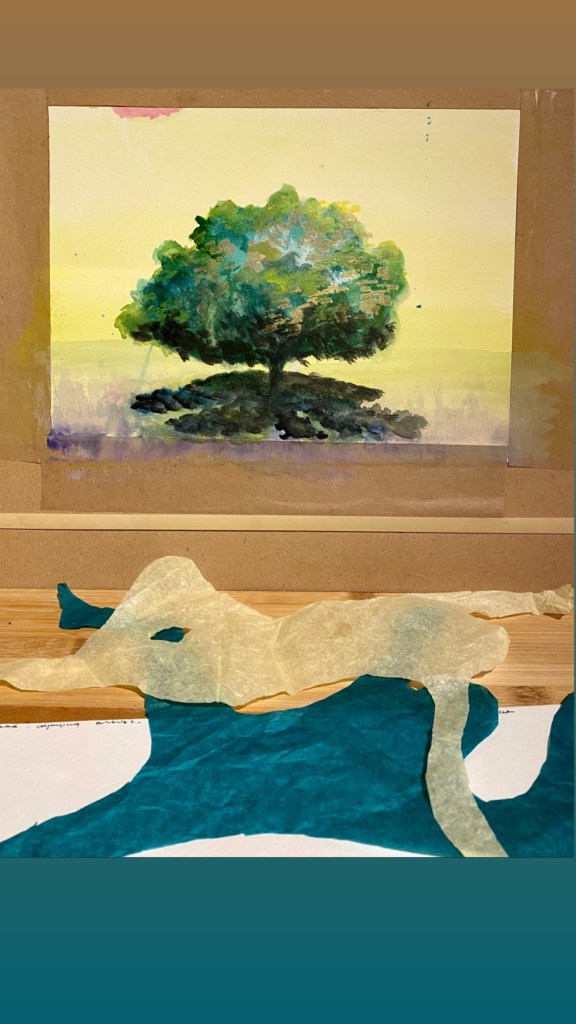
Watercolor of my favorite tree and remnants of my “Drawing with scissors: Matisse” workshop with the London Drawing Group. September 29, 2020.
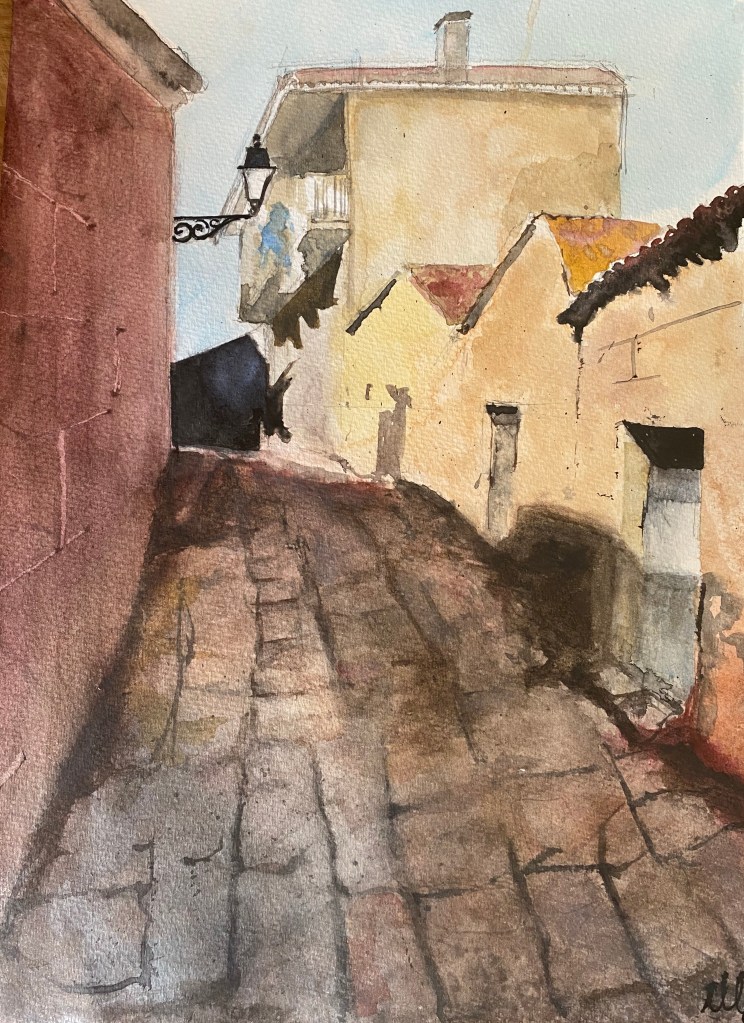
Watercolor class with Juan Saturio {take 1} from Escuela Alda con Limón in Madrid. I want to try this again as my street got too dark/muddy ( a danger with watercolors). I think even my imperfect children need to be shown.

I know that the work of lightworkers is needed more than ever, and these times ask each of us to lighten the load of our fellow human beings, in however capacity we can do this. Be a light and help to a neighbor, an elderly acquaintance, a friend you lost track of. We can take this time and insulate ourselves or we can greet our better selves at the end of this surreal journey.

Watercolor experiments in light. September 29, 2020.

Finally, I know and can vouch for the healing power of movement and Nature. Move that body! Move that body everyday, walk or run among trees or by the ocean. Exercise in the fresh air to revive your mind and minimize the dreaded screen time. Open your windows wide ( if there are no fires around that is ..) Make sure you move everyday at least one hour to combat fatigue, depression and what in Italian we call abbrutimento ( degradation, brutalization) which comes from never leaving your home. Challenge yourself to go to different nature spots, to give your eyes something new to look at, and revive your spirit. Rumi also said the soul needs to travel as much as the feet. Daily loving movement, as the FlyLady calls it, is the foremost way we can help our body feel better- and when we feel better we can be better to those around us. Do anything you can not to go default.

The pier in San Clemente beach, which has been my refuge in this strange summer 2020. August 2020.

This summer I managed to steal moments of beauty and time for mini-art and writing retreats in long weekends spent in the beautiful “Spanish village by the Sea” San Clemente, California.

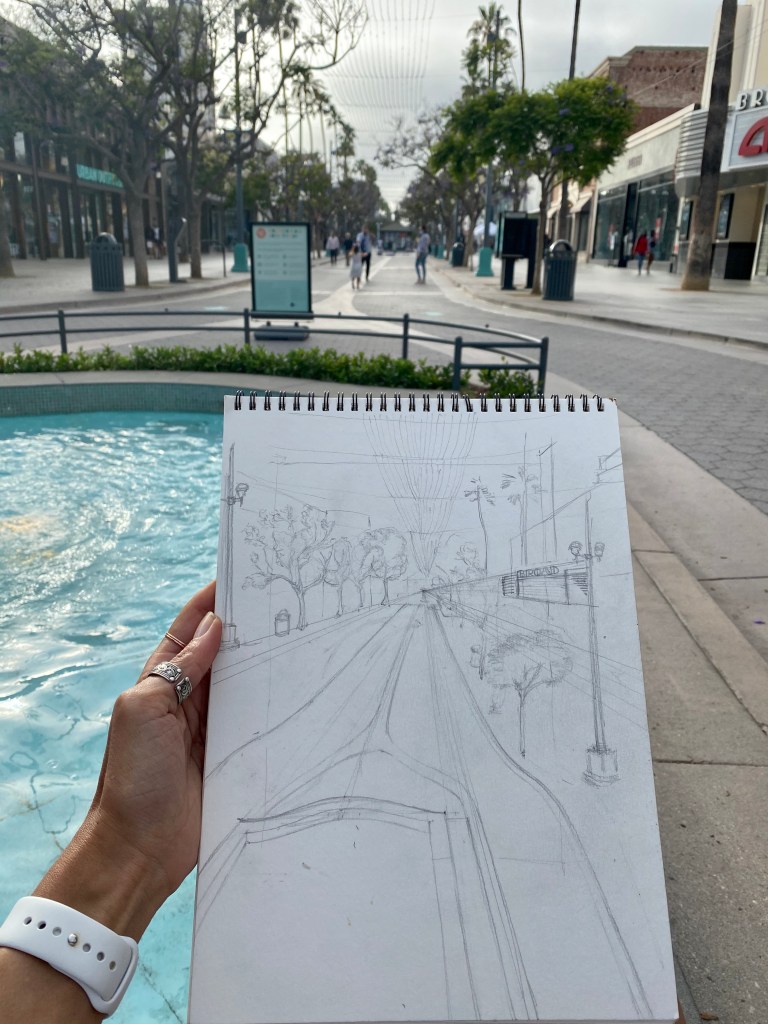
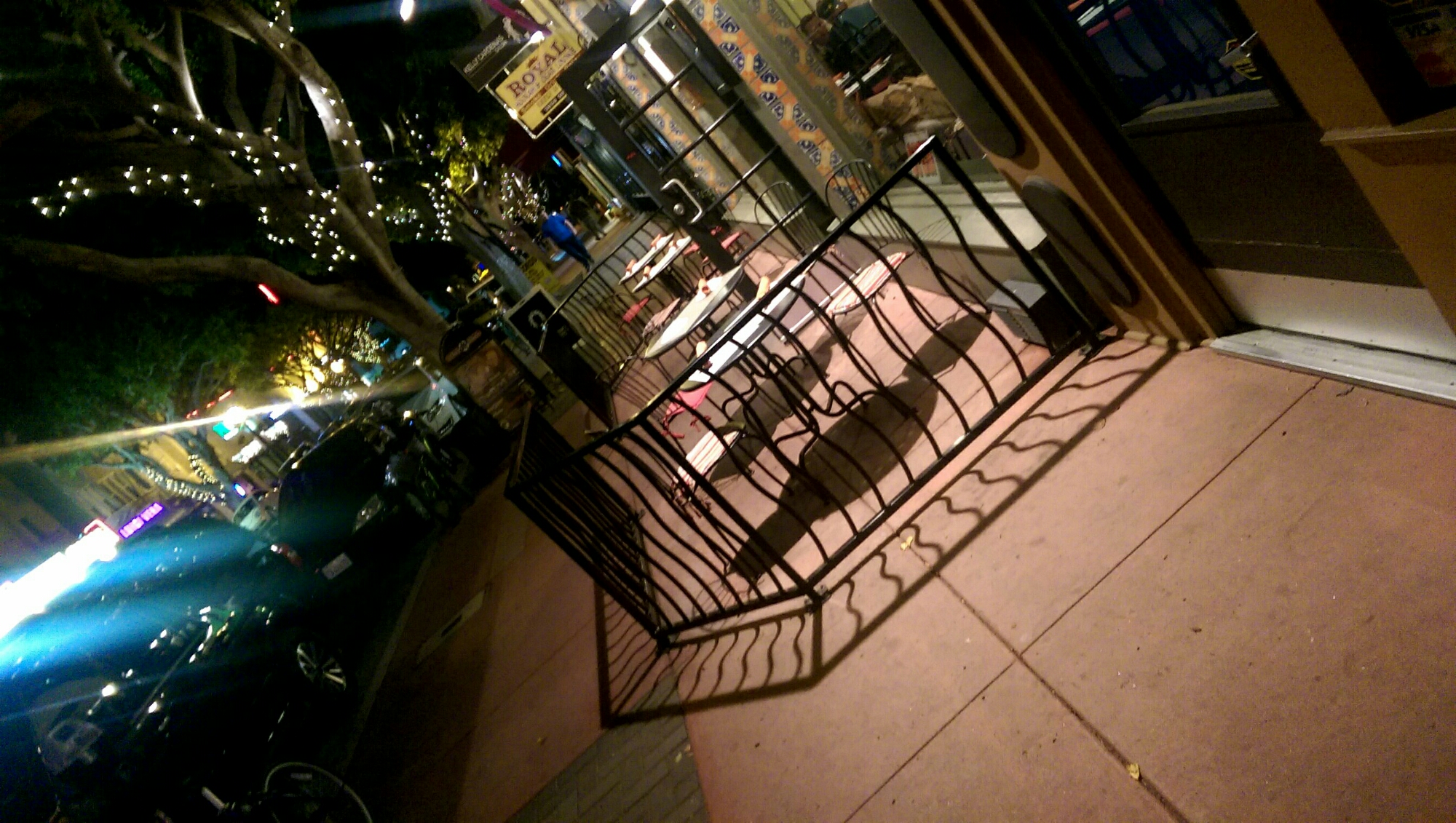
Drawing Third Street Promenade in Santa Monica, California. June 2020.

In June I ran away to Santa Monica.

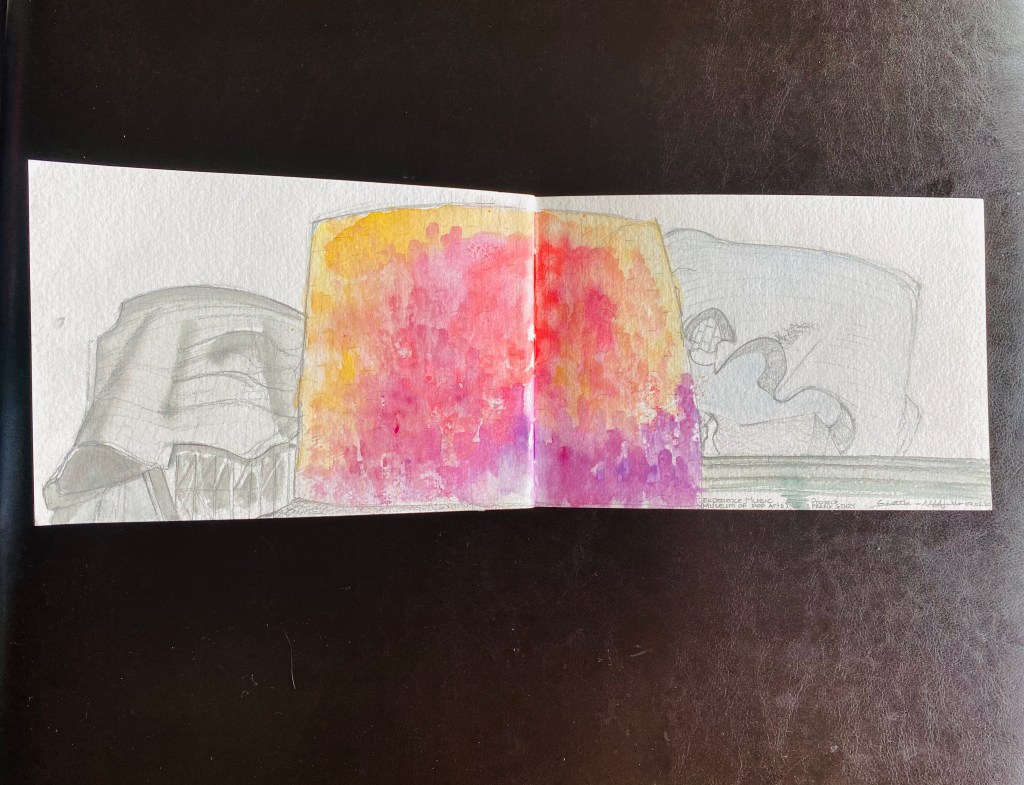
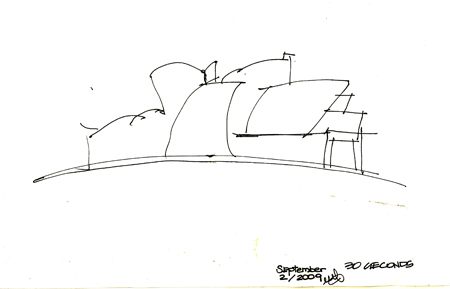
The Music Experience Project by Frank Gehry, Seattle. Graphite and watercolor. July 2020.
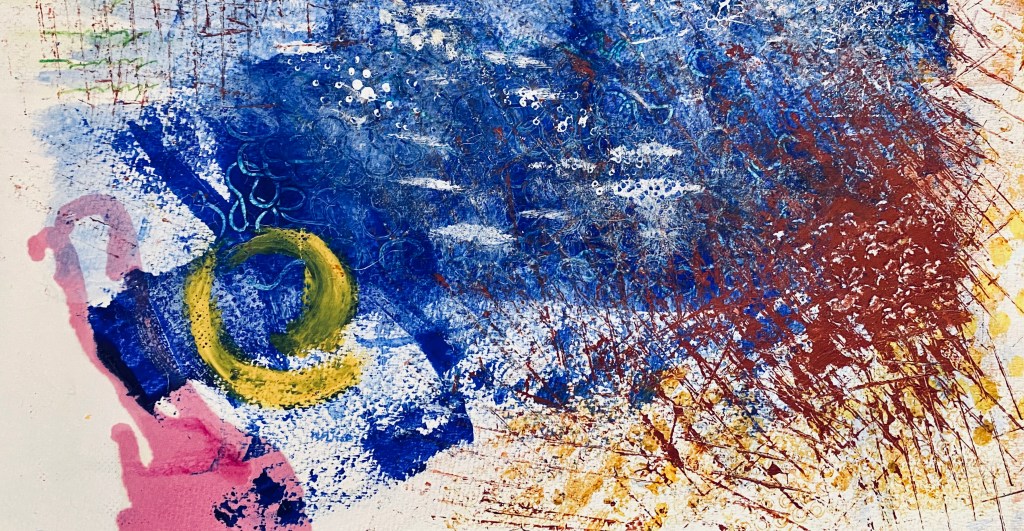
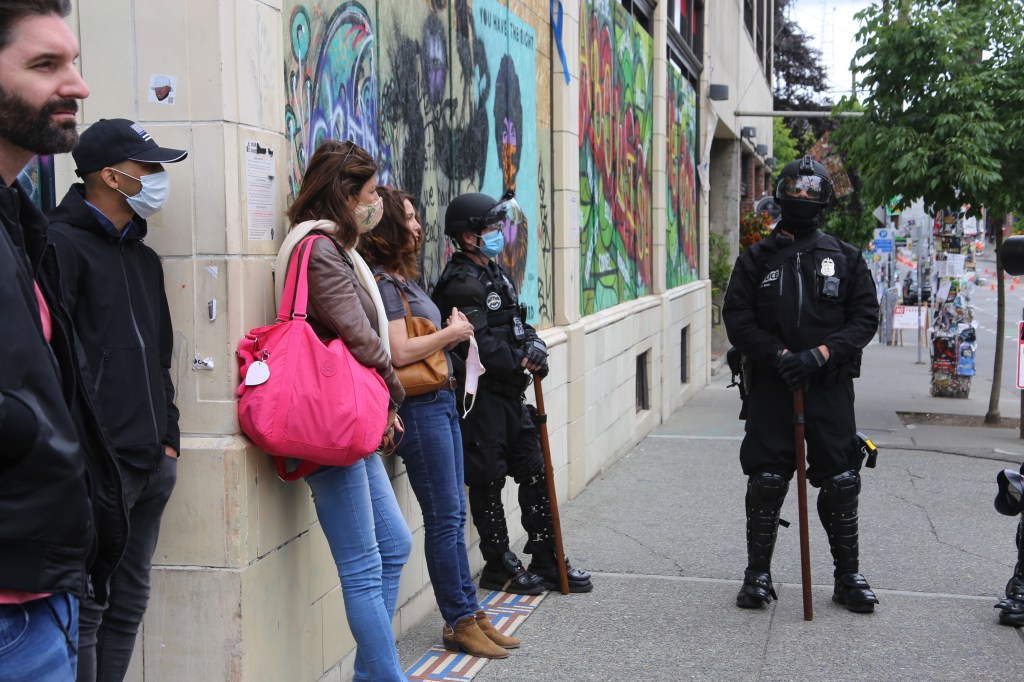
There was a brief visit, right before the 4th of July weekend, to a subdued Seattle. The architecture was galvanizing.. and it was so healing for me to give my eyes different views to see, after months of lockdown in San Diego. I visited the Autonomous Zone there and stood in front of menacing police in riot gears . Of course I will share my photo-dossiers of these escapes of mine. All in good time.

This summer I took A LOT of art classes online to stay sane and “force” myself to show up to my art practice. I am on a journey to develop an authentic contribution and I am exploring a lot of techniques and art workshops to find my voice amongst the languages of art. There is a lot of experimenting… right now I’m more sure of what is “ not me” than what is… but the experience is filled with light and play. There is discipline, too.

I hope you are able to follow me and my progress on Instagram, at least unti I develop the practice to post and write here before going for the insta-fix. Below samples of the art exercises I completed and the outcome from the Summer art classes I attended.

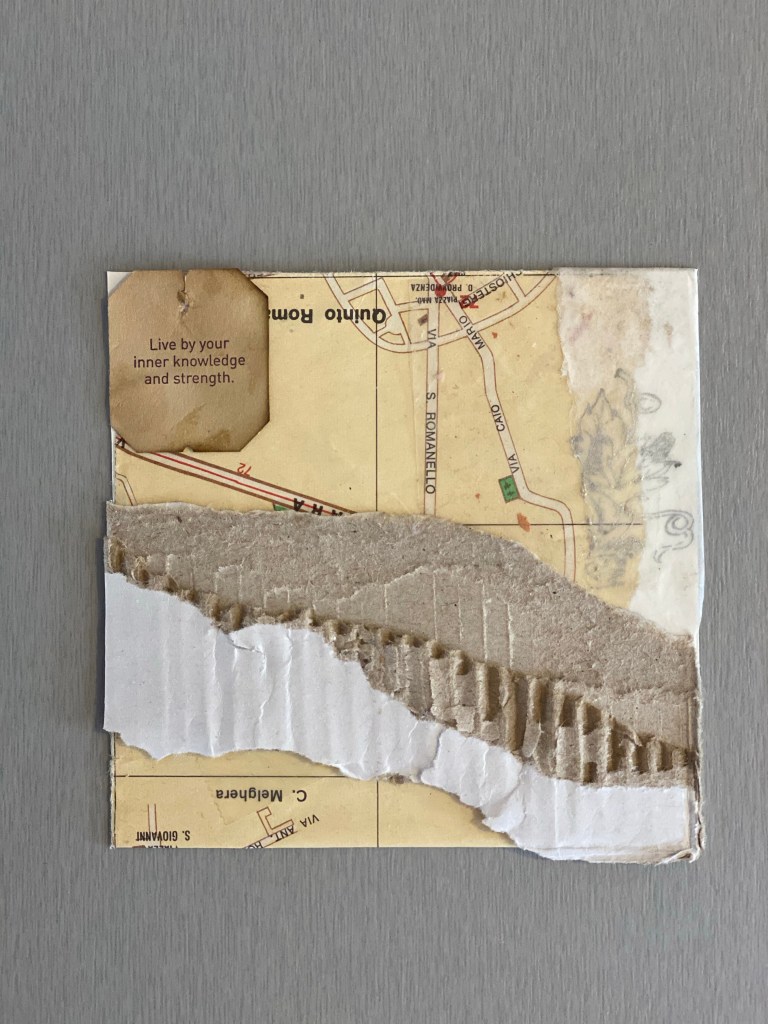
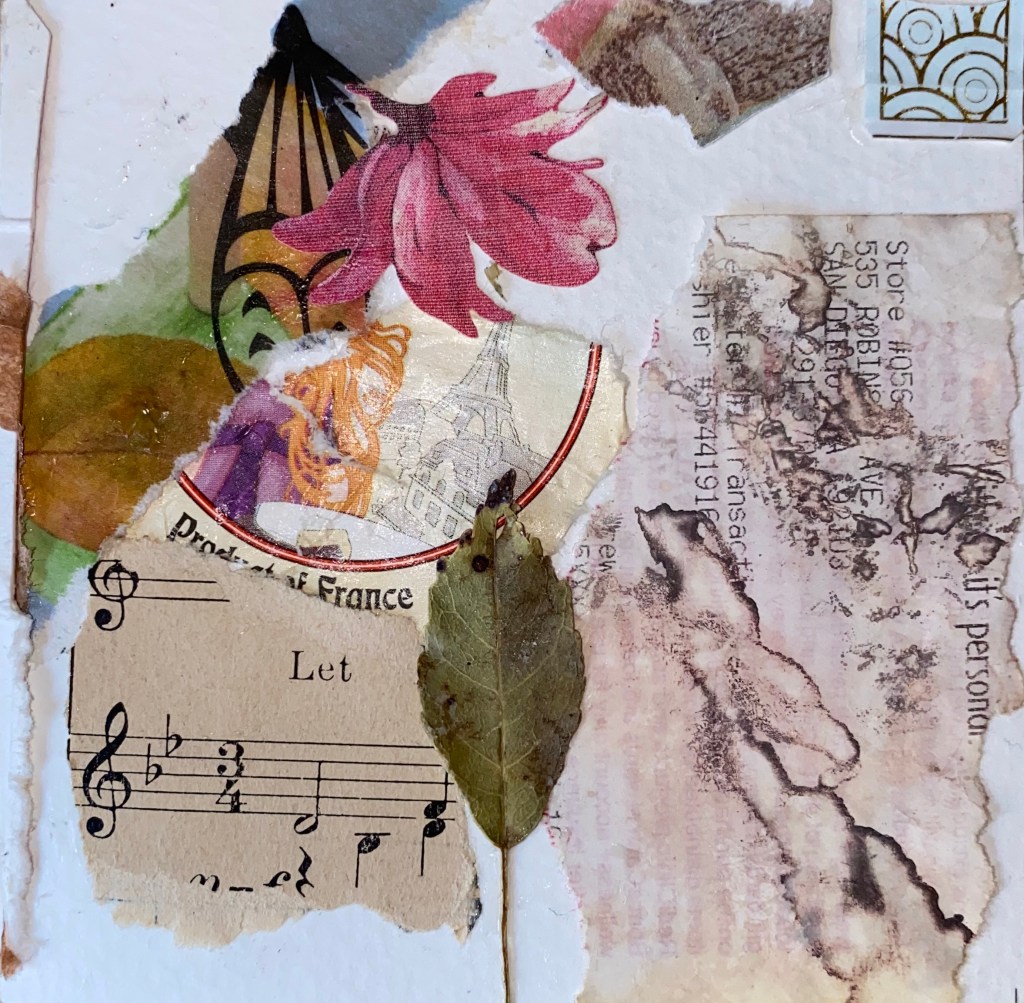
Delicate. Five minute collage, following the method of Crystal Marie Neubauer. Mixed Media. May 2020.
The Road Home. Five minute collage. Mixed Media. May 2020.
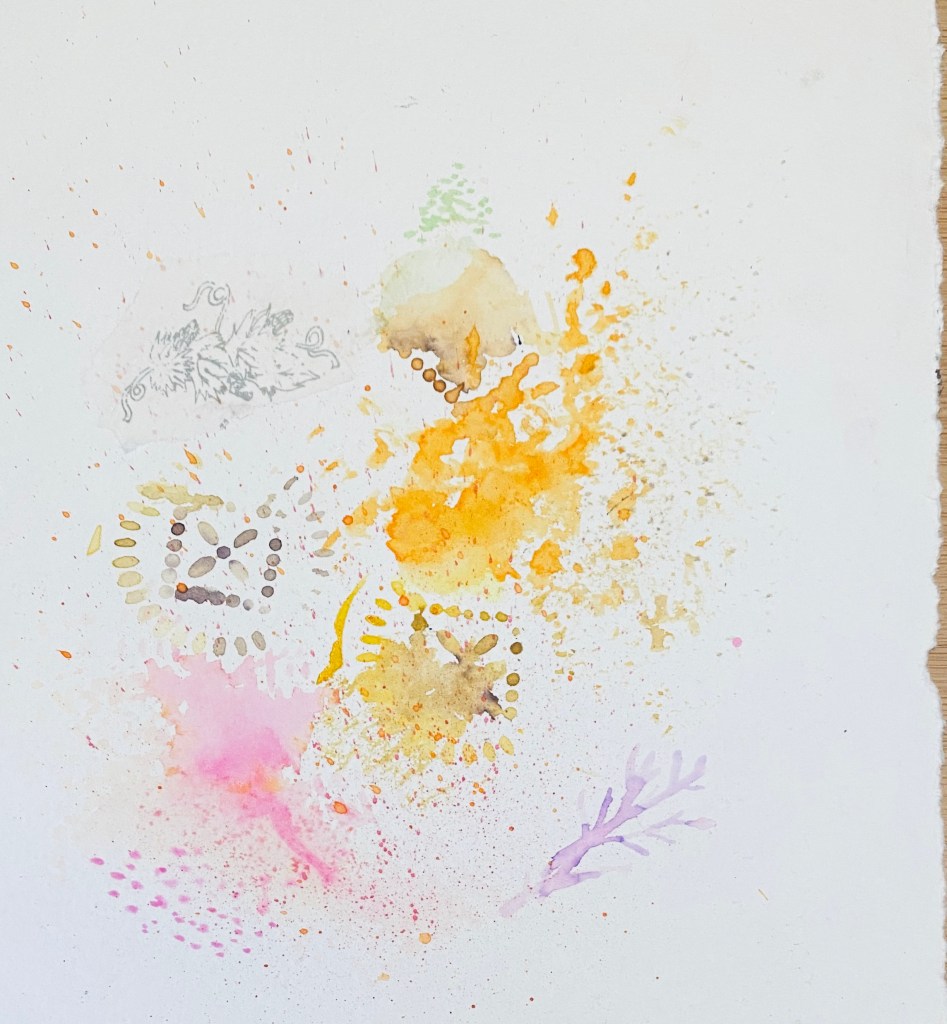
Ombre watercolor class with Jennifer Evans, of Periwinkle Studio. July 2020.
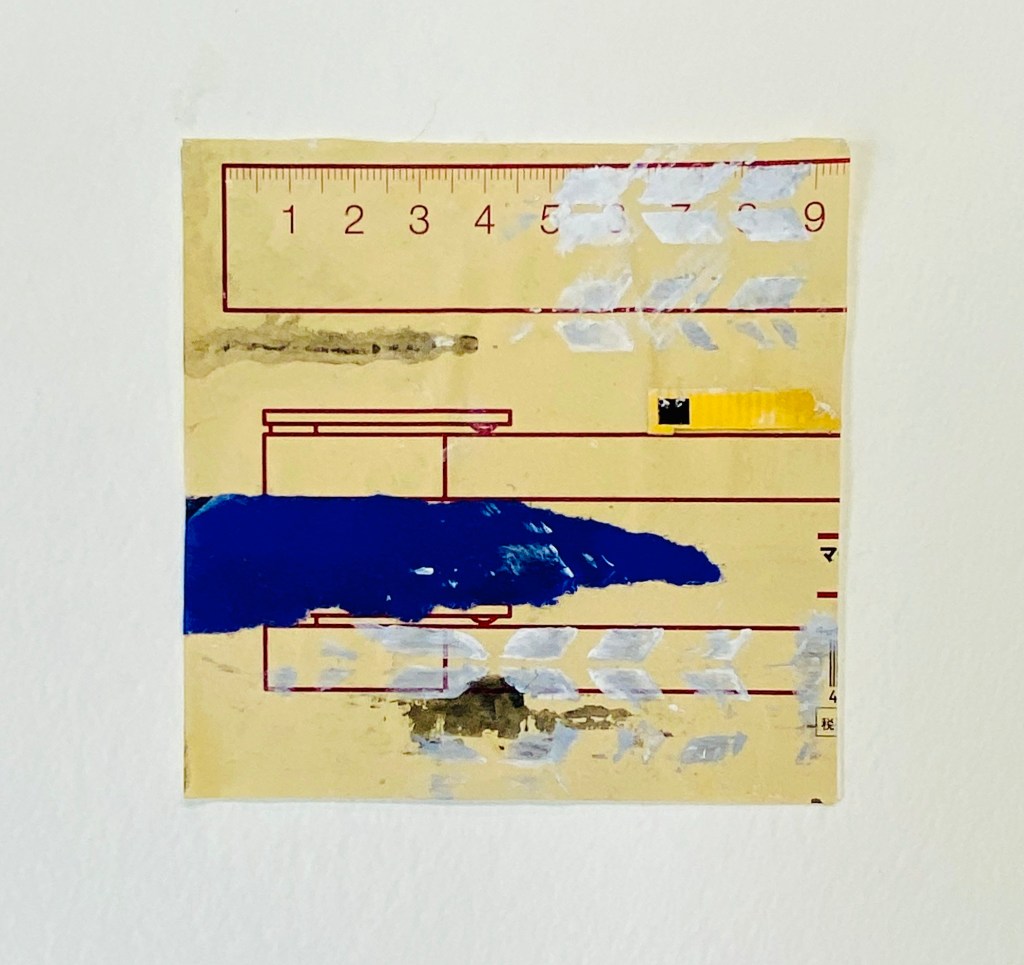
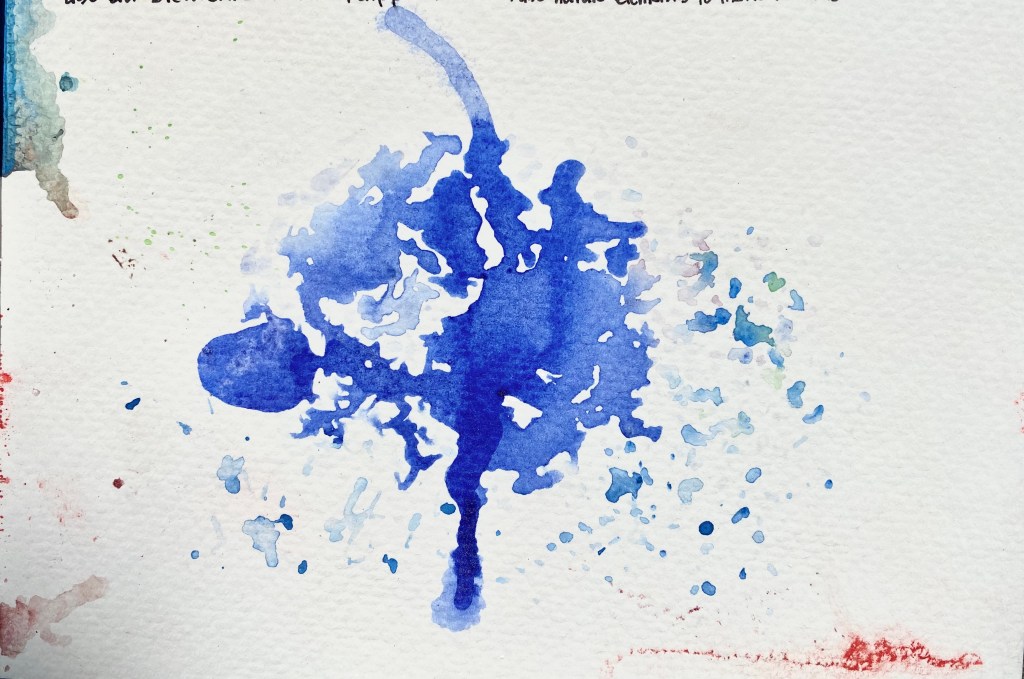
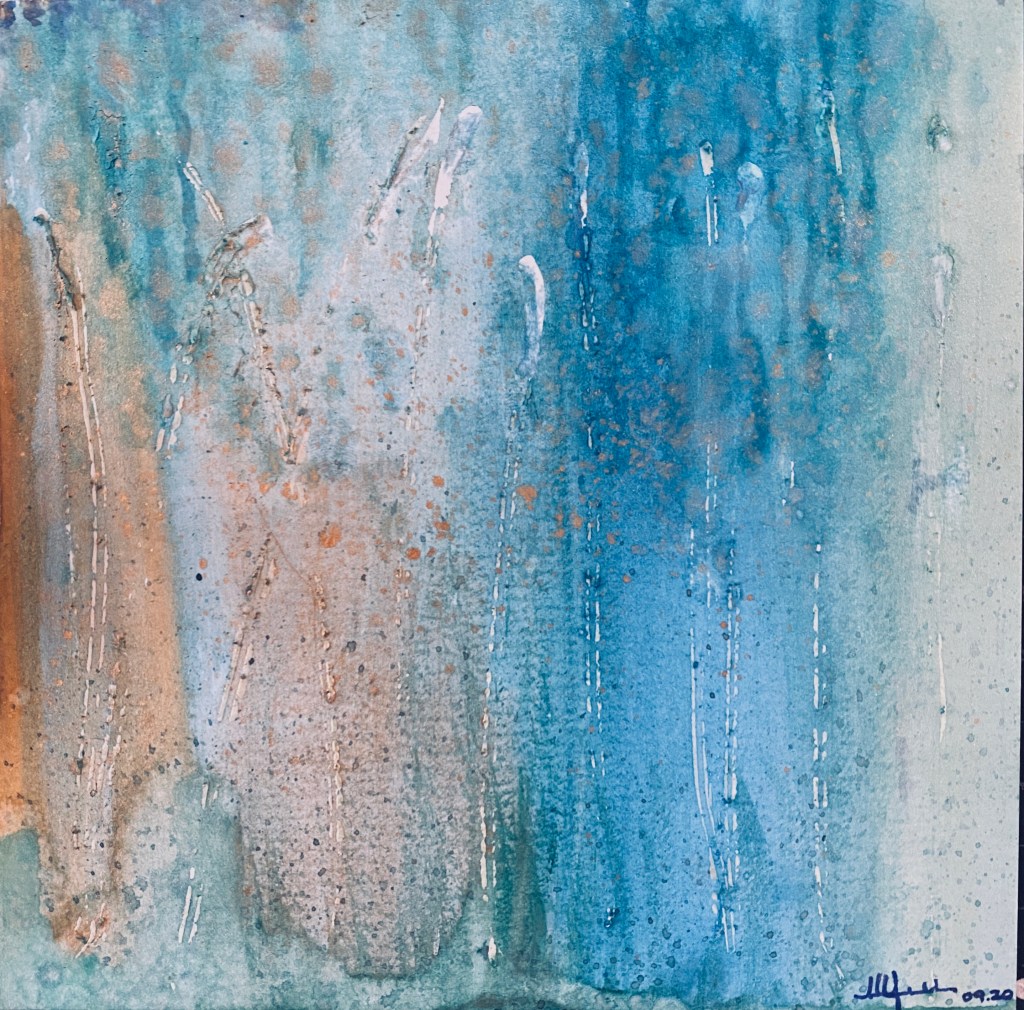
Abstract watercolor class with Jennifer Evans of Periwinkle Studio. July 2020
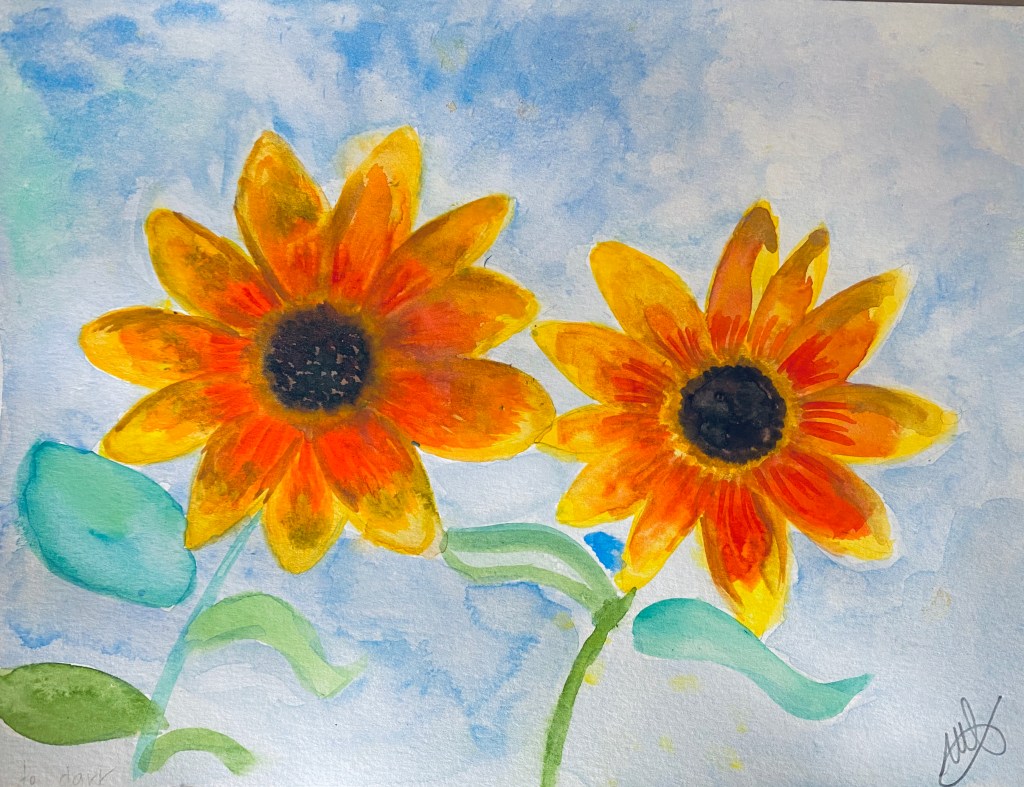
Gaillardia watercolor class with Jennifer Evans of Periwinkle Studio.
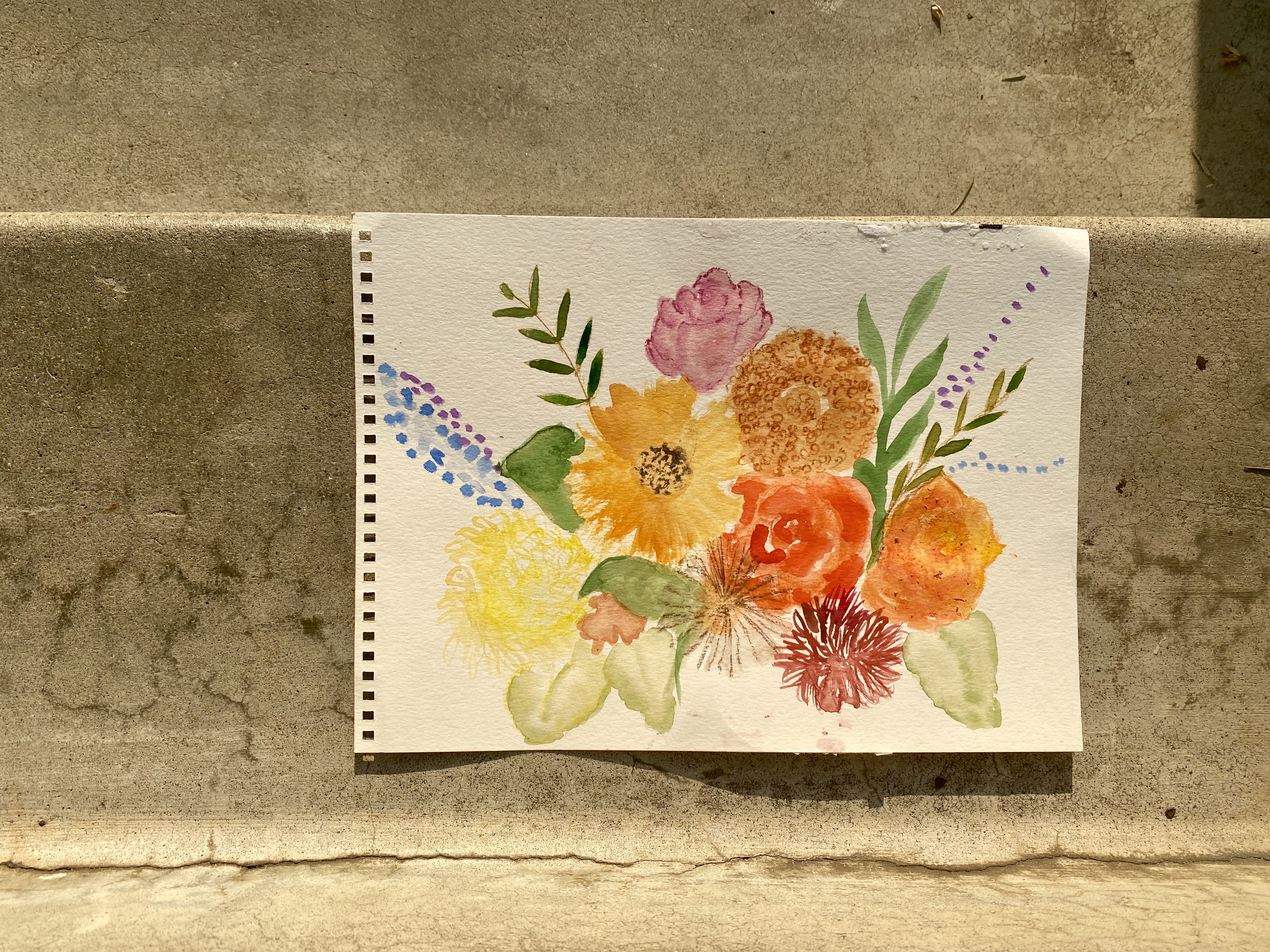
Fall Bouquet watercolor workshop with Jennifer Evans of Periwinkle Studio.
She Rests. Five minute collage. Mixed Media. August 2020.
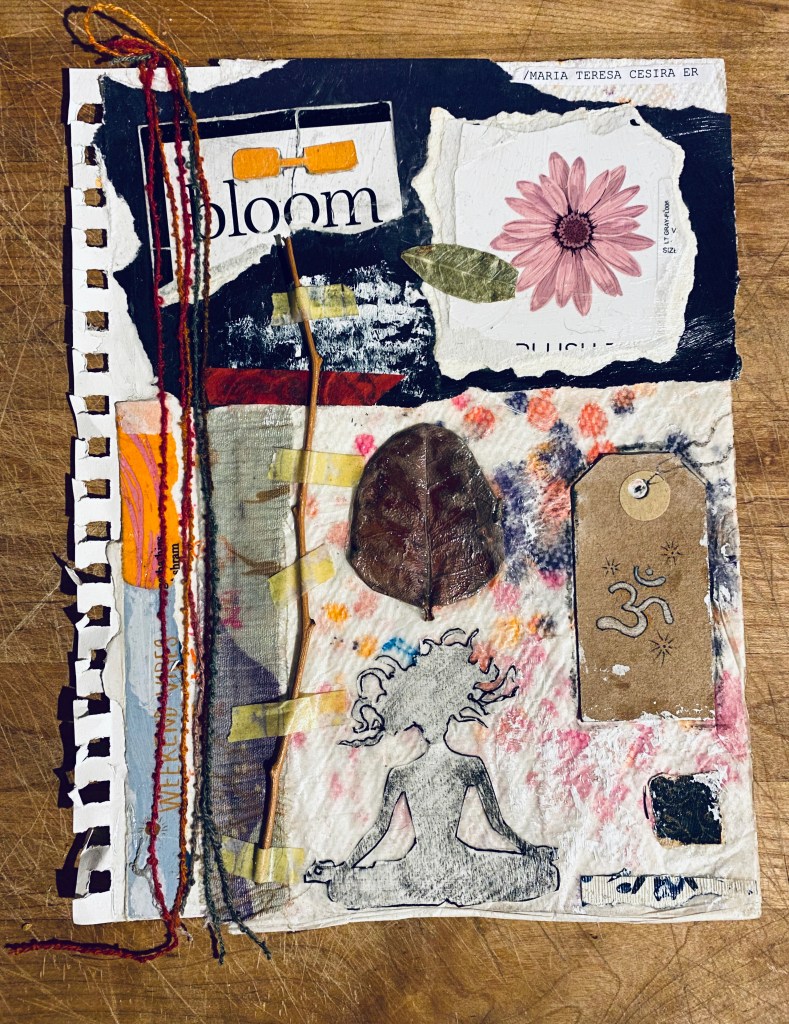
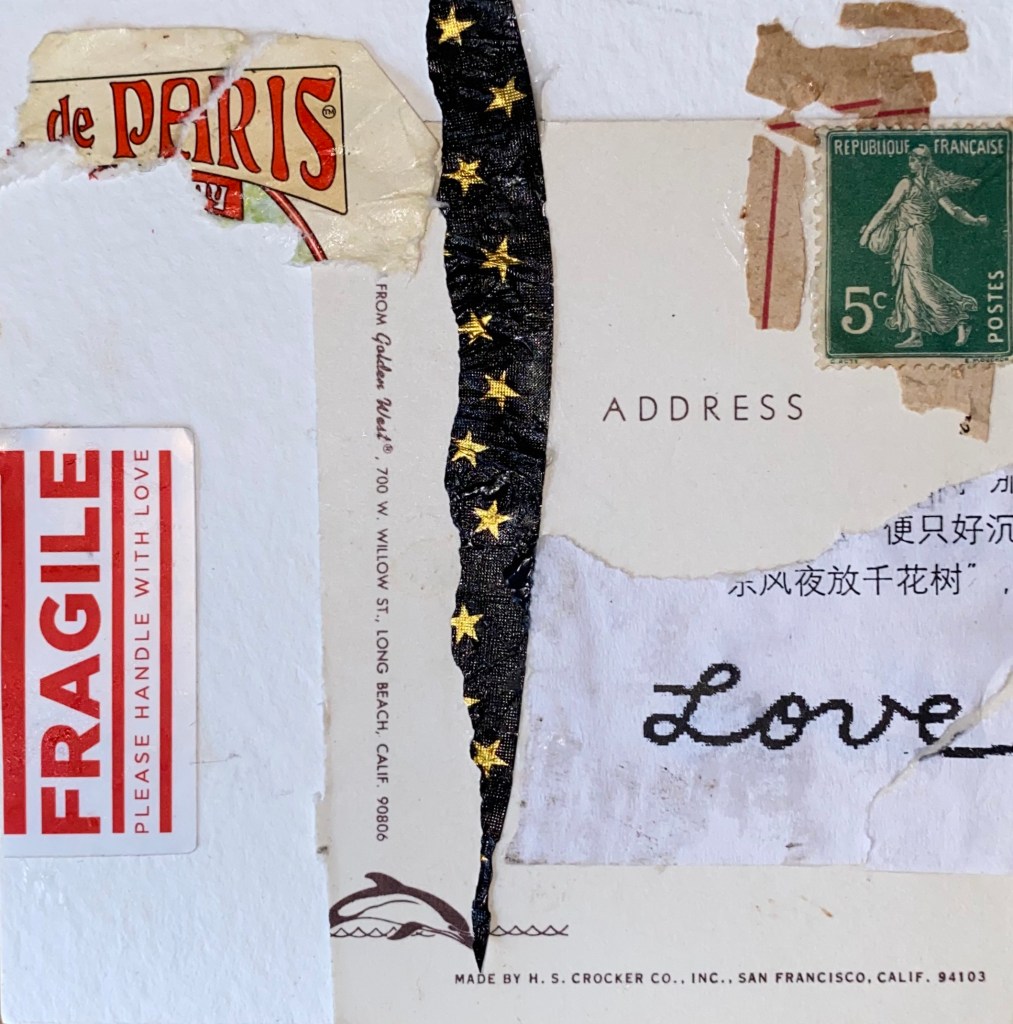
Letters to Love. Five minute collage. Mixed Media. August 2020.
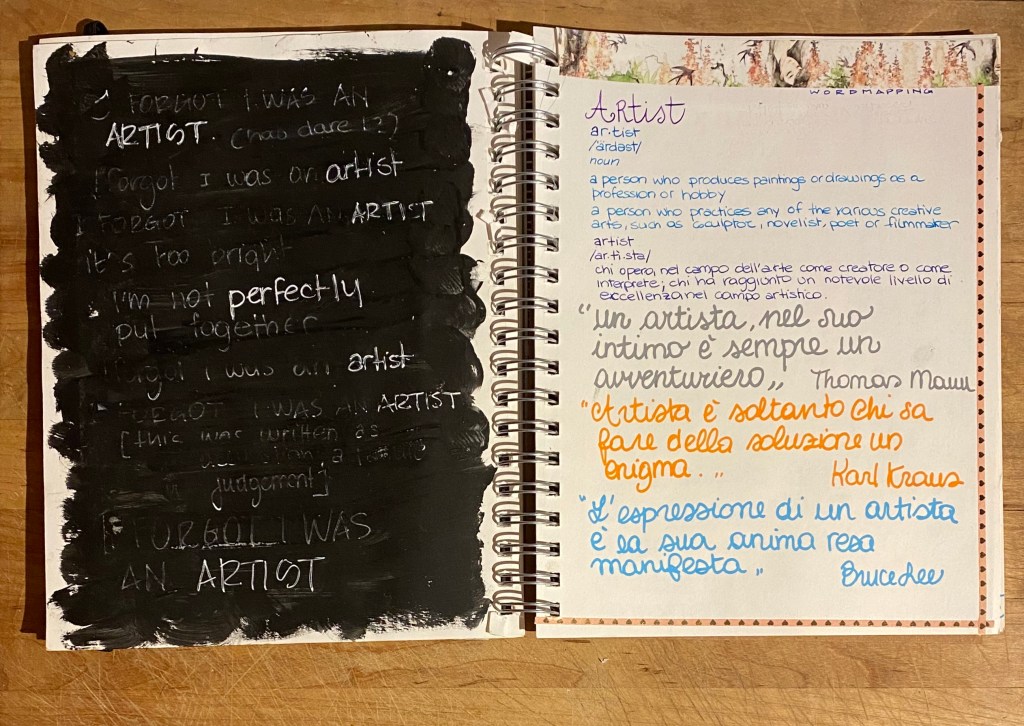
Love is Fragile. Five minute collage. Mixed Media. August 2020.
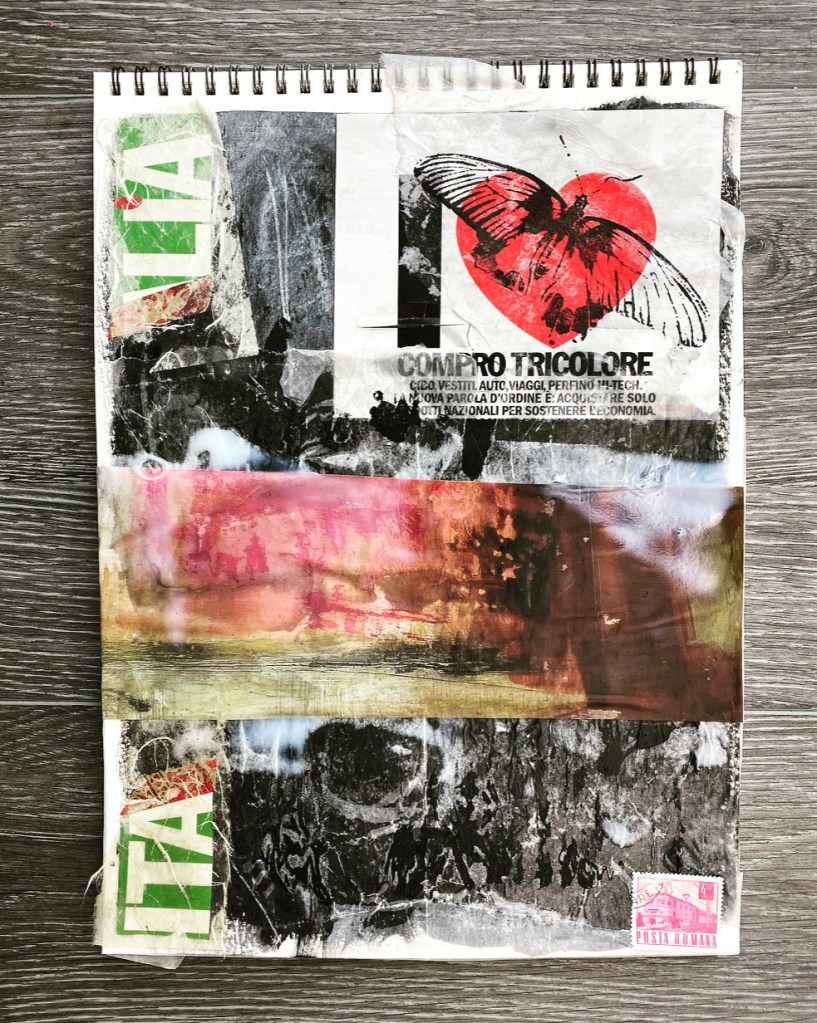
Abstract watercolor class with Jennifer Evans of Periwinkle studio. September 2020

What else? I finally started a morning journaling practice centered on my art development, and came up with with my approach to life and art, in the form of the French word “doucement”- softly, sweetly. How to bring a quality of luminosity to everything I am, everything I do?

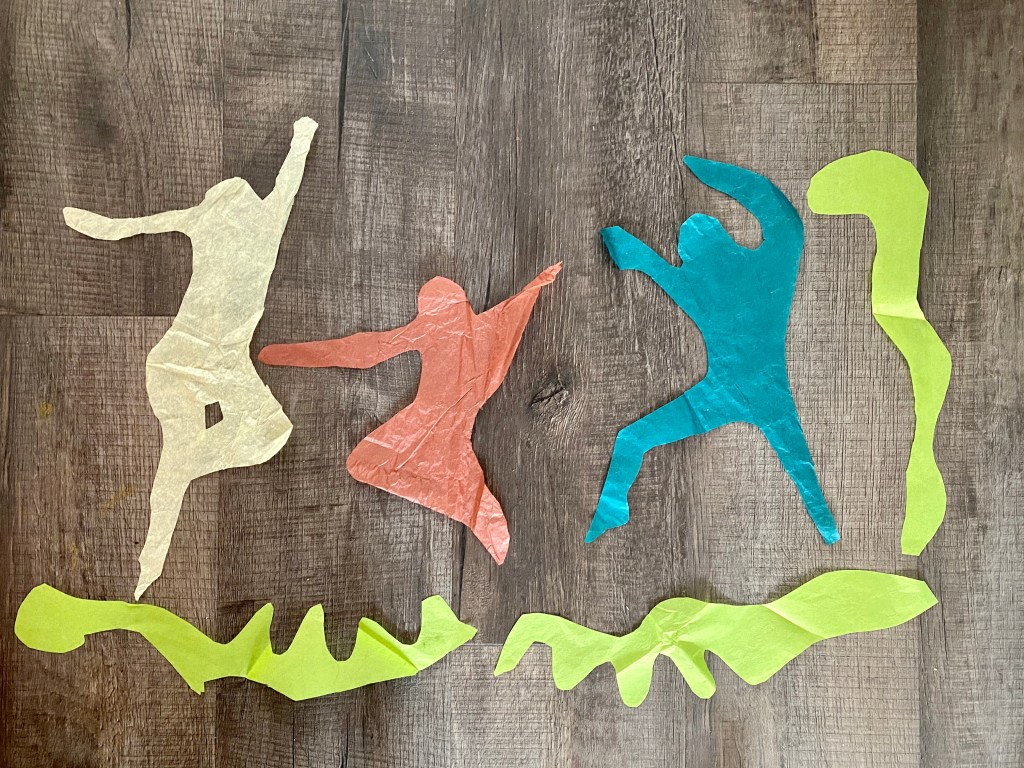
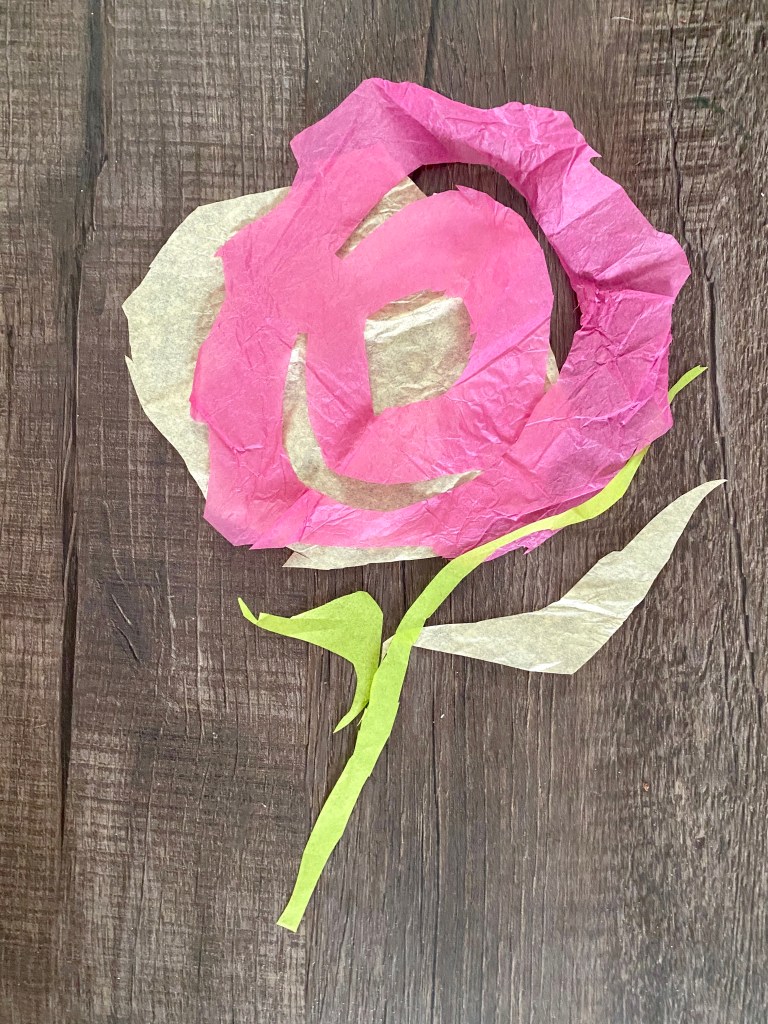
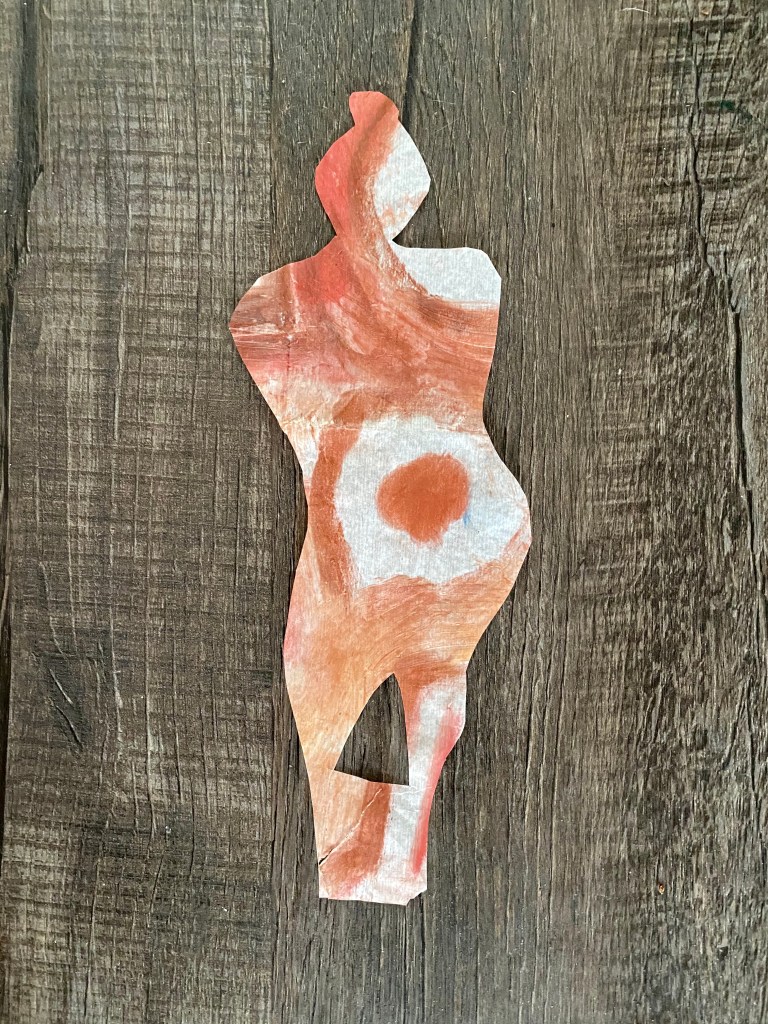
“Drawing with Scissors: Matisse” course with London Drawing Group. August 2020. This involved cutting figures and shapes freehand on sheets of tissue papers( no drawing beforehand).
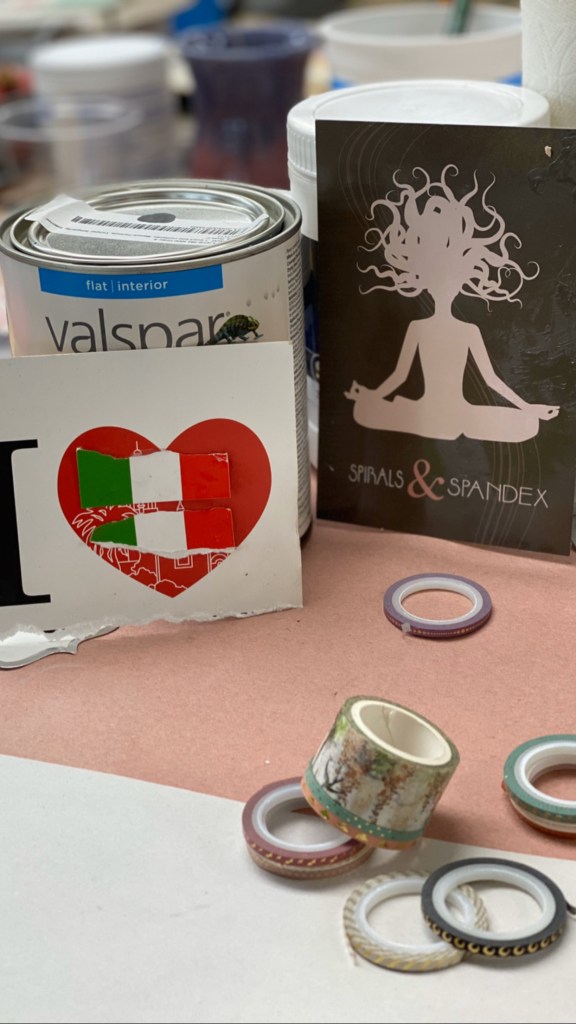
“Drawing with Scissors: Matisse” class with London Drawing Group. August 2020.
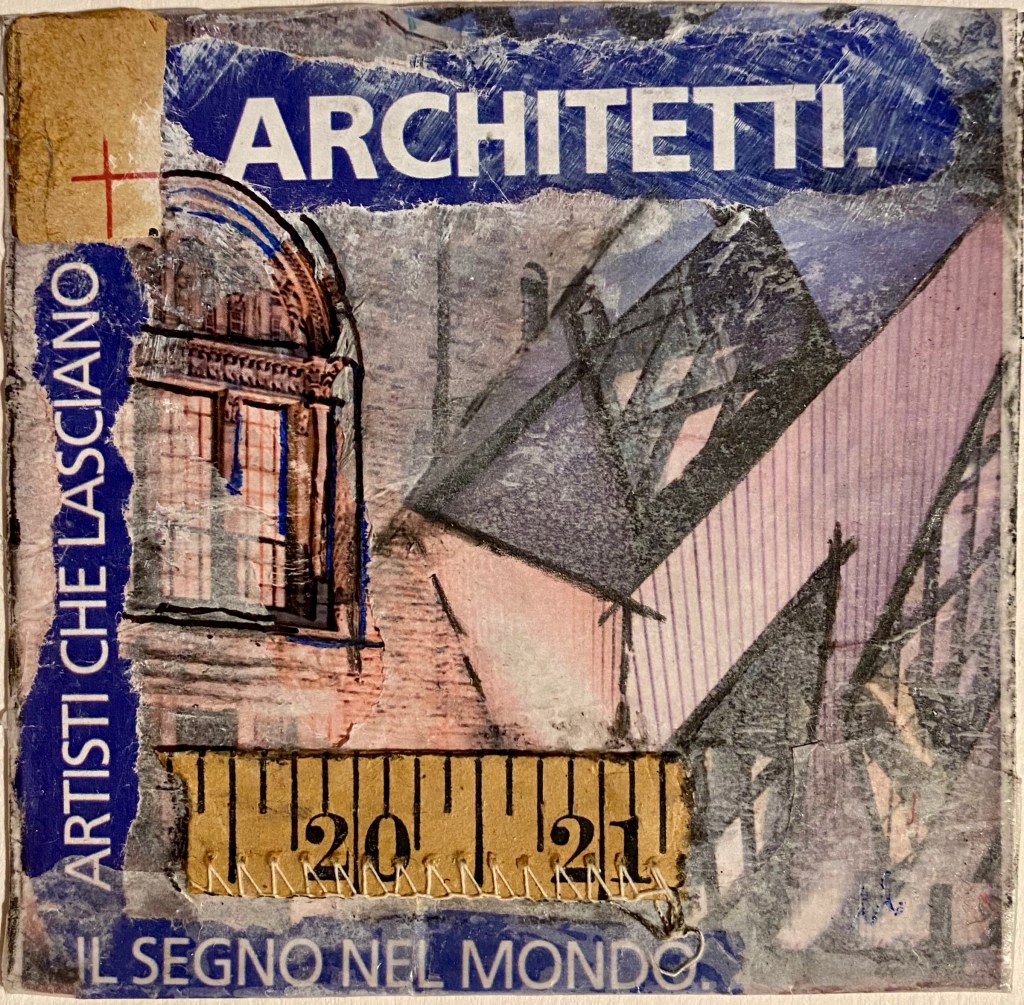
I watched a film that still echoes, Bright Star, on the Romantic Poet John Keats, started rereading Art & Fear and am finally, systematically, going through my possessions and purging with Marie Kondo’s book.

I know I have said this for years but it took been grounded for a whole summer to finally tackle this.

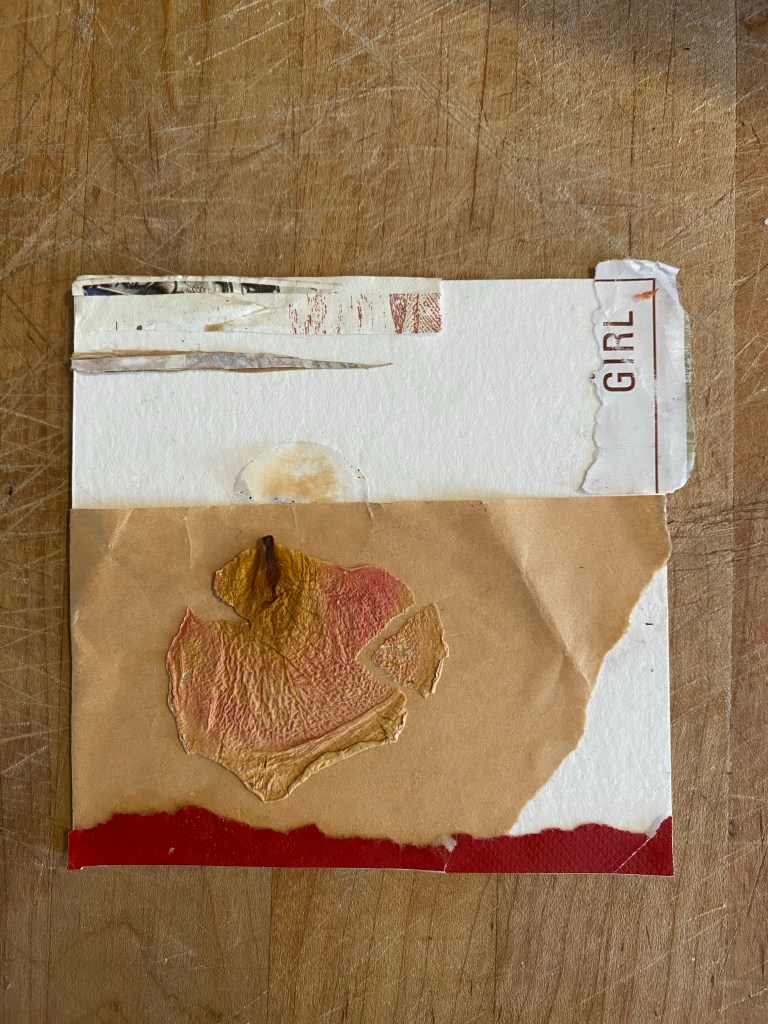
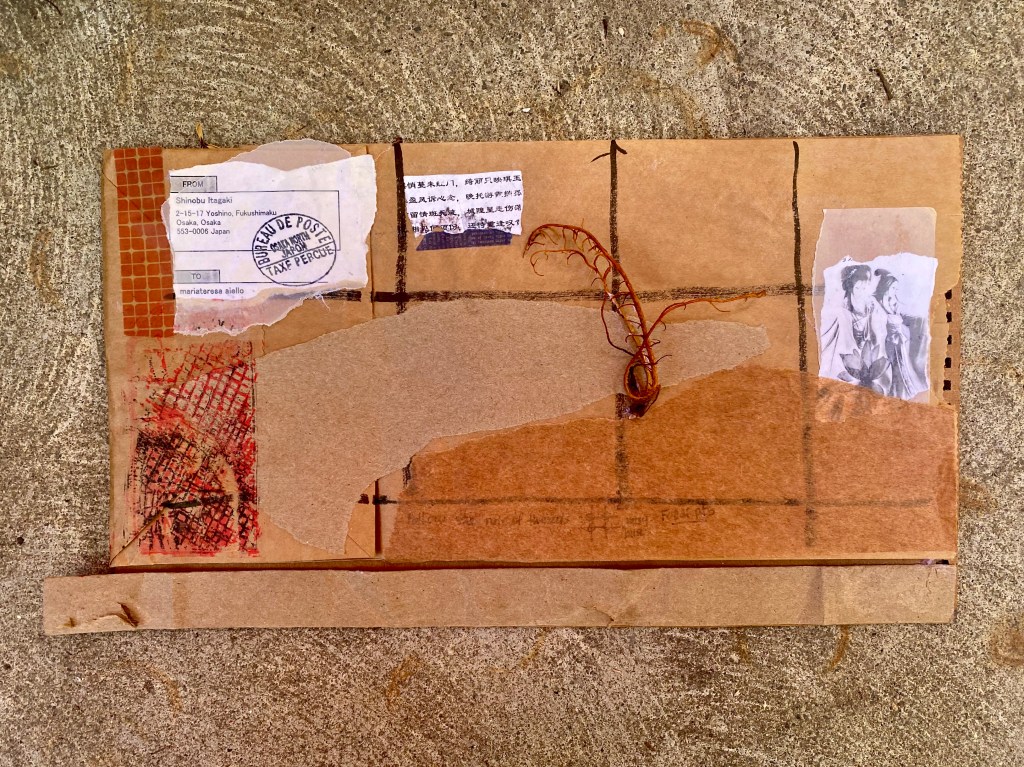
Postcards from Japan. A collage inspired by the Vintage Collage class by Jennifer Evans of Periwinkle Studio.

Until next time, be well!

Read Full Post »

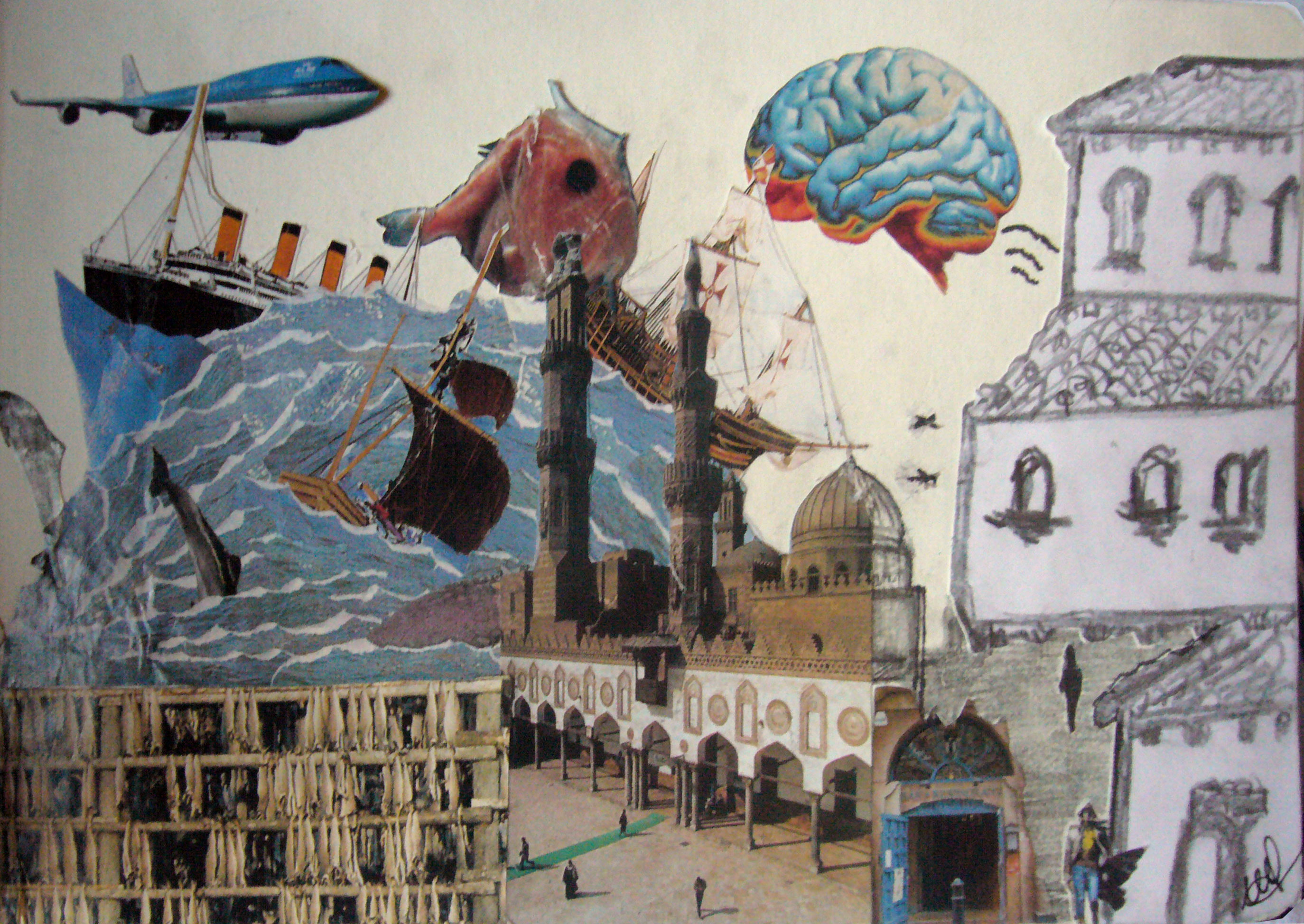
Collage. Mixed Media, Golden matte medium and glue. March 15, 2020. 9” x 12”

I return.

With some scraps pasted on watercolor paper, with a draft of a poem. Like a pater familias who periodically abandons the domestic domicile and neglects his duties to answer the siren, wearing only a backpack.

Wanderlust. It’s in my blood.

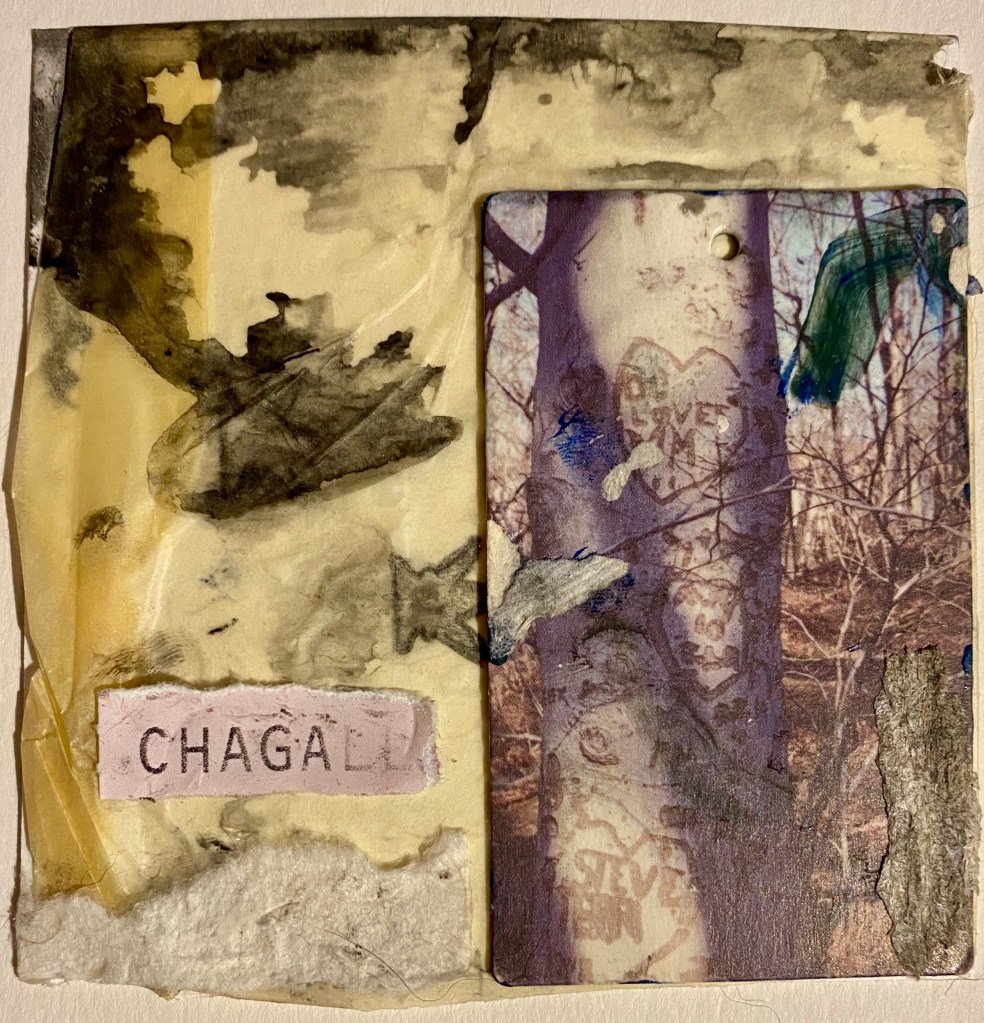
Five minute Collage. Mixed Media, Golden matte medium and glue. March 13, 2020. 4”x 4”
Ten minute response Collage. Mixed Media, Golden matte medium and glue. March 14. 2020. 4”x 4”
Ten minute response collage. Mixed Media, Golden matte medium and glue. March 14, 2020. 4”x 4”
Three element collage . Mixed Media, Golden matte medium and glue. March 14, 2020. 4”x 4”
Five minute collage. Mixed Media, Golden matte medium and glue. March 13, 2020. 4”x 4”

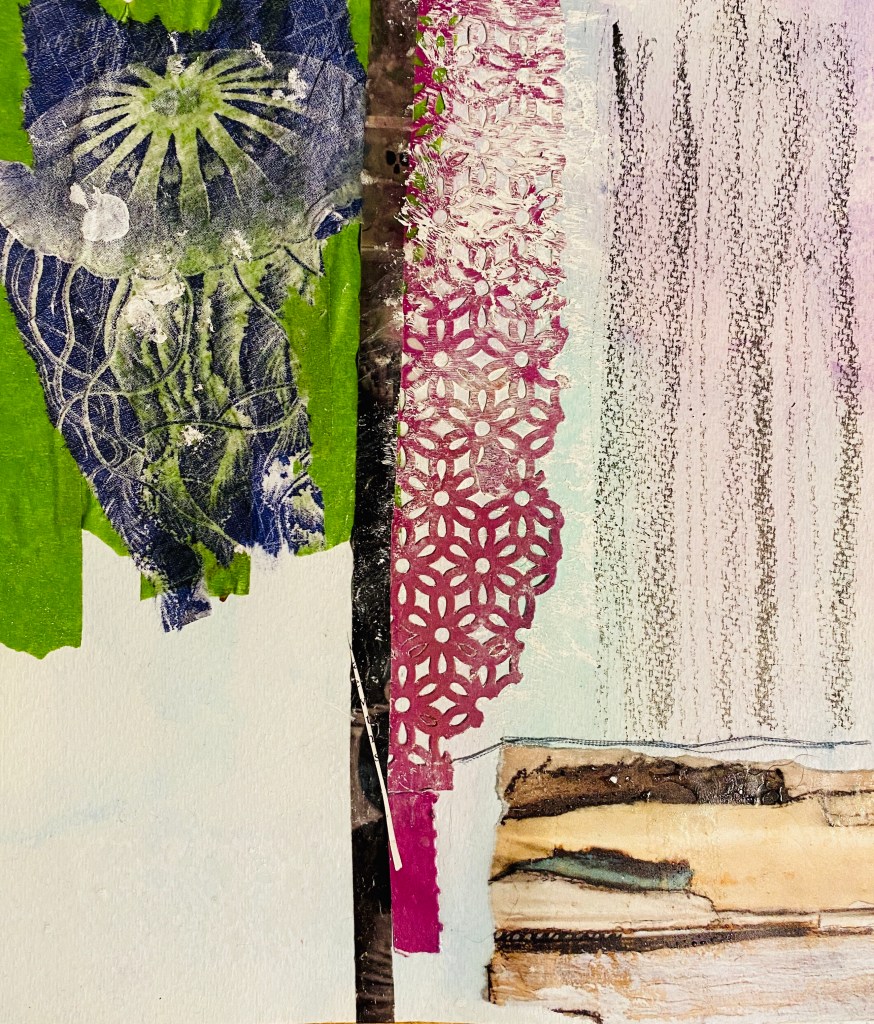
So, before they shut down California and closed all her beaches ( I can just see the headline of Italian newspapers: California Surrenders), I attended a mixed media workshop taught by an empowering teacher, Crystal Marie.

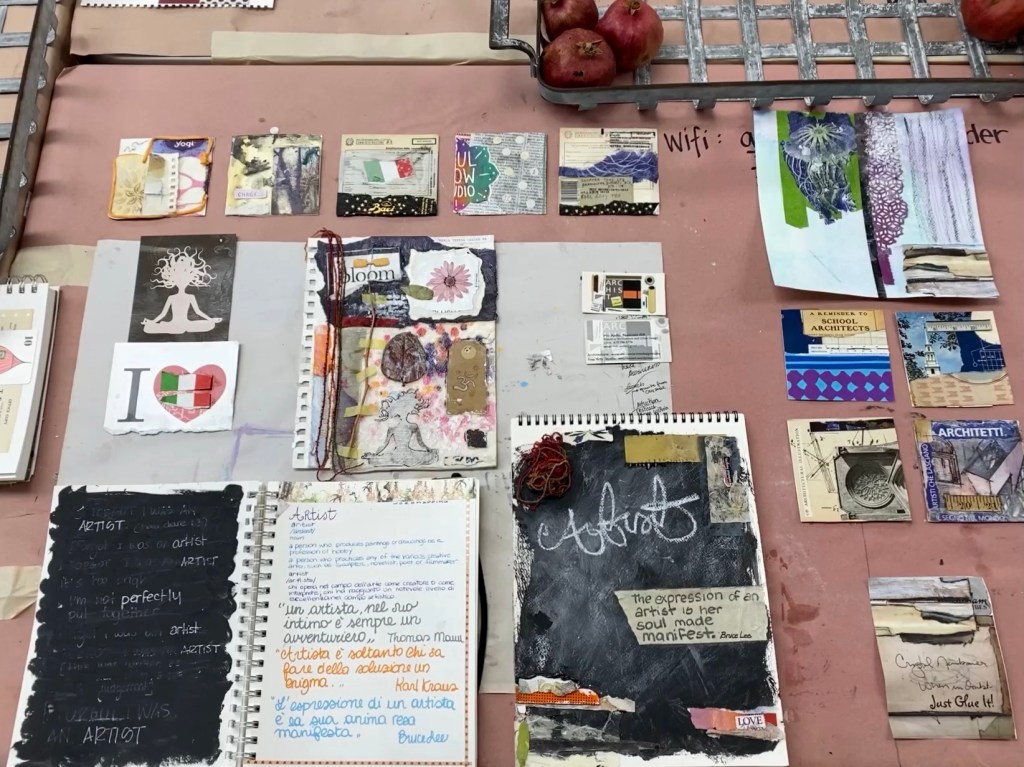
These are the outcomes ( and voyages ) from Collage and the Intuitive Voice — A Collage and Writing Collaboration , hosted at the idyllic Way Art Yonder Studio, owned by my friend Jana Freeman. My heart rejoices when we take the right turn to the house on the hill, where my spirit can sing, where it is okay to play.

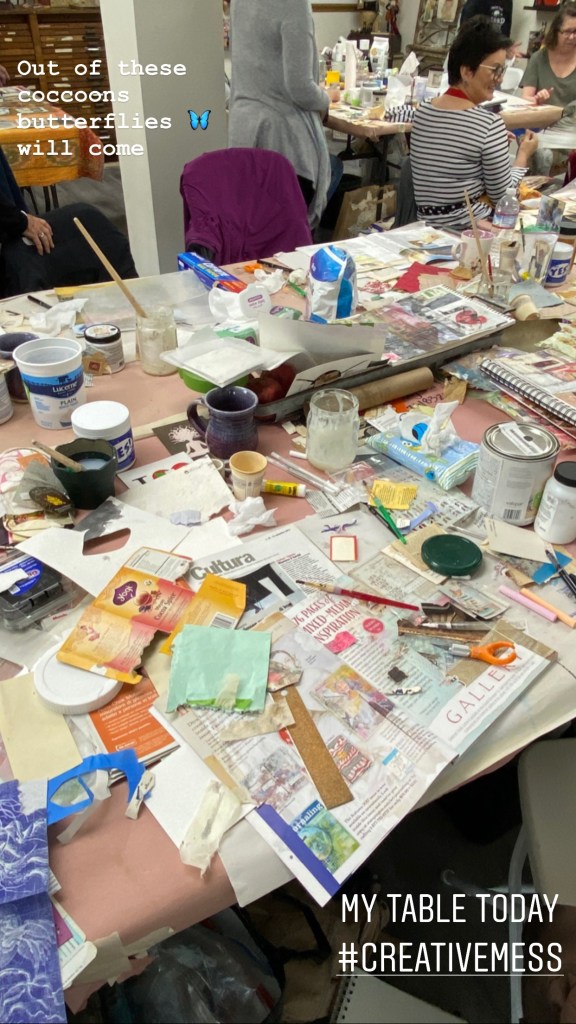
My station at Way Art Yonder Studio ❤️
Taking shots for the ‘gram.
By the way, you can see more process photos, work from my fantastic colleagues, read the quotes I collected – aaand follow me and my wanderings live – on Instagram : @sketchbloom
Laying down the pieces from the “piles of possibilities”. This collage prompt came from our morning pages.
Finished piece! It is very joyful to me.
How to grow an artist. How to grow SketchBloom, my digital studio. A process that requires support, mindfulness and grafting, as in growing a new type of fruit.
“ How To Grow An Artist.”. Mixed Media, Golden matte medium and glue. March 15, 2015. 9” x 12”

I was able to join Crystal last year for an encaustics and collage workshop last February , with exciting results and exposure to new techniques. I posted my work from that workshop on Instagram and will feature it here next.

This time the experience was deeper. I came away with sooo many lessons, quotable quotes and insights: the journaling/writing aspect of the workshop was incredibly soothing and therapeutic in personal fraught times ( Italy was preeminent in my mind). I love returning to writing, my first love. Most importantly, I was able to reflect and share and CELEBRATE what it means to be an artist.

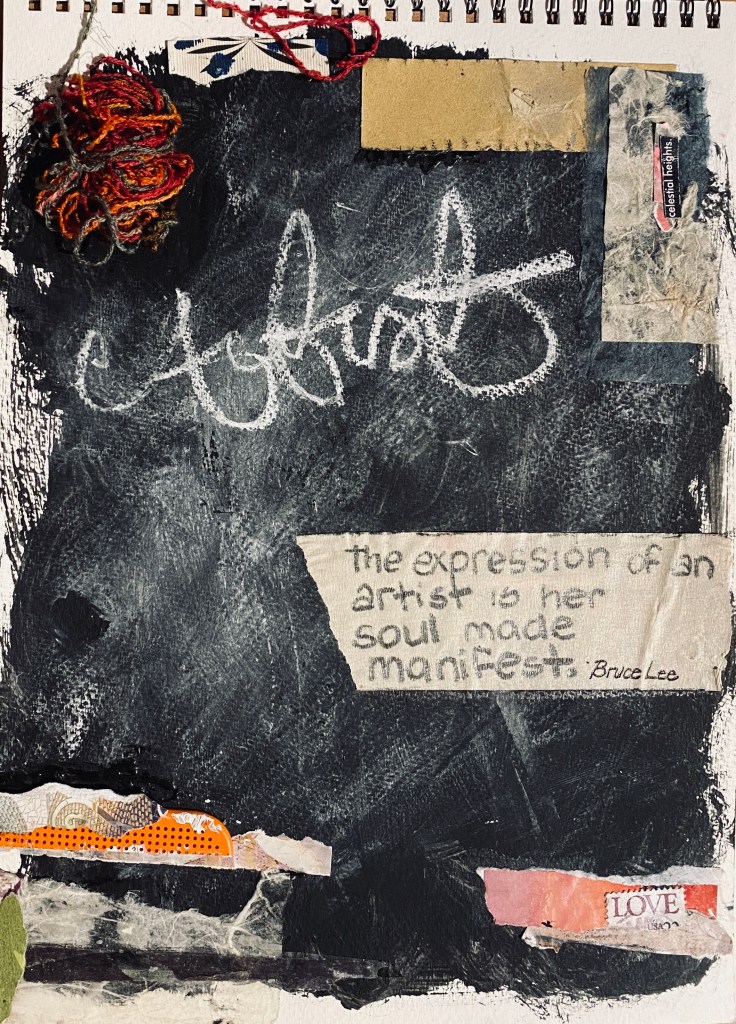
Redacted morning pages. Quedate con lo bonito = Only keep the good. Quotes on being an Artist.
Collage. Mixed Media, Golden matte medium and glue. March 13, 2020. 9” x 12”
A small tribute to the most beautiful country of the world, now mortally wounded.

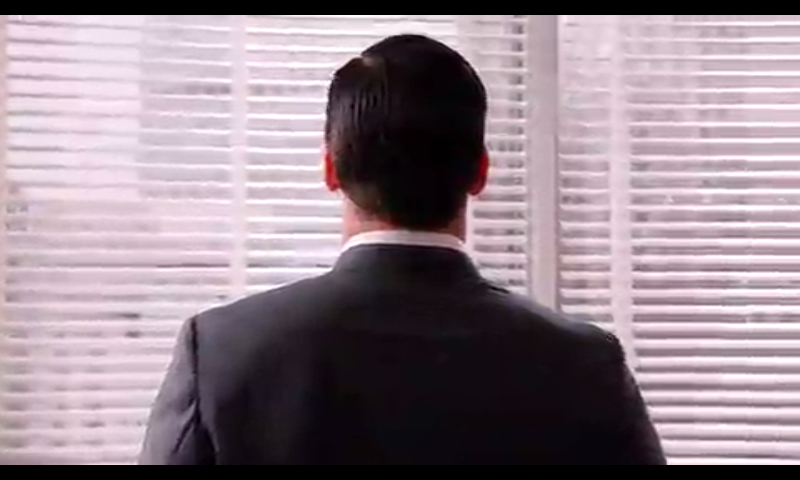
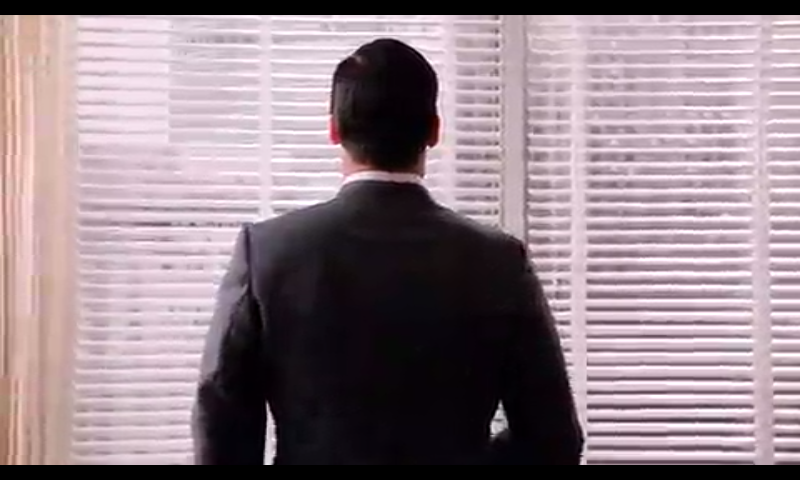
Now, I could berate myself for only producing artifacts at this intense levels once a year when I attend these workshops, but let’s not do that. Other duties and career and life commitments vie for time..I just enjoy the return each time. Like a soldier returning from war, knocking on a door— as as they say in Mad Men.

Dichotomy: my architecture world vs. my art world
Response Collage (10 minutes) Mixed Media, Golden matte medium and glue. March 13, 2020. 4”x 4”

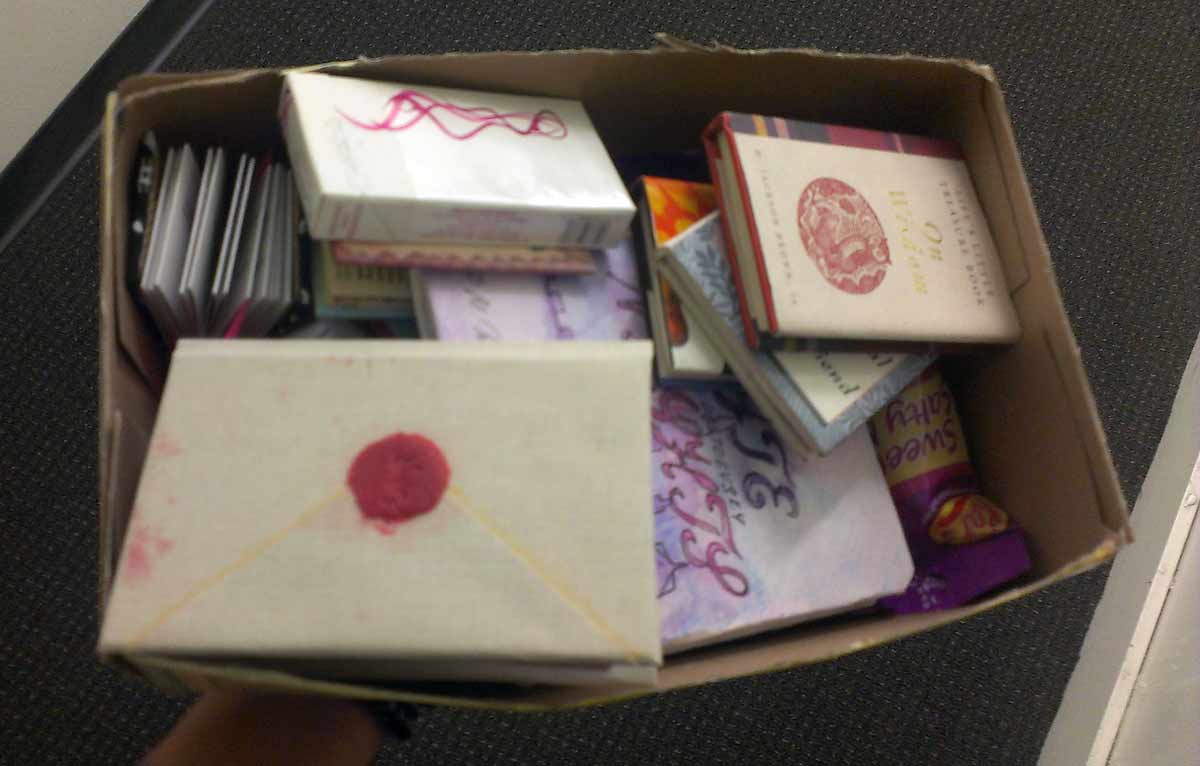
Each day is a new beginning, like the title of the little book I found in the alley of my building, full of smoke and the story of a recovering alcoholic. Each breath. Each spring.

These are the days of stasis — the dormant days or deepening ones.

Collection of 5- minute Collage. Mixed Media, Golden matte medium and glue. March 13, 2020. 4”x 4”
A work in progress, beautifully unfinished.
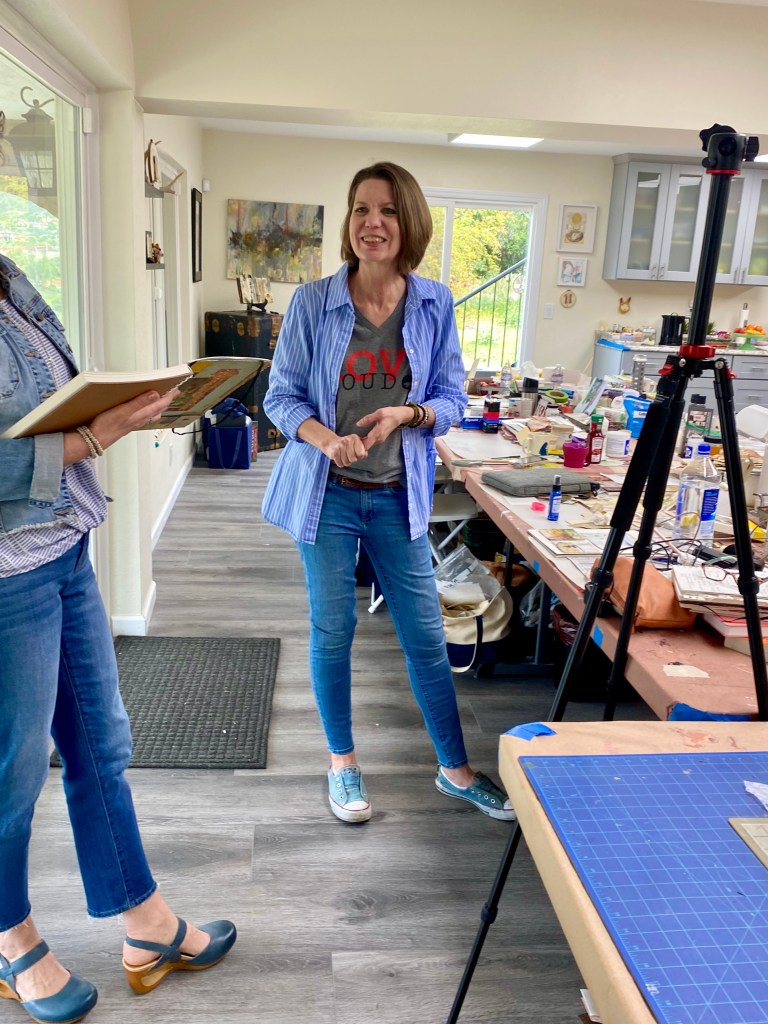
My wonderful teacher Crystal Marie!
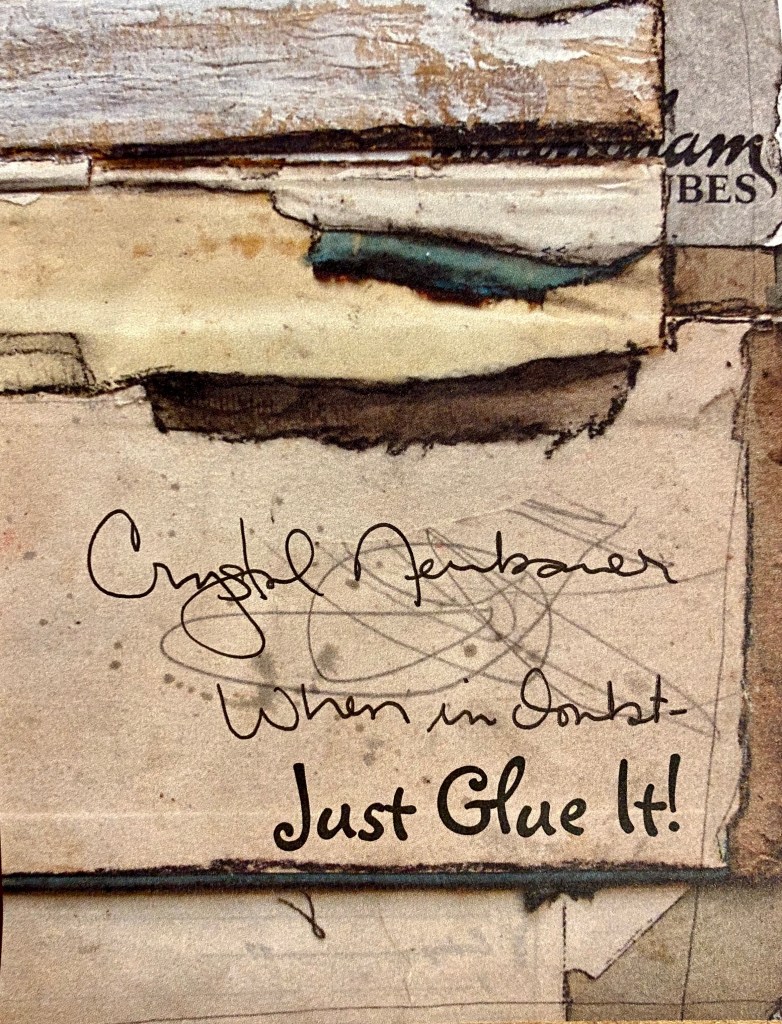
One of Crystal Marie’s motto : Just Glue It.
What I see of my work/myself ….
How other people see me/ my work or … what I let people see…
Here my work and my desk — all cleaned up— on Final Presentation Day ( pardon my archi-speak).
Ciao Way Art Yonder Studio! See you soon!

Before I leave you to my draft poem ( upcoming post ) and artifacts from my latest retreat — and a retreat it was, from life and obligations…Art is always a refuge…before I push publish on these collages of words and paper and sticky stuff, I just want to say that this is the time to finally read ”La Noche que Volvimos a Ser Gente”or “The Night We Became People Again” by José Luis González, inspired by the big New York blackout of 2014.

The night will be longer this time.

Read Full Post »


Rainer Maria Rilke writes:

Nobody can counsel and help you, nobody. There is only one single way. Go into yourself. Search for the reason that bids you write; find out whether it is spreading out its roots in the deepest places of your heart, acknowledge to yourself whether you would have to die if it were denied you to write.

This above all — ask yourself in the stillest hour of your night: must I write? Delve into yourself for a deep answer. And if this should be affirmative, if you may meet this earnest question with a strong and simple “I must,” then build your life according to this necessity; your life even into its most indifferent and slightest hour must be a sign of this urge and a testimony to it.

[…]
A work of art is good if it has sprung from necessity. In this nature of its origin lies the judgment of it: there is no other.

In this spirit I offer you, Reader, this poem and these images, stemming from one brief November visit to the city than never sleeps – and several months of correspondence.


In a New York Minute [Glissando]


“If you can receive it at the wavelength is is playing at, you may love it.”

From a review of the series “Forever”


We existed

in the ellipses between

words appearing on screen

and giving up


Suspended above the city

you loved how I used the word luscious


We kissed with our souls

on the tip of our tongue

this is from Spoon River Anthology


You are morse code

and I need continuity


–when I asked if we were ships in the night

and you said yes did you notice me wiping the water

on my cheeks? I barely noticed too.


But then you said : “Body and heart.”

Body and heart.


You spoke of fire between our souls,

as if you knew about souls.

You only know about fire.


My tears don’t fall

I do

every single time

— how many goodbyes did it take?


So elegant in your detachment, like it was an art form.

Precise in your choice of words,

I fell in love with your philosopher brain.

I still fall in love with it every time — liminal.


A New York minute.

You were the space separating

Love and reason


I was addicted to a city

giddy at the thought of walking her streets beside you

how do you fly and walk

at the same time?


Even if you don’t see her torn feet

the effortless dance of the ballerina

is a flower bloomed out of pain.


Take each sentence, rearrange as you wish.

This is not to scale.

The timeline is not linear.


To hear you whisper, half-asleep: “When?”

Zero things better.


I heard that New York is the heartbeat of the world.

In that heartbeat a part of me is marked by your passage.


We will never go to Tokyo.

Read Full Post »

Today was a beautiful day of art and comraderie!
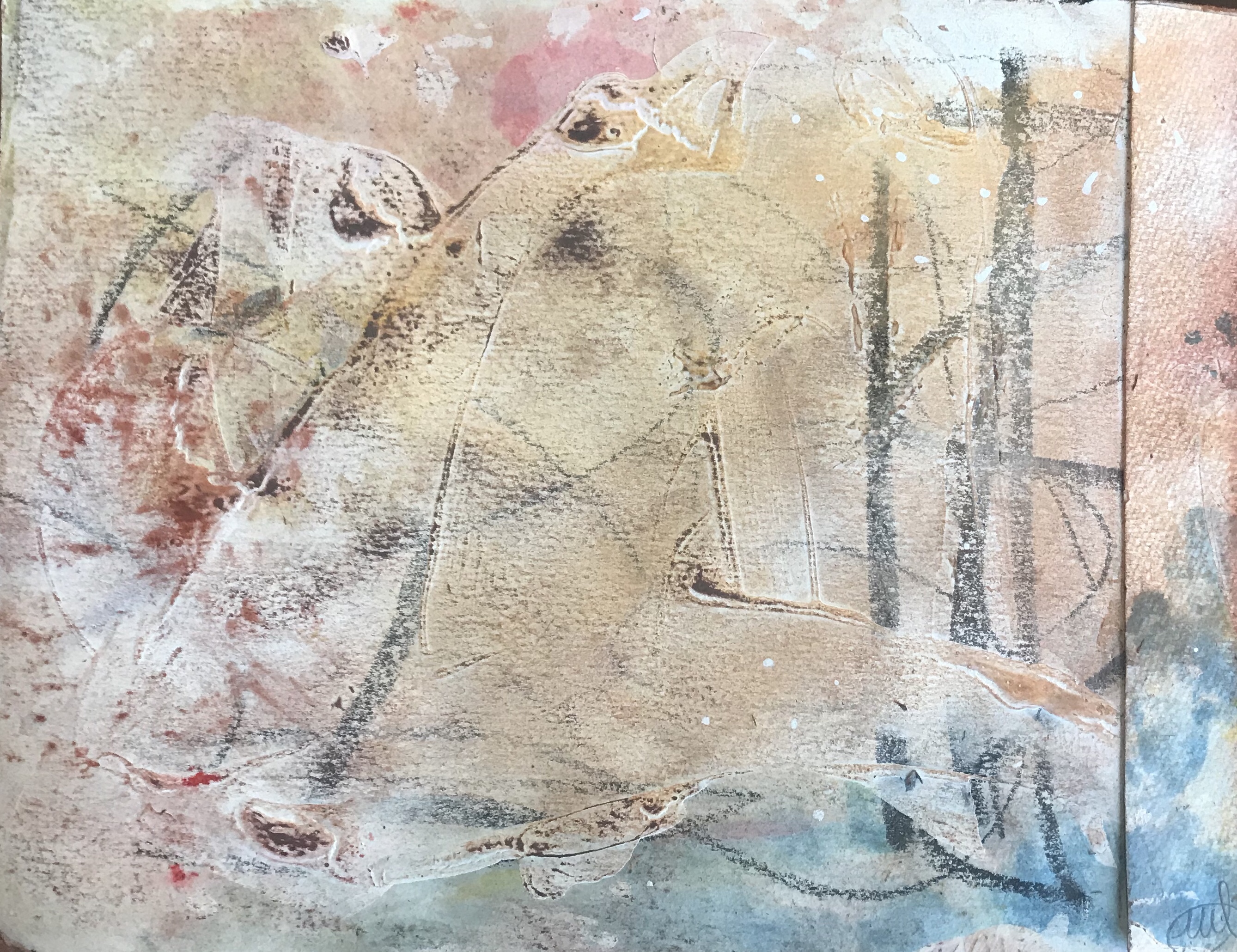
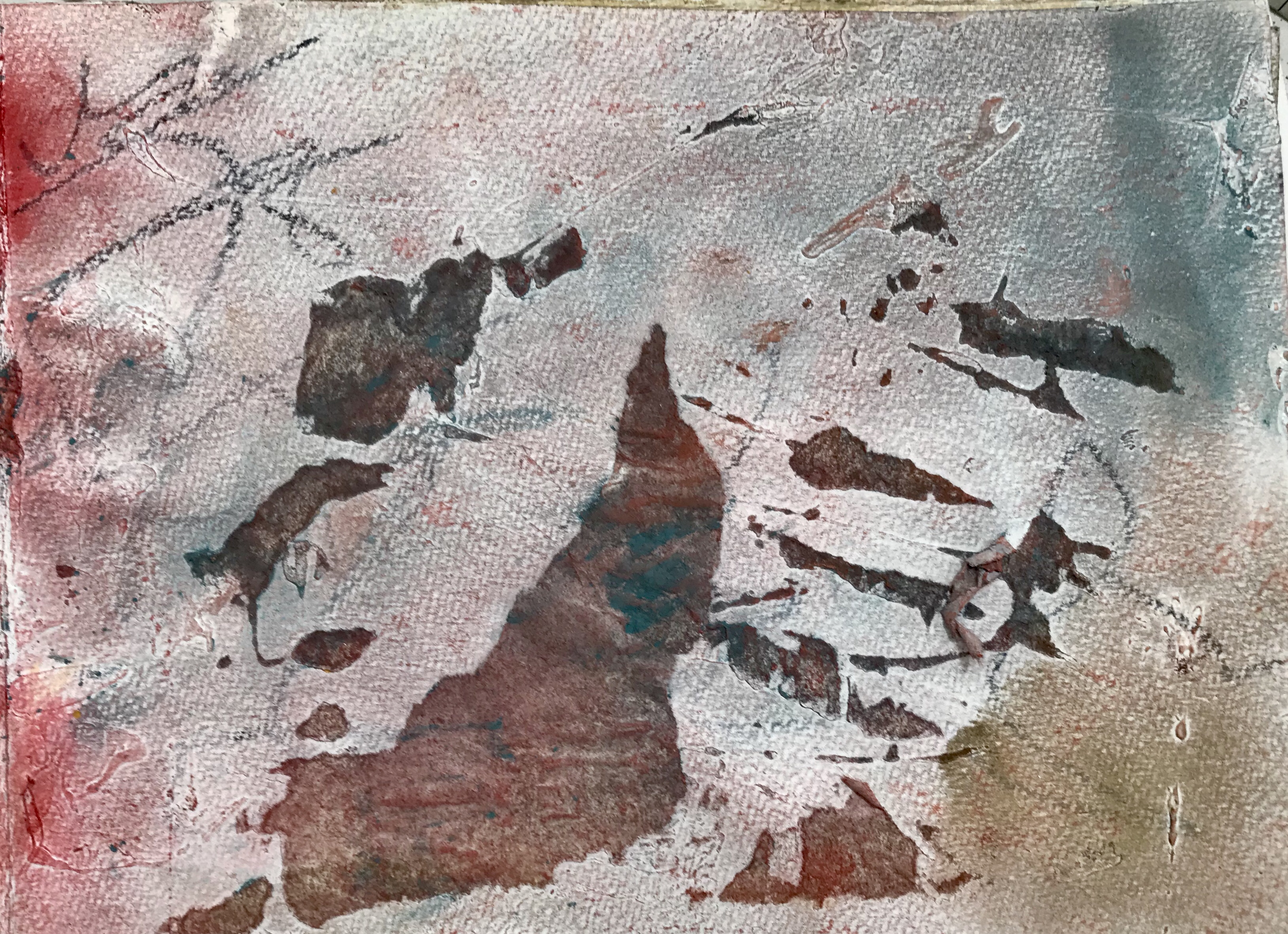
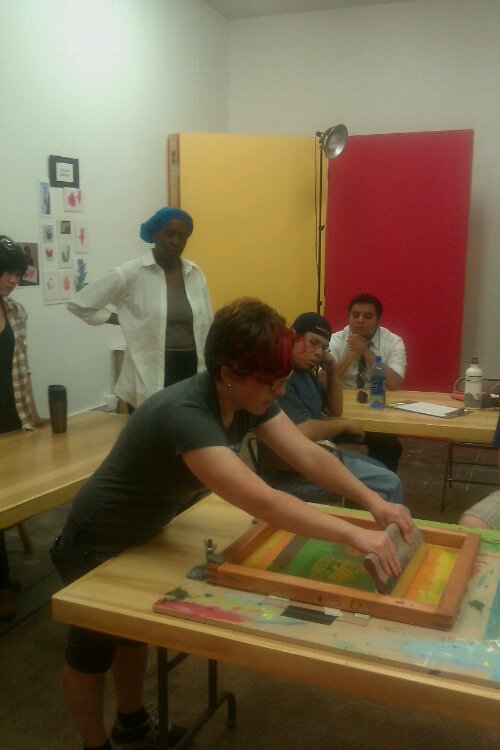
I attended the first day of Roxanne Evans Stouts’ workshop at Way Art Yonder in Jamul, California. This was my second workshop in this wonderful art studio – and another opportunity to spend a day fully with my art, exploring mixed media and collaging.

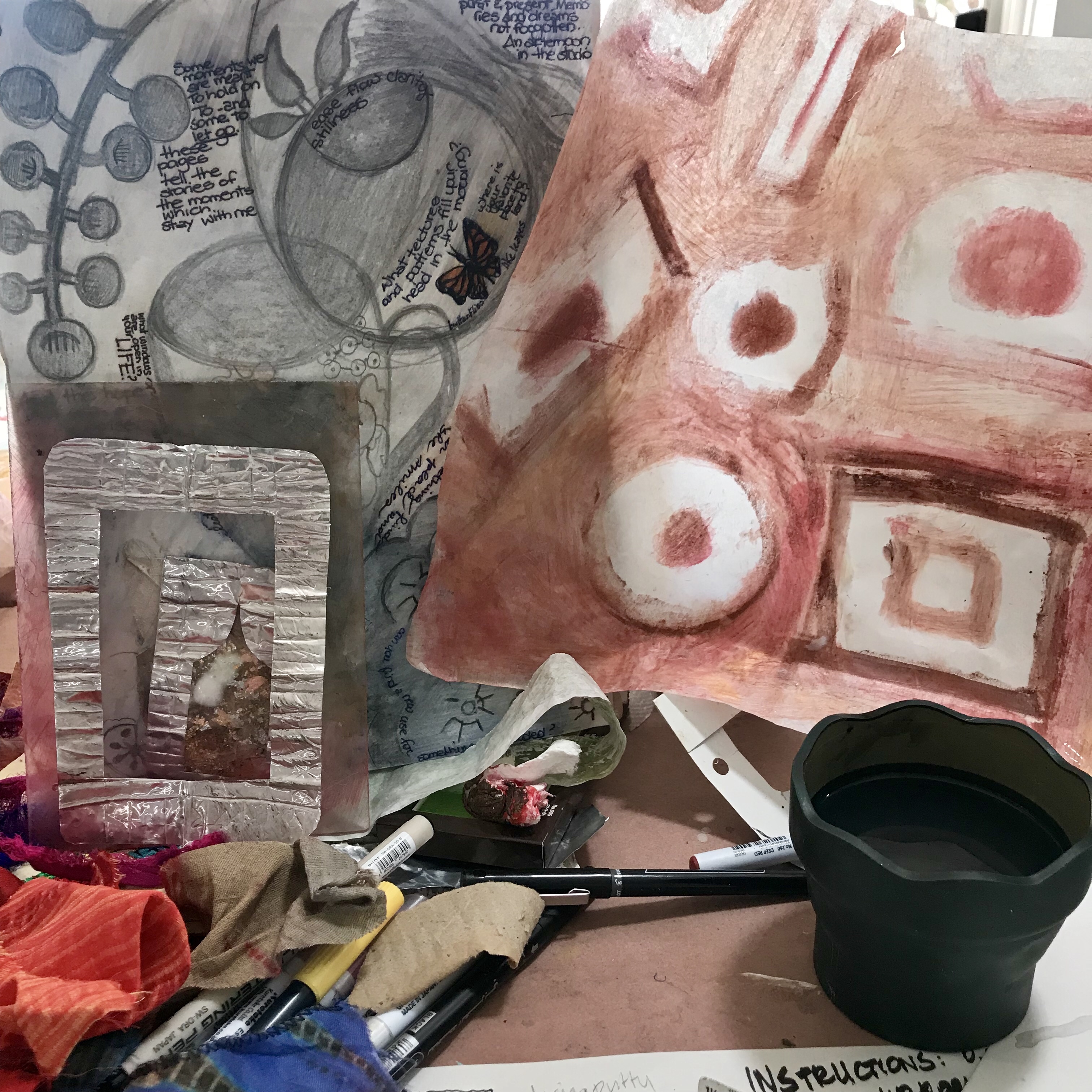
Today’s workshop involved learning foundations and advanced tools for making an art/visual journal. I learned countless new ways of using acrylic matte medium along with pastel, plaster of Paris, Golden high flow acrylic, distress stain and different papers/ glazing uses to achieve translucent effects.

Then there were demonstrations on how to use plaster of Paris with stencils and ink pads.

We made the background pages of what is going to be a visual journal based on the concept of windows and daydreams.

This was the official workshop prompt.

“Daydreams and Window Light”

A book of expressions in mixed media and collage about the changing seasons with Roxanne Evans Stout

Imagine creating a handcrafted artist book in which every page is a window into the story of you… either symbolically, or perhaps even a literal window that we will make out of metal, plastic or cardboard. Our covers will be made of plexiglass, that we will sand, texture and glaze. Our inside pages will include vintage photo frames, mica and distressed metal sheets, all of which I will provide. Join Roxanne and she will guide you in creating beautiful books with pages that are rich in color and texture, and pages that sing of the light and magic that is uniquely you!

Some of the keywords of the days were texture ( of course), story, China marker, gesso,wax paper, deli paper, parchment, distressed, embossed, awl, hole punching, tacky glue, gloss and matte medium, layer, pan pastels, high flow , tracery, filigree, aluminum, gold and copper foil paper, plexiglass, sandpaper, etching, unfinished/open, assemblage, vignettes, patterns, glazing, negative space, russett and burnish.

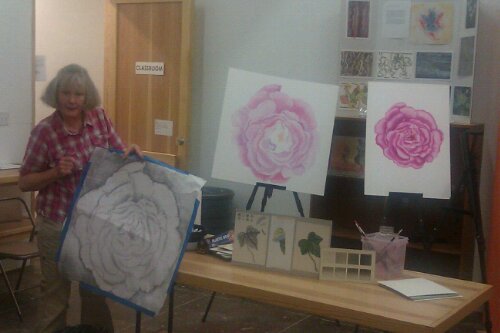
It was really interesting to know that my professor was a botanical artist before coming into the world of mixed media/collage- she used to draw photorealistic flora and fauna for publication, but found mixed media and it re-lit the fire of art in her soul, a fire that was lost in the technical precision required of her former profession.

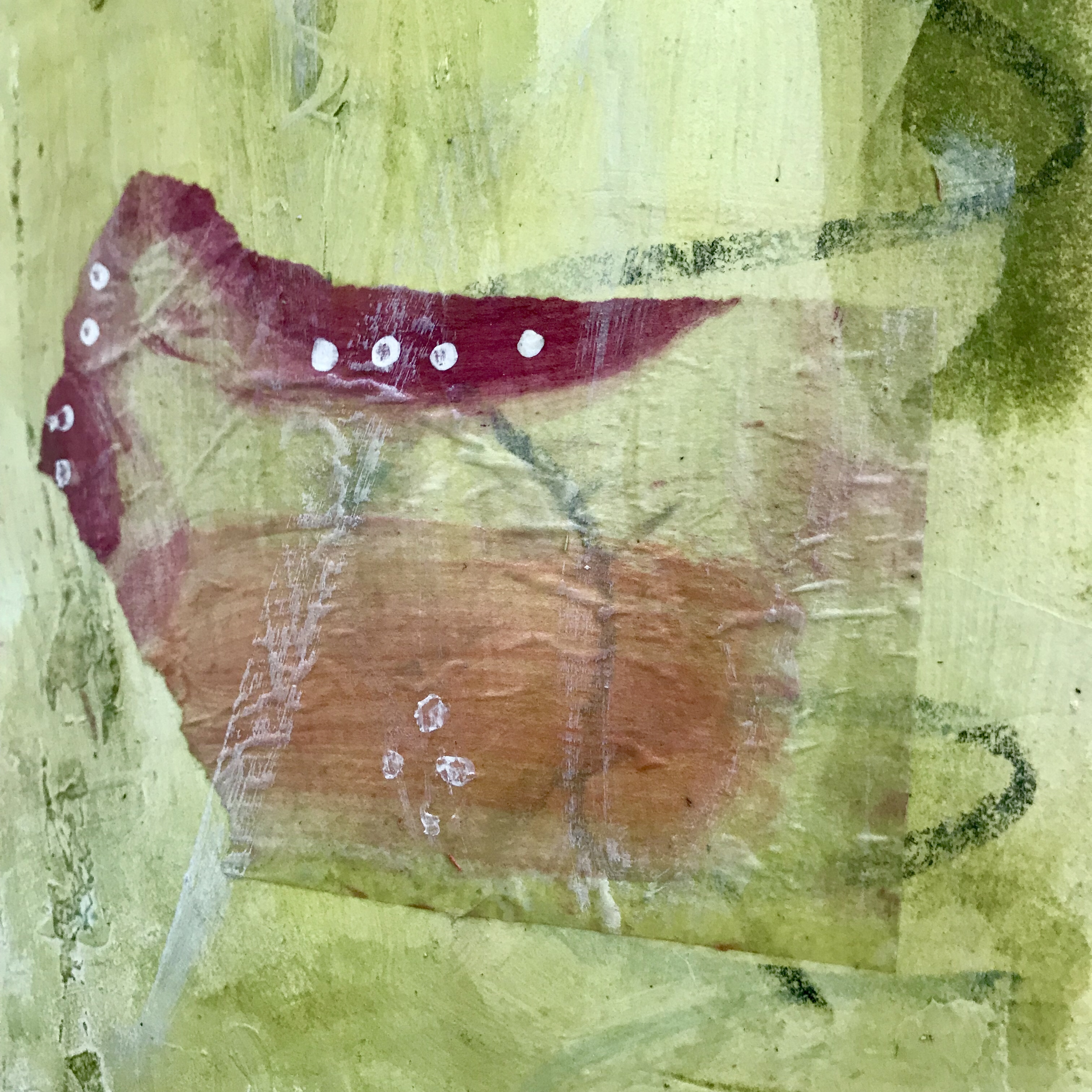
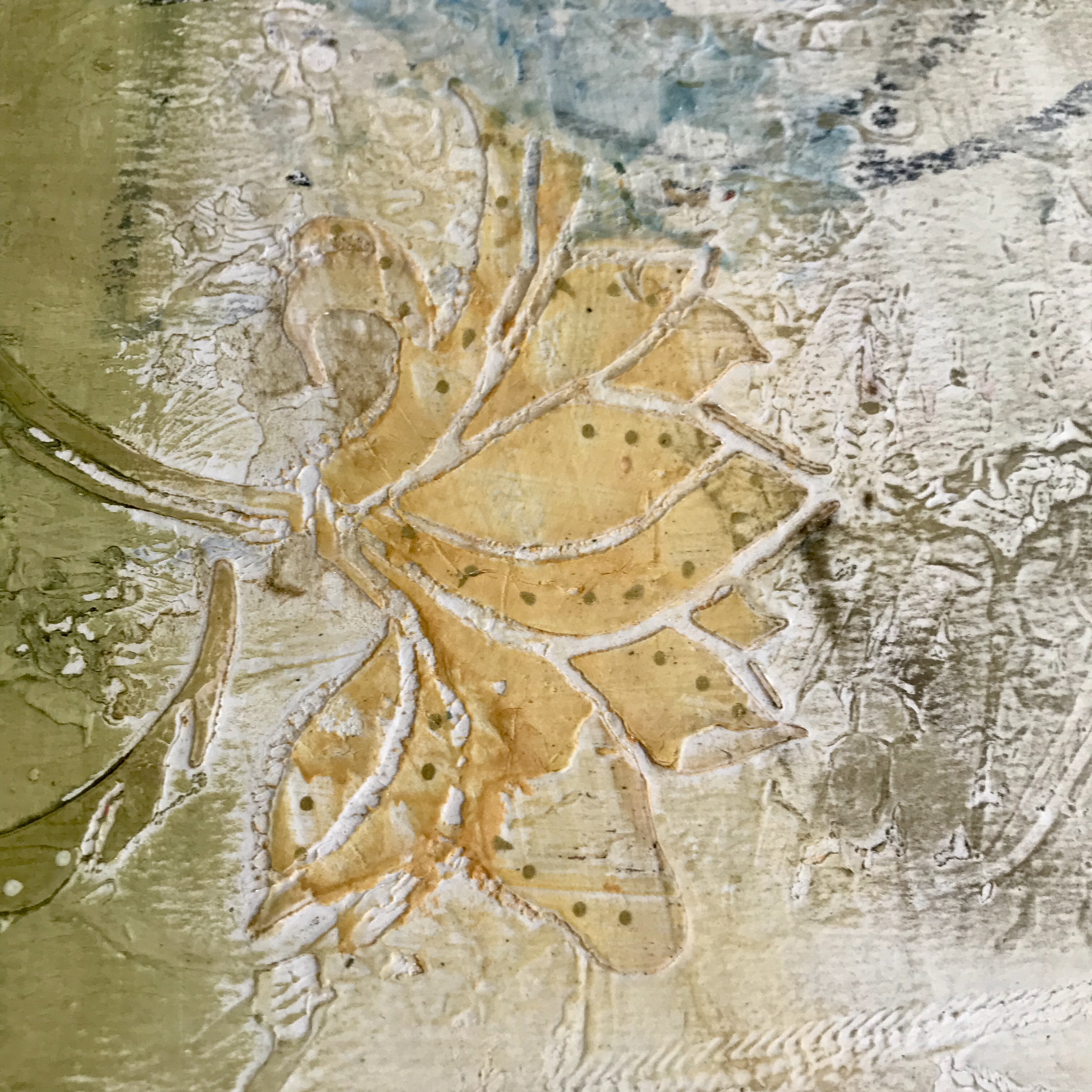
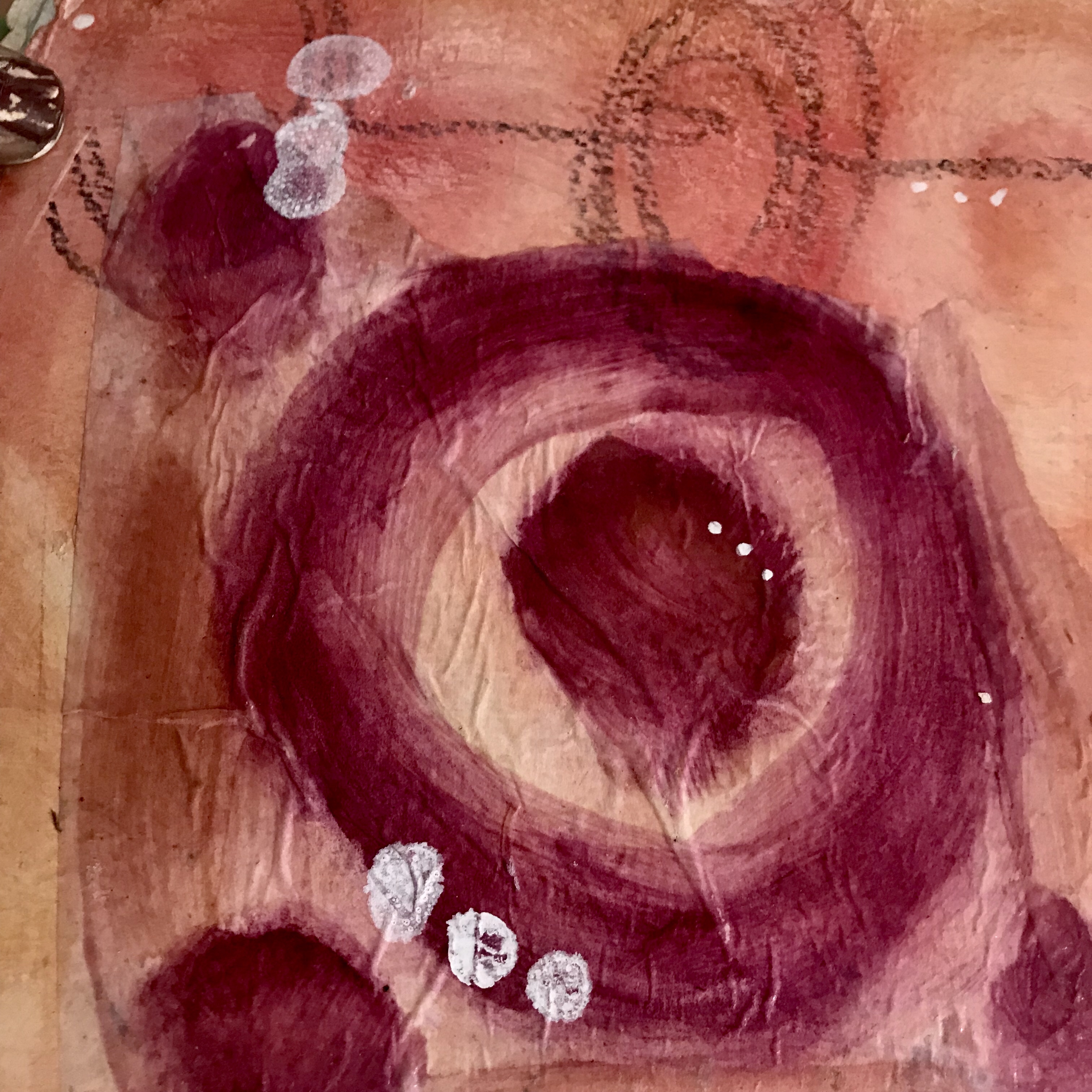
These are some of the background pages I produced today- tomorrow we will work with collaging and creating our windows.

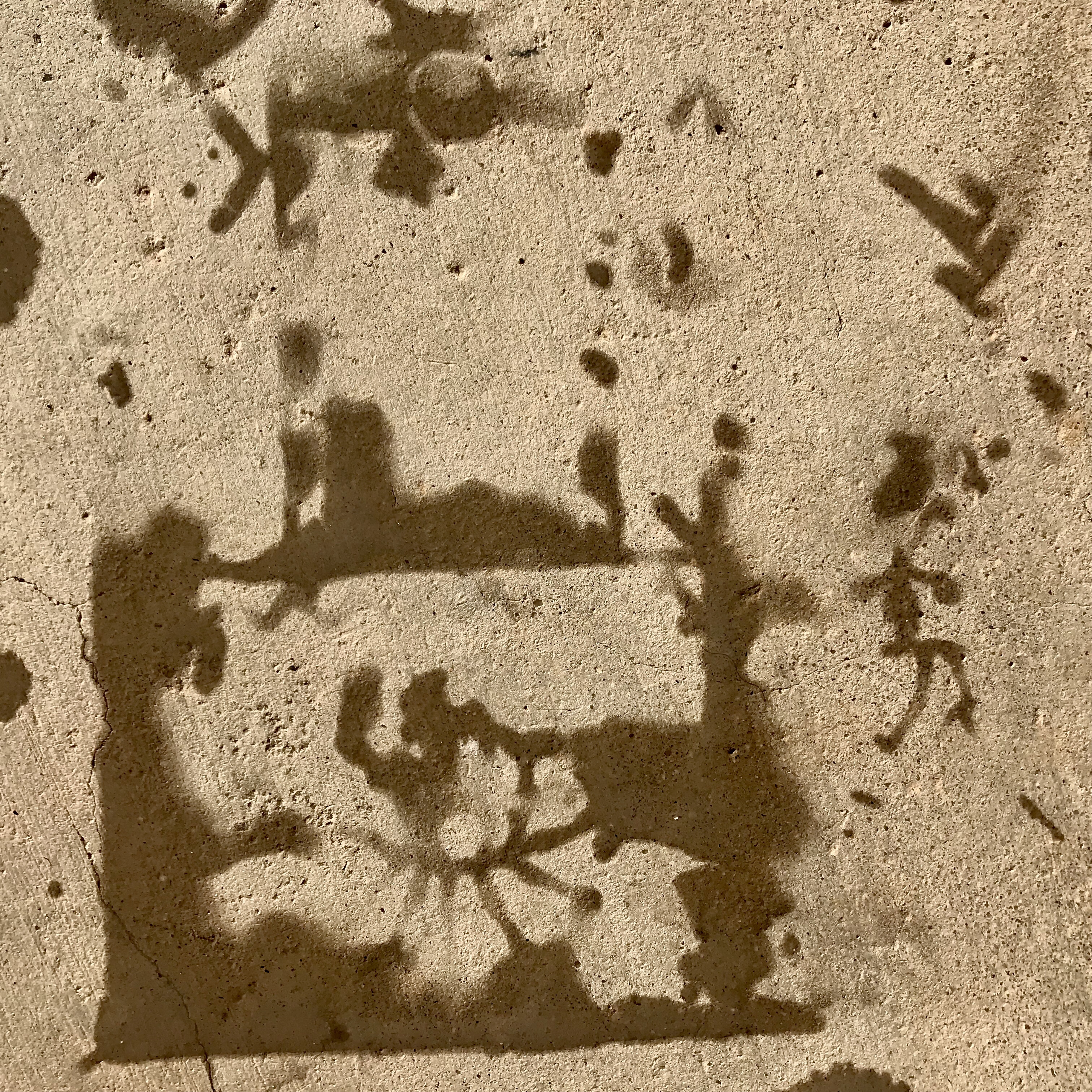
And finally, some observations around the studio: photographing a a stack of stencils, and a single well-burnished ones. Washing the stencil, stenciling water on concrete.

The last three pieces are from my talented and formidable art-friend Carla Bange 🙂

Read Full Post »

collage_web

Butterfly Closures (a type of band-aid for deep cuts and stitches sold in the U.S). Mixed media on paper, ink and graphite. Better Buzz Coffee Roasters, Mission Beach, San Diego. September 22, 2018


The belief that women talk too much is rooted in the understanding that women should be silent.  “The talkativeness of women has been gauged in comparison not with men but with silence,” is how well-known feminist Dale Spender explained her reasoning in her book Man Made Language written decades ago. “Women have not been judged on the grounds of whether they talk more than men, but of whether they talk more than silent women.”

Emily Peck


This is another novella.

“Poetry is the spontaneous overflow of powerful feelings: it takes its origin from emotion recollected in tranquility.”

William Wordsworth


Angel comes from the Greek angelos, the messenger, the sent one.


Who more than the poets can speak about love?

-she said I contain worlds-

after six days his kisses stopped

he who told me all my no’s became yes’s

he who brought the wind

he who said I talked too much

-but could not spell-

and taught me to stay

by being the one who left.


“Never gift a book to someone who doesn’t understand vowels.”


I’m just removing the pebbles I’ve had in my shoes for two months, yes tonight- yes he was sweet, boiling ice. Yes he was heartless.

It’s the light in your eyes I cling on to save me

-or distract me-

my fallacy

the shine of yet another city – and i am the magpie with butterfly wings.


Of eyes i like when they tighten to focus like the lens of a camera

a mind is sometimes a beautiful forest, and layered people

a cosmos

he was my mirror, but you are on the other side of this screen


I have been running for seven years

but i was never more beautiful than the night we first went out – that glow was hope.

Seven years is what it takes for all cells in the body to renew

therefore in November I am, molecularly, a whole different person than the one she knew.


In July the old woman asked me why I was not married.

“God has to send me an an angel.” I replied. “An angel.”


We made fire in August. Consume.

We were southern blood, I was like sea.

To suffer for love is the greatest privilege.

In the morning the sun would wake me up by warming my feet; at one the vendors made their way back from the beach. We passed black bodies picking tomatoes in the fields of Sardinia.

They started pulling the umbrellas from the sand in the clubs in September. The light in the house was always crepuscular, like Tara in Gone With The Wind.


I guess it boils down to a lack of belief, a lack of patience

I am impetuous, and impulsive – female like guerra

if two pieces in a puzzle are too much alike, they don’t lock

I never thought your tattoos could cut me

I followed their path : they taught me the root of the word “seduction”

your eyes stopped seeing me, and it felt like violence.


Poetry is making pain elegant, and writing with broken hands.

Cruelty is not giving the beautiful words you say you have- to someone who lives by them. Mercy is never knowing when the last time comes.


“What we initially fall in love with is what hurts us the most in the end; he dressed really well, he was early, and his hair spelled trouble.”

I ran away to the ease of palmtrees and terracotta tiles (a cop-out)

because you cannot heal where you got sick – and I know you take yourself wherever you go, but 7,000 miles in between help.

They say it’s enough if only one of the two loves

and we know that i’m in love with the feeling,

the person is just an excuse.

it is not you who i missed- but what came with you;

I belong to freedom, and my art.

I steal words from my travels.


I can tell you in real life (IRL) men do not come in the middle of the night to tell you they don’t want to lose you- no matter how pretty or intelligent you are. nothing is fought for any more, and stories end for a nothing, for fear, on cloudy mondays.


Poets are one soul in the end, share one collective heart

the only ones who are not ashamed of being publicly immolated

but on the contrary, they show their wounds to the sun

they never explain them

– and that’s how they heal.


Read Full Post »

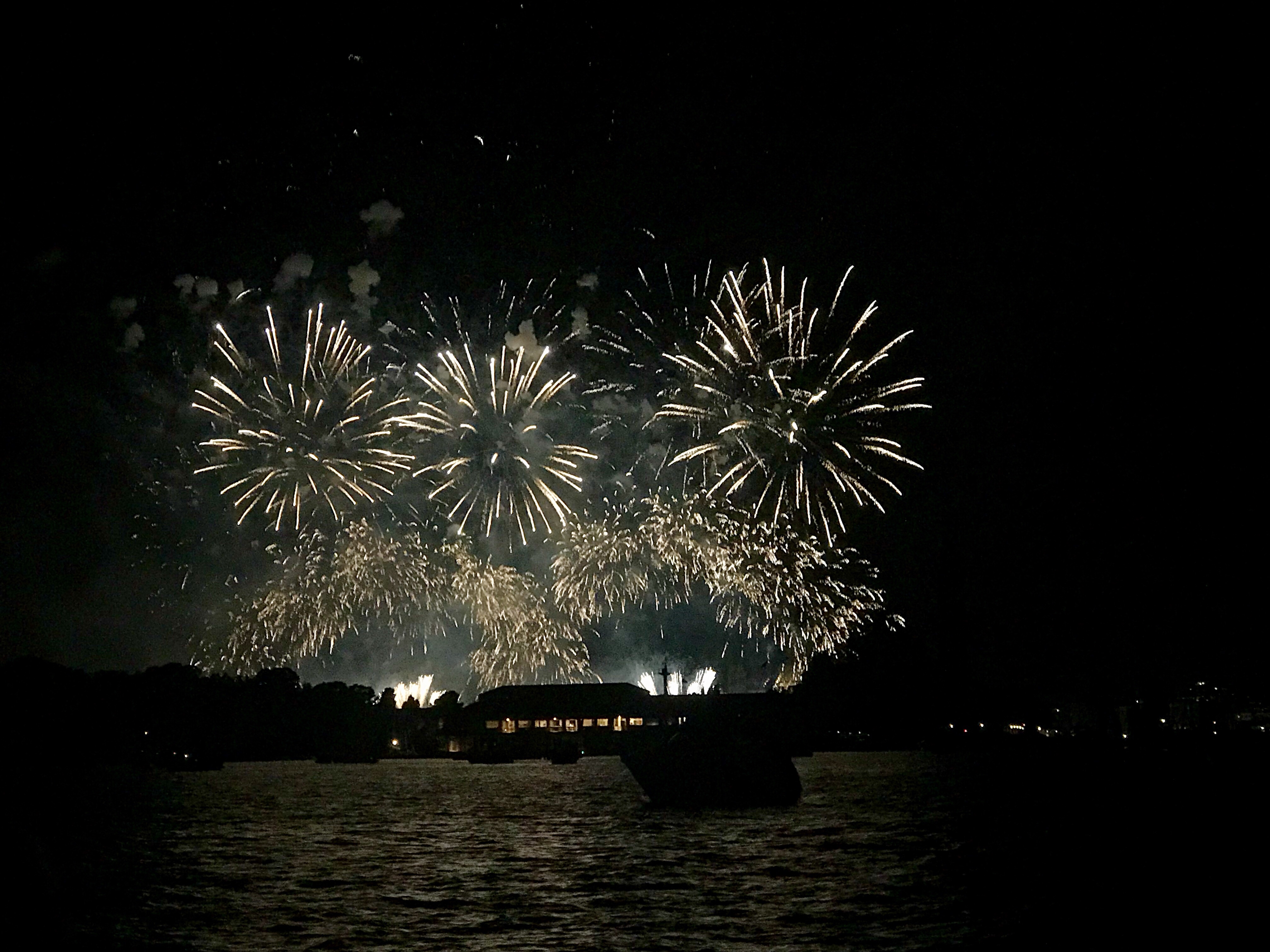
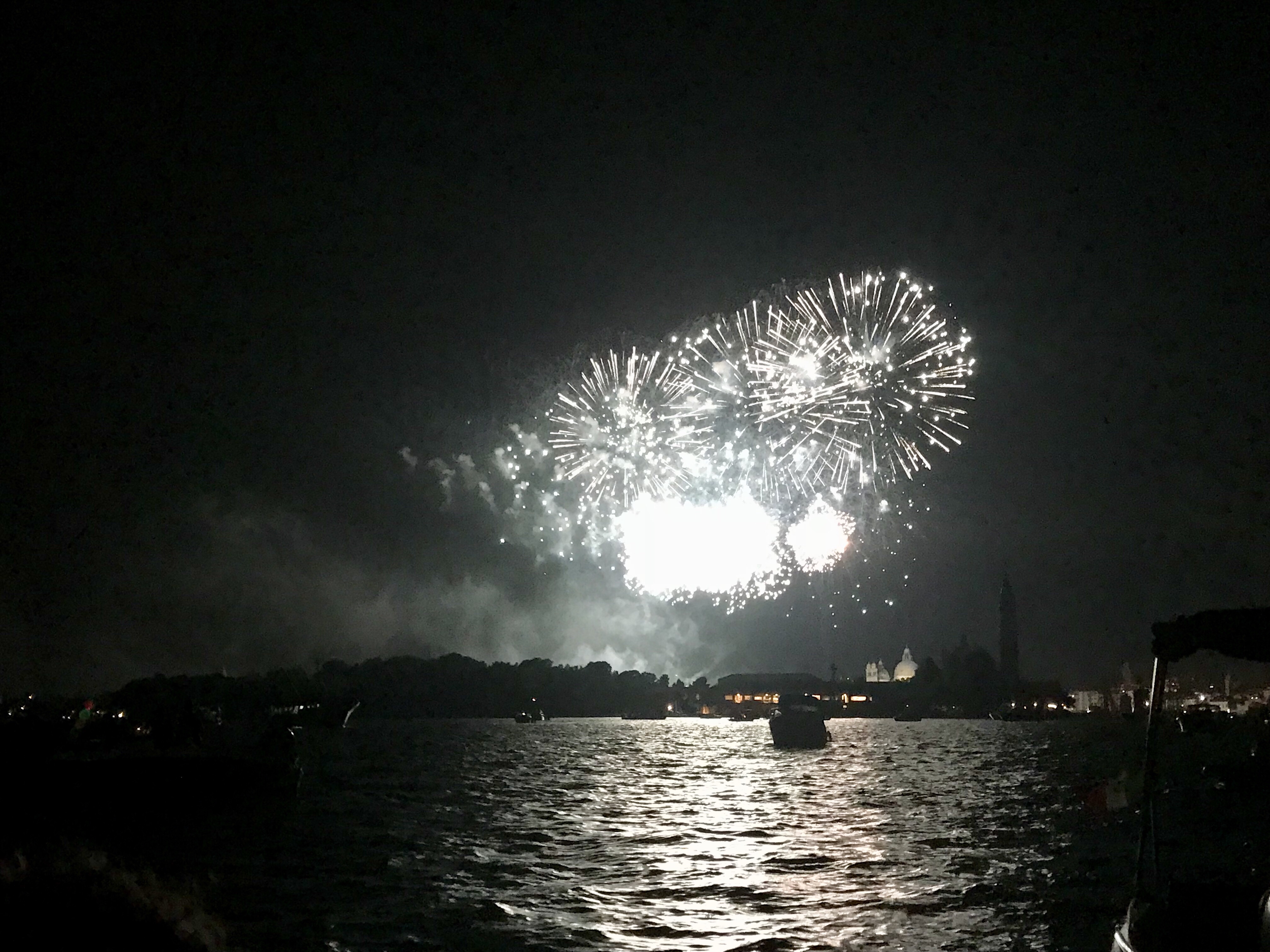
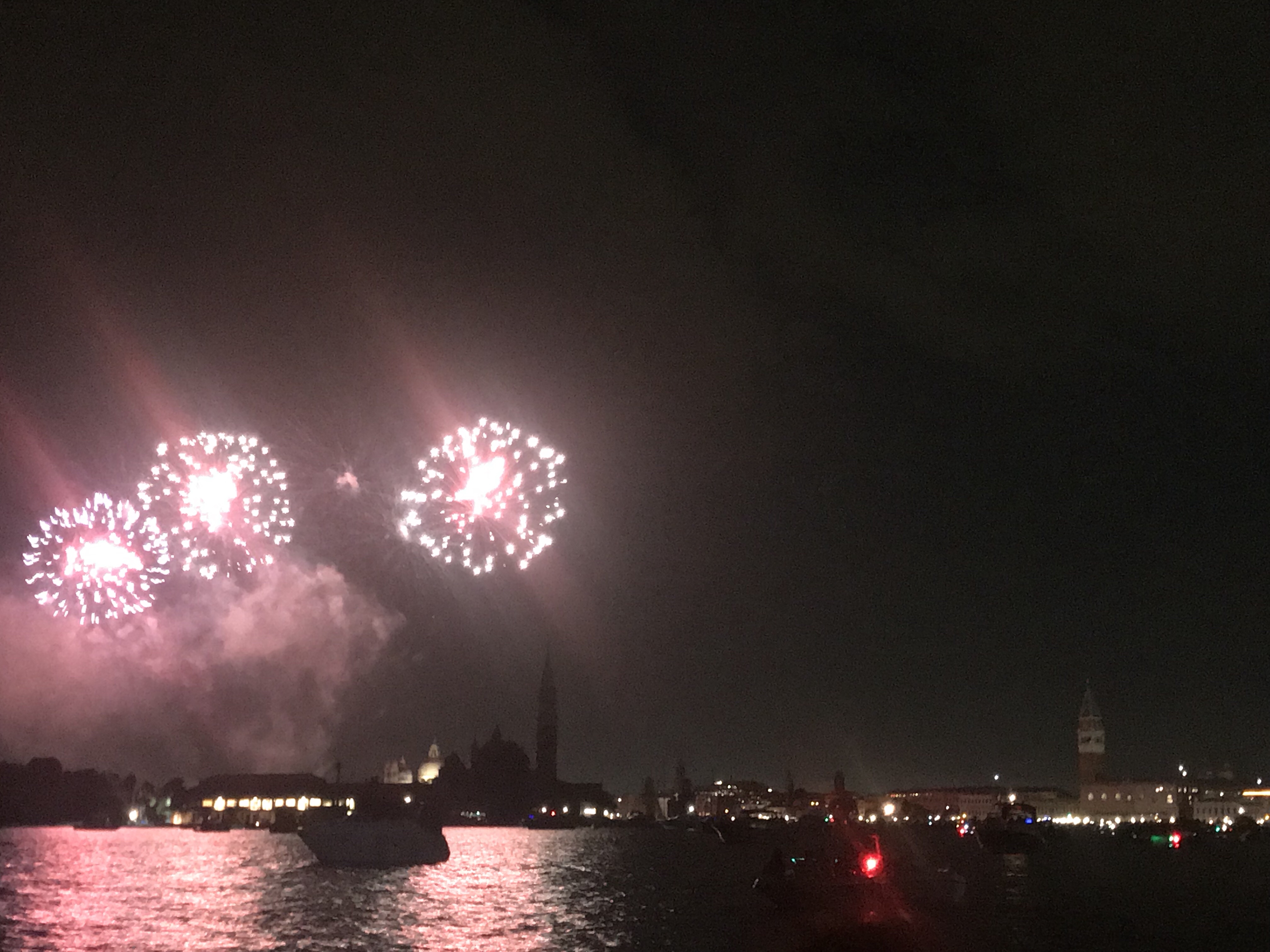
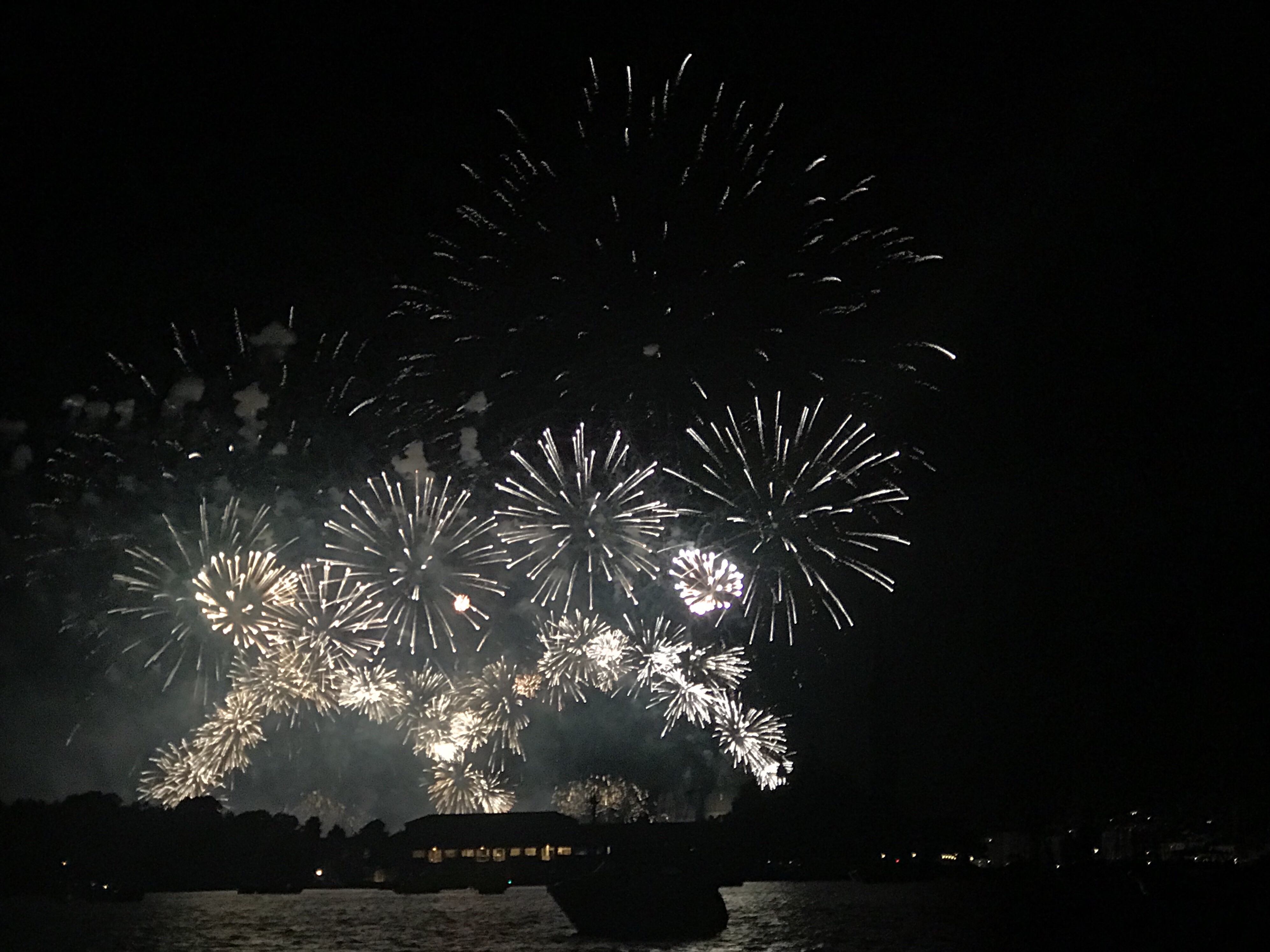
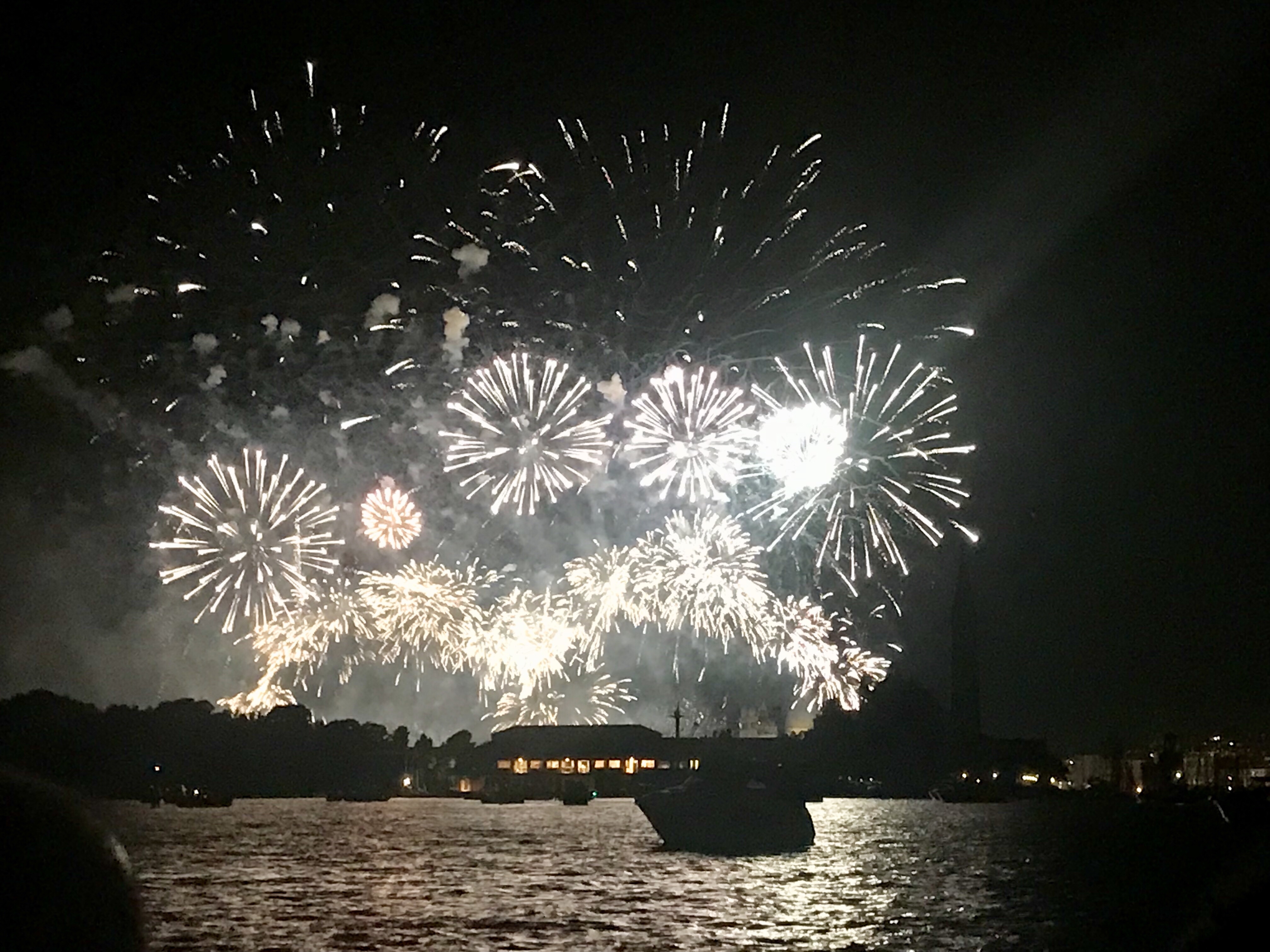
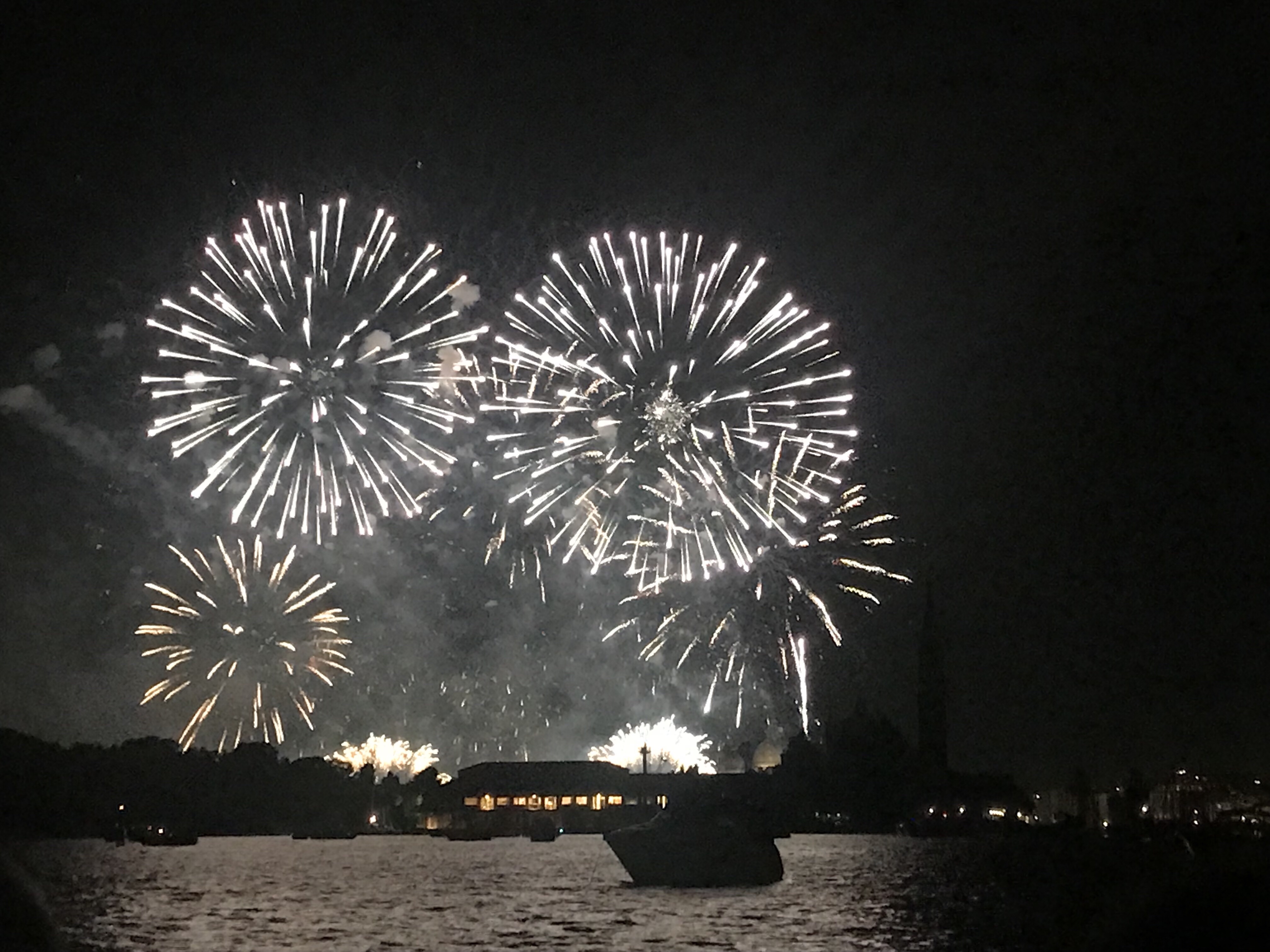
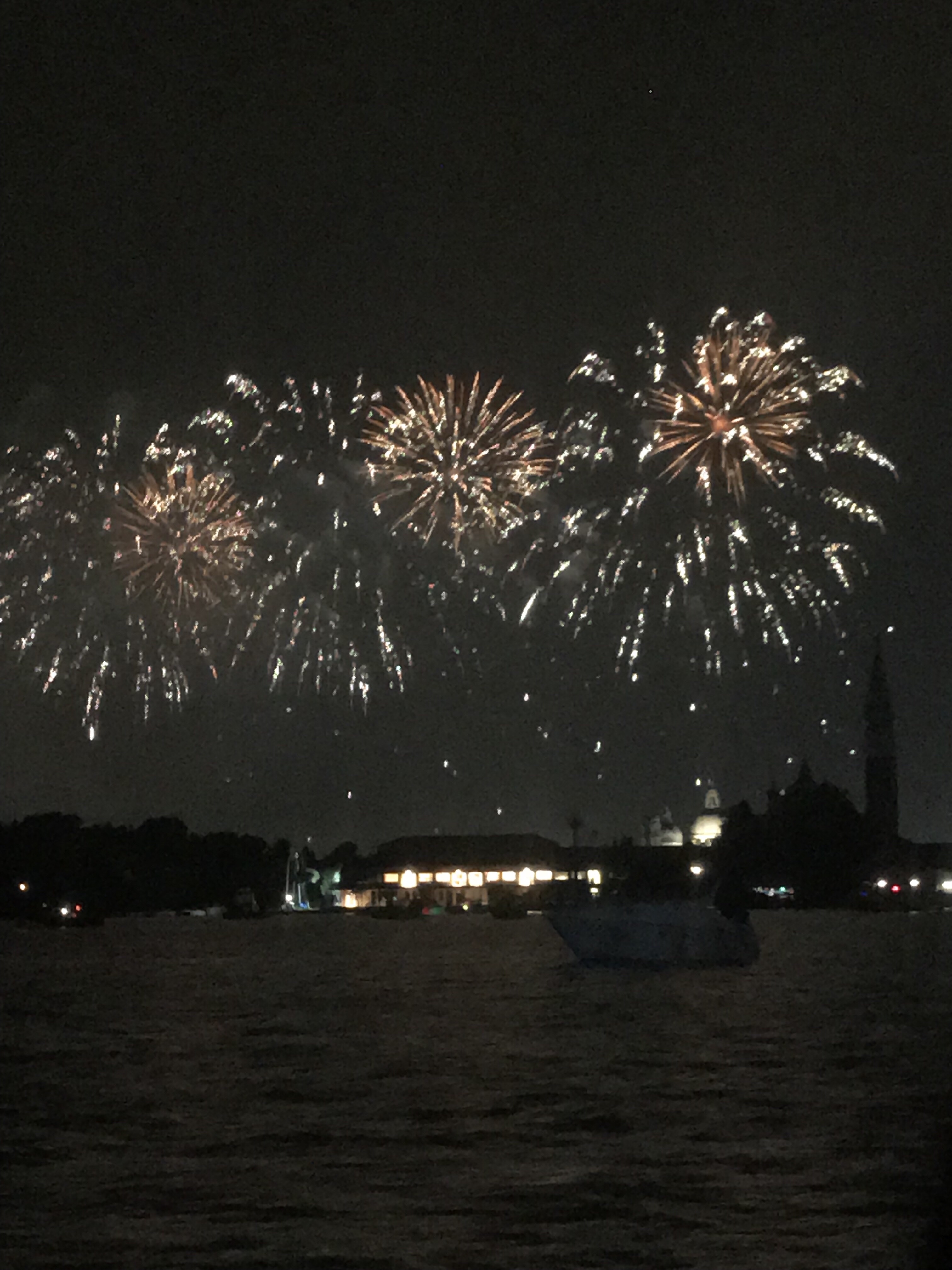
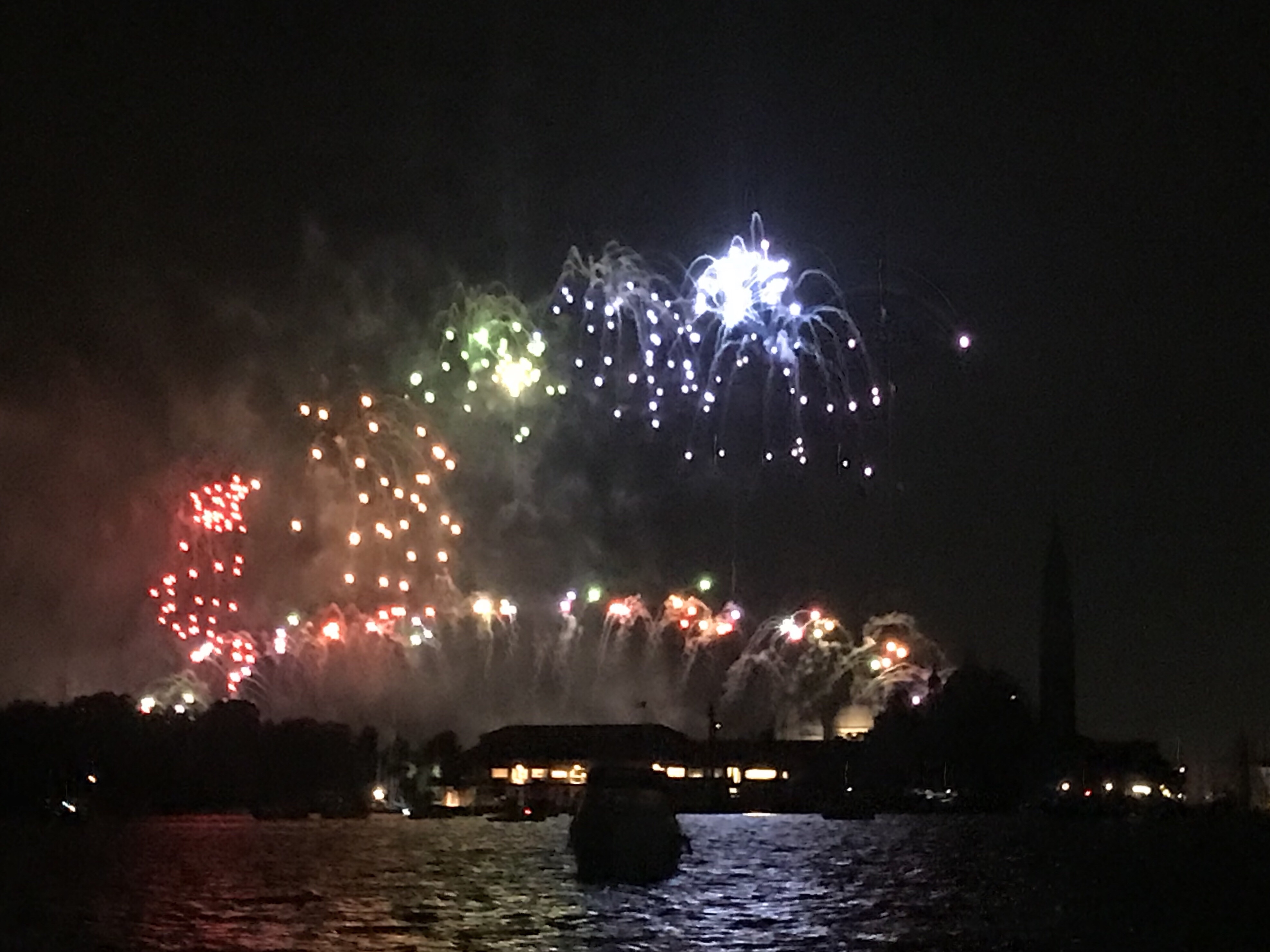
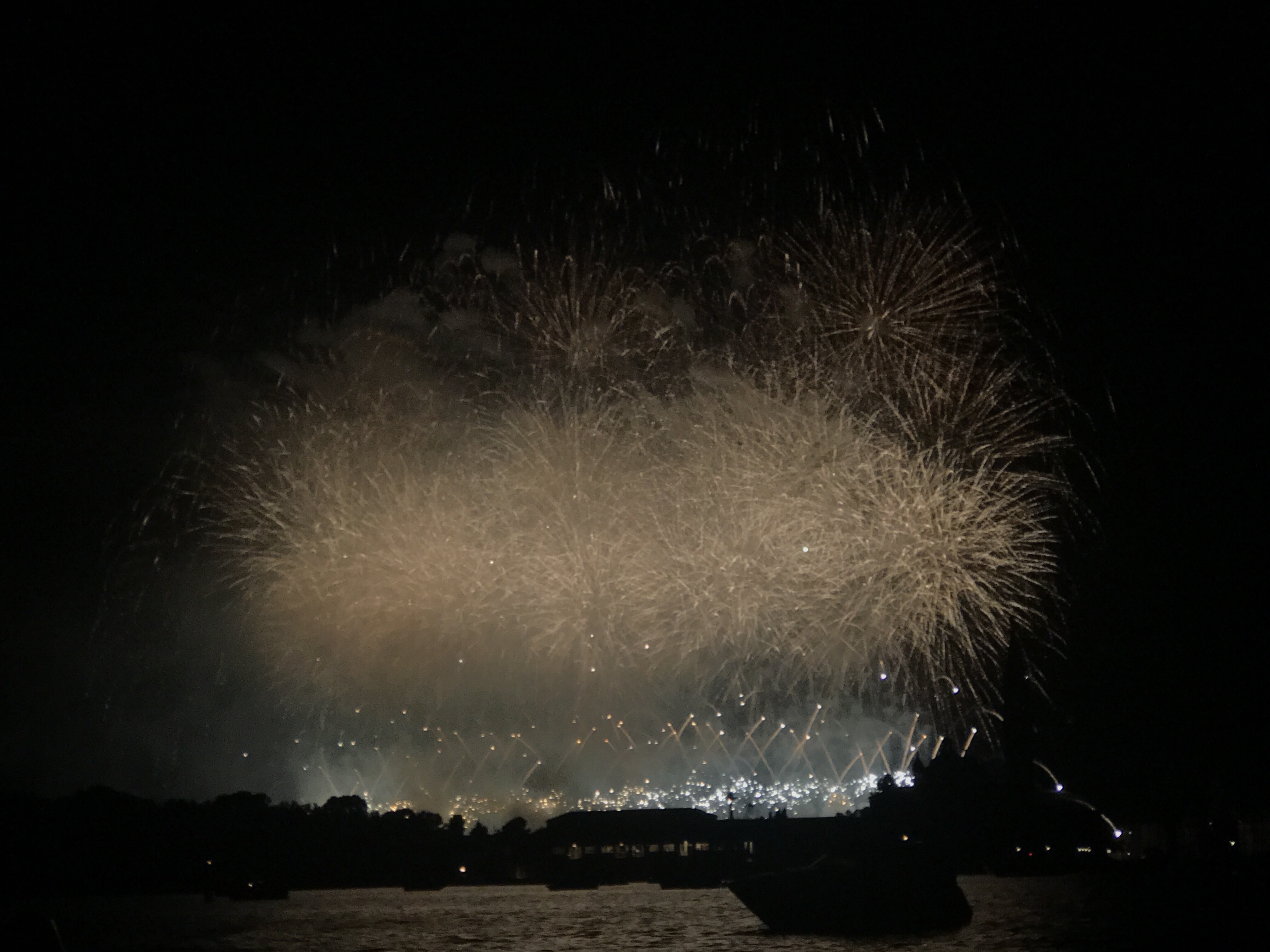
The Feast of the Redeemer (or Festa del Redentore) is one of the most important Holy days for Venetians. For one day the whole Basin of San Marco is transformed into an immense piazza/party with hundreds of boats and revelers enjoying dinner on the water and waiting for sunset. The religious day is held the third Sunday in July, and chronicled here is the day before.. the secular fête. I had seen a painting of Tintoretto depicting the yearly ceremony of the City of Venice’s marriage to the Sea.. and when my cousin, who is from nearby Mestre, told me he was invited to the Feast I suspected it would be a once-in-a lifetime occasion, and I begged him to let me tag along.

At night, beautiful fireworks light up the already dreamlike city of Venice. It is a dream within a dream ( lucid Venice) .. just like the hallucinatory Carnevale.

This tradition was started in medieval Venezia, in 1576, when a Feast was planned to celebrate the end of a particularly disastrous Plague (Venice suffered many) which killed more than 50,000. The painter Titian was amongst the perished. None other than Andrea Palladio was commissioned to build the Church of the Redentore, which was completed in 1576.

The Doge ( the Venetian ruler of the Imperial Serenissima) would walk on a bridge made of barges from Le Zattere area of Venice to the Redeemer Church each year.

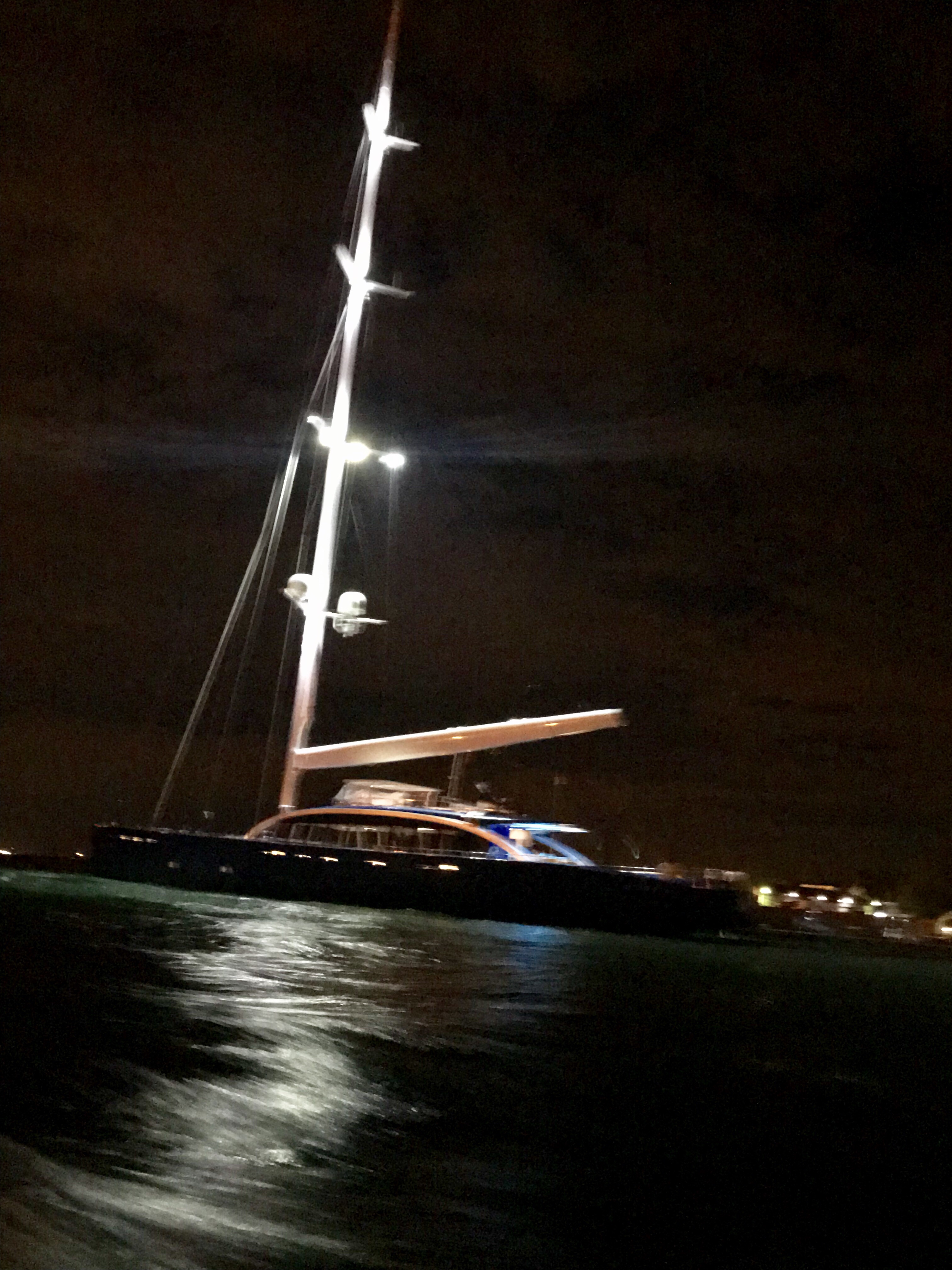
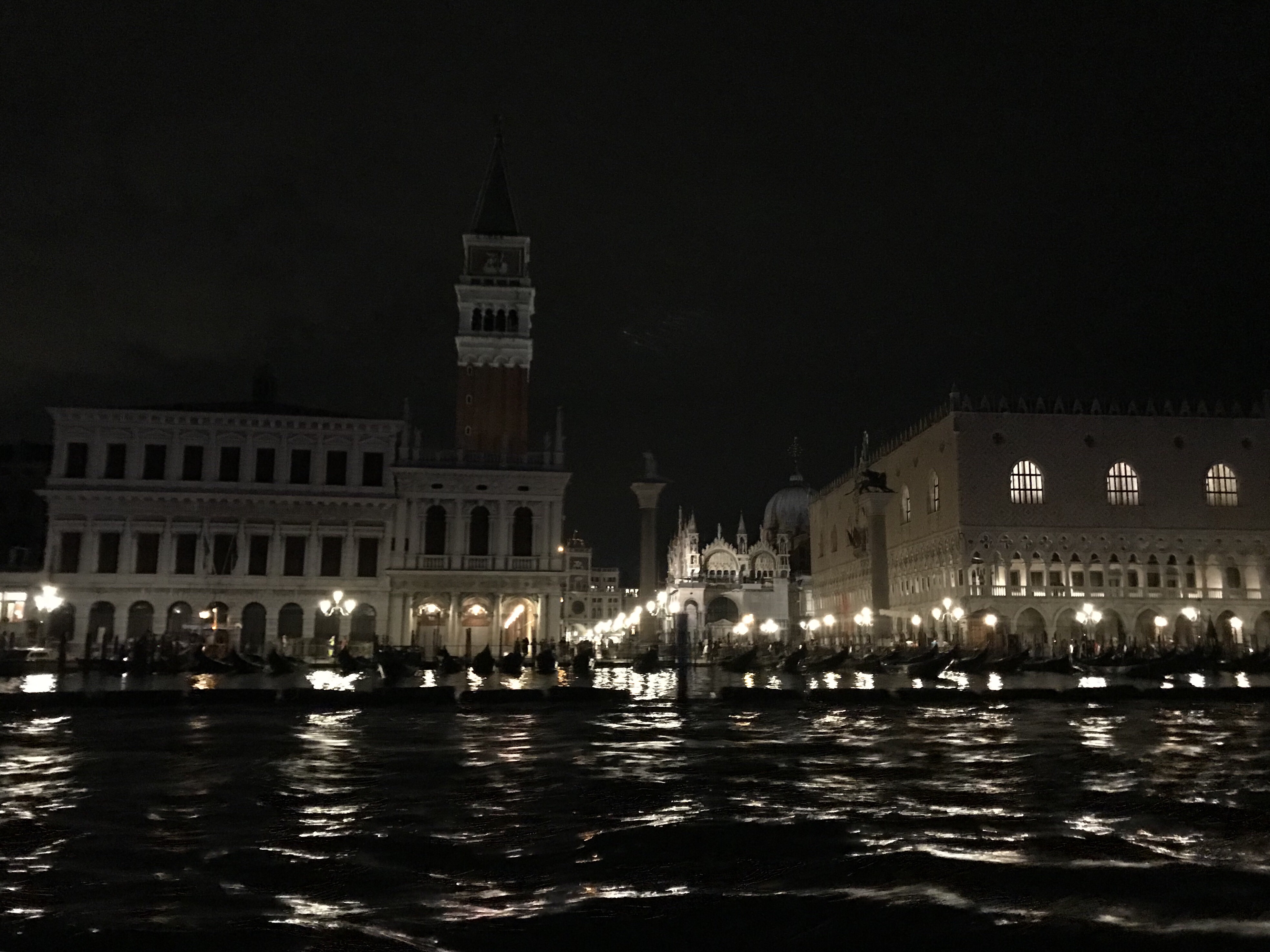
There is no way that a camera, let alone a phone ( with, what I suspect a wet lens) on a moving boat could capture what the Redentore is, being surrounded by thousands underneath the summer night skies, all in love and in awe of one city. The energy of seeing a people dancing and celebrating on a sea of boats was awe-inducing ….but here I offer some impressions, pale comparisons to the live Lady at Night.

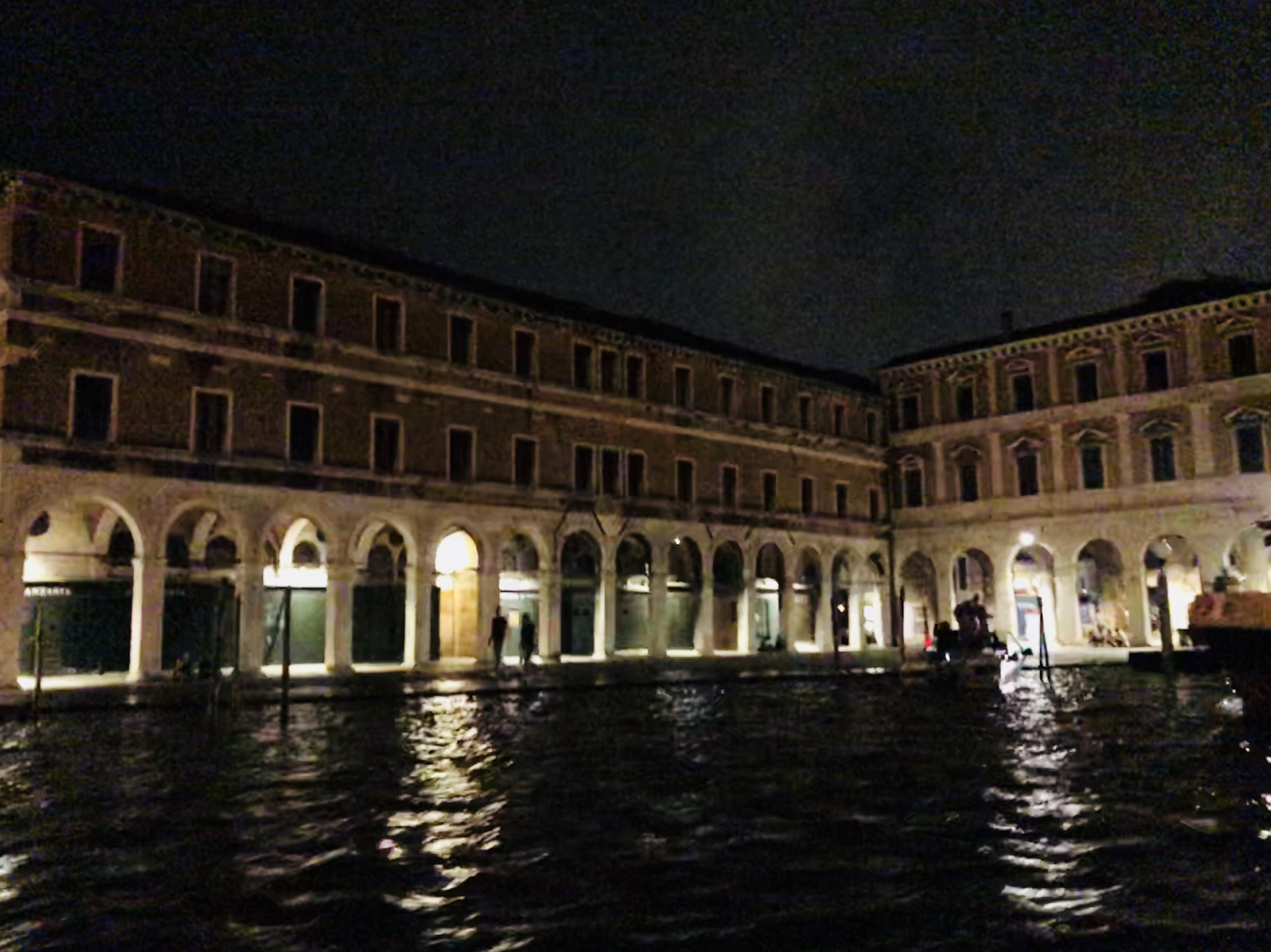
Just as wonderful as the Feast and the fireworks, was the ride through Canal Grande to admire nocturnal Venice. The Canal is only open to boats without resident permits once a year: on the day of the Festa del Redentore.

Read Full Post »

L.A.nguid

While I wait for the next set of

glistening eyes

Yeah, when you say maybe

and mean never

When I met him I told him

You use your eyes like weapons

Some things are only meant to be burned on the altar of poetry, liquid like skin

Two planets colliding:

orbits not meant to ever meet again.

Some cities, like kisses that have no right to take and give so much, go to your head.

Where to start? Perhaps from the end

– going backward.

We danced on the H of the Hollywood sign

‘Tis the time of rose gold here

The color of California sunset

The spring of Lana Del Rey and Lorde

Laidback, the occasional listlessness

Head tilted backward on a convertible

We don’t know how lucky we are

His reckless back was softer than your silk robe. I’m not forty, I’m in my second twenties.

In an Uber, real tired, I realize the city I live in possesses the quality and repetition of a videogame,

“what should a town look like”- the approximation fails at convincing

I put the matchbook in your pocket so that one day you may find it in your hand and smile- go back to that night, that rooftop. that’s the scene from a movie.

If your man is gentle, and a good lover, you have two women to thank.

Before I even spoke

He was singing over me

He was counting each of my hair.

Read Full Post »

The final full moon of Winter 2017: the Worm Moon {Native Americans} or Storm Moon {Pagan Rites} or Lenten Moon {Christianity}. Also known as the Seed Moon or Chaste Moon. This is the final moon of Winter 2017 and the last full moon before the Spring Equinox. Tonight is also the time that Daylight Saving Time ends in most states of the U.S… returning time and hours to their natural cycle and us to a more harmonious rhythm. The days will be longer thanks to moving the clock ahead one hour -in the UK this is called “Summer Time”. This is the moon of nature’s rebirth from the dark winter months; its meaning is new, fresh starts.


//These poems were typed, not copy-pasted. It makes a difference.//


Venus Just Asked Me 


Perhaps 

For just one minute out of the day 

It may be of value to torture yourself 

With thoughts like, 


“I should be doing 

A hell of a lot more with my life than I am 

Cause I’m so darned talented” 


But remember,

For just one minute of the day. 


With all the rest of your time-

It would be best

To try

Looking upon your self more as God does. 


For He knows

Your true royal nature.  


God is never confused 

And can see Only Himself in you.  


My dear, 

Venus just leaned down and asked me 

To tell you a secret, to confess 


She’s just a mirror who has been stealing 

Your light and music for centuries 


She knows as does Hafiz,

You are the sole heir to 

The King.


Hafiz


The Size of the Love-Bruise


The

Gauge of a good poem is 

The size of the love-bruise it leaves 

On your neck. 

Or 

The size of the love-bruise it can paint 

On your brain.

Or 

The size of the love-bruise it can weave 

Into your soul. 

Or indeed-

It could be all of the 

Above. 


Hafiz


 …


The Shape of Laughter


Let my words become like a skilled 

Potter’s hands, 


Quieting,

Smoothing your life 

With their knowledge,


Reaching into your tender core 

And spreading you out 

Like the morning 


That leaps from the sun’s amused wink 

Onto hills, brows and backs of so many

Beautiful laboring beasts.


God’s duty is to make perfect 

All your movements of mind, of limb,

And your ascending shape of laughter.


Watch the way my hands dance 

With their diamond-edged brilliance 


Cutting you open with music, 

Reaching into your heart


And spilling the night sky- jar you carry 

That is always full of giggling planets and stars. 


My words are a divine potter’s wheel.

If you stay near to me, 

Please, 

Stay near to me–


And Hafiz will spin you into 

Love.


Hafiz


…..

The Fools Who Dream 


Here’s to the ones

who dream

Foolish, as they may seem

Here’s to the hearts

that ache

Here’s to the mess

we make


She told me:

A bit of madness is key

to give us to color to see

Who knows where it will lead us?


And that’s why they need us,

So bring on the rebels

The ripples from pebbles

The painters, and poets, and plays


And here’s to the fools

who dream

Crazy, as they may seem

Here’s to the hearts that break

Here’s to the mess we make


From “La La Land”, 2017 

Read Full Post »


Moving


I think moving is not the few hours on a bleary Saturday morning

-the act of-

No, it is weeks:

Looking around at everything you love

And know you’re going

to have to say goodbye.


Like holding a lover for the last time

A little death


Everything we know is going to end

One day 

They say”


Maybe moves and doomed love affairs are

God’s gentle way of reminding us

Nothing is permanent.


Remember that last look

right before you closed the door

and knew you wouldn’t be back?

Isn’t that the definition of living,

Isn’t that the definition of loving.

Read Full Post »

The Prophet described iman, or faith, as such: “Faith is to acknowledge with the heart, to voice with the tongue, and to act with the limbs,” (Chittick 6).

This outlines the hierarchy of bodily domains that human beings consist of: the heart, signifying innermost awareness; the tongue which articulates and expresses; and one’s limbs, the source of action.

The art of poetry incorporates all three of these, for one cannot compose a poem without the cognizance of the heart, the use of speech or the physical use of limbs to write out the words.

Poetry channels the three spheres of the body so that awareness, thought and activity fuse to create one product.

Beyond Words: Chronicling Spiritual Ecstasy and Experience in Sufi Poetry

Kate Van Brocklin 

Read Full Post »

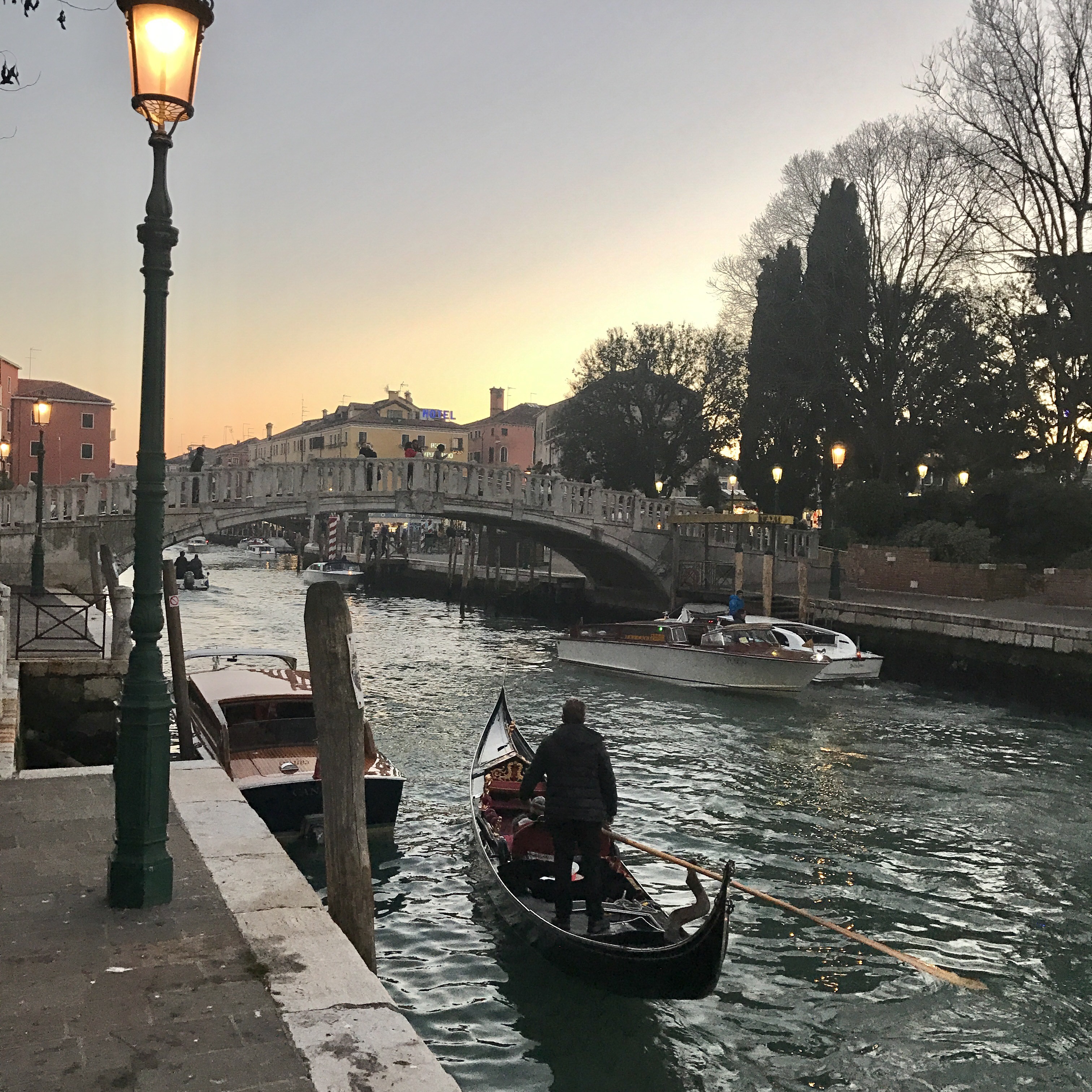
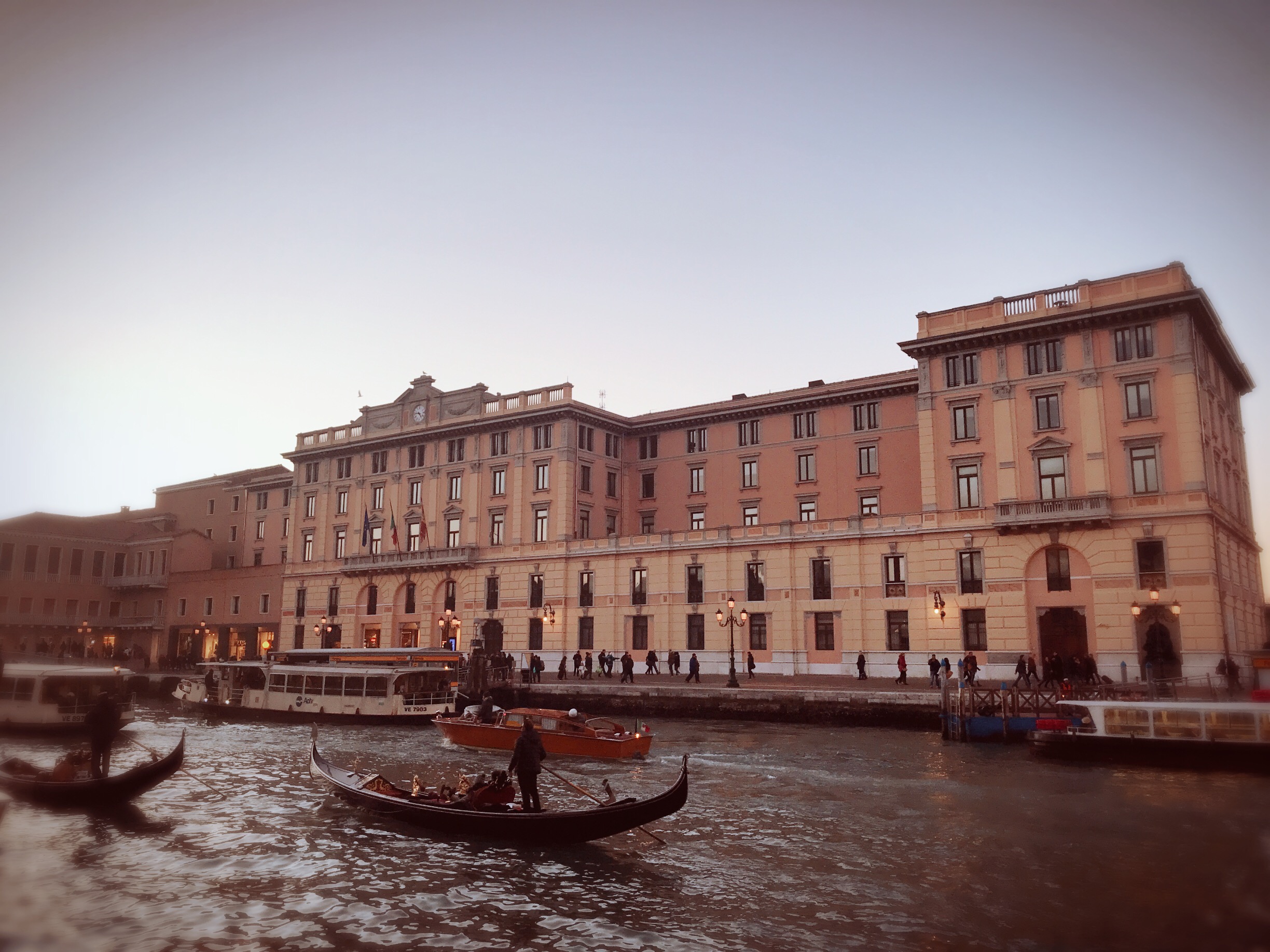
And, suddenly, you are gazing at the eternal sublime. Venice’s borders are the dream realms. This is a city that starts on water and ends in the soul. Venice is a portal between reality and myth. A city that is real, but also impossible. My little cousin declared, at ten years old, that ‘this is the most beautiful city in the whole world.’ In no other country man-made and natural Beauty is so entrenched with the national psyche and identity. Beauty is elevated as the greatest national virtue, privilege and asset. Beauty is Italy’s doctrine and her true religion. We are, after all, Il Bel Paese.
Venezia, Italia, January 1, 2017.


‘There is still one of which you never speak.’
Marco Polo bowed his head.
‘Venice,’ the Khan said.
Marco smiled. ‘What else do you believe I have been talking to you about?’
The emperor did not turn a hair. ‘And yet I have never heard you mention that name.’
And Polo said: ‘Every time I describe a city I am saying something about Venice.’

Italo Calvino, Invisible Cities


Error
This video doesn’t exist


Read Full Post »


Song of the Open Road, IV

Walt Whitman


The earth expanding right hand and left hand,

The picture alive, every part in its best light,

The music falling in where it is wanted, and stopping where it is not wanted,

The cheerful voice of the public road, the gay fresh sentiment of the road.

O highway I travel, do you say to me Do not leave me?

Do you say Venture not—if you leave me you are lost?

Do you say I am already prepared, I am well-beaten and undenied, adhere to me?

O public road, I say back I am not afraid to leave you, yet I love you,

You express me better than I can express myself,

You shall be more to me than my poem.

I think heroic deeds were all conceiv’d in the open air, and all free poems also,

I think I could stop here myself and do miracles,

I think whatever I shall meet on the road I shall like, and whoever beholds me shall like me,

I think whoever I see must be happy.

Read Full Post »

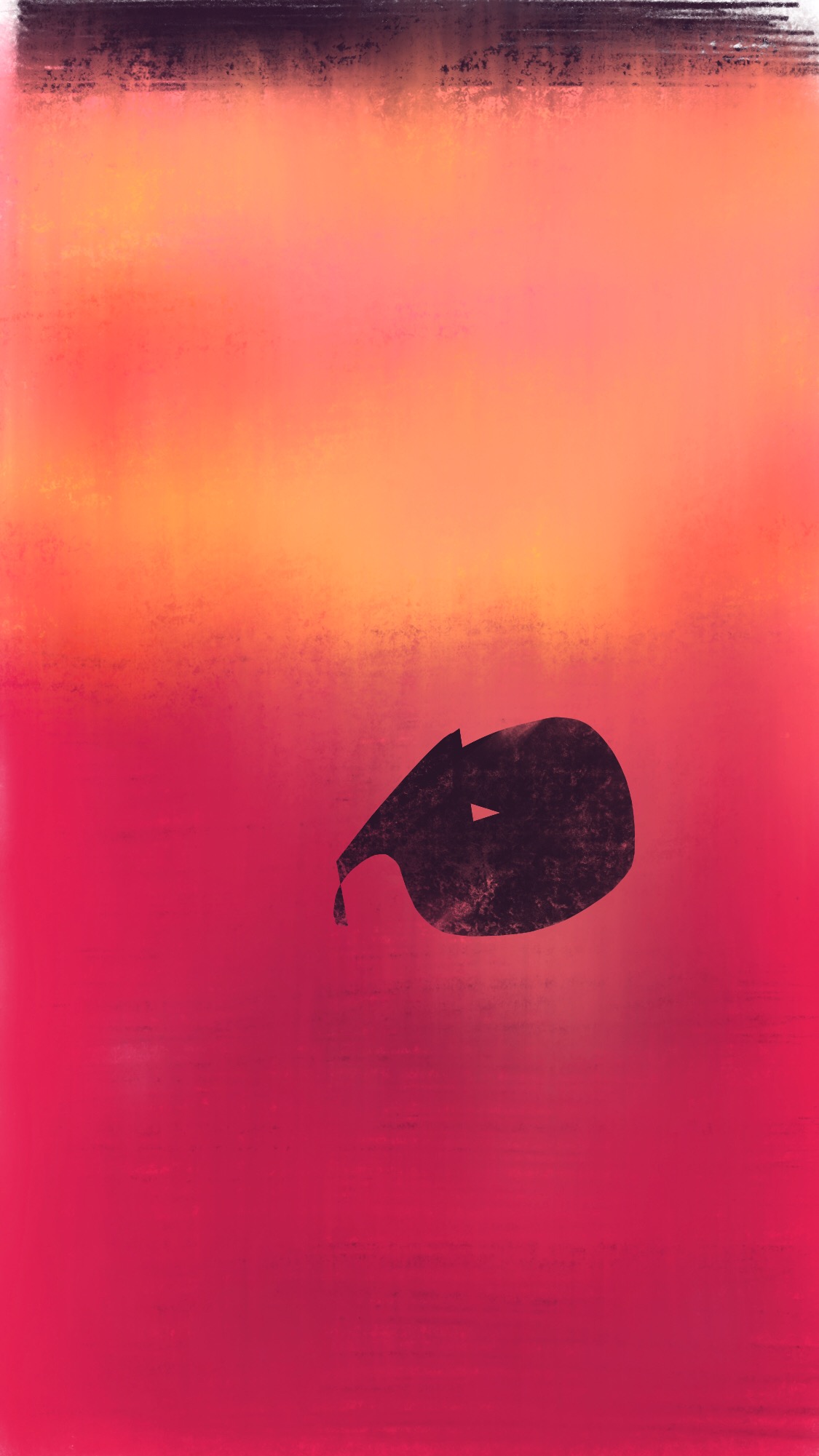
Digital painting made on ProCreate app for IPhone. November 11, 2016.


Dark days here in California.
Days of mourning, but also poetry, catharsis, resolve for Resistance.

The Sun broke through the clouds today.

Words, thoughts, and memories flowed and something beautiful is emerging from the summer blush, the gentle nights, the dawns of Bahia de Los Angeles down in the peninsula.

The blood and ink spilled on the battlegrounds of a war lost before it began.

Red like the heart, yellow like the fire, orange as the light.

Some days all of this will make sense. The humbleness of things not going your way, not going as predicted.

For now huddle with your familiars, write manifestos, memorize lines of poetry

To leave as flowers as you bid your adieu.

In the end nothing mattered, not eloquence, preparedness, not even expertise.

It boiled down, as it always boils

down

to

emotion.

In love, in war, in politics.

These scars will become constellations.


I recently switched to an IPhone.

I was  always an Android/PC person, but did it all for the camera (and the IPhone 7 larger screen, which brings it closer to a tablet). Today after some research I downloaded ProCreate, a painting and layering app and Tayasui Sketching, a drawing and watercolor app. I’m looking forward to exploring them with my Sensu brush. The layers aspect of ProCreate pushes this app beyond what I was used to with Paint Commander, my Android painting app. If I don’t sound as my usually excited self is because I’m still numb.

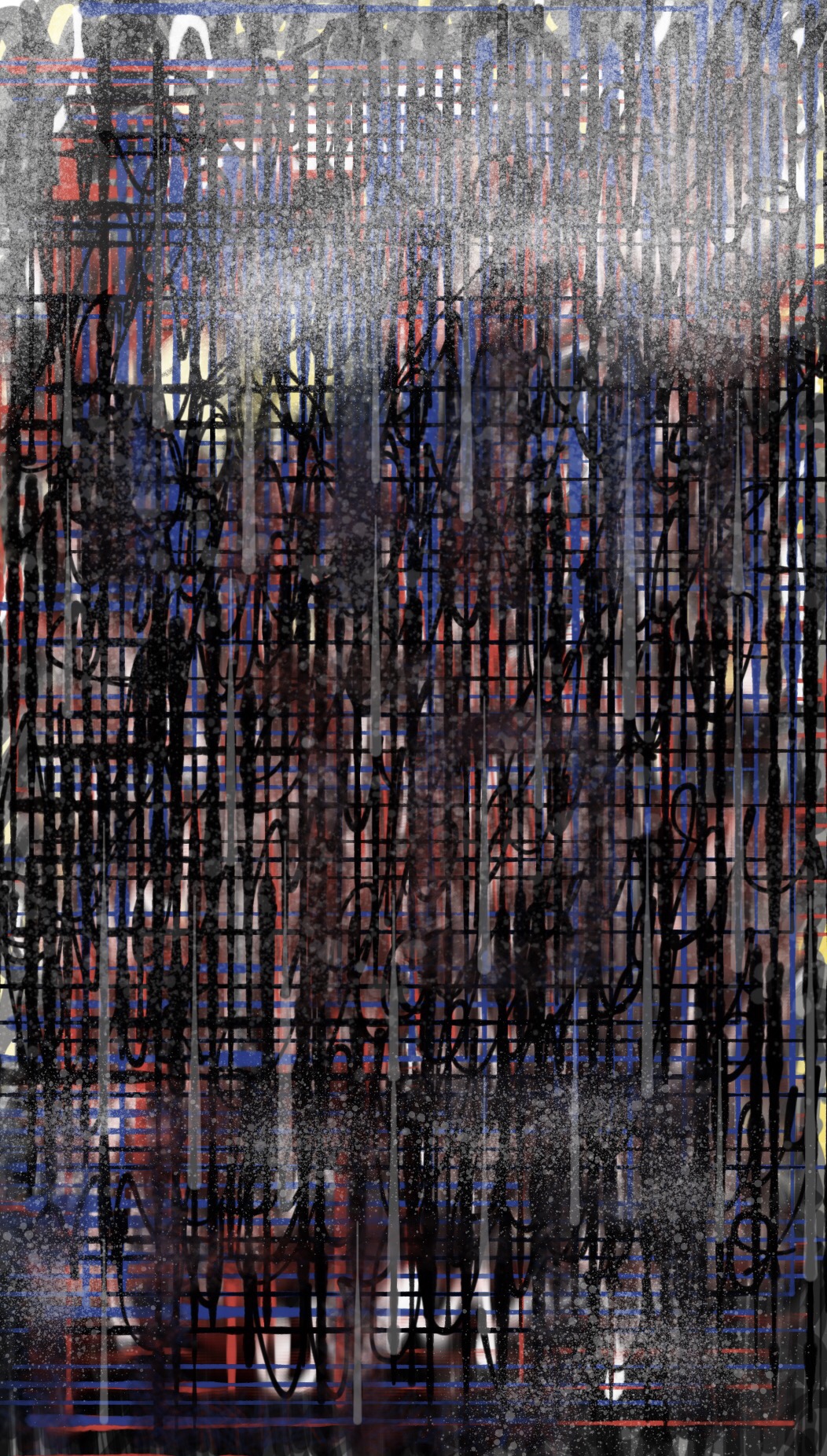
The spontaneous construct above was an experiment with ProCreate inspired by Rothko, some photographs I took in September in Baja California, the recent elections and the high-strung feeling running through social media- especially related to some alarming episodes of intolerance already happening.
I guess things have to fall apart before they are made anew, and I guess the heart has to break in a myriad of pieces to become a mosaic, a kaleidoscope. This was the autumn of earthquake faults and fractures, of buildings and people.

There is a Japanese custom of repairing broken antique vases with gold, making the wound not only visible, but the whole more precious for having being shattered.


I was dead then alive. Weeping then laughing. The power of love came into me and I became fierce like a lion then … then tender like the evening star.


~ Rumi 

Read Full Post »

image

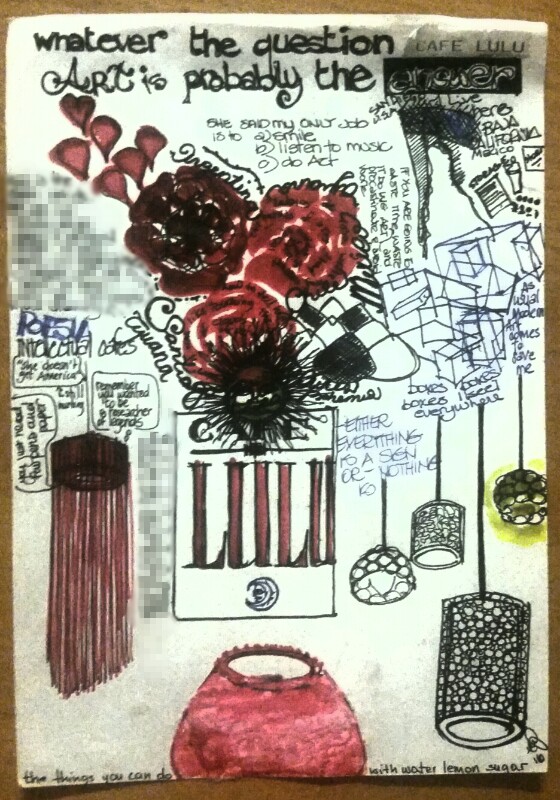
Cafe'-inspired ink drawing and collage. San Diego, June 2016

image

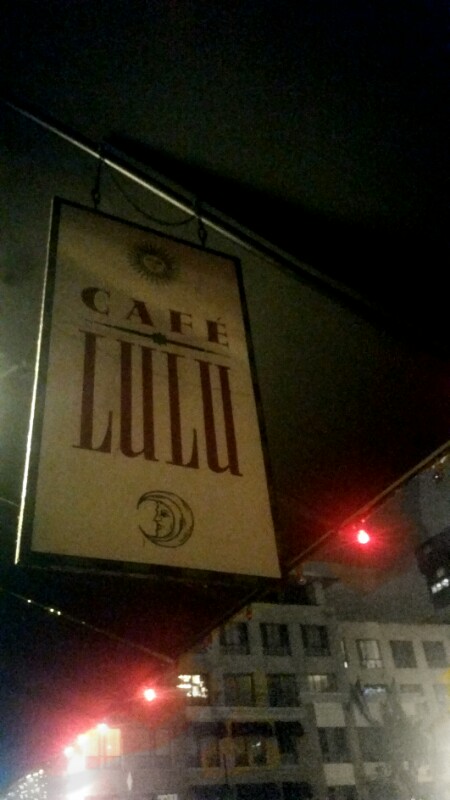
Café Lulu, Sun and Moon. San Diego, Gaslamp Quarter, June 2016.

image

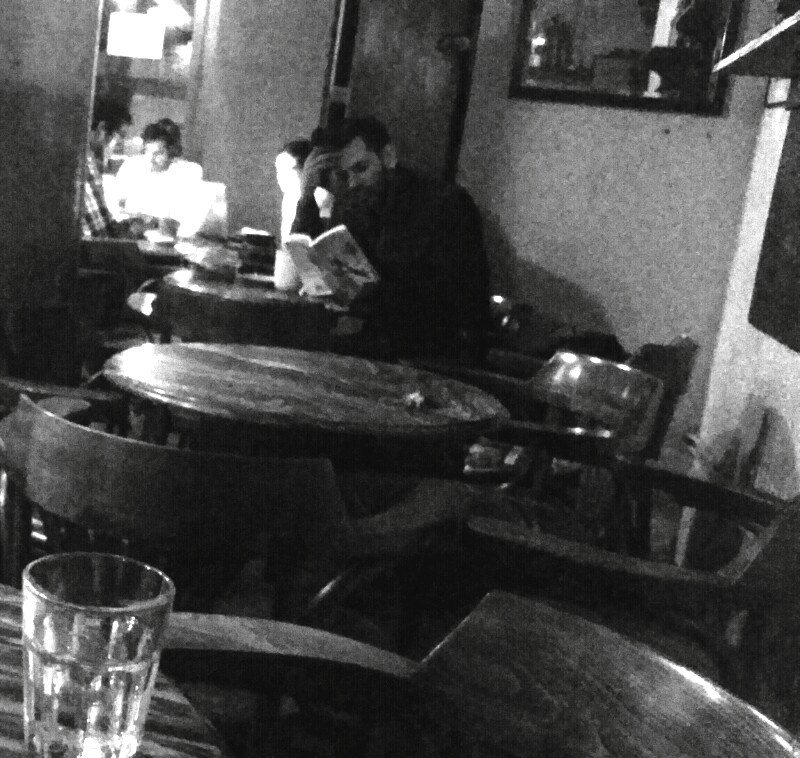
The Reader. Café Bassam. San Diego, June 2016.

image

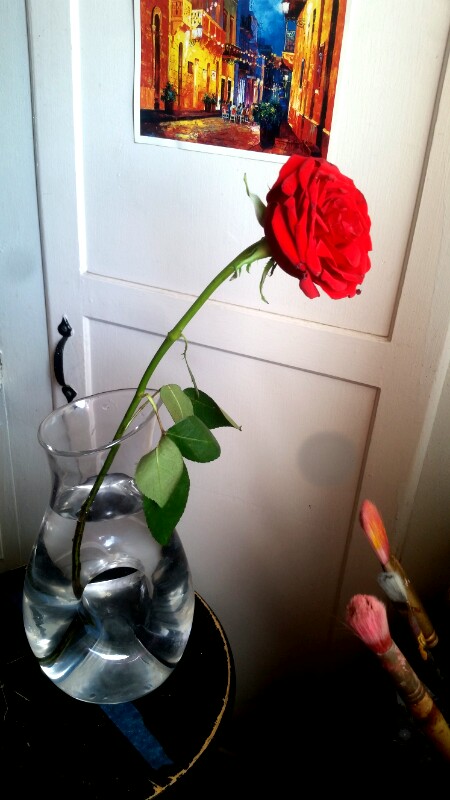
Rosa de Tijuana 1/15 . June 2016.


A Mi Tijuana

Milton Ríos

Spanish | English


La olvidada, la 100 por ciento criticada!..

A la que puedes dar mil opiniones sobre ella

La única que es coherente con su equilibrio

Entre las cosas buenas y malas!

La ciudad malvada… la maravillada,

La llena de narcos!

Artistas, multicolores y muchos tantos…

Esta ciudad… ciudad de paso

Y paso a ser mía,

Mi ciudad! Mi metrópoli confundida

Ayer la mas violenta

Hoy el ejemplo de paz!

Pero solo en mi Tijuana se puede vivir esto!

Balazos, teatro… buena música, cineastas en acción

El party el revolución! La que ya no es nada

Por que nació la calle 6ta.

Donde se junta lo subterráneo,

Las culturas urbanas, donde no ahí negros ni blancos!

Ni mexicanos ni gringos…

lo que importa es la noche bohemia,

algo de baile y alcohol

que viva la diversión…

la ciudad de segunda!

De segundas oportunidades

Donde caen los deportados

Donde comen y duermen los emigrados,

Donde se respira libertad

Donde ahí policías buenos y malos!

Y aquí te preguntas? Para que ir al otro lado…

Si acaso nomas de compras,

 a conocer lo bien planeado.

Pero para dormir a gusto! Para respirar a diario…

Con la adrenalina constante,

De Tijuana ahí que ser amante.

Y así a donde vallas al decir soy de Tijuana

Obtendrás ese silencio! Que es un silencio ganado

De respeto por que para criticar Tijuana

Solo  nosotros los que la vivimos

Los que la hemos hecho nuestra

Y ser tijuanense, claro que satisface

Pero también pesa y cuesta!…


Read Full Post »

image

Hello Stranger!

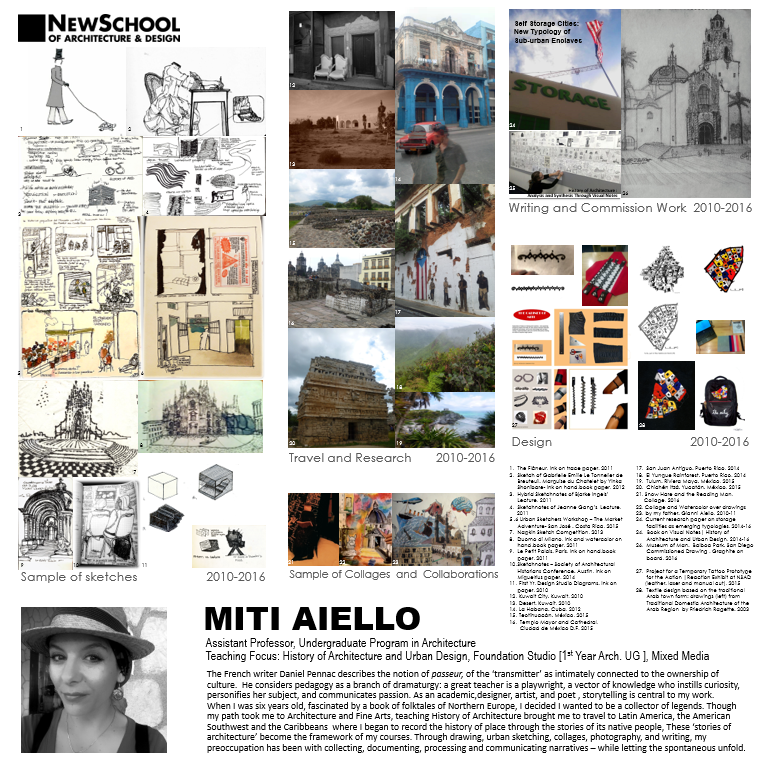
In case you are wondering what happened to me and why I’ve gone M.I.A during the month of February and most of March, the board above is one of the reasons. As it happened in 2010,
our school underwent an enormous accreditation visit, which meant preparing for months collecting, documenting and providing evidences.

One of the best things to come out of the work leading to the Accreditation was that Faculty was once more asked to prepare a record of what we have been doing – outside of teaching- the past five years.
It is a monumental task to audit, select and curate five years of life, work, art – yet I welcome the chance to take stock of where I have been, for it points to where I want to go. This process of self-evaluation is a privilege not afforded to many professions, and I was thankful for the challenge.
We were also asked to write a brief narrative. I worked on this more hours than I care to admit and I am happy to now share this with you: words, drawings and travel photography — some of which hasn’t been seen here yet! Hope you enjoy it.


“The French writer Daniel Pennac describes the notion of  the passeur, of the ‘transmitter’, as intimately connected to the ownership of culture.  He considers pedagogy as a branch of dramaturgy: a great teacher is a playwright, a vector of knowledge who instills curiosity, personifies her subject, and communicates passion. As an academic, designer, artist, and poet , storytelling is central to my work.

When I was six years old, fascinated by a book of folktales of Northern Europe, I decided I wanted to be a collector of legends. Though my path took me to Architecture and Fine Arts, teaching History of Architecture brought me to travel to Latin America, the American Southwest and the Caribbeans  where I began to record the history of place through the stories of its native people, These ‘stories of architecture’ become the framework of my courses. Through drawing, urban sketching, collages, photography, and writing, my preoccupation has been with collecting, documenting, processing and communicating narratives – while letting the spontaneous unfold.”


Miti Aiello, San Diego, March 2016

Writer Update:

My abstract on my research on Storage Cities has been accepted by one of the two main Architecture academic bodies here in the U.S for presentation at their International Conference! They are sending me to Santiago, Chile in June, and will publish my academic paper. Too excited for words. If you want to get a sneak peek and read my abstract check out my academia.edu page.
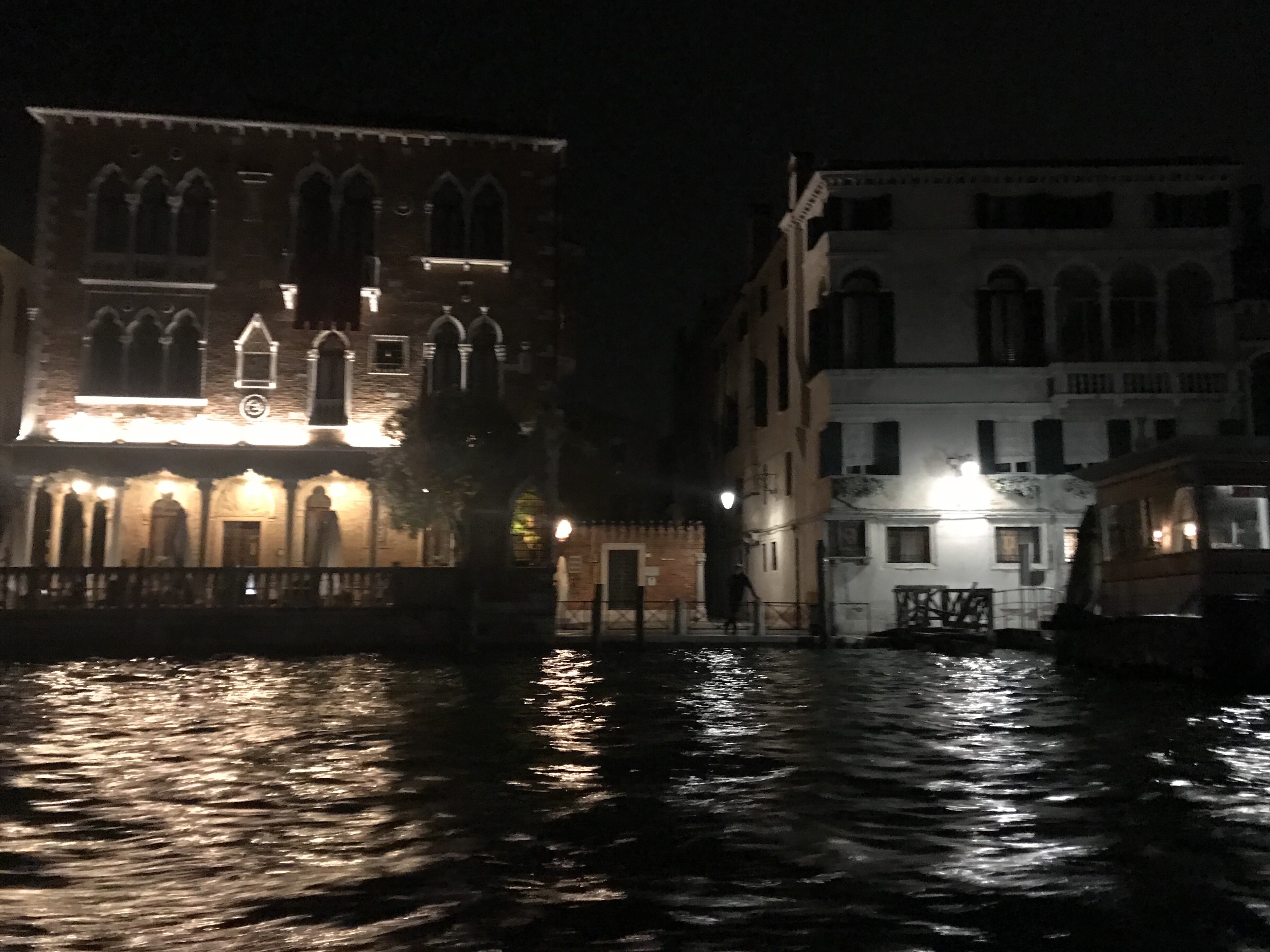
This is likely a hello/byefornow.
I wanted to update my blog now that classes have ended for the quarter, and before once again leaving for Mexico, this time in Baja California Sur for a week of volunteering. Faculty and students of my school are going to help build a healing center using natural architecture in a location that is three hours away by car from the closest road. It will be very remote, challenging and, I am sure, transforming. I will document everything.

Few weeks ago I wrote that, sometimes, we don’t have time to do art because we are too busy living a life that is art itself.
That is a true blessing, amidst the inherent challenges.

Although I have not posted here, I have not stopped taking photographs, seeing, collecting, thinking. My hope of hopes is to get caught up with my posts this summer…Promises we have heard before…

“You don’t need motivation.
What you need is discipline, young lady!”

Joe

Read Full Post »

image

image

image

image

image

image

image

We are the Stargazers,
We are the Memorykeepers

We are the stargazers,
we are the memorykeepers
the nightwalkers
the moonseekers
we are the solitude dwellers
we pause, head lifted to look at clouds
moving fast through the night skies
like steam raising from hot coffee
in a makeshift cafe.

[ stop looking at your phone
and look at the stars ]

We are impractical madness.
We are the timeconjurers,
propelled through dark hours
chasing follies
– we pause to take photographs when we’re late; we always answer the muse
and she comes at the most inopportune moments.
We are the harbingers,
we are the jesters.
We sit on street corners in the cold, listening to the banter of clochards.
Our hands hurt
we write poems no-one will read.

We are the stargazers,
we are the memorykeepers
we are the storytellers.
We are the art warriors,
we battle against the loss of words,
which come unexpected and vanish so quickly, like the tendrils of love in the morning.

We fight against time which consumes.
We succeed – and steal one verse or image from the frenetic chasm.
We indulge in vain attempts to capture stars.

We are the dreamers,
we are the songcollectors
we are the last romantics.
Our job is to always have innocent eyes.
We are the wanderers.
Our job is to remember and coalesce.
We preserve life’s gossamer fragments of beauty, we keep them like strands of lights in a jar.

We are the butterflies,
we are the petal priests,
we run red lights.

We wander at night and are consumed by fire.
In girum imus nocte et consumimur igni.

San Diego. January 18, 2016

Read Full Post »

image

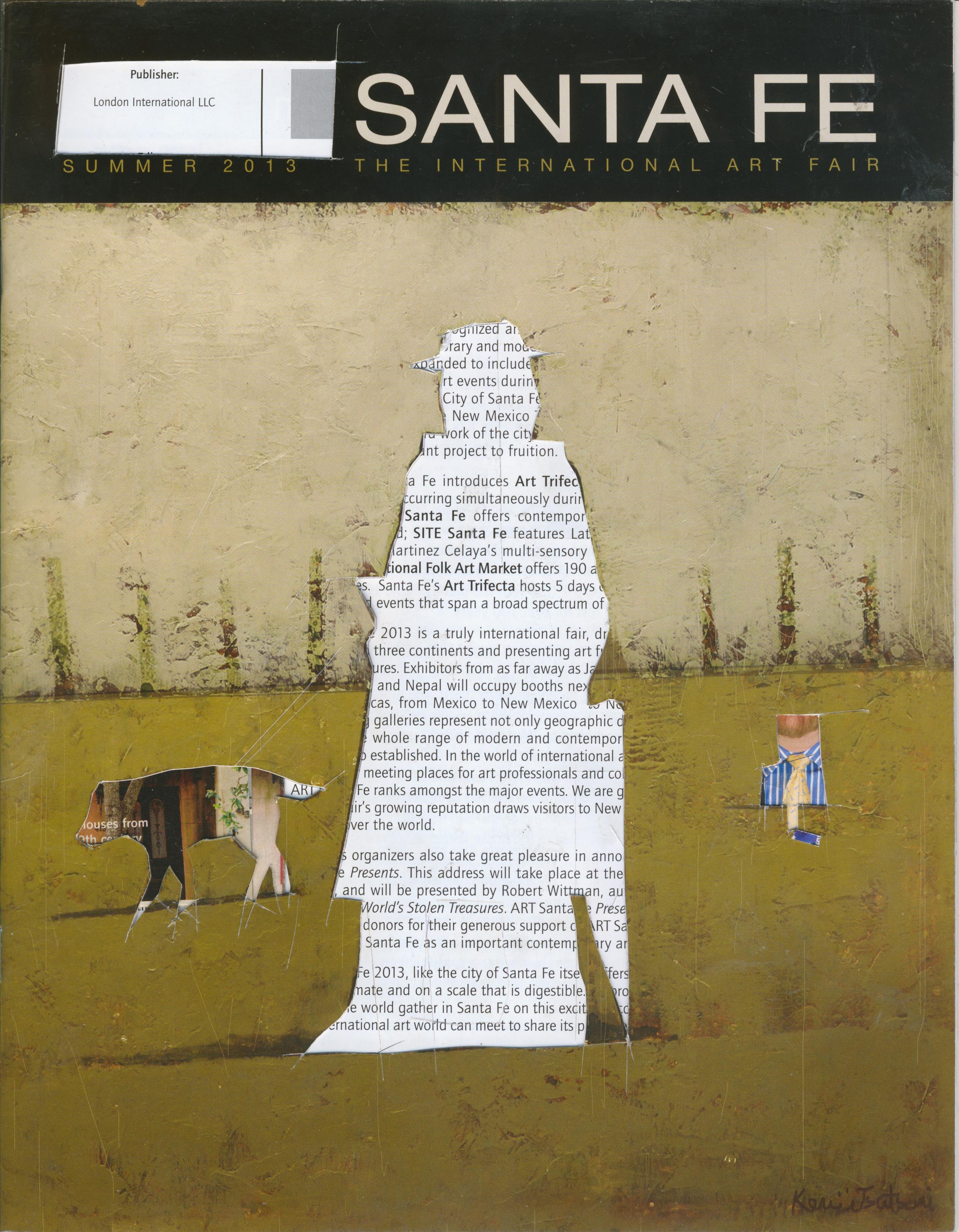
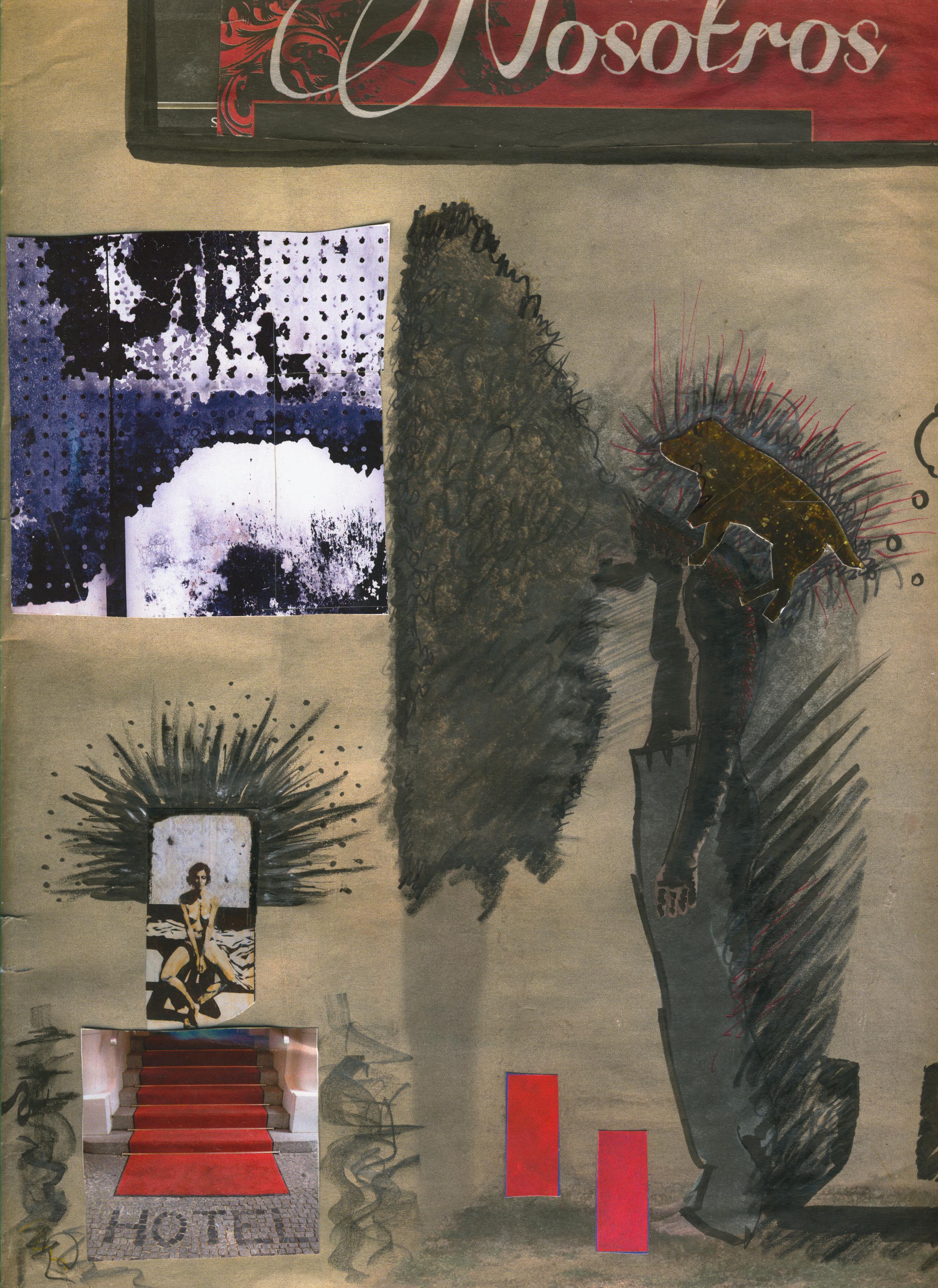
Beginning of a collage, or perhaps the finished piece. Santa Fe, Summer 2013.

The material you see here comes from that magical city, Santa Fe, New Mexico. I have been going through drawers as part of my decluttering project with The Life- changing Magic of Tidying Up- The Japanese Art of Decluttering and Organizing and found two collages, loads of beautiful art magazines and some cutouts.
As mentioned before, there are many moments of art in the past three years that never got recorded here.
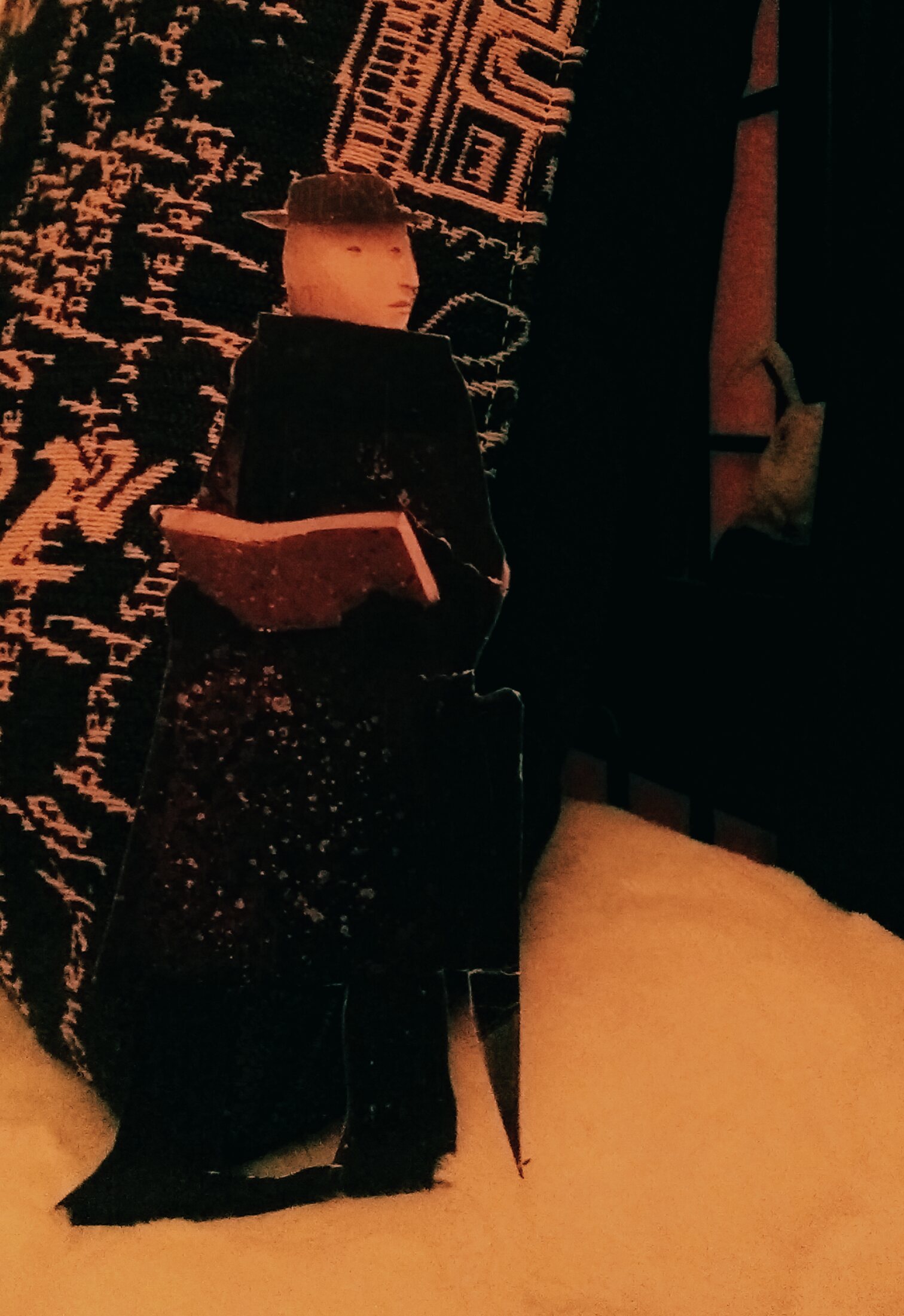
The cutouts came to life last night:

image

Snow Hare and the Reading Man. San Diego, December 25, 2015.

I have been inspired by my blogsister Ghadah at prettygreenbullet and her Eve silhouettes which inhabit nooks and crannies of her atelier.
Perhaps a (re)viewing of Nightmare Before Christmas at the San Diego Symphony on Halloween inspired the surreal. I dig it. I hope you do too.

It is too late to wish you a Merry Christmas so I will just say I hope the New Year brings a lot of art, beauty and wonder to us all.

I am finding a lot of presents through my decluttering process…a lot of things that are new to me again, books and gorgeous butterfly binders, for one!
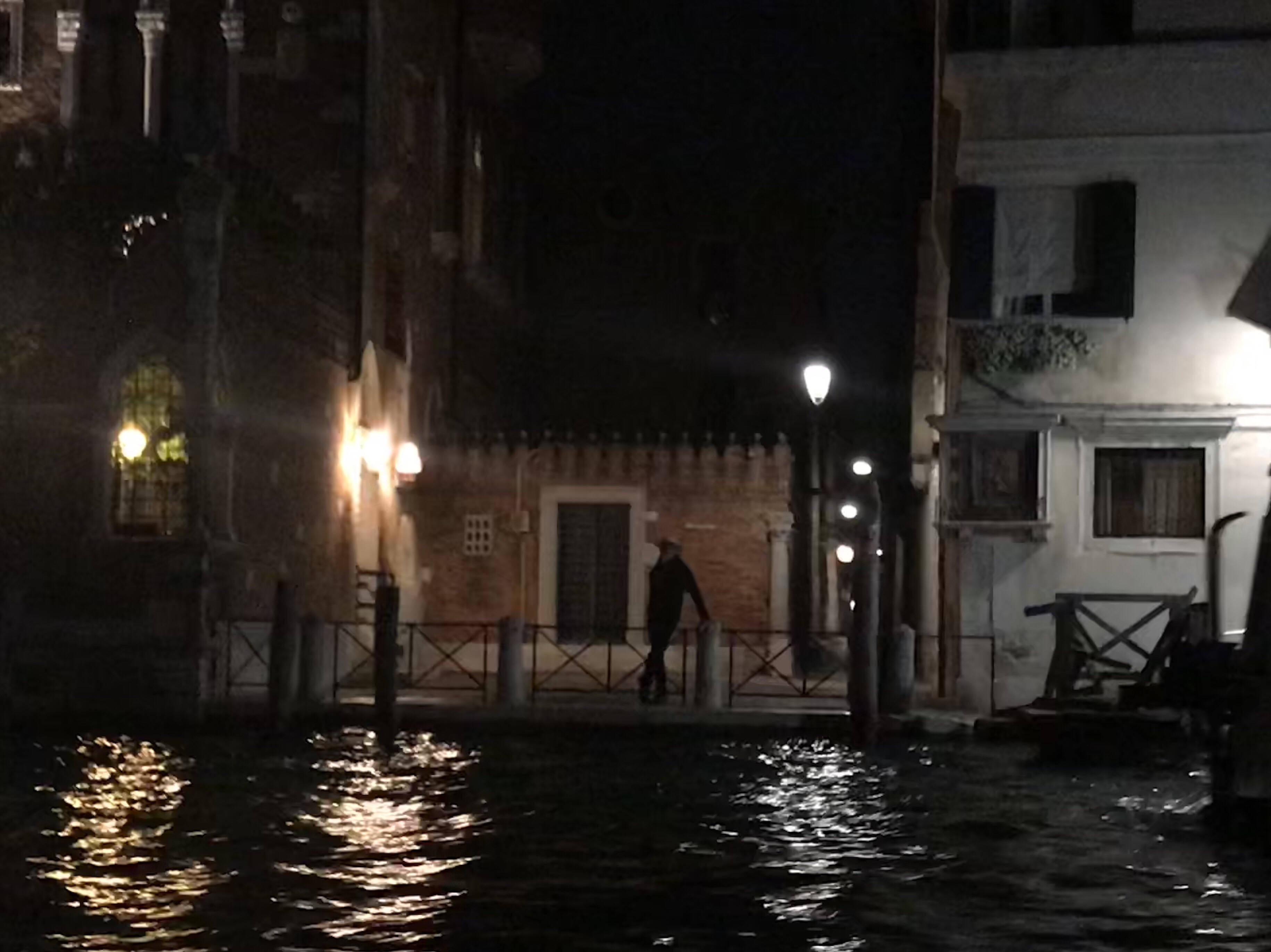
I highly recommend it as a end-of-the year/new year resolution.

The best way to find out what we really need is to get rid of what we don’t.

Marie Kondo

Clear your stuff. Clear your mind.

image

Mixed media collage. Santa Fe, Summer 2013.

Read Full Post »

image

Bassam's Café , the post-art hangout

[ Updated, more crisp scans.
I hereby promise not to post phone photos when I can provide scans. ]

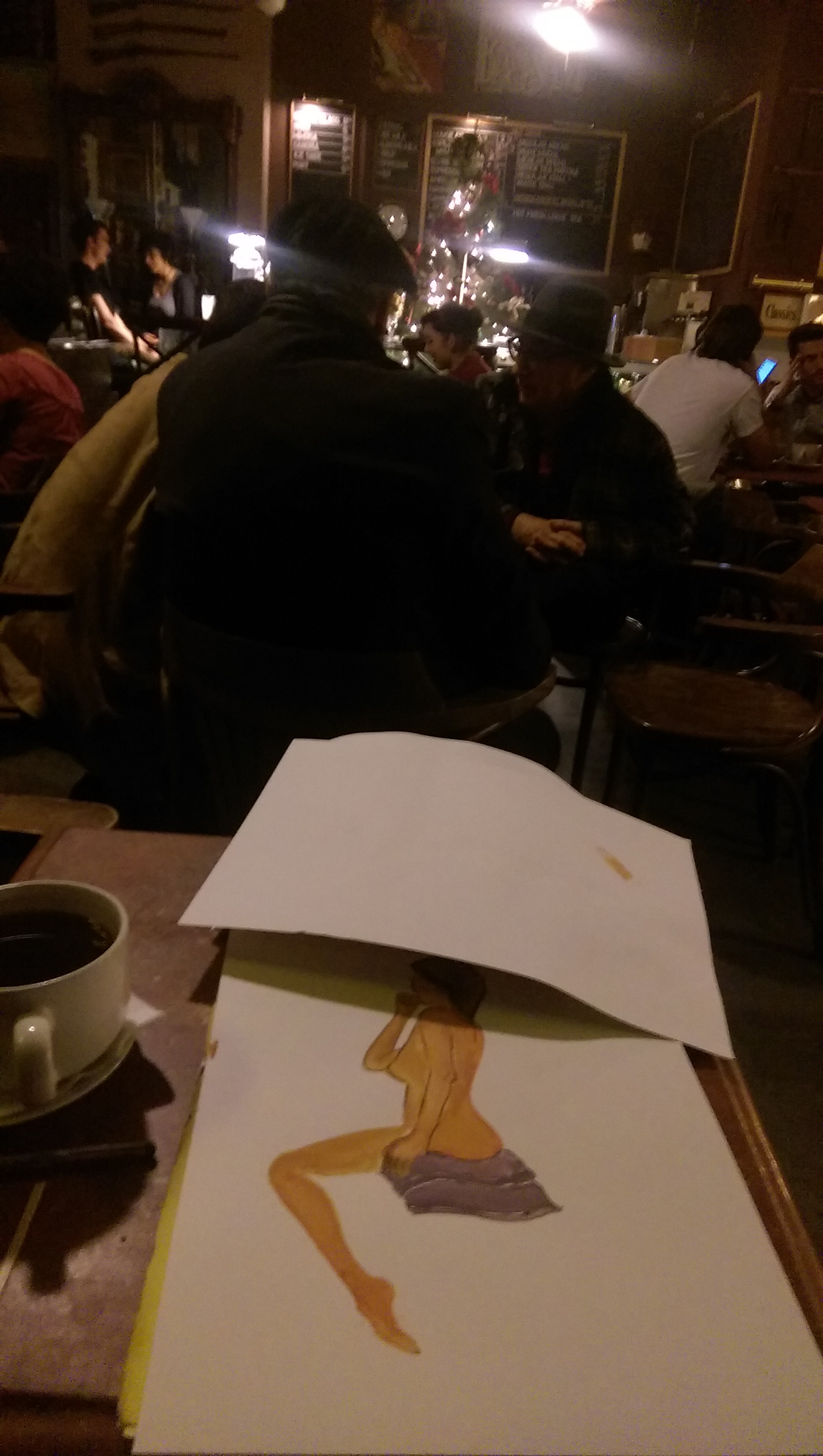
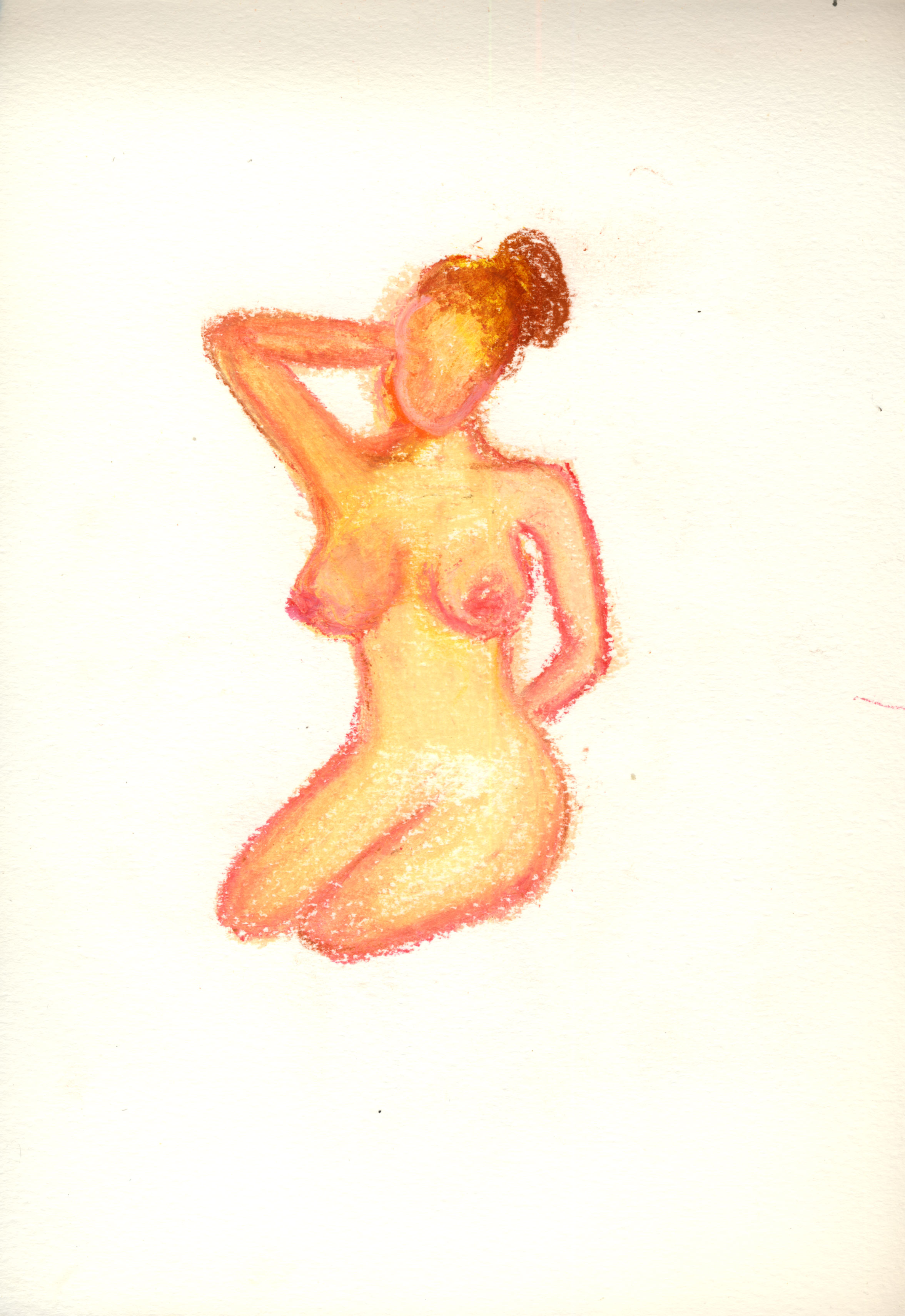
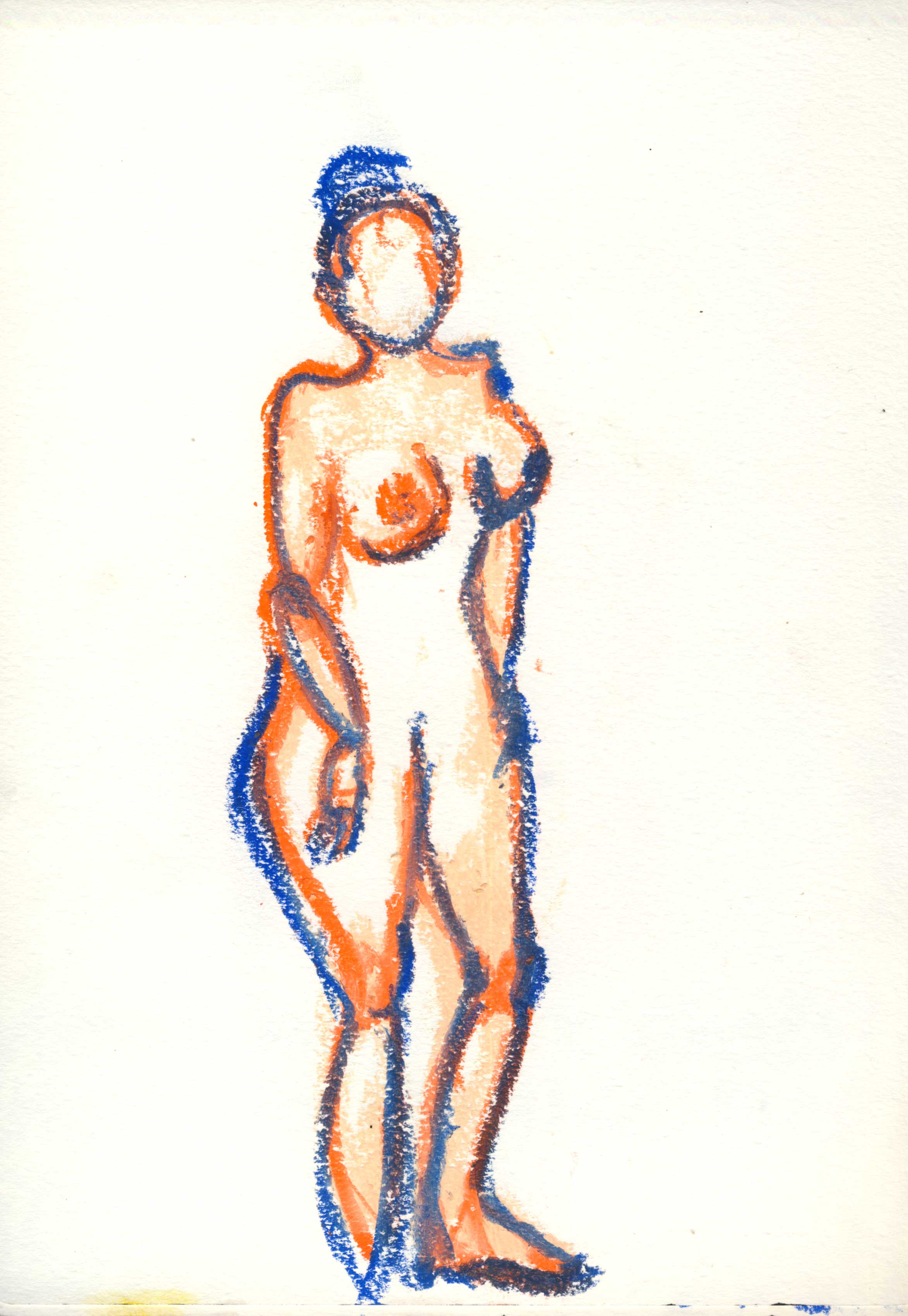
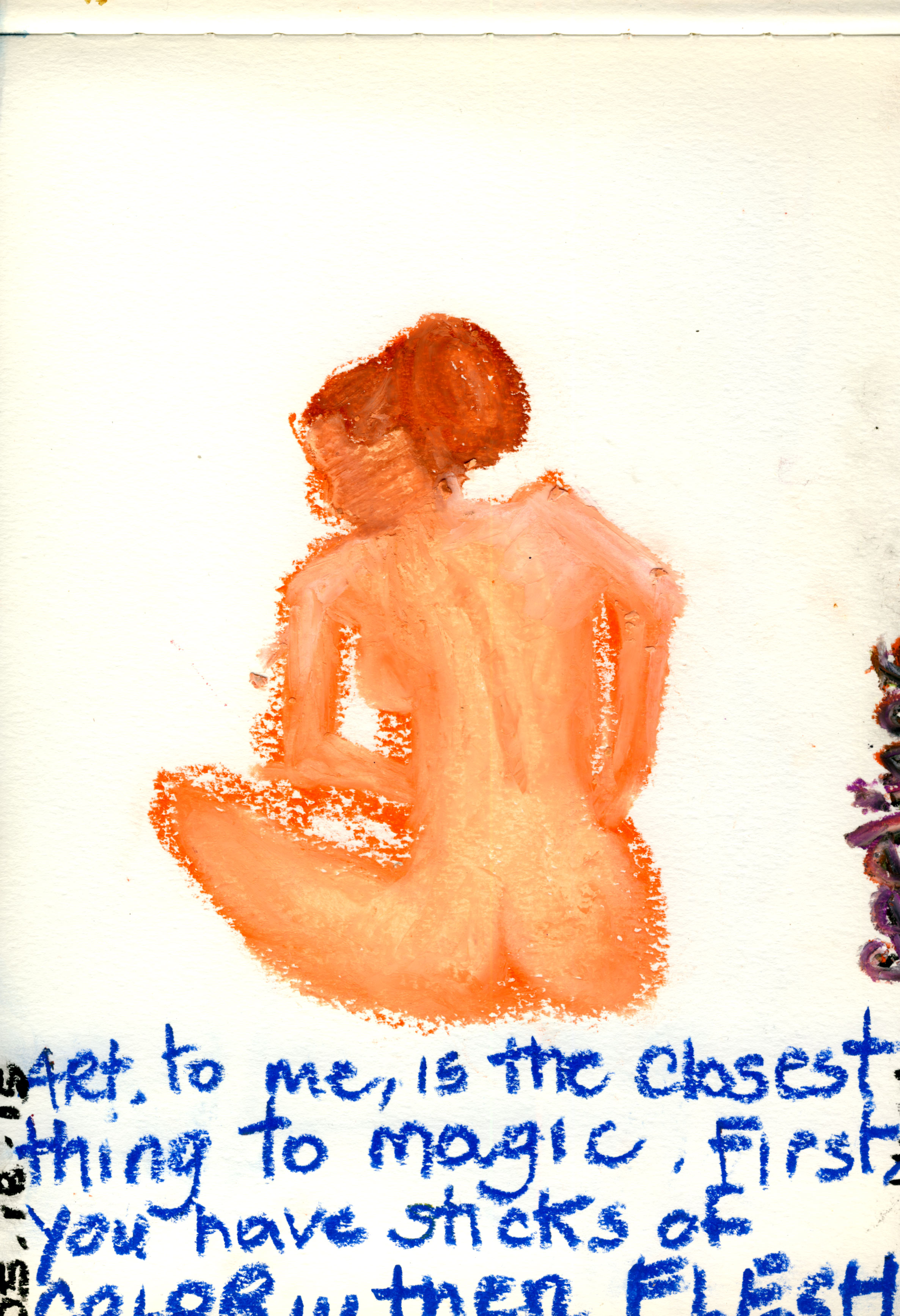
On the evening before the Winter Solstice, I rejoined the group that meets in the lower level of the San Diego Arts Institute {The Museum of the Living Artists} in Balboa Park, for “One Last Hurray”– tonight was the last night Live Modeling will be hosted in the Gallery . These rendez-vouz became scarcer with the passing of the last few months, from every other Monday, to one Monday a month, to a late summer hiatus, to this…the end.

Once more I am reminded that the only constant in life is change. I will miss these evenings of art, self-paced, the bodies of the models always surprising once translated into the page. The outcomes always tell me more about myself than them. I had not attended these Live Modeling sessions since October, when the school year resumed and I found myself teaching First Year again on Mondays and Wednesday evening (which was exciting, and cyclical at the same time…because as things change they do, occasionally, repeat).

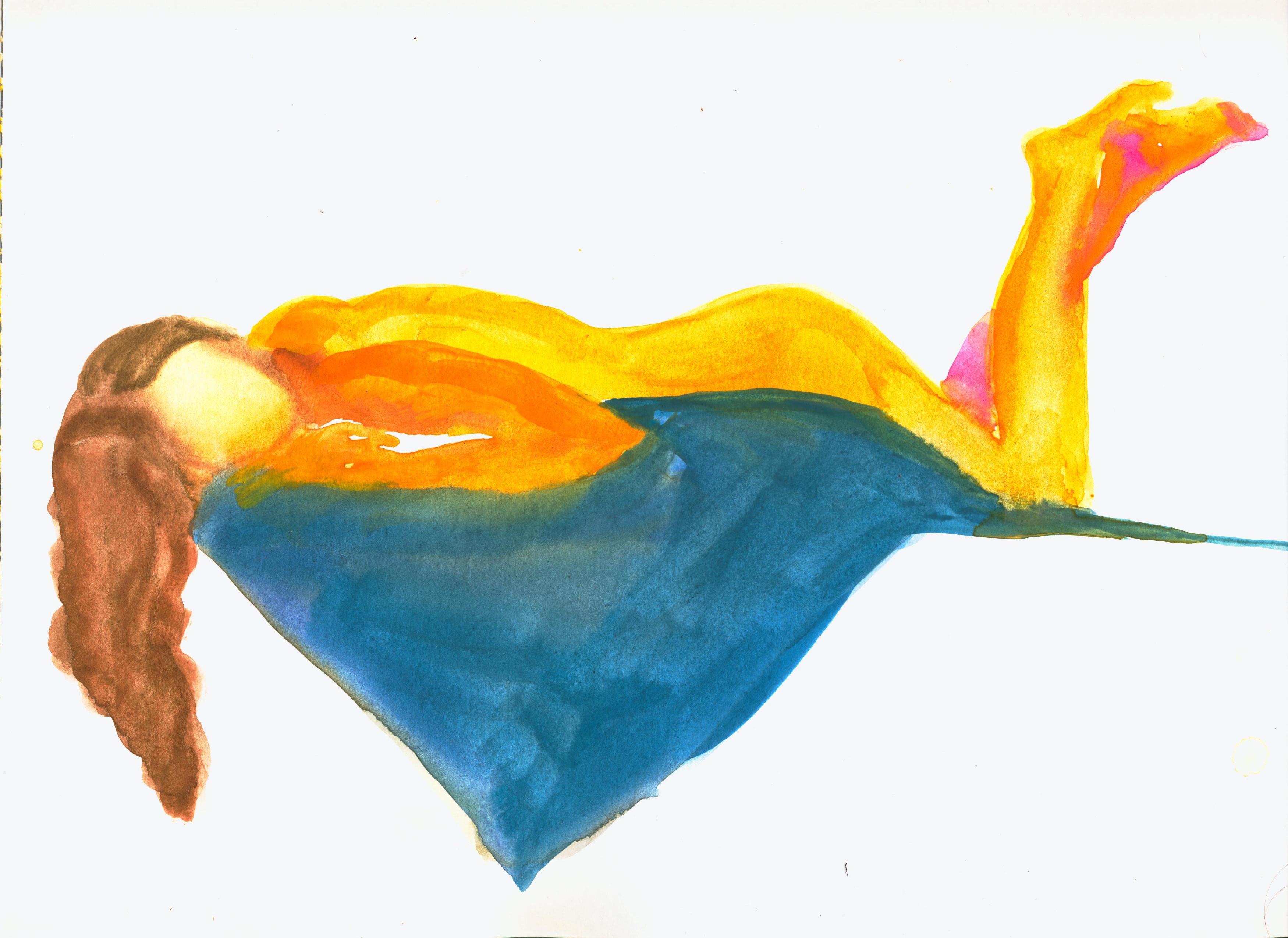
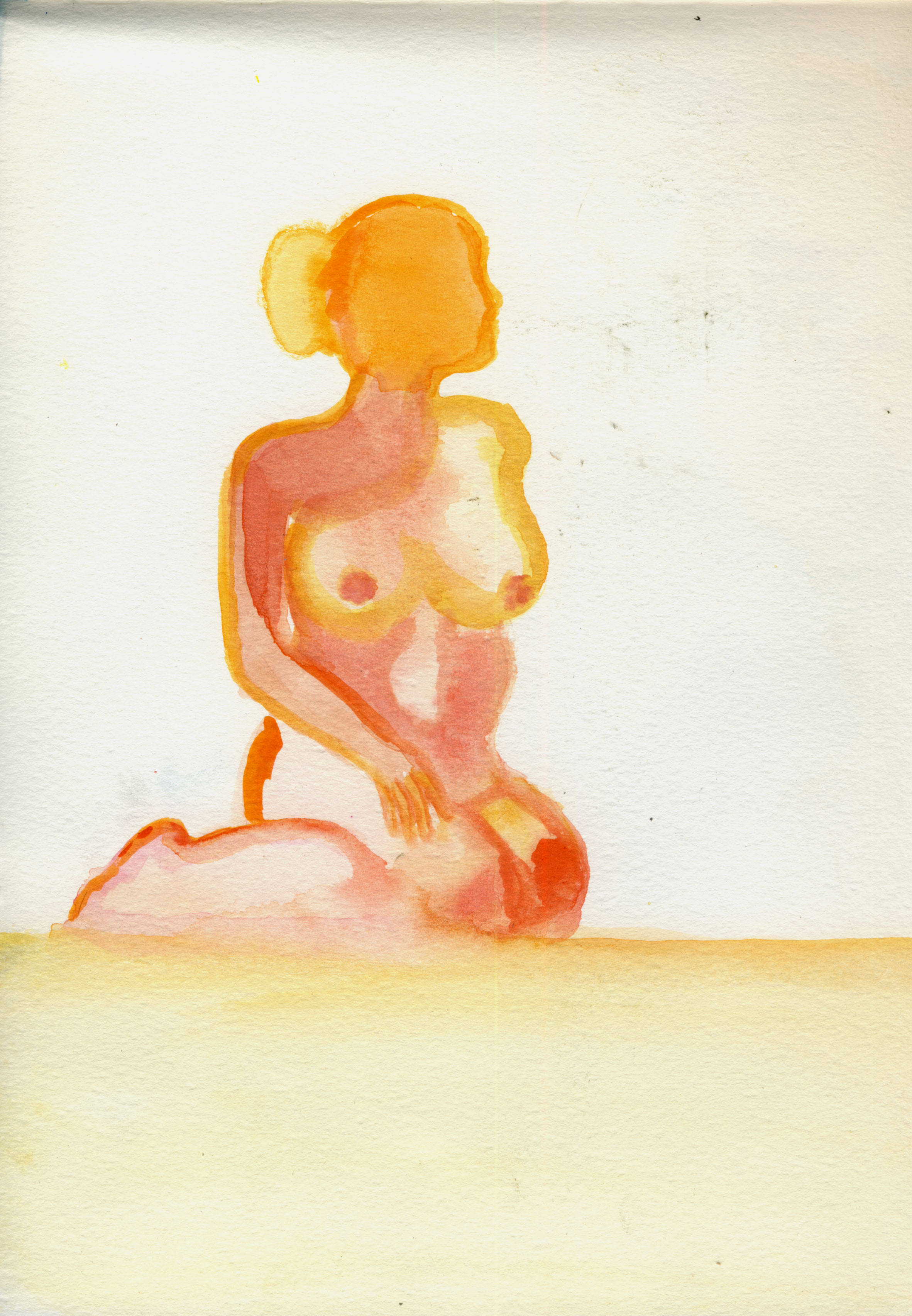
It was nice to say goodbye tonight. I pushed colored water with brushes, with no expectations, reminding myself that I am a painter more than a drawer, and reciting my farewell to painting/drawing nudes. My interest lies in making (collages and pantings that do not involve bodies) and these ‘art therapy’ sessions did much good in helping me find time for art, but it is time to move on and find the discipline within me.

image

Watercolor on the wrong paper- Strathmore Bristol. San Diego, December 21, 2015

Speaking of discipline, this time physical, this Fall I was also pining for my old Wednesday night zumba/dance class, taught by one of the best teachers in town and, lo and behold, that class is also no more. Everything is telling me to let go and let myself be unmoored because routines, and certainties, are only illusions of the mind and of time.

I am reminded at least few times a day that, since I became Assistant Professor, a title that I longed for and a milestone for me, the time that I used to have for Art and SketchBloom has vanished, leaving me with scraps, and occasional posts during school breaks. It is bittersweet, because when I had more time, I also had different challenges.  On the plus side, I feel that my classes are getting stronger and that all the energy put into what I do is bearing beautiful fruit, and my travels a re translating into lectures, thoughts, incipits of papers. My students have been blossoming , and what I offer them, though intangible, is perhaps my greatest art…the words and the stories shared in the intimacy of the classroom.  My favorite part of this Fall was new lectures on Native American Architecture and the Empires of the Sun (Aztec, Maya, Inca), along with those for Hindu and Buddhist Architecture. It was wonderful to share my travels to Teotihuacan and Mexico City, DF (July and November) and various museum visits. All these will be documented here in the coming days.
I am going to visit new Mayan sites soon 🙂 and I feel blessed that what I love to do (travel) also makes me better at what I do. One of my students wrote me that what I shared from my travels was her favorite part of the History of Architecture and Urban Design course, and that made me smile inside. Another told me that I am, indeed, a ‘collector of legends’, what I knew I wanted to be at 6 years old as I was put in charge of our classroom’s bookshelf.

I have been reading a lot on Hindu and Buddhist philosophy and there is a whole section of advice on, basically, doing your best, and letting go. Letting go of what you think is the idea of perfection, because life is already perfect, in secret ways that we will only understand in time. SO many ways to convey a message that I run into again and again.

I swear at least once a day in the past few months I have encountered and recorded places, people, feelings, stories, books, quotes, readings, images  that I wanted to share here but pressing obligations and life prevented me. I trust that what I have been collecting (the speed and quantity of memories accumulated akin to hoarding for its sheer size) will be shared and enfolded in time. The thought of living hard and traveling harder to make memories for my old age has crossed my mind. One thing I did not do is draw  or paint, but I believe, now, there are other ways to make art.
Photography is one. Or writing.
Also, creating the space and conditions that allow art to emerge: clearing your life and decluttering, physically and emotionally, to make room for art, for the NEW.
Is not prepping the canvas also part of the painting? Then I have weaved that canvas fabric with the threads of days full of wonder, struggle and discovery, primed it with an unshakeable faith, and strengthened with tireless service, resilience and endurance.

Please forgive me, it is the end of the quarter, and the end of a stupendous year …and I am waxing poetic. Time to sum up the past 12 months. I wanted to count all the things I was grateful for in 2015 and I counted 41. How many things are you grateful for? Every difficulty came with a breakthrough and a blessing for me, a strengthening lesson. I hope the same for you, Reader.

I know it is not the end of the year proper yet, but for me it already has come, with the close of another quarter and the time, silent and special, to calculate grades, my students’ and mine. I wish all my readers and visitors a great journey in 2016, untroubled by worldly events and guided only by that ‘light that never goes out’, our own.

image

Watercolor on the wrong paper- Strathmore Bristol. San Diego, December 21, 2015

image

Watercolor on the wrong paper- Strathmore Bristol. San Diego, December 21, 2015

Read Full Post »

image

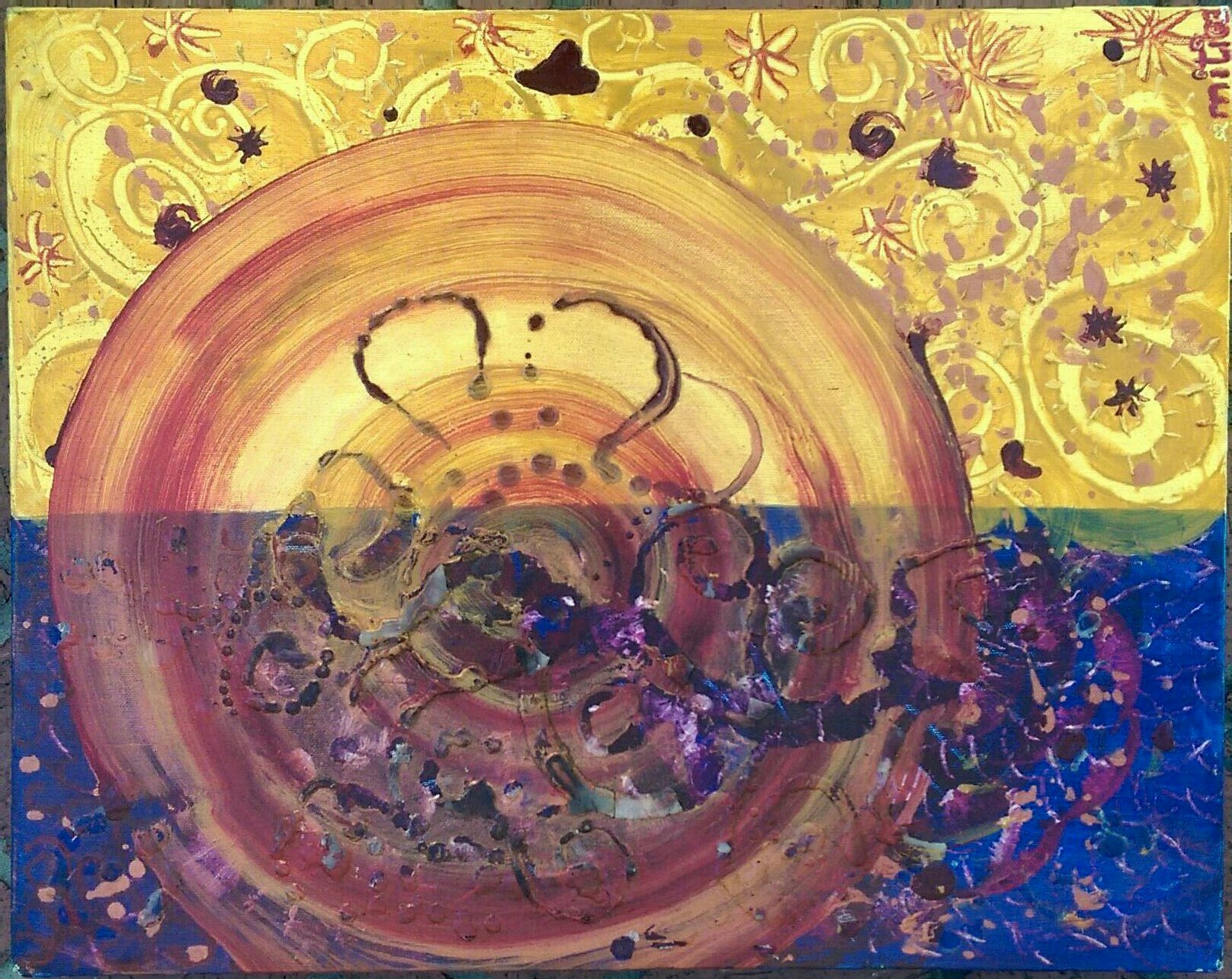
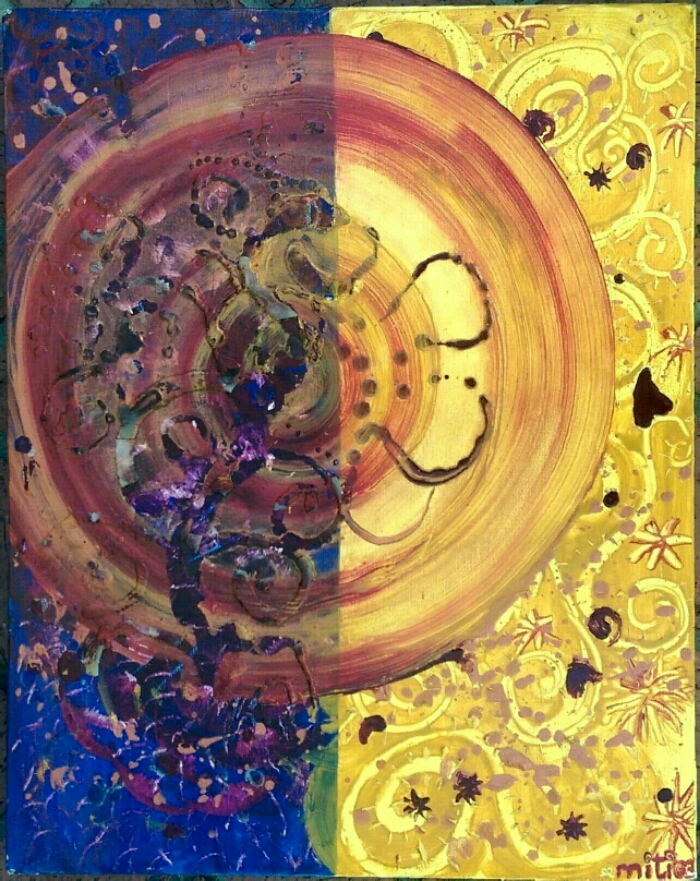
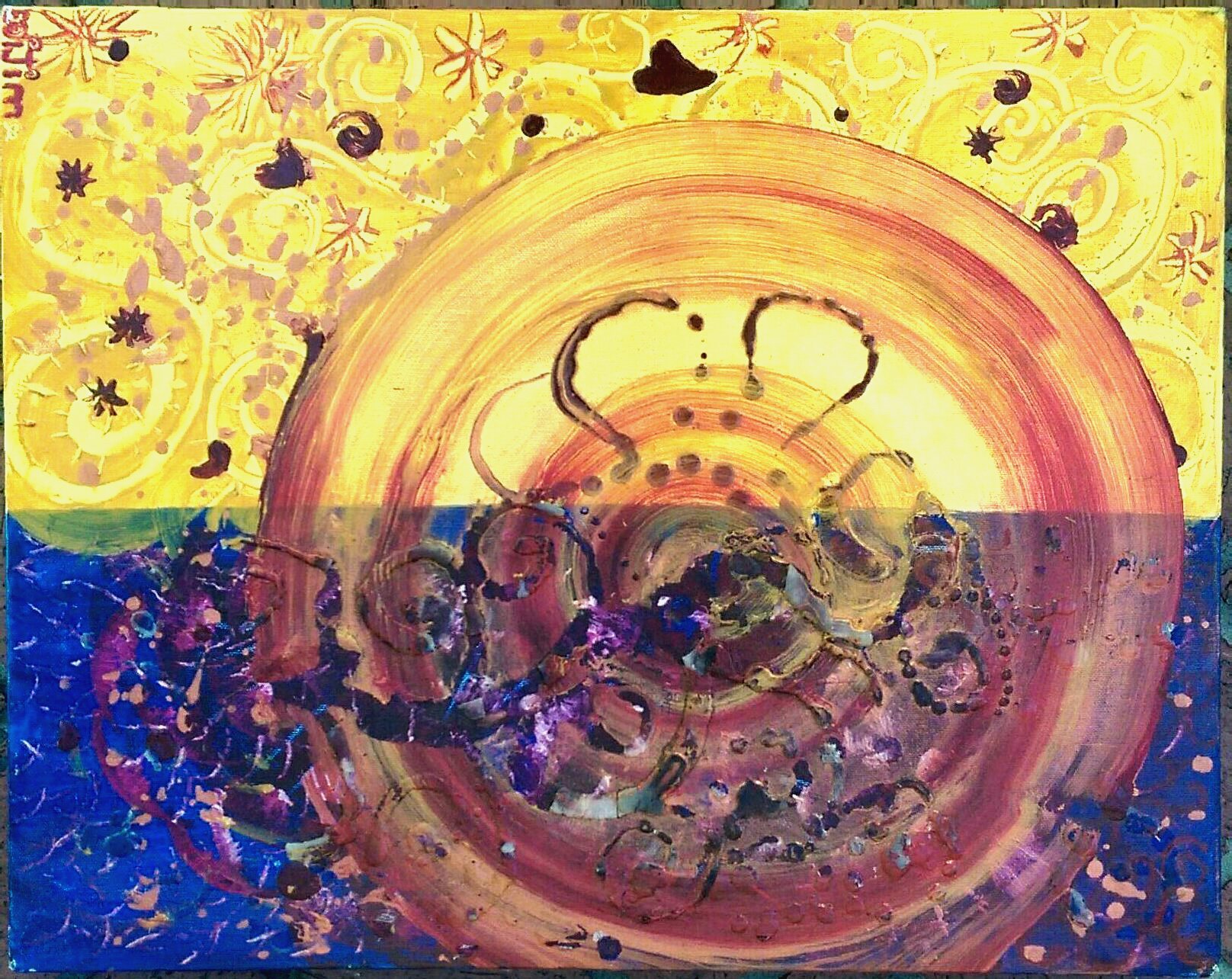
Sunset and stars, for Martha. Acrylic paint and Encaustics. San Diego, 2003.


I finished this painting with encaustics (wax dripping) in 2003, for Martha, my oldest and dearest friend in San Diego.

This is how the painting looked for years:
image

I was dissatisfied with it.
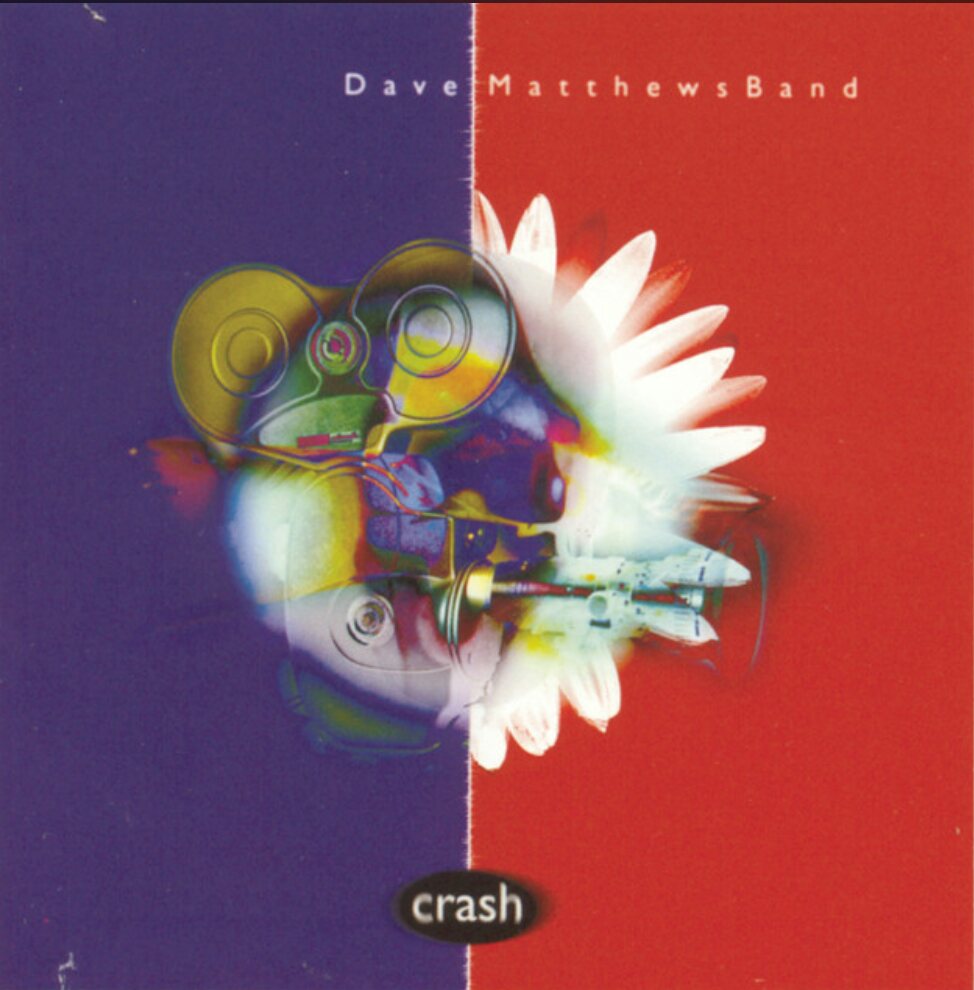
It just seemed an ‘experiment’ with golden acrylics, was too heavy on the left side and just, in general, looked like a 90’s Dave Matthews Band CD cover gone wrong.

While there were some reedeming moments ( the night sky/ starry side had a loveliness to it) the demarcation line was too abrupt and the piece as a whole did not make sense
.
So, I took it back sometimes in 2010 to ‘work on it’. Poor Marthita..who does that? Thank you, ever-patient friend.

This untitled ‘thing’ sat on an empty wine rack in my kitchen for years, becoming mine again, in a way, a de facto piece of furniture.
I was at a loss…I knew I had to give it back at some point, yet had no idea how to fix this obvious statement on dichotomy that just looked wrong.

Enter Beverly. One night, a couple months ago, my very eclectic, ageless, artist neighbor Bev was talking to Mingus, her black cat ( I am pretty sure it’s a familiar 😉 ) on the walkway we shared.
It was one of those rare days my place was guest-ready, so I invited her in for a glass. She was interested in the painting on the easel, still turned the ‘wrong’ way. I shared my conundrum with her. She just walked up to it and said ‘What if you turn it this way?.
Now, “thing” was a fiery California sunset. She found the sea in the paint, and it took 12 years.

Something like this gives me faith that everything comes into its own in time.
That timing is always right.
That years are necessary.
That the right person comes in and points to you what has being staring you in the face, what you could not see.
Thank you, Bev.

….
Below, a flipped, filtered version I think
it really is what this painting wants to be, in its dreams.

image

We’re Always Under Stars


You took me star-gazing
the first night
I was looking for Orion.

(when i went home
I found him,
hung low over my window
at 5 am.
I could never sleep
after you.)

You shared the impossible poetry of Hikmet, which nobody in their right mind should reveal to someone they just met.

On the second day
you came with your convertible,
the passenger side devastated
by an accident.
I had to get in from your side,
for a month.
Climbing in, crossing over,
my body awkwardly tilted while trying to maintain grace in my version of
a courtship.
I did not mind, not one time – though I always forgot.

I should have, maybe, read the sign.
Instead, I thought it was endearing
it meant you had your wounds, too.
I did not feel so bad about my messy house, my scars.

We drove to the beach,
California style.
It was a semi-deserted nudist beach, and we had to hike a steep cliff
to get there.
There was always a sense of the
unexpected
with you.

We talked while girls with bouncing boobs
and men with various appendages
were too away for us to really see
–I was, at once, at ease with and acutely aware of the french strangeness of the situation–
another would have thought about
how progressive it all was.
Unaware until later that that was a choice, I kept my top on.
In hindsight, perhaps,
you were testing my boundaries.

When you touched me,
you touched me
the sun kissed me
another star, on our second date.
We dipped in Mediterranean warmth.

I looked at you
like Sicily looks at Calabria
over the Strait.

I thought this time things would be
different, because we shared the same language.
I forgot stars rise and set at night, too.
And we are always under them.


San Diego, November 2015

Read Full Post »

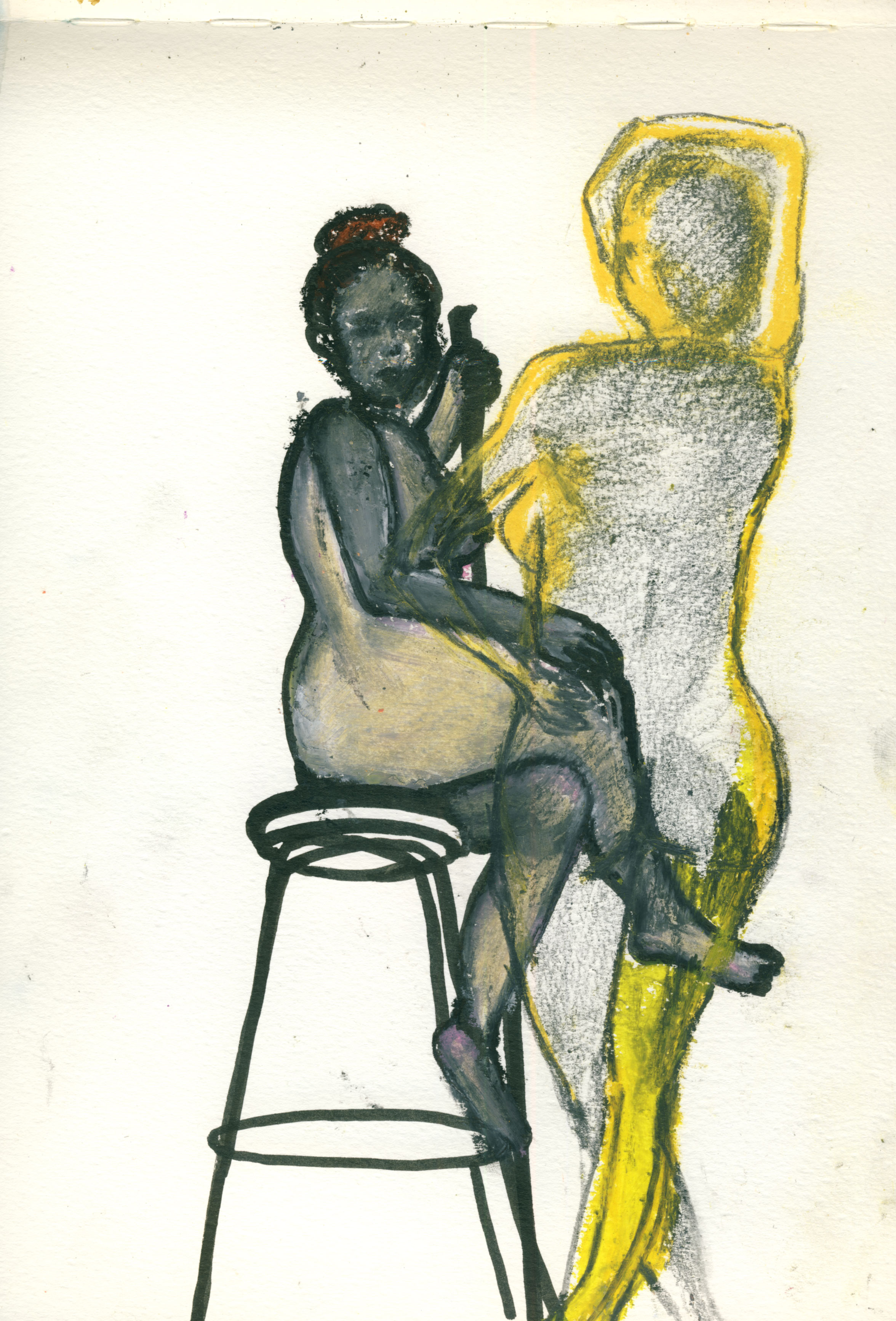
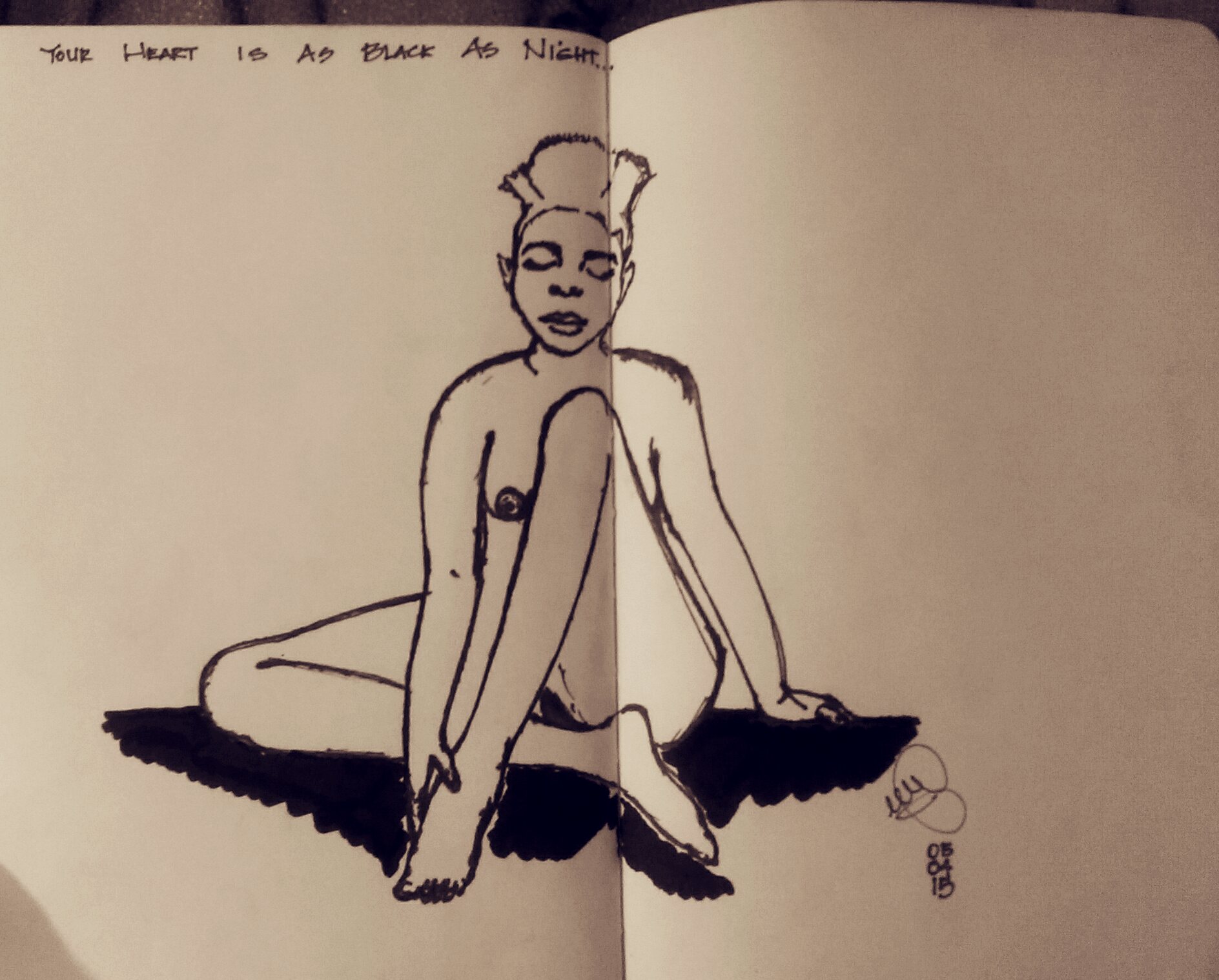
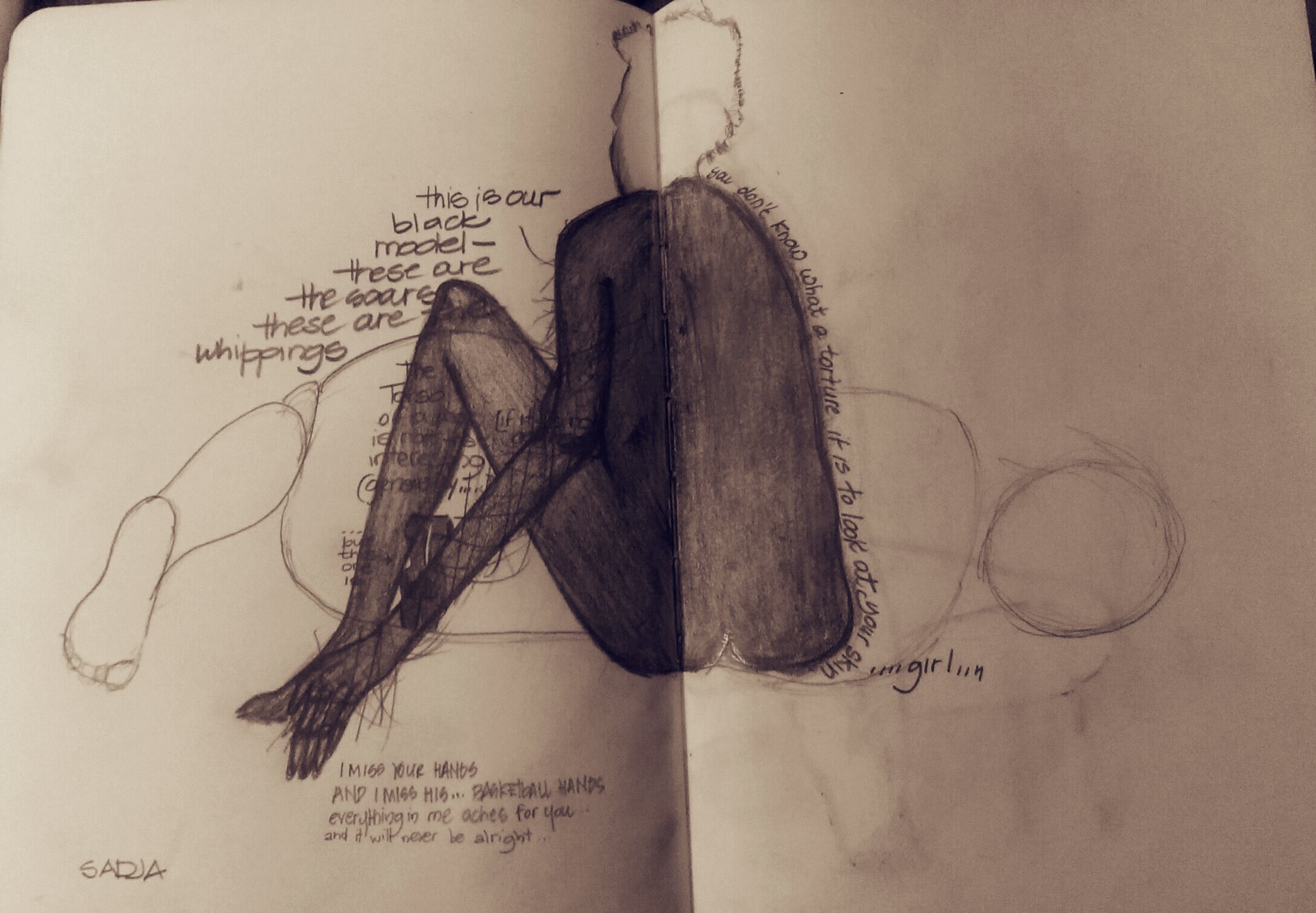
nude4_may2015_webnude5_may2015_web

nude3_may2015_webnude2_may2015_web nude1_may2015_web


Another month of quickening days, of white skies, of scorching heat, of California monsoons has gone by.

The weather in San Diego has been positively schizophrenic.  Life has been full (I dislike the word “busy”), heartbreaking and healing at turns, magic, adventurous, challenging and with an overall trend of daily progress towards balance, harmony and mindfullness. Things are good.

I have been blessed to have crossed paths with soulful fellow travelers.

Since the beginning of 2015, the posts here at Sketchbloom have been so sparse…it’s embarassing. I miss my days before my professorship where I had the luxury of being an artist full time. Yet there were, of course, different struggles at the time.  I always heard that with privileges come responsibilities, and I felt those, so much, this past school year. Although the school year ended, culminating with Graduation at the end of June, I feel I am only (sort-of) beginning to breath now.

I completed my six-week five-credit Arabic course yesterday. I signed up for the class on what must have been an adrenaline rush from the tough Spring I had. The course started during Finals week at my University, which meant a seamless, yet intense/insane transition! I have some calligraphy to share from the course, and I am happy to say I can finally read and write in Arabic!

This month also saw me in Ciudad de Mexico DF for few days. I will post soon  some photographs  and recollections from that city of thousand faces. Alas, no drawings. (no time)

How to sum up a whole year? Only through recollection in tranquility. I am finally on break, and I plan to catch up with all the posts from my travels. I have notebooks full of thoughts and words, that might become verses, once distilled. Yet, this is also the time to make. I read that, a year from now, you will wish you had started today. SO I am starting, again, today. Every time I post here it feels like a new beginning. For those of you who have been following this blog (more than a thousand!), thank you for your patience and for the kind forgetfulness, and forgiveness, of promises not (yet) kept. I started running behind in 2013….no comment. My art and this blog can hardly catch up with my life and travels. I guess that is a good problem to have. Maybe you want to wander here, and see why time flies.

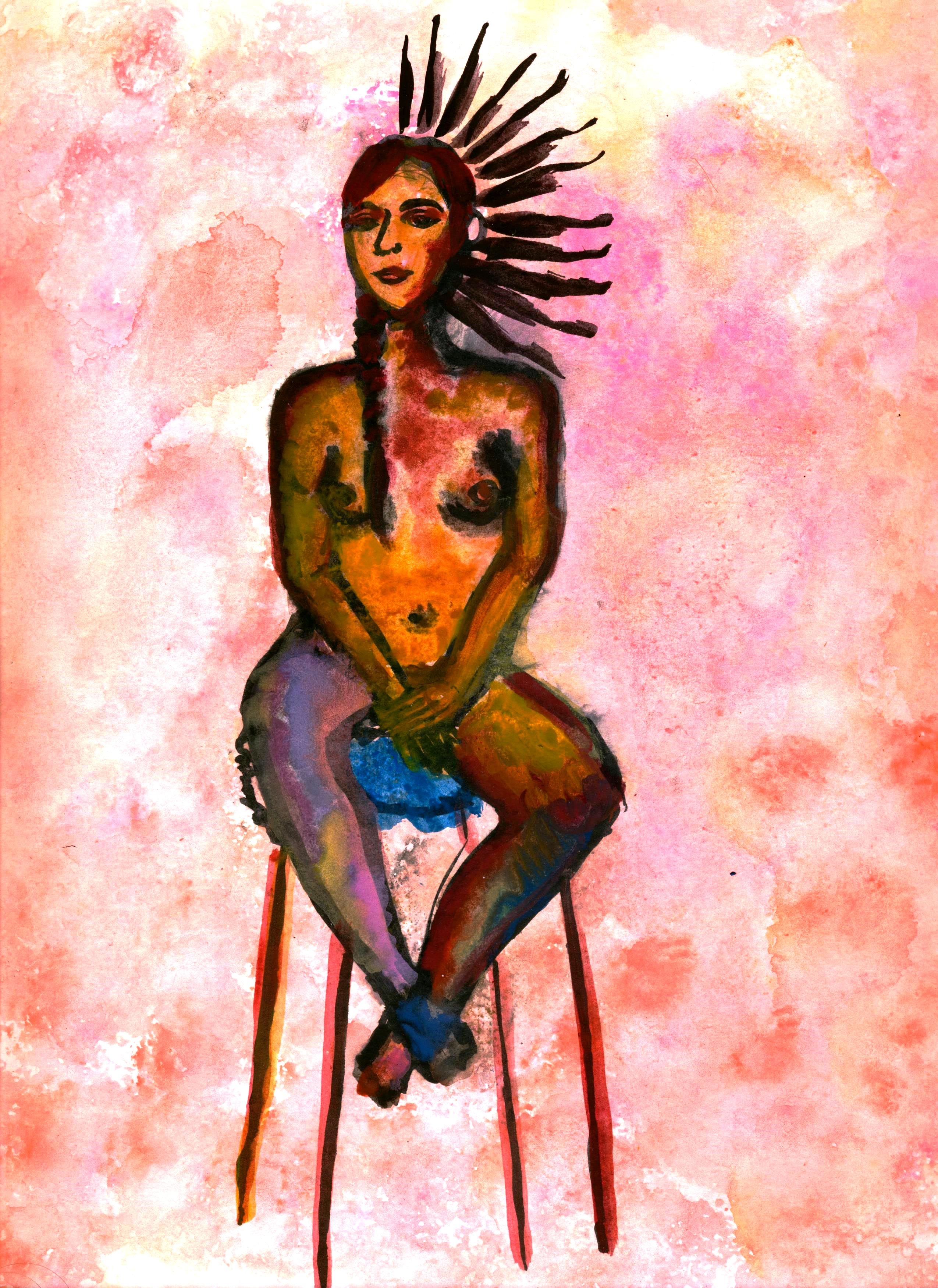
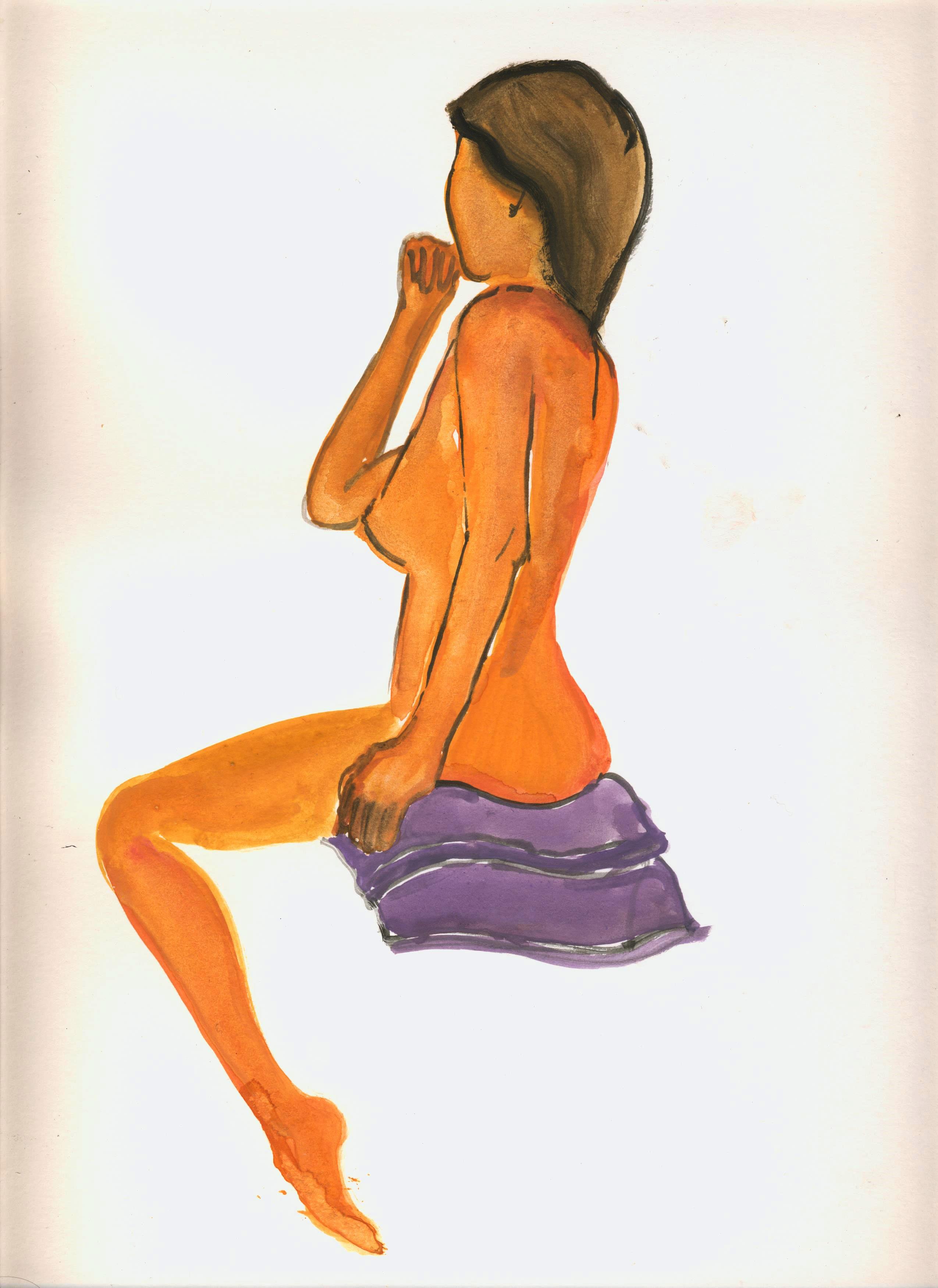
Annnyyyyhow…..Here are the rest of this spring’s nudes from Monday nights at the San Diego Arts Institute.

I noticed, going through the various drawings done there, that I tend to experiment with a different medium and paper each time. I guess I really miss my collages. I had the time to scan these drawings (i always feel quick and dirty when I post shots from my phone), and, well, what a difference.

One good piece of news is that I will get back my art studio in the Fall. I was part of the Brokers’ Building Artist Colony from 2003-2008 and I cannot wait to have a special place for my art again.

This summer – this year, really – feels like the long backward run, the gathering momentum

overdue

of the pole jumper.

Read Full Post »


IMAG9055_1

IMAG9053_1_1


IMAG9273

IMAG9279_1

11206068_10152941777770893_6730298231119734646_n IMAG9277 IMAG9011 IMAG9014

IMAG9392

11417665_10152967591740893_4910097218433073687_n

First experiment in Digital nude painting on my Android HTC ONE phone, using the Paint Commander App and the Sensu brush.

IMAG9398

Two months to the day of my last post, I return.

Like a lover who walks into the door surreptitiously, I offer no explanations.

Just Kidding.

This quarter saw me teaching three courses with a total of 120 students, so, dear Single Reader, the reason for my hiatus is self-evident. It was a ten-week long journey into different periods of History of Architecture and Urban Design, Urban Issues and so. much. more.

Here are snapshots of my bimonthly art dates. I have quite a few drawings, but could not conjure up the time and mental space to scan and post them. Ideally, these will be scanned version soon..but here they are.

I embarked on an Arabic adventure as of Monday, and this will be a spectacular summer, I feel and know.

“If we had no winter, the spring would not be so pleasant: if we did not sometimes taste of adversity, prosperity would not be so welcome.”


Anne Bradstreet

Read Full Post »

image

I walk at night.
You can keep mornings, with the aftershave of salesmen, rush hour…with the Starbucks lines and hair perfectly
well done.

(Mafalda says that everything good in life messes up your hair)

You can have the morning with its blinding light, its lack of nuances…leave the night to blur lines, to hide and to reveal.

The morning of road warriors, weekend warriors, commute warriors, checkers of life’s milestones – I lost count, and it is not my race.

Leave me the profound night, let me walk at hours of my choosing, when empty streets whispher poetry lines, if you just listen.

This is my queendom, let me patrol my land of empty office buildings, of Mexican night workers, of quiet and shadows.

The night of orange streetlights, of vacant lots and sleeping churches.

Of red windows, where the artists burn.

image

image

image

image

image

image

image

image

Read Full Post »

image

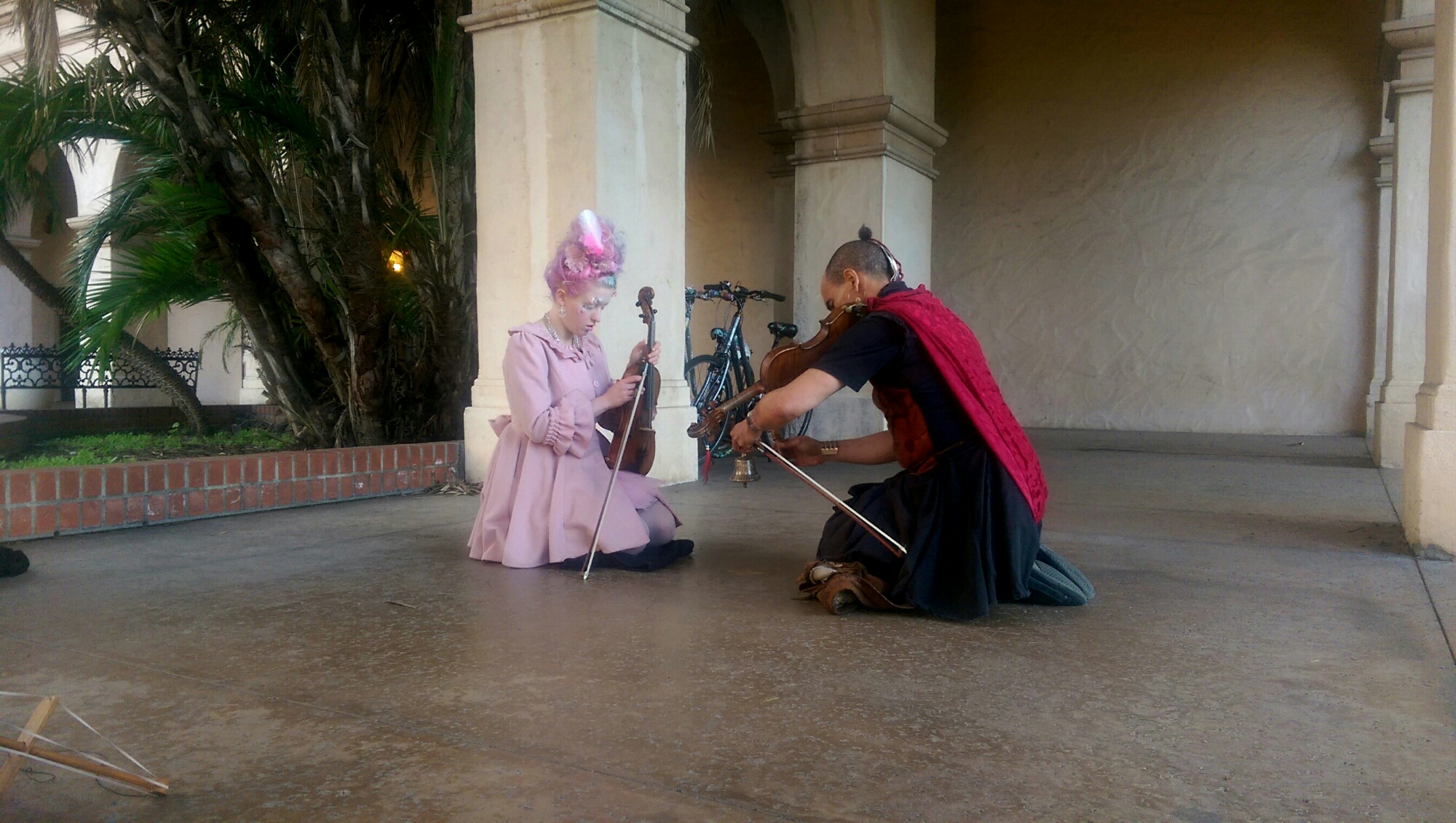
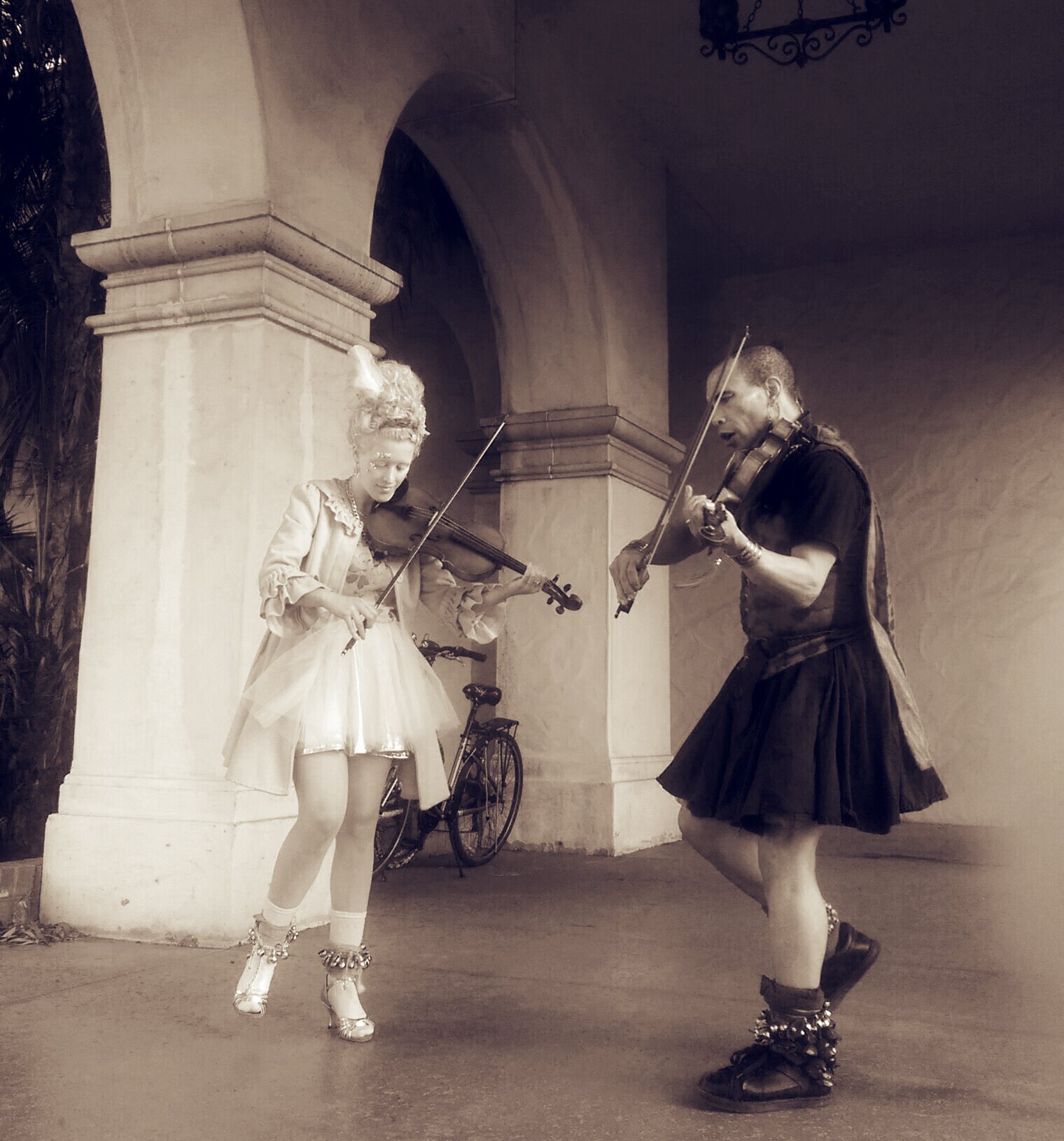
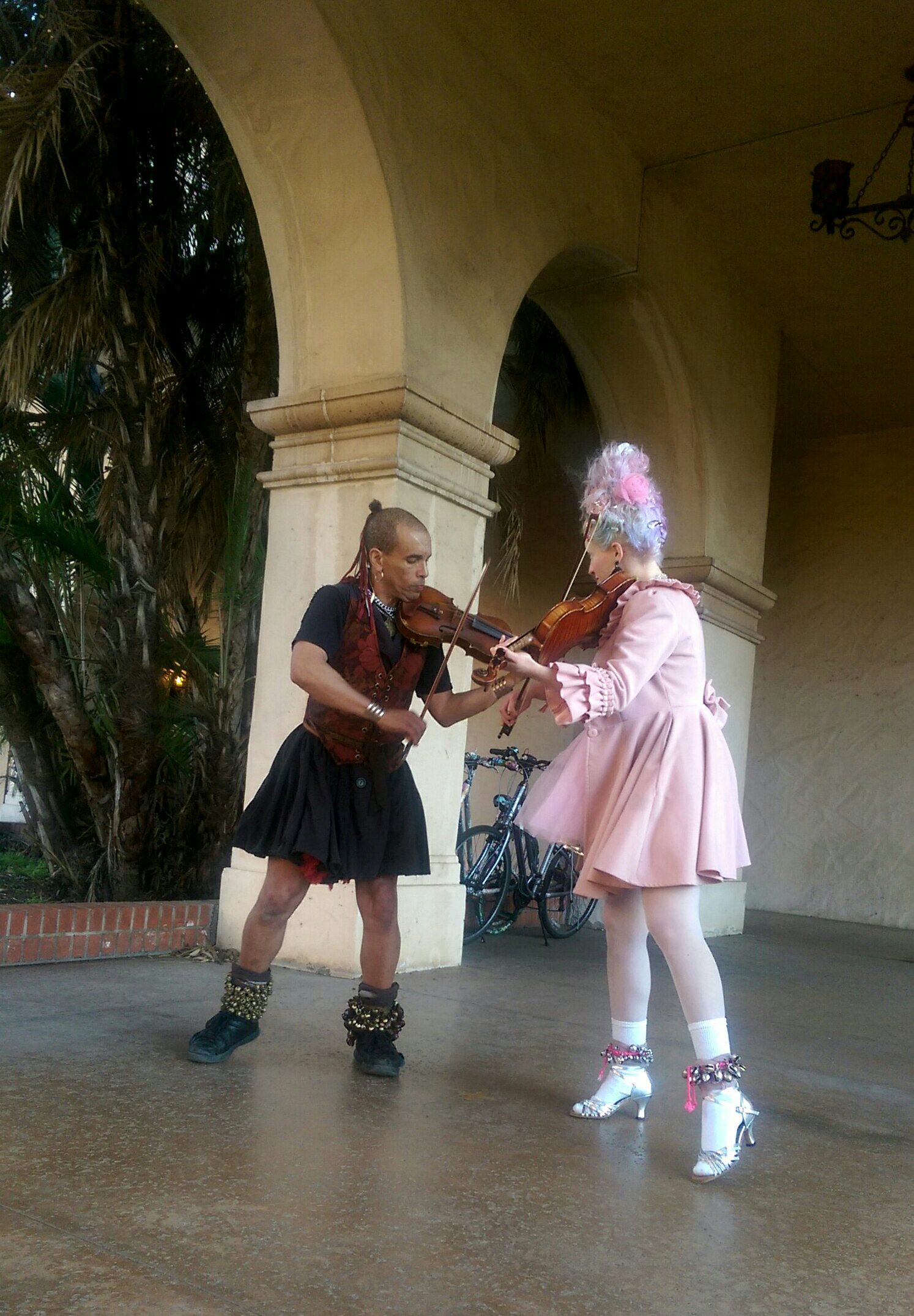
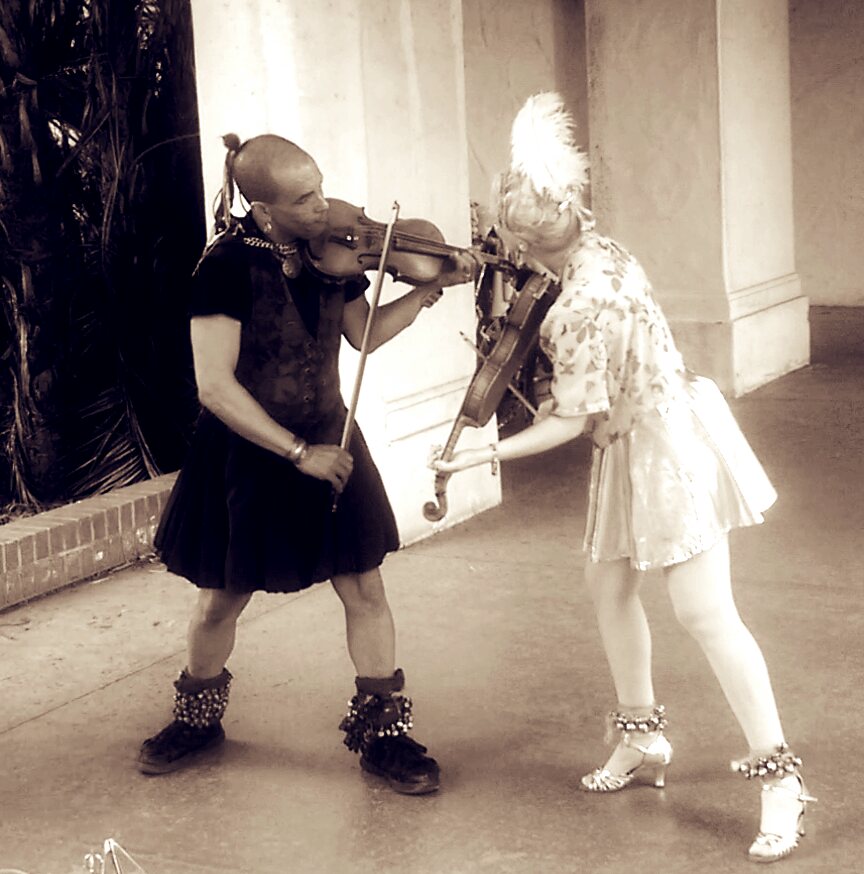
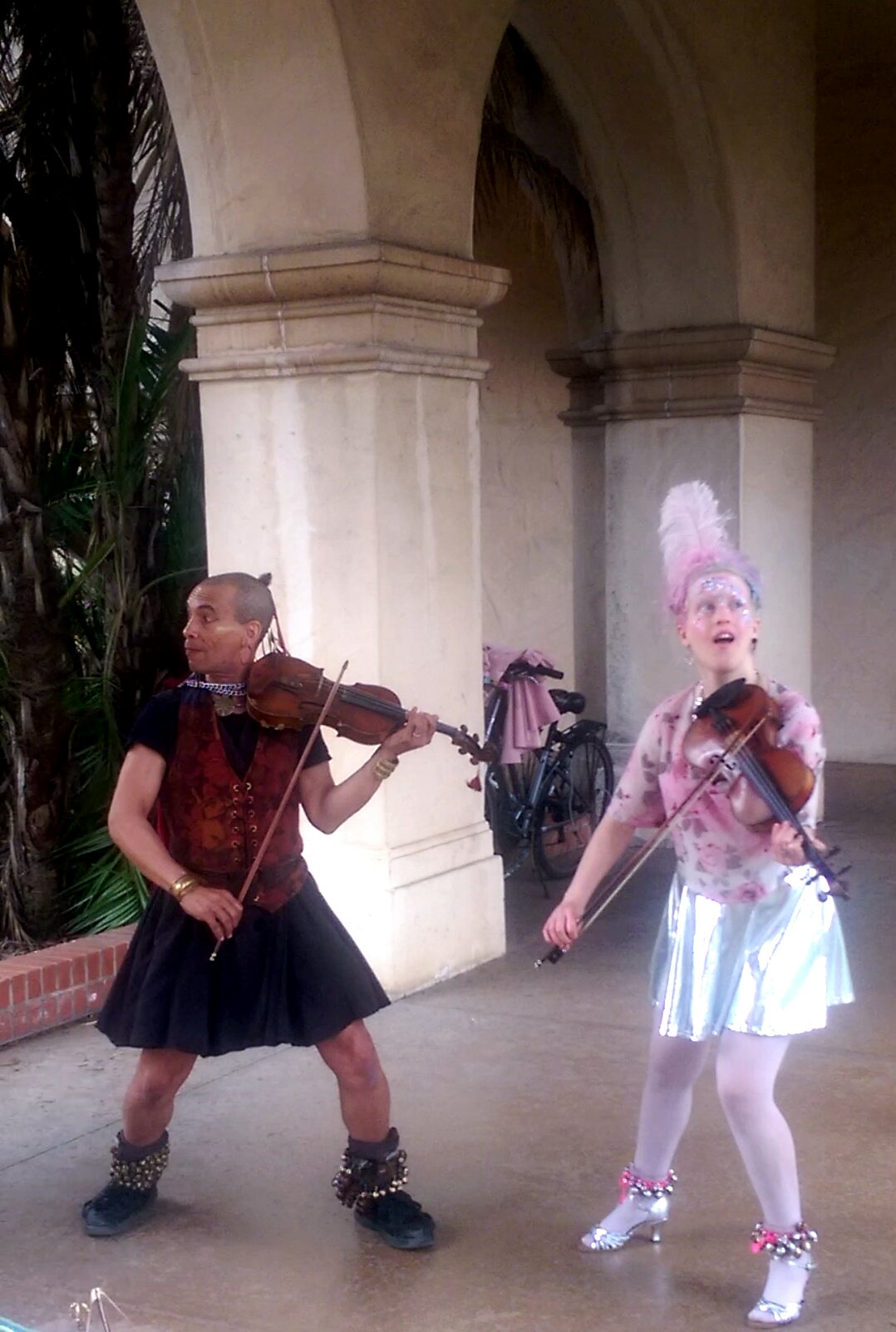
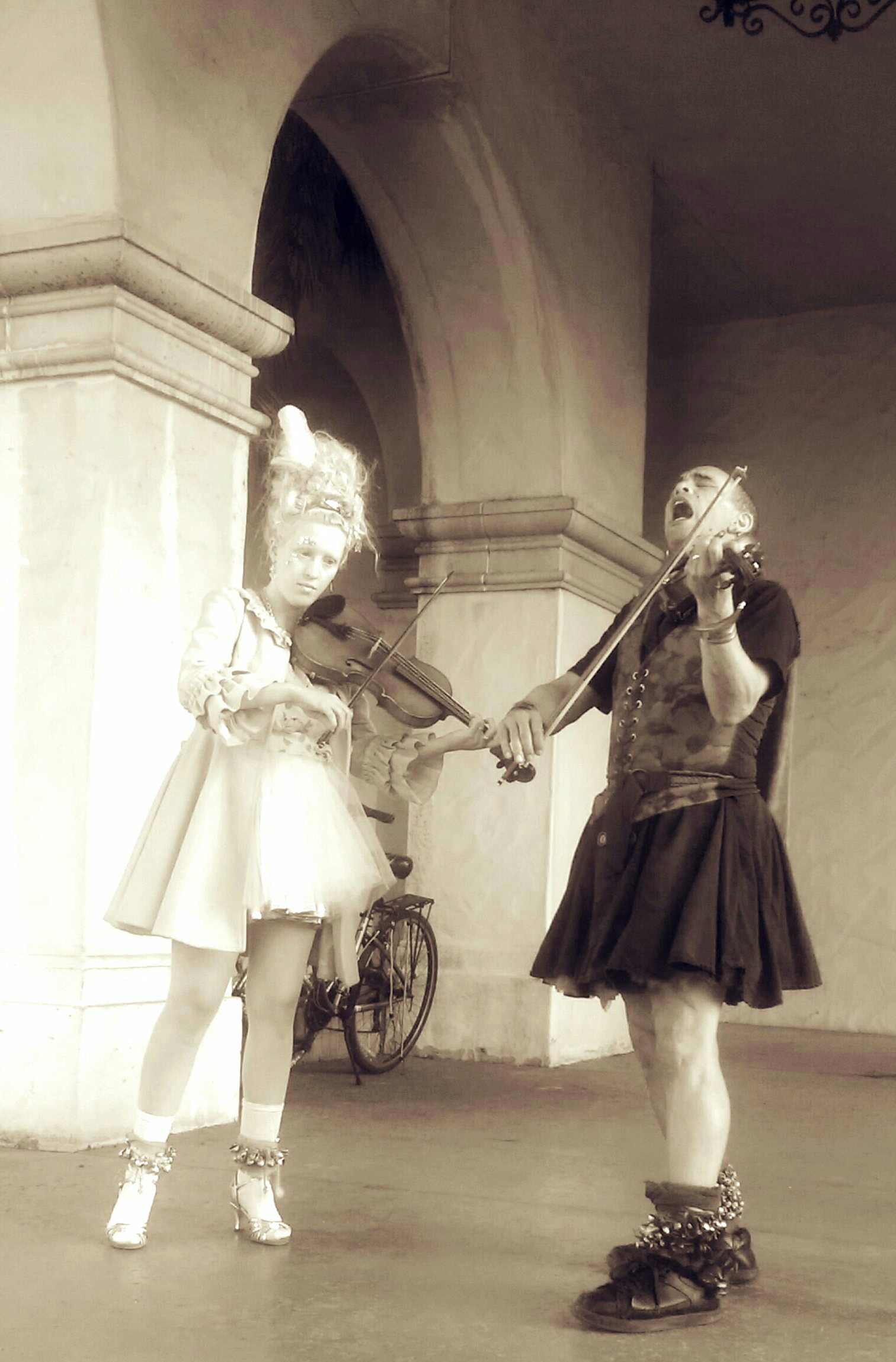
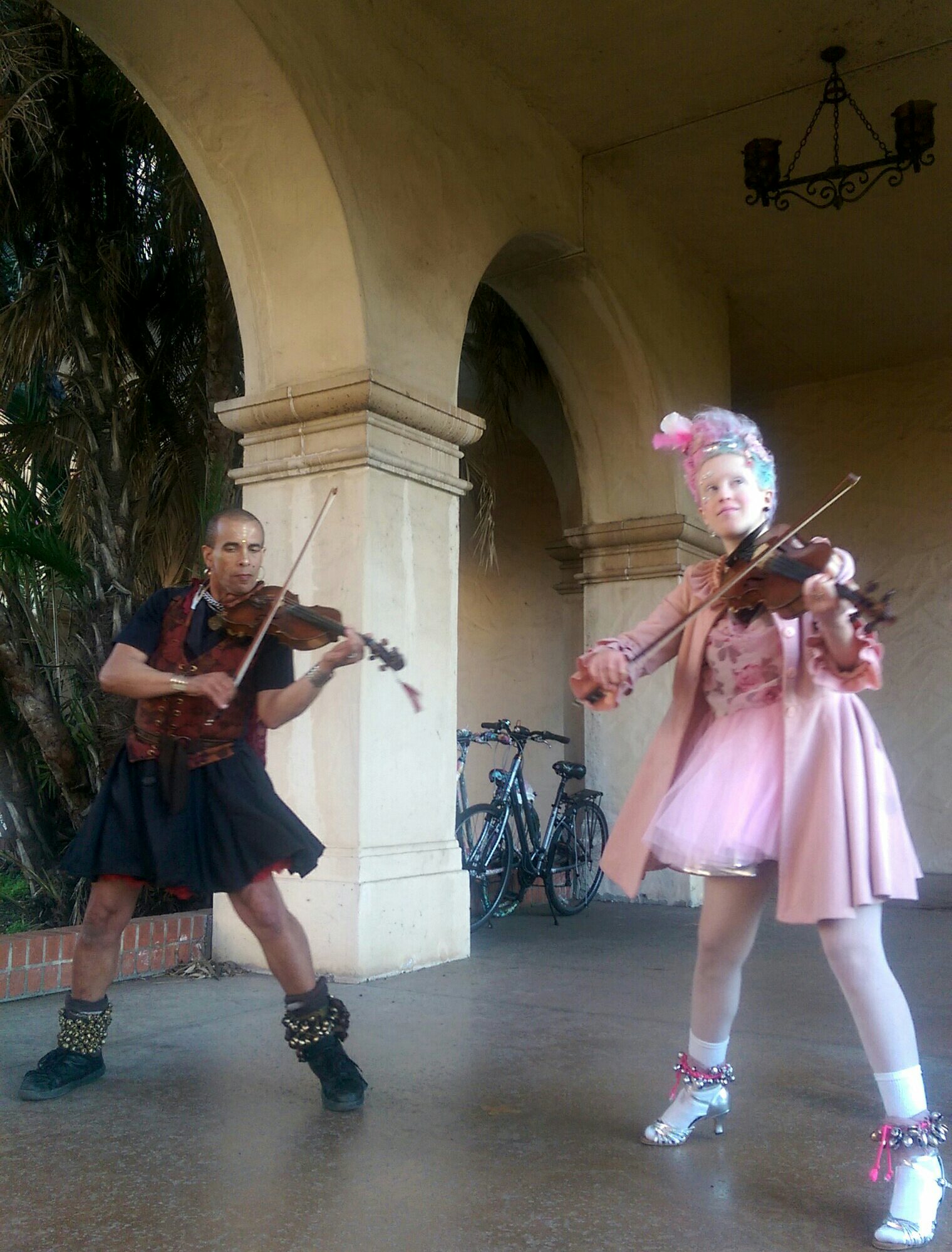
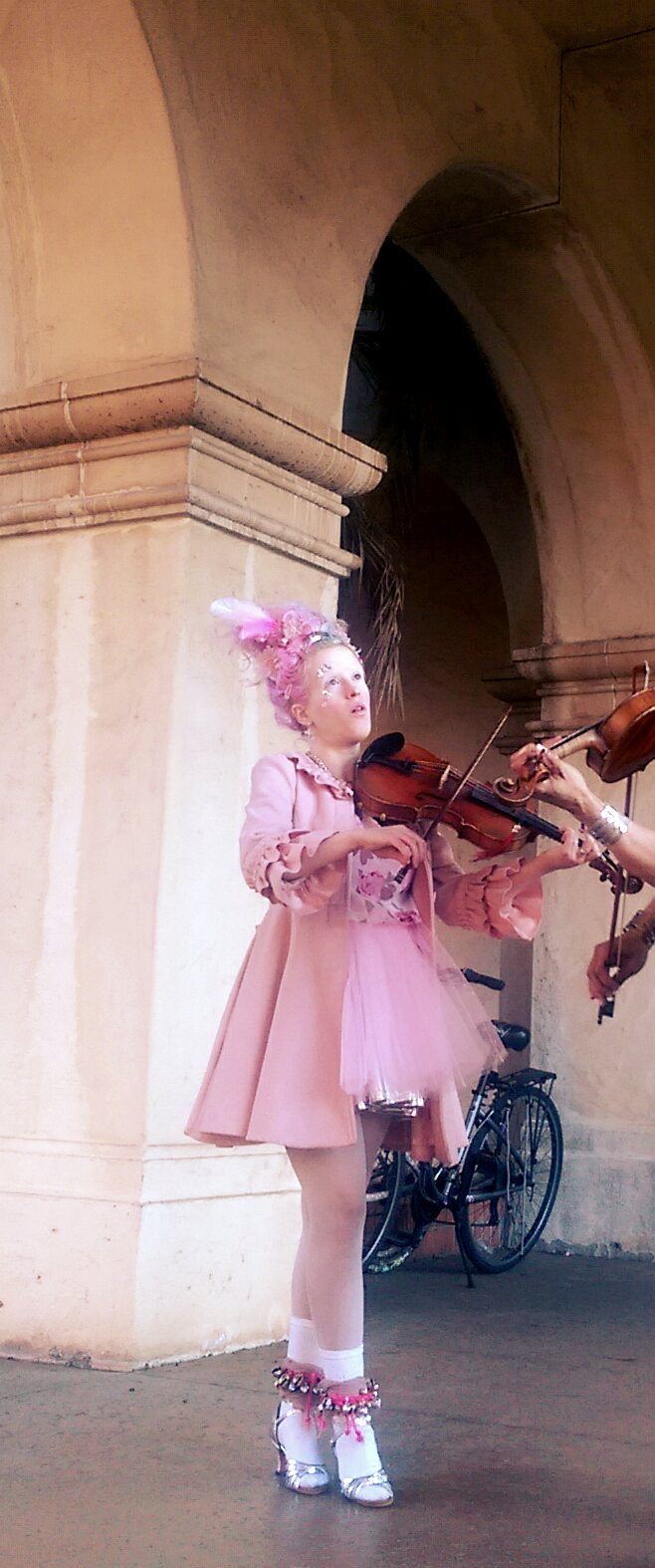
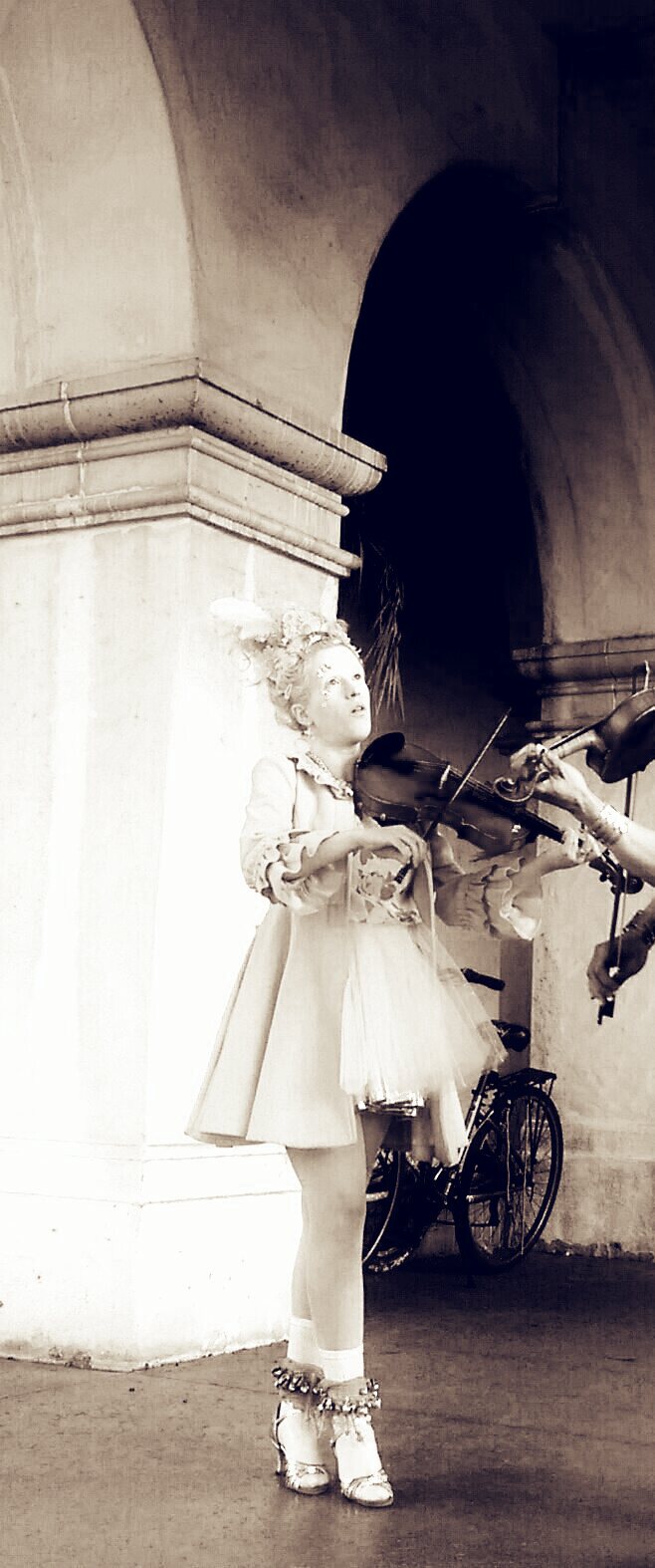
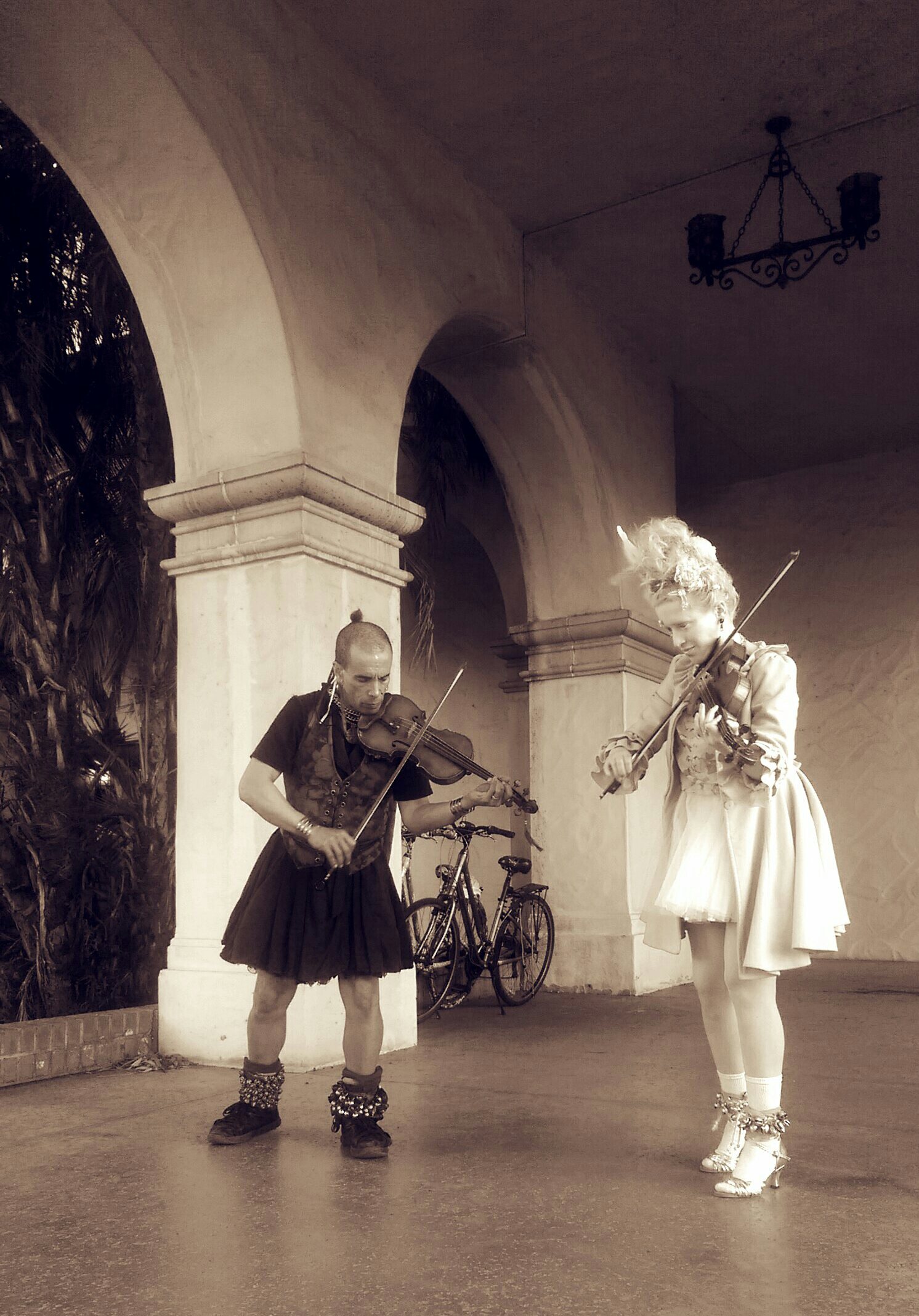
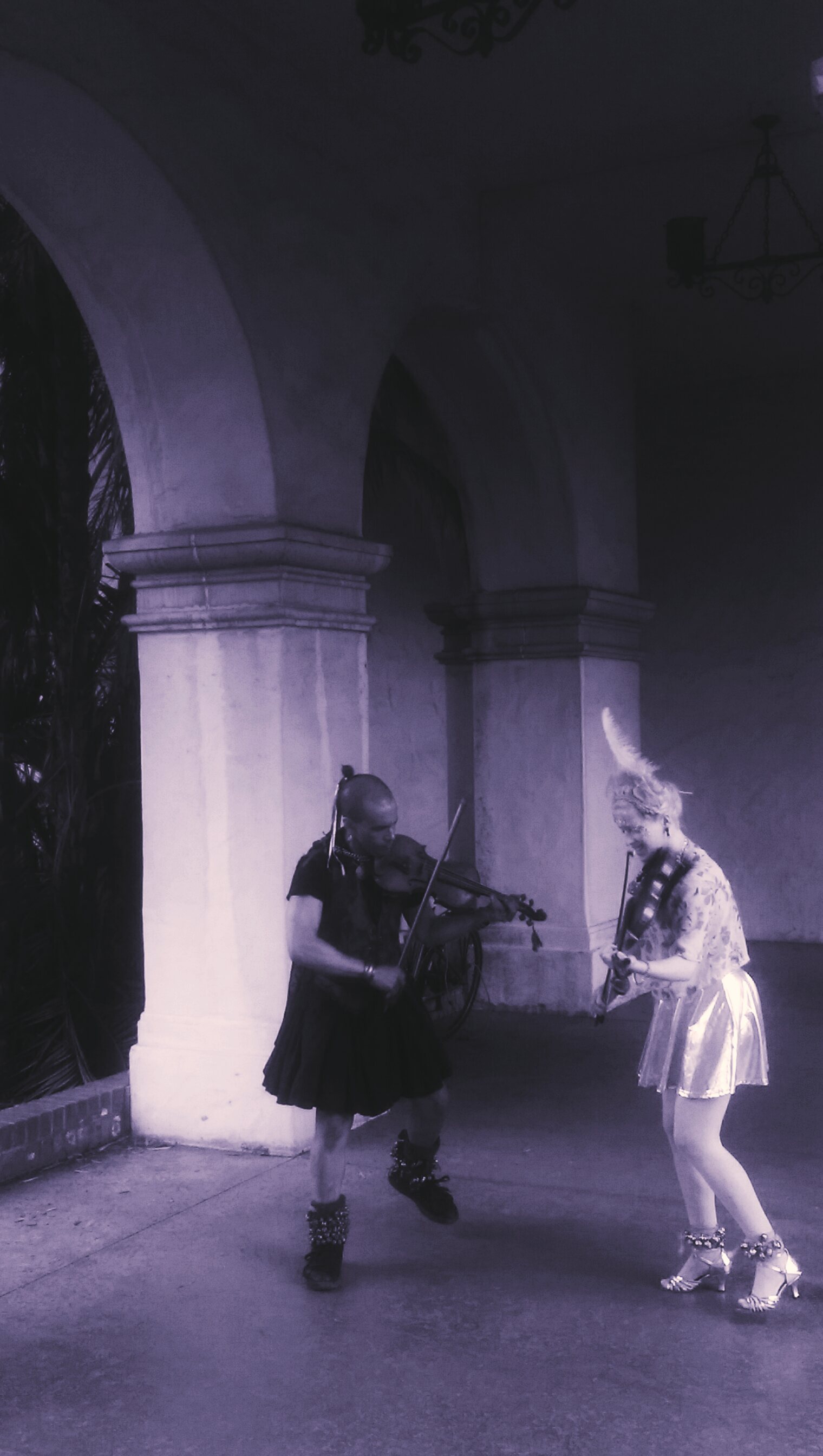
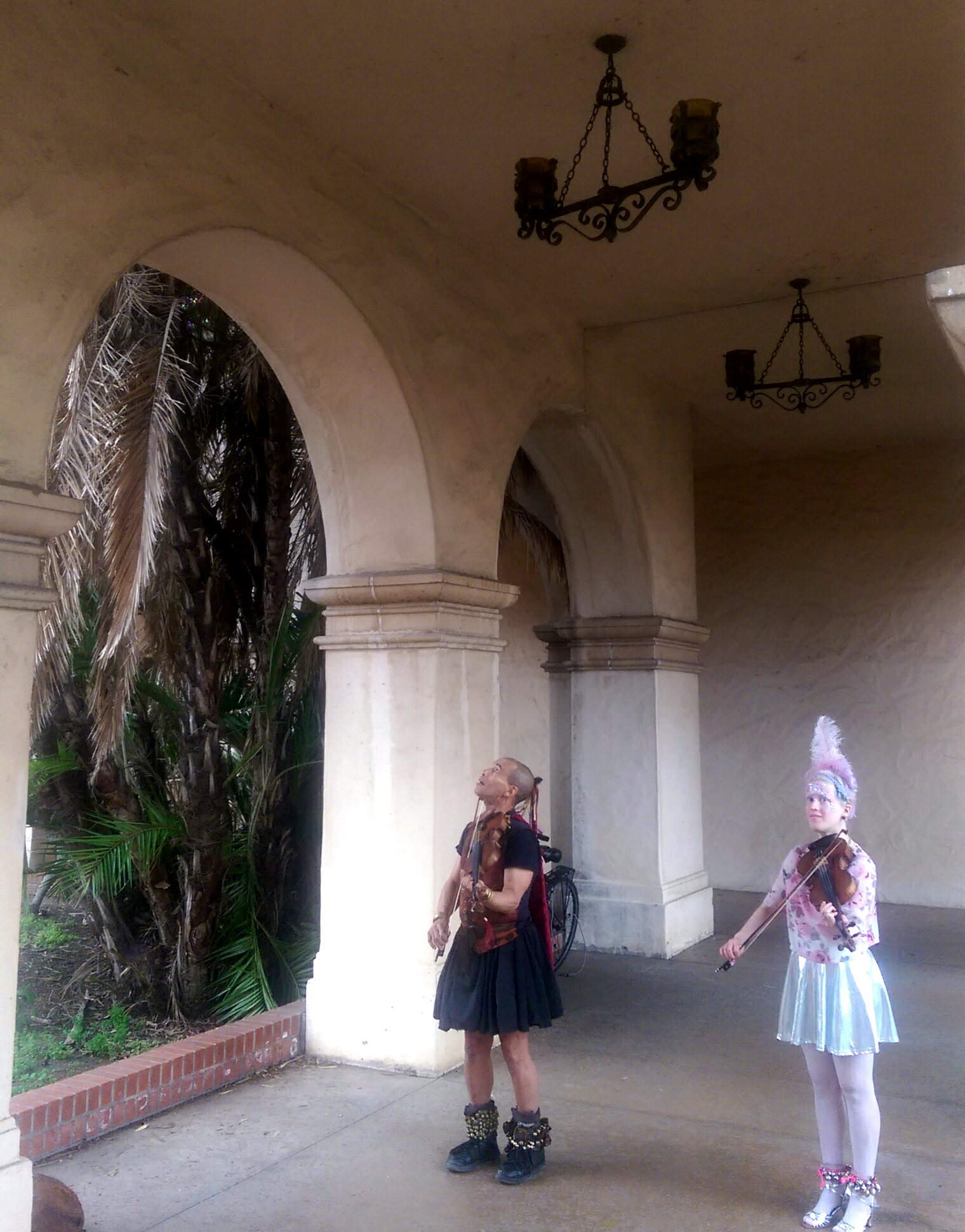
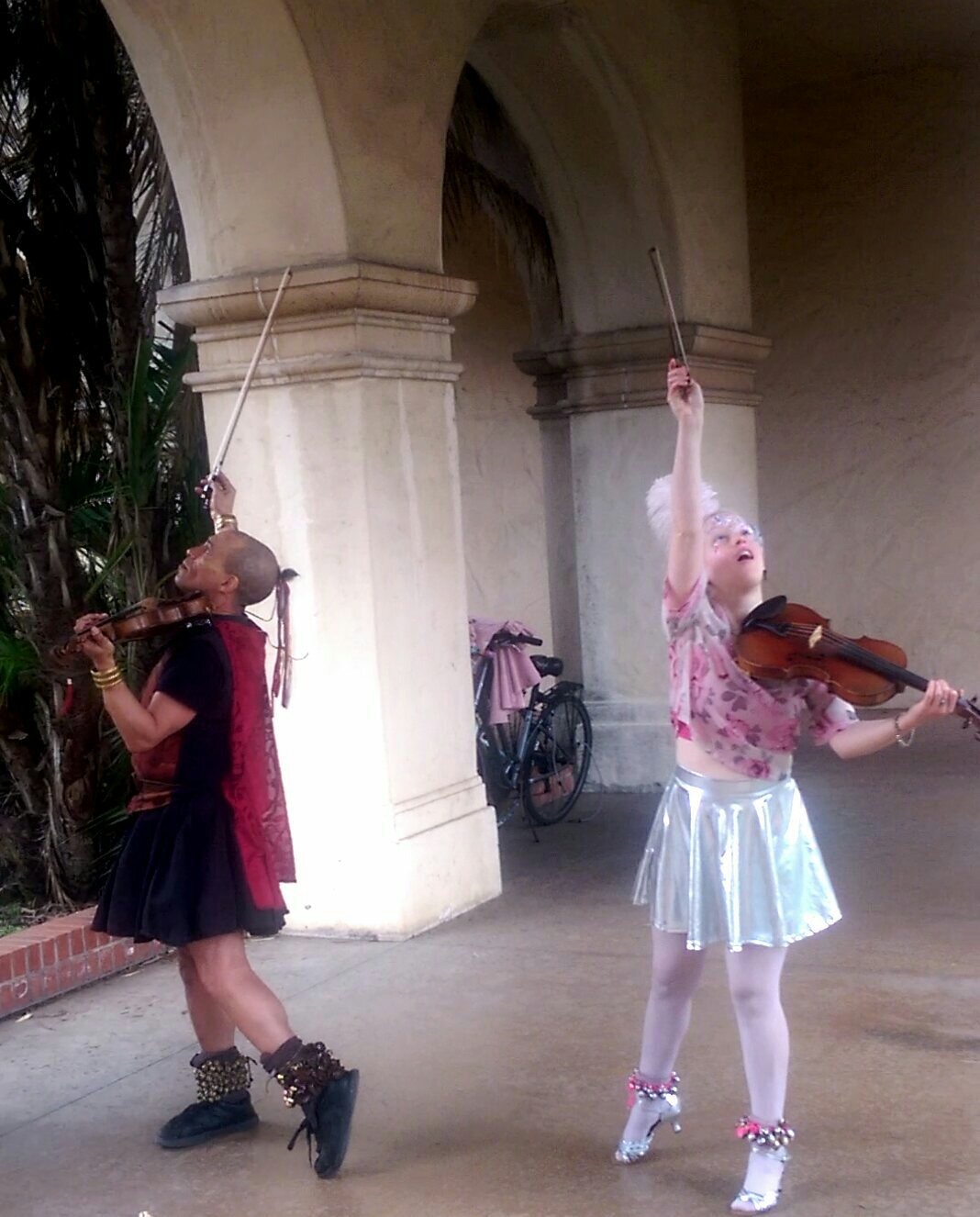
In January I collided with two splendid creatures in Balboa Park, Lila’Angelique and Thoth, which together form Tribal Baroque.

I wanted to share some portraits I took of them, in order to share some of the magic of their presence and music.

Nothing prepares you for the beauty that is Tribal Baroque, but here is a taste of what’s in store if you can make it to one of their prayformances in the park.

This is the Facebook page of Tribal Baroque, so you can catch these fairies who are here in San Diego for a limited time.

{more to come…see below}
…….

Four days ago, I spent two hours crafting the perfect posts on my muses, full of links and perfectly ( to me) worded prose.

When I went to publish the post, I LOST everything. It is the first time that this has happened on WordPress, which is usually excellent at saving drafts in progress.

I have been too heartbroken to come back and re-craft my post, but I have new art from Saturday and tonight – yes i started sketching and painting again (!) – and new photographs that I want to share, and life must go on.

Enjoy this images for now.. I will come back in the morning, refreshed, and tell you its stories…
…….

image

image

image

image

image

image
image

image

image

image
image

image

image

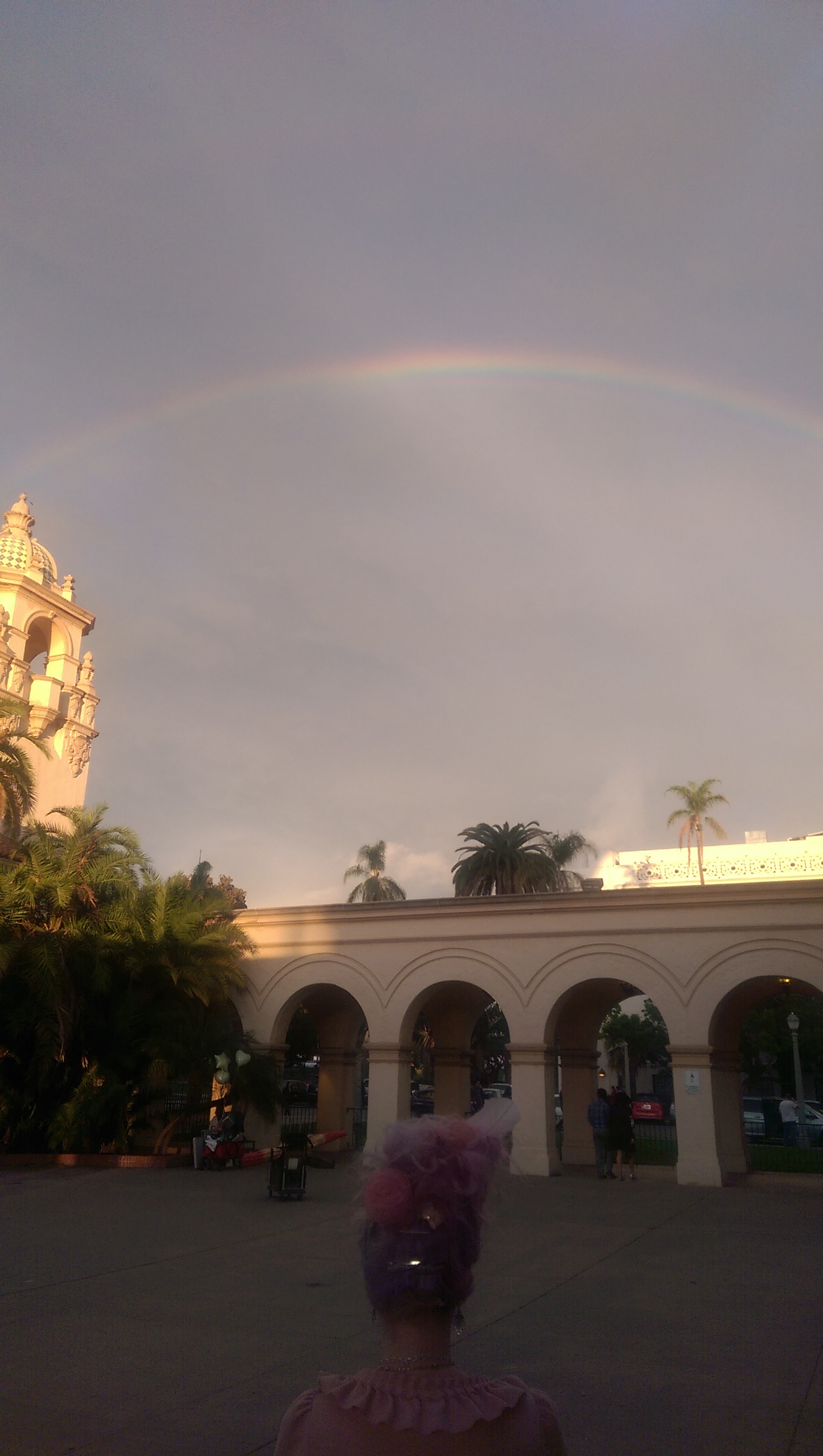
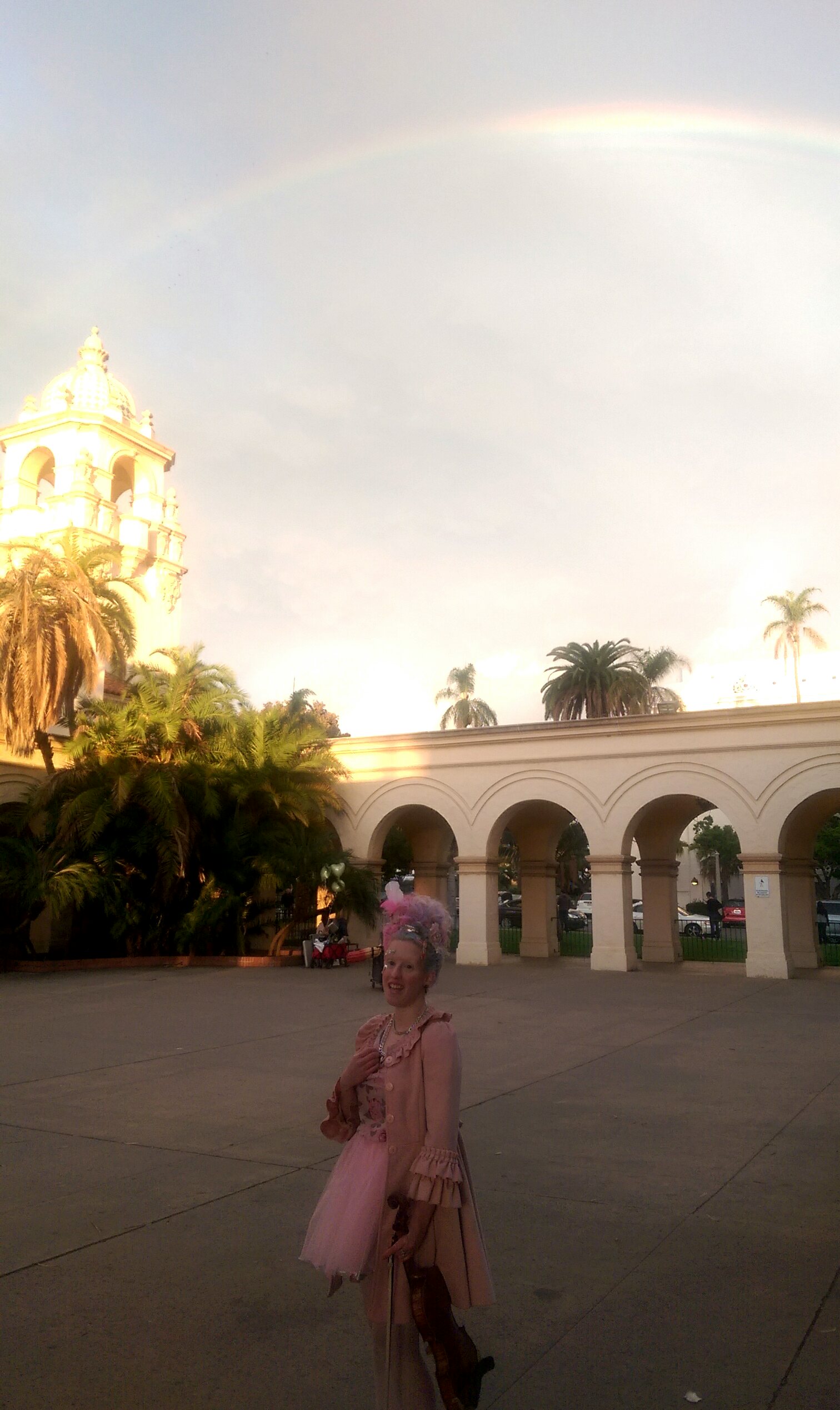
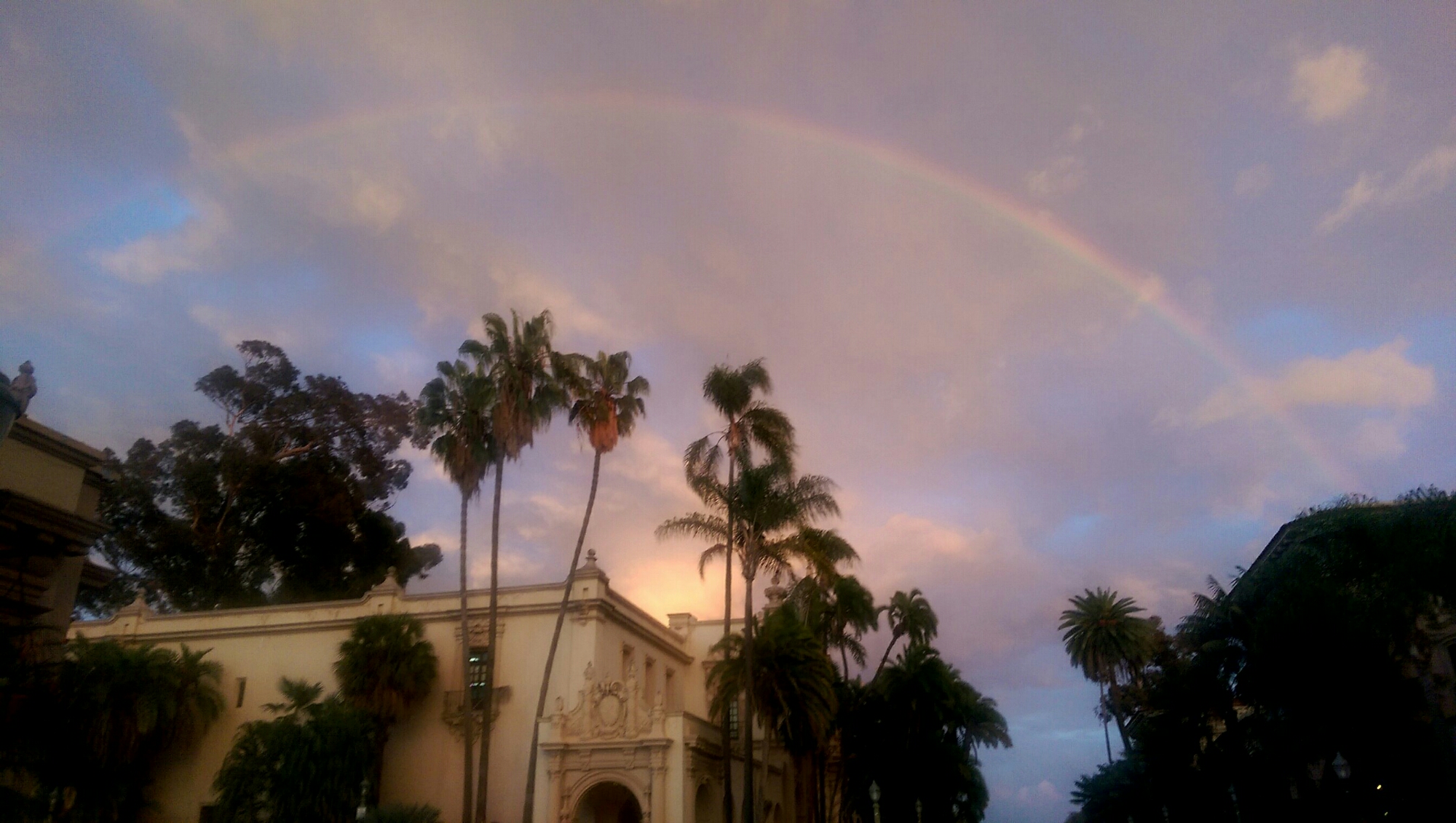
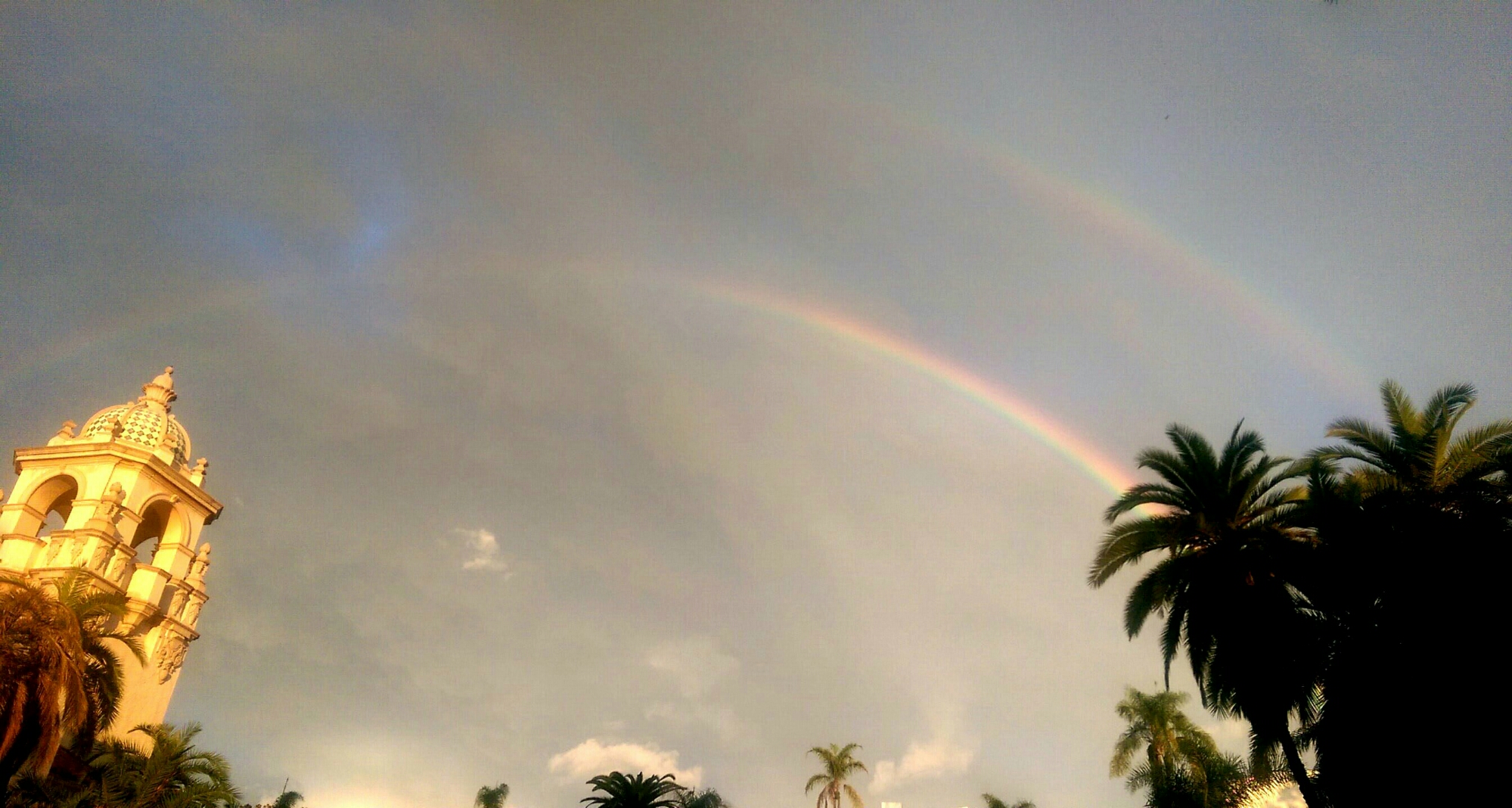
Thank you for bringing the *triple* rainbow and pink sky 😉 :
image
image

image

image
image

image

image

Read Full Post »

image

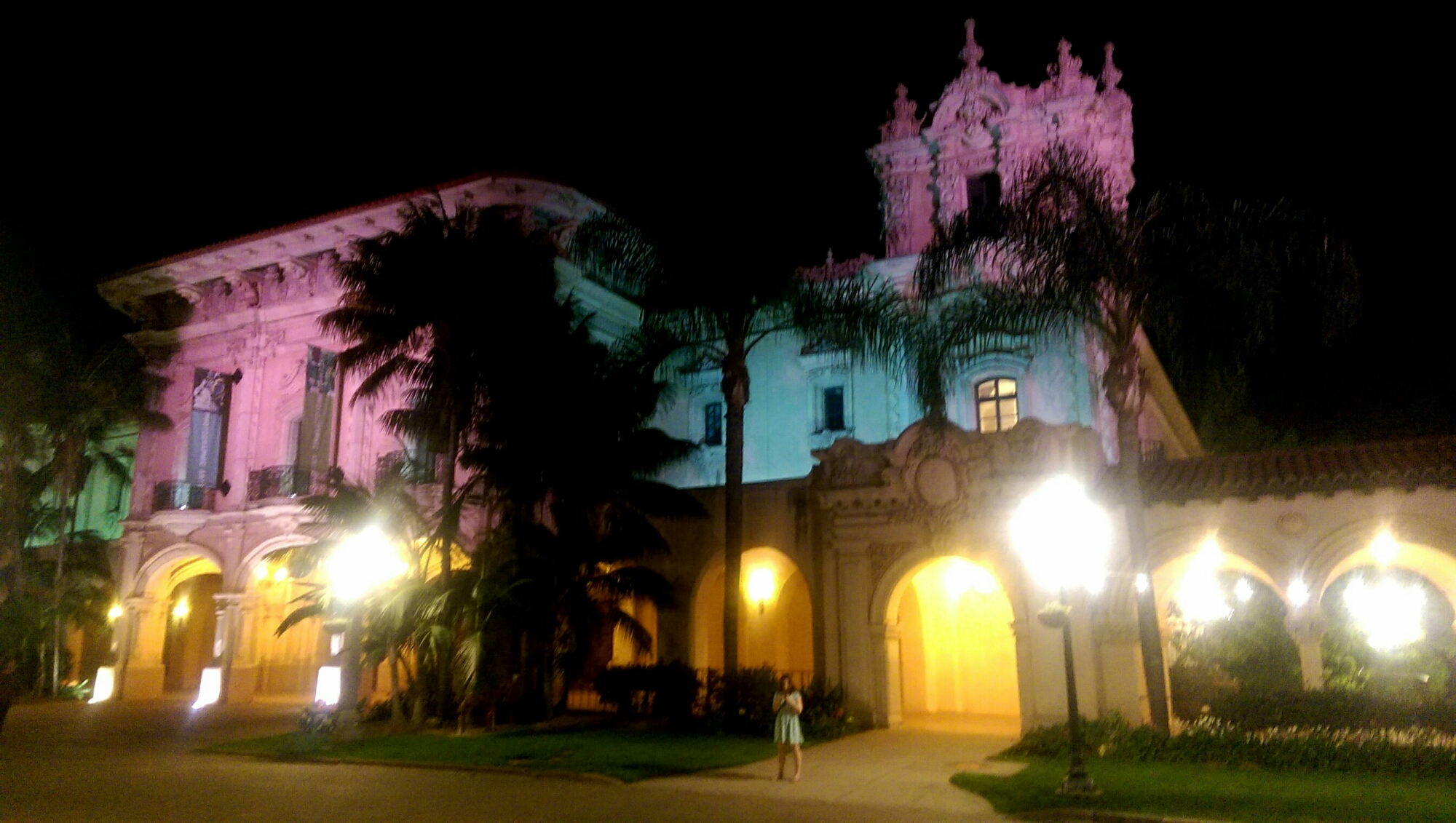
California Building Tower. Balboa Park, Uptown San Diego. January 2015.


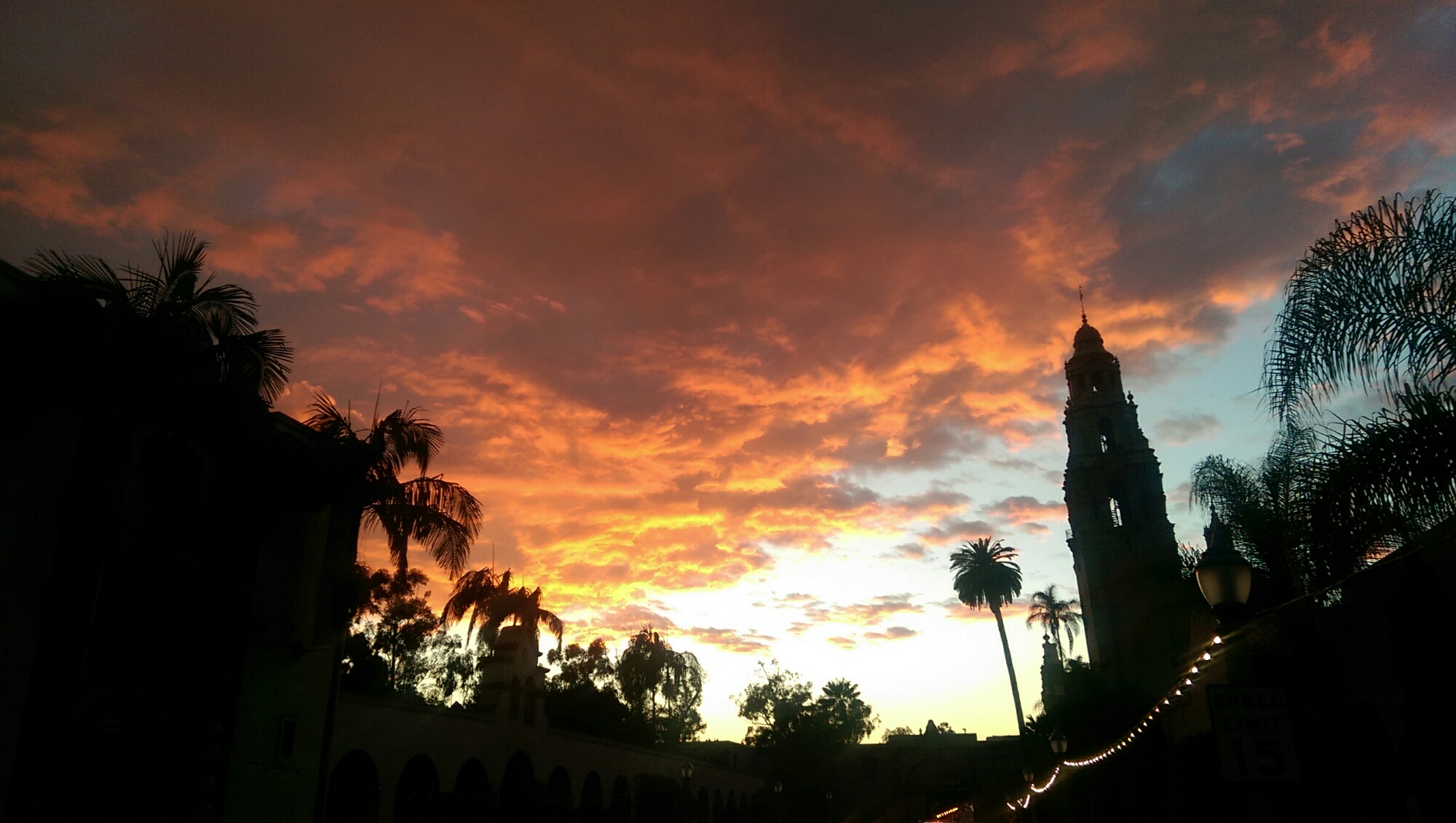
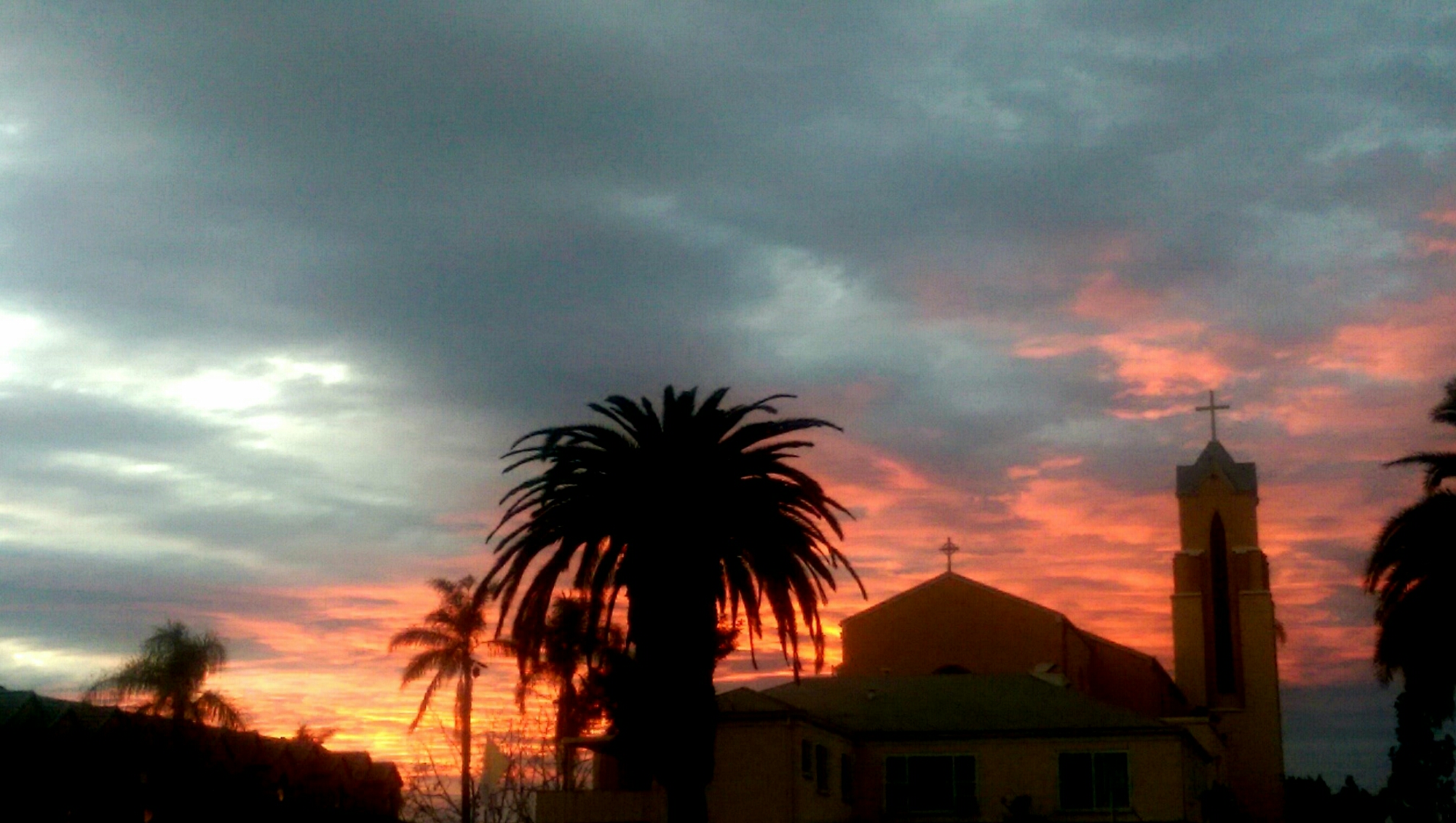
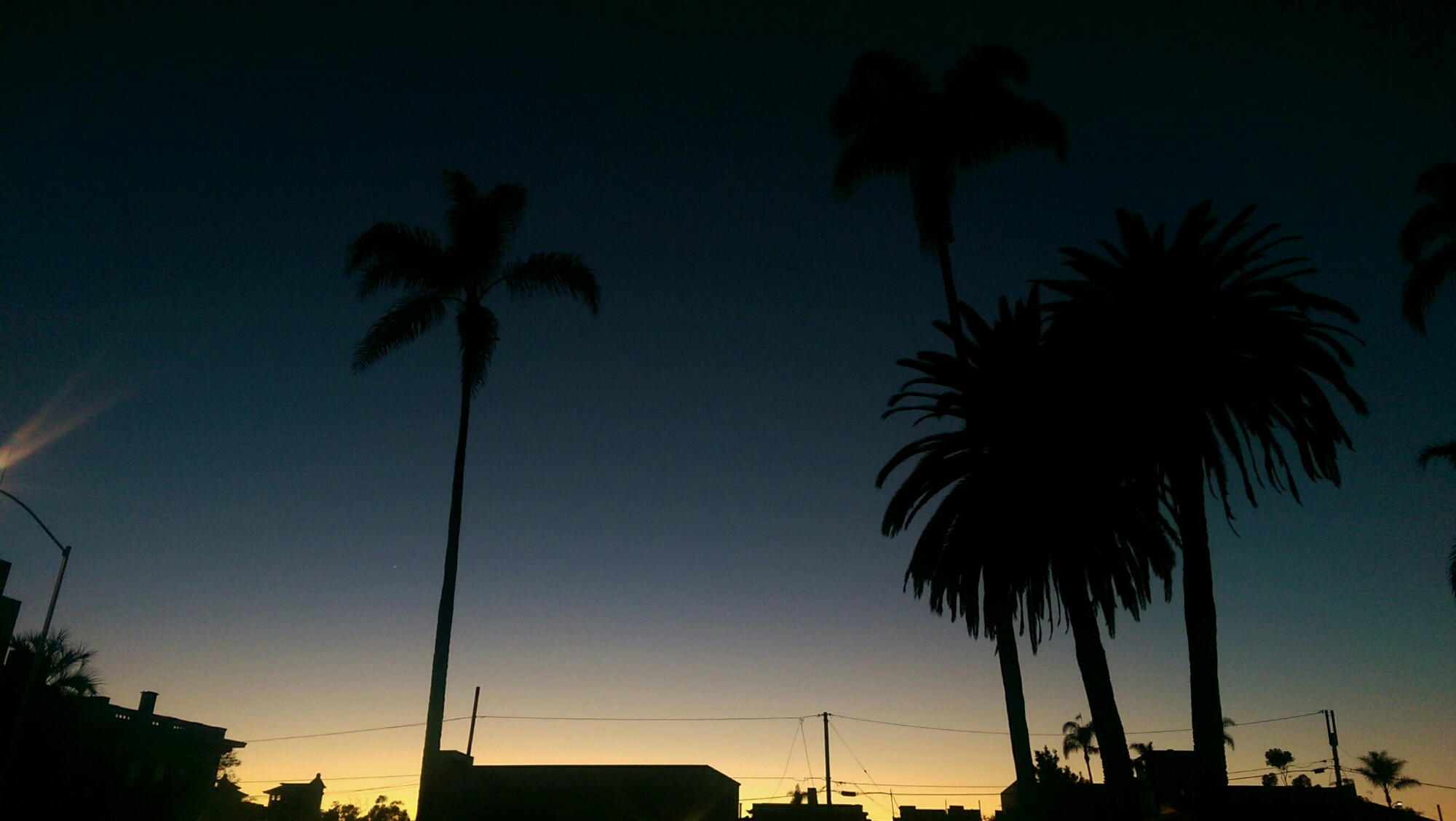
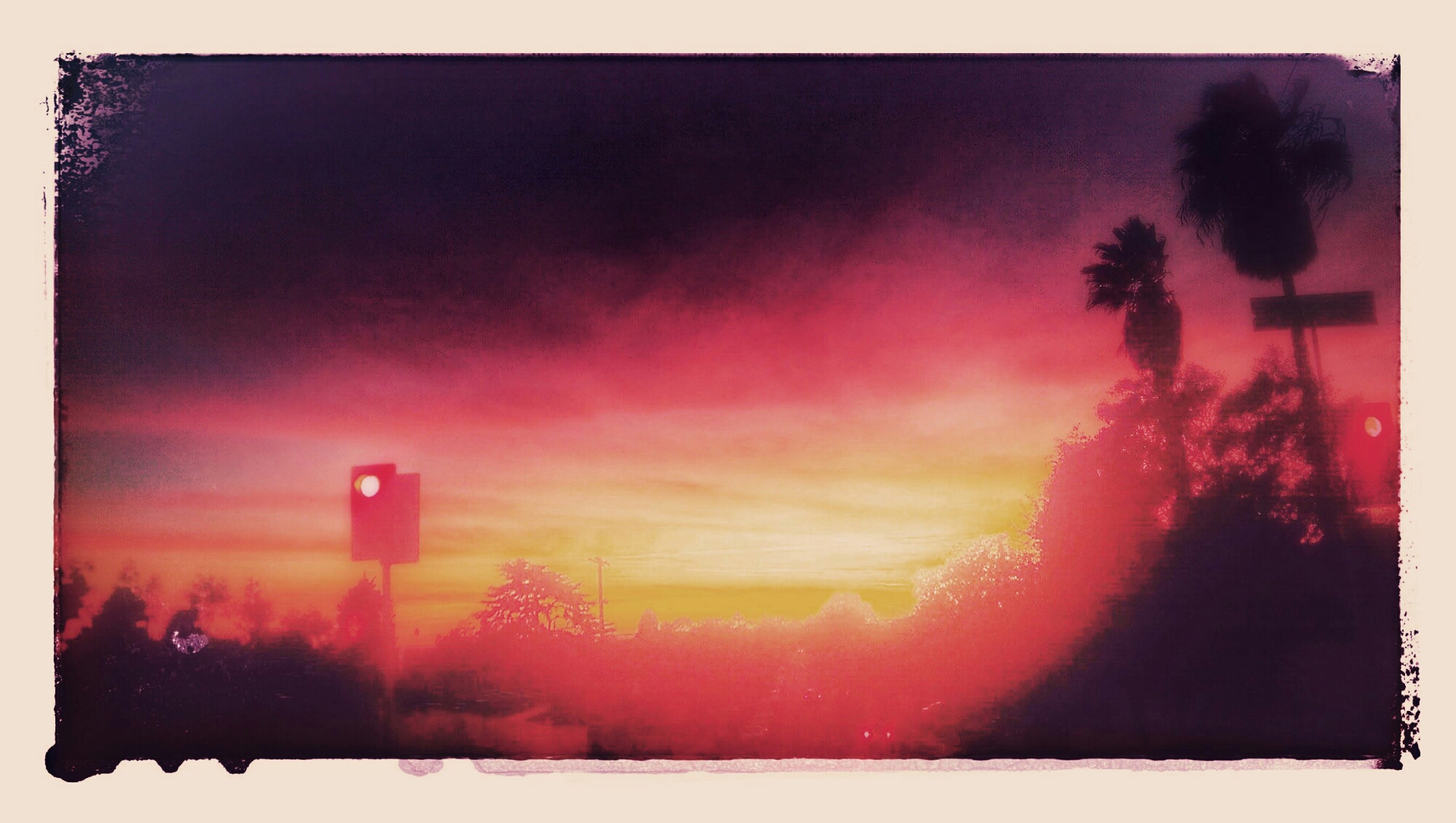
In the past couple of months, we’ve had the most spectacular sunsets – the most magnificent skies, really.

In addition, balmy, magical nights.

I don’t know if it’s just me, but San Diego and Southern California are becoming more and more lovely and precious each day.
It is like falling in love, all over again.

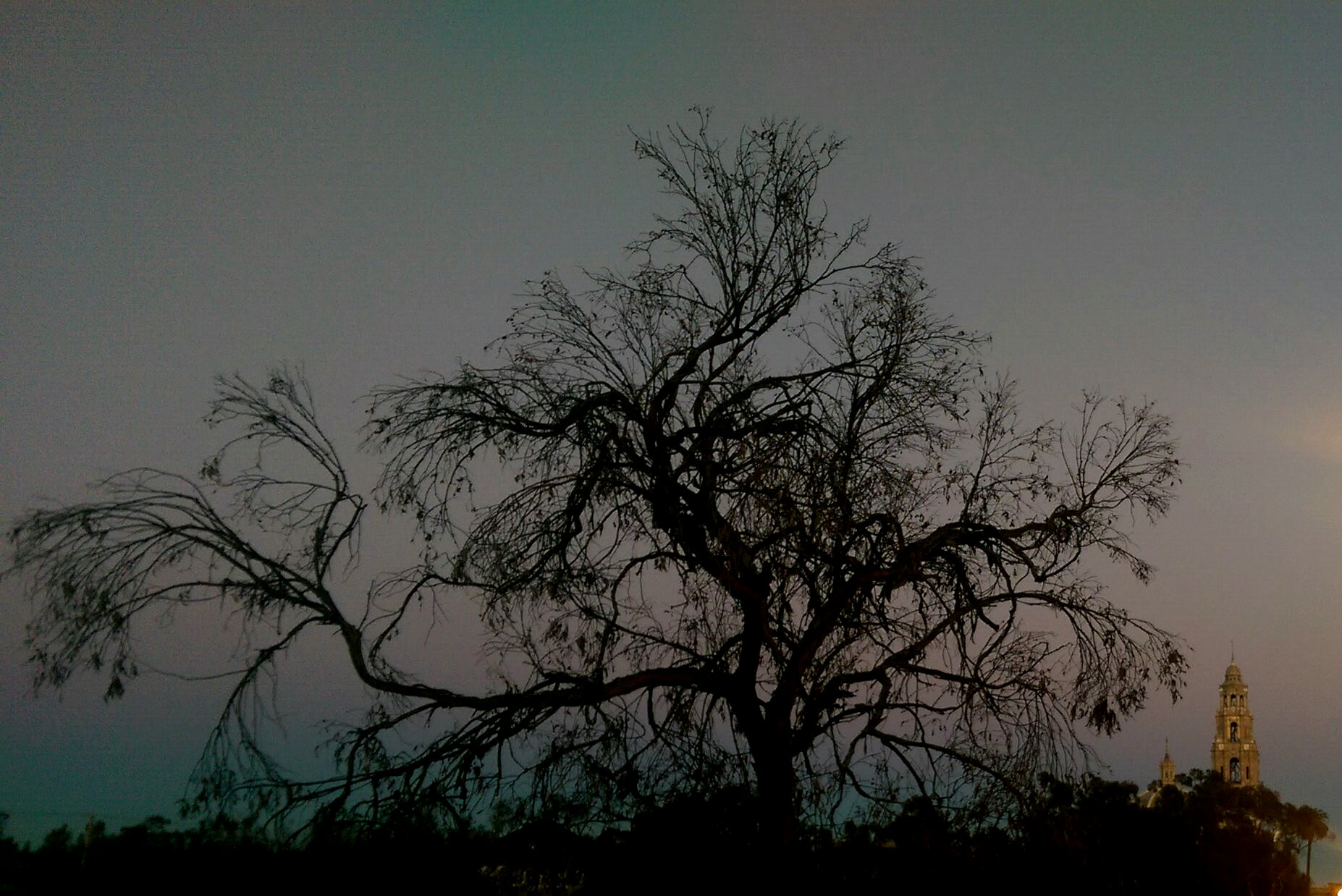
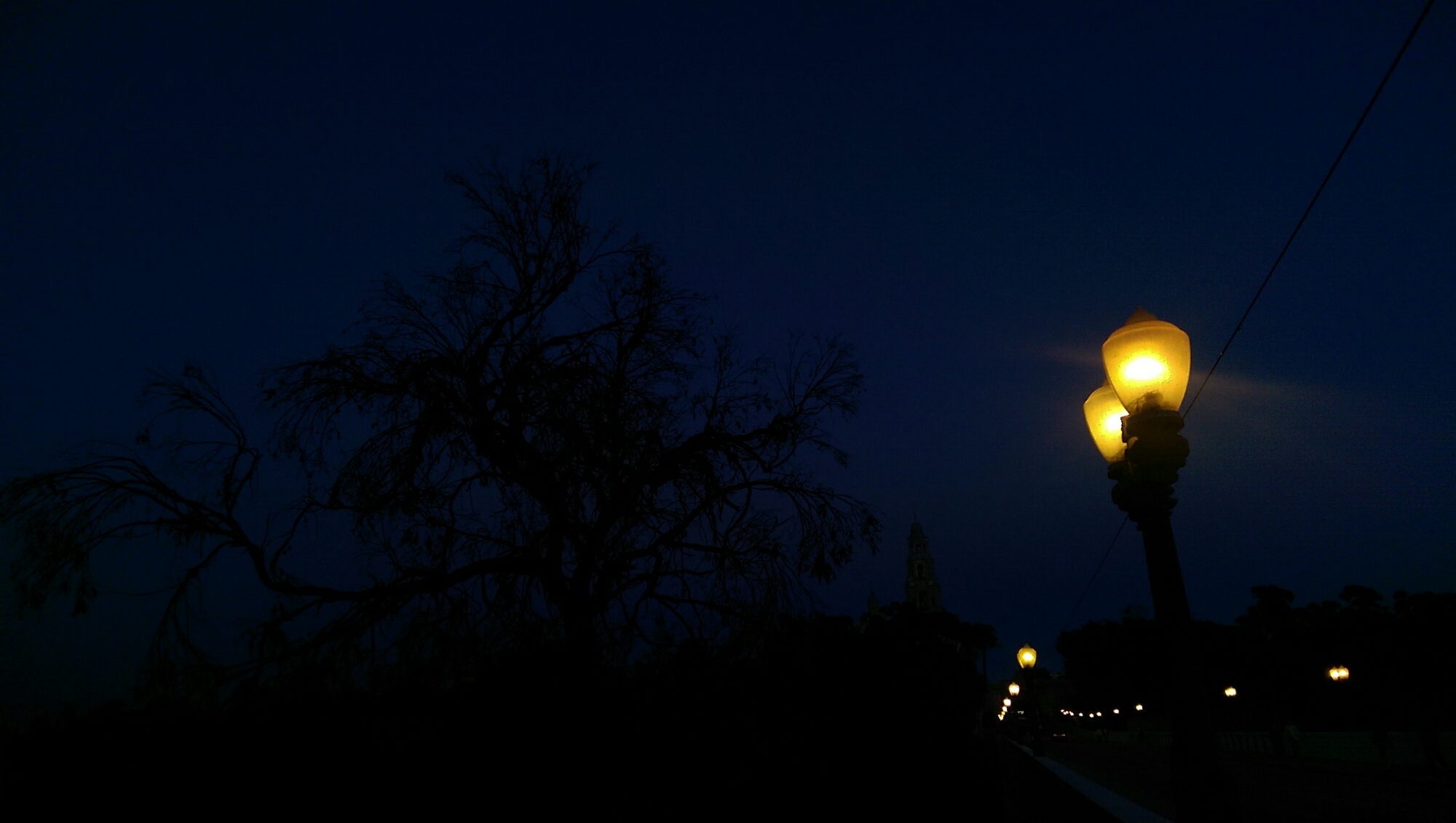
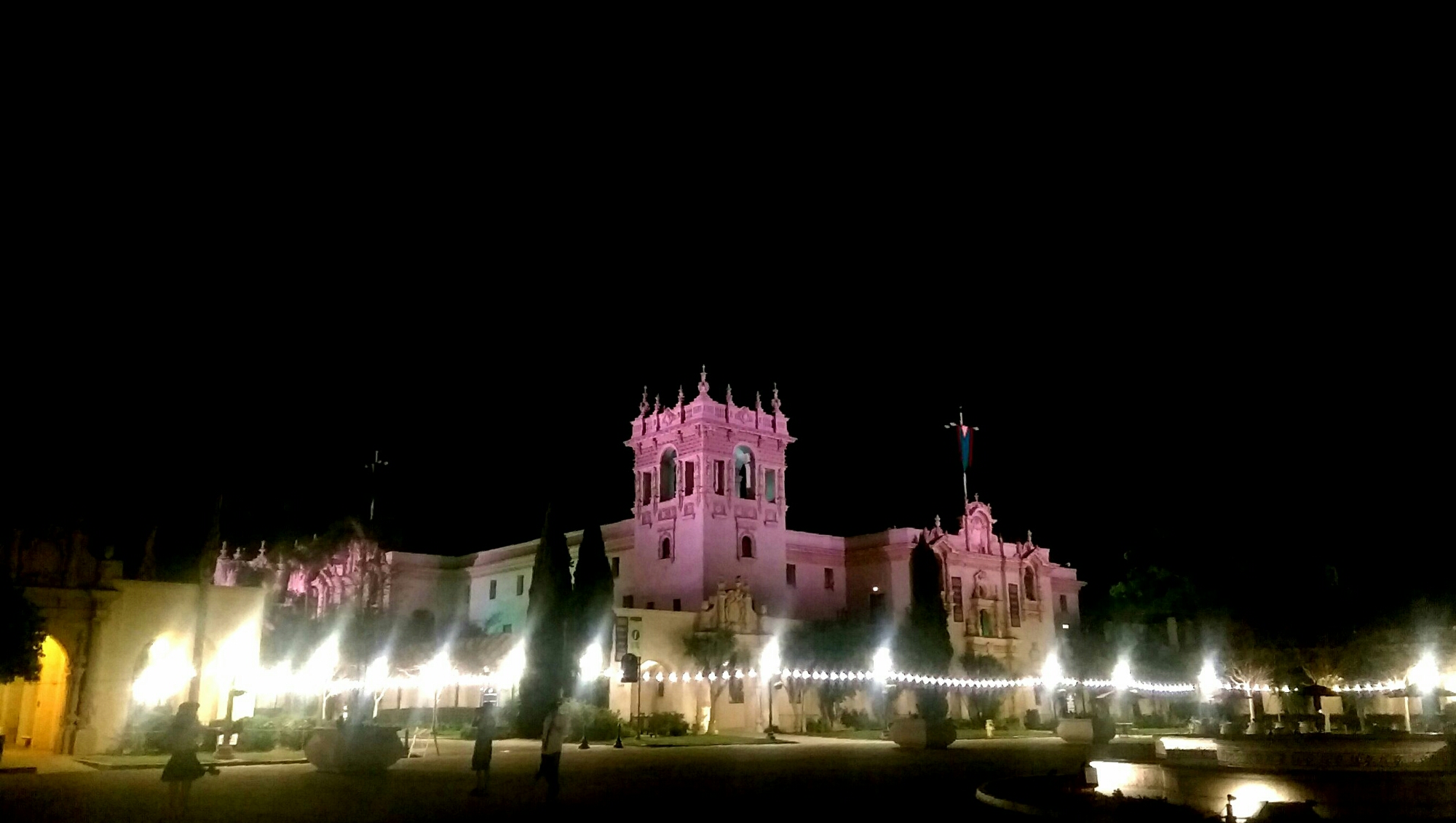
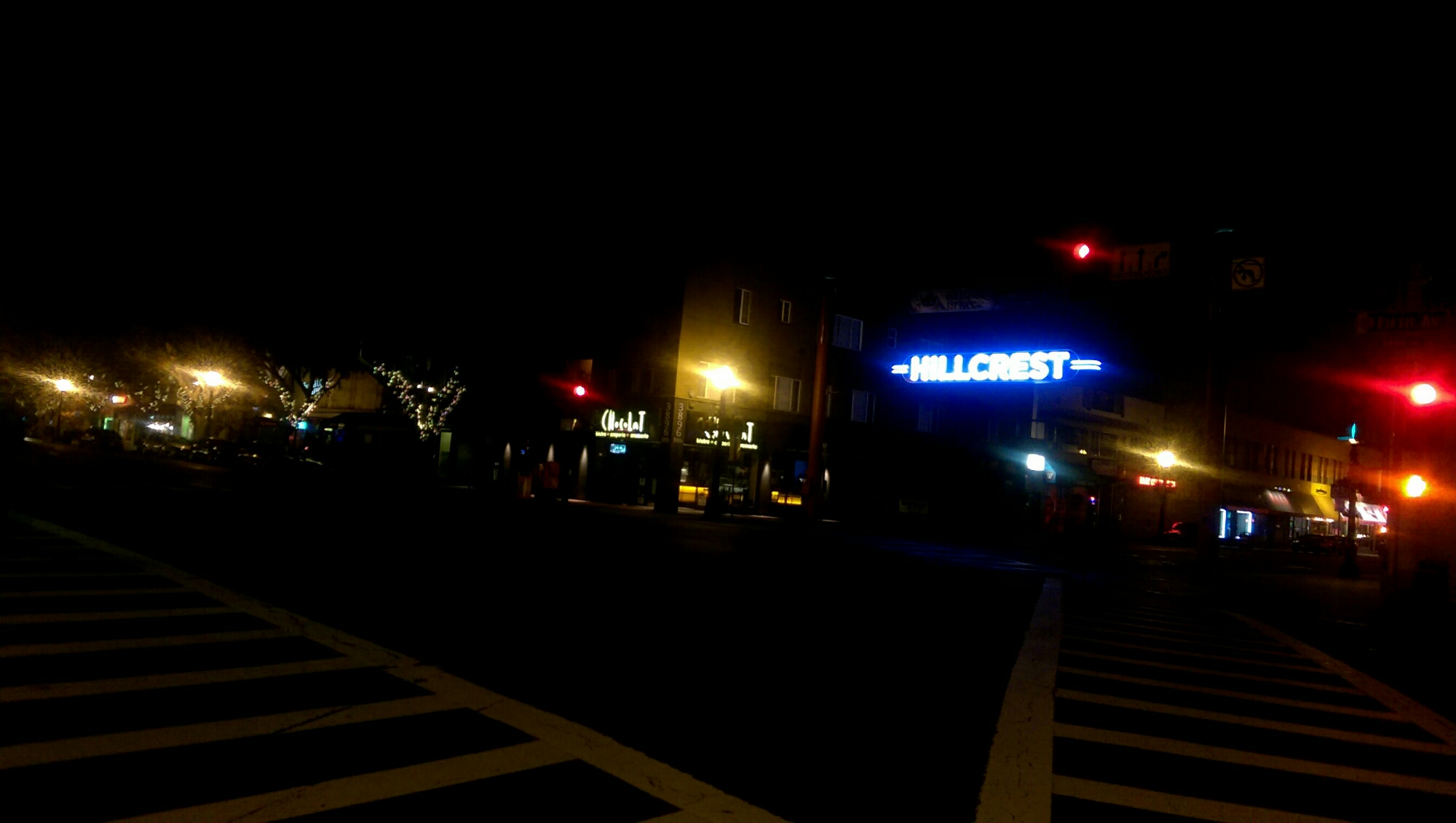
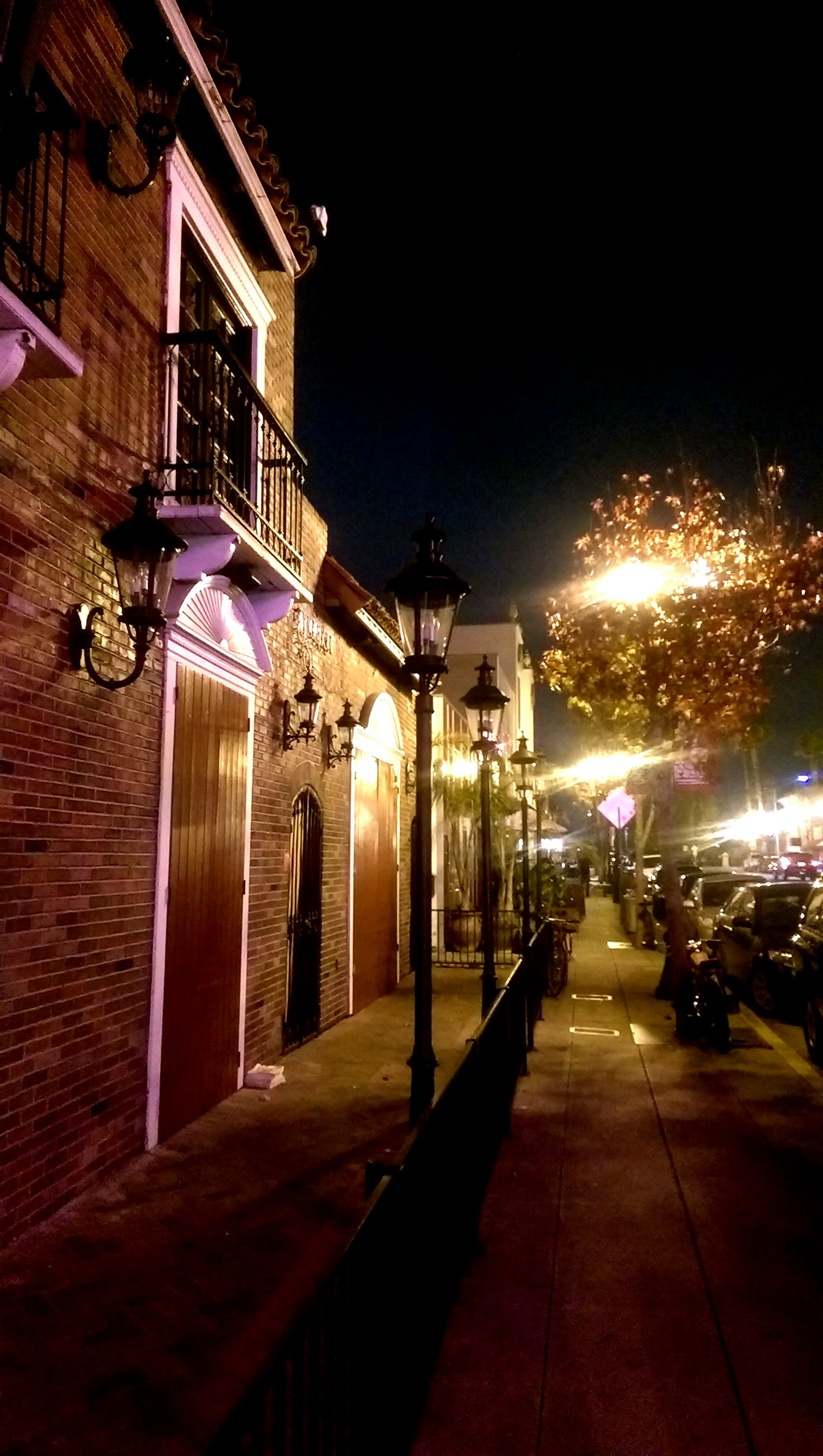
Tonight I want to share some night and sunset shots, reserving the day skies for another post.
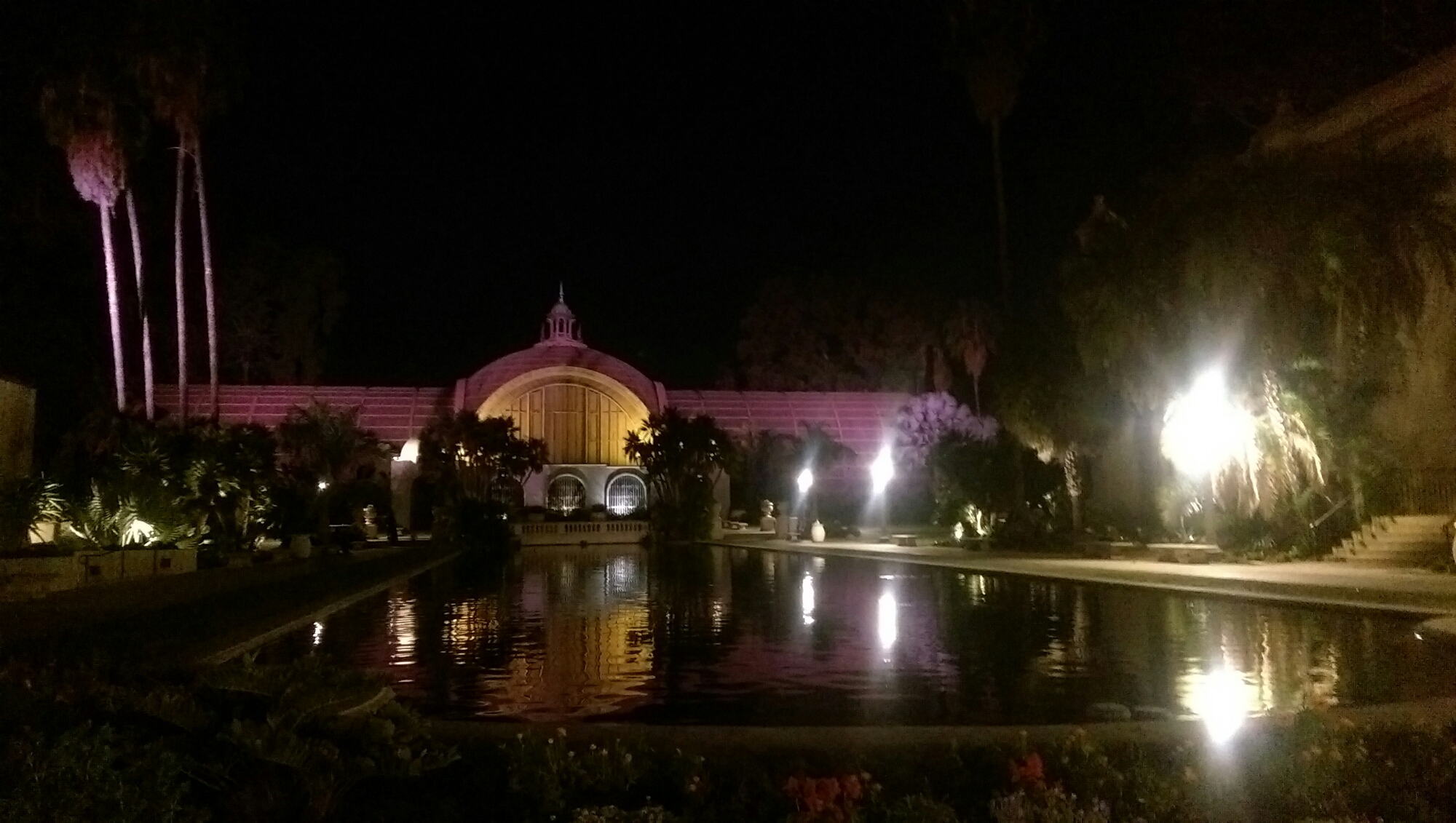
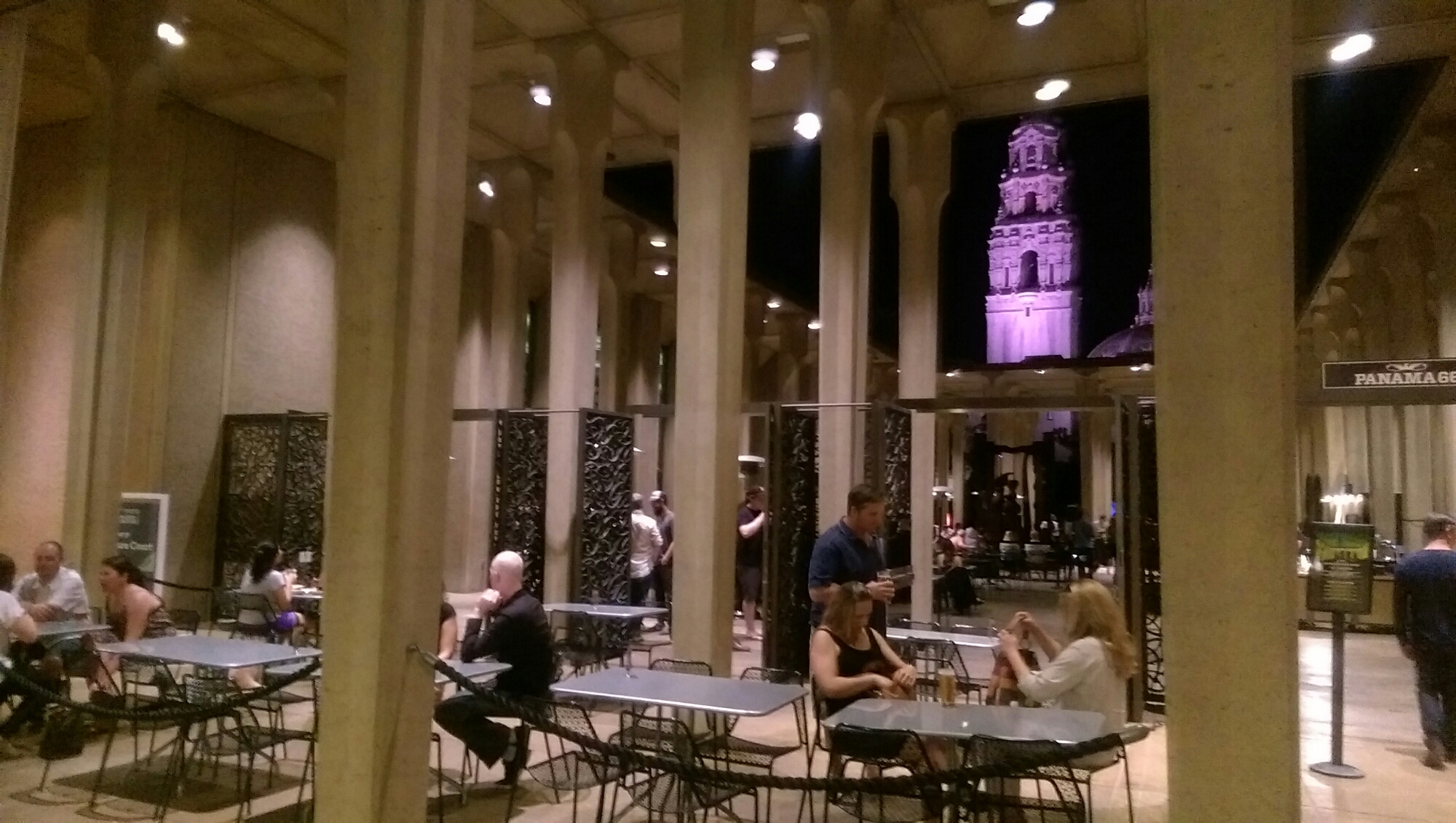
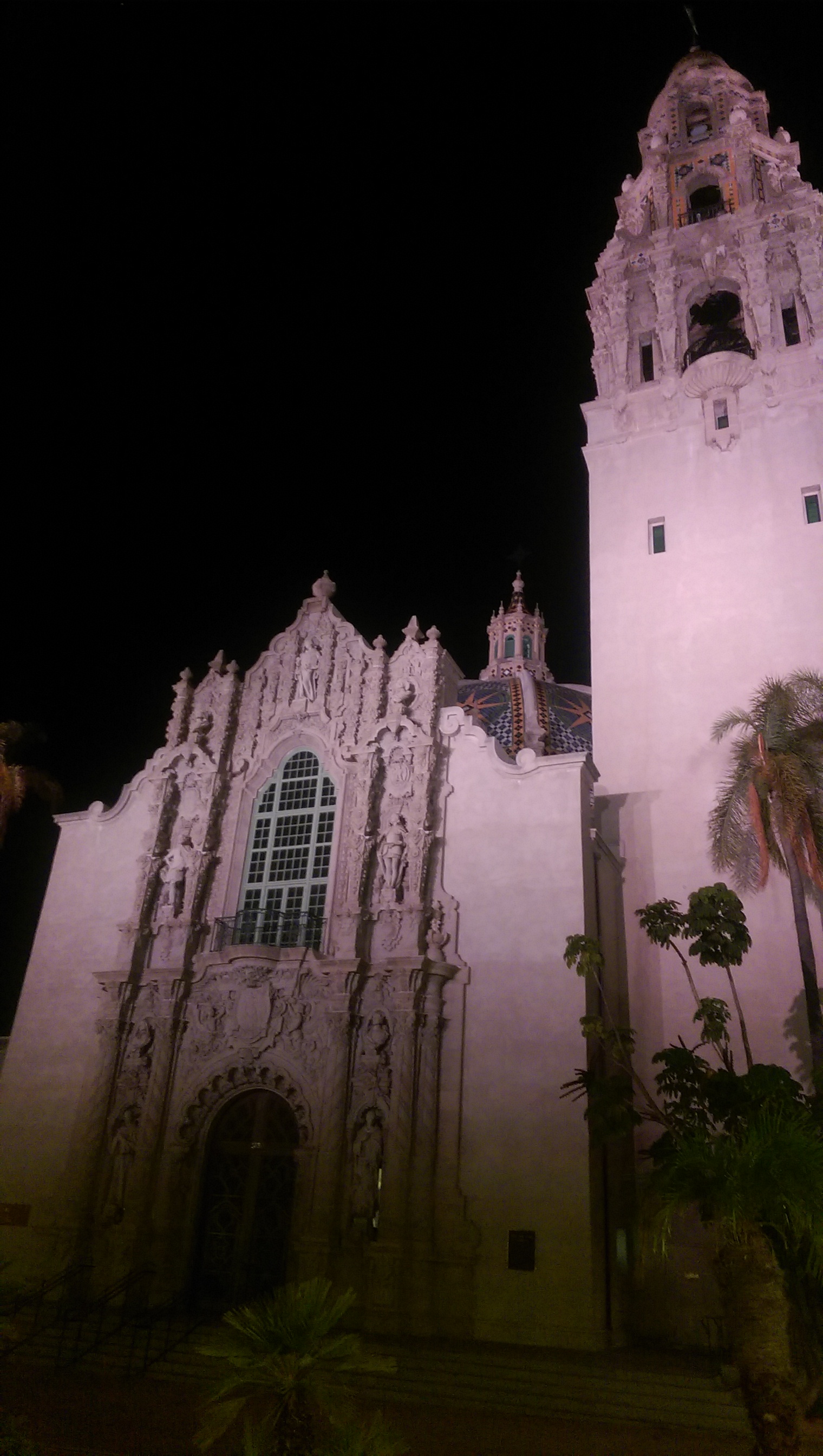
These photos have all been taken and corrected on my HTC One camera, hence the sometimes annoying light ‘spilling’, low res and graininess.
I will start carrying my Panasonic camera again, and correcting on Photoshop. I realize that my photos look better on a small screen…
One day I would like to invest in a proper Digital DSRL, but for now accept these artisanal shots.

I have taken to making nightly pilgrimages to our Balboa Park.
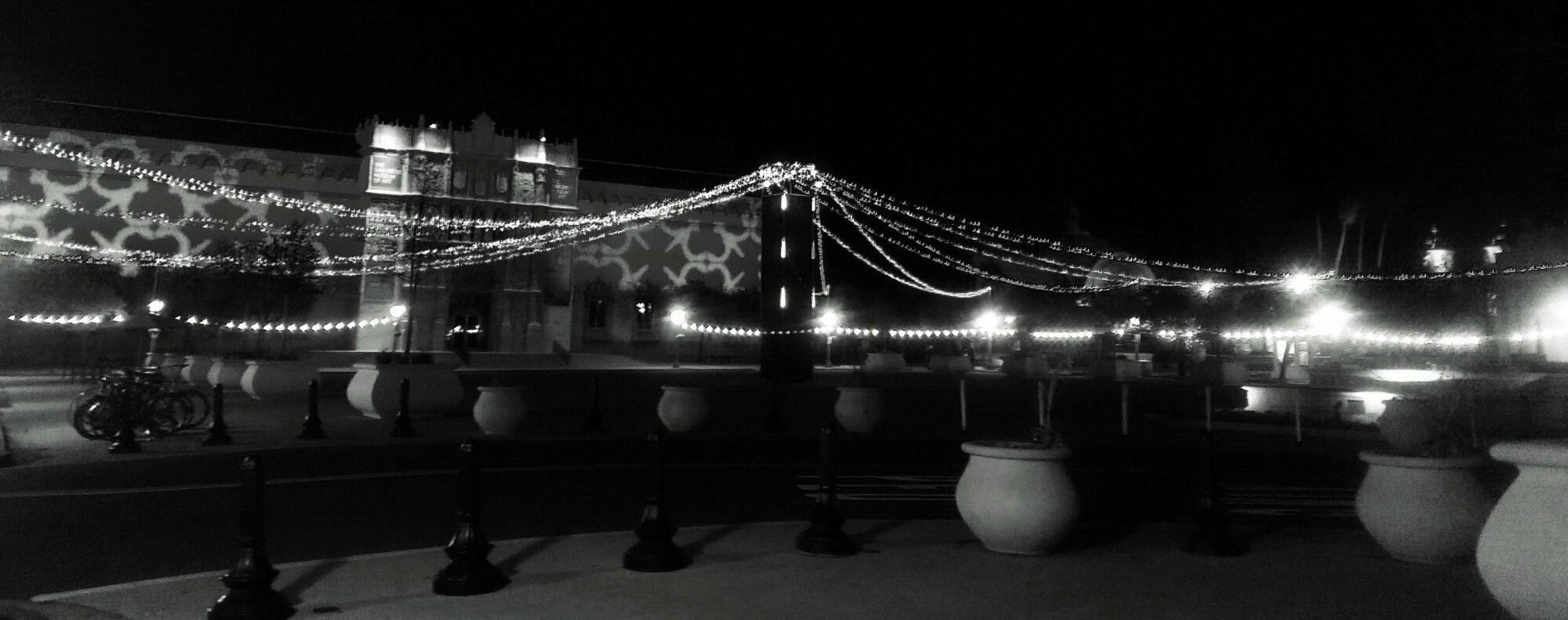
This is our cultural park, with more than twenty art museums and Spanish Colonial Revival architecture. The pairing of Spanish architecture and tropical greenery take me to Cuba, to Puerto Rico…to the Caribbeans. Balboa Park was built in 1915 for the Pan-American Exhibition, and is celebrating its Centenary this year!

The central plaza, Plaza de Panama, is now restored as the living room of the city.

To my eye, the park is more and more beautiful each month that goes by.

image

View from Cabrillo Bridge. Balboa Park, Uptown San Diego. January 2015.

image

Night view from Cabrillo Bridge. Balboa Park, Uptown San Diego. January 2015.

image

View of Plaza De Panama. Balboa Park, Uptown San Diego. March 2015.

image

Balboa Park, Uptown San Diego. March 2015.

image

Arboretum. Balboa Park, Uptown San Diego. March 2015.

image

Sculpture Garden. Balboa Park, Uptown San Diego. March 2015.

image

Museum of Man. Balboa Park, Uptown San Diego. March 2015.

And here are other end-of-day scenes from San Diego.

image

Normal Heights, San Diego. January 2015.

image

Bankers' Hill, San Diego. January 2015.

image

Hillcrest, San Diego. February 2015.

image

University Heights, San Diego. February 2015.

image

Hillcrest, San Diego. February 2015.

image

Downtown San Diego, Gaslamp Quarter, Horton Plaza. December 2014

image

Downtown San Diego, Gaslamp Quarter, Horton Plaza. December 2014.

image

Gaslamp Quarter, San Diego. Cafe' Sevilla. January 2015.

image

163 South Highway towards Downtown San Diego. View from Cabrillo Bridge, Balboa Park. March 2015.


And now, two poems to the Night.

The Night is Still

by Edith Matilda Thomas


The night is still, the moon looks kind,
The dew hangs jewels in the heath,
An ivy climbs across thy blind,
And throws a light and misty wreath.

 
The dew hangs jewels in the heath,
Buds bloom for which the bee has pined;
I haste along, I quicker breathe,
The night is still, the moon looks kind.

Buds bloom for which the bee has pined,
The primrose slips its jealous sheath,
As up the flower-watched path I wind
And come thy window-ledge beneath.

The primrose slips its jealous sheath,—
Then open wide that churlish blind,
And kiss me through the ivy wreath!
The night is still, the moon looks kind.

….

A Gift

by Leonora Speyer


I Woke: —
Night, lingering, poured upon the world
Of drowsy hill and wood and lake
Her moon-song,
And the breeze accompanied with hushed fingers
On the birches.

 
Gently the dawn held out to me
A golden handful of bird’s-notes.


Read Full Post »

image

San Diego, Bankers' Hill, March 15, 2015

image

San Diego, Bankers' Hill, March 15, 2015

image

San Diego, Bankers' Hill, March 15, 2015

image

San Diego, Bankers' Hill, March 15, 2015

Autobiography of Eve

 by Ansel Elkins

Wearing nothing but snakeskin
boots, I blazed a footpath, the first
radical road out of that old kingdom
toward a new unknown.
When I came to those great flaming gates
of burning gold,
I stood alone in terror at the threshold
between Paradise and Earth.
There I heard a mysterious echo:
my own voice
singing to me from across the forbidden
side. I shook awake—
at once alive in a blaze of green fire.

Let it be known: I did not fall from grace.

I leapt
to freedom.

Read Full Post »

image

Solana Beach, California. February 13, 2015.


Invitation to Love

by Paul Laurence Dunbar


Come when the nights are bright with stars
Or come when the moon is mellow;
Come when the sun his golden bars
Drops on the hay-field yellow.
Come in the twilight soft and gray,
Come in the night or come in the day,
Come, O love, whene’er you may,
And you are welcome, welcome.


You are sweet, O Love, dear Love,
You are soft as the nesting dove.
Come to my heart and bring it to rest
As the bird flies home to its welcome nest.


Come when my heart is full of grief
Or when my heart is merry;
Come with the falling of the leaf
Or with the redd’ning cherry.
Come when the year’s first blossom blows,
Come when the summer gleams and glows,
Come with the winter’s drifting snows,
And you are welcome, welcome.


Paul Laurence Dunbar was one of the first African American poets to gain national recognition.
This poem was published in 1896, when the poet was 24 years old.
He died ten years later.

Read Full Post »

image

La Mujer Que Lee ( Woman Who Reads ). Pastel, Paint, Newsprint Collage on Board. 2004

image

Picture the two of you lamp-shopping at IKEA, orchestrating a from-scratch dinner, and generally being capital-T Together.

Refinery29.com

No Te Enamores De Una Mujer Que Lee.
[Do Not Fall in Love With A Woman Who Reads]

By Martha Rivera-Garrido

No te enamores de una mujer que lee, de una mujer que siente demasiado, de una mujer que escribe… No te enamores de una mujer culta, maga, delirante, loca. No te enamores de una mujer que piensa, que sabe lo que sabe y además sabe volar; una mujer segura de sí misma. No te enamores de una mujer que se ríe o llora haciendo el amor, que sabe convertir en espíritu su carne; y mucho menos de una que ame la poesía (esas son las más peligrosas), o que se quede media hora contemplando una pintura y no sepa vivir sin la música. No te enamores de una mujer a la que le interese la política y que sea rebelde y vertigue un inmenso horror por las injusticias. Una a la que le gusten los juegos de fútbol y de pelota y no le guste para nada ver televisión. Ni de una mujer que es bella sin importar las características de su cara y de su cuerpo. No te enamores de una mujer intensa, lúdica y lúcida e irreverente. No quieras enamorarte de una mujer así. Porque cuando te enamoras de una mujer como esa, se quede ella contigo o no, te ame ella o no, de ella, de una mujer así, JAMAS se regresa”.

Don´t fall in love with a woman who reads, with a woman who feels too much, with a woman who writes… Don’t fall in love with a cultivated, magician, delirious, crazy woman. Don’t fall in love with a woman who thinks, who knows what she knows and also knows how to fly; a woman sure of herself. Don’t fall in love with a woman who laughs or cries while making love, who is capable of turning her flesh into spirit. Don´t fall in love with a woman who loves poetry (those are the most dangerous) , who could spend half an hour staring at a painting and can’t live without music. Don’t fall in love with a woman who is interested in politics; one who is rebellious and suffers enormously because of inequality and injustices. A woman who enjoys football matches and ball games but doesn´t like to watch television at all. Don´t you dare to fall in love with a woman who is gorgeous no matter her face or her body – an intense, playful, lucid and irreverent woman. You don’t want to fall in love with a woman like that.  Because if you do so, whether she stays with you or not, whether she loves you back or not, from her, from a woman like that, you´ll NEVER EVER return.

Read Full Post »

image

Plaza de Panama. Balboa Park, San Diego. December 2014.


I was trying to find a poem
To describe your skin, night
But the poets don’t know
the hours, or the look i just tried on you–
I cannot find you in their words.

I am always hiding in their verses,
moon behind clouds.
Distilling memories, crafting them into images, words:
what is the wine that we drink?
and who can write about the way you held me?

They do not have a name for this, for how perfect we were, the amber and coffee
of our hips.
Your kind chest,
your arms, taut as steel,
and the fact that i did not look at you, not once, afraid of learning too much
from the way you walked,
or the way your clothes fell.

Drowning so sweet,
tender fire.

Name the nights this year,
count them on the palm
of one hand.
Indifferent city, i stole moments of brilliance
from your stingy months.
I ride dark, subversive waters
and capsize
continuously.

‘Until the inconscious is made conscious, the subconscious will rule your life,
and you will call it Destiny.’
Carl Jung

Do the poets write
of a lion lying with his lioness?
Of fleeting things?

You drove and i held your hand
You told me one must laugh, pray and cry,
everyday.
I argued the last point.

San Diego, December 2014

Read Full Post »

image

Sunset. Venice, California. November 2014.

image

Anything Can Happen. Anything Can Be. Santa Monica, California. November 2014.


image


image


How to Love
By January Gill O’Neil

After stepping into the world again,
there is that question of how to love, 
how to bundle yourself against the frosted morning—
the crunch of icy grass underfoot, the scrape 
of cold wipers along the windshield—
and convert time into distance. 
 
What song to sing down an empty road
as you begin your morning commute?
And is there enough in you to see, really see, 
the three wild turkeys crossing the street 
with their featherless heads and stilt-like legs
in search of a morning meal? Nothing to  do 
but hunker down, wait for them to safely cross. 
 
As they amble away, you wonder if they want 
to be startled back into this world. Maybe you do, too, 
waiting for all this to give way to love itself, 
to look into the eyes of another and feel something— 
the pleasure of a new lover in the unbroken night, 
your wings folded around him, on the other side 
of this ragged January, as if a long sleep has ended.

Read Full Post »

image


Habeas Corpus

by Jeffrey Schultz


In memoriam the once-frozen North

Our collective consciousness does not allow punishment where it cannot impose blame.

United States v. Lyon
Judge Alvin Benjamin Rubin, dissenting


There is of course the other idea: that the intricate latticework
Of our bodies loosed from us at last will leave us free
To become anything, pure light, perhaps, or wing-beats

In fresh powder beneath some maples locked up in their thin veneer
Of ice. But then as always a sudden gust and the limbs’ clacking,
And, as when some insurgent sound crosses over the porous border

Of a dream, the world recrystallizes around us: midday, snow-
Grayed, the wind-chill’s sub-zero like a ball-peen to the forehead.
It’s cold enough to quiet even the soul’s feathery throat-song,

And so it does. Nothing moves and I move through the woods
At the edge of its city with dog, hoping he’ll shit his daily shit
Before this reddening flesh numbs entirely. Nothing moves,

But beneath months-thick ice and powder, winter’s put up its dead:
Squirrels and sparrows, the wren and the fox, whole families
Of field mice posed as if in the pet store’s deep freeze, even,

Here and there, scattered and whole, occasional missing persons.
For now, for guilty, for guiltless, no matter, the world offers neither
Deliverance nor decay, and though we trust in that the thaw

Will come, that someday soon some pond water, water
Still and softly rippled as pre-War window-glass, will again reflect
Its image of the bloodless sky, cut, at intervals, by spring’s

First returning vultures, and though the police will then take
A little comfort, as they kick the MOBILE CRIME LAB’s tires
Before rolling it out for the season, that the birds help at least

To ease the legwork, we know no one’s, you know, going to be
Set free. The skull’s thin as eggshell so far as the beak’s thick curve
Is concerned. The raisin of the eye’s an easy delicacy.

And so to imagine the future is to imagine the present, but warmer,
But more forthrightly, more honestly violent. And so another day’s
Bones picked clean. There is of course the idea’s consolation:

For eternal patience, eternal reward, for the meek, the Earth’s
Corpse. Instead, a sort of waking sleep, a sort of waking slow;
We rub our eyes, warm the last of yesterday’s coffee, stare

As our email loads: surely something must have come, surely
Someone has spirited us that which would make all the difference.
We call to complain that nothing’s working because we like

The on-hold music, which is a sound other than our breathing.
We ask the music if we can speak to its supervisor but when we try
To explain it only laughs, Guiltless!
Who do you think you are anyway?,

Laughs its little soprano sax laugh before it loops back to its loop’s
Beginning. The coffee pot runs on mediated coal and drips acids.
The car’s topped up with artillery and emits amputees. The idea was

Waking would make things clearer, would startle us as from any night’s
Nightmare: these sheets’ cold which is not bare concrete floor,
This patch of light the moon has cast not the interrogator’s light,

This knocking in our head not some still-indecipherable code
Tapped against an adjacent wall by who knows who, by someone
We can’t even begin to imagine, someone stuck here longer

Than even ourselves yet still committed to the idea that finding
A way to speak to each other would help matters, this knocking
None of that but rather something real, here, furnace clank or thief

In the night, something real and something present and not
The dream of what must be held that way until it stops thrashing,
Not the dream of being held that way, but what could be danger

Or else nothing once more, which means we prowl once more
The house, ridiculous in our underwear, ridiculous with a flashlight
Gripped like a truncheon, the floorboards cold somehow as bare

Concrete, the floorboards that croak somehow like vultures who are
Not here, who winter south, scan the Sonoran desert’s northern
Edge, its empty water bottles and tire ruts and those nameless

It dries to a sort of jerky, those nameless who labored in vain
To cross it, who had hoped that in crossing, they would be set free.
Nothing’s wrong, the house secure, bolts bolted, latches latched.

Somewhere in the distance beyond the kitchen window, downtown
And its bus bench bail bondsman, downtown and its graffiti
Covered wall’s Great Writ:Repent! The End Is Nigh! As always, as always,

Answers the darkness. But, pre-War? In what will soon enough be
Dawn-light, in this near-light, who can tell if it’s blood spread thin
On our hands or else just a healthy, living glow?  Outside, the idea

Of night and the idea of day seem to have come to a standoff.

No one’s calling for negotiations. We know what happens next:
Whether the stars flicker or merely flinch, the sun, whose face

Is a badge, has always been a little trigger happy. And though
The firestorm will consume, soon enough, everything, it seems
For the moment this will go on. As if indefinitely. As if without cause.

Read Full Post »

image

San Diego Harbor, October 18, 2014.


to my single reader:


perhaps one day soon
i will tell you about puerto rico, taíno heart, and driving into méxico at midnight
like two fugitive moths
the indio angels
perhaps i will share the secret tales
of a heart that keeps returning
to the south
and reading poetry as an act
of revolution.
i did not forget. i am not gone.
i never gave up.
artists cannot stop seeing and sharing beauty, no more than poets can stop feeling and bleeding ink.
it is not a choice for us.
understand that a pen lies dormant sometimes, oftentimes,
only to gather strength, and stories,
like our souls.
only to heal.
the vessel eventually spills over.
i will tell you about calabria, my tierra, my fisherman father, then new mexico, the beautiful natives of this country, their poignant song…and the lines i wrote
at ten thousand feet
they might make sense
once stitched together.
i will talk about
traveling as an act of infinite love
to heal, to forgive, to archive
yet never, never forget (i will never let you go, hold you into the light)
but i will never say a word.
there will be more photos than drawings, please forgive me.
there will be, more often than not, no explanations, and little context [as in life]
accept these scattered offerings.
what is the music that one hears
as we change skin?
i can only bring back
dispatches.
the giving of one’s self
receiving infinite blessings
and signs
i will find a way to share this
hiding my hands, covering my mouth.
breaking awful tiles on that grey vinyl floor ! and every instance that made me thankful
for a heart that was broke open
like a seed that could finally flower.
for a traveling soul
that will always eschew expediency
for narrative.


but not tonight.
tonight is not the night
for everything to be told.
it’s a start, a shy coming back
after months abroad.
the new world, the old world.
i return to the shuttered home,
look at these years
stacked in neat boxes,
wrapped with care, once.
a gift from ourselves, to ourselves.
it is time to return,
harvesttime is once upon us, and finds me stronger.
it is time to shake the dust covers, unpack
and finally, finally move in.
there is never enough time to do housework, single reader,
but i figured  you know
it is not the thought of unfinished laundry
that keeps me up at night.

Read Full Post »

Ink on Moleskine paper. Schneider Hybrid 0.5.  San Juan, Puerto Rico. June 2014.

Ink on Moleskine paper. Schneider Hybrid 0.5.
San Juan, Puerto Rico. June 2014.

Read Full Post »

Cities and Sieges

image

image


After the brief siege ended, 
and the city was laid open at his feet, walls fallen apart like scruples, maybe he thought:


‘I don’t want you to be my first girl,

But my last.

I’ll walk away from your eyes,

And feed you silences.


Because the time is not ripe, 

I will put up fences in the water

To separate

And dams

To hold

My expansive heart.


[ You and I 

Inevitable as thunder

Follows lightning]


I will build, with concrete

Walls that cut through

Olive groves and piazzas

And I will

Contain you.’


Somewhere in between, endless summer, 2014

Read Full Post »

image

Villa Real de la Santa Fe de San Francisco de Asis, July 2014


Love after Love


The time will come
when, with elation
you will greet yourself arriving
at your own door, in your own mirror
and each will smile at the other’s welcome,

and say, sit here. Eat.
You will love again the stranger who was your self.
Give wine. Give bread. Give back your heart
to itself, to the stranger who has loved you

all your life, whom you ignored
for another, who knows you by heart.
Take down the love letters from the bookshelf,

the photographs, the desperate notes,
peel your own image from the mirror.
Sit. Feast on your life.


Derek Walcott

Read Full Post »

These Rocks Were Put Together By Cats {American Officer}

These Rocks Were Put Together By Cats {American Flag}

Bobby Doesn't Live Here Anymore

Bobby Doesn’t Live Here Anymore


Decoupage: A technique were text is disassembled and reassembled, leading to new interpretation. Used by David Bowie to compose lyrics.
. …

Love in the Morning

By Annie Finch

Morning’s a new bird
stirring against me
out of a quiet nest,
coming to flight—

quick-changing,
slow-nodding,
breath-filling body,

life-holding,
waiting,
clean as clear water,

warmth-given,
fire-driven
kindling companion,

mystery and mountain,
dark-rooted,
earth-anchored.

Read Full Post »

Still from the film 'Vincere', 2009.

Still from the film ‘Vincere’, 2009.


What lips my lips have kissed, and where, and why

(Sonnet XLIII)


Edna St. Vincent Millay, 18921950

What lips my lips have kissed, and where, and why,
I have forgotten, and what arms have lain
Under my head till morning; but the rain
Is full of ghosts tonight, that tap and sigh
Upon the glass and listen for reply;
And in my heart there stirs a quiet pain
For unremembered lads that not again
Will turn to me at midnight with a cry.
Thus in the winter stands a lonely tree,
Nor knows what birds have vanished one by one,
Yet know its boughs more silent than before:
I cannot say what loves have come and gone;
I only know that summer sang in me
A little while, that in me sings no more.


Read Full Post »

image


Break my Heart in Three Hundred Words – Or Less


The light is lilac in the morning
Red at night
A blush of time
I was shedding skin
When I met you


San Diego, May 2014


….and that is the only thing I want.
And since I can’t have that, I don’t care about the rest.

I don’t care about anything, anything.

Anna Karenina

Read Full Post »

All images and text © 2013 Rose-Lynn Fisher

image

Tears of Remembrance. Rose-Lynn Fisher, 2013.

image

Tears of Release. © 2013 Rose-Lynn Fisher

image

Tears of Possibility and Hope. © 2013 Rose-Lynn Fisher

image

Tears of Momentum, Redirected. © 2013 Rose-Lynn Fisher

image

Tears of Ending and Beginning. © 2013 Rose-Lynn Fisher

image

Onion Tears. © 2013 Rose-Lynn Fisher

image

Tears of Laughing till I’m Crying. © 2013 Rose-Lynn Fisher

image

Tears of Elation at a Liminal Moment. © 2013 Rose-Lynn Fisher

image

Tears of Timeless Reunion. © 2013 Rose-Lynn Fisher

image

Basal Tears. © 2013 Rose-Lynn Fisher

image

Tears of Change. © 2013 Rose-Lynn Fisher

image

Tears of Grief. © 2013 Rose-Lynn Fisher


A friend of mine, The Book Madam, shared this lyrical work – and I could not help passing it on.

Haunting, mesmerizing and beautiful, the Topography of Tears reminds us that there is an architecture to our memories, our grief, our love.

The stark landscapes depicted are aerial maps of emotions – tears may spring from the eyes, but they are crystallized by our minds.

Seen at a microscopic level, tears become tangible maps of our heart, site plans of our soul-states.

Our alchemy knows the difference between the landscapes of memory, cascading mirth, the drifting flotsam of grief, and the continents of hope.


From the author:


The Topography of Tears


‘The Topography of Tears is a study of 100 tears photographed through a standard light microscope.
The project began in a period of personal change, loss, and copious tears.
One day I wondered if my tears of grief would look any different from my tears of happiness – and I set out to explore them up close.

Years later, this series comprises a wide range of my own and others’ tears, from elation to onions, as well as sorrow, frustration, rejection, resolution, laughing, yawning, birth and rebirth, and many more, each a tiny history.
The random compositions I find in magnified tears often evoke a sense of place, like aerial views of emotional terrain.
Although the empirical nature of tears is a chemistry of water, proteins, minerals, hormones, antibodies and enzymes, the topography of tears is a momentary landscape, transient as the fingerprint of someone in a dream.

This series is like an ephemeral atlas.
Roaming microscopic vistas, I marvel at the visual similarities between micro and macro realms, how the patterning of nature seems so consistent, regardless of scale.
Patterns of erosion etched into earth over millions of years may look quite similar to the branched crystalline patterns of an evaporated tear that took less than a minute to occur.
Tears are the medium of our most primal language in moments as unrelenting as death, as basic as hunger, and as complex as a rite of passage.
They are the evidence of our inner life overflowing its boundaries, spilling over into consciousness.

Wordless and spontaneous, they release us to the possibility of realignment, reunion, catharsis: shedding tears, shedding old skin.

It’s as though each one of our tears carries a microcosm of the collective human experience, like one drop of an ocean.’


Rose-Lynn Fisher


Check out her other work at rose-lynnfisher.com

Read Full Post »

image

image


image


image


image


image


image


image


image


image


image


image


image


Thank you mamma for letting me draw on the walls with permanent markers, for drawing our profiles in the moonlight, for the watermelon eaten with spoons on a beach still asleep, for all the walks,  for the picnics in lawns amongst the highways, where you would bring my net, so I could catch butterflies.

I’m still catching butterflies.
I love you.

Read Full Post »

image


Shift #5

Ali Liebegott

for Seamus Heaney


a box of coconut water
two cans of coconut milk

so many looking for help

some people care when a poet dies

a poem is a conscience
a report card, a confession:

today my lies were a motor that spun the Earth

how can you get truth from a hill
when I am the continent that drifts?

how can I taste what I’m mourning
when soon everything will be salt from the sea?


—8/30/13, Register 6
1 PM—5:15 p.m.

Read Full Post »

image

San Diego, April 20, 2014

Open the windows of your soul,
And let the light in,
As a house shuttered for months
Receives the Sun.

San Diego, Easter Sunday 2014

Read Full Post »

image

image

image

image

image


Don Draper: As much as I would like to join all the ads making fun of the ubiquitous San Francisco hippie, let’s try to trade on the word ‘love’ as something substantial.

– I don’t think that it’s possible in this context.

Don Draper:
So why are we contributing to the trivialization of the word? It doesn’t belong in the kitchen.
” I love this.”
” I love my oven.”
” You know what I’d love ?
I’d love a hamburger.”
We are wearing it out.
Let’s leave it where we want it.
We want that electric jolt to the body.
We want Eros. It’s like a drug.
It’s not domestic.

What’s the difference between a husband knocking on a door and a sailor getting off a ship?

About 10,000 volts.

Read Full Post »

IMAG1363-1web

San Diego, May 2013.


A lover knows only humility,
He has no choice.
He steals into your alley at night,
He has no choice.
He longs to kiss every lock of your hair,
Don’t fret,
He has no choice.
In his frenzied love for you,
He longs to break the chains of his imprisonment,
He has no choice.

A lover asked his beloved,
“Do you love yourself more than you love me?”
And the loved replied:
“I have died to myself and I live for you,
I’ve disappeared from myself and my attributes,
I am present only for you.
I have forgotten all my learnings,
But from knowing you I have become a scholar.
I have lost all my strength,
But from your power I am able.
I love myself,
I love you.
I love you,
I love myself.”

I am your lover,
Come to my side,
I will open the gate to your love.
Come settle with me,
Let us be neighbors in the stars.
You have been hiding so long,
Endlessly drifting in the sea of my love.
Even so, you have always been connected to me.
Concealed, revealed, in the norm, in the un-manifest.
I am life itself.
You have been a prisoner of a little pond,
I am the ocean and its turbulent flood.
Come merge with me.
Leave this world behind us.
Be with me,
I will open the gate to your love.

I desire you more than food or drink.
My body, my senses, my mind,
Hunger for your taste.
I can sense your presence in my heart.
Although you belong to all the world,
I wait in silent passion,
For one gesture, one glance.

Rumi

Read Full Post »

IMAG4505web


These days, I am embracing and appreciating the time it takes me to complete tasks. By letting my many projects marinade, each is given  the time needed to grow and mature.  Ideas and execution, for some, are fast-tracked.  To me, they mature into each other like fine wine.  I have been productive, yet deliberately steeping.  Pondering and moving slowly- yet inexorably – like a steamroller- not drowning in manic busywork as some do, in order to avoid their naked thoughts.

There is a saying: slowly but surely. I like that. I hope in that.  I think coming to terms with one’s pace is part of accepting the way we process life, events, feelings.  I think it is important to honor one’s response time in terms of well-being, and artistic and creative output.  Of course this runs counter-intuitive to all the deadlines we (architecture) professors set for our students, and I do not know how to solve the riddle – or that of quality over quantity – when we need to have certain set standards for assignments and projects.

Not easy.

It used to be perfectionism and fear of success (yes, you heard right) that froze me – but now I have seen enough to know the seasons and the flows of activities- and that everything is cyclical.  I do still procrastinate.  I do wait for inspiration with major creative task, and for the right time (it usually comes at night). Miracles do happen to me right before something is due. But, somehow, everything comes together beautifully.  When I produce, it is exactly what I envision, often better…the pieces, transformed by time, fit in more perfect ways. Serendipity comes into play.                And in serendipity and promethean connection lies the magic.

I may be late, but I’m always on time.

My friend Bruce, in his Myth and Symbols class, in order to explain the ‘myth of time’ compared absolute time with miti time. All the students knew what he meant and smiled.

It made me giggle.

Give me six hours to chop down a tree and I will spend the first four sharpening the axe.

Abraham Lincoln

Read Full Post »

image

“What is love? There is nothing in the world, neither man nor Devil nor any thing, that I hold as suspect as love, for it penetrates the soul more than any other thing. Nothing exists that so fills and binds the heart as love does. Therefore, unless you have those weapons that subdue it, the soul plunges through love into an immense abyss.”

“Love is wiser than wisdom.”

“Yesterday’s rose endures in its name, we hold empty names.”

Umberto Eco, The Name of the Rose

Read Full Post »

IMAG4536web


I went to my Sunday practice at the Self Realization Fellowship yesterday, and during the retreat we did some visualization exercises – which was perfect because one of my goals for this long weekend was to do art and post here…since…ehm… we are almost at the end of the month (yikes!).

Below, a project I (finally) completed yesterday…the manuscript for my second book of art and poetry.

Here is the first…planning to put both on blurb.com after some design decisions are made.


IMAG4534-1web


Off to a good start …happy, vibrant and loving 2014.


Read Full Post »

1web


Above, my Christmas presents from my students.
The ‘one hundred small books’ were a project for the Advanced Presentation course I taught.

To start the conversation on small scale binding, I brought some of my mini books to show.
How did I end up with these? 😛


IMAG4351(1)web


My students could choose their own narrative and learned how to bind books using different techniques and materials.
We covered layout through a discussion on portfolio graphics and blog and website design –and used some color palette tools–
so for the final project I wanted to do something different and strange, inspired by an artist in the 70’s who created one hundred little books.

Some of them are portfolios, some poetry, photography…a couple are on love and music 🙂


IMAG4354web

IMAG4357web

IMAG4353web


There is even Dostoevsky’s novella ‘White Night’ and a book entirely on coffee and quotes, both done by Anastasia, a fellow artist (someone knows me!).

You can follow her beautiful work here.

I will post more pages from the little books once school resumes. I also (shocking, I know) have a little book on coffee quotes at home, bought in Italy few Christmases ago. I’ve been meaning to write a post about it, and now I will share it with you – and Anastasia 🙂

Also there were lots and lots of sketchbooks from my History of Architecture students (!).

IMAG4362web

I. love. them.


Before I go (get coffee), some coffee quotes from my little coffee book:

If asked: ‘How do you take your coffee’?
I reply : ‘Very Seriously’

Unknown


Coffee is a language in itself

Jackie Chan


Wake up!

Drink coffee…

Then think.

Unknown


Coffee is the favorite drink

of the civilized world.

Thomas Jefferson


Black as night,

Sweet as sin.

Neil Gaiman ‘Anansi Boys’


Deja Brew:

The feeling you’ve had

this coffee before.

Unknown Coffee


It is inhumane, in my opinion, to force people who have a genuine medical need for coffee to

wait in line behind people who apparently view it as some kind of recreational activity.

Dave Barry


Black as the Devil,

Hot as Hell,

Pure as an Angel,

Sweet as Love.

Charles Maurice De Talleyrand


IMAG4363web

My Bounty. Merry Christmas.

Read Full Post »

Making Bracelets [Nights at Bassam's]. Digitally manipulated photographs. December 2013.

Making Bracelets [Nights at Bassam’s]. Digitally manipulated photographs. December 2013.


“We all need someone to look at us.  We can be divided into four categories according to the kind of look we wish to live under.
The first category longs for the look of an infinite number of anonymous eyes, in other words, for the look of the public.  The second category is made up of people who have a vital need to be looked at by many known eyes.  They are the tireless hosts of cocktail parties and dinners.  They are happier than the people in the first category, who, when they lose their public, have the feeling that the lights have gone out in the room of their lives.  This happens to nearly all of them sooner or later.  People in the second category, on the other hand, can always come up with the eyes they need.  Then there is the third category, the category of people who need to be constantly before the eyes of the person they love.  Their situation is as dangerous as the situation of people in the first category.  One day the eyes of their beloved will close, and the room will go dark.  And finally there is the fourth category, the rarest, the category of people who live in the imaginary eyes of those who are not present.  They are the dreamers.”

Milan Kundera


-the definition of unconditional-


daydreamer
stargazer
we make an unlikely couple
– we sure do –


i’ve been in my head
dangerously close to the sun
i don’t have icarus’ wax wings –
mine are made of foil
they will not melt, but burn.


turn your journals into songs,
irresponsible happinesses,
stringing beads and giddy smiles…
i always, still, get lost in the immense, dark pools of your eyes
drawn to, swim in, drown.
undeniable whirlpools, deep waters: as far as i am concerned, the whole building tilts towards them.  i can’t escape the pull.
their whites, though, is like the white of clouds
i could stare at them, and calm myself,
like one does with cumuli and strata, cirri.


i’ve been making a mixtape –


each song was bought and paid for in heart pieces.


i have traveled
through winters in fargo,
my freshman years,
nights in Florence,
i have opened lost love letters in california.
for you, it’s always for you.
and if i’m wasting my love
if you are stealing it
I’m a more than willing victim
fake-fainting in the arms of the gentleman thief.
your handling always extracts poetry from me,
you are an expert player – and I am pliant.


we don’t live in paris or rome, i know, but i swear on our stolen nights i was walking by the river and looking at the stars —
we are not on park boulevard: we are in heaven.


perhaps it was just need that brought us together
we wanted fire
and it was provided.
I am convinced we are each others’ figments of the imagination.
because nothing is ever real when we are together: it’s vivid, surreal pura vida, and exists in air chambers.
or, perhaps what i have with you is reality, only feeling, only present, only now –
the rest is a filler.
time is relative under the bell, we are forever kissing – every action continues in perpetuity.
months go by, but i just held you.
the silence is absolute, and you can’t hear my screams.  I know better now.


i wake up with sentences fully formed,
i have not left your eyes or your chest where I slept.
where you let me sleep for the first time.
i am still there.
i am letting the days go by
as one gazes, mesmerized, at colorful and bland socks
tumbling in the dryer.


this is what i really want to do,
tell you that i replay your words in my mind,
that i am happy you feel my eyes on your
[caressing] eyes.


that you kissed me with lips of pillows and petals
and that i slept in them.
that your skin is made of the most exquisite silk
and that each kiss i gave you was my blessing.


i wanted to use our bodies as instruments
make love, no, a symphony.
the words that part us will never come from my lips
or my fingers.
we both know that i am unable.


there is an overlap between
freedom and loneliness.
i’m perhaps utterly lost,
but finally at peace.


i want you to know,
i would never take a single touch or word
for granted. or your soulheartbody.
the night dissolved in your arms
faded
devotion made touch, flesh, verb, breath-
you are the definition of unconditional.


more paper trails for me to burn on,
Love is not warm milk.
i want to
adorn you in precious metals and words
last night’s embers are still glowing.


when i die, i will be made into fireworks.


San Diego, December 16, 2013

………


We want what we want.
We love what we love.

From ‘ Beautiful Ruins.’


songlist:

playlist3web


Read Full Post »

image

Steel. Digital manipulation, text brush. December 2013.


Movement Song

By Audre Lorde


I have studied the tight curls on the back of your neck
moving away from me
beyond anger or failure
your face in the evening schools of longing
through mornings of wish and ripen
we were always saying goodbye
in the blood in the bone over coffee
before dashing for elevators going
in opposite directions
without goodbyes.

Do not remember me as a bridge nor a roof
as the maker of legends
nor as a trap
door to that world
where black and white clericals
hang on the edge of beauty in five oclock elevators
twitching their shoulders to avoid other flesh
and now
there is someone to speak for them
moving away from me into tomorrows
morning of wish and ripen
your goodbye is a promise of lightning
in the last angels hand
unwelcome and warning
the sands have run out against us
we were rewarded by journeys
away from each other
into desire
into mornings alone
where excuse and endurance mingle
conceiving decision.
Do not remember me
as disaster
nor as the keeper of secrets
I am a fellow rider in the cattle cars
watching
you move slowly out of my bed
saying we cannot waste time
only ourselves.


Read Full Post »

I found and lost myself inside of that night. Collage. Graphite, fountain ink, found objects. San Diego. December 9, 2013.

I found and lost myself inside of that night. Collage. Graphite, fountain ink, found objects. San Diego. December 9, 2013.


These collages are starting to need a change of byline for SketchBloom: Art Therapy. Oh well;)

Above, a work in progress (and, darling aren’t we all?)..not sure which way it will go.

In the midst of nude painting to be done from memory (and I have started sketching, too bad the final product won’t be posted here), there’s been art and feelings on fire.

In the quest for ASCII hearts ( yes, lots of hearts are needed ) I found these lovely images.

All credits to benjscott.com

All credits to benjscott.com

The image above is from http://www.benjscott.com/artscii/. Click to be taken to more exquisite ASCII art images and his program.

The ascii art images above are from http://www.benjscott.com/artscii/. Click to be taken to his program.

This is a program called ASCIIART – which goes beyond recreating images in characters to delving into typography…and…this had me at hello.

I cannot wait to experiment with some black and white art.


Also, a return to poetry, literature and tender music. Maybe a new poem will blossom soon…the ingredients are there once again.

Some quotes from a book I am finally finishing (quotes that became a poem): The Beautiful Ruins by Jess Walter.
Freedom and loneliness overlap, look in the mirror, my face, these words reversed.


Hearing his name caused him to turn back again

looking into her eyes was like standing by a door slightly ajar

how could you not push open the door

see what lay inside?

And that door seemed to open a little.

and the glimpse he had beyond the door tortured him

he wanted to say more, to say everything on his mind, but he couldn’t.

It wasn’t a question of language.

He doubted the words existed in any language.

He  forced himself to look away from her then.

It was like prying a magnet off steel.

It was as though, outside of that room, there could be such a thing as ‘right’ and ‘wrong’.

And then there was her.

Read Full Post »

image

before…

image

after…

image

image

image

still waiting after three days for the glue to dry on the rosebuds ….

“We will never walk along the river again,
So walk with me in this poem.”
Eric Jirek

The night shift belongs to the poets.

Read Full Post »

image

La Baracca del Bucaniere - Fisherman's Shack - The Kitchen. Graphite and watercolor. Calabria, Italia. September 18, 2013.

image

Black and White Figs. Graphite and watercolor. Calabria, Italia. September 18, 2013.

The fastest drawings, right before leaving.
So many watercolor sheets to fill, and beautiful travel magazines to cut up for my collages.
I had to leave them behind and go…
Until another summer.

Read Full Post »

image

image

image

Like being in a Van Gogh’s painting….

Read Full Post »

image

image

Today is my mom’s birthday, she didn’t want me to buy flowers, so I painted her some…

Read Full Post »

image

Photograph, digital manipulation. Calabria, Italia. August 2013.

Read Full Post »

image

Ink on Hand Book paper and digital manipulation. Berkeley, California, 2010.


Sometimes it takes finding a portrait you do not remember drawing….a sketch you do not immediately recognize as your own- yet find intriguing and technically correct, to remind you you are an artist, you can do these things.
You, in fact, do these things- it is your work, a beloved toil- your ink on paper is like rubber on the road for others.
Days with no art are never complete, nor true – or honest, as Papa Hemingway would say.

I can’t help but thinking one should not need such reminders….

Read Full Post »

image

Muji paper bag, found material. Milano, Italia, January 2012.


As Stephen King used to address his imaginary interlocutor…

Dear Reader,

Conscious of my erratic posting frequency lately and sudden absences and reappearances, I feel it is right to append few words to this latest image and not once more slink out without, if not an explanation, at least a taste for things to come.

To the handful of Sketchbloom aficionados, a reassurance that this digital sketchbook has many pages yet to be filled.
This hiatus was a leavening and not the intermittent sputtering of an engine about to give out.

I have been traveling and working within and without, intensely, compiling new travel material and unearthing little gems to share from the past four years.
Call it a spring cleaning of many, many drives that was long overdue and undertaken in the mind first and, secondarily, going through storage media in different geographies.

It’s going to be a long, luscious end-of-summer, of images like frames of a wanderer’s life-movie , of odes to my father that will live next to art made by hands, of necessary, daily making, of teaching…and thoughts, words and warmth that become memories and  poetry.

I finally (finally!) feel caught up and organized,  ready to knock out creative projects I have flirted with for years. Along with the biggies, a lot of posts ready to be shared.

My cardboard suitcase is always packed,  and I’m taking you with me.

Read Full Post »

Plans

by Stuart Dischell

She plans to be a writer one day and live in the City of Paris,

Where she will describe the sun as it rises over Buttes-Chaumont.

“Today the dawn began in small pieces, sharp wedges of light

Broke through the clouds.”

She plans to write better than this

And is critic enough to know “sharp wedges” sound like cheese.

She plans to live alone in a place that has a terrace

Where she will drink strong coffee at a round white table.

Her terrace will be her cafe and she will be recognized

By the blue-smocked workers of the neighborhood, the concierges,

The locals at the comptoir of the tabac down the block,

And the girl under the green cross of the apothecary shop.

She plans to love her apartment where she will keep

Just one flower in a blue vase.

She already loves the word apart-

Ment, whose halves please her when she sees them breaking

The line in her journal.

She plans to learn the roots

Of French and English words and will search them out

As if she were hunting skulls in the catacombs.

On her walls she’ll hang a timetable of the great events

Of Western History.

She will read the same twenty books
As Chaucer.

Every morning she will make up stories….

She looks around her Brighton room, at the walls,

The ceiling, the round knob of the rectangular door.

She listens to the voices of the neighbor’s children.

A toilet flushes, then the tamp of cigarette on steel,

The flint flash of her roommate’s boyfriend’s lighter.

When she leaves she plans to leave alone, and every

Article she will carry, each shoe, will be important.

Like an architect she will plan this life, as once

The fortune in a cookie told her: Picture what you wish

To become, if you wish to become that picture.

Thank you The Poetry Forge.

Read Full Post »

image

image

image

image

image

image

image

image

You have to keep breaking your heart
until it opens.
Rumi

Without the use of a camera Portland-based artist Jim Kazanjian sifts through a library of some 25,000 images from which he carefully selects the perfect elements to digitally assemble mysterious buildings born from the mind of an architect gone mad. While the architectural and organic pieces seem wildly random and out of place, Kazanjian brings just enough cohesion to each structure to suggest a fictional purpose or story that begs to be told.
Reblogged from here.

Read Full Post »

Jason De Caires Taylor. Underwater sculpture.
Reblogged from Cosmic Machine. Click to view more.


Staccato II


‘We should be so anchored in that stillness of the ocean,

so much so that waves do not bother us.’


‘Avoid the bridge, he says.

We need all the poets.’

One last brilliant morning, and watch,

I become seagull.


Has poetry ever brought back a lover

except in dreams

Has it ever changed one heart

Have words ever mended

That is a job for Time.


My poems are songs for no-one, you see.

I sing them on a street corner

For the wind, for the rare passerby

There is no hat on the pavement,

You can keep your change.


Respectability will not keep you warm at night.

All these books, my house is made of them,

their wondrous stories

they are but paper and weight in the dark.


The sun kisses me and I fall asleep

in a room bathed in golden light

the sunsets are getting longer these days

– look at this cloudless sky, the heat of summer in January,

how can one not be happy?

That is not what I came for.


There are constellations on my skin

You will never see

Here is Ursa Major,

Orion’s belt.


Yours was the final, absolute silence

Of deep space –

I was tethered


Night stars are beautiful to look at

But, oh, they cannot warm you

Diamonds are heartless

and perfect.


In the dark,

He speaks  a tongue I do not understand.

During the day he absolves me.

He says

When Life gives, take.

She is a miserly landlady, sometimes

And this is not a kind Winter.


When the thick walls of the city are besieged,

they absorb the injury of cannons,

fiery arrows, climbing soldiers.

To a point.

A fortress, like a ship, like a dam,

is still made by human hands.

Lo, the smallest breach and the tiniest rivulet

Bring down civilizations.


San Diego, January 2013


Read Full Post »

Poetry After the Fact

This is something that has been marinating for weeks in my mind.

Poetry and art exorcise life’s sorrows…they bring closure when/where there is none to be had.
Surrender is accepting that you will not know all the answers…it is making peace with not understanding- something that is incredibly arduous for someone who seeks clarity and communication in all things.

And yet, words deliver, they free and heal us. For poets, a sealed, completed poem makes sense of the arcane.
Poetry allows us to move unencumbered by the baggage of emotions (as these are now, at the same time, crystallized and released) , unrequited feelings, unanswered pleas.
Poetry is the answer, it is the peace we seek. The poet finds words, and like breadcrumbs, they guide through the forest. Poems are maps through the dark regions of the heart.


Poetry Came Instead
{Closures}

Tonight the sky is cold and clear
– trace filigree of stars.
The moon,  mother-of-pearl,
the constellations are aligned.
It is a night for leavening.

I was precipitating towards him
I could not resist him,
more than one resists gravity
(he had me at ‘epitome of inevitability’).

We first made love
on sheets of paper
I wrapped myself in his words

I sent him distress calls –
we were two ships in the night.
He told me I didn’t have to
explain myself when I unraveled,
he quoted my poems
-the only one who ever
kissed the tips of my fingers,
or my forehead every time i saw him.
How does one forget ?
A gaze that caresses,
the perfect first kiss.
How does one erase?
The only cure for love is more love.

I told him better later than never
he said never late
is better.
I called for him so many nights –
the days of forgetting were so long.
When I am upset I wash walls.

I said
we’ve been dancing around the fire for so long
he answered
it’s time to get burnt.
I was ready to,
Poetry came instead.

Nothing extinguishes the flame
of fickle lovers
as a yes.

My heart bled wasted ink,
a dumb moth continuosly scarred.
I will never know the hieroglyphs of his skin, or the sound of his singing-
the light of his eyes was not for me.
A beautiful vessel,
the essence deserted him
and eluded me.

As for the girl,
pepper and spice,
I can finally look back at her eyes
-those wells, the light that pulls everything towards her as an
undeniable whirlpool-and not sink.
The angles of her face
don’t bruise any more .
There is just love.
The careful letting go
of a butterfly.
Maybe next time, Luna
.

These days,
I am surrounded by Beauty.
The spring i pursued
was but a mirage,
my thirst was quenched
by the sweetest sand.

There is drought,
but I am hearing thunder
a strong, kind rumble that displaces air–
has the rainy season finally come
or is it another summer shower?

He kissed me a suspended, light kiss
held my face
like one holds a vase
i was not sure if he was drawing me closer, or letting me go.

You were not a dream,
you were more like
a moment of clarity after
months of drowsiness
.

I know precariousness
And things that don’t last.
I sleep with pen and books.
Do you know what it means to
spend the night writing?

Everything you do
can be a prayer.

I was lying next to you
like a big yes.
Unrealized dreams
are the only ones that last
forever.

Read Full Post »

Staccato | Fragments

image

1.Time and Vessels:

“She had a way of moving that moved him as much as music, which was what moved him most of all.
Surely the spirit animating that peerless body must be unusual too?
Why would nature make a vessel like that, if not to contain something still more valuable?” ― J.K. Rowling

Love is always the same
-it is only the vessel that changes-
that’s what the poet meant,
it took me a year to understand.
Love moves from one heart to another, selfsame.
You can never lose Love.

2. Skins:

Listen to songs from around the beautiful Earth.
Angel, you can always find the seven notes therein, sleeping.
The same Love is asleep in the Other.
Until it is awake.
You can find the same warmth on skins
milk to dark chocolate,
sand dunes to ashes.
The same kind fire lights all eyes.
The same Sun and Moon no matter
where we are…or how far we are from each other.
All is Good.

3. Love:

I am full of Love for you.
The flower can’t keep from opening.
God is the Love in the lover.
The lotus-heart is hidden beneath layers.

4. Fire:

a. The main function of fires is to warm,
not to burn. My heart is singed, but tempered.
b. The unattended fire dies.

5. Words:

Your words kept me warm
on the long walk home.
Thoughts you had for me,
caresses on a winter day.
Now, try to imagine
a flooding river
forced through
an eyedropper.

6. Let Go:

There is nothing to go back to
there are no mistakes
nothing to miss, fix
or understand.
There is only driving.
I leave my cities of salt behind,
the Nothing,
I see the lonely Friday afternoons,
the hardest,
on the rearview mirror.

Live as though
you are soon moving to a new city.

7. The coldness of stars:

“But who could bear to know which stars were already dead, she thought, blinking up at the night sky; could anybody stand to know that they all were?” ― J.K. Rowling.

The further you look in space,
the further you look in the past.

8. Constellations

The sun is a benign star
made of fire
It burns as I burned for you
It is a star that colors my skin
– my body responds to it the way it responds to the moon.

Gypsy: You are both stars, don’t forget. And the stars exploded billions of years ago, to form everything that is this world. Everything we know, is stardust. So don’t forget, you are stardust.

A handful of stars in your hand.
A candle is meant to become just flame.
Do not render a perfect heart when you go.

9. Silence:

The silence of the Sphinx
protects me-
Ice in my veins, it slayed me.
He taught me
one does not learn
by speaking
and to do so only if what i had to say
was more beautiful than silence.

10. Poetry and Poets

Empty this bucket heart,
My poems are puzzle pieces
put together in the heart of the night.
Milk the night ravings – distill them as grapes with wine.
Stolen words feed our ravenous souls.

11. Life:

There are problems that can’t be solved
they can only be lived
-some say there are no problems.
Do not chain eagles or falcons.
If you don’ t believe in God
believe in Love, or another.
Peace is a religion, too.

Read Full Post »

image

Enhanced still from 'Albert Nobbs'.


And, in the dawn, armed with a burning patience, we shall enter the splendid cities.

Arthur Rimbaud


Only burning patience will allow us to conquer a splendid happiness.

Martha Medeiros


http://vimeo.com/53188239

Read Full Post »

image

Ink and lipgloss on hand. book paper. November 2012.

Read Full Post »

image

The set above was designed by Jenna Ann Mac Gillis for the performance
‘The Desperate Characters of Mercer County’
which took place at San Diego Space for Art on November 10, 2012. Read all the lurid details of this Americana story here.

Like a Gillian Welch Song

I can feel poetry
rise out of silence
like an undeniable tide,
a Polaroid floats to the surface.

The words appear
Oh honey, just take out your lighter,
they are written in lemon juice

Loving you was like
carrying a cardboard suitcase
in the rain

In the absence of

I collect mugs by my bedside
Ride in empty buses
-straw bale leggings-
and always get to the theather
after the movie ended

I walk among the Saturday night revelers huddled around a screen
-the miniskirts march in lockstep

It’s date night in San Diego
a cold one too
knights in shirt sleeves have donated their coats
and presents are opened inside cars.

I steal glances and compose poems
that don’t help anyone tonight.
The lines start to sound
like a Gillian Welch song.
If you have a mind like a diamond,
expect it to cut.

I was in love with the dream of you
And now I am shackled to a ghost.

Some kinds of pain never die;
they can only ease a little,
and not every day
.


San Diego, November 2012

Read Full Post »

Poem at 4.17

image

Poem at 4.17 AM

You left me with all the pieces of the engine laid on rags – garage floor

I sat there wearing my nightgown trying to make sense of the puzzle – there are no instructions and I’m not a mechanic

I sat there for a year.

On some nights I imagined them chess pieces, and played against
you, them, myself

On some other nights I wrote on walls with no ink or feather
about snake charmers
and wolves in sheep’s clothing

Narcissus was tired
The Prince’s treasure, under lock, turned out to be a room full of mirrors
.

Mornings I thought

For a summer I made sculptures and looked at photos

That night in the warehouse, our distracted dance, our last

You drove away
with an engine-less car.

San Diego, November 2012

Read Full Post »

Another month rushed by, seemingly accelerating towards the end, as though sprinting to the finish line. The year’s end. Another year.

This past month brought also new beginnings and renewals. Just like accountants, professors measure years differently from the general public.

So this, other, new year that starts with the fall -the harvest- brought Spring in October : experimental mixed media and history courses, new energy, enthusiastic and curious students, expanded involvement, new projects and many welcome social occasions…and always, the company and camaraderie of my gentle and wise kin.
I love my job and feel so blessed. (I have just been given a Service Award for Five Years of outstanding contribution to the school, celebrate good times..)

I hosted my very first reception for my Graduate students’ work in the History of Architecture course this last week. The title of the exhibition was

‘ History of Architecture: Analysis and Synthesis through Visual Notes’.
My past students’ critical, and sometimes lyrical and poetic work –their beautifully rendered drawings, sketches and diagrams–have been gracing the halls of my school and received much acclaim. This body of work and research into this alternative method for teaching history is the topic of a forthcoming paper, which I will present in the Spring.

I am also launching a project called Builtculture, which I will be editing. This is something I have been working on for few months along with a stellar Graduate student of mine, Samar Sepehri. Builtculture is a repository for lectures and cultural events happening in San Diego and the So-Cal region, for the architecture and urban design discriminating aficionados. It exists in form of a facebook page for now, but will soon morph into a simple yet useful calendar site–as soon as I can catch my breath.

Planning to post photos of the Visual Notes Exhibit next week -need to scan few more examples and ‘teasers’- and to share Builtculture when it is ready too. I am thinking about adding an Academic section to my work site, Archistdesign, for such endeavors.

All of this to say, really, is that my full-time job and volunteering [ for community build and garden build projects , I have learned to build a deck and plaster, aka architecture for social purpose … yes!] have taken ahold of my heart and days  lately, and my art has had to wait.
I also (also!) will have my poetry published. New poems have been brewing and blooming, maybe I will share one later tonight.

I know that there are few of you who follow these ramblings of mine , who gently coax me when I have not posted for a while, and wanted to reach out and declare that I do not want this to be a ‘ travel blog’ , a dalliance…but that I also have to make peace with the fact that I am nor cannot be a a full-time writer, poet or artist, (although I would embrace these lives and crafts in a heartbeat, teaching is my calling) and that I cannot post or work on my art everyday. Life itself needs to be explored, precious work completed, books need to be read, and body, soul, and spirit nurtured daily. Perhaps, I have been given too many passions for just one life. These are heavy gifts and Chet Baker sings ‘I fall in love too easily’…

Before biding my hopefully brief adieu, here is a poem that I recently found among old correspondence.
It is nice to be old enough to have that.. Speaking of correspondence, see ‘ Young Goethe in Love’. I died.


The Undertaking

The darkness lifts, imagine, in your lifetime .

The darkness lifts, imagine, in your lifetime .

There you are — cased in clean bark you drift through weaving rushes, fields flooded with cotton.

You are free.

The river films with lilies, shrubs appear, shoots thicken into palm.

And now all fear gives way: the light looks after you, you feel the waves’ goodwill as arms widen over the water;

Love, the key is turned.

Extend yourself —it is the Nile, the sun is shining, everywhere you turn is luck.

Louise Glück

Read Full Post »

image

 
Lift now the lid of the jar of heaven,

Pour, cupbearer, the wine of the invisible,

The name and sign of what has no sign.

Pour it abundantly.

It is you who enrich the soul–

Make the soul drunk and give it wings.

Come again always, rich one,

and teach all our cupbearers their sacred art.

Be a spring jetting from a heart of stone;

Break the pitcher of soul and body–

Make joyful all lovers of wine.

Ferment a restlessness in the heart

of the one who thinks only of bread–

Bread is a mason of the body’s prison;

Wine, a rain for the garden of the soul.

I’ve tied the ends of the earth together.

Lift now the lid of the jar of heaven

Close those eyes that see only faults

Contemplate those that only see the invisible

so no mosques or temples or idols remain

So this or that is drowned in his fire.

Rumi

Read Full Post »

image

Paragraphs of books become a pattern for a one-of-a-kind infinity scarf.
Be still, my heart.

Read Full Post »

image

image

Read Full Post »

image


The Eternal Life of Objects, the Persistence of You

You skate
On the membrane of my dreams
We are divided by a thin layer of ice
The surface breaks
And there it is
All of our love
All of my sorrow
Flooding and resurfacing
Precarious degrees
Separating water
From water.

We spill over fields and rice paddies
-This is how we will come back-
All of our impossible futures,
The ache of forking paths
We will be streams, and rivers
Timeless and steady arteries.

I visit you in images
Stitched together between awakenings.
I take your things, put them away
The inevitability of your arms
As i come to.

You lie just beneath
the gossamer veil of thoughts
– forgive as the sea forgives,
as it heals, as it forgets,
Forgive as children are forgiven-
Their eyes are not windows yet
But mirrors.

Calabria, September 2012

Read Full Post »

image

This photo was taken by my dear friend and photographer/artist extraordinaire Maha Comianos.

She is currently exploring the creative side of architects in her Archi * Artist Series, among many other artistic endeavors.

Check out her inspired work at:
http://www.studiomaha.com

Read Full Post »

Ink drawing of the sculpture “The Age of Enlightenment – Gabrielle Émilie Le Tonnelier de Breuteuil, Marquise de Châtelet” by Yinka Shonibare, MBE. Drawn at the San Diego Museum of Art, 2008. 


There are particular nights, small time frames, where everything you want, and, yes -everything you need- is given to you.

You watch your life unfolding perfectly, like a well-written screenplay of a comedy of errors, where the characters, after a series of ‘harrowing events’ and near misses, find each other at last. These nights you believe in signs, and that there are no coincidences.

I am not saying that life or love have a happy ending, but some days do.

Last Friday, the San Diego Museum of Art in Balboa Park hosted an extraordinary event, part of their Summer Salon Series (inspired by the tradition of French literary and cultural salons). This event was a 36 Hour ‘continued’ Salon taking place in the museum’s galleries (open consecutively for 36 hours…I will never forget contemplating Egon Schiele at 2 in the morning), auditorium, and outdoors in the sculpture garden.

Needless to say, the collection of happenings taking place ranged from the superb to the surreal. Wandering in the museum galleries in the wee hours of night with other artists, revellers and cool types felt very subversive and….Big City.

A Yes Men lecture, an avant-garde play on self-loop for four hours, museum tours, German Expressionist Cinema, ambient music with obligatory trippy visualizations, live bands, a napping station plen air, stargazing on the lawn of the sculpture garden, drawing dreams and nightmares and, my favorite, a marching band in which us, the audience, were given a makeshift instrument and played (and marched) directed by the one-man band’s crazy frontman.

The general feeling of anarchy, and being caught between confusion/freedom/disbelief/engagement made this event very Dada, or something the Situationists would have conjured up…

Click to enlarge

During a lecture, I drew one of the pieces on display {above}. you can find a photo of the piece here.

From the museum’s literature: The Age of Enlightenment – Gabrielle Émilie Le Tonnelier de Breuteuil, Marquise de Châtelet, is from a series of five figures depicting notable philosophers from the eighteenth century. The marquise, fluent in several languages and an accomplished mathematician and physicist, personified the “enlightened” person. Her lasting legacy is the translation and critique of Isaac Newton’s Principia Mathematica that is still used to this day. Despite the fact that the Marquise de Châtelet was a leading mind of eighteenth-century France, much of her work was overlooked because of her gender. Her most famous lover, Voltaire, described her as a ‘great man’ whose only fault was being a woman.

I like to think that the Marquise is headless because she has never been recognized for her work and her name is virtually unknown.

She has been deliberately omitted in the annals of His-tory.

The fabric of her dress also tells a fascinating story of colonialism and the fallacy of ‘tradition’.

Read Full Post »

image

One of my most cherished books.

image

Lord Byron’s handwriting.


Stanzas Written On the Road Between Florence and Pisa


Oh, talk not to me of a name great in story;

The days of our youth are the days of our glory;

And the myrtle and ivy of sweet two-and-twenty

Are worth all your laurels, though ever so plenty.

What are garlands and crowns to the brow that is wrinkled?

‘Tis but as a dead flower with May-dew besprinkled.

Then away with all such from the head that is hoary!

What care I for the wreaths that can only give glory?

O Fame!—if I e’er took delight in thy praises,

‘Twas less for the sake of thy high-sounding phrases,

Than to see the bright eyes of the dear one discover,

She thought that I was not unworthy to love her.

There chiefly I sought thee, there only I found thee;

Her glance was the best of the rays that surround thee;

When it sparkled o’er aught that was bright in my story,

I knew it was love, and I felt it was glory.


George Gordon, Lord Byron

November, 1821


Romantics, for more on the lives of the Poets, you might hide here for a few days, and spend the evenings at your local cafe reading poems accompanied by a well-tempered clavier.  For my part, I have ordered Ugo Foscolo’s Le Ultime Lettere di Jacopo Ortis (The Last Letters of Jacopo Ortis)–and  look forward to sinking in its lyrical, poignant song that so well describes the passion and contradiction of the Italian spirit (and carries me back to the Halcyon days of Literature and Poetry studies in high school).  A presto, more watercolor portraits await…

Read Full Post »

El Templete, Habana Vieja (with water from the Malecon).
Ink on hand.book paper. Habana, Cuba. April 2012.


Example of Moorish (Mudéjar) Architecture in Habana Vieja.
Ink on hand.book paper. Habana, Cuba. April 2012.


….

image


Music is a total constant. That’s why we have such a strong visceral connection to it, you know? Because a song can take you back instantly to a moment, or a place, or even a person. No matter what else has changed in you or the world, that one song stays the same, just like that moment.”

Sarah Dessen, Just Listen

Read Full Post »


The Arms That Wouldn’t Let Me Go


On this sweet, rainy evening

My thoughts run to you

Like water towards the ocean

In the city’s gutters and roofs

Towards countless drainstorms

Powerless in the face

Of a calculated incline.


It is a sweet rain that is falling tonight

It wears your scent of promises

It is music, it sings of gentle breezes through wooden wind charms,

Of a veranda in the Caribbeans.

A scattering of drops

Like miniscule sand pebbles on my books

As I wait.


O Night, your silence descends upon me like a mantle

It calms me

I could write lines like an ode to your burning eyes

Your long, long lashes that caught my tears

Brushed away listless years

And changed me.


Tonight I don’t see the bus stop in front of me

Or the muted lights of cars

I see you waiting for me on that street

The staircase that separated me from bliss

[I met my two loves on the steps of Italian cathedrals,

they gave me their blessings]

I know you are there

And when you see me, your eyes smile stars,

twinkling benign in the skies between us.


If the world ended in two days,

As predicted,

I would have felt safe

Your broad shoulders would have protected me

From all the walls and crumbling houses of the City.


Sleep, days, a thin membrane

Before and after us

A tender gauze between dusk and your sunset skin.


We stole nights

Like compassionate thieves

Time measured in kisses

A perfect, impossible life

Soft like the sound of a far-away gramophone

Or a clavichord in Vienna

(Will you come with me to cobbled alley-ed Vienna?)


I am home now

The lanes are deserted and streetlights have relinquished

their daytime tyranny

The night is wide with the tabac scent

Of water falling on hot concrete and asphalt

It is a summer night somewhen, somewhere else.


I am home now

The house is still

And bathed in red solitude

I need to stop writing

And conjure up what I’ll be wearing tomorrow

I need to stop thinking

That I could die happy tonight.


San Diego, April 25, 2012


Read Full Post »

image


Moon Over Cuba

La luna sobre Habana
Tiene una sonrisa
De la Calle San Francisco a Espalda,
En el Vedado.

El Malecon vio’ todo, sus serenadas,
La trova y el son.

Las olas en la noche
Regresan y regresan
amantes para la izquierda
Como tu pensiero
Caliente
Que no me dejas dormir.

Todo es posible en La Habana
Dijo’ Graham Greene.
En la ciudad de las columnas
Tome’ las espinas ayer
Y ora
Tomo la Rosa.

Habana, 5 Abril 2012

Moon Over Cuba

The moon above Habana
Has a smile
From San Francisco Street to Espalda,
In the Vedado.

The Malecon saw everything, his serenades,
The trova and the son.

The waves in the night
Return and return
unofficial lovers
As your thought
Burning
Which keeps me awake

Everything is possible in Habana
said Graham Greene.
In the city of colums
I picked some thorns yesterday
And today
I catch the Rose.

Ya lo se
Que voy a quierer de sentir
El sonido de tu voz
Tu acento

Par la calle la brisa es suave en mi piel
Aqui nunca hace frio
La noche te cubre
Con sus caricias
Su bufanda hecha de estrellas

Estoy olvidando
Todos mis dolores
Las olas se la traigan con ellas

Los muros conservan
Los abrazos de los enamorados
Todo me habla aqui
y tengo que regresarme
Tu me dices

Como escribir en la rena
Y esperar l’agua
Que borra
Un otro amor.

Habana, 8 Abril 2012


I already know
I will want to hear
The sound of your voice
Your accent

In the street the breeze is smooth on my skin
Here it’s never cold
The night covers you
With her caresses
Her scarf made of stars

I am forgetting
All my sorrows
The waves carry them away

The walls conserve
The embraces of lovers
Everything speaks to me here
and I need to come back
You say

It’s like writing on the sand
And waiting for the water
To erase
Another love.

Read Full Post »

image

image

Habana

Nadie’ en tus arquiadas
En tus piedras llore’
Tus plazas me acogieron

Respire’ en la sombra de tus arboles
Sufrie’ por su cara
–los abrazos olvidados en la rena
estan alla’ hasta otro viento–

En tu son
Tu sol
Comprendi’ tus ojos infinitos
El calor the tus brazos dorados
Me calento’

En la noche el agua va corriendo en las fuentes–
Todavia estare’ alla’,
En los pasajes y las calles,
En las escaleras y las puertas serradas,
y en tu corazon de sal.

La Habana, Cuba, Avril 2012

Havana

I swam in your porticoes
On your stones I cried
Your piazzas welcomed me

I breathed in the shade of your trees
I suffered for his face
–the embraces forgotten on the sand
   there remain, until another wind.

In your sound
Your sun
I understood your infinite eyes
The heat of your golden arms
Warmed me

In the night
The water will continue to run in the fountains
I will be there still,
In your passageways and streets,
In your staircases and closed doors,
And in your heart of salt.

Havana, Cuba, April 2012

Read Full Post »

Bassemah takes on Ghadah

image

image

image

Earlier this year I acquired two books from my lovely blogsister Ghadah Alkandari at PrettyGreenBullet.
One was to keep…the other to collage.

Here I asked my dear friend Bassemah, of Palestinian origins, to respond to one of Ghadah’s drawings.
She chose this one.

We spent an afternoon doing art in her warm San Diego home, playing Cuban and French music…I would love for you to have been there, Ghadah!

And to listen to the two of you speak Arabic *___*….

Read Full Post »

Light The Candles


To Happiness by Carl Dennis

If you’re not approaching,
I hope at least
You’re off to comfort someone who needs you more,
Not lost wandering aimlessly
Or drawn to the shelter of well-lit rooms
Where people assume you’ve arrived already.

If you’re coming this way, send me the details
—The name of the ship, the port it leaves from—
So I can be down on the dock to help you
Unload your valises, your trunks and boxes
And stow them in the big van I’ll have rented.

I’d like this to be no weekend stay
Where a single change of clothes is sufficient.
Bring clothes for all seasons, enough to fill a closet;
And instead of a single book for the bedside table
Bring boxes of all your favorites.

I’ll be eager to clear half my shelves to make room,

Eager to read any titles you recommend.
If we’ve many in common, feel free to suggest
They prove my disposition isn’t to blame
For your long absence, just some problems of attitude,

A few bad habits you’ll help me set to one side.
We can start at dinner, which you’re welcome
To cook for us while I sweep and straighten
And set the table.
Then light the candles
You’ve brought from afar for the occasion.

Light them and fill the room
I supposed I knew
With a glow that shows me
I was mistaken.
Then help me decide if I’m still the person I was
Or someone else, someone who always believed in you
And imagined no good reasons for your delay.

“To Happiness” by Carl Dennis, from Unknown Friends.

Read Full Post »

Even When He Dreams


The task of art is to transform what is continuously happening to us, to transform all these things into symbols, into music, into something which can last in man’s memory.

That is our duty. If we don’t fulfill it, we feel unhappy.

A writer or any artist has the sometimes joyful duty to transform all that into symbols. These symbols could be colors, forms or sounds. For a poet, the symbols are sounds and also words, fables, stories, poetry.

The work of a poet never ends. It has nothing to do with working hours. Your are continuously receiving things from the external world. These must be transformed, and eventually will be transformed. This revelation can appear anytime. A poet never rests. He’s always working, even when he dreams.

Besides, the life of a writer, is a lonely one. You think you are alone, and as the years go by, if the stars are on your side, you may discover that you are at the center of a vast circle of invisible friends whom you will never get to know but who love you. And that is an immense reward.

Borges

Read Full Post »

A Moon Over Berkeley
[We Became Art for a Moment]

There is no need to seek her
For she is the Moon
Her stunning face hangs over me
Never lets a night go without
The ache of her beauty
Do you see the small star by her?

Her shadow is cast over the city
Like Brunelleschi’s cupola over all of Tuscany.
The heaviness of her copper lies
[in my mouth]
She hides under train tracks and asphalt
She peeks from our longtrodden alleys
She’s under and above me.

I have to see about a City
-I said to him-
The way others go see about a Girl.
‘The city is a girl’ he replied.

They wrote about us
We became Art for a moment
Part of the city like streetlamps
A collage of colors
Red for San Francisco cars
Mustard like her scarf
White, my fedora
Red was our debaucherous light
Her crisp apple shirt matched paintings
[gray as planes]

In Buena Vista park we laid on the grass
Fed mosquitoes and waited fairies
I crafted stories on Bechtle’s California suburbs
Stories of quiet misery and afternoon beers, for her…

Blue for too many train tickets
We sat in a room full of patterns
And listened.

Under brilliant suns we walked
To the edge of Sunset.
Faded too early in the streets of Janis Joplin
Among Tibetan jewelry stores,
Earrings and beads,
We found minstrels and poets.

Lemonade and Mate,
I told her about the weight of flowers
Narrated the geography
Of my broken heart.

It is night again
And I still choose my dandelion poetry
Over sleep
And being on time.

San Diego, March 7, 2011

Read Full Post »

image image

image

image

image

image

image

image

Read Full Post »

My California

image

image

image


My world, my California, still needs to be made.
To make a new world you start with an old one, certainly.
To find a world, maybe you have to have lost one.
Maybe you have to be lost.
The dance of renewal, the dance that made the world, was always danced here at the edge of things, on the brink, on the foggy coast.

Ursula K. Le Guin

Read Full Post »

When the Sun rises…

I will wait for you…

 I will wait for you.


With the stubborness of a chair.

Read Full Post »

image

image

In the winter, Venice is like an abandoned theatre. The play is finished, but the echoes remain.

Arbit Blatas

To build a city where it is impossible to build a city is madness in itself, but to build there one of the most elegant and grandest of cities is the madness of genius.

Alexander Herzen

There is something so different in Venice from any other place in the world, that you leave at once all accustomed habits and everyday sights to enter an enchanted garden.

Mary Shelley

It is the city of mirrors, the city of mirages, at once solid and liquid, at once air and stone.

Erica Jong

I stood in Venice, on the Bridge of Sighs;
A palace and a prison on each hand.

Lord Byron

A train-ride takes you from Milano to Venice..whose real name is Venezia, the Most Serene city and splendid, golden Republic. On the train you think about Byron, his letters written on trains, his Venetian Countess.

Through frozen fields and dormant earth, through fog and long-gone rice paddies , you deboard to the Sublime.

At dusk the lights from bars and cafes shimmer on the dark waters, and you start thinking in cliches, such as temporarily inhabiting an Impressionist painting.

Yet the feeling is fresh and true: each visit to this surrealists’ dream had its poignant moment of suspension of disbelief.

Each time the city grabs you and takes you away with her.

Here’s a taste of today’s acts of flanerie in La Serenissima.

Read Full Post »

e

Crocheting Cathedrals. Il Duomo with parasitic architecture (stage for New Year's festivities). Ink and watercolor on hand.book paper. December 31, 2011.

Aperol and Spritz. Most of the older ladies in my neighborhood are incredibly fashionable, decked in the latest trend winter coat. Here's two enjoying a mildly alcoholic aperitivo at 11 AM. Ink on hand.book paper. December 31, 2011.

Santa Maria Presso San Satiro. The obligatory pilgrimage to the second Bramante's church. Last year I drew Santa Maria Delle Grazie, which is near to my place. I am always amazed by the playfulness and modernity of the oculi (round windows) on the Northern Romanesque facade. I found out that the space in front of the church is called 'Largo Jorge Luis Borges'. Can it get better than this?
Ink on hand.book paper. December 31, 2011.

Window of the Pio Albergo Trivulzio. In an act of Flanerie, I got lost trying to reach the Roseto, and found these whimsical, almost Gaudi-like windows on a palazzo I had not seen since my childhood, painted in the typical warm 'Milanese Yellow' (think saffron rice and add a patina of melancholy, smog and time). Ink on hand.book paper. January 1, 2012.

Read Full Post »

Dream before Nonno died. He was a fisherman. Ink on notebook paper, 2003.


Fragments {and a cashmere wrap}


The cashmere wrap finally arrived in the mail

so much weighs on this stole

‘opportunity a thief makes’

he said before giving me homework

— how we love.

“A great deal of intelligence can be invested in ignorance when the need for illusion is deep”

Saul Bellow

A lot weighs on this stole:

conversation is rippled with diamonds

they tumble , heavy, they are words, quotes

…out of the mundane…

a pearl – grasp it and keep it.

Wisdom is the only jewelry I wear this season

and my greediness awaits

meaning.

He who grasps more than he can hold, would be better without any.

If a house is crammed with treasures of gold and jade,

it will be impossible to guard them all.

Lao Tzu

Did you hear the sound of wisdom, Heart?

The message you sought.

My only wealth is my memory.

Like a mendicant I gather precious words,

fragments of light that I bring back,

puzzles I spend days composing.

– You, collector of spirit, feeder of souls.

Everyone wants to go to Heaven, no-one wants to die.

The falcon, scarred wing, alighted the sill.


– the magpies, once they have caught the prey,

lose interest

and look around for the next creature to pursue-


Yogis come and go,

grasp their message

Catch leaves in the wind

take them home, make a nest.

Heaven is simple:

let go of anything that is not love or peace.


San Diego, December 15, 2011


Read Full Post »

image


San Diego, December 14, 2011.

Read Full Post »

Fall Bouquet {and a button}. November 26, 2011.


Think in images, not sentences anymore

or better, fill yourself with food-sounds

against hollow silences.

Colours are a kind of music

and music pours a red-yellow wine here.

Drink it.


Sit like a cat in the Sun,

this warm December Sun that heals

this warm December Sun that lights

all dusty corners of the soul

and renews.

My California, My South,

My brilliant blessing, I thank you.


Year, rush to an end.

Is it Spring when the birdlets leave the gilded cage?

Open all doors.

Is it Spring when the starlings return from Southern latitudes?

Then burst open shutters and windows

They never do close here.


In the photograph, the hand is like a wing that shelters

It is always there,

in the heart-home

that has no doors

like a nest.

Read Full Post »

image

San Diego, November 25, 2011. Third Avenue Pedestrian Bridge.

image

San Diego, November 25, 2011. Third Avenue bridge and context (canyon).

Bridge, De-constructed.

” In recent years , the modern understanding of social responsibility as functional program has been superseded by a concern for context. But contextualism has been used as an excuse for mediocrity, for a dumb servility within the familiar. Since deconstructivist architecture seeks the unfamiliar within the familiar, it displaces the context rather than acquiesce to it. What makes it disturbing is the way deconstructivist architecture finds the unfamiliar already hidden within the familiar context. By its intervention, elements of the context become defamiliarized. In one project, towers are turned over on their sides, while in others, bridges are tilted up to become towers.”

Mark Wigley

Read Full Post »

Cafe' De Flore, Paris, October 2011.

Cafe' De Flore, Paris, October 2011.


Fall Bouquet


“El cariño que te tengo. Yo no lo puedo negar.

Paris sun

is the glow of her cafes.

It is a dusk sun that burns in the night,

the warmth of crowds,

bright minds while shadows fall.

Cigarette ambers,

the heat of Bossanova bass

in St. Germain.


“Llego a Cueto, voy para Mayarí”

Fallen leaves of orange, gold, copper

I make a bouquet

for our house of glass love.

Sunset is each day’s autumn.

I fill rooms with colours

Gardener of my own heart.

Draw before you lose them

Orange umbrellas

I’m left with buttons.

“¡Y ahora si quieren bailar,
búsquense otro timbalero!”


You opened my heart

with a wound of light.


There are flamenco guitars and sheeshas

on roof terraces

There are nights such as these

–filled with stars–

in Tunis or Bayreuth.


There are dancing sunrises in Ibiza

and white cabanas on Miami beaches.


There is a cafe where our traveling souls will meet

There is poetry after the fire.


Read Full Post »

To Choose a Pair of Gloves

To choose a pair of gloves
Is serious business.

I place your brown leather small
On top of mine
It is as if you are protecting me
A tender shelter for my hands
Made of florentine winters
cobblestones, morning trains, domes.
It runs a bit short
A black cashmere wrap, or
the vulnerable clinging of the young.

The gloves are empty
Your hands are not there
Your gloves are shells
Echoing your touch

Your gloves are naked
They are the skin you use to protect your skin
I carry them now
I carry you

Then I place mine on top
Brown like yours, but bigger
Your gloves poke from under , happy.
Mother and child of the same tan.


Read Full Post »

Murmurations Upon Watching Un Chien Andalou. Digital Collage.November 20, 2011.

Read Full Post »

Ink drawing, Watercolor. 16 November 2011.

Ink drawing, Watercolor + Digital Manipulation. 16 November 2011.

I was recently reunited with luggage lost 45 days ago.

Three items were missing: a bottle of Cinema Eau De Parfum by Yves Saint Laurent, a beloved collaged orange umbrella bought in Barcelona and a pair of Sketchers shoes. Go figure.

Immediately i set out to substitute my lost umbrella. As said in one Law and Order episode (I paraphrase): “Hardheaded Calabrese: the people there are very stubborn… once something is taken away from them, they don’t rest until …they get it back.”

My mind went back to the orange umbrella I bought for my mom in Milano last Christmas (probably with her money;)), from one of my favorite stores: Muji.

In my quest, I ran into this glorious essay on a particular shade of orange.

I have a box of orange objects in my house that I have been meaning to combine into a series.

Tomorrow seems like a good day for it, and orange thoughts are perfect for winter-short days and too much yin.

Before you read, keep this in mind:

Fire in Arabic is ‘Nar’.

………….

My Orange

by Michele Foyer


If we lived during the time of the Dutch West Indies Company, I would tell you that the color that so captured me was the child of paprika and chocolate. The world no longer swoons over spice willing to risk a sail beyond the end of the known. And yes, sadly rape and pillage in its desperate greed. I had only to pass the window of the Muji store in Manhattan’s Chelsea to discover this color in an umbrella.


What is it that grabbed me? Is it a vibration for which the color is only a foil? Or is it something about the color itself lodged between memory and desire? This redder orange infused with luxurious chocolate yielded a strangely jazzier yet muter tone than orange. But if we are mapping out its terrain inevitably the orange relation comes up.


My “Muji Orange” is a distant relative of the neon orange of warning, as well as a “tangerine streamlined baby” of sixties psychedelic abandon. Its crazy older paternal cousin might be the Tang of astronauts or maybe the impossible orange of orange Crush soda, or possibly even Blake’s Tyger burning bright, but its doting grandmother, is definitely — yes, most definitely — a bittersweet French marmalade.


There is some mystery to orange. Orange is the only color in the seven-color spectrum besides violet that originates as a noun, naming a particular thing. It refers to the berry fruit of the orange tree, something very concrete and specific and not as abstract as the other colors. Was the experience of the orange fruit so strong that it came to stand for the orange experience?


The Old English Dictionary (OED) states that in Medieval Latin “the forms ‘arangia’, ‘arantia’ (Du Cange) whence ‘aurantia’ have “popular association with ‘aurum’ gold from the colour.” Perhaps, the OED postulates, there is an etymological relationship between the Old French “orenge” for “arauge” after “or” gold. The OED traces the “loss of the initial ‘n‘ in French, English and Italian” as “ascribed to its absorption into the indefinite article” resulting in “narange” absorbing “une” and “narancia” absorbing ”una.”


Also from the OED we understand that the “native country of orange appears to have been the northern frontier of India, where wild oranges are still found and the name may have originated there.” In Late Sankrit the word for orange is “naranga;” in Hindi it is “narangi” (OED, p. 2001)


Is “orange” related to the color of the fruit and/or to gold and the word “ore” (OED, p. 2001)? Are both these not only things, but also perhaps experiences of light? More questions arise as we consider other correspondences that I call “rhymes and ricochets.”


In Persian the world for pomegranate is “nar” (OED, p.2001) which echoes the nar of narange. Is this coincidence or relationship? The OED states it is not certain. Was the “nar” / pomegranate the fateful fruit of the tree in the Garden of Eden myth? It is possible because the pomegranate rather than the apple was the indigenous fruit. If the pomegranate was the tree of knowledge, what was the knowledge that this golden ball embodied? Might it have reflected a relationship of light to dark?


Is there anything other than coincidence to the resonance of the pomegranate which also figures in the myth of Persephone who spends half her days in a descent into Hades when the earth experiences the dark of winter and the other half above ground when the earth experiences the light of spring – alternations or gradients of light and dark?


In one narrative color is dependent upon history and culture. The OED by definition is a history of the English language, tracing the history and values of the western world with its migrations and roots to the East. Today we think oranges are synonymous with the warm climates of Florida and California. We often believe they are indigenous to North America. However, they were planted by conquistador sailors who needed to create supplies of vitamin C to take with them to guard against scurvy on their long sea journeys.


What is orange in cultures outside of the European? In other cultures closed off to our own for so long by the migration and exchange of trade, say the Japanese or Chinese, what is the etymology of the word orange? In Cantonese Chinese (but not in Mandarin), the word for orange is related by sound to the word for gold. At New Year’s the Mandarin orange embodies good wishes for prosperity. Are “gold” and “orange” a conflation of all these color experiences of light?


What about other earlier societies? I wonder whether orange might “rhyme” with “fire.” Fire had the life-giving power that made a large difference to a culture. If gold wasn’t the commodity of value, it might make sense for the word for this experience to be “fire.” Might gold be in part only an imitation of the light of fire?


These richoceting ruminations about gold and fire are vital, because it is precisely the light of gold or fire that starts to go missing in “my” Muji Orange. It is that chocolate brown in addition to the red of the orange that makes the color “step back” toward the shade. Muji Orange recedes from the saturation and almost clear brilliance of an ordinary orange that lags just behind the brilliance of yellow—whether the origin is the light of sun, gold or fire.


Muji is a Japanese company and that perhaps contributes and infuses a measure of its aesthetic into that of the west. The store’s name is related to “mujo” which evokes “transience” in Japanese. I once heard about Japanese “killed colors.” These colors had a little bit of death in them, fading from their original brilliance and glory. I couldn’t find reference to them again but only to the rikuyu colors made from graying. In Muji Orange the quality of orange steps away from the brilliance of the sunny orange into the shade, holding a note of something that is darker. It is not a sinister dark to be avoided but one to be savored like a fine chocolate.


Is my “Muji Orange” so beautiful to me because it captures the life of light and its brilliance — and the life of dark and its recession? To me “Muji Orange” is a kumquat color par excellence. First like the sweet rind of the kumquat there is a “taste” of brilliance and then immediately, almost simultaneously, just as the fruit yields a sour taste, my Muji orange bursts with another very different moody, darker earthy “taste.” Does Muji Orange with its paprika jazzy zest want to dance the tarantula? Is it death or lack of light that gives my Muji color its kick?
I have questioned whether it was the vibration of the color that pulled me into the Chelsea store — the umbrella an extraneous element. But I wonder if the precise color of orange might also be a “rhyme” with the function of “umbrella”? Are the form and the vibration related in the poetry of memory?


Recently I recalled an earlier encounter with umbrellas. When I studied in Madrid in my 20s, I would often take the subway to go downtown to the Turner bookshop. I’d climb the stairs of the appropriately named Sol subway stop that spilled out onto Jose Antonio, emerging more often than not into a scorching sun.


On my way to the bookshop I would pass outside the window of a store that made confectionaries of violets sold in white and purple miniature hatboxes. But my favorite was the neighboring shop entirely devoted to umbrellas with a placard handwritten in a swirly old-fashioned cursive script in the window that read “Manana llovera.” Both its whimsy and its sales-minded craft were not lost in the English translation — “tomorrow it will rain.”


Last December, many years after my sunny Spanish sojourn, when to me it is now irrefutable that night and day, death and life are folded into one another and that Persephone must braid both dark and light — the Muji Orange color caught my eye. Manana llovera. Tomorrow it will rain. Dear Reader, I bought the umbrella.


Bibliographic Note The Compact Edition of the Oxford English Dictionary, Volume I, AO, (Oxford University Press, United States, 1982).

Copyright Michele Foyer. Web: http://michelefoyer.com/news.html

Read Full Post »

Meditations on the Sun and Moon

Hurricane after silence,
The Sun gives liberally —
You cannot trap its warmth:
Love cannot exist in a prison
It is true
But the Sun will always have her one Moon.

Fences in the water are useless
the water will continue to flow-
You can take a horse to it.

You cannot start fires and complain
If you get burned
You cannot sow seeds on puddles, asphalt,
Dirt
And marvel when a plant doth sprout.

A plane cuts the sky
Writes a requiem
Draws parallel light-hopes.

I live for that tender moment at the end of my days
As the sun is in full crescendo glory,
giving the last, sweet ripeness
Her moon rushes to a corner
Small, full of mischief
and twinkling laughter.

San Francisco, November 2011

Read Full Post »

Les Tuileries, Paris. 2011.

Out beyond ideas of rightdoing and wrong doing

There is a field. I’ll meet you there.

When the soul lies down in that grass,

the world is too full to talk about

language, ideas, even the phrase each other

doesn’t make any sense.

Jalal al-Din Muhammad Rumi

مولانا جلال الدين محمد بلخى

Read Full Post »

La Seine, Paris. Photograph+ Digital Alteration. November 2011.

I am sorry
For my jumbled mess of thoughts
my contradictions
my ash offerings

I am sorry
for my sterile hips
for burning like a fallow candle
for not fathoming your fullness
(I salute it now).

Penelope undoes at night
her morning’s narrative.
It changes with each day:
two steps forward and one back
is not a step forward.
In fact, it is very much like
marching in place
while wearing a hair shirt.

I am sorry for my darkness
For wanting to hurt you with dandelions
for standing by a ripped promise
like a stubborn stone.

I write because
I have to.
If necessary, I can beg for a pen and paper
to hold again my favorite barbed wire.
(Sylvia Plath tell me again
how much fun it is
to write a poem).

I move my arms to caress
the petals of a giant sunflower
Inhale, lenghten
Exhale, melt.

In my raw silence,
my shard-sharp mind, my heart-awareness
forgetfulness is that one wine
I cannot purchase:
The door was ajar
yet I chose not to enter.

“Forgive my thoughts,
for they bloom at night
Nightflower’d orphans
banished by light”.


San Diego, November 2011.

Read Full Post »

Thoughts set free. Ink on paper and trace. November 9,2011.

“If neurotic is wanting two mutually exclusive things at one and the same time,

then I’m neurotic as hell.

I’ll be flying back and forth between one mutually exclusive thing and another

 for the rest of my days.”

Sylvia Plath, The Bell Jar, Chapter 8


I have to thank my colleague Alan Rosenblum for sharing the concept of thinking with one’s hands and the visual poetry of The Mystery of a Murmuration. His advice is to watch this in silence.

Read Full Post »

Calvary and Atonement. Paris, Le Marais district. October 2011

The Dark Night of the Soul

St John Of the Cross


On a dark night,
Kindled in love with yearnings–oh, happy chance!–
I went forth without being observed,
My house being now at rest.

In darkness and secure,
By the secret ladder, disguised–oh, happy
chance!–
In darkness and in concealment,
My house being now at rest.

In the happy night,
In secret, when none saw me,
Nor I beheld aught,

Without light or guide, save that which burned in my
heart.

This light guided me
More surely than the light of noonday
To the place where he (well I knew who!) was awaiting me–
A place where none appeared.

Oh, night that guided me,
Oh, night more lovely than the dawn,
Oh, night that joined Beloved with lover,
Lover transformed in the Beloved!

Upon my flowery breast,
Kept wholly for himself alone,
There he stayed sleeping, and I caressed him,
And the fanning of the cedars made a breeze.

The breeze blew from the turret
As I parted his locks;
With his gentle hand he wounded my neck
And caused all my senses to be suspended.

I remained, lost in oblivion;
My face I reclined on the Beloved.
All ceased and I abandoned myself,
Leaving my cares forgotten among the lilies.


Read Full Post »

No blind facade allowed. Paris, 2011. Intersection between Clovis and rue Descartes. Mural by Belgian artist Pierre Alechinsky, poem by French poet and writer Yves Bonnefoy (2000)

Passant,
regarde ce grand arbre
et à travers lui,
il peut suffire.Car même déchiré, souillé,
l’arbre des rues,
c’est toute la nature,
tout le ciel,
l’oiseau s’y pose,
le vent y bouge, le soleil
y dit le même espoir
malgréla mort.

Philosophe,
as-tu chance d’avoir arbre
dans ta rue,
tes pensées seront moins ardues,
tes yeux plus libres,
tes mains plus désireuses
de moins de nuit.


Yves Bonnefoy


Passerby,
look at this great tree
and through it,
that could  be enough.For even torn up, sullied,
the tree of the street is
all of nature,
all the heavens,
the bird alights there,
the wind moves there,the sun there expresses
the same hope
in spite of death.

Philosopher,
if you are lucky enough to
have trees in your street,
your thoughts will be less arduous,
your eyes more free,
your hands more desirous,
at least at night.


My own translation based on this one.

-.-.-.-.-.-.-.-.-.-

L’arbre bleu: A concrete poem to Paris

By Cara Waterfall


A luminous, blue tree explodes above the Paris rooftops of the 5ième arrondissement. L’arbre bleu (or the blue tree) is the flâneur’s reward for roaming the streets of Paris in reverie and without a map.

This 2000 mural by Belgian artist Pierre Alechinsky, completed in situ, is at the intersection of rue Clovis and rue Descartes. At Alechinsky’s request, the painting has been accompanied by a poem by his friend and renowned French poet and writer Yves Bonnefoy.

The tree’s radiance is in stark contrast to its metropolitan environment: it is a bright blue column with only a few errant splashes to mar its clean lines; the branches emanate from the trunk like an open palm, fingers outstretched. The image reminds the observer that nature still has a place here – although it is somewhat camouflaged by the crowds and the congestion of buildings.

But the border of this central motif tells another story: Alechinsky, 84, delights in imperfection and the margins provide a narrative of their own. Each block in the border of l’arbre bleu reveals the troubled fragments of this urban world: charred trees have succumbed to civilization and now wilt against the concrete backdrop; bursts of royal blue spatter blemish the other blocks of the frame.

Bonnefoy, 87, has written extensively about the meaning of spoken and written words. His style is unembellished with a simple use of vocabulary that can be misleading: he manages to imbue a sensuality into this sparseness of language. As such, it is the ideal complement to Alechinsky’s l’arbre bleu.

The poem gently intrudes on the individual’s consciousness and suggests that this image is sufficient to begin a dialogue about how humans interact with their environment and specifically, how art can bring us closer to nature. The poet further explains that although it is only the image of a living tree, this “torn, soiled tree of the streets” is vivid enough that a bird perches on it, the wind moves it – even the sun shares its hopeful rays with it.

L’arbre bleu was a natural sequel to Alechinsky and Bonnefoy’s initial collaboration: in 2009 Bonnefoy had written a book about the artist’s pictorial method of expression in Alechinsky, Les traversées (The Crossings). He was well prepared for this text having written numerous essays on the subject. The book also explores his involvement with the CoBrA Group, a radical art movement from 1948 to 1951, of which Alechinsky was one of the founders.

Alechinsky is the sole surviving member of the CoBrA Group. (The name was coined by one of the founders, Christian Dotremont, from the initials of the members’ hometowns: Copenhagen, Brussels and Amsterdam.) The Group was inspired by primitive art and children’s drawings. Their painting is characterised by vibrant colours, and vigorous brushstrokes; this liberty of movement is evident in l’arbre bleu. Critics have dismissed Alechinsky as “the man who grew up to be a child” and his art as infantile scribbling, but this spontaneity is representative of the CoBrA movement.

In the early 1950s Alechinsky became enamoured with oriental calligraphy: this highly stylized way of writing with an ink-wet brush allowed for greater variations in the curve and thickness of the lines he used in his work. His experience as the Paris correspondent for the Japanese journal Bokubi (The Joy of Ink) further informed his artistic methods. But the overriding trait of his art remains the combination of writing and pictorial signs.

The Blue Tree mural in Paris

L’arbre bleu differs from “standard” graffiti in that it was not created under cloak of darkness, but was commissioned; however, it still fits into the category of street art as a political vehicle that is countercultural. The painted tree explores our relationship to nature and underscores the fact that the concrete jungle can be fertile ground for the imagination.

But the real strength of l’arbre bleu lies in its economy: the painted image and the poem are layered with meaning. They articulate that nature can be accessible anywhere. Alechinsky and Bonnefoy have redefined the concrete poem: its lyricism unfolds amid the circuitry of the city – the painted tree no more out of place than a real one would be.

From indietravelpodcast.com.

Read Full Post »

Ink on Miquelrius paper + Digital collage. October 2011


I want to share these two poems by Ilyas Abu Shabaku, which were given to me as a gift. Poetry is a candle in a dark room: our job in this life may just be to burn as bright as torches, as bright and as alive and loud as we can, for each glorious day we have left.

Thousands of candles can be lighted from a single candle, and the life of the candle will not be shortened,

Happiness never decreases by being shared.

Buddha


YOU OR I?

By Ilyas Abu Shabaku, Lebanese poet (1903-1947)

This beauty, is it yours or mine?

In you I see a person beautiful in love

Like me. And which of us has given me life?

Is it your shape or mine that i love so?

When in my dream I see love’s images

Is it your shadow in my soul or mine?

Love, all of love, dwells in all I see

Whence all this light? Your universal soul?

Did I create you in the world of fancy

Or are you my creator?

Am I the first whom inspiration blessed

Or was it you? Who writes this verse?

Did I write it for you or you for me?

And who in love can be dictated to

And who dictates? Our imaginations blend,

Your soul within my soul, your mind in mine

When things appear obscure to me I see

A doubting shadow dawning in your eyes

When we met first I found my beginning

As if you were a lost part of my being.

Translated by Adam Haydar and Michael Beard


I LOVE YOU


By Ilyas Abu Shabaku, Lebanese poet (1903-1947)

I love you more than human heart can bear

More than a poet dreams or lover feels

You are the perfumed cloud from heaven sent

To rain upon me your enchanted dew;

I feel your heart, your veins flow into mine,

No gap to let the impure world creep in;

My heart confronts your heart, finding its twin,

As two cups meet in one eternal vow;

In us when wine is made to mix with wine,

A blend of perfume, breeze, and dew combine;

My inspiration dwells within your eyes,

And swells when lip on lip instructs my art;

For us the fire rages, though unfed,

Though we are calm, a storm erupts within.

Translated by Adam Haydar and Michael Beard

Read Full Post »

image

image

image

Everytime it rains in San Diego, I get giddy.

I used to dislike rainy days but now, they are just…”Paris days.”

The city acquires a new depth, a warm, poetic melancholy.
That feeling of being inside a Caillebotte painting, where the real city, what I see, what i inhabit, what i fall into, is the image in the water; that wet,beautiful canvas. The rain on the asphalth, rivulets, currents, puddles become a mirror that scrambles, abstractizes, seduces….

The rain on the windows when you are sitting in a literary cafe’, and the place becomes a haven not only for the soul (as it usually is), but a toasty, welcoming,peopled orange-glow that will shelter the body in the intemperate, stormy weather. So seeing the sign of the cafe’ in the rain, in the mist,  is what the ship, no longer wreck-bound,  feels at the first glimpses of  the watchtower in the fog, keeper of her dreams and saviour.

It is as though the rain is inside the cafe’. The window panes are frosted and dewy. We could be anywhere. We could be in Paris.

Or all of it sunk in an ocean, a majestic  ruin overgrown with algaes and debris. All of it, wooden tables and chairs from Lebanon, credenzas and tapestries from Jordan. The wine, the coffee, the tea jars. They are all tubling down. And us with them.

It is as though we are sinking in a sweet, decadent oblivion. We drink in the atmosphere while we happily drown in a vague past with no memories. Where everything is possible, allowed, forgiven. And everywhere else, outside of this retro submarine, is desert.

Read Full Post »

October 2011

Strangers

by Huda Ablan


1.

No one belongs to the path

except a pocket

stuffed with the leaves of the night.

It keeps steps in stock

from a shop at the crossroads of the will,

patched with the skin of an old dream.

When yawning,

it invites them to a dance

with few feet and much madness.

When hungry,

it devours their warm, ripe whispers.

When thirsty,

it drinks their cries washed with holy water.

When lonely,

it forsakes its lenght and shrinks

to a remote corner of the heart

leafing through pictures of those

who have passed away

ensnaring with their song…

It will cast glances,

and tremble with the silence.


2.

No one belongs to the rose

except its melting

in the hand of a sad lover

who plucks it from slumber

every morning

and plants it in the vase of a tear

overflowing with pain.

He teaches how love sings

and how to breathe the secret

hiding behind the eyes

so it may reveal itself

without words.


3.

No one belongs to the heart.

Immersed in opening its chambers–

Shut tight with red forgetfulness–

It stirs the beats of a love

over which a curtain has been drawn

for a thousand nights,

and shakes a cup of blood

freezing as it faces circulation.

It alone

stabs the rug of a wound

made ready for crying

and prays

facing death.


4.

There is no one in the house

is dozing cracks obscure

the rounded journey of a small sun.

In the enclosure of the spirit

its walls bend in the face

of blows from the winds.

Its warmth ages and shrinks

in the coldness of waiting.

With the eyes of the absent

it soaks up warm places that flow

at the very edge of the passage

and melts in the shudder

of an endless beckoning.

. . . . . . . . . . . . . . . . . . . . . . . . . . . . . . . . . .     .

Read Full Post »

Namaste. Ink on paper, digital manipulation. October 2011.

MENDING WALL

Robert Frost


Something there is that doesn't love a wall,
That sends the frozen-ground-swell under it,
And spills the upper boulders in the sun;
And makes gaps even two can pass abreast.
The work of hunters is another thing:
I have come after them and made repair
Where they have left not one stone on a stone,
But they would have the rabbit out of hiding,
To please the yelping dogs.  The gaps I mean,
No one has seen them made or heard them made,
But at spring mending-time we find them there.
I let my neighbor know beyond the hill;
And on a day we meet to walk the line
And set the wall between us once again.
We keep the wall between us as we go.
To each the boulders that have fallen to each.
And some are loaves and some so nearly balls
We have to use a spell to make them balance:
'Stay where you are until our backs are turned!'
We wear our fingers rough with handling them.
Oh, just another kind of outdoor game,
One on a side.  It comes to little more:
There where it is we do not need the wall:
He is all pine and I am apple orchard.
My apple trees will never get across
And eat the cones under his pines, I tell him.
He only says, 'Good fences make good neighbors.'
Spring is the mischief in me, and I wonder
If I could put a notion in his head:
'Why do they make good neighbors?  Isn't it
Where there are cows?  But here there are no cows.
Before I built a wall I'd ask to know
What I was walling in or walling out,
And to whom I was like to give offense.
Something there is that doesn't love a wall,
That wants it down.'  I could say 'Elves' to him,
But it's not elves exactly, and I'd rather
He said it for himself.  I see him there
Bringing a stone grasped firmly by the top
In each hand, like an old-stone savage armed.
He moves in darkness as it seems to me,
Not of woods only and the shade of trees.
He will not go behind his father's saying,
And he likes having thought of it so well
He says again, 'Good fences make good neighbors.'

Read Full Post »

Three Talismans|Nodes necklace by Archist Design Studio © . I used Industrial Chic spacers.

A talisman (from Arabic طلسم Tilasm, ultimately from Greek telesma or from the Greek word “telein” which means “to initiate into the mysteries”) is an amulet or other object considered to possess supernatural or magical powers. (thankyou wiki.)

Each spacer/bolt has the word intre·pidi·ty embedded on it.

Susan Lenart Kazmer, of Industrial chic ,gives us this definition of a talisman:

tal·is·man \ˈtælɪzmən\: objects worn to bring specific qualities into your life, such as strength, happiness and protection.

She considers herself a “contemporary builder of talismans utilizing objects of her own culture”. As soon as I saw her rugged and evocative spacers I was immediately inspired to create an industrial/architectural piece.


A pretty package containing rugged things.

Read Full Post »

Digital Collage. October 2011.

Read Full Post »

Ink and watercolor on watercolor paper. October 2011.

The birthplace of Existentialism.


Les chemins de la Liberte’ passent par le Flore.

Jean-Paul Sartre

Read Full Post »

Ink on paper. Paris 2011

notredame2web notredame1web notredame3web

Read Full Post »

image

image

image

image

For many travelers, Paris is Parisland. Here’s the Eiffel Tower. Let’s take aboat ride along the Seine. Ah, the Champs Elysees. Five museums on the list —
let’s whip through them. And, late at night, we’ve got to find that nightclub where the girls kick up their …heels.

Others — that’s my brood and me — go to Paris for the quiet. We sit in cafes for hours. We settle on parkbenches. We take long walks on nearly empty streets. It’s still Parisland, just another kind: an open-air library, a set for dreaming, an urban pillow for outdoor naps.

From a review of Quiet Corners of Paris

Here is a curated list for the flaneur/flaneuse to pack on your messenger bag.

And here, more on the The Flâneur: A Radical-Chic Icon

Read Full Post »

image

“Inside a lover’s heart there’s another world, and yet another.”

        Love

        rests on no foundation.

        It is an endless ocean,

        with no beginning or end.

        Imagine,

        a suspended ocean,

        riding on a cushion of   

        ancient secrets.

        All souls have drowned in it,

       and now dwell there.

        One drop of that ocean is

        hope,

        and the rest is

        fear.

        Rumi

Read Full Post »

Ink on paper. September 2011

In Tlön, Uqbar, Orbis Tertius by Borges, we find the description of a hrönir.

In the most ancient regions of Tlön, the duplication of lost objects is not infrequent.

Two persons look for a pencil;the first finds it and says nothing; the second finds a second pencil, no less real, but closer to its expectations.

These secondary objects are called hrönir and are, though awkward in form, somewhat longer.

The methodical fabrication of hrönir (says the Eleventh Volume) has performed prodigious services for archaeologists.

It has made possible the interrogation and even the modification of the past, which is now no less plastic and docile than the future.

Curiously, the hrönir of second and third degree –the hrönir derived from another hrön — exaggerated the aberrations of the initial one;

those of fifth degree are almost uniform; those of ninth degree become confused with those of the second;

in those of the eleventh there is a purity of line not found in the original. The process is cyclical: the hrön of twelfth degree begins to fall off in quality.

Stranger and more pure than any hrön is, at times, the ur: the object produced through suggestion, educed by hope.

Things become duplicated in Tlön; they also tend to become effaced and lose their details when they are forgotten.

A classic example is the doorway which survived so long as it was visited by a beggar and disappeared at his death.

At times some birds, a horse, have saved the ruins of an amphitheater.

Ficciones, Jorge Luis Borges

Read Full Post »

image

The dream-like quality of leaving

The dream-like quality of almost-ness

You write poetry
By longhand
in waiting
For a tram
(Waiting is disappearing as an art form)

Or when the body is moving
Transported
The in-between times of a pedestrian
In quiet
Solitude
When it’s too late
train out of service
Wrong train

Sometimes one needs to leave
to write again or be almost leaving
Not to take things for granted

Sometimes one needs to get lost
To be able to listen to silence
The vast canyon of yourself
To run away from the familiar
Leave the road that takes you home
Slightly uneasy
While away the wander-hours

The last in a museum
The first to hear the bells ring
In the deserted streets
Before turning in
Or, once, the padded snow in
A winter night landscape.

The heart needs peace
To hear its own beat
It needs time not to count the wrongs

You write poetry when you stop
At the sight of the black girl playing the cello
In the middle of the ravelers’ din
Recognize her public act of poetry
Her offering
A sight so shattering and quenching as the buddhist monk practicing.
In a busy intersection.
(You remember the red violin
And that singular ache for Lakme’s flower duet,
or Bach’ prelude to Suite No.1)

Poetry happens
when you are supposed to do something else
When you take a day-pass instead of one-ride ticket.

Poetry seldom happens
In the fat of comfort
In the butter of safety

In forgetting yourself
Poetry comes.

Read Full Post »

It has been ten long days since my last post, ten days of travels, of letters written and not sent, of (re) search.

In the middle of it all, I experienced the ‘biggest blackout in the history of San Diego county’. Thursday, September 8th, 2011, power went off for millions of people in Southern California, Baja California and Arizona. No ATM’s , shuttered stores, nowhere to buy food or water in a world where, when the machines stop, the city stops. The blackout lasted for almost nine hours, from 3.30 Pm till just before Midnight, and it was all it took to plunge my two neighborhoods in an atmosphere that was at times apocalyptic, at others, surreal, magical, “european”. Beyond the novelty, even excitement, felt by some there were people trapped in high-rise elevators, in trolley cars over canyons, in mid-rise buildings without water. It was a time where everything stopped and a battery radio and candles (my only emergency preparedness) help whiled away the hours. It was a movie. And a dream.

Before I share what I have been working on in the past few days, here is my dispatch from the Blackout and some urban moments caught on camera.

PS: From http://www.nakedtranslations.com/en/2004/entre-chien-et-loup  nakedtranslations.com:

Entre chien et loup is a multi-layered expression. It is used to describe a specific time of day, just before night, when the light is so dim you can’t distinguish a dog from a wolf. However, it’s not all about levels of light. It also expresses that limit between the familiar, the comfortable versus the unknown and the dangerous (or between the domestic and the wild). It is an uncertain threshold between hope and fear.

This slideshow requires JavaScript.

The night we saw the stars.

Full moon, venus, motherlight.

Flaws and flames

Not multiplied

It is so quiet

we can hear ourselves

If the end of the world comes

I want you to know

We are fine.

By Moon Light.


Read ”La Noche que Volvimos a Ser Gente”or “The Night We Became People Again” by José Luis González, a short story on the big blackout in New York City.

If you are left with a battery powered CD player when the world ends- and speak italian- you could do worse than listen to Caffe’ Letterario.

Read Full Post »

The funambulist. Ink drawing + digital collage. August 2011.


Nets

To Rietta Wallenda

Tightrope acrobats dance above safety nets

(or not)

Nerves taut like violin chords

Pulsing on neck, tendons stiff.

/

The fisherman spreads his father’s nets

Repaired a thousand times, damaged again

He sews his wounds on the beach

Fastens the corks

The old man with the young eyes

who listens to Mina and

–faraway look toward his sea,

a cigarillo in his mouth–

dreams of America.

/

Or, once a young girl

with a butterfly net

out to catch impossible sprites on hilly fields

Between highways

On the outskirts of the city.

You don’t know where I have been

and what I have seen.

/

The spider crochets his architecture

His gothic cathedrals

With divine geometry

With infinite patience

Behind the mirror.

 August 2011

From British Pathe':'This 1931 video shows a woman dancing on a high wire suspended 300 feet in the air. We think this was shot in an American city possibly New York. Click to vertigo.'


Addendum September 5, 2011:

A search on the term ‘funambulist’ and inquiries about Moussavi’s “Function of Ornament” led me to find an incredible blog and post:

 The Funambulist [Architectural Narratives]: Computational Labyrinth or Towards A Borgesian Architecture

The editor is a fellow ‘literary architect’ interested in theory, film, art, books.

Won’t you join me down the rabbit hole of Borgesian architecture for a read of ‘Aleph’?

This could be the beginning of a beautiful friendship.

Read Full Post »

Various Graphite Media, depicting 'Dwelling for Imaginary Civilization of Little People,1998' by Charles Simonds. Made in clay, adobe, paint and housed in the New Mexico Museum of Art. August 2011.


Wabi-sabi is a beauty of things imperfect, impermanent, and incomplete.

It is a beauty of things modest and humble.

It is a beauty of things unconventional.


From
Wabi-Sabi for Artists, Designers, Poets & Philosophers


Photo via minecaching.tumblr.com. Click for source.


Charles Simonds began building clay villages, ruins and what he termed ” dwellings for imaginary civilizations of little people” in the 70’s, in New York.

His microscopic urban interventions at one point could be found, among others, in Paris, Venice, Shangai, Dublin.

They are now housed as prestigious artifacts in art collectors’ homes and museums (like the Whitney in NYC).

Photo via whitney.org. Click for source.

Photo via whitney.org. Click for source.


Click for more Charles Simonds’ dwellings

Watch the video: Dwellings 1972

.                         .                         .                       .                          .                          .                       .


Simonds and Sarah


Salmon kisses,

I knead  essays at night

dream perfect poems–

lost silver strands become your hair.

I make collages of languid bathroom quotes,

images and cities.

Night drunk with words,

your eyes are full of them–

nestled in the cup of your arms

like Simonds’ tiny city in a new york warehouse.

A word thief,

of raspberry essence–

the poetry of portugal:

“Your toes are

little ducks

Sita to Shiva…”


You say I’m used to you like my mandatory doppio cappuccino,

Sarah’s velvet voice,

heaven in Corcovado nights.

You say my poems always have three words:

almonds, apricot, oil.

Here you go:

Downtown is on fire

Your almond eyes float like moons

Your skin is oil on water,

Apricot lips.


Berkeley, August 2011

Read Full Post »

Still from 'One Room in Rome'. 2011


Escape Velocity

I wake up in San Francisco.

I attained

Escape velocity

From you and your gravity

Your slate roofs

( to my terracotta tiles).

The bee drinks from the flowers in the fields

Liberally

There is only

So much happiness in one day.

I lost words

They slipped by and became dreams

And in dreaming, perfect sentences

(to poems that will never be, yet exist).

I asked my own

About a thousand years from now,

and if there’s a heaven for love stories

‘If there’s delight in love’, I said, ‘Tis when I see

that heart which others bleed for, bleed for me.’

Jilynnette said yesterday

her name like Ginger Ale

Gingerelle

our life is measured by streetlight time.

I told her about boulevards and run-on sentences

piazza, urban commas and periods.

I fell asleep reciting

Borges, Cortázar, the Center for the Art of Translation

as a rosary, not to forget.

You are gone at Harvest time

As the grains burst open

With sunshine.


Berkeley,  August 2011

Read Full Post »

Embrace All Your Selves. Digital Collage. August 16,2011.

Embrace All Your Selves, Exhale. Digital Collage. August 16,2011.


The title of the book began as a very sophisticated literary joke, an allusion to John Donne’s “Meditations on Emergent Occasions.” But as sometimes happened in O’Hara’s poetry, the joke turned out to have a surplus of meaning. His poems are meditations — but not the kind that comes after hours of quiet thought; they proceed from the heart of noise; they are written on the run, in a hurry, on a lunch break, in a perennial emergency. O’Hara’s poems perfectly capture the pace of a New York day in 1962. He is a master of the art of gentle self-laceration: “Now I am quietly waiting for / the catastrophe of my personality / to seem beautiful again, / and interesting, and modern.”


Meditations in an Emergency

Frank O’Hara 1926–1966

Am I to become profligate as if I were a blonde? Or religious as if I were
French?

Each time my heart is broken it makes me feel more adventurous (and how the
same names keep recurring on that interminable list!), but one of these days
there’ll be nothing left with which to venture forth.

Why should I share you? Why don’t you get rid of someone else for a
change?

I am the least difficult of men. All I want is boundless love.

Even trees understand me! Good heavens, I lie under them, too, don’t I? I’m
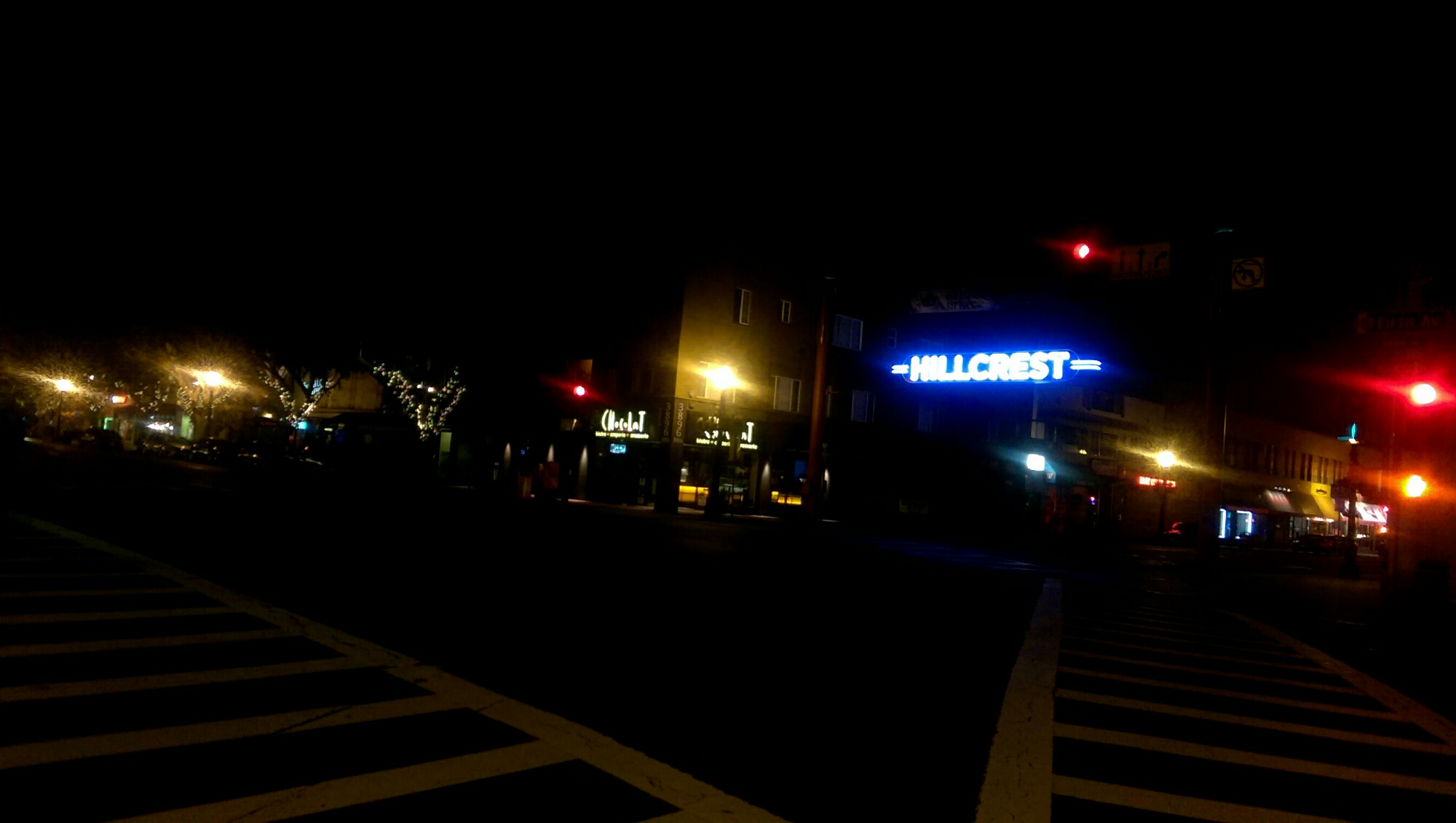
just like a pile of leaves.

However, I have never clogged myself with the praises of pastoral life, nor
with nostalgia for an innocent past of perverted acts in pastures. No. One need
never leave the confines of New York to get all the greenery one wishes—I can’t
even enjoy a blade of grass unless I know there’s a subway handy, or a record
store or some other sign that people do not totally regret life. It is
more important to affirm the least sincere; the clouds get enough attention as
it is and even they continue to pass. Do they know what they’re missing? Uh
huh.

My eyes are vague blue, like the sky, and change all the time; they are
indiscriminate but fleeting, entirely specific and disloyal, so that no one
trusts me. I am always looking away. Or again at something after it has given me
up. It makes me restless and that makes me unhappy, but I cannot keep them
still. If only i had grey, green, black, brown, yellow eyes; I would stay at
home and do something. It’s not that I’m curious. On the contrary, I am bored
but it’s my duty to be attentive, I am needed by things as the sky must be above
the earth. And lately, so great has their anxiety become, I can spare
myself little sleep.

Now there is only one man I like to kiss when he is unshaven.
Heterosexuality! you are inexorably approaching. (How best discourage her?)
St. Serapion, I wrap myself in the robes of your whiteness which is like
midnight in Dostoevsky. How I am to become a legend, my dear? I’ve tried love,
but that hides you in the bosom of another and I am always springing forth from
it like the lotus—the ecstasy of always bursting forth! (but one must not be
distracted by it!) or like a hyacinth, “to keep the filth of life away,” yes,
there, even in the heart, where the filth is pumped in and slanders and pollutes
and determines. I will my will, though I may become famous for a mysterious
vacancy in that department, that greenhouse.

Destroy yourself, if you don’t know!

It is easy to be beautiful; it is difficult to appear so. I admire you,
beloved, for the trap you’ve set. It’s like a final chapter no one reads because
the plot is over.

“Fanny Brown is run away—scampered off with a Cornet of Horse; I do love that
little Minx, & hope She may be happy, tho’ She has vexed me by this Exploit
a little too.—Poor silly Cecchina! or F:B: as we used to call her.—I wish She
had a good Whipping and 10,000 pounds.”—Mrs. Thrale.

I’ve got to get out of here. I choose a piece of shawl and my dirtiest
suntans. I’ll be back, I’ll re-emerge, defeated, from the valley; you don’t want
me to go where you go, so I go where you don’t want me to. It’s only afternoon,
there’s a lot ahead. There won’t be any mail downstairs. Turning, I spit in the
lock and the knob turns.

Read Full Post »

Marker on paper. August 3, 2011.


Il Nostro Canto

by Silvia Signorelli

il tuo passo a Milano

di cento stagioni

presso di me ha colorato l’aria

di silenziosa neve

d’inverno il calore

dell’estate abbracciata

di luce loquace

gazzelle

azzurre di mitezza

nostro canto

di bene grande

raggianti

Nuestro Canto

tu paso por Milan

de ciento estaciones

junto a mi ha llenado de color el aire

de silenciosa nieve

de invierno el calor

del verano abrazada

de luz locuaz

gacelas

azules de masadumbre

nuestro canto

de amor grande

radiantes

Our Song

your stride in Milano

of a hundred seasons

colored the air around me

with silent snow

warmth in winter

beheld by summer

by loquacious light

gazelles

blue with gentleness

our song

of a great love

radiant

From: La Tua Voce Sonora | Tu Voz Sonora

Read Full Post »

Today I want to stray from the visual and go back to words (even though visual work is piling up by the scanner, waiting to be shared.)

The visual permeates every aspect of a designer/artist life…it is the expected outcome: something that all can see. Here in sketchbloom I share works and progress/process in form of JPEG images, pixels on the screen. Even my words are translated as pixels and a visual experience as I type. To truly appreciate words one needs to go back to audio, in a dark room, eyes closed, and listen to the sound…absorb its meaning. Listen to the words, embrace their message, intensity. In the visual world we hear people’s voices translated into impersonal pixels (emails, texts and, for those who partake, chats). The visual has become an acid which burns the eyes, making it challenging to sit still with a (pictureless) theory book, so dependent on visual candy have we become. The world of ideas, that I am so incredibly fortunate to inhabit as a profession, is threatened by the constant stimula and incessant buzzing of the digital revolution, which rides on the visual. The digital revolution that was supposed to connect us all (and it does, superficially) but in reality has made us feel alone in a different, emptier way. The comfort that one gets from the words of an author, from a book with paper and weight, is to me the comfort of flamenco guitar music on an analog cassette tape. Billie Holliday on a scratchy record, as opposed to the robotic voice of online text.

So today I just want to turn off and just listen- going back to dear words, words that imagine Bruce Mau reading to me, and to you.

  • Allow events to change you.
    You have to be willing to grow. Growth is different from something that happens to you. You produce it. You live it. The prerequisites for growth: the openness to experience events and the willingness to be changed by them.
  • Forget about good.
    Good is a known quantity. Good is what we all agree on. Growth is not necessarily good. Growth is an exploration of unlit recesses that may or may not yield to our research. As long as you stick to good you’ll never have real growth.
  • Process is more important than outcome.
    When the outcome drives the process we will only ever go to where we’ve already been. If process drives outcome we may not know where we’re going, but we will know we want to be there.
  • Love your experiments (as you would an ugly child).
    Joy is the engine of growth. Exploit the liberty in casting your work as beautiful experiments, iterations, attempts, trials, and errors. Take the long view and allow yourself the fun of failure every day.
  • Go deep.
    The deeper you go the more likely you will discover something of value.
  • Capture accidents.
    The wrong answer is the right answer in search of a different question. Collect wrong answers as part of the process. Ask different questions.
  • Study.
    A studio is a place of study. Use the necessity of production as an excuse to study. Everyone will benefit.
  • Drift.
    Allow yourself to wander aimlessly. Explore adjacencies. Lack judgment. Postpone criticism.
  • Begin anywhere.
    John Cage tells us that not knowing where to begin is a common form of paralysis. His advice: begin anywhere.
  • Everyone is a leader.
    Growth happens. Whenever it does, allow it to emerge. Learn to follow when it makes sense. Let anyone lead.
  • Harvest ideas.
    Edit applications. Ideas need a dynamic, fluid, generous environment to sustain life. Applications, on the other hand, benefit from critical rigor. Produce a high ratio of ideas to applications.
  • Keep moving.
    The market and its operations have a tendency to reinforce success. Resist it. Allow failure and migration to be part of your practice.
  • Slow down.
    Desynchronize from standard time frames and surprising opportunities may present themselves.
  • Don’t be cool.
    Cool is conservative fear dressed in black. Free yourself from limits of this sort.
  • Ask stupid questions.
    Growth is fueled by desire and innocence. Assess the answer, not the question. Imagine learning throughout your life at the rate of an infant.
  • Collaborate.
    The space between people working together is filled with conflict, friction, strife, exhilaration, delight, and vast creative potential.
  • ____________________.
    Intentionally left blank. Allow space for the ideas you haven’t had yet, and for the ideas of others.
  • Stay up late.
    Strange things happen when you’ve gone too far, been up too long, worked too hard, and you’re separated from the rest of the world.
  • Work the metaphor.
    Every object has the capacity to stand for something other than what is apparent. Work on what it stands for.
  • Be careful to take risks.
    Time is genetic. Today is the child of yesterday and the parent of tomorrow. The work you produce today will create your future.
  • Repeat yourself.
    If you like it, do it again. If you don’t like it, do it again.
  • Make your own tools.
    Hybridize your tools in order to build unique things. Even simple tools that are your own can yield entirely new avenues of exploration. Remember, tools amplify our capacities, so even a small tool can make a big difference.
  • Stand on someone’s shoulders.
    You can travel farther carried on the accomplishments of those who came before you. And the view is so much better.
  • Avoid software.
    The problem with software is that everyone has it.
  • Don’t clean your desk.
    You might find something in the morning that you can’t see tonight.
  • Don’t enter awards competitions.
    Just don’t. It’s not good for you.
  • Read only left-hand pages.
    Marshall McLuhan did this. By decreasing the amount of information, we leave room for what he called our “noodle.”
  • Make new words.
    Expand the lexicon. The new conditions demand a new way of thinking. The thinking demands new forms of expression. The expression generates new conditions.
  • Think with your mind.
    Forget technology. Creativity is not device-dependent.
  • Organization = Liberty.
    Real innovation in design, or any other field, happens in context. That context is usually some form of cooperatively managed enterprise. Frank Gehry, for instance, is only able to realize Bilbao because his studio can deliver it on budget. The myth of a split between “creatives” and “suits” is what Leonard Cohen calls a ‘charming artifact of the past.’
  • Don’t borrow money.
    Once again, Frank Gehry’s advice. By maintaining financial control, we maintain creative control. It’s not exactly rocket science, but it’s surprising how hard it is to maintain this discipline, and how many have failed.
  • Listen carefully.
    Every collaborator who enters our orbit brings with him or her a world more strange and complex than any we could ever hope to imagine. By listening to the details and the subtlety of their needs, desires, or ambitions, we fold their world onto our own. Neither party will ever be the same.
  • Take field trips.
    The bandwidth of the world is greater than that of your TV set, or the Internet, or even a totally immersive, interactive, dynamically rendered, object-oriented, real-time, computer graphic–simulated environment.
  • Make mistakes faster.
    This isn’t my idea — I borrowed it. I think it belongs to Andy Grove.
  • Imitate.
    Don’t be shy about it. Try to get as close as you can. You’ll never get all the way, and the separation might be truly remarkable. We have only to look to Richard Hamilton and his version of Marcel Duchamp’s large glass to see how rich, discredited, and underused imitation is as a technique.
  • Scat.
    When you forget the words, do what Ella did: make up something else … but not words.
  • Break it, stretch it, bend it, crush it, crack it, fold it.
  • Explore the other edge.
    Great liberty exists when we avoid trying to run with the technological pack. We can’t find the leading edge because it’s trampled underfoot. Try using old-tech equipment made obsolete by an economic cycle but still rich with potential.
  • Coffee breaks, cab rides, green rooms.
    Real growth often happens outside of where we intend it to, in the interstitial spaces — what Dr. Seuss calls “the waiting place.” Hans Ulrich Obrist once organized a science and art conference with all of the infrastructure of a conference — the parties, chats, lunches, airport arrivals — but with no actual conference. Apparently it was hugely successful and spawned many ongoing collaborations.
  • Avoid fields.
    Jump fences. Disciplinary boundaries and regulatory regimes are attempts to control the wilding of creative life. They are often understandable efforts to order what are manifold, complex, evolutionary processes. Our job is to jump the fences and cross the fields.
  • Laugh.
    People visiting the studio often comment on how much we laugh. Since I’ve become aware of this, I use it as a barometer of how comfortably we are expressing ourselves.
  • Remember.
    Growth is only possible as a product of history. Without memory, innovation is merely novelty. History gives growth a direction. But a memory is never perfect. Every memory is a degraded or composite image of a previous moment or event. That’s what makes us aware of its quality as a past and not a present. It means that every memory is new, a partial construct different from its source, and, as such, a potential for growth itself.
  • Power to the people.
    Play can only happen when people feel they have control over their lives. We can’t be free agents if we’re not free.

Read Full Post »

City of Salt by Nicholas Kahn and Richard Selesnick. Image via amazon.

“Here is a splendid volume from the Terry Gillam school of fictional photography… The book comes in a sturdy slipcase and features complex landscapes, painstakingly created, and digitally peopled by actors playing out scenes which conjure up a mystical Middle Eastern civilisation. Enigmatic, but beautiful.”
AG Magazine

“This is a beautifully structured text with an imaginative use of words and photography. This wondrous book of tales is a complex work of art that will be read throughout our generation.”
Focus: Fine Art Photography Magazine

“City of Salt… creates and documents alternate realities in miniature, accompanied by narratives inspired by Sufi tales, Italo Calvino and more.”
Michelle Wildgen –Publishers Weekly


The City. Image via kahnselesnick.com. Click to enlarge.

Suspended! Image via kahnselesnick.com. Click to enlarge.


Two Streets. Image via kahnselesnick.com. Click to enlarge.


The Flyer. Image via kahnselesnick.com. Click to enlarge.

 
From Amazon:
 
Panoramic photographs of fantastical landscapes make a bizarre Baedeker to alternative realities in City of Salt, by Nicholas Kahn and Richard Selesnick. The second volume, after Scotlandfuturebog, in an intended trilogy of such otherworldly guides juxtaposes those scenes with similarly inspired texts: Sufi tales, the writings of fabulist Italo Calvino, and parables by the artists themselves. The strange deserts, marshes, sandy shores, villages, and fields are often traversed by wandering figures, frequently in peril or precariously alone. Kahn and Selesnick’s process combines sculptural and photographic media. The artists first construct the intricately detailed worlds in three-dimensional miniatures and dioramas, then digitally photograph the scene and populate it with characters in allegorical, though intriguingly puzzling, tableaux.
…………………………..
 
I ran into this gorgeous, oversized, substantial book few years ago while visiting UCSD’s excellent Architecture library. Words and images weave imaginary tales and create an escapist landscape. May days verge on the surreal, time is suspended, perhaps in a cruel, paradoxical loop. To travel through time, for once forward instead of backwards…to harness the days as though wild horses, bridle their energy. May seems to slip through my fingers, each time. I am lulled by the calm (before the storm? No, before more tense calm.)
Dreams and collages await. I find the only cure for restlessness is mindful awareness, in brilliant execution of each undertaking- as small as it is, as humble as it is. Ambition can paralyze you in May, when mid-year approaches and mental harvests take place. Each day we need to reconcile heaven and hell within us. Refusing to attemp the feat, or lack of acceptance of our opposite instincts,  is the only way the battle is lost. In numbness lies defeat.

Read Full Post »

Digital Collage. May 16, 2011.


Ink drawing and digital manipulation. May 2011.

 
The Pretty Parking Lot
 
I have dreamt of perfect poems
faded like dewdrops upon awakening
 
About mice and buildings
built by men
 
Cities are sentences that haunt me
 
Book thieves, foreign movies…
the line is thin between memories and reverie
 
The fog has lifted
the rain felt soft (like a blessing)
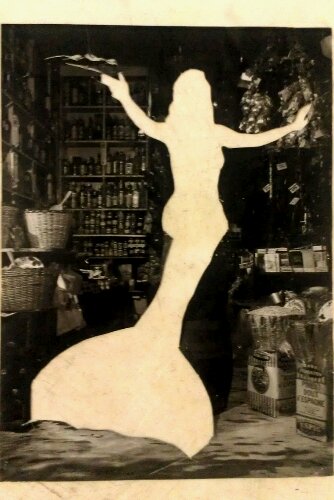
yet I am in a pretty parking lot.
 
You left your eyes as you passed me by.
 
May 2011
 
…………………………………………………………………..
 

                     Where can I run? 
                    You fill the world. 
                   The only place to run is within you.

                        From Agata e la Tempesta| Agata and the Storm


……………………………………………………………………..
 

They miss the whisper that runs
any day in your mind,
“Who are you really, wanderer?”—
and the answer you have to give
no matter how dark and cold
the world around you is:
“Maybe I’m a king.”

               William Stafford


Read Full Post »

”]” 

13 Days of a mild artist block and a spring flurry of activities all around. It has been one busy month of May.  In the blog-material  department, I have been gathering up material for new posts (but failed to..ahem..post them), reading omnivorously,watching foreign movies,writing poetry on walls and collecting books mentioned or shown in said foreign movies — more on this later. It’s a lot to keep up with.

In days that go at double-speed, sometimes poetry finds you…and nothing is the same again.

You Reading This, Be Ready

Starting here, what do you want to remember?
How sunlight creeps along a shining floor?
What scent of old wood hovers, what softened
sound from outside fills the air?

Will you ever bring a better gift for the world
than the breathing respect that you carry
wherever you go right now? Are you waiting
for time to show you some better thoughts?

When you turn around, starting here, lift this
new glimpse that you found; carry into evening
all that you want from this day. This interval you spent
reading or hearing this, keep it for life –

What can anyone give you greater than now,
starting here, right in this room, when you turn around?

William Stafford           

Read Full Post »


Architecture Depends by Jeremy Till Book cover

On April 08, 2011 I attended Till’s  provocative  lecture on his new book ‘Architecture Depends’. Here is a review from The Architects’ Journal (UK).

Here are some quotes from that day, from my notes, which i hope to be as faithful as possible:

The book was initially titled ‘Architecture and Contingencies’. The publisher made me change it to ‘Architecture Depends’. There are problems changing the title of a book once it is finished- and structured around a different title.

This book is a polemic. Architects detach themselves.  This detachment starts here in academia. Architecture students go in as humans and come back as architects.

Architects are separate from life. Autonomy in architecture is detachment.We witness the treatment of buildings as though they are detached objects, displayed in the media as something apart. This detachment is a dissolution.

All we got is Vitruvius: commodity, firmness, delight. Recycled through the ages!

Of all the impossible task that modernity sets for itself, order stands out. How does modernity achieve order? By exterminating ambivalence. Modernity is behind the Holocaust.

Corbu didn’t invent modernity. He was a symptom of it.

Modernity cannot get rid of contingency.

Contingency is getting rid of the idea that things may turn out differently. In architecture contingency is inevitable.

Architects would be banished by Plato.

Contingency makes us have to make choices.

Abstract vs. situated knowledge.

“All architecture is waste in transit.” Peter Guthrie

Le Courbusier tried to banish domestic inhabitation.

Parametric people are as conservative as the New Urbanists, the latter caught in an aggressive past, the former in a progressive future .

Modernity: concerned with purity, the color white…modernity is this gleaning table with this aesthetic of getting rid of dirt.

‘You don’t know how wonderful dirt is.’ James Joyce’s last words, from Gideon’s biography.

Architects ‘make space’…negative space…what does that even mean?

‘Social space is a social product’. Henri Lefebvre

The production of space is not the agency of architecture alone!

Sustainability=sustain the status quo. This word has become meaningless.

Elvis Costello and Lo-Fi architecture: I heard Elvis Costello once in an interview saying that when you record in the studio you get caught up in a certain kind of environment. He would ask to have the record played back on a cheap transistor radio, because that’s how the music is going to be experienced by most people. The same with architecture. We have to have in mind low-fi, transistor radio architecture as we stay in front of the computer, believing what we see. The more it looks real the less real it is.

Architecture cannot be about aesthetic alone: it deals with the social and ethical. It has to be alert to the context.

I don’t like to use pictures in my presentations because, as soon as I provide pictures, the argument becomes about aesthetic.

Professions set themselves apart by setting up problems they are the only ones able to solve. Professors do the same.

‘Architecture and Agency’ will be my next book.

Sensemaking vs. problemsolving.

In architecture we have created phony ethics, we have associated ethics with aesthetics, morality with beauty…God is in the detail, etc.

Doing good by doing beautiful buildings?

Professional codes of conducts are an example of phony ethics: these are not ethical guidelines, they are principles for relating to the client.

You can’t be ethical by doing beautiful buildings! You have to assume an ethical stance, a responsibility for the other. If we start thinking that every line on a piece of paper is an act of social responsibility, then every line assumes significance.

I am against ‘Anyone is Anyone’ conferences.

From the paper ‘Lost Judgement’ from the 2003 EEAA Prize by Jeremy Till – and referred to during the talk:

The Other for architects is the one or ones who will be part of the social space our buildings help construct. In this way we can be the architects Unger would wish us to be, “enabling people as individuals and as groups to express themselves by changing their situations. …(the architect) lives out his transformative vocation by assisting someone else’s.”
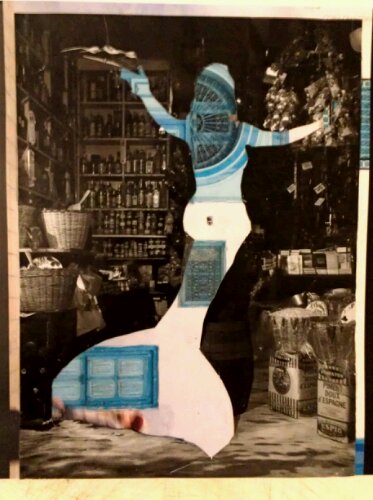
An ethical person is a person who gathers discordant opinions and makes the best decision. Hope is with given given circumstances. Stop investing in objects.

The next project I will do will be on scarcity. Scarcity is much more interesting to me.

Architects sold out the profession to the agency of Capitalism. In building Dubai they forgot it was going to be built by slave labor. If all you offer is commodity you have got nothing to offer. Spatial intelligence will get us away from the cul-de-sac we got ourselves into. We should be gathering contingencies and make the best possible solutions.

I like to think of architects as angels with dirty faces.


Read Full Post »

Updated March 15

image

Homeless man reading. March 11, 2011.

For about a year, I have been lackadaisically documenting street conditions in San Diego.
The paranoia towards publicly shared space, the  ordinances (no sitting allowed, no loitering), the lack of benches. Downtown San Diego is the antithesis of porosity, a built environment that refuses to be interacted with. We purchase community: getting out your billfold is the only way to experience publicness. Ok. So there is Seaport Village…but that is not the streets….urban San Diego.

On the street of the America’s Finest City on any given night you find first and third world country sharing the sidewalk (sorry am I being un-PC? I meant developing country.)

I refrained from taking photos of homeless people until now, out of respect. But yesterday I learned that politeness can be the opposite of sincerity.
The work of an artist/flaneur is (also) to look at things most people gloss over, or willingly ignore. We are walking bookmarks. So tonight I asked this man what he was reading. ‘Science fiction’ he said. ‘It was originally published in 1952.’

:: :: ::
Later on that evening

Yoga class having come and gone (again), I will take a page from Neruda the Brazilian writer Martha Medeiros and stop going home the same route. I will sit for an apple mint sheesha (hookah, as it’s known here) and purchase me some people time.

:: :: ::
Later on that week….

This is ‘Dies Slowly’ or ‘Muere Lentamente’, a poem misattributed to Pablo Neruda, from the original ‘A Morte Devagar’ by Martha Medeiros:

The poem and the English version which follows – and which I slightly modified – come from this blog

Muere lentamente quien se transforma en esclavo del hábito, repitiendo todos los días los mismos trayectos, quien no cambia de marca, no arriesga vestir un color nuevo y nole habla a quien no conoce.

Muere lentamente quien evita una pasión, quien prefiere el negro sobre blanco y los puntos sobres las “ies” a un remolino de emociones, justamente las que rescatan el brillo de los ojos, sonrisas delos bostezos, corazones a los tropiezos y sentimientos.

Muere lentamente quien no voltea la mesa cuando está infeliz en el trabajo, quien no arriesga lo cierto por lo incierto para ir detrás de un sueño, quien no se permite porlo menos una vez en la vida, huir de los consejos sensatos.

Muere lentamente quien no viaja, quien no lee, quien no oye música, quien no encuentra gracia en sí mismo.

Muere lentamente quien destruye su amor propio, quien nose deja ayudar.

Muere lentamente quien pasa los días quejándose de sumala suerte o de la lluvia incesante.

Muere lentamente quien abandona un proyecto antes deiniciarlo, no preguntando de un asunto que desconoce o norespondiendo cuando le indagan sobre algo que sabe.

Evitemos la muerte en suaves cuotas, recordando siempre que estar vivo exige un esfuerzo mucho mayor que elsimple hecho de respirar.

Solamente la ardiente paciencia hará que conquistemos una espléndida felicidad.

He dies a slow death who becomes a slave to habit, repeating everyday the same paths, who doesn’t change the mark he leaves, won’t risk wearing a new color, nor talk to people he doesn’t know.

He dies a slow death who avoids passion, who prefers black to white and dotted i’s over a whirlwind of emotions,especially those that make the eyes sparkle , rescue smiles from yawns, hearts clumsy with feelings.

He dies a slow death who doesn’t upend the table when he is unhappy at work, who won’t risk a sure thing for the uncertainty behind a dream, who won’t allow himself, at least once in his life, to flee from sensible advice.

He dies a slow death who doesn’t travel, nor read, nor hear music, who doesn’t laugh at himself.

He dies a slow death who destroys self-love, who won’t let himself be helped.

He dies a slow death who spends his days complaining of his bad luck or of the neverending rain.

He dies a slow death who quits a project before starting it, not asking about what he doesn’t know, or not answering when asked about something he does know.

Let us avoid death in gentle doses, remembering always that being alive demands an effort much greater than the simple act of breathing.

Only burning patience will allow us to conquer
a splendid happiness.

Read Full Post »

Ink on Paper. January 2011.


As designers, architects, artists, we use the ability to first visualize then communicate  a desired outcome. Implementation means having the courage, discipline and perseverance  to  bring that vision into the physical realm. I love to write, and to write lists, but this year I am doing something different with my 2011 resolutions. I am drawing them. It sems to be working. On good days, and they are abundant here in San Diego, you can find me in the park, chasing the sun and reading. An old-school physical book.  The previous specifications is now necessary due to the variety of reading options we have (what is your pleasure, or rather, your poison: smartphone, kindle, ipad, TMZ on your laptop?). These are my immediate, must-finish charges: 

Ink on paper. February 2011.

Books:

Inchoate: An Experiment in Architectural Education. Angelil, Marc and Liat Uziyel, eds.

The Architect: Chapters in the History of the Profession by Spiro Kostof

Sketching and meditating. Two resolutions, perhaps one and the same.  

Ink on Paper. January 2011.


Pondering on drawing, as opposed to writing, resolutions led me to think about visual vs. written and oral communication.

While drawing-or diagramming-a goal may help provide us with clues, visual or other, that help us actualize it, I don’t buy the argument that ‘visual’ people can only best communicate their intent through images. This is also known as ‘a picture is worth a thousand words’ syndrome. By the same token, I refuse to accept that ‘visual’ people only understand material if it’s accompanied by images and therefore should be excused if they are poor readers or listeners. That is plain laziness. There are notions and topics  in this world that cannot be boiled down to neat Powerpoints (even though, heaven knows, we have tried to even run wars through the ubiquitous slide application), but require flight of the imagination, suspension of disbelief, and the ability to follow (picture-less) complex arguments. In trying to explain critical thinking, images run the risk of appearing like obtrusive clip-arts, obfuscating rather than enlightening.

The tyranny of the visual often lets us  get away with having inferior written and oral communication skills. I don’t buy the ‘visual’ doctrine (or fallacy) with my students or my architecture colleagues. Maybe it’s because I come from a linguistic lycaeum, was an English Minor, and come from Italy, but the way a person speaks or writes is more important to me, or revealing of their character, than any imagery or composition she or he can conjure up on a board. And here I need to say that, lest I behave like a whitened sepulcher, I know I have failings when trying to communicate: typos due to late night writing, listitis (I make too many lists), lectures that tend to go on a tangent and probably what is called mild A.D.D in this country (or severe A.D.D…depending on what day you ask my students;)). Lastly the fact that, no matter how many years I live here, my soul is Italian and so is the way to express myself, and we do use lot of what here are called ‘run-ons’ in writing, and perhaps even talking. We are peripatetic, scenic-route communicators.

Ok, so I am not perfect: let the flawed still admire and aim at beauty.

I ask the person I listen to to paint a convincing, even seductive picture with their words, to evoke the sense and meaning of their process. Of course exact,clear words go well with exact, clear drawings and diagrams, but seductive images without substantive explanations or clear, logical statements leave me dry. The literary arts are for the most part lost to modern architecture students, beyond the required ‘humanities’  and enticing (but seldom frequented) advanced elective courses. The result is professionals who are literate in CAD, codes, building, or even ‘architecture’, but illiterate in the sense of the global collective written word, and therefore culture. Shouldn’t the designers of shelters for the human race understand its most lyrical expressions?  Shouldn’t they design for man and woman’s highest aspiration, rather than the lowest common denominator? We ask architects to create places of Beauty, places that inspire, to design poetic aedifices. Without knowing what poetry is, without at least having been exposed to it, that is an impossible feat. If architecture is the Mother of all the Arts, should it not contain them? Literature, philosophy, liberal arts, music…Where are you Muses in our curricula? We have modified –and are moving towards transforming–the academic requirements for the make-up of the future architect based on the needs (vocational at best ) of field practice, a large number made up by corporate building farms, where architecture is just a sign on the door. Of course we aim for graduates ready to enter the profession, but hopefully we are also aiming for critical thinkers, whole individuals who can inspire, not just perform.  What should lead, follows. The trend can only go downward. I am talking about cad monkeys, or people who are paid ‘to draw, not think’ –I was actually told that many years ago. Call me irrational,  but I call for mandatory poetry courses (mandatory poetry! an oximoron). Call me utopian, but world literature should be as much part of an architecture curriculum as world architecture. When you know, you cannot unknow. I always say that. When you are exposed to possibilities and ‘big questions’ you cannot accept passively that things are just the way they are because they have always been. Poetry and literature are democratic expressions, highly dangerous to the status quo. And therefore highly desirable.

In my quest, I ran into this book. I am collecting a body of critical readings (for myself!) and this book will definitely be included.

Downcast Eyes: The Denigration of Vision in 20th Century French Thought, by Martin Jay

Read Full Post »

Bjarke Ingels came to speak to our school Friday night.

The venue was the Museum of Natural History in scenic Balboa Park.

I am still blown away by the lecture and, more importantly, the message.

It was truly (r)evolutionary.  The fact that BIG’s insanely brilliant concepts not only get built but a) give back to the community in terms of urban interaction b) are socially and ecologically responsible and c) are giving him fame and making him a household name is galvanizing.

Expanding the collective idea of what is possible through architecture: this is the optimism we need after years of gloom, in face of all the naysayers and ‘pie-in-the-sky’ disablers.  Something is blooming in the state of Denmark.

What an event. My friend Alan Rosenblum told me it would be as if  ‘Lady Gaga came to San Diego’.

And. It. Was.  The students loved it. Three days later, and we are all still giddy.

I could not agree more.  Thank you Mr. Ingels.
You intensified the dialogue between students and educators, and showed us how the ‘crazy’ ideas that are developed in studio and propose new typologies for the city are not only possible but timely and welcome. This creates a better learning environment, where pragmatism actually means being part of the solution, not propagating the problem.

I had the same dilemma when working in traditional, corporate offices and found refuge in academia. BIG showed us that there is a third way, the ‘Bigamy’ way. You can have it all. You can be good and successful. You can be extremely famous
and not be arrogant. He spoke of pragmatic idealism, and hedonistic sustainability. He demonstrated how to create building that are fun to experience as inhabitants and city neighbors and yet are sustainable. He showed us the intellectual approach and use of hybridization of traditional typologies to achieve new functions and forms. To wit: the Garbage to Energy plant in the middle of Copenhagen, which will be the city’s tallest structure and will house a ski slope (!) and blow smoke rings each time one ton of CO2 is burned. These are usually ‘crazy’ projects that we see coming from the upper studio division, when we ask the students to ‘dream big’ (pun intended) and question the drab, anti-interactive reality of center cities such as San Diego. The students, deep inside, try to dream but are conditioned to think that projects such as the one we saw in the lecture could never be built due to various factors such as financial interests or politics of control, or even lack of relevance of our role as architects.

We have been liberated from all of this because we can now point to BIG’s projects. Here it was demonstrated that the only limits we have as architects and human beings are those self-imposed, or those we feel ‘reality’ has burdened us with. I know that as faculty we felt validated by BIG’s successes ( does it make sense?). The music and videos, the whole presentation and BIG’s  infectious enthusiasm, warmth and positive energy were, in the words of a student ‘AWESOME’. Another student told me he learned a lot about diagrams from the lecture.
The lecture also was a model for engaging presentations. I have been toying with the idea, but now I am committed to use music and pop references in my History of Architecture classes; I ran the idea with few students and they were all for it. 🙂 I will quote Ingels when he says that we need to ‘cease to consider the building as objects but focus on what they do for the city’ : this informs and generates a new approach to ‘sacred architectural monsters’ and teaching history of architecture (or as I like to think, architectural stories).

A big thank you to Allen Ghaida, the AIAS and all my colleagues at the NewSchool Arts Foundation for making this dream of an event a reality.

I sketched feverishly- and took down all the provocative quotes. Here are my hybrid/computer-augmented notes.

I will add all of the proper building names and location as soon as possible.

click to enlarge

…..and this was my present 🙂

Read Full Post »

The Flâneur: A Radical-Chic Icon

The Flâneur. Ink on trace paper. February 26, 2011

The Flâneur and his turtle in the streets of Paris. Digital collage. February 26, 2011. Background photo from San Francisco’s artist David Blumin. Click for his website.

Post updated 11.01.2021


Then I heard the phrase ‘Walk with a turtle’ on NPR, during an interview with Council of Dads’ author Bruce Feiler–and had an epiphany: I, too, had been a flâneuse in my early years. When I was 9 years old I used to tie a red ribbon to the shell of my turtle Stefania/Stefano (we are still not sure) and take her for ‘walks’ around my building and in the field of olive trees nearby. This cannot just be explained by mere coincidence or a sense of equanimity (i would take my giant schnautzer Zorro for walks- or rather, he would take me- and treated Stefania/Stefano to the same). By walking the city (ok , in my case the field of olive trees) at the pace of a tortoise, we are bound to pay attention to life around us, to read the city–not just skim it from the wheel of our car or glancing up from smartphones while we traverse sidewalks. Having a turtle as a guide nudges us to stop rushing. I am reminded of the buddhist monk in the documentary ‘Baraka’, slowly pacing the street with small steps , at the sound of a bell–in the midst of a hyperactive Japanese metropolis. The realization of possible multi-layered readings on the figure of the flaneur prompted a small research. Here is a documentary on Walter Benjamin’s Flâneur and Paris.

Historical evidence of The Flâneur? Or just man waiting for his wife? Undated image from: storify.com/virtualdavis/flaneur

The  Flâneur

The term comes from ‘flâner’, which means to stroll in French. From this verb Baudelaire coined the word  flâneur, a person who walks the city in order to experience it.  The flâneur is driven  by an  insatiable  hunger  for  passion; he  seeks  the  streets and  the  city  life  for they  provide  inspiration  and  cure him of the malaise and loneliness  of  being human. He practices mindfulness, or conscious dilly-dallying. In US they would call him a ‘loiterer’, surely shoo him away…or perhaps fine or even jail him (I always tell my students there is no such thing as the word ‘loitering’ in Italian….what else would we do in Piazzas!?). My friend Bruce and I were discussing the flâneur few days ago and he reminded me of  the symbology of the turtle and this quote from Rumi:

The soul needs as much time to wander as the feet.

Rumi


Baudelaire writes of the flâneur:

 The  crowd  is  his  element,  as  the  air  is  that  of  birds  and  water  of  fishes.

 His  passion  and passionate  spectator,  it  is  an  immense  joy  to  set  up  house  in  the  heart  of  the  multitude, amid  the  ebb  and  flow  of  movement,  in  the  midst  of  the  fugitive  and  the  infinite.

To  be away  from  home  and  yet  to  feel  oneself  everywhere  at  home;  to  see  the  world,  to  be  at the  centre  of  the  world,  and  yet  to  remain  hidden  from  the  world

impartial  natures which  the  tongue  can  but  clumsily  define.  The  spectator  is  a  prince  who  everywhere  rejoices  in  his  incognito.  The  lover  of  life  makes  the  whole  world  his  family,  just  like  the lover  of  the  fair  sex  who  builds  up  his  family  from  all  the  beautiful  women  that  he  has ever  found,  or  that  are  or  are  not  -­‐  to  be  found;  or  the  lover  of  pictures  who  lives  in  a magical  society  of  dreams  painted  on  canvas.


A Process of Navigating Erudition

From Wikipedia: Flâneur is not limited to someone committing the physical act of peripatetic stroll in the Baudelairian sense, but can also include a “complete philosophical way of living and thinking”, and a process of navigating erudition as described by Nassim Nicholas Taleb’s essay on “Why I Walk” in the second edition of The Black Swan (2010).  A Sunday Time review called The Black Swan  one of the twelve most influential books since WWII.

Benjamin  in his Arcades further describes the flâneur utilizes the city,  which becomes an  extension of  his residence:

The   street   becomes   a   dwelling   for   the   flâneur;   he   is   as   much   at   home   among   the facades  of  houses  as  a  citizen  is  in  his  four  walls.  To  him  the  shiny,  enameled  signs  of businesses  are  at  least  as  good  a  wall  ornament  as  an  oil  painting  is  to  the  bourgeois  in his  salon.  The  walls  are  the  desk  against  which  he  presses  his  notebooks;  news-­‐stands are  his  libraries  and  the  terraces  of  cafés  are  the  balconies  from  which  he  looks  down on  his  household  after  his  work  is  done.


Some of the questions I have been thinking about are : Can the flâneur be a flâneuse? Must he or she always haunt the city aloof and alone, or is ‘Flâneurie’ an activity that can be enjoyed in small groups, maybe of separate actors, each with his or her own turtle?

The flâneur is enjoying immense popularity on the Internet and blogosphere, among the hipster and (pseudo)intellectual crowd.  He is radical chic, a gentleman stroller whose eccentricity is afforded to him by indipendent wealth. He is a man of leisure who can make a statement about the bondage of work and busyiness: he is above it and does not need it.
On the other side of the coin, we might re-evaluate the ‘homeless’ people, the figure of the clochard (sounds better in French doesn’t it) as flâneurs without means, but with the same intellect and intent.  They also make the city their living room and library.

In “American Flaneur: The Cosmic Physiognomy of Edgar Allan Poe“, James V. Werner describes how ‘ highly self-aware, and to a certain degree flamboyant and theatrical, dandies of the mid-nineteenth century created scenes through outrageous acts like walking turtles on leashes down the streets of Paris. Such acts exemplify a flâneur’s active participation in and fascination with street life while displaying a critical attitude towards the uniformity, speed, and anonymity of modern life in the city.’

Hmm…Sounds like The Situationists.

A new interpretation of the activities of the flâneur appear in the writings of Guy Debord, the dérive also being a protest against the processes of consumption and capitalism:

One of the basic situationist practices is the dérive [literally: “drifting”], a technique of rapid passage through varied ambiances. Dérives involve playful-constructive behavior and awareness of psychogeographical effects, and are thus quite different from the classic notions of journey or stroll.

In a dérive one or more persons during a certain period drop their relations, their work and leisure activities, and all their other usual motives for movement and action, and let themselves be drawn by the attractions of the terrain and the encounters they find there. Chance is a less important factor in this activity than one might think: from a dérive point of view cities have psychogeographical contours, with constant currents, fixed points and vortexes that strongly discourage entry into or exit from certain zones.

–Guy Debord

While the flaneurs practiced ‘aimless wandering’, the Situationists devised processes to purposefully get lost.

There is no English equivalent for the French word flâneur. Cassell’s dictionary defines flâneur as a stroller, saunterer, drifter but none of these terms seems quite accurate. There is no English equivalent for the term, just as there is no Anglo-Saxon counterpart of that essentially Gallic individual, the deliberately aimless pedestrian, unencumbered by any obligation or sense of urgency, who, being French and therefore frugal, wastes nothinincluding his time which he spends with the leisurely discrimination of a gourmet, savoring the multiple flavors of his city.

Cornelia Otis Skinner.

Elegant Wits and Grand Horizontals, 1962

Watching is the chosen pleasure of flâneur. He is an ‘urban stalker’, as Susan Sontag defines him in her 1977 essay On Photography.  Modern flâneurs, let’s arm ourselves with cameras or a moleskine . Let’s pretend we are all ‘The Sartorialist’ and many, many other envoys on particular missions. Would you enjoy the streets of your city if you thought you were spying on someone, an urban detective, privy to secrets no-one else can know? What would the intelligence gathered from today? What stories could you tell(or draw)? What stories would the city reveal to you. There is so much life out there. And buildings are lessons.

Let the urban voyeurism begin.
Here are some useful links:

And, finally, my very own books for Parisian flanerie.

Read Full Post »

image

image

image

image

image

Before the first day of the month comes to a close…

Read Full Post »

Ink and coffee on paper.

One more post before the month is over. I still have a lot of sketches to share and  am working on finding time to do some more collages (wow, the previous sentence needs to have more conviction to it!). Lots of changes going on around the world…. I am just sitting and seeing it all turn.
Wanted to share some words I received today:


Events of these past weeks remind us that as designers, faculty, engineers, authors, landscape architects, students, and architects we build landscapes and cities that fuel revolutions. Of knowledge and of hope…..Act of civil disobedience in Tunis and in Cairo are fueled by the spark of indignity. And in their Main Squares, we are reminded that Cities are embodied energy too. Below are words on cities. There are many.
 
Come, let yourself fall with me into the lunar scar of our city, scratched by sewers, crystal city of vapor and mineral frost, city witness to all we forget, city of carnivorous cliffs, city of immobile pain, city of immense brevity, city of the motionless sun, city of the long burning, city of the slow fires, city up to its neck in water, city of playful lethargy, city of black nerves, city of three umbilical scars, city of yellow laughter, city of twisted stink, city between air and worms, city of ancient lights ,old city nested among birds of omen, new city next to sculpture dust, city reflection of gigantic heaven, city of dark varnish and stonework, city beneath glistening mud, city of guts and tendons, city of violated defeat, city of submissive markets, city reflecting fury city of anxious failure, city woven with amnesia….
 
Carlos Fuentes
See you in February!

Read Full Post »

Santa Maria Delle Grazie with Bramante's apse. Milano. Pilot pen on paper. January 2011

 In the monastery adjacent this church, just a few minutes’ stroll from my house, one can find Leonardo Da Vinci’s ‘Last Supper’. The apse (widely attributed to Donato Bramante, and dated around 1490) is significant as it signals a crucial transition from the Late Gothic style of the nave to a splendid Northern Italian Renaissance in the apse, the choir and cupola.

.25 technical pen on cardstock. January 2011.

Photoshop manipulation of pen drawing. January 2011.

MITI’S RECIPE FOR SKETCHING:

Day One: Look. (First Encounter)

Day Two: See. (Visual Analysis;walkaround…resist the urge to take photos. Training your eyes will not only lead to better sketches, better lessons learned from the Architecture itself, it will lead to–if you are so inclined–even better photography in the end. Notice, examine and mentally record -on the exterior- connections, details, rhythms, proportions, materials; on the interior: spaces, rituals, light, sequences, apertures, passages…)

Day Three: Sketch. (even quickly…by now you learned the lessons, you acquainted yourself with the building. You begin to understand.) Use the verb ‘to draw’ as in drawing water from a well, draw information (this last advice comes from Travelling the World with an Architect’s Eye)

Tips for cold-weather sketching: stop when your legs fall asleep. Wear half (I call them ‘homeless-style’) gloves to keep the hands free. Listen to warm music on your ipod. Bring a thermos or mug with hot, organic, unsweetened english breakfast tea.

And…

for impromptu urban sketching, carry your pens with the very handy penholder by Muji (did I mention before that I love Muji?)

Sketchbook by hand book, penholder clip by muji.

Read Full Post »

image

Where would you go with shoes as these?
What kind of life would you live?
And what dreams would you have and what words would you write.

Sometimes it happens, on a still winter night…
To chance upon lace, to be charmed by organza.

The heart stops captured by a promise…or an illusion.

These, ladies and gentlemen, are shoes made for daydreaming.

[Ballerinas by La Scarpa Artigiana di Spelta, Milano]

Read Full Post »

The Fortress of Lost Time. Graphite on paper and magazine cutouts. December 28, 2010. Miti and Gianni Aiello.

Genova. Graphite on paper and magazine cutouts. December 27, 2010. Miti and Gianni Aiello.


These collages start with a drawing my father sketches out on thin notebook paper; I then proceed to create possible scenarios.

And this is the conversation at the end of the day with my mother, a retired judge — which i have entitled:

Talking about art with my (practical, realist) mother

[Me , retiring for the night, putting my art paraphernalia away] I’m happy about the collage. It was a good day.

Oh, did you have fun?

Mom, I don’t do art to have fun (recalling an earlier conversation about not turning your passion into an hobby).

But, didn’t you entertain yourself while you did it? Didn’t you stop worrying about other things while you were making it?

No mom, that’s not the point. I am creative. I have to create/work on  something everyday.

But what’s the use? Something is useful only if someone appreciates it.

Mom, I appreciate it, then it’s enough. I do it to satisfy myself. The people who read my blog appreciate it. Art doesn’t have to be useful in the pragmatic sense.

Then it’s psychotherapy.

No, mom don’t diminish me, if you think it’s psychotherapy then that means there’s something wrong with me.

But if it benefits you it’s like psychotherapy. Ok, like fitness. Mental fitness…..It’s like writing books.

Mom, art is not about fitness.

But I don’t understand art.

Ok, how about this: I do it for something you don’t understand : for pleasure.

No, I don’t understand it.

It’s okay mom. The world is beautiful because of its variety. (Italian saying: ‘il mondo e’ bello perche’ e’ vario). [Exiting the room].

I love my practical mom! She keeps me and my father out of trouble 😉

Read Full Post »


Christmas Day finds me in Amsterdam this year, on my way to Milano. Internet access may be intermittent the next few weeks, and while I plan to do art and sketch (well, as much sketching as subzero temperatures will allow), I won’t have my scanner so the quality of the drawings, collages and whatever else I may do will not be pristine, so bear with me. After all, this is the beauty of traveling: not having your usual environs, trappings and equipment leads to creative problem solving and a bit of experimenting (even though, judging from my luggage, it sure does look like I am carrying all my trappings :P). I plan to use a very nifty feature I discovered in WordPress: post by SMS (text). I am not sure my Italian sim card will allow me to use my Android phone as modem or that I will have internet on it, but I sure will be able to text so I am looking forward to post some impressions of Milano in winter, maybe even some life ephipanies (ha!).
For now I want to leave with some quotes I took down from the movie Eat, Pray , Love (don’t judge, it was playing on the plane and I happen to dig the author, as I mentioned before):
 
 
Italy:

Americans know entertainment, but they don’t know pleasure.

In Italy we have the expression ‘dolce far niente’ ; the sweetness of doing nothing.

Maybe you are a woman in search of a word.

Ruin is a gift. Ruin leads to transformation and evolution.

Bali:

Learn to see with your heart, not with your eyes, or with your head.

Meditate while smiling. Smile not just with your face, smile with your head. Smile even with your liver.

India:
You don’t have to be married or have children to have a family.

You have to learn to select your thoughts everyday, just as you select the clothes you are going to wear everyday.

God dwells within me. As me.

To live is to trust.

What if you had the capacity one day to love the whole world?

…..
A Merry, Merry Christmas
And a Happy New Year
Let’s hope is a good one
Without any fear.
(And so this is Christmas, and what have you done?)


Here is to new beginnings without old nonsenses.

Here is to lots of art and growth (and lots of good things to share)


Read Full Post »

Photograph, December 19, 2010

This is my piazza, do you want to join me? We can walk inside the Battistero and talk about Islamic influences in the architecture of the Rinascimento in Firenze…or maybe just stroll about like tourists. Let’s take that via,the one on the left, do you want to come with me?

Every time I consider  imaginary spaces, my mind wanders to The Forgetting Room, that magnificent book.

Should we build a forgetting room for this year (to let bitter memories flow onto Oblivion)? Or a remembering one (to extract poetry and melancholy …even, ah, wisdom…out of hardship? – the feeling of seeing a familiar river in winter). God knows I built enough altars, and burned enough. I haven’t yet learned if sadness is better than anger.
2010, what a stubborn, bittersweet, impenetrable year you were….I release you, since I could never reach you, no matter how hard I tried, or how much I mentally applied myself to understand you.
Perhaps you were never meant to be comprehended. Perhaps you were not worthy.

Read Full Post »

Photograph- Digitally retouched. December 18, 2010

Photograph- Digitally retouched. December 18, 2010

This is a continuation of my experimenting with words from the Arab Film Festival in San Francisco.

Lastly, an irregular haiku:

How quickly

the lizard

loses its tail!

San Diego, December 16, 2010

Read Full Post »

This has started to be a weekly blog, and I am not too happy about it. This Quarter has been so intense in a stupendous way: I am involved in a myriad of exciting projects at the school and became involved in new committees – and that has meant less free time, but an overall brand new meaning in what I do. And did I mention the books ? In my studio class we are talking about designing negative space and casting shadows and in history we are in the Golden period of Classical Times : Greece (what have the Greeks done for you lately) and Rome. Who could ask for more?

Throughout it all, we have ‘got to keep the heart’ as Wanda, my sweet ex-neighbor said. Brain food needs to be augmented by daily spirit-food, soul-food…heart-food. As fully-realized human beings we have to ask an incredible amount from each day, but I believe it’s the only way to go…or you could just go on auto-pilot and become numb. Art and what happens here is just that for me, an outlet and inlet of pure ‘heart-stuff’, to balance the facts and seductive theories I’m immersed in everyday. Could we say this is my Dyonisian to the Apollonian? The days that I don’t get to post or practice are somewhat overcast, a bit stuffy, as though not enough light or air was let in.

I finally completed my Viva La Revolucion post and a related ‘revolutionary’ piece {see previous}. It took FOREVER. I don’t know why I keep giving myself homework. But I hope you enjoy that line of thinking, always trying to put it all together in a somewhat cohesive way that has to do with the nature of this forum.
The Holidays are coming and I am looking forward to post more frequently and produce more work. And I have a long list of things/topics so definitely stay tuned!
I finally had some time to do a new collage today.

It all started with this catalog of this year’s Arab Film Festival in San Francisco, and an image of the Salk Institute in San Diego.

I knew I wanted to make a collage using the two for some time, and the inspiration came from a dream last night.

I did not know the word part would materialize. Using the titles of the movie in the Festival, I created a game for myself, a sort of stream-of-consciousness poem generator. Here is one of the early results.

Here is how it all came together, unwritten an unspeakable words, fragments of poems, figments of my imagination…

Read Full Post »

Students in Roma protest using 'literary shields' and have given rise to the so-called Book Block.

Students revolts have spread in Italy and England in the past few weeks. The images that I see coming from my country remind me of interactive urban installations organized by Coop Himmelblau in the 1960’s and 1970’s .

These are called ‘soft explosions’, such as the covering of a street in Vienna with foam,or the appearance in the streets of Paris of habitable ‘bubbles’.

Soft Space. Coop Himmelblau. Vienna, 1970.

Bubbles.Coop Himmelblau. Paris, 1968.

Coop Himmelblau’s approach,according to the pleasantly subversive Spatial Agency, is similar to that of Haus-Rucker-Co, based on the Austrian heritage of Freud’s psychoanalytic approach– this led them to explore the relationships between the architectural environment and our individual perceptions of it. Their early work leading up to the late 1970s consisted of performative installations and actions involving the spectators as participants. [read more at
Post-traumatic Urbanism ]

Italian students today put the art in revolt.

During the Book Block protest in Rome (so called by the collective writers Wu Ming— see Black Block for reference ), which took place November 24, 2010 in Rome, University students fashioned ‘literary shields’ to defend themselves against the riot police (members of the Italian police have been charged with murder in several cases involving student demonstrators, sports fans rioting outside of stadiums and G-8 protesters in recent years). The shields become what the students are fighing for: the right for education against drastic government cuts. What better symbol of the predicament Italian Universities are in, than to take to the streets books relevant to today’s Italian young adults. A plank of wood sandwiched between two sheets of cardboard become the book covers. Here are some of the texts, and the titles are sometimes surprising:


Tropic of Cancer
by Artur Miller
The Little Prince by Antoine de Saint-Exupéry
The Italian Constitution
Decameron by Boccaccio
Naked Sun by Aasimov
A thousand plateaus: Capitalism and Schizophrenia by Deleuze
Gomorrah by Saviano
Don Quixote by Cervantes
Moby Dick
by Melville
The Prince by Macchiavelli
and…my favorite book of all time: One Hundred Years of Solitude by Garcia Marquez

From Studenti.it

As the students recount, it was a spontaneous process started one November afternoon at the University. Each student proposed titles of books;they wanted to represent that ‘ culture is the only defence against a government who wants to demolish it’.

Gian Mario Anselmi, professor of Italian Literature at the University of Bologna says: : “These kids used culture as shield, our true and only identity. We defend ourselves with classical texts. The titles they chose are incredibly diverse, fruit of who knows what advice and suggestion, but it does not matter. It is the smbol that matters. And on these shields told of utopia, history, courage and love.”
The Book Block protest plans to make an appearance again on December 14 in Rome.

The writer Roberto Saviano, in his open letter to the newspaper ‘La Repubblica’ –written to condemn the violence emerged in some recent student revolts –praises ‘intellectual’ and creative demonstrations such as the ‘Book Bloc’. He writes:
‘C’era allegria nei ragazzi che avevano avuto l’idea dei Book Block, i libri come difesa, che vogliono dire crescita, presa di coscienza. Vogliono dire che le parole sono lì a difenderci, che tutto parte dai libri, dalla scuola, dall’istruzione… La testa serve per pensare, non per fare l’ariete. I book block mi sembrano una risposta meravigliosa a chi in tuta nera si dice anarchico senza sapere cos’è l’anarchismo neanche lontanamente.’
The kids who had the idea of th ‘Book Block’ did so in good spirit, books as defense, books that signify growth, self-awareness. Books are there to say words come to our defense, that everything starts with books, school, learning…Your head is there for you to think , not to use it as a battering ram. I think the Book Blocs are a wonderful answer to those who call themselves anarchic, wearing black overalls, without even knowing what anarchy even means.’

As I was preparing this post, I collected these quotes and thoughts on revolution and books:

Promise yourself to live your life as a revolution and not just a process of evolution.

Anthony J. D’Angelo

Do not read, as children do, to amuse yourself, or like the ambitious, for the purpose of instruction. No, read in order to live.
— Gustave Flaubert

“There is not a particle of life which does not bear poetry within it”
— Gustave Flaubert

“The poet or the revolutionary is there to articulate the necessity, but until the people themselves apprehend it, nothing can happen … Perhaps it can’t be done without the poet, but it certainly can’t be done without the people. The poet and the people get on generally very badly, and yet they need each other. The poet knows it sooner than the people do. The people usually know it after the poet is dead; but that’s all right. The point is to get your work done, and your work is to change the world.”
— James Baldwin

“The whole dream of democracy is to raise the proletariat to the level of stupidity attained by the bourgeoisie.”
— Gustave Flaubert

“Be regular and orderly in your life, so that you may be violent and original in your work.”
Gustave Flaubert

Read Full Post »


John Hejduk. Sketch from Lake Baikal, part of the Vladivostok oeuvre

John Hejduk. Sketch from Lake Baikal, part of the Vladivostok oeuvre

John Hejduk. Sketch from Lake Baikal, part of the Vladivostok oeuvre

John Hejduk has been called one of the most influential architects and educators of our time..
He was also a poet, an artist and the Dean of the Irwin S. Chanin School of Architecture of the uber-prestigious Cooper Union in New York.

I am reviewing couple of his books, Vladivostok and The Mask of Medusa and thought I would share some of the ear-cornered pages.  Like Marco Polo, John Hedjuk’s travels start from Venice. Some of you may know my mother is from the Venice region, Treviso to be precise, and it was endearing to find the Serenissima in this book, a fascinating fusion of East and West, and even Milano, my birthplace. From the foreword:


The journey I have been on for the past ten years followed an eastern route starting at Venice, then moving north to Berlin through Prague, then northeast to Riga, from Riga Eastward to Lake Baikal and then on to Vladivostok. This has been, and is, a long journey.

Bodies of water mark the trek. Venice of the Adriatic, the lagoons, the Venetian canals, the river Vitava of Prague with its echoes of Rilke and Kafka, the waterways of Berlin, the Gulf of Riga, Lake Baikal, and the Sea of japan in Valdivostok. The elements giving off their particular atmospheres, and sounds, impregnate my soul with the spirit of place, place actual…place imagined.

The works from this journey are named and form trilogies.

In Venice;

The Cemetery of Ashes of Thought                                                                                                                                  

The Silent Wtnesses and

The 13 Watchtowers of Cannaregio

In Berlin;

Berlin Masque

Victims, and Berlin Night

In Russia;

Riga,

Lake Baikal, and

Vladivostok

[  ]

I state the above to indicate the nature of a practice.

[ ]

I have established a repertoire of objects/subjects, and this troupe accompanies me from city to city, from place to place, to cities I have been to and to cities I have not visited.  The cast presents itself to a city and its inhabitants. Some of the objects are buit and remain in the city; some are built for a time, then are dismantled and disappear;some are built, dismantled and move on to another city where they are reconstructed.

I believe that this method/practice is a new way of approaching the architecture of a city and of giving proper respect to a city’s inhabitants.

It confronts a pathology head-on

John Hejduk, 1989 

Hejduk’s work is provocative, political, polyedric. Read Errand, Detour, and the Wilderness Urbanism of John Hejduk, part of  Paroles d’Architects, an excellent collection of writings on architecture.

Also Sorkin on the Mask of Medusa, in Exquisite Corpse: Writing on Buildings.

Reading this book, at the nexus between literature and architecture reminds me of Italo Calvino’s Invisible Cities. One of the future anterior projects: to illustrate Calvino’s cities. But it’s been done.

Cultural Minister

The Minister of Culture reads the works of Hawthorne, Flaubert and Hardy.What impresses him is the extraordinary love of women by these authors. Somehow the three writers are related through the strenght of Zanobia,Madame Bovary, and Batsheba. The Minister of Culture is aware of their seductions. He imagines, fabricates, and sews the dresses they had worn. He folds each garment and places it in an oblong box and waits for sundown. He precisely selects his victim, follows her, commits his crime, redresses herin the dress from the box, and places the body at the edge of the water. At Dawn he reads from the appropriate passages in a trembling voice.


Read Full Post »

image

image

image

image

image

It is November, National Novel Writing Month (NaNoWriMo) and  National Blog Posting Month (NaBloPoMo). The goal of the first is to write a novel of 50,000 words in the next 30 days, by sticking to a schedule of 1667 words per day. If you have been thinking about writing for a while, and completing that literary project of yours, this is the time to do it. NaBloPoMo is set up as its usual one post per day, but this time there are  prizes and more publicity.
I wanted to share some inspiring badges for this month. Let the writing begin.

Read Full Post »

Steel frame poetry. Click for more info ore read below.

Choi+Shine, a Massachusetts-based design studio has recently received the Boston Society of Architects Unbuilt Architecture Award for their creative concept Land of Giants™, transforming the generic steel-framed electricity pylons across the Icelandic landscape into unique, individual humanised forms.

Read the World Architecture News article here.

In contrast to the poetry of the unbuilt, and whenever I see vision in design and architecture, there are the missed opportunities of the city around me. In my History of Architecture class I like to tell students that Architecture is built politics. By this I mean that the architecture of the civilizations we study, even the built environment around us, is the embodiment of a people’s values, belief system, socio-economic conditions (or agendas). Architecture can literally be considered ‘the body politik’.
During a recent conversation with a colleague the meaning of absence came up, that is, the absence of benches or piazzas in downtown San Diego. America’s Finest City enjoys the perfect temperate weather, is gifted with a beautiful natural setting, and yet its downtown does not invite enjoyment, people watching, outside of commercial establishment. This is a city that is, peculiarly, not urban at all, but fragmented, servile to cars, at times alienating. In the heart of its historical quarter, the Gaslamp, the city does not yield; no place to sit and pause to take it in.

There could be such place: Horton Plaza.

Downtown San Diego. Horton Plaza is in the 'Core'. Balboa Park is visible on the upper right corner. from onlinesandiegohomes.com

Horton Plaza/Fountain Side is a potential piazza whose use is twarthed by the deliberate use of ‘discomfort’ tactics: rough landscaping and the absence of benches, or seating at human-being level. I see tourists crouching down on curb edges everytime I walk by. There is a plan by the CCDC to ‘reenvision” the public park to make it more attractive‘.

Horton Plaza, facing the U.S Grant Hotel. San Diego, 1910. Fountain and plaza design by Irving Gill, who proposed four tiled walks (the city approved two, not tiled). Notice the cordoned-off lawn, and the absence of benches, even back then. sandiegodailyphoto.blogspot.com

Horton Plaza before 2008, with fountain still operable. It is flanked by a mall by the same name ( I love when malls appropriate the names of public space they displace, names such as 'Plaza', 'Avenues', 'Boulevard' etc.). Tall, unattractive plantings and no benches make the use of this piazza impossible. From http://sdhs1960.org/photos/yesterdaytoday.html. Adding ugliness to infamy, the fountain has remained fenced and inoperable for two years with no immediate plans for restoration. From signonsandiego.com

Horton Plaza/’Farmer Market’ Side is an open space eager to be a piazza, yet at the stage of ‘Piazza. Interrupted’. Why? The absence of seating, appropriate lighting, or a focal point in this location (a fountain? a modern sculpture?) renders this an open space to be traversed as quickly as possible, day or night, where spontaneous gathering is not encouraged (except for the commercially-viable weekly Farmers’ Market half-days or the inescapable ritual of the holiday ice-rink).

Horton Square, between the Horton Plaza Mall and the NBC building in Downtown San Diego. From shindohd@ flickr.com.

But Horton Square has potential, at least it’ s not a permanently-in-shade, unusable ‘public space’ such as those found among high-rises in financial districts nation-wide. You know what I’m talking about.

Wells Fargo 'Plaza', Financial district, San Diego. from frwl @ flickr.com.

Upon reading ‘ Why Public Spaces Fail’, it seems like San Diego has used this article as a blueprint to eschew its public responsibility and alienate the public sphere.
Of course anytime public space is brought up, the issue of the homeless is dragged out like a decaying corpse from the cellar, to once more make an appereance in trite arguments. The refrain goes ‘ We cannot have any public space in San Diego because of the homeless’. Meaning, if you build it, they (the homeless) will come. And we can’t have that. It’s as if the city, to paraphrase Ani di Franco’s words, instead of curing the disease, is bent on suppressing any evidence of the symptoms.
Of course we have the public, but touristy, Seaport Village and our cultural, manicured, Balboa Park. Both are not integrated with the urban fabric of downtown San Diego, that is they are destinations, not generators (can I say incubators?) of urban moments within the streets/flow of the city.
Balboa Parkis a wonderful (or maybe just pretty, depends on the days and my mood) public space, also designed by Irvin Gill,  and yet it is a place apart, an idyllic, bucolic, museum-filled oasis . I have not tried to go there at night, but I suspect that, in addition to dangerous, the park closes at night (like most American parks, something that doesn’t happen for public spaces in Europe). There are no night activities encouraged in Balboa, except for going to eat at The Prado restaurant, which stops serving food around ten. This could also says something about San Diego early bird ethic, and limited vision when it comes to cultural events. Balboa Park could be made an integral part of Downtown by better, more frequent transportation and by its transformation into a cultural hub, with stores and museums open at night. There are already good news: the main plaza of the park, originally designed as a public space and made in recent decades into an ugly valet parking lot is to be restored to its original use (!!). San Diego will finally have a true piazza (hopefully with seating opportunities) and I for one plan to go there sketching as often as possible.

The lack of piazzas or urban public spaces is not of course a San Diego phenomenon, or a Southern Californian one, but a North-American one. Why criminalize the act of spontaneous gathering, why call it ‘loitering’? We do not have this word in the Italian language, not with the negative connotation. What else but healthy loitering and thinking is done in piazzas in Italy? We can speculate, get political, be conspiracy theorists. We could talk about the privatization of public space. We could wax poetic about missing piazzas and the public consciousness of European cities.

Or we could-maybe- all agree on the beauty of (un)built poetry.

Read Full Post »

Toolenburg- Zuid. Steven Holl

All images are from a research project completed by my student, Mariam Thomas, on Architects as Artists and their rendering/design techniques.

The relationship between architecture and art, and the study of practitioners who are also artists (with the mindframe of artists), whose design process transcends design practices and pragmatism to include enlightment, discoveries and art- wonderings is of immense interest to me. Not only because I come from Italy , where the greatest architects of ‘our’ Rinascimento where first and foremost artists, but because I believe Architecture (with the capital A) is meant to embody Art and , in the best cases, become visual poetry (or frozen music). The relationship between the word and the built, i.e, literature and architecture, and architects/artists who are poets and writers…all these are dynamics that not only fascinate me, but give me hope and recharge me. I would love to one day explore these themes through one of more courses.

It’s fantastic to see the relationship between Steven Holl’s initial sketches and watercolors and his buildings, which preserve intact the spirit of their inception. I saw one of his works on the water in Amsterdam: it was similar to an e. e cummings poem, minimal and undeniable.

The line is so thin between his grayscale watercolors (an obsession of mine lately) and his white-grey walls. Holl’s book ‘Written on Water’ is one of my favorite books in our library, I steal it often.

Beautiful, Beautiful, Beautiful. I need to complete some collages soon, semi-architectural, archigram-style.

I have only been collecting ‘collage material’ for eight years. I hold on to fragments that could one day be part of a piece, it is time to justify these attachments.

I can hear the words in my future memoir:

At the end of the aughts, beginning of the twenties, there was no work. We were all doing collages….they were beautiful. We had time to think, sometimes not, but we still had books, and paper, and ink.


Kiasma Contemporary Art Museum(1992-1998). Steven Holl

Kiasma Contemporary Art Museum(1992-1998). Steven Holl.

Nanjing Museum of Art & Architecture (2002-2009). Steven Holl.

Nanjing Museum of Art & Architecture (2002-2009). Steven Holl.

Knut Hamsen Museum (1994-2009). Steven Holl.

Knut Hamsen Museum (1994-2009). Steven Holl.

Knut Hamsen Museum (1994-2009). Steven Holl.

Chapel of St. Ignatius (1994-1997). Steven Holl

Simmons Hall, Massachusetts Institute of Technology (1999-2002). Steven Holl.

Simmons Hall, Massachusetts Institute of Technology, CAD drawing. (1999-2002). Steven Holl.

Simmons Hall, Massachusetts Institute of Technology (1999-2002). Steven Holl.

Toolenburg- Zuid. Steven Holl

Toolenburg- Zuid. Steven Holl

Read Full Post »

10 AM Roy de Vries- Learn to paint with Windsor & Newton Oil Bar

image

Roy was our first mentor, We started the day experimenting with oil bars, a mix between big oil pastels and oil paint. They allow for playfulness and immediate gratification, while lending themselves to interesting blending and the joy of an oil painting without all the cleanup and threatened muddyness.

image

First experiment with oil bars. Can't wait to pair this up with a poem.


11 AM Valerie Henderson- Hands on Monoprint Workshop

image

image

'Stretching' the ink onto the plexiglass.

image

Removing the ink, working on negative space and texture with toothpicks and cutips.

image

The result: the spent plexiglass, the image and its ghost. I love prints and textures. Ready to be a designer for Ikea now;)


12 PM Lisa Starace- Screenprinting Demo
image

image

1 PM Marcy Gordon- Water Color.

image

image

Learning new watercolor techniques: wetting selecting areas of the drawing, alternating petals in this case, allows the water to have 'boundaries' and results in more controlled bleeding and blending.

 3 PM San Diego Guild of Puppetry- Overhead Shadow Puppetry: Tips and Techniques.

image

image

image

image

image

Shadow puppetry ...what a magical workshop. Here are my first movable 'puppets': a chicken and a worm/dragon. This was pure fun and I started thinking about shadow puppetry for architectural application (a city skyline to start a journey into form exploration).

The back of the puppets. Lots of work goes into making the moveable parts seamless and invisible.


4 PM Chris Warren- Laptop Musicianship.
5 PM Jennifer Bennet- Collaborative Linoleum Print.

image

image

My first linoleum print since art school. Miss carving.


 8 PM Colette Plush- A Visual Interpretation of a Sentence.

My starting sentence.

We followed a pretty elaborate process in choosing various hardware and found objects from various mounds, according to the number of words, adjective , verbs, the color of our sentence...

The end product.

I attended these workshops two Sundays ago at SD Space for Art. It was incredible, a whole day of art, a sort of ‘intervention’ that every creative should undergo at least once a year.

I apologize for the delay in posting this, and for going a bit M.I.A.  Fall Semester has started at my school and while there is new energy and new purpose in the air — and I’m excited for the History of Architecture class– there just seemed to not be enough hours in the day lately.

Read Full Post »

Ink on paper. October 1, 2010.

Today was the one year anniversary of the official launch of SketchBloom!
Let’s drink a cup of tea to that:)

Read Full Post »

image

image

Ink and Watercolor on paper. September 30,2010.

Read Full Post »

Heart in heart


i carry your heart with me

i carry your heart with me (i carry it in

my heart) i am never without it (anywhere

i go you go, my dear; and whatever is done

by only me is your doing, my darling)
                                  i fear

no fate (for you are my fate, my sweet) i want
no world (for beautiful you are my world, my true)

and it’s you are whatever a moon has always meant

and whatever a sun will always sing is you

here is the deepest secret nobody knows

(here is the root of the root and the bud of the bud

and the sky of the sky of a tree called life; which grows

higher than the soul can hope or mind can hide)

and this is the wonder that’s keeping the stars apart

i carry your heart (i carry it in my heart)

e. e. cummings

Read Full Post »

image

image

image

image

image


The measure of a good book is its ability to haunt us. I have been delinquent; the past few days’ in-between moments, usually dedicated to art and this blog, stolen away by a classic charmer of a book, Jane Eyre.

Yet I have been thinking, almost pining, for another book –and the time and the place of its reading. This particular story begun for me on a train to Nice, on my way to Provence, during a fall where everything changed.
A  book, unlike anything read online, is forever tied to its place of discovery and unfolding. This alone speaks to the mindfulness of reading books.

The images, feelings before words, that keep coming back to me like a calling are from an exquisite, excruciating novel by Marguerite Dumas (of ‘The Lover’ fame- if you have not read the book or watched the movie, you are in for a ride) called, simply, Blue Eyes, Black Hair. In Italian though, it does sound better, more poetic, and less like a description of a convicted felon: Occhi blu, Capelli Neri.

The story, and premise of the book are meant to be forgotten, but not the feeling, the soul state (stato d’anima). The book is filled by silent presences and vocal absences; the words, the dialogues take place in the mind of the two main characters, but alas, they are never uttered.

Occhi Blu, Capelli Neri is about longing, isolation, deprivation and a love/passion/dependence that is meant to be measured out and sipped slowly (the italian word I am thinking of is centellinare); each moment, each degree of ‘closeness’, each kindness, must be begged for. The object of this liason is the breaking down of any vestige of pride till all is left is naked, raw need.

At least this is my interpretation of the book: while I do not remember all the particulars, I see ‘shots’ of the book as if, in reading it, I was already seeing the movie. If this ever became a film, it would be one of those French movies where the waiting replaces the action, where the climax is anticlimatic but intense. It would be a difficult, anxious, art house  movie that would no doubt not work for the majority of the moviegoing audience in this country (hard to eat popcorn to this, Eddie Izzard docet). But it would be a poignant, bittersweet movie that would leave a beautiful lingering sadness. Well, beautiful if you happen to believe that there is something arresting about sadness.

I read this review of the book, and have translated some sentences from the original Italian. I found the words used to describe the book intoxicating. Is it possible to get drunk on prose?

I enjoyed the nod to Dumas’ architectural awareness, I enjoyed finding in this essay a communion of feeling for the book, which became for me a shared human experience. It is surprisingly comforting to discover that I am not alone in the feelings elicited by this strange novel, and that there are people walking about, being haunted by the same imagery, poetry, longing.

 I owe this post to St Loup, a literary inspiration. Thank you, flâneur . And to these word I accompany some grayscale objects from my life, some recent watercolors (wanting chiaroscuro).

Here are some excerpts from the excellent review of Occhi Blu, Capelli Neri {Blue Eyes, Black Hair} by millenovecentosettantatre on ciao.it.

..Libro d’arte. Espressione vera di capacità e sensibilità, oscillanti tra le tre stoffe di prima. Una pièce, più che un romanzo

Arthouse book. True expression of ability and sensitivity, fluctuating between the swaths of fabric aforementioned. A pièce , rather than a novel.

Una concentrazione di parole fluide e belle, strutturate con la parola del narratore ad interferire e le intenzioni espresse a chiarire, spiegare, provocare.

A concentration of words, beautiful and fluid, structured with the narrator’s voice to interfere, and expressed intentions to clarify, explain, provoke.

Finta sceneggiatura di qualcosa, tra teatro e recitazione astratta e pensata con personaggi predefiniti, semplici nelle iconografie, fortissimi, tremendi, assurdamente complessi nelle logiche individuali.

Fake scenography of a something, between theatre or abstract acting with predefined characters in mind, simple in their iconographies, powerful, tremendous, absurdly complex in their individual logic.

L’amore è il Nuovo Romanzo francese, di cui l’autrice è figlia legittima. Quella struttura che in Alain Robbe-Grillet vede il fautore della nuova comunicazione scritta, che passa negli oggetti, nelle fantasie degli oggetti, nelle descrizioni paranoiche e reiterate, nell’immobilità e arriva al marchio finale, provato anche dal lettore alla chiusura del libro.

Love is the New French Novel, and the author is its legitimate daughter. That structure which, in Alain Robbe-Grillet witnesses the proponent of the new written communication, which traverses objects, fantasies of objects, paranoid, reiterated descriptions, stillness, and reaches the final stage, the selfsame felt by the reader at the closing of the book.

E’ l’amore mio per esso e per quel senso di configurazione deciso che prescinde dalla trama del racconto per lasciare un’orma, un’impronta, come se il libro fosse un album di foto personali, che non si riapre più ma che impolvera nel diritto di essere stato e avere dato.

It is the love I have for [this book] and for that impression of deliberate configuration which transcends the plot of the novel and leaves a footprint, a fingerprint, as if the book was an album of personal photos, which is meant to be open no more, yet gets covered in dust with the right of having been, and having given.

Località di mare. Non è nuova l’Autrice a parlarne. Spazia dall’Indocina alla cittadina francese dal mare freddo e bianco, tra architetture nate apposta per essere fuori stagione e spiagge testimoni di passeggiate silenti.

Seaside resort. Nothing new to the author. She ranges from Indochine to the French town endowed by a white,cold sea, to architectures born to be out-of-season, and beaches witness of silent walks.

Pareti, finestre, pensieri, silenzi, pensieri mentre l’altro o l’altra dorme. Nuovo romanzo puro. Silenzi. Dovrebbe essere pieno di pagine bianche, un libro come questo. Ne rimango sempre tramortito. Sempre.

Walls, windows, thoughts,silences, thoughts while the other (woman or man) sleeps. A New pure Novel. Silences. A book like this should be full of blank pages. I always end up stunned. Always.

Le pagine scorrono mentre montano le storie. Il distacco iniziale si fonde in una miscela densa che prende corpo e dona il sapore della trama, senza in realtà che ci sia mai stata.

The pages run as the stories mount. The initial detachment coalesce into a thick mixture which takes form and lends the  flavour of a plot, without a plot actually ever having been there.

Grande la Duras, in questo. Il romanzo corre via e sembra accompagnato da una musica di piano, leggero, struggente, assolutamente non enfatico o retorico. Neanche Chopin, forse Mahler per quel che ne so io.

Duras is great in this work. The novel spirits away and seems to be accompanied by the notes of a  piano, light, poignant, absolutely not emphatic or rethorical. Not even Chopin; for all I know it could be Mahler.

Sembra accompagnato da balli senza senso, modello maliarda, tra effluvi e movimenti di veli di seta, come nella descrizione della ragazza, spesso si legge. Un tourbillon di dorsi di mano e lacrime e sonni precari, tra “ieri ero lì” e “ieri era lì…” e così via con ogni coniugazione e meditazione possibile. Senza dolcezza sprecata, assolutamente.

[The novel] seems accompanied by senseless dances, as if by sorceress, betwixt efflusion and movements of silk veils, as we often read in the descriptions made by the girl. A tourbillon of backs of hands and tears and precarious sleeps, between “yesterday I was there” and “yesterday [he/she was there] and so on with every variant of conjugation and meditation possible. No wasted sweetness, whatsoever.

Un giorno di nubi diventato libro, con la stagione presumibilmente in decadenza e la noia che abbraccia e bacia le ore, una per una, come fossero tutte figlie sue, conosciute per quel che possono dare e odiate per quel che danno.

A cloudy day which becomes book, with the high season presumably decaying and boredom embracing and kissing the hours, each by each, as if they were all her own daughters, known by what they can give and hated for what they do give.

Il romanzo è complesso, intollerante di distrazioni o scivolate inerti. È un libro per persone sveglie e zitte, leste di emozioni nel torpore di un dolore qualunque.

The novel is complex, intolerant of distractions or inert slides. It is a book for those alert and quiet, quick of emotions in the torpor of any given sorrow.

È un cortometraggio breve di vita e di proibito di essa, girato e concepito dentro i privilegi tipici delle realtà durasiane, senza ipocrisie.

It is a short-lived, forbidding short, filmed and conceived within typical privileges of Durasian realities, without hypocrisies.

Un attacco ai piani alti dell’esistenza, condensati nelle bramosità e nelle ovvietà più inconfessabili. Condito ad arte dentro le attenzioni meravigliosamente femminili che l’Autrice dispone con senso teatrale, quasi da architetto d’interni oserei dire, che dispongono negli occhi blu a pelle chiara e capelli scuri, il fenotipo perfetto per la rappresentazione così disagiata di sentimenti forti e originalità estreme.

[It is] an attack to the lofty spheres of existence, condensed in the most inconfessable longing and obviousness. Artfully seasoned with wonderfully feminine attentions arranged by the author with theatrical sensibility, almost as an architect of interiors I dare say, which display in the blue eyes with fair skin and dark hair, the perfect phenotype for a most uneasy portrayal of strong feelings and extreme originality.

La passione, unico motore in un contesto straordinario dipinto d’arte, come è il libro, frutto di enorme talento. Se ne prova distacco e attrazione insieme. Antipatia per il fulgore di quei caratteri somatici così caldi e freddi insieme, tanto da far innamorare o incazzare senza  vie di compromesso. Il titolo ne enfatizza l’antitetica possibilità contenuta.

Passion, sole engine within an expertly painted, extraordinary context is, as the book, fruit of enourmous talent. One feels detachment and attraction at the same time. Antipathy for the blinding light of those somatic traits together so hot and cold, such as could make one fall in love or in a fit of rage without any way of compromising.
The title [of the book] underscores the antiethical possibility contained therein.

Niente di scomodo. Niente di decisamente scostante. Le pieghe scomode sono nell’essenza stessa semmai. Nella cerchia ristretta degli identificanti possibili: personaggi a parte, il mondo durasiano è fastidiosamente elitario a volte. Di quell’élite da sturbo, ideologica e strutturata nei salotti, di cui mi lamento ovunque. Una selva di cose belle per persone belle che ad una lettura profonda si immaginano poi neanche così belle. Alla francese più che altro.

Nothing uncomfortable here. Nothing decidedly unsettled. The uncomfortable folds are, if anything, the very essence of the story. Within the narrow circle of the possible identifiers: aside from the characters, the Durasian world is bothersome in its elitarianism at times. That self-numbing elite, ideological and designed around parlours, which I complain about everywhere. A moltitude of beautiful things for beautiful people who, upon further analysis, we imagine, are not even that beautiful. In French fashion, more than anything.

Il libro avanza, si srotola e finisce. Passando per la Duras, va letto assolutamente. Non passandoci, si può anche regalare e basta.
Un libro da donna non più giovane ma lontana comunque da tutte le donne possibili.

The book advances, unravels, then comes to an end. A must read, if your literary wanderings traverse Duras. In case they don’t, this book can be given as a gift. A book suited for a woman no longer young, yet invariably far from all possible women.’


The intricacies of the human heart, the complex workings of our minds are the true subject of Occhi Blu, Capelli Neri.

Catharsis: intense hatred must invariably stem from intense love; they are but two sides of the selfsame coin. I am humbled.

‘Never worry
About things
That you are unable
To change
Change your own way
Of looking at truth.’

Sri Chinmoy

Read Full Post »

image

Read Full Post »

How to pin a heart to a sleeve. Ink on Paper. 2002

A Time for Everything

There is an appointed time for everything.  And there is a time for every event under heaven ~
2 A time to give birth, and a time to die; A time to plant, and a time to uproot what is planted.
3 A time to kill, and a time to heal; A time to tear down, and a time to build up.
4 A time to weep, and a time to laugh; A time to mourn, and a time to dance.
5 A time to throw stones, and a time to gather stones; A time to embrace, and a time to shun embracing.
6 A time to search, and a time to give up as lost; A time to keep, and a time to throw away.
7 A time to tear apart, and a time to sew together; A time to be silent, and a time to speak.
8 A time to love, and a time to hate; A time for war, and a time for peace.

Ecclesiastes

Watch: {Buddha Bar IV – Agricantus – Amatevi  in Sicilian and Armenian}


“Know

The true nature of your Beloved.

In His loving eyes your every thought,

Word and movement is always-

Always Beautiful.”

– Hafiz

 from poetseers


“Amare, non significa convertire,
ma per prima cosa ascoltare,
scoprire questo uomo,
…questa donna,
che appartengono a una civiltà
e ad una religione diversa.
L’amore consiste non nel sentire
che si ama, ma nel voler amare;
quando si vuol amare, si ama;
quando si vuol amare sopra ogni cosa,
si ama sopra ogni cosa.”

Charles de Foucauld

 Prete cattolico e religioso che visse tra i Tuareq nel Sahara dell’Algeria


“To Love, does not mean to convert,
but first of all to listen,
discover this man,
this woman,
who belong to different civilizations and religions.
Love consists not in feeling we are in love,
but in the will to love;
When one is willing to love, she loves;
When one is willing to love above all else,
she loves above all else.”

Charles de Foucauld

Catholic religious and priest living among the Tuareq in the Sahara in Algeria


Happy Eid, Cammellino.

Read Full Post »

image

The Archangel Michael leads the Army of God. According to Wikipedia, {argh}. Michael is an Archangel in the Christian, Islamic, and Hebrew traditions.
He is the patron of the warrior.
I love the power of iconic images, the symbolism of the Catholic faith I have left behind yet respect in its ability to give visual comfort to the afflicted.

Justice is represented by the sword. How do we define it? I found these thoughts of comfort, as I have been slaying dragons and cutting the last of the hydra-heads. I am a woman who knows evil, yet art in the form of protective, powerful imagery gives solace, hope for deliverance and, of course, just retribution (hell hath no fury…etc. etc.).

Someday some abstract rendition will come out of this; I will be able to process it all and turn it into art, or in one of Ghadah’s women/girls..but today I am literal like a church fresco, I tell my story as if to pheasants, through illustrated stained- glass windows. The via crucis is made not by twelve stops, but more like one hundred and nine, or seventy-seven – a year-long Lent. I am a cathedral of crutches* and all the lessons are learned on my skin.

image

So, on Justice:

The great American trial lawyer, Gerry Spence, wrote, “There is no power like the power of justice”.
British Prime Minister, Benjamin Disraeli, in a speech to the House of Commons in 1853, stated, “Justice is truth in action”. 

image

The above picture represents the “power of justice”.

The shield protects, the sword destroys. The power is strong, like the young warrior. The power comes quickly, as if on wings, out of the heavens.

[ source here]

Here’s to shining fingernails, the female version of swords.

* more on this and local art happenings in the next post.

Read Full Post »

Platonic Solid Exercise. Graphite on Paper. 2007

Happy September. Post coming late today, but it is a new month and I hope this, my birthday month (yay) will be better than the last- and all summer for that matter.  Lots of challenges and growth but…they don’t call them growing pains for nothing.

In my classes today we shared links on artists, visual notes, wonderful quotes, and great books.  I can’t wait to tell you all about it.  Things are getting really exciting and we are all growing by leaps and bounds. Good stuff and a great feeling of accomplishment at the end of this intense summer quarter. 

Few unrelated topics that I have been mulling over lately:

1.  Working out shadows in axonometric settings, like solving algebraic equations, helps to solve ourselves and gives us mathematical certainties (certainties that cannot be so cleanly and clearly found in real life).  I always heard math is not an opinion, and I am appreciating its impartiality, its justice even. I know now its compassion.

Still, a solution is relative to the light angle  we construct a priori, a philosophical question if there ever was one.

Shadows, like math, are either ‘wrong’ or ‘right’ relative to the established angle of light;  no room for fuzzyness, approximation, guessing. How refreshing. How pure the solution.  These (platonic) objects exists in an utopian airtight chamber or world, and the light is absolute, the light of truth.

The ‘real’ world (and ‘real’ shadows), like all matters of architecture and design and their ‘solutions’, are much more subtle, nuanced, grayscale— as opposed to black and white.
And so even truth is relative in our confounded orb.

2.  I am thinking of ways to design the freehand drawing classes to transcend drawing as transposing what we ‘see’ and help it become a design tool (depicting what may be, or possible scenarios).

It is a challenge, because the basic drawing techniques still need to be mastered, but the course could be imbued with and define a research path, becoming not only a stronger vehicle for learning, but generating material for publication. Exciting stuff, now it’s just a matter of  tightening up my interest areas and plan for action.

The Freehand Drawing and Rendering and Delineation classes will meet again next summer, and I have held some meetings to design its contents(more on this on coming posts) . Some words buzzing in my head are collages/assemblages, words, poetry, architecture, grayscale abstracts, visual notes/sketchnotes, inventories, data gathering quests, urban scavenging, pattern and in-formation.

3.   The more I grow as a passive designer- passive because I have been in an observing, absorbing mode for a while now…just storing information until the right moment comes- the more drawings i do, I am realizing that the challenges of design are not additive ones, but subtractive.

Learning what to remove, what to take away, leaving just the essential, is the challenge. Architecture is a matter of reduction, not addition.    Let me try to explain myself better. During our architectural education and pedestrian work experiences we are taught to include so many details, turn in complete drawings, complete construction documents sets etc. All of this is techniciams’ stuff. It is the drafter’s realm, or the CAD operator’s realm. It is not the Architect’s or designer’s province, which should aspire to loftier expressions. Design is abstraction of thought and ideas. It is reducing your concept to your most pure expression, cutting away all the fat and the unnecessary. Even the best art, I am finding, is painfully created by reducing your concept, feelings, ideas, to the most clear image, the prime number, the denominator. Significant work is created through ruthlessly leaving out all unnecessary data, information. Including too much is just self-indulgence; the disciplined designer pursues truth as she or he defines it and does not or cannot have time for self-indulgence. The purity of the idea is what one needs to be faithful to, everything else is interference by bureaucrats, technicians, pencil pushers.

Am I sounding like Howard Roark? WellI am in the process of defining a design philosophy and given the person that I am, this definition comes first in words , which will guide the action.  As my dear friend Lamees said, one is not to do without being first.  Be first–then do– then have…it all happens spontaneously.

Part of being an architect is accepting an elitist role, necessary not to set apart one from the rest of humanity, but to preserve the purity of the design idea, its drive and execution. Part of being an architect and an artist is learning to let go of many things once thought necessary and just rendering our work in the most pure, direct, potent way.

Finally, a quote that is driving my days, these days:


“What we think or what we know or what

we believe is, in the end, of little

consequence. 


The only consequence is what we do.”


John Ruskin


Read Full Post »

Ink on paper, trace, digital collage. August 27,2010.

Ink on trace. August 27, 2010.

The spoils of Archangel Michael (the Archangel of Justice). Ink on paper. August 27,2010


From

St Loup’s secrets & lies:

All you have to do is take these lies and make them true…

Read Full Post »

There are ‘doing’ days and there are ‘absorbing/thinking’ days. Today was the latter.

{ Here } is a wonderful Ted talk from the author of ‘Eat, Pray,Love’ on inspiration and its transcendence (thankyou to my friend Momen for sharing this). I must admit I was wary of the book, and of ‘jumping on the band wagon’, but through this talk I could see Elizabeth Gilbert, sans-hype: a brilliant thinker, enlighting, humorous, with not an ounce of self-importance. She reminded me of an academic, and I wonder if she ever taught: her caring and accessibility would make her a formidable teacher. I like to think, in another life, I would have met her, and we’d be fast friends.

It’s been couple of days filled with love, music, colors, soulful food, words, friendship. Eyes exposed to new sights, hands holding crafts and design objects, papers, manufactured desires. I have basked in the scent of hand-picked books, curated lives, and held manuscripts I know I will never have the time or chance to read.

May all your days be full of enchantment, wonder, and the humble realization that we are, all of us, forever perched on the edge of knowledge.  We can only gaze at this sea, be open to it- arms wide.

Trust that all that is meant for you to see, read, discover,and, yes, love will no doubt alight your path.

Read Full Post »

So you already know I heart Japanese Stationery stores.

Here are more lovely pens and things from Jetpens.

Some of these, like rubber stamps – or writing letters sealed with rubber stamps- don’t exactly fit my life right now, but isn’t it fun to imagine such settings?

Thanks go to my (enabling)  friend Andy who shared Jetpens with me.

Click on the images for more details.

Brush Pens

Lamy Mechanical Pencil

Midori Animal Shape D-Clips

Woman-shaped clips by Sun-Star

Rubber Stamp by Kodomo no Kao Ouchi Mininature House : A Chair and Ciao!

The beautiful packages of Kodomo no Kao Ouchi Miniature House Rubber Stamps.

Round index tabs by Metaphis

Sun-Star 7-Blade Shredder Scissors

Acid-free, refillable adhesive tape from Tombow- for the gluing perfectionist (wow).

Kokuyo Systemic Special Cover Refillable Notebook

PlePle Choco Wrap Pencil Case

Lamy fountain pen, extra fine nib, aluminum body.

My favorite: Pen-Style Scissors.


Here are some photos of 
Jet Pens aficionados.


Share

Read Full Post »

Il Sole (The Sun). Clay, Markers and pen. Milano, April 12, 1981, 5 yrs. old

Il Sole (back). God bless my mom for putting dates on *everything*.


The Sun

By Mary Oliver


and into the clouds or the hills,
or the rumpled sea,
and is gone–
and how it slides again

out of the blackness,
every morning,
on the other side of the world,
like a red flower

streaming upward on its heavenly oils,
say, on a morning in early summer,
at its perfect imperial distance–
and have you ever felt for anything
such wild love–
do you think there is anywhere, in any language,
a word billowing enough
for the pleasure

that fills you,
as the sun
reaches out,
as it warms you

as you stand there,
empty-handed–
or have you too
turned from this world–

or have you too
gone crazy
for power,
for things?


Read Full Post »

Pilot Pen V5 (aka Pilot Precise Extra Fine) on office pad. August 3, 2010.

Drawn with Pilot Pen V5 (aka Pilot Precise Extra Fine) on office pad. August 3, 2010.


The Man with Many Pens

by Jonathan Wells


With one he wrote a number so beautiful

it lasted forever in the legends of numbers. With another


he described the martyrs’ feet as they marched

past the weeping stones and cypresses, watched


by their fathers. He used one as a silver wand to lift

a trout from its spawning bed to more fruitful waters


and set it back down, its mouth facing upstream.

He wrote Time has no other river but this one in us,


no other use but this turn in us from mountain lakes

of late desires to confusions passed through


with every gate open. Let’s not say he didn’t take us

with him in the long current of his letters, his calligraphy


and craft, moving from port to port, his hand stopping

near his heart, the hand that smudged and graced the page,


asking, asking, his fingers a beggar’s lucent black,

for the word that gave each of us away.


More poetry from the New Yorker


I confess: I am weak for love pens and other writing instruments.

I have had a fascination with pens (and office supplies) since I was 4, when I would help organize my mother’s supply center at work.  I was very scrupolous 🙂  In college, buying pens at the Varsity Store on Campus, or better yet, at Mathison’s,  was therapy.  Above you see my sine qua non pen.

And, one more thing  for today: my blogsister Ghadah at PrettyGreenBullet gets an A.

Ghadah Alkandari. Isograph and Marker. Hand Exercise from 'Drawing on the Right Side of the Brain' (Aug.2,2010)

Share

Read Full Post »

"How fine you look when dressed in rage. Your enemies are fortunate your condition is not permanent. You're lucky, too. Red eyes suit so few. " Cheshire Cat 2.1. Ink on tracing paper. June 30, 2010

From Disney’s Alice in Wonderland (1951).

Cheshire Cat: Oh, by the way, if you’d really like to know, he went that way. 

Alice: Who did? 

Cheshire Cat: The White  Rabbit. 

Alice: He did?

Cheshire Cat: He did what? 

Alice: Went that way. 

 Cheshire Cat: Who did? 

 Alice: The White Rabbit. 

 Cheshire Cat: What rabbit? 

 Alice: But didn’t you just say – I mean – Oh, dear. 

Cheshire Cat: Can you stand on your head? 

 Alice: Oh! 


It must be Halloween in July (seriously, wasn’t it Christmas?).   

I have material for three new posts and some serious  retroactive editing to do; have been drawing, reading short fiction, poetry, and fascinating stories about forensic art curating- all of which I will share with related art.  But let me start with saying that at times intense reading  (input) for the ambitious –or obsession-prone– designer/visual artist can be considered a passive-aggressive behavior, when so much needs to be in output mode, expressed, exorcised. Indeed, Julia Cameron in her Artist’s Way asks us to refrain from reading for one week, as we need to temporarily pause others’ voices and opinions to recognize  and strengthen our own.   

Lately my work, alas,  has been hindered: I had to hunt (and was haunted[1] by) a ghost with sixty-four  teeth. The wheels of karma turned and I , who once called someone-undeservedly- a ghost, have had to suffer one.     

Hello,  setbacks.    

So for today’s art, folks, this page is my canvas and my collage. This is where the work is done.  

Let me tell you about the Cheshire cat. He appears to di-sappear only to re-appear!    

All this to say (and yes, Art is process, it is a filter, it exorcises…it is a strainer, a sieve.  She is a savior):   

Ink on Paper and digital collage. June 29, 2010

I have been walking under a black cloud for three months   

Holding my breath   

Only it was not a cloud   

-though it hung like a pale, hungry moon-   

It was the Cheshire smile of a ghost   

Useless, hideous ghost that would not go away   

Spoke maddening riddles, multiplied hydra-like,   

Says I…. I….I….   


That single grin is fading again   

Waning   

And I, tethered, am starting to exhale.   


Thank you. How about how good it feels to finally forget forgive you.


 [1] Definitions from  The Free Dictionary:  

haunt // (hônt, hnt)   

v. haunt·ed, haunt·ing, haunts   

v.tr. 1. To inhabit, visit, or appear to in the form of a ghost or other supernatural being.   

2. To visit often; frequent: haunted the movie theaters.3. To come to the mind of continually; obsess: a riddle that haunted me all morning.4. To be continually present in; pervade: the melancholy that haunts the composer’s music.   

v.intr. To recur or visit often, especially as a ghost.   

haunt   

vb 1. (Myth & Legend / European Myth & Legend) to visit (a person or place) in the form of a ghost   

2. (tr) to intrude upon or recur to (the memory, thoughts, etc.) he was haunted by the fear of insanity3. to visit (a place) frequently4. to associate with (someone) frequently   

n 1. (often plural) a place visited frequently an old haunt of hers.   


Read Full Post »

image

image

image

image

image

image

image

I found these architectural lamps at Ikea today. Reminiscent of origami and folding facades, these inspired me to explore layering simple forms and materials into complex compositions. I heart Ikea…and here’s to democratic design!

Read Full Post »


Love Beyond the Seen. Amina Alkandari. Ink on Paper. July 2010

Posting from the road, The Gipsy Cafe’ in Los Angeles. The surrealist drawing is by Amina Alkandari, part of her series ‘Love behind the Seen’. This bohemian cafe’ is located within the alternative Anti Mall in Costa Mesa.. a place uniting local businesses, local artists and designers and clever public space. Love at first sight- and more on this soon.

Here are some shots.  I could go back everyday.

Lastly, drawing my students drawing.

Read Full Post »


Reading Gemini. Half-Price Bookstore, Berkeley, California. Photography, June 28, 2010.

 All the following images have been taken at City Lights Booktore in North Beach (Little Italy) , San Francisco, on June 29, 2010. I dedicate this post to my dear English and Literature Professor at NDSU, Steve Ward. Long live The Beats.

McClure, Bob Dylan and Allen Ginsburg at the last Beats gathering, 1965.Outside City Lights Bookstore, North Beach, San Francisco.

Read Full Post »

Playing the Muse by Bruce Matthes

Perhaps if we all had, every day, time for art and for poetry, just a daily dose, perhaps our lives would feel a little less hurried, a little less hectic, and time would slow down for that cup of tea in front of a vintage art book. Perhaps we could squeeze more out of our day by letting the mind lull a bit, recharge, empty itself so that we could squeeze more info, memories, ideas. How do we download the weight of each day, how do we discharge- our mind like a sieve- retaining only lessons that could benefit us, letting go of the inconsequential? Perhaps with few moments under the sun, or with nature, few breaths and a prayer.

Today I was listening to NPR and I heard a man say that it is the job of  human beings to learn to let go of large quantities, and hold on to the precious little.

Antonio Machado’s poetry, according to Antelitteram, evolved to acquire with time the personal aspects of reevaluation of time, nature and feelings, until it reachead a poetry influenced by a profound interest in philosophy.

Bruce Matthes, a fellow artist and humanist , told me over coffee (what else?)  about his illustrations of Antonio Machado’s poetry.  I was immediately piqued, having completed a similar project- which I hope to share here soon. Bruce was kind enough to let me showcase his beautiful, lyrical work.

Click on each image to enlarge and read the poetry.

This slideshow requires JavaScript.

Read Full Post »

Child's Pose | Thank you

Yoga is moving meditation. Feel your body melt on the ground. Feel your muscles, your bones dissolving into the ground. Be thankful for this time. The gratitude you feel spreads from your heart to your entire being, and radiates towards everyone around you.

Mercedes, Yoga instructor and, apparently, Rockstar in a band- I attended her class for the first time today.

I went to yoga today to plug out: I have been spending too many hours tethered to my computer and needed a retreat. The gym worked for that today, but I am hoping to spend some times, soon, away from technology in places like Yosemite, Sequoia National Park and, perhaps, Napa Valley. It is apparent that I failed at the NaBloPoMo self-challenge, missed too many days -like this weekend- and yet realize that blogging everyday is not my style, and have come to accept the fact that pauses result in epiphanies which can push inspiration forward. Nevertheless I do like to post aoften to show up to my day, art, intellect, just as I would like to make a habit of yoga to practice the mindfulness of the body.  The solitude after yoga practice  makes me realize many things, for example how infinitely precious moments with loved ones are, moments we take for granted. As I walked home tonight, looking at the night sky  I thought about Pablo Neruda, and his lines :

And I, infinitesimal being,
drunk with the great starry void,
likeness, image of mystery,
I felt myself a pure part of the abyss.
I wheeled with the stars;
my heart broke loose on the open sky.

From ‘Poetry’

How the sky would be with no stars, because that is how life is without the love of the people we care about….

So i frightened myself, and I can hear my friend Lamees that ‘frightening’ ourselves is good, for it wakes us up.  Awake means aware.  I resolve every day, like most of us, I’m sure,  to be a better person, yet fail and sometimes lose myself in petty feelings. A friend of mine told me that he heard from a wise, humble man to ‘just do one thing better today than you did yesterday’. So today I went to Yoga,  my way to tune in, because I am not there yet as far as daily meditation. Tuning in means more sun, but, sometimes, more rain.

I chanced upon a quote I like very much (I am kind of ashamed to say where I got it)

“And those who were seen dancing were thought to be insane by those who could not hear the music.”

I hear the music, do you?

Read Full Post »

My beloved 120GB ipod and a new present, Aerial TANK headphones from Urban Outfitters. Ink on stolen notebook paper. June 2, 2010


NaBloPoMo writing prompt of today:

What is your favorite poem?

#1

By the Ionian sea

You pick fresh fruit and seeds

From orchard and underwood nearby

I fetch seashells

Starshaped

For you

I build a nest of leaves–

We spend warm nights with street artists

Flame-eaters and sages

Fall asleep with fire

Yours and mine

Gipsy ballads


I wrote this in 1999.

Read Full Post »

Lily Pond. Balboa Park, San Diego. May 2010. Panasonic Lumix Camera.

Two Lilies. Balboa Park, San Diego. May 2010. Panasonic Lumix Camera.

The real voyage of discovery consists not in seeking new landscapes,

but in having new eyes.”

Marcel Proust


Read Full Post »

(Follow the) Butterfly, Bone, Koa, String(s). Ink on trace paper. May 2010

Koa and Bone. Graphite and Watercolor. May 16, 2010


Some of you may remember my koa and bone set; here it is in ink and watercolor. The ink version is the one that surprised me the most: I noticed that by scanning the back of the drawing, the bracelet/string become more realistic, acquire thickness. The translucent properties of the trace paper and the shadows/distance/spaces created in the crevices lend this effect…something to keep in mind for the future.


We wander at night and are consumed by fire

I have been thinking and reading about Situationism:  there was once a time in which we were all Situationists.  I remember, as a teenager, roaming in the deserted streets of my neighborhood, on the ‘marina’ side of a small Calabria town. The whole neighborhood was a seasonal development and, in winter, my family (comprised of my mom, dad, and yours truly) was the only one living by the sea. Sometimes I would take off with my moped, the latest Stephen King tome and explore the abandoned villas, hide in construction sites, or walk over dried river beds– before exams, I would memorize historical dates while jumping from summer cabin to summer cabin, in the spring, when the grey beach and the deep sea were laying dormant, awaiting the summer sun, awaiting the brilliant cobalt colors and the golden heat…like they are probably doing now.
The Situationists would be proud of this roaming, untouched as it were by what they called ‘the consumer experience’.
Today I was an urban bedouin again, gathered in my scarves, on my pilgrimage (when you travel by bus it does feel like a pilgrimage, especially on Sundays) to the sea. Only grey waters reflecting grey skies today, but the sound was what I sought: this is my church and this is where I worship.


Read Full Post »

Words are Swords. May 9 2010. Ink on paper.


It is said that the tragedy of Hamlet is consumed between
‘words’ and ‘swords’. Words, words, words murmur the duelling characters…

Some may say words are swords, of the most insidious kind, and that that which is uttered – or written- has a potential for far more damage than a weapon meant to plunge in an enemy’s body. In Italian there is a saying, its origins in the Gospel, ‘ Chi di spada ferisce, di spada perisce’ [Qui gladio ferit gladio perit] . In English it is translated as ‘He who lives by the sword, perishes by the sword’.  As for those who live by the words, we also (must) suffer by words.

As a writer, a wordsmith, a poet – and more importantly, as a sentient human being – I have pondered today the reach of words, their lasting impact as means of communication in the analog and digital age.

Wounds are healed yet words remain. It is a theme that I will continue to explore, as more images are conjured up on the topic as I am posting this.

Thoughts in the alley:
Can you stop a bud from blossoming?
No.
You can only marvel at its perseverance.
You can choose to admire its beauty,
while contemplating the poignancy of its helplessness.


Word Machine. May 9,2010. Ink on paper.

WordBombs. May 9, 2010. Ink on paper.

The scene of the crime. May 9, 2010. Ink on paper.

Read Full Post »

The meaning of art. Graphite on paper. May 2010


Today I found Emerson, Rainer Maria Rilke and Whitman of  O Captain! My Captain! hanging out by a student’s desk. (what color is poetry?)  Hemingway was smoking a pipe on the corner, looking at William Carlos Williams. Yeats and Frost were conversing on the road not taken, and Sandburg was thinking about stopping by the City Lights bookstore, North Beach, San Francisco.

Just yesterday I was thinking that my desire to teach can all be traced back to seeing ‘Dead Poets Society’ at 16, English class, Mister Hanneman’s. That was Breckenridge, Minnesota.

I wish I could watch that movie with my students, at the beginning of each quarter: it is veiled under architecture, and art, and history…but the meaning and the message is always poetry, always life.

I went into the woods because I wanted to live deliberately.I wanted to live deep and suck out all the marrow of life…to put to rout all that was not life; and not, when I came to die, discover that I had not lived.

Henry David Thoreau


Make your life extraordinary.

Read Full Post »

Waiting for Godot | Static Head. Digital Collage. May 5th, 2010


What have you been doing? I’ve been reading about Utopian Architecture and speaking Art with my wonderful students. I’ve been breaking LCD monitors and buying inferior ones on Craigslist (which does not have a return policy). I have decluttered my place, simplified my life (hello facebook/Big Brother withdrawals), embraced yoga and precariousness. I have been watching Weeds, and pondering its message on the contemporary (post-modern?) condition, worthy of a dissertation– I swear sometimes (some of) San Diego feels like a collection of ticky tacky boxes and ticky tacky condos. Now that my beloved nokia is out of commission and I embrace,nay, celebrate my coffee addiction I am feeling a kinship to the soccer mom protagonist, with my coffee mug and old motorola flip phone {argh}.

I have been making lists, and will get there…someday…somewhere. …work in progress…

I have been listening to Dan Brown’s ‘The Lost Symbol” and marveled about how close the initial message is to Wayne Dyer’s.  The image above is inspired by a passage in the book: incidentally today I had coffee with a true-to-life Myth and Symbols professor.
Life has been serendipitous.

Mainly, I have been waiting for Godot.

Read Full Post »

Bracelet, ring and necklace made of koa wood, bone, string. May 4, 2010

Still thinking about the versatility of wood, building material and jeweler’s materia prima.

This is the drawing (soon watercolor) I mentioned, long time coming, but, also, lots of slanted plumerias…I had to keep at this drawing , for some reason I kept leaving it and coming back to it, and carrying this wooden artifacts in my messenger bag everywhere, looking to finish the work. Perhaps I felt it like an ‘assignment’ and part of me rebelled to it, working on other drawings and ideas instead (which I am happy to say gave me material to now go back and post more regularly.) Perhaps it was the repetition that disturbed me, or it taking longer than i thought. Do you ever give yourself artistic assignment you regret but complete out of discipline–or stubbornness? It is very strange how art is a dichotomy between what is enjoyable and what is necessary, or what we arbitrarily consider necessary. I guess it is a way to give some sense of structure to our work.

I did not allow myself to post anything until I finished this blessed necklace, so you might see a series of plumerias, but I see a struggle XD.

Some say you should not do it once it ceases being fun. I think I would like to set a record for finishing what I started, and this is just an outward offering.

Speaking of flowers, here is walking around Mission Hills in San Diego, with my friend Theresa. Beautiful homes, canyons (we do live in an enchanted land- afternoon light through leaves-shimmering like a blessing), juxtaposed to sceneries right out of the incorporated town of Majestic/Agrestic. Passing by an It’s a Grind at the bottom of a horrific ‘Mediterrenean-Style’ condo on the way to Hillcrest made me chuckle and made me sad at the same time. I am sure the name contains the word ‘Tuscan’ somewhere.

The walk was a spontaneous one, not one of my photo expeditions, so here some unorthodox shots from my cell.

Read Full Post »

Requiem for my Lumix?

My. Oh. My.

It is already the middle of the month and what do I have to show for April? Only two posts! Argh.

And very little art.

Granted, my Hawai’i reportage took a bit of time to prepare–and I guess I was in Hawai’i to take a break–but I have, once again, succumbed to my usual Spring funk. While in parts of the world with actual seasons (not that I am complaining, absolument, non) Mother Nature wakes up from the winter torpor, I go through the slowest time of the year during the months of April, May and June. I do not know why (well, April, is, after all, the cruellest month) but every year, without fail, spring finds me off, with no energy:  my days are simply too much yin and not enough yang. Call them the Spring Blues.

School started again after my trip, and San Diego saw a lot of rain and days colder than average which resulted in me coming down with the nth something this year. And, excuse me, did I mention the earthquake?  Oh yes, now when I am up late I glance from time to time, with paranoia, at the chains/switches hanging from my chandelier/fan (not my choice) and check if they are doing the swing dance like the night of the aftershocks.
Oh yes. What a rolling good time that was.
I also broke my camera (yes the unbreakable one, I was soo good for 3 years) in a freak accident with a bathroom floor in the Hawai’i airport, as soon as I landed.  So, of course I am seeing beautiful things I cannot capture all the time now, please send me good vibes as I am getting the camera checked tomorrow.

I am trying to counteract the slump by making lists, decluttering and going back to the gym–but I must get back to doing art daily. There’s been some architorture and some writing these past couple of weeks, but my mechanical pencil is feeling neglected and giving me the eye.
Very excited to announce  I received a small painting commission, and I will post my progress in these pages 🙂

I must say this rocked my socks and moved me to write today. I know this map will def. motivate me…I had no idea I was read so far and wide (starry eyes). Um, hello random google search clicks from Australia;)

I have been working on a post on Wood and hope to publish it tomorrow, and get back into the swing of things, because when I get my art in daily everything else seem to run smoother. Do you still love and need me?

My little wonderings took me to Italian literary blogs, so forgive if there is no art in this here post, just my writing. I have been recently (finally) taking advantage of my Netflix subscription to watch cerebral movies (and get addicted to the show Weeds, and its quite incredible music …like how i feel right now). During Spring Break I very much enjoyed the Tudors (i know, total nonsequitur…I’m jussaying)
I am noticing and appreciating more good writing and well timed dialogues amongst all the visual candy I have indulged in. And they seem to all come from the Showtime shop. Mmm..

Well this is my daily dispatch from the fog zone, hopefully see you tomorrow.

Time to get back to the shop, this time with a decluttered home (loveyou flylady) and a clear(er) mind!


Happy Cruel April/Tax Day everyone 😉

Read Full Post »

North Shores. O'ahu, Hawai'i. March 2010

Back in California, back from the aqua, verdant heaven-on-earth that is Hawai’i.

I learned about the Birthing Rocks, the most sacred site in O’ahu, the  mystical place where the Alii, the Kings and Queens of Hawaii, were born. At the spectacular Bishop Museum a storyteller sang and cried the story of the Hawaiian people and the forced annexation of a proud and sovereign nation. We learned the meaning of a ceremonial hula dance- which was once practiced underground- andthe symbolism of the dance movements.  The words in the Hawai’i language are an ode to the stewardship of the natural bounty of the Isles.


I also had delicious malasadas at Leonard’s.

Most of all I basked in the sun, played in the water, and saw all I could of the Island, by foot, vespa (in two-no helmet!) and PT Cruiser… I filled my eyes with these views–two things really, sea and water, the most amazing thing about the latter being its changing color depending on what side of Oahu we were.

It took me a few days after I got back to go through the circa 3000 photos from the trip  (the convenience of digital camera being both a blessing and a curse).  At last, here are few shots -raw- of pretty, pretty water…my postcards from paradise.

My  soundtrack to these images is the much beloved IZ Kamakawiwo’Ole’s rendition of ‘Somewhere Over The Rainbow’…and all his beautiful songs sung in Hawai’i.

I am excited about the slide feature that WordPress added, hope you enjoy these and fill your eyes with Beauty, everyday.

Sandy Beach, O'ahu, Hawai'i. March 2010

Sunset on the last North Shore, O'ahu, Hawai'i. March 2010

Driving around the eastern shore of O'ahu, we chanced upon this sight. March 2010

This slideshow requires JavaScript.

Read Full Post »

Sea Fruit. Watercolor, charcoal and white Prismacolor pencil. March 13, 2010

This is a mental recollection of an exquisite painting, smaller than 8 X 10, that I once saw in my friend Sophia’s place. It was an oil painting, varnished, and the raspberry on the beach looked so large, lustrous and luminous. You could tell the translucent quality of the skin. This is my humble attemp at recreating that piece in watercolor: oil paint allows for more luster, and maybe one day I will try that as well, even though most of my painting are done in acrylic .

What symbolism this piece recalls, and what do you see, I wonder…

I had a wonderful art session with my favorite artistes today, a lunch at my favorite French Bistro and a stroll through Little Italy’s Farmer’s Market, where we picked up fruit and vegetables (our models). A good, full day, not untouched by worries ( hard times to be had by all) rather, a respite…and realizing that, in the words of a fellow New York Times reader:

‘A good academic degree pays for itself in a flexible mind and an ability to adapt as well as the richness of inner resources to survive hard times without despair.’

Sitting in Cafe’ Italia, with my watercolors, and my ‘model’ perched on a napkin, envisioning faraway beaches and the quality of the water in Calabria– and feeling glances from patrons–I realize Art is a wonderful privilege, an ability to lose one’s self and a giving of kind, compassionate time to one’s self. Like every privilege, to me at least, art is also a responsibility.  Of course the endless list of chores awaits, yet I felt what art offers is more than escapism or absorbing creativity produced by others , as in savoring a book or basking in a glorious movie ( I love both): with art we create our own narrative, as in writing a book vs.  reading one. Does it make sense to be then a bit exhausted after a creative session? Perhaps it is all about resistance…learning to teach the wrist and mind to embody ‘effortlessness’.

Not to mention the refinement of the medium. This was the fourth serious attemp/experiment with watercolor I have done.

I will never forget, while following ‘The Artist’s Way’, one was to go for a week without reading. Reading has been in the past a way to procrastinate creating in the first person, a way to be vicariously creative . We must watch that.

Share

Read Full Post »

I always used to say to my students ‘Architecture is constructed politics’, but lately, after (re) reading Le Corb’s Vers Une Architecture, I have been known to spur on my students with my rallying whispher of  ‘Architecture is built poetry’.  As in Le Corbusier’s assertion that the plan is an expression of the spirit, as in architecture with the capital A, as in not mere construction (ok. I think by now you know my very own windmills, which I am  battling, no need to get riled up again – except to dream of a tee which says Technicians, maybe someone over at Archinect is listening)

Tees Designs. March 08, 2010. The 'tyranny of the straight line'.

In my quest to find a link between poetry and architecture, I came across some gems, and wanted to pass on my finds. As I mentioned, I have been reading Gaston’s Bachelard ‘Poetics of Space’, and there seems to be a certain zeitgeist focused on poetry and its relationship to created (architectural) space.

William Stout, the reknown historical bookstore in San Francisco dedicated to Architecture, recently published Poems for Architects: An Anthology, by Jill Stoner.

From William Stout Publishers:

This unusual anthology of twentieth century poetry is arranged into sections of poems that address issues of domesticity, urbanism, formal concepts and form itself. Each section is introduced with a provocative essay by Stoner, an associate Professor of Architecture at UC Berkeley (where else?), that develops the argument for the relevance of poetry to architecture today. Twenty-nine varied authors such as Mark Strand, Wallace Stevens, Eavan Boland, Adrienne Rich and Rita Dove, help to illustrate the point.

This is definitely on my wishlist…maybe they desk copies for faculty available ?

Make buildings that are poems.


Antoni Gaudi

I also came across this gem of a book: Le Corbusier: The Artist The Writer, by Lucien Herve (1970).

As the story goes, Le Corb was an artist in the morning, an architect in the afternoon and, at night, he would write poetry.

I have also been pointed towards John Hejduk,  an accomplished architect (his are the Wall House projects), artist, Dean and Faculty of the School of Architecture at Cooper Union (<3), author and poet.  His is  Such Places as Memory: Poems 1953-1996, 1998.

John Hedjuk said:

” I believe in the social contract therefore I teach. I believe that the University is one of the last places that protects and preserves freedom, therefore teaching is also a socio/political act, among other things. I believe in books and the written word, therefore I fabricate works with the hope that they will be recorded in books. I am pragmatic and believe in keeping records. I believe to record is to bear witness. The book I wrote, Victims is to bear witness and to remember. I believe in the density of the sparse. I believe in place and the spirit of place.”

Speaking of writing, I am going to my first ever writers’ workshop and will report back 🙂

Share

Read Full Post »

” I have to more or less trip over work before i touch it”

John Wesley

(thankyou Karen for giving me The Times Magazine every month, full of literary/art pearls-see pg.147)

It has been a rainy, blustery weekend–albeit mentally invigorating.
I noticed my posts come after some sort of revelation, or rumination, or happenstance. It is almost as though I cannot wait to have ephiphanies, or discover new things and share them here. But one needs to live life before commenting on it, thus the days of silence. When I am not here, I am charging, like a battery, and keeping my eyes and ears open for interesting stories, art, individuals.

Friday night I meet an oceanographer/historian of Maltese origins with a penchant for adventure, who shared a video from his version of ‘Motorcycle Diaries’.  In 2001 (or 2002, I do not remember exactly, there was wine involved) he and few companions rode from San Diego to the end of Baja California, crossing a stretch of land, called Punta San Carlo, which has never been crossed before, by literally asking some fishermen to load their bikes on their little boats. The fishermen in the boat proceeded to wear lifesaver jackets and I thought about what my father’s reaction would be if someone asked to load a motorbike on his fishing boat. Even though he has a Suzuki street bike, I chuckle at his reaction. He would take on the challenge for sure. We discussed how the oceanographer (now living in La Spezia, Italy, with his gracious wife) should put the video online: if he indeed went ‘where no man rode before’ I am sure hundreds of fellow bikers would be interested. His video was titled ‘Lawrence of Baja’ (from the oceanographer’s love of Lawrence of Arabia) and set to some pretty interesting music. Through him I also learned about Malta, the Knights, the Crusades and a book that Lawrence of Arabia wrote for his thesis ‘ The Influence of the Crusades on European Military Architecture‘ (see, architecture follows me everywhere, no rest for the weary, along with discussions about Arab architecture, civilization in Spain etc.).  I had the occasion to meet some other Maltese citizens here in San Diego and I always love to discuss how Malta is so close to Italy, yet the language contains lots of Arabic words. A land truly between two worlds.

Something to ponder upon : Gibraltar (in Italian made into the latin-sounding Ghibilterra) actually comes from the Arab word Gib’ Al- Tareq, or Mountain of Tareq, who was a condottiero, or conqueror, responsible of the ‘Opening of Spain’, or the cultural invasion of Spain which lasted for 800 years and left us some of the most beautiful Moorish architecture in the world, such as Grenada and Alhambra.

SO you might think that a motorcycle journeythrough the deserts of Baja, in a completely self-sustaining fashion (and I am talking about plastic bottles containing gasoline strapped on bikes), inspired by Lawrence of Arabia (who himself died in a motorcycle accident) is pretty adventurous, right? Well on the very same night I also met a visiting British comedian who decided to move back to England from Australia, with his girlfriend, by biking (as in bicycle) across this land, camping (as in tent) on RV camps and refilling on fuel for the gas stove by asking RV’s to share their gas —since it was sold in five-gallon canisters and impossible to carry on bikes. I do meet the most interesting people and now officially feel the need for some adventures of my own.

My own brush with Motorcycle Diaries (my long dreamed-of trip to Cuba) did not happen this Spring, due to creative accounting on the part of the IRS– apparently I made just enough money to pay more and not receive a refund, call my tax bracket a financial Bermuda Triangle…So I have been pondering how it would be to walk throughout California, from San Diego to San Francisco…and what would be my cause?

These are the thoughts that go through my head as I walk home from school, usually in the evening, usually a 45-minute quiet, starry  walk, full of dreams, prayers and stories.

These days we are fed imagination  through the media. We are not really given a lot of opportunity in our day-to-day lives to exercise our imagination– most of us aren’t–and dreams are purer imagination, pure creation: it’s as if we are producing a movie every single night, all of our own, it is completely self-created and instantly created..

Groks Science Show

Dr. Veronica Tonay

Read Full Post »

I can't wait to design a home with a sunken garden and a wind tower. Or the italian tradition of operable windows. Both would be ideal for San Diego's breezy and sunny summer weather. Look ma, no HVAC!

Last week I had the privilege to attend two remarkable lectures. The first, on Vernacular Architecture in Persia by the Architect Simi Razavian of MSA&Associates, Inc. Architecture, was a guest lecture part of my Non-Western Traditions seminar class. Simi masterfully shared with us passive-solar techniques used in her native Iran, the lyrical wind towers of Tabas and the use of natural elements in residential design, such as adobe for construction, wet straw and water for convective cooling (in conjunction with wind towers) and gardens and fountains as evaporative cooling channels and elements of sensorial delight.

I wonder how Leed points would work for buildings that seek to return to Nature, since Simi commented that , in all the Leed lectures she attended, Passive Solar was not even mentioned (but the lates triple glazed glass was, along with ways to maneuver the artificially calculated Leed ‘points’).

Through this lecture I was reminded of of my interest in school in adobe and Pueblo construction, and of two of my favorite books, Thermal Delight in Architecture (which incidentally contains an incredible description of a Persian hanging garden) and Earth to Spirit : In Search of Natural Architecture. Notions such as these, plus genius loci and architecture as humanities-based discipline is what initially drew me to Architecture (this and Antoni Gaudi). Yet I found in practice, with very few precious exceptions, what Le Corbusier calls ‘Construction. Not Architecture’ .

Where is the poetry?

Which brings me to the other lecture I attended later that day: James Brown  of Public, one of the most ‘soulful’ architecture firms in San Diego ( I have been aware of the reputation of Public for years, and James had me at hello with his phrase on ‘spirituality of material‘, his graceful demeanor and humble approach to defining architecture and process).  The courage of design conviction, the dedication to values such as meaning and pushing, nay, nudging boundaries is the best cure for the Nothing (yes, as in Neverending Story) that is swallowing the practice here in the US.

Share

Read Full Post »


The exterior of Glashaus in the Barrio Logan neighborhood of San Diego, home of a growing number of art+design hubs.

Some of you, as I write this, are partaking of the festivities (and revelries) at Glashaus in Barrio Logan , San Diego for the Moustache Masquerade – Anniversary Party . Last week, Jamie Huffman of Surface Furniture was so kind to let me roam around the studio with my camera, arrange his tools and wooden cars and play with rusty, coppery dust.

I have in mind to try rust watercolors in a future session, and to film the vents turning intermittently with the haphazard breeze, a’ la American Beauty.  There was so much to see at Glashaus, the Beauty of things made, the poetry of craft.

I am reading Gaston Bachelard’s Poetics of Space, of which John Stilgoe writes in his foreword:

The Poetics of Space is a prism through which all worlds from literary creation to housework to aesthetics to carpentry take on enhanced–and enchanted– significances.Every reader of it will never again see ordinary spaces in ordinary ways. Instead the reader will see with the soul or the eye, the glint of Gaston Bachelard.

Indeed, whatever spirituality we can imbue dwellings with starts with the choosing, crafting, and careful shaping of materials.

The resin vapors and the tools reminded me of my father’s and my uncle’s boat and motor repair/workshop in Calabria, Southern Italy, a place that I can only now appreciate in memory–as a kid I saw it as a bit random, a bit dangerous, a bit of a world foreign to me, perhaps unknowable as a little girl, a place of working men, wood shavings, tools and grease. I was drawn to the dogs that were kept there, the boats, big and small, that were stored under the sheds. My favorite parts was the orchard of fig trees in the back, the grape vines, the fields beyond the property wall.

Visiting Jamie’s studio reminded me of  ‘the work of honest men’ and the Wabi Sabi principles of the aesthetics of rugged things. Running my hands on rough surfaces brought me closer to the material aspect of architecture, delighting in details, something that was definitely a learned trait for me.

Thank you so much for having me over, and Happy Anniversary to everyone at Glashaus.

The working space of Surface Furniture Studio and Make in the Glashaus.

Wooden cars designed and crafted by Jamie Huffman, a statement on mass production and commonplace of outsourced manufacturing products.

Surface Furniture Teardrop Travel Trailer

Share

Read Full Post »

Last week I was reeling from hearing a contractor repeatedly referring to Architecture projects as ‘products’ (can you please stop talking about Architecture as a manufacturing industry? thankyou) and from seeing this noble profession hijacked by what one student referred to as ‘technicians‘.

Vitruvius, Le Corbu, are your tired bones  spinning in your graves? They will soon design a software that, given site parameters and local codes will design the building by itself (look ma, no architect!). If they are not about to launch it already. As my friend Andrew Duncan said, we are looking at a software company deciding the future of architecture projects in this country, in form of who owns the -increasingly more sophisticated- computer models/simulations of buildings. And thus the nail in the coffin, the relevance of our profession is eroded, while we just sit and watch, and clap at the latest computer wizardry. What is it called when people clap at their impending demise?

I am so tired of seeing the creativity of our young architects being sapped by the grueling process it takes to be a ‘licensed architect’ here in U.S. And yes, it is just here and Canada, because everywhere else in the world you are an architect after having proven worthy of an architecture degree and after a standard, brief, state exam. So we/you are all architects in my eyes.

So as I was saying, I was a bit demoralized.  But then, during our Le Corbusier’s seminars, my students put these quotes up (underlining is mine):

I repeat: a work of art must have its own special character.

Clear statement, the giving of a living unity to the work, the giving it a fundamental attitude and a character: all this is a pure creation of the mind.

This is everywhere allowed in the case of painting and music; but archtiecture is lowered to the level of its utilitarian purposes: boudoirs, W.C’s, radiators, ferro-concrete, vaults or pointed arches, etc., etc.

This is construction, this is not architecture.

Architecture only exists when there is a poetic emotion.

Art is poetry: the emotion of the senses, the joy of the mind as it measures and appreciates, the recognition of an axial principle which touches the depth of our being.  Art is this pure creation of the spirit which shows us, at certain heights, the summit of the creation to which man is capable of attaining.

And man is conscious of great happiness when he feels that he is creating.


Le Corbusier, Towards a New Architecture. English Ed. 1931

Is it a coincidence that Le Corbusier uses the term Art and Architecture interchangeably?

Construction is for an architect what grammar is for a thinker; the architect should not vegetate there, Le Corb reminds us.

The desired effect is not a mass of grammatical rules, but prose,  or even better, poetry, which not only uses grammar, but trascends it.

Now look around you and tell me how many pedestrian masses of periods and exclamation points surround you, and where does poetry happen (does it at all)?

In class we talked about art being the product of the heart, and architecture the product of the mind.  I knew then these young men and women believe in Architecture, with the capital ‘A’ – not to be confused with building- and everything that it stands for, everything that our ‘architectural heroes’ tell us through the echoes of time, and whispher with their art, their sketches and drawings, their buildings, their irreverent portraits (just as Keating’s poets in Dead Poets Society).

More importantly, these students believe in themselves. Everything then went right in my world.

Share

Read Full Post »

Night Tree. Untouched Photograph. San Diego. February 18, 2010

Photography means ‘writing with light’.

Tonight the sky is lit up, and I took one of my ‘apnea photos’ as I was  walking home. I set the camera on the night setting, then, since I don’t have a tripod, hold still and don’t breathe until the camera finishes computing all available light.

Earlier in class  (History of Art Neoclassic-Modern) we discussed the concept of ‘organic photography’,  that is photography that is not retouched or  enhanced digitally (Photoshopped). Well, what you see above is a direct dump from my camera. I read the recent review of ‘Werewolves’ and our very own Duncan Sheperd mentioned a David Caspar Friedrich light throughout the movie.

The sky tonight reminds me of German Romantic poetry.

David Caspar Friedrich. Mann und Frau Den Mond Betrachtend. Oil. 1819

The one true source of art is our heart, the language of a soul infallibly pure.

A work that is not begotten from this source can only be an artifice. Every authentic work of art is conceived in a sacred hour, and borne in a happy hour, often without the artist’s knowing, by the inner impulse of the heart.

David Caspar Friedrich

Read Full Post »

For many artists/designers endeavoring to build an online a presence, a blog is an incredible way to show up to their work and share new projects. Still, designing a high-quality blog and content is not enough. You have to get the word out ( is a blog still a blog if nobody reads it?)

So how can you make it inviting for people to visit your digital studio?

I believe a non-cluttered, restful design is key, for starters. My design zen inspiration is An Open [Sketch] book. Joining blog/aggregating communities such as networked blogs, technorati and notcot.org can bring like-minded people to your online home.  Also, blogging websites are full of advices on how to ‘get read’ (see ‘On Blogging’ on my blogroll).

In December, I designed my new business cards so I could share my online work and vision with artists and professionals I met  (do you like them? – ordered with Vista = very happy)

I also found a way to have a  digital V-Card as a gmail signature so that people could visit my art and architecture websites when I sent them an email- we will talk about this next.

But I believe the best way to reach out to people is to be an answer to their problem, i.e tutorials ( like I’m doing now…this is so meta). In other words, if you couldn’t find something online and had to build it yourself , save the struggle to other people and you will gain aficionados. In my case, I wanted to have a customized ‘Buy Me Coffee/Micro-Donation’ button for my WordPress blog, linked to Paypal, just in case someone wanted to take me out for coffee cause they loved my blog and art  so much:) A sort of digital tip jar.

What I found online did not fit my blog or design needs, and there were problems linking my button my free Paypal account. So i did a bit of code magic. I hope it helps you.

And if it does and you want to tip me…well… that would be just swell!

How to make a customized ‘Buy me Coffee’ Paypal micro-donation button


Premise:  You have a free PayPal (not-merchant) account, and a free WordPress.com blog.

Goal: You want to be able to place an attractive button where folks who enjoy your posts can drop couple of bucks to sustain your caffeine
addition (or other, who am I to judge?).

Problem:

A. You have tried to generate the button code from your Paypal account but, once it is placed in your blog, it does not link to your
Paypal donation page. You tried messing with the code, and it still doesn’t work.

B. You need help with placing your own image on the Paypal button, or with creating the button on WordPress.

Solution:

Well, I struggled so you don’t have to.

1.If you are here, I am assuming you have a blog.  If you don’t have one, go to wordpress.com and sign up for one. It is beyond the scope of this tutorial to enumerate the qualities of WordPress, but people who have shopped around invariably choose to host their [free] blog here. You will be well-cared for. For the WordPress.org [paid domain] folks, there is a Paypal plugin, so no need to go further.

2. After accessing your blog, sign up or sign on to your Paypal account. Look at the tabs on top of the page: under ‘Products and Services’, click ‘Website Payment Standards’

You will land on  ‘Website Payments Standards Overview’ >Payment Button tab.

Go to  ‘Accept donations anywhere on the web’ and click on ‘Create one now’

Fill out the fields (skip Step 2 and 3 unless you want to upgrade your PayPal account).     You can customize your button now, but you probably want to substitute the ‘donate’ image with something more appealing at a later time. I did not customize for this tutorial, and did not fill the ‘Company’ or ‘Donation ID’ fields.

When you are done, click ‘Create Button’ at the bottom of the page.

This will generate the button’s code. Remove ‘Code Protection’, on the top right of the box (very important) and click ‘Select Code’.

Copy (ctrl+c) the code. On your desktop, right-click anywhere, select ‘New’ and create a new text (.txt) document, or you can use your usual html editor as well. Paste (ctrl+v) the code.

You will get something like this (where the red X’s are your id numbers):

3. Normally you would now go to your WordPress blog dashboard, choose Widgets, drag a ‘Text- Arbitrary text or HTML” widget  to your sidebar  and and paste the above code to obtain a button. This time though, this would result in an empty field, and we need a workaround.

You will use the ‘Image-Display an image in your side bar’ Widget

Drag it in the sidebar and open it:

A. Widget Title: You can name your button ‘Donate’ or ‘Feed the Starving Artist’ etc.

B. In the ‘Image URL’  place the URL address of any  image that is hosted on image hosting websites such as Flickr, Photobucket etc.

(I always recommend hosting your own images). You can usually find this code under a ‘Share’ button by the hosted image in these sites.

The address will look something like this (where ‘yourhostingsite’ and ‘youraccountname’ are a substitute for your actual code):

http://i231.yourhostingsite.com/albums/ee231/youraccountname/7338fccb7887.jpg

C. In the ‘Link URL’ (where you want visitors to land when you click your button) you will paste this code, derived from the PayPal code above (with a sprinkle of magic).

https://www.paypal.com/cgi-bin/webscr?cmd=_donations&business=XXXXXXXXXXXXX

(the X’s are your ID code from the Paypal button code in Step 2)

Now we have the ‘ingredients’ for our customized button: an image hosted online, its address, and a link to your PayPal donation page.

I like to have the button centered, so I adjusted the size and justification of the widget until I was satisfied.

Be creative, you can design your button to include text and credit cards symbols, in a software such as Photoshop.

Hope you will enjoy your very own PayPal/Donations button and that this worked out for you!


Share

Read Full Post »

Happy San Valentino!

Here are some card designs I have been playing with, let me know if you would like a hi-res version, and  which one I should put in my future etsy print shop.

Finally, I have been listening to my Buddha Bar CD’s today, and in Buddha Bar II there is a Rumi poem recited by Deepak Chopra and Demi Moore, set to beautiful, haunting music. If you are interested in the CD, here you go. Here is the text, and may all your days, like this one, be filled with love.

A lover knows only humility,
He has no choice.
He steals into your alley at night,
He has no choice.
He longs to kiss every lock of your hair,
Don’t fret,
He has no choice.
In his frenzied love for you,
He longs to break the chains of his imprisonment,
He has no choice.

A lover asked his beloved,
“Do you love yourself more than you love me?”
And the loved replied:
“I have died to myself and I live for you,
I’ve disappeared from myself and my attributes,
I am present only for you.
I have forgotten all my learnings,
But from knowing you I have become a scholar.
I have lost all my strength,
But from your power I am able.
I love myself,
I love you.
I love you,
I love myself.”

I am your lover,
Come to my side,
I will open the gate to your love.
Come settle with me,
Let us be neighbors in the stars.
You have been hiding so long,
Endlessly drifting in the sea of my love.
Even so, you have always been connected to me.
Concealed, revealed, in the norm, in the un-manifest.
I am life itself.
You have been a prisoner of a little pond,
I am the ocean and it’s turbulent flood.
Come merge with me.
Leave this world behind us.
Be with me,
I will open the gate to your love.

I desire you more than food or drink.
My body, my senses, my mind,
Hunger for your taste.
I can sense your presense in my heart.
Although you belong to all the world,
I wait in silent passion,
For one guesture, one glance.

Rumi


Rumi’s words are often mysterious, yet often refer to his personal search and passionate, intimate connection with the Divine Presence within.

(via enlightenedbeings.com )


From: Love: The Joy that Wounds. Love poems by Rumi

PREFACE BY
Jean Claude Carriere

CALLIGRAPHY BY
Lassaâd Metoui

Everything – strength, joy and knowledge – comes to us through love.
Love burns and devours, love destroys life and it gives life.
Love is both secretive and revelatory.
This is how it was for Jelalaldin Rumi, the thirteenth-century Persian
poet, grand master of the Sufi tradition and founder of the brotherhood
of Whirling Dervishes.
Born in what is now Afghanistan, then settling in Konya, in Turkey,
shielded from the invading Mongol hordes, he was a venerated teacher,
an unrivalled scholar. People from everywhere came to listen to him.
Then one day he met a wandering dervish, a man who was very
sensitive to the cold, and older than Rumi was. He spoke in riddles,
was insolent and irritable, and his name was Shams al-Din of Tabriz.
Love blossomed between the two men. They stayed together, locked
away, for forty days and forty nights.
When they went their separate ways, Rumi was no longer the
academic whom everyone had known. He danced, laughed, made up
poems. He had been illuminated, as though from within.
In a lightning flash he had become a poet.
And for the rest of his days, he forgot his professorial chair and his
teaching, and, instead, sang of this metamorphosis to the whole world,
with unforgettable elan.
In all he wrote some 50,000 lines of poetry, much of it collected
together in The Book of Shams al-Din of Tabriz and in the Masnari, two
jewels in the world’s history of poetry.
Love is a grace, Rumi tells us over and over. It is a fire, it is
intoxication, an unceasing turning, a breath from heaven. It is a way
for all lost people and a cure for every fever.
And love is limitless, for it excludes nothing and no one. Here, lovers
are not alone in the world.
Quite the opposite. To love someone is to love the whole world.
Jean-Claude Carrière

The following poems were written by Jelaluddin Rumi in the 13th Century A.D.  His words are often mysterious, yet often refer to his personal search and passionate, intimate connection with the Divine Presence within.

The following poems were written by Jelaluddin Rumi in the 13th Century A.D.  His words are often mysterious, yet often refer to his personal search and passionate, intimate connection with the Divine Presence within.

Share

Read Full Post »


This book awoke all senses in me. 

Keri smith possesses a truly remarkable voice; she embodies that Fellini quote:


Put yourself into life and never lose your openness,      your childish enthusiasm throughout the journey that is life, and things will come your way.

Federico Fellini

Take a peak of the book here and check out Wish Jar, the blog of Keri Smith.

Share

Read Full Post »

Ink on Paper (original). November 2009


Influenced by my new find, Applied Arts – Canada’s Visual Communication Magazine I wanted to try my hand at product placing, color iterations and offsetting, a great Photoshop tool that I am sure all of you in Graphic and Interior Design know and love, but that is seldom used in Architecture applications (we specialize in skies, people and -yawn- cars).

The issue I perused was all about the winners of Canadian print, media and radio ads. This territory is completely new to me, but was fun to explore, in a sort of ‘provocative foreign art gallery’ kind of way. The creativity and innovation out there is astounding.  Some of these advert are pure genius. Go Canada!

So here are some things that definitely piqued my interest:

1. Insane Spots (for you yankees, ads) for Milk:
These are short (sometimes micro), irreverent and bizarre videos on the virtues of milk, each shot with a different animation technique and visual style. You can find them here and here.
Personally, i prefer soy milk, but wanted to share the artistic innovation.

2. Provocative campaigns
     I looove these ads:

Campaign for the new Vancouver Convention Center. Images via http://www.underconsideration.com, and created by ddbcanada.com

I loathe thee, carpet! 

Cigarettes always win, in fact, "cigarettes smoke people". Campaign for the Canadian Cancer Patients Aid Association, created by bleublancrouge.ca

Cigarettes Smoke People II


Amy Winehouse en crochet. Dose. ca campaign by rethinkcommunication, image via their website

Paris Hilton made of chewing gum. Dose. ca campaign by rethinkcommunication, image via their website

Lego Tom. Dose. ca campaign by rethinkcommunication, image via stillad.com

For a great commentary on this campaign, read here

And lastly, this ad which I stumbled upon- a very dear message to me –as a lover of letters, books and all things paper.

Campaign By the Australian Post, by Saatchi Melbourne. Image via pixelpastahome.blogspot.com

It says “If you really want to touch someone, send them a letter.”

I am actually sending a letter to my mamma sunday, with some of my art, since she never saw my blog – and probably never will. She doesn’t have a computer and loathes the internet.  She does however, prefer texts to phone calls.  Please, Santa Web, come to my mother’s house!

Read Full Post »

Time is fluid. Somewhen. Photograph. 2009


In My Craft or Sullen Art

In my craft or sullen art
Exercised in the still night
When only the moon rages
And the lovers lie abed
With all their griefs in their arms
I labour by singing light
Not for ambition or bread
Or the strut and trade of charms
On the ivory stages
But for the common wages
Of their most secret heart.

Not for the proud man apart
From the raging moon I write
On these spindrift pages
Nor for the towering dead
With their nightingales and psalms
But for the lovers, their arms
Round the griefs of the ages,
Who pay no praise or wages
Nor heed my craft or art.

Dylan Thomas, 1945

Read Full Post »

Quick sketch of ray fish, or razza in Italian. Concept for a student model. Ink on back of NewSchool Attendance sheet. October 2009


You can see straight thru

an X-ray fish to its heart.

We are just as transparent

so be true, gentle, honest, just. . . .


From :

AN AQUARIUM

Poems

By Jeffrey Yang

Read Full Post »

image via Octogon (Design and Architecture online from Budapest)


So here it happens, the siren of Architecture called, and I heeded.

Nay, I relinquished.

Architecture, that capricious muse, finally seeps in my art chamber- yet how could I have kept it at bay?

Architecture is, indeed, frozen music.

If this building was music, what song/genre would it be?

Sir Barry says that some architects of the Baroque era literally applied to their designs harmonic ratios learned from musical intervals and harmonic relations between notes.

I always thought Baroque was the music closest to the act of creating, to perfect mathematical equations, the music of the cosmos. Fractals’ music. Baroque and its clavichords is what I am listening to right now, as I finish a 3D digital model. The model dances and takes form. Digital sculpture.

You must pardon if I wax poetic. I just finished ‘Death in Venice’ and my heart is full of poetry tonight.

Read Full Post »

Photograph from Nokia phone (3.2 Megapixel camera, Carl Zeiss Lens). Early Summer 2009.


Do you remember

Driving back from Las Vegas

Dusty

We stopped at a roadside fast-food

Nowhere, California?


We played Monopoly

waited until the sun came down,

until the traffic subsided.

You were merciless.


M.A

November 23, 2009


Share

Read Full Post »

San Francisco – Cafe’ De La Presse

Legendary Literary Cafe’ a stone’s throw from the French Embassy.  The staff’s uniforms were très French, the atmosphere European, and the cappuccino was ….flawless.

Collage, Pilot Pen on Paper

Pilot Pen on Paper. November 2009

All photographs taken with Lumix (Panasonic) camera, Leica wide lens.

San Diego: Newschool of Architecture and Design – Cafe’ A la Carte

Bringing coffee, culture and ‘moments of urbanity ‘, as Francisco Sanin, a dear professor in Syracuse|Florence, used to say.

The passage/hallway is transformed in a piazzetta; Adam, the owner, strums his guitar, chats with customers.

Brings book such as ‘Reading Lolita in Tehran’, and Russian lit.

.

Our very own coffee cart @ NewSchool: Cafe' A la Carte. Pilot pen, Graphite and Prismacolor white pencil on paper. November 2009

Arabic Coffee
Naomi Shihab Nye

It was never too strong for us:
make it blacker, Papa,
thick in the bottom,
tell again how the years will gather
in small white cups,
how luck lives in a spot of grounds.

Leaning over the stove, he let it
boil to the top, and down again.
Two times. No sugar in his pot.
And the place where men and women
break off from one another
was not present in that room.
The hundred disappointments,
fire swallowing olive-wood beads
at the warehouse, and the dreams
tucked like pocket handkerchiefs
into each day, took their places
on the table, near the half-empty
dish of corn. And none was
more important than the others,
and all were guests. When
he carried the tray into the room,
high and balanced in his hands,
it was an offering to all of them,
stay, be seated, follow the talk
wherever it goes. The coffee was
the center of the flower.
Like clothes on a line saying
You will live long enough to wear me,
a motion of faith. There is this,
and there is more.

Share

Read Full Post »

Digital manipulation of photograph. November 2009


“Out beyond ideas of wrong doing and right doing, there is a field. I’ll meet you there.

When the soul lies down in that grass, the world is too full to talk about.

Ideas, language, even the phrase ‘each other’ doesn’t make any sense.

Rumi


This is what may happen if you move an image while scanning, tweak the result in Photoshop, and pixelize : an Impressionist painting.

Try it. Let me know how it works for you.


Share

Read Full Post »

Pilot Pen on paper. November 12, 2009

Yesterday I attended Leon Krier’s lecture at NewSchool of Architecture and Design.

I thought it was very interesting when he said the ruins of the World Trade Center resembled a Frank Gehry building (! things that make me go mmm…), so here is my 30 second Frank Gehry assignment, given to me by a student.

I really wanted to ask Mr. Krier about Seaside and the Truman Show, but decided not to.

Thought-provoking concepts in the lecture, even though not fully demonstrated in practice.

Architects are members of an elite. Otherwise, we have no raison d’etre.

Leon Krier, November 12, 2009

Pilot Pen on Paper. September 2009.


Share

Read Full Post »

lemons

Watercolor and Graphite. November 12, 2009

persimmon1

Persimmon- very quick pastel rendering. November 12, 2009.


Got out my pastels today after a long, long time.

I have a wonderful book on pastels bought when I used to have a studio, but no time to do art:/ Time to dig it up, experiment, and get messy.

I have been on a ‘fruit’ roll lately, and  here is a  poem on vegetables.  I have been toying with the idea of making this blog into an (almost) daily offering of art, accompanied by a poem or quote  (art and poetry being ‘my thing’, as they say), along with the occasional writing and random posts. What do you think? Is consistency inherently good, and does a ‘theme’ make a blog stronger? The poems would be the ‘dream’ part of SketchBloom. Are poems dreams? Oh My, I am starting to sound like the Log Lady form Twin Peaks!

Anyways, few months ago ‘Writers’ Almanac’ , on NPR , featured a poem titled ‘ Vegetable Love’.

I ran into ‘ Vegetable Love in Texas‘, which contains some lines resonating with my current state of mind.

So here is for serendipity.

Vegetable Love in Texas
by Carol Coffee Reposa
Texas Poetry Calendar: 2008


Farmers say
There are two things
Money can’t buy:
Love and homegrown tomatoes.

I pick them carefully.
They glow in my hands, shimmer
Beneath their patina of warm dust
Like talismen.

Perhaps they are.
Summer here is a crucible
That melts us down
Each day,

The sky a sheet of metal
Baking cars, houses, streets.

Out in the country
Water-starved maize

Shrivels into artifacts.
A desiccated cache
Of shredded life.
Farmers study archeology

In limp straw hats.
But still I have
This feeble harvest,
Serendipity in red:

Red like a favorite dress,
Warm like a dance,
Lush like a kiss long desired,
Firm like a vow, the hope of rain.


Share


Read Full Post »

Courtyard @ The Getty. Los Angeles. Pilot Pen on paper. November 1, 2009

Courtyard @ The Getty. Los Angeles. Pilot Pen on paper. November 1, 2009

On Sunday November 1, I was graciously invited by students from my school to join in a field trip to the Getty Museum in Los Angeles.

On the way there, we watched a video about the design and construction of the museum, and the controversy between the architect, Richard Meier, and the artist, Robert Irwin. I had already been to to the Getty couple of times, but I was not fully aware of the ‘creative’ conflict which embroiled Meier, who thought he would have complete control of the design of the museum buidings and the entire site, and Irwin, who was engaged to create a sculpture for the site but then went on to propose – and be assigned- the design of the area now known as the garden.  Of course it was not just about the ‘architect’ and ‘the artist’, but all the key decision makers, from the Getty board, to the Museum curator. Through an exhaustive architectural tour and key insights on the project– by none other than Andy Spurlock, the landscape architect of Robert Irwin’s garden– I came home with many thoughts on the ramification of the Meier-Irwin, Architecture/Art diatribe.

Here are some of them:

1. Perception

The project does seem to have a split personality. Obviously the linear axis was important, nay, fundamental for Meier. Robert Irwin had an approach that, he said, would give importance to all of the views of and from the building, not just the main axis. So we see a difference of approach between a ‘ritual’ on the architect side (by no means indicative of all architects’ approach) and a ‘sculpture in the round’ approach on the artist side (not necessarily a typical or expected’ reading’ of a site from an artist’s point of view).  Are both approaches equally valid?

2. Here’s looking (back) at you, kid.

Both projects are self-referential. Perhaps Irwin is more so, as it ends looking back at itself.  Meier’s ‘triumph’ would have celebrated the view, but also, of course, the museum. I wonder how much ego figures in the equation , and, not knowing the artist and the architect personally, I can only speculate.

3. Letting Go.

The issue of control (or lack-of- thereof) was very painful to see, on the architect side. The ‘plaza’ or ‘triumph’ that Meier envisioned (albeit a very short one due to site configuration), can be seen as a period to his exclamation point, and Irwin stole that thunder. Did the project benefit from the diversity of Irwin approach? And–sounding like a reader’s guide– how so? Are we married to ‘unity of design’?

3.5 The spiral.

People who know me know that I am very partial to spirals. It struck me as really beautiful , and convincing, that Meier at the opening of the video mentioned how he wanted to create a spiral because that is a shape ‘which embraces’ the site.  Irwin too used a spiral. When I asked Mr. Spurlock about it , he said that, in fact, the spiral shape  Meier used was limited to a central  stairway.  I liked to think the two were more similar than they let on. On an unrelated note, Meier also said something really poetic about the color white. White reflects, contains, and becomes all of the colors around it. So in this setting the buildings change hue with the light of the day.  It is a magnificent sight, one which makes you realize that white, so beloved by the Modernists, is, after all, a lot more organic and sensual that one may think. Not cold at all.

4. Ambivalence, and Art/Architecture

I can see myself playing devil’s advocate (and his devil’s advocate), because I still have not decided what I think of the project, whether I ‘like’ it, or ‘buy’ it. It is a great, real example of the art /architecture dychotomy, of different design approaches, and of the challenges in trying to define artists or architects. Meier does have an art backgrounad and considers himself (also) an artist. My experience is that architects are artists when they want to be, but more often than not, they are proud to be architects. So don’t go calling them artists. As for me, as they say, it is an entirely different story.

Is Architecture art? I thought so. But Architects can be artists, whereas the opposite is not true. Artists do not have the responsibility of creating a human habitat, as Andy Spurlock said. But what about artists like Robert Irwin , who created sculptures which become part of the built environment, or urban landscape –to use  a trendy term? His responsibility is not – and cannot be- just aesthetic. So here the lines between art and architecture are blurred.

When I was in college, with an architecture degree almost under my belt and taking art classes to complete a fine arts degree, I composed a collage ‘Everyone can be an artist Not everyone can be an architect’.  Perhaps that explains some of it.

5.  I am probably adding to the mythology, or myth-building of the Getty controversy by these suppositions of mine. Andy Spurlock really needs to write his own version of the story:). He said something that still resonates with me, the idea, or the perception that  ‘Gardens are about change, landscape design is about predictability’.

This time around I did not have much time for drawing or photography, just the quick sketch above. Feel free to see my previous Getty work under the  ‘Photography’ tab.

What I did have time for, though, was  a wonderful, leisurely luncheon al fresco, lively conversation and a background of lavender mountains.


Share

Read Full Post »

Derivatives

Still thinking of Mara….this could be her ghost.

Incomplete Mara (My Mona Lisa). Photoshop. October 2009.

Incomplete Mara (My Mona Lisa). Photoshop. October 2009.

I have also been pondering the implications of this Fellini quote I found:

A different language is a different vision of life.

Federico Fellini

If so how can we ever bridge the divide?

Perhaps only in music.

Or silence.


Share

Read Full Post »

Mies Van De Rohe's Barcelona Chairs @ the College of Environmental Design in Berkeley. Oct. 2009

Mies Van De Rohe's Barcelona Chairs @ the College of Environmental Design in Berkeley. Oct. 2009

Reading Lounge at CED Library, Berkeley. Oct. 2009

Reading Lounge at CED Library, Berkeley. Oct. 2009


My absolutely favorite part of Wurster Hall building is the CED library- which is so up to date it has its own facebook and twitter page.
In it, we find large, custom-designed tables with great lighting and comfortable wooden chairs.
Plenty of room to spread out and a wonderful atmosphere for working and studying.
I also love the sitting area with Mies Van De Rohe’s Barcelona chairs, which lends a hint of sophistication to the space and makes it really inviting. You can learn more about chairs’ design here.

A library should feel like a special place, and this one definitely celebrates knowledge and books.

These days, much is said about the future of libraries (and books), in a digital age of downloads and Kindle. Print newspapers are disappearing or undergoing big cuts, and one of my favorite Op Ed contributor at the New York Times covered the issue, saying that desperate times call for desperate measures. Last week the Times also wrote about libraries who are embracing digital lending (albeit on a reservation system).

As an avid book lover and collector, I am intrigued by debate of the future of books (and e-books- does the brain like them?) and ponder about a future in which books will be obsolete or prized collections, such as records are today.

It seems like this topic is covered everyday in one form or another, and now even art has contributed to the  fetishism of the book. Do we celebrate a form of communication right at the moment when that form is losing its relevance? Recently, I have started the whole contents of my library on LibraryThing, and , through this process, I am appreciating my books all over again.
Considering they have made the trip across the pond several times, they are all very expensive books by now, too. A point has to be made that, with the advent of e-books, I would not have to pay hundreds of dollars each time to ship my body of knowledge. I still remember how cumbersome it was to try to bring all my CDs on trip and I am, it’s true, ever-so-thankful for my 120GB Ipod.

Of course book lovers will say that books will never lose its relevance, but when the new generation is getting the book contents via the internet (legally or illegally), and even the University of California Libraries have been collaborating with Google on its mega-scanning project, we need to accept the fait accompli: a paradigm shift is taking place, whether we like it or not. The enviromental cost of printing on paper needs to also be taken in consideration.

The dream is an old one to unify all books ever printed, , in every language, and make that body of knowledge easily accessible. A sort of modern-day version of the Alexandria Library. Sure everyone knows about Google books, but do you know that the Boston Public Library will scan on demand any public domain books you request? And send you a link to download it? That is, I have to admit, incredible.

I will throw my two pennies in the fray: I spend lots of time in front of the screen, and so far, I have found the experience of reading a book (in my case, Death in Venice) online the equivalent of eating junk food. Sure it can fill your stomach, but the quick and easy fix, notwithstanding the empty calories, robs you of the ritual of eating a meal. In Italy there is a movement that is trying to save movie theathers, and it studied the difference between watching a movie in the big screen as opposed to downloading it and watching it on the computer. It surveyed young viewers who were asked to make a drawing after seeing a movie in the movie theather and once again, in the computer screen at home. The difference in the creative output is outstanding. Watching a movie on your laptop does not feel ‘special’ and I do believe some of the magic, the ‘suspension of disbelief’ is lost, when right outside of the borders of your screen you see the laundry that neds to be folded, or dishes needing to be washed. Indeed , once televisions were installed in every home there was also a cry for the ‘death of the movie theather’. As it has been said for drawng, in that case, the advent of tv dinners did not eradicate home cooked meals , just made it more special. Yes, Okay, but if reading abook becomes rarer and rare, how special is it? Could reading in front of a screen kill the magic and wonderment of a story? The e-culture, or i-culture, is exponentially more of vehicle of change than tv ever were for the movie theather. It does more than shift the paradigm: it shatters it.

The digital revolution is here, and like the Nothing in Neverending Story, it will eat the book culture we have now, to substitute it with gadgets increasingly more sophisticated and more ‘realistic’:
[Behold! Perfect imitations of ‘ Real (TM) books’]!
E-book publishers are even claiming that people are reading more now that they have access to electronic book readers.

Soon the books will go the way of music and MP3’s…and when offer is abundant , invariably the value (both economic and of personal attachment) plummets. It is the plastic culture, Andy Warhol would have loved it.

I am sure my dialectic has some holes in it, but I hope you catch my drift.

This is the end of the world as we know it (TM).

-.-.-.-.-.-.-.-.-.-.-.-.-.-.-.-.-.-.-.-.-.-.-.-.-.-.-.-.-.-.-.-.-.-.-.-.-.-.-.-.-.-.-.-.-.

Read Full Post »

Barcelona Chairs by Mies Van De Rohe, 1929 @ the CED Library in Berkeley

Barcelona Chairs by Mies Van De Rohe, 1929 @ the CED Library in Berkeley

This post started (two weeks ago)  as a celebration of my favorite library, the CED library in Berkeley. I was just going to show you the sketch of Mies’ Barcelona chairs and tell you how much I liked there– and how conducive the environment is to getting things done and eating your frog, and call it a day. I then found a very interesting brief history of the building this Library is housed in, which actually embodies the creation of the College of Environmental Design at UC Berkeley: it was so fascinating and full of great quotes, I wanted to share with you.

The ongoing debate about the relevance of libraries  and printed matter begged to be included, since this was a post on libraries. As it happened once before, the Times published great material on the topic as I was crafting this post. I hope you ejoy it and will join in the discussion.

During a recent quiet (read: my internet was down) evening I pulled out a paper I brought home with me from Berkeley, a brief history of the College of Environmental Design at UC Berkeley and the building it is housed in: Wurster Hall. The paper was originally written in 1984 by Sally B. Woodbridge to mark the 20th anniversary of the building, and the following is a summary of its contents (read I am paraphrasing, not all ‘flour from my bag’ as we say in Italy).

As William Wilson Wurster said in 1964:

I wanted [future Wurster Hall] to look like a ruin that no regent would like…It’s absolutely unfinished, uncouth, and brilliantly strong…The Ark  [previous Architecture building], for instance, is a ripe building; it has been lived in; it’s been used; it’s been beaten up…It’s arrived.
Our building will take twenty years to arrive.

Oral History, Regional Oral History Office, The Bancroft Library.

Detail of Interior Courtyard Elevation- College of Environments

Detail of Interior Courtyard Elevation- College of Environments

In 1984, the twenty years had passed, and, as Woodbridge says, they had left the building lived in, used, and beaten up.  The crisp mountain of concrete did not age gracefully, mainly because the university judged the building to be maintenance free: weak points such as the caulking were never redone or checked when necessary.
Woodbridge’s paper was reissued in 2009, with a new introduction, this time to celebrate the 50th anniversary of the building and the college.  For, in fact, the building embodies the college, and the struggles to find unity in a name ( I had no idea that Environmental Design was a term fraught with so much political meaning) and in differences in design visions.
The issue of the name is important, because the CED was not just another college at U.C Berkeley, it was the world’s first institution dedicated to the study of Environmental Design (Woodbridge, 2).

The new building was going to be housing the City and Regional Planning, the Landscape Architecture, and Architecture Departments. In reading the essay, one realizes the power in a name, for there was a waryness of the other departments of being subordinated to the older and larger field of architecture.

Wurster, the Dean of the School of Architecture from 1950 to 1963 ,started working on the unification of the departments shortly after he assumed his academic duties, and formed a committee which met for four years, but the disapproval of the college names and disagreements over the new college led to a very poliically fraught atmosphere. Wuster disbanded the committee, and when the legislation finally approved the creation of the new building (prophetically without a name) in 1956-7, he assembled a team of unlikely-mind architects to design the new building.

It is very telling that the administration disapproved of choosing three faculty members to design a major building, but Wurster argued successfully that not choosing Architecture faculty would be a vote of disapproval. Wurster abhorred Avant Garde Design, ‘I want you to design a ruin”, he said, pounding the table for emphasis. He was concerned with consistencies of use of forms and materials. Some say he had a Brutalist approach, à la Kahn.  Unfortunately, as Esherick, one of the architects, said, the funds  at their disposal did not allow them to do the fantastically controlled concrete work that Kahn used at the Salk Institute in LaJolla.

Wurster got his wish, no regent liked the building, in fact, one of them remarked: ‘They should have not disguised the building with trees’, referring to the elegant renderings made to ‘sell’ the new design.                                                                                                                   If, as many think, the building did not age gracefully, it was and is certainly appreciated for its capacity to withstand neglect and intense use.  Wurster was of the opinion that a school should be a rough place with many cracks in it. If, as many think, the building did not age well, it was certainly appreciated for its capacity to withstand neglect and intensive use . While it took a beating, it kept the uncouth character that Wurster so admired.  Perpetually unfinished, Wurster Hall was an pen ended and provocative environment for teaching and questioning.
Right up to the exposed ductwork (sounds familiar?)

Rendering of the Interior of Wurster Hall. From CED Library, Berkeley. OCt. 2009

Rendering of the Interior of Wurster Hall. From CED Library, Berkeley. Oct. 2009

As J.B Jackson wrote: Where beauty has to be sought out and extracted from a reluctant environment, the arts often seem to flourish best. wherever it exists in profusion and variety it is likely to be accepted as a condition of daily existence, a kind of birthright calling for no special acknowledgement. American Space 1972

Extracting beauty from the environment is what the College of Environmental Design is all about.

A summary of:   Sally B.  Woodbridge ‘The College of Environmental Design in Wurster Hall: A History”, 1984, 2009

And now, for fun, or as my German teacher used to say, ‘zum spiel’, I would like to talk about that ‘brilliantly strong’ character, and what it reminds me of.

Wurster Hall. Elevation from Courtyard. Oct. 2009.

Wurster Hall. Elevation from Courtyard. Oct. 2009.

……..

Casa Del Fascio by Terragni, Como, 1930.

Casa Del Fascio by Terragni, Como, 1930.

Share

Read Full Post »

Photograph- Organic (unretouched), 10.19.09

I 'll Carry You, You'll Carry Me (Orange Frogs). Photograph- Organic (unretouched), 10.19.09


Until One is committed, there is hesitancy.
the chance to draw back
always ineffectiveness.

Concerning all acts of initiative (and creation)
there is one elementary truth
the ignorance of which kills countless ideas and endless plans:

THAT THE MOMENT ONE DEFINITELY COMMITS ONESELF,
THEN PROVIDENCE MOVES TOO.

All sort of things occur to help one
that would never otherwise have occurred.

A whole stream of events issues from the decision,
raising in one’s favor all manner of unforeseen incidents
and meetings and material assistance,
which no man could have dreamed would come his way.

Whatever you can do or dream you can,
begin it.
Boldness has genius,power and magic in it.
Begin it now.

Goethe

Thank you Barbara , for giving me this quote, so many years ago.


Share

Read Full Post »

Card Design 1 of 7- Fall 2009

Card Design 1 of 7- Fall 2009

I am always happy if my internet connection goes down for a bit. It is the time I can then dedicate myself to catching up with my offline (old school) reading. Books, magazines, San Diego weeklies…. things I find in the most disparate places.
I am an unapologetically omnivorous reader and that, combined with a respect for the written word I have inherited from my mother, results in knowing a bit about everything and being at constant risk of  being overwhelmed by paper at all times.

Well, the past few days i have had intermittent connection, and that combined with a very ambitious redesign of my little place and general reorganizing and putting away of things, plus the getting ready for the new school year  means that today I am definitely  stealing time and burning the candle at both ends– and putting up two posts that have been simmering for a week.

Being plugged into art and writing means that sometimes art just must BE, that is, I have been immersing myself in design inspiration (see the augmented blogrolls and site freshening up/networking!!) and seeing the amazing amount of creative output these talented souls put out almost daily inspired me so much to claim the time to post new discoveries, and sketch, and share.

In my dreams I would have time to be like a professional blogger and post everyday or at least every other day, but the reality is that writing needs time, and if I want to be more prolific, I ought to start alternating written pieces with art, and do I have lot ready to share (in my famous digital trunk).  Geez, I don’t want to sound like Julie from Julie and Julia, I am not cooking elaborate french recipes and waking up at five in the morning to post the daily progress . Clearing actual and digital clutter, ‘feng-shui’ing’  life to make ways to creative endeavours is invisible labor, but of immense consequence.

It seems like the work never gets done, and that one could always do more, or  re-do things using a finer comb, or to greater degree of perfection.  See, here is where my mom comes in with her ‘il meglio e’ cattivo del bene’ or ‘better is enemy of good enough’. I tend to perfectionism, and sometimes at results in over-ambitiousness. Hence, the effectiveness blogroll for inspiration!

I am aiming to making this website, my digital live-work loft, more inviting, more connected, like Making it Lovely , and that meant coding and learning a bunch of new stuff- like subscribing to networkedblogs- thanks for ALL the views :)! All of that was worth it (i have been a busy little bee since the last post) because the fans and subscribers and have been growing and I can only hope a year from now to be where my Design Inspiration gurus are.

Thank you for all the support!

Personal success has nothing to do with ordering others, but is a matter of ordering oneself. Nobility has nothing to do with power and rank, but is a matter of self-realization. Attain self-realization and the whole world is found in the self.
Happiness has nothing to do with outward wealth and status, but is a matter of inner harmony.”

Wentzu, Verse 4


Share

Read Full Post »

copley_small

Interior of 'Copley' Symphony Hall, San Diego. Love my new 0.25 pen!

Today the whole school attended Convocation, to kick off the new school year and Fall semester.

The venue was spectacular: Copley Symphony Hall, built in 1929. I took some liberty with the size of the coffers, and the left side was a little too ‘spanish rococo curlicue nonsense’ for my taste.

As the sandiegosymphony.com site explains:

The theather was surrounded by the new redevelopment that took place in the site (the Syphony Towers Office Building, Sheraton Suites Hotel and a parking garage). A very important point: none of those structures is in direct contact with the walls of the theatre, and so no sound or vibration disturbance from any of the surrounding structures will ever interfere with the sound of the music played inside.This is one of the few venues in the world that belongs to the orchestra playing in it. It has proved to be a gem and a pleasure to sit in to hear great music performed superbly.
Symphony Towers was also the first building I worked in when I moved to San Diego seven years ago, and Symphony Hall where I saw Ani di Franco play in 2002 0r 2003.  It was very surreal being there tonight but…

No man ever steps in the same river twice, for it’s not the same river and he’s not the same man.

Heraclitus

Read Full Post »

Paper Goods

I have returned from San Francisco with lots of paper goods (my favorite addiction), and found a gem of a store there:

Ever since I was little, writing instruments and surfaces proved irresistible to me.  My mother, a lawyer, was in charge of an office and, of course, its office supply closet was my favorite playground.  I looove folders and ‘things to put/organize things in’.  Consequently, The Container Store is a place best for me to avoid.

In comes Mai-Do .  I spotted this quaint store  from the other side of the Westfield gallery (by Union Square) and even though I had no idea what it was, I could smell trouble.

Here are some photos of the incredible selections of folders at Mai-Do (every color imaginable).

011020092670110200926801102009270

And did I mention the pens? Did I mention the …ehm…notebooks?

Everything in this store appears to be carefully handpicked and designed to be lethal to the incorregible paper addict (quoi? moi?).

I am beginning to think Stephen King’s ‘Precious Things’ was modeled after Mai-Do.

To wit below the spoils:

MaiDo_numbers_small

1. Thin Notebook by Apica. Made in Japan (of course!)

2. Origami Paper

3. Hi.Tec.C Pens 0.25 (a size next to impossible to find) and 0.3 by Pilot

4. Post-It holder by Sacchi

What a delicious place. A true feast for the eyes (and hands- of course I had to touch and open everything).

This store  reminded me of one of my favorit-est places in the world, Muji, and to never, ever–for any reason– go to Japan or Singapore:  death by paper surely awaits me there.  At the end of my visit I got a small Mai-Do card with four stamps, and, after it’s filled, it’s good for a discount at the store.  Something tells me I will be back.


I couldn't find my card, so the wonderful people at Maido sent me another.

I couldn't find my card, so the wonderful people at Maido sent me another.


maidocard2_small_web

Even the stamp are design well thought-out.


maido_small

Read Full Post »

I found my next sketchbook. And it literally sings.
lpbook_small copy_text

Michael Roger Press sketchbook. Cover made from recycled LP record

How cool is that? What a great idea for recycling.
It makes me feel so green 🙂

The sketchbook is by Michael Roger Press, Made in California. I found it at Urban Outfitters in Berkeley. The great thing about these sketchbooks- and the winning part of the concept- is that each one is unique. I love the title of my LP-book : Quintessence.

A mission to locate the inexplicably hard-to-find [in Berkeley] Pilot pens took me to the UC Berkeley ‘Cal’ Bookstore. I was amazed by the amount of very design-y, very chic offerings there. Obviously, some discerning buyers at work, for the college student who will not be wont for nothing. I thought of my days at North Dakota State, and our Varsity store. Well, we might have had the NDSU-emblazoned apparel and mugs but, no, we sure didn’t have the Garbini

Garbini_small

Brought to you from the formidable Karim Rashid, the one and the same who brought design to the masses at ‘Tarjet’. I love my Garbini, but more than that I love saying ‘Garbini by Karim Rashid’.

And last but not least, the one gratuitous purchase (but oh-so-cool) : the pencilcase made of zippers.
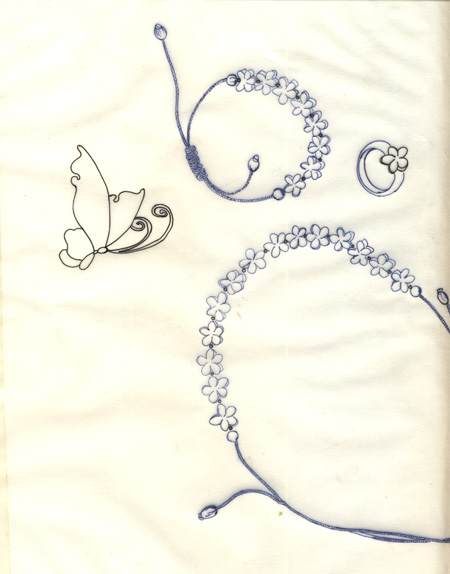
zipper_small

zippercasesmall

My mom has been sewing all her life , why didn’t she think of that? So here you see my new, nth pencil case ( I collect them so when I am really old my whole life will be organized in pencilcases with different labels). Here you see the zippercase in its original position and then ‘deployed’.

Until next time. The shopping window has closed for now lest this become a treacherous path (how many of us bloggers buy so we can post? study ‘the show and tell factor’ in consumer culture….). I can see the danger lurking. More art soon!

Read Full Post »

Older Posts »