Feeds:
Posts
Comments

Archive for the ‘Architecture’ Category

Blue_Mosque_Sketch_IPAD

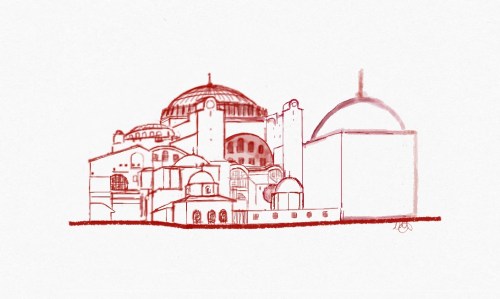
Hagia_Sophia_Sketch_Ipad

Istanbul. Hagia Sophia or Church of the Holy Wisdom. Digital sketch. Built by Isidorus the Elder  and Anthemius of Thrallos under Emperor Justinian in 537 AD.


Maybe Istanbul was the city in the sky where the people who were our reflections lived.
Burhan Sönmez

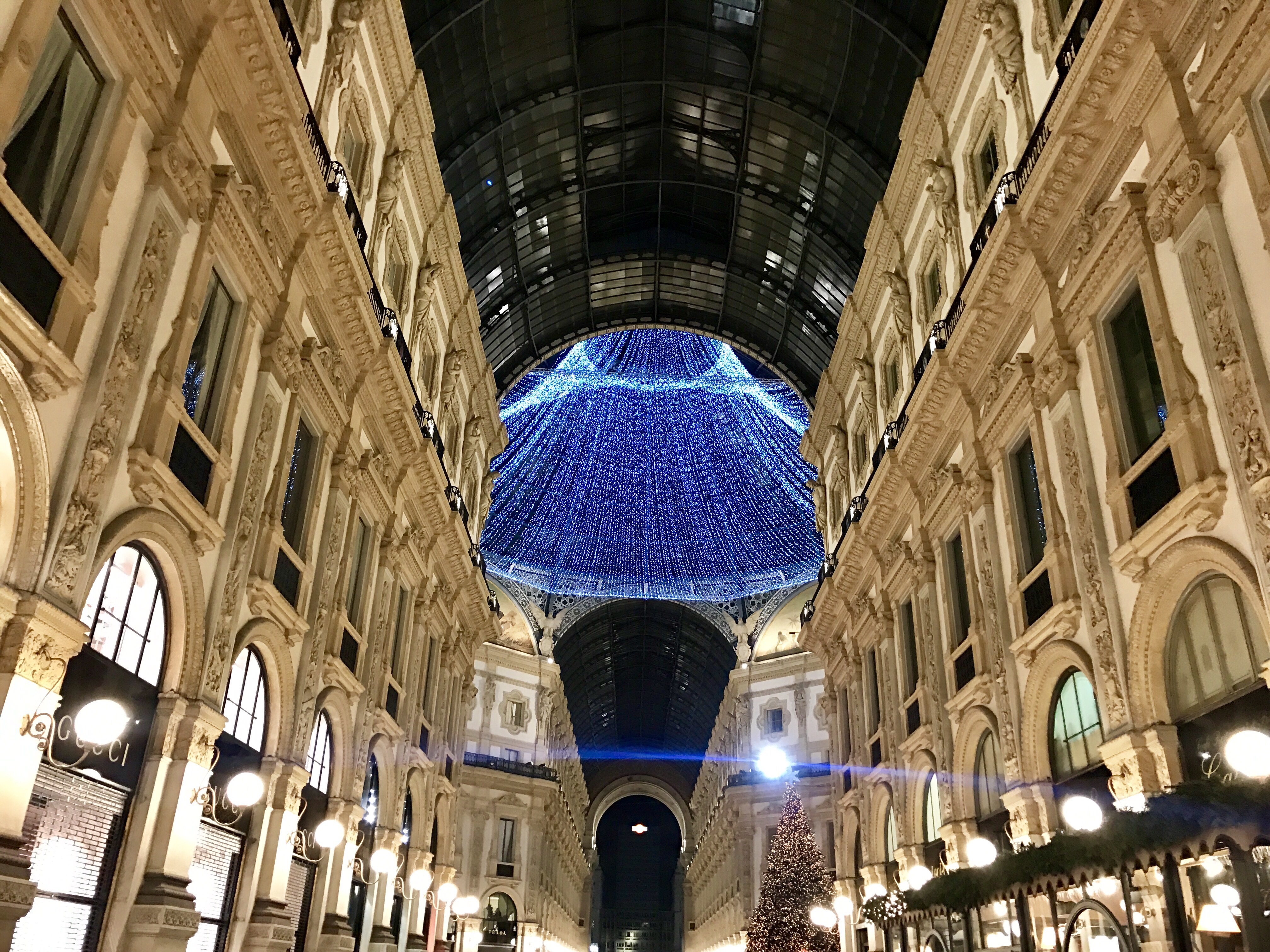
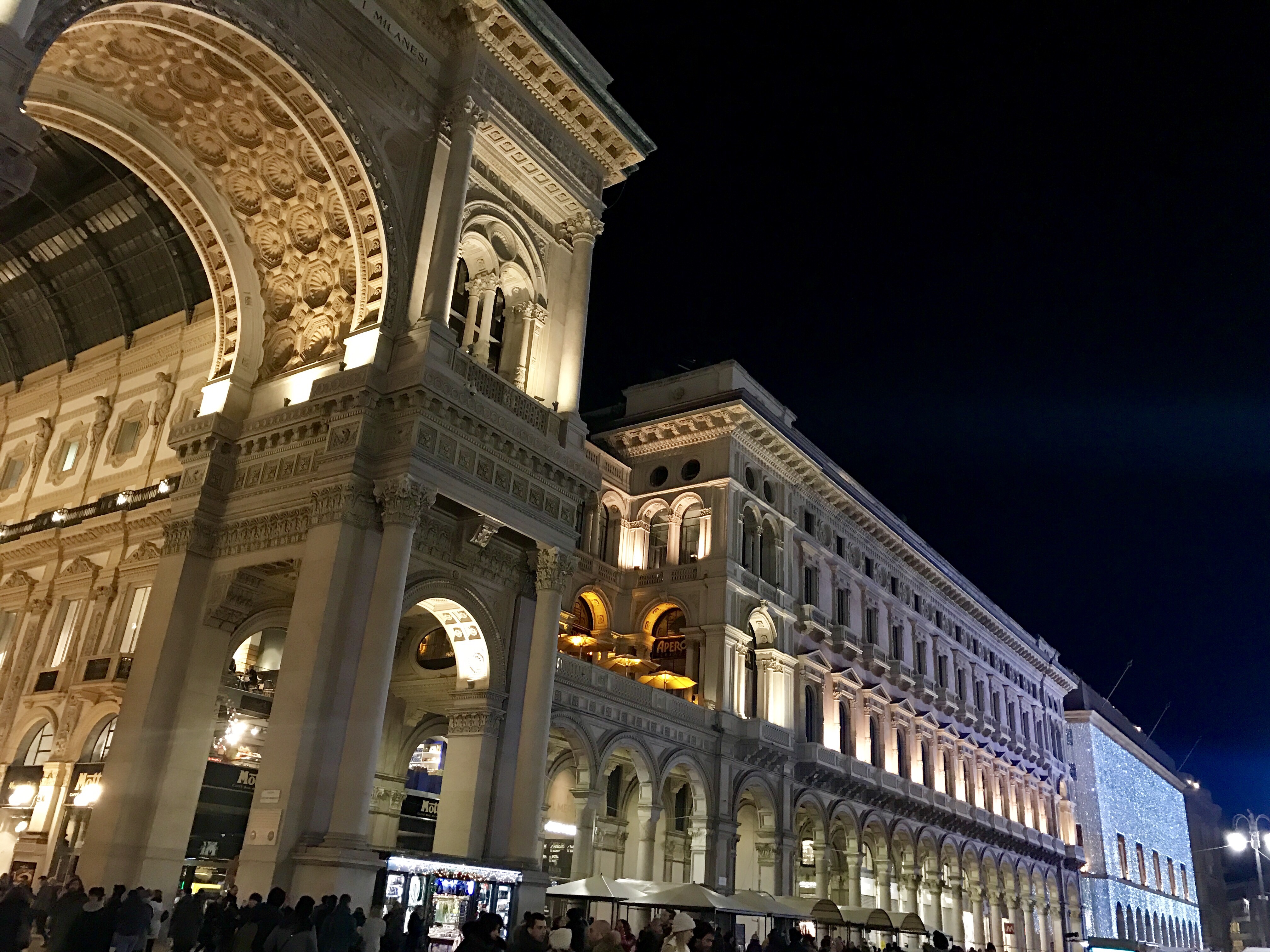
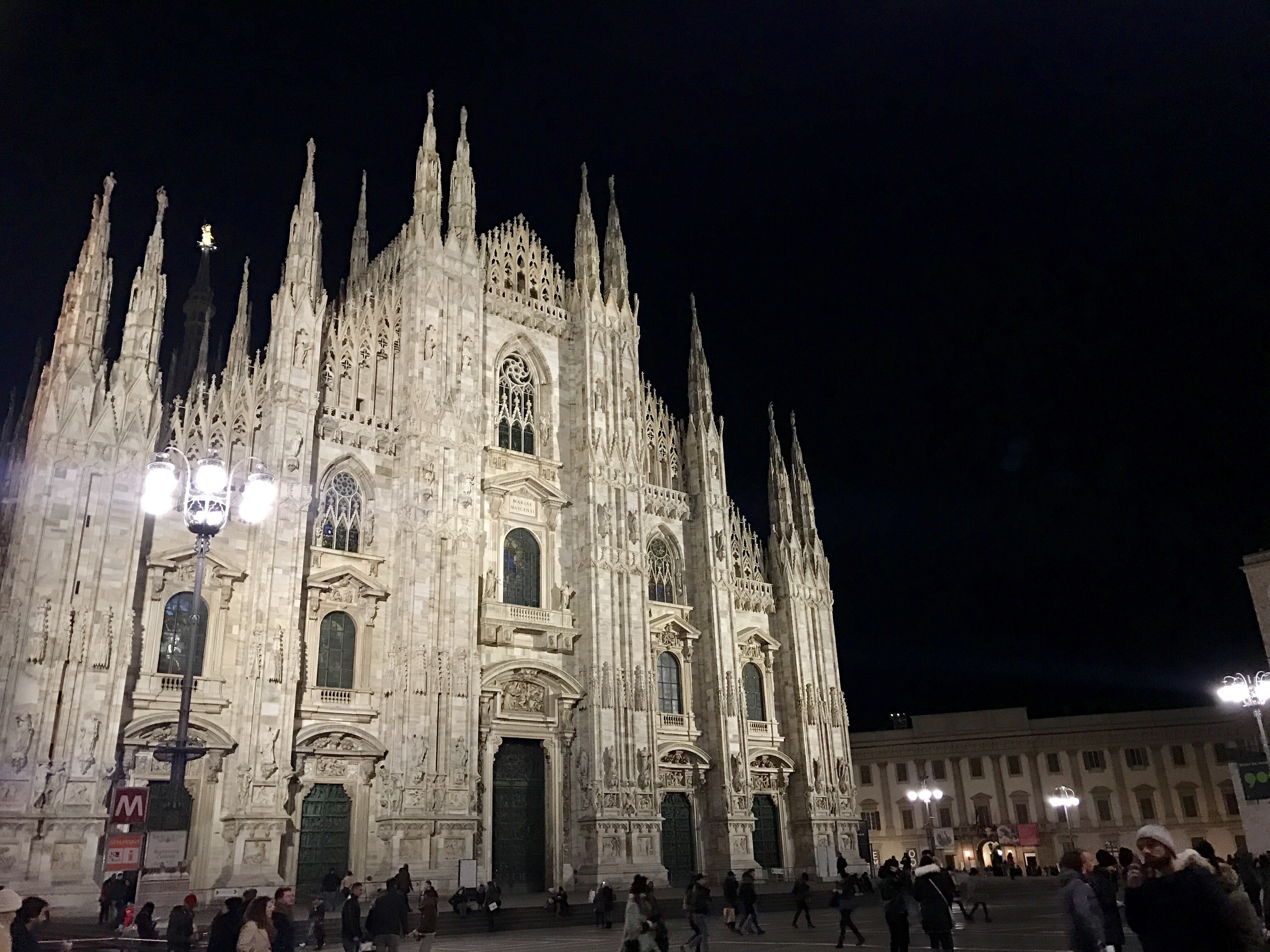
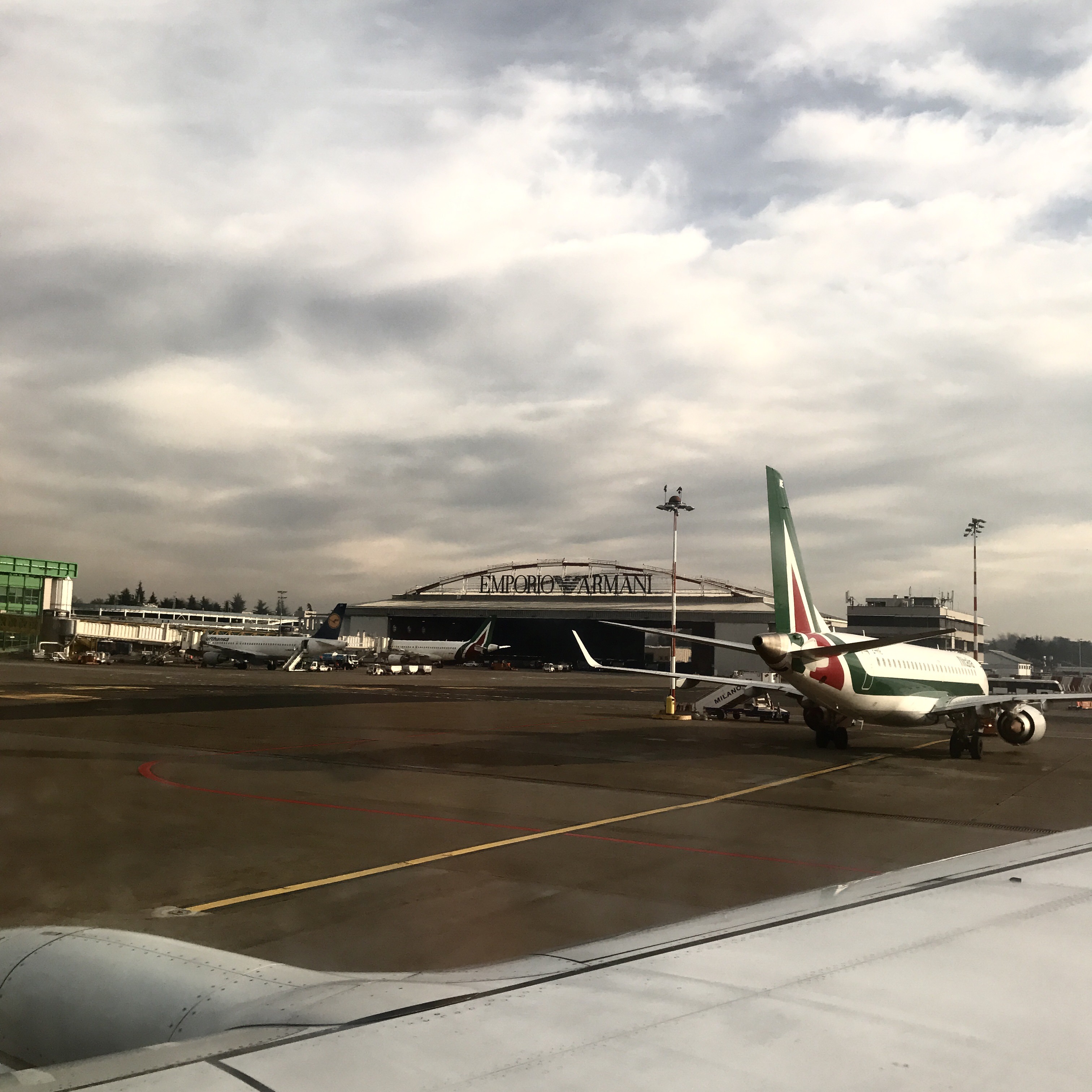
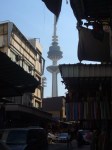
A quick trip to Ahmet Square in Istanbul on my way back from Italy, to visit Hagia Sophia and the Blue Mosque. You can see my photos and a video on  @sketchbloom

These are my first architectural sketches using my new Ipad and the SKETCHES app.

( I had previously used drawing apps on my phone to sort-of draw a portrait, experiment with digital watercolor and collage).

Learning the tools and the limits of the app was really interesting, as was experimenting with all the different tools and lineweights. I completed these few days ago on the plane ride from Istanbul to Los Angeles- looking at photos i took. The first one took me 15 minutes, the second one three hours. No ruler was used, tracing or overlaying – just a stylus with different tips and a brush.


Read Full Post »

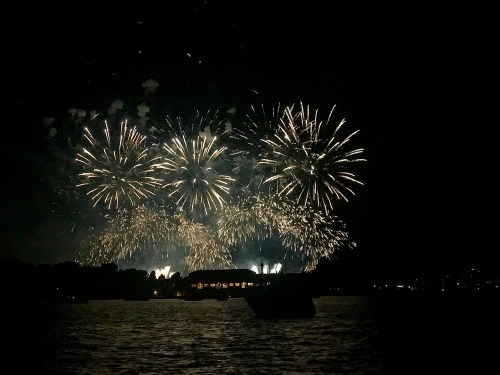
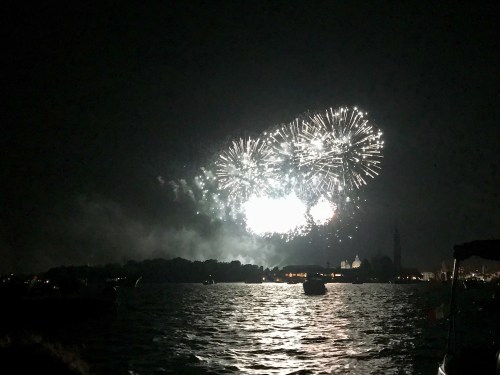
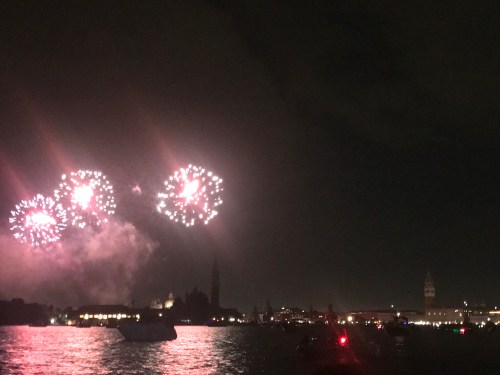
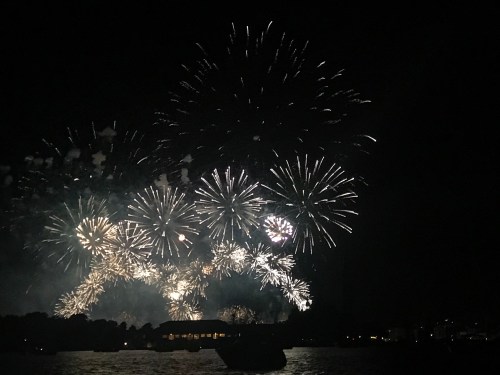
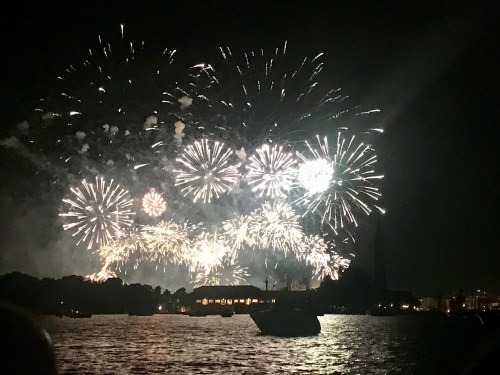
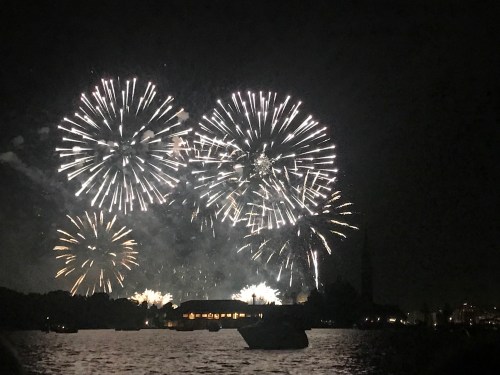
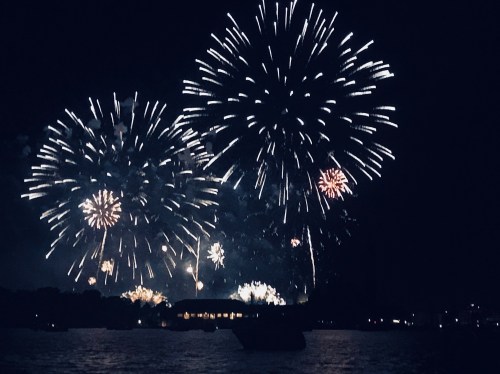
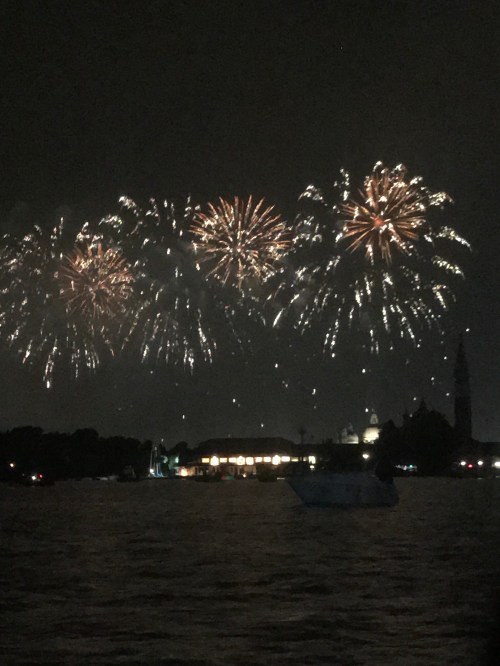
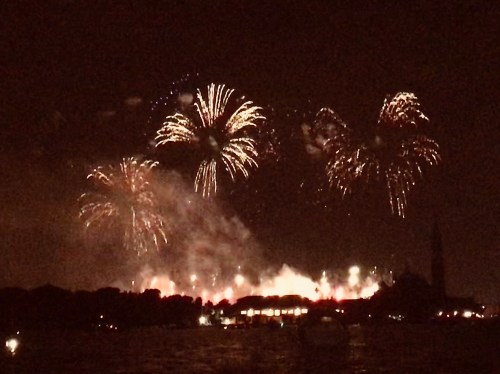
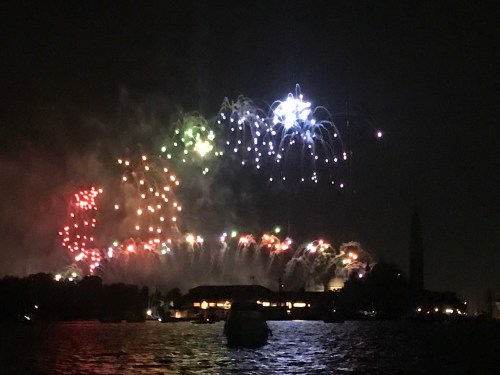
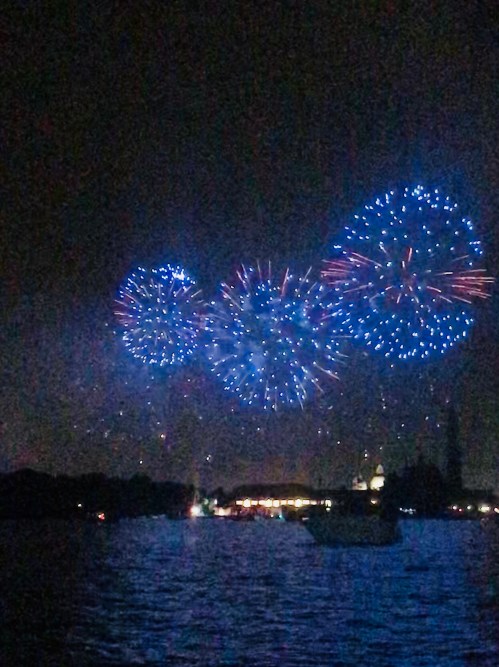
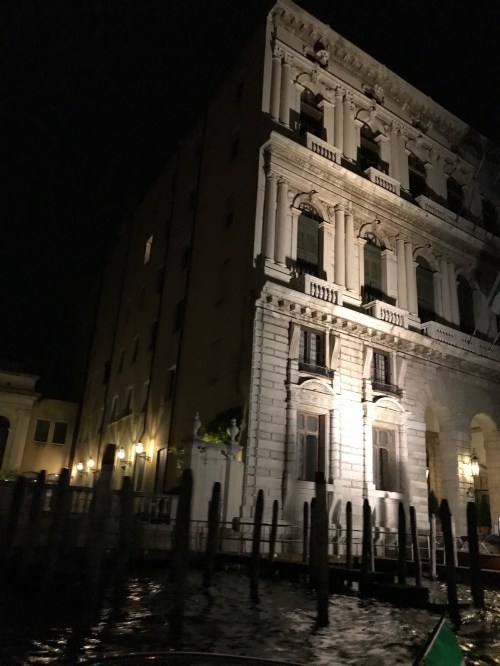
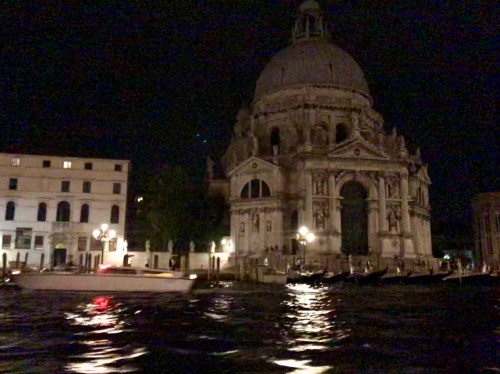
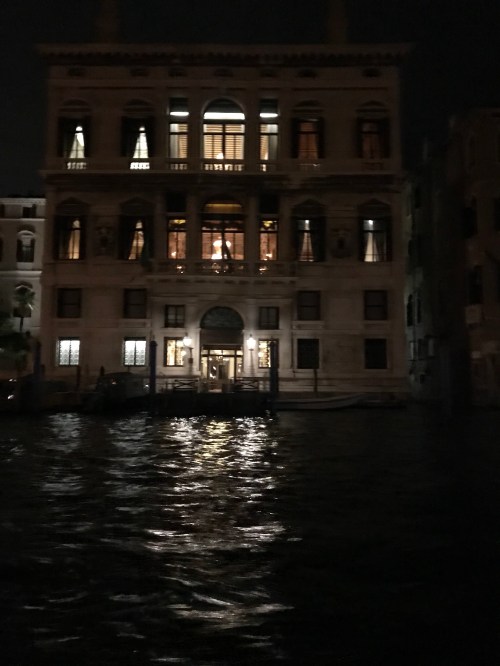
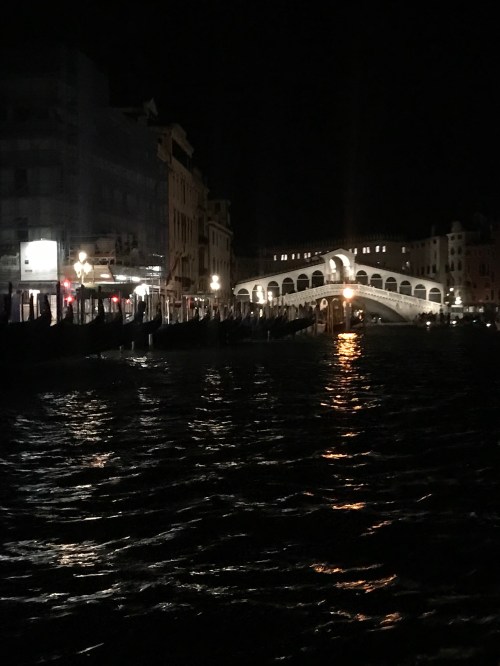
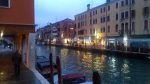
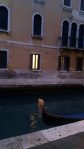
The Feast of the Redeemer (or Festa del Redentore) is one of the most important Holy days for Venetians. For one day the whole Basin of San Marco is transformed into an immense piazza/party with hundreds of boats and revelers enjoying dinner on the water and waiting for sunset. The religious day is held the third Sunday in July, and chronicled here is the day before.. the secular fête. I had seen a painting of Tintoretto depicting the yearly ceremony of the City of Venice’s marriage to the Sea.. and when my cousin, who is from nearby Mestre, told me he was invited to the Feast I suspected it would be a once-in-a lifetime occasion, and I begged him to let me tag along.

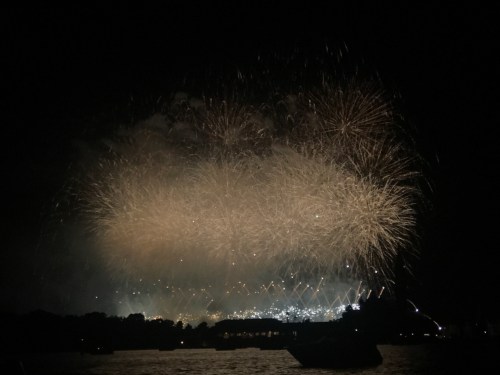
At night, beautiful fireworks light up the already dreamlike city of Venice. It is a dream within a dream ( lucid Venice) .. just like the hallucinatory Carnevale.

This tradition was started in medieval Venezia, in 1576, when a Feast was planned to celebrate the end of a particularly disastrous Plague (Venice suffered many) which killed more than 50,000. The painter Titian was amongst the perished. None other than Andrea Palladio was commissioned to build the Church of the Redentore, which was completed in 1576.

The Doge ( the Venetian ruler of the Imperial Serenissima) would walk on a bridge made of barges from Le Zattere area of Venice to the Redeemer Church each year.

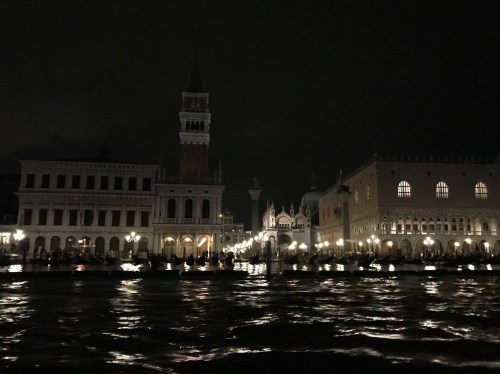
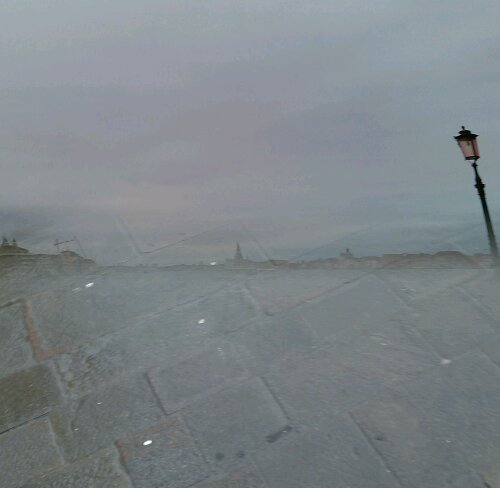
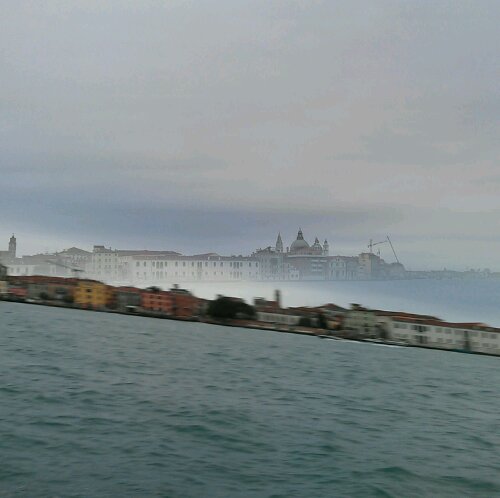
There is no way that a camera, let alone a phone ( with, what I suspect a wet lens) on a moving boat could capture what the Redentore is, being surrounded by thousands underneath the summer night skies, all in love and in awe of one city. The energy of seeing a people dancing and celebrating on a sea of boats was awe-inducing ….but here I offer some impressions, pale comparisons to the live Lady at Night.

Just as wonderful as the Feast and the fireworks, was the ride through Canal Grande to admire nocturnal Venice. The Canal is only open to boats without resident permits once a year: on the day of the Festa del Redentore.

Read Full Post »

img_1436

The French poet Paul Valéry said that all things are generated from an interruption. I learned this from my favorite Italian thinker, Alessandro Baricco, here in en español, whose lectures – to be found only in Italian – I listen to to learn about literature, writing, and life.

There were many interruptions this year, and not just personal. I can think of the devastating Hurricane Irma in my beloved, beautiful Puerto Rico, or the September 19 earthquake in my favorite city this side of the Atlantic, Ciudad De México – which occurred on the 32nd Anniversary of an earthquake that killed more that 10.000 people.

My personal earthquake and hurricane happened on August 21 of this year, when my dad passed away. I can now finally begin to write this sentence, and about it, without being swallowed up in the chasm that this loss left in my life. I know his spirit went back to his sea, where he returned, and I feel he is near, both inside my heart and dancing around in freedom and light. I like to think I can take him with me wherever I go now, and share my life in a more immediate way. I like to think his energy was transformed into waves of the sea. The sea can hug you, yet you can’t hug the sea, his immensity. I like to think he is in a butterfly, sometimes in a song. A friend of mine wrote “I heard your dad went back to the Universe”. I like that.

My dad loved the Old Man and The Sea, drawing boats and fish, Jonathan Seagull, reading, Venice, watching documentaries on nature, fishing, and working on his boat. He loved his friends and he loved me. He is the reason art is in my life. He is the reason I read One Hundred Years of Solitude in middle school (I used to raid the books of his youth unbeknownst to both my parents). It became my favorite book, it still is, and magical realism, anarchy and arcane literary worlds shaped who I am.

I thought about coming back to SketchBloom with a post on Van Gogh, and the film Loving Vincent, which I saw this month. The movie reminded me of my dad, of his love of painting, his simple bedroom , and his fisherman shack on the beach, La Baracca Del Bucaniere, which he lovely composed for the last ten years of his life here on the Earth school.

That post is in the pipeline, and I took new photos of his sculpture when I was last in Calabria –  but I wanted to return with a sketch, a return to art.

I just got back from Mexico (that is how the locals call it, Mexico…no need to use “Ciudad de”) yesterday, where I finally got over my protracted artist’s block.

Here, a simple sketch (above) and some photos/vignettes/stories I bring back from my trip.

Walking in Coyoacán – Frida’s neighborhood:

Scenes from Roma, one of the neighborhoods of DF:

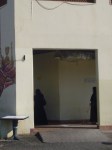
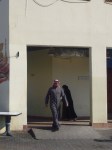
This is Barba Azul, a cabaret from another era, where salsa is danced from midnight till dawn, where there is an altar upstairs (I have seen them in parking lots, too) and where the exit is a tiny rectangle carved into a decorated garage door- something out Pinocchio’s Paese dei Balocchi (toyland)…or a circus in a Fellini movie. One of the many surreal vignettes of this metropolis.

Unfortunately I could not take a better photo of it (with the usher emerging!) but it is on my list for next time. I also learned about the ficheras , the ladies of the establishment who sell a dance for a token (and more, at their discretion).

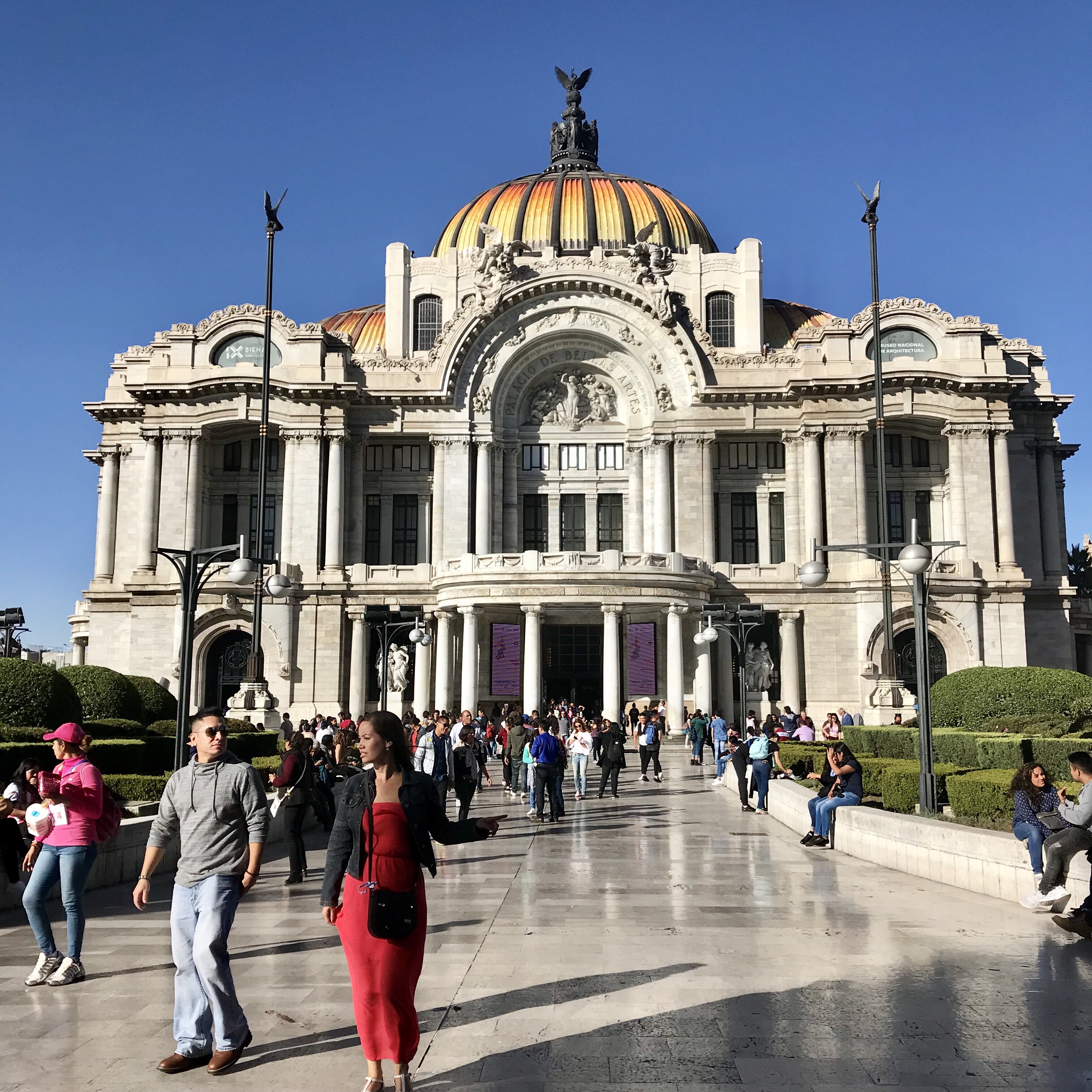
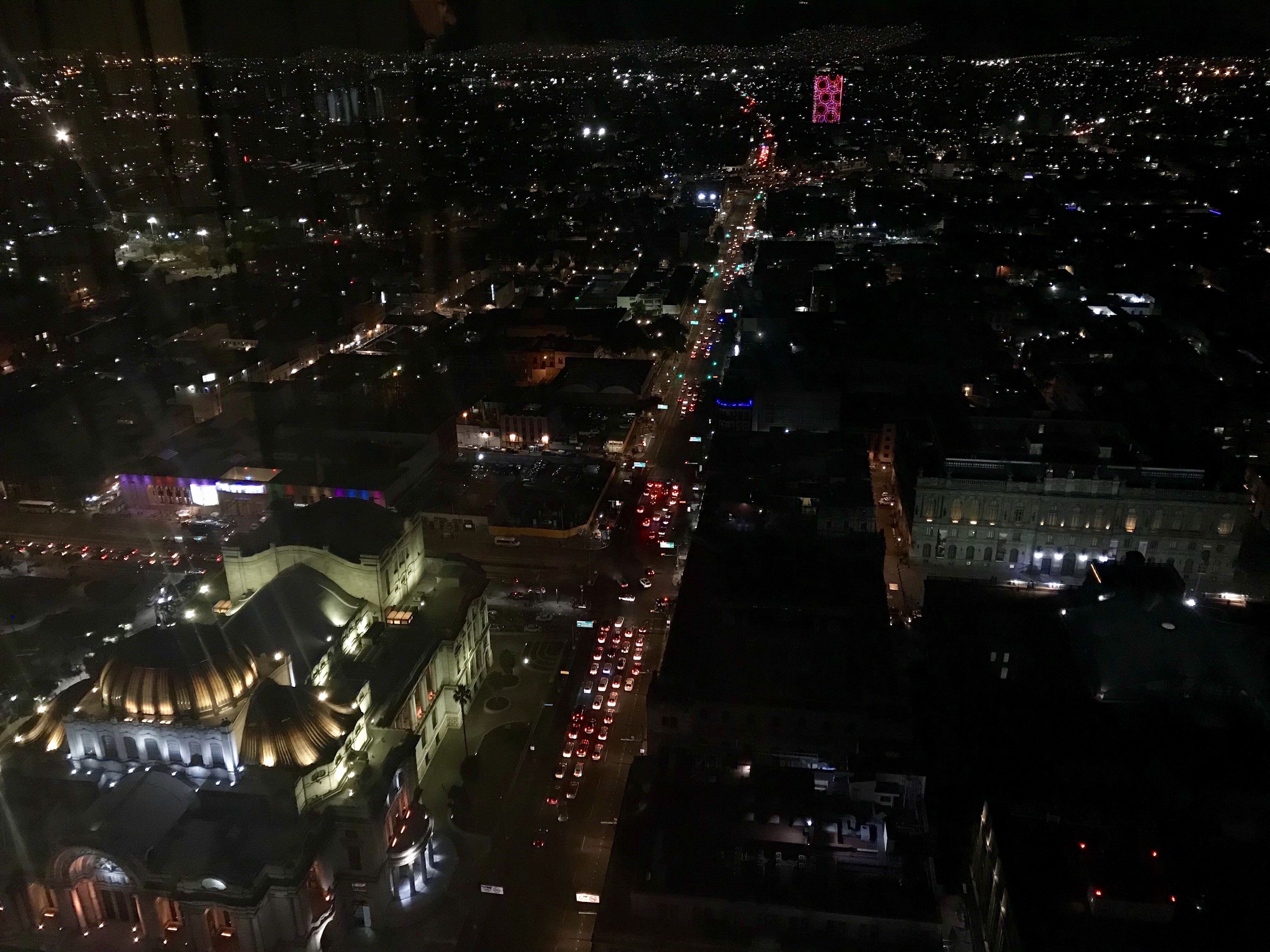
The obligatory photo of the Palacio De Bellas Artes, November 2017 version:

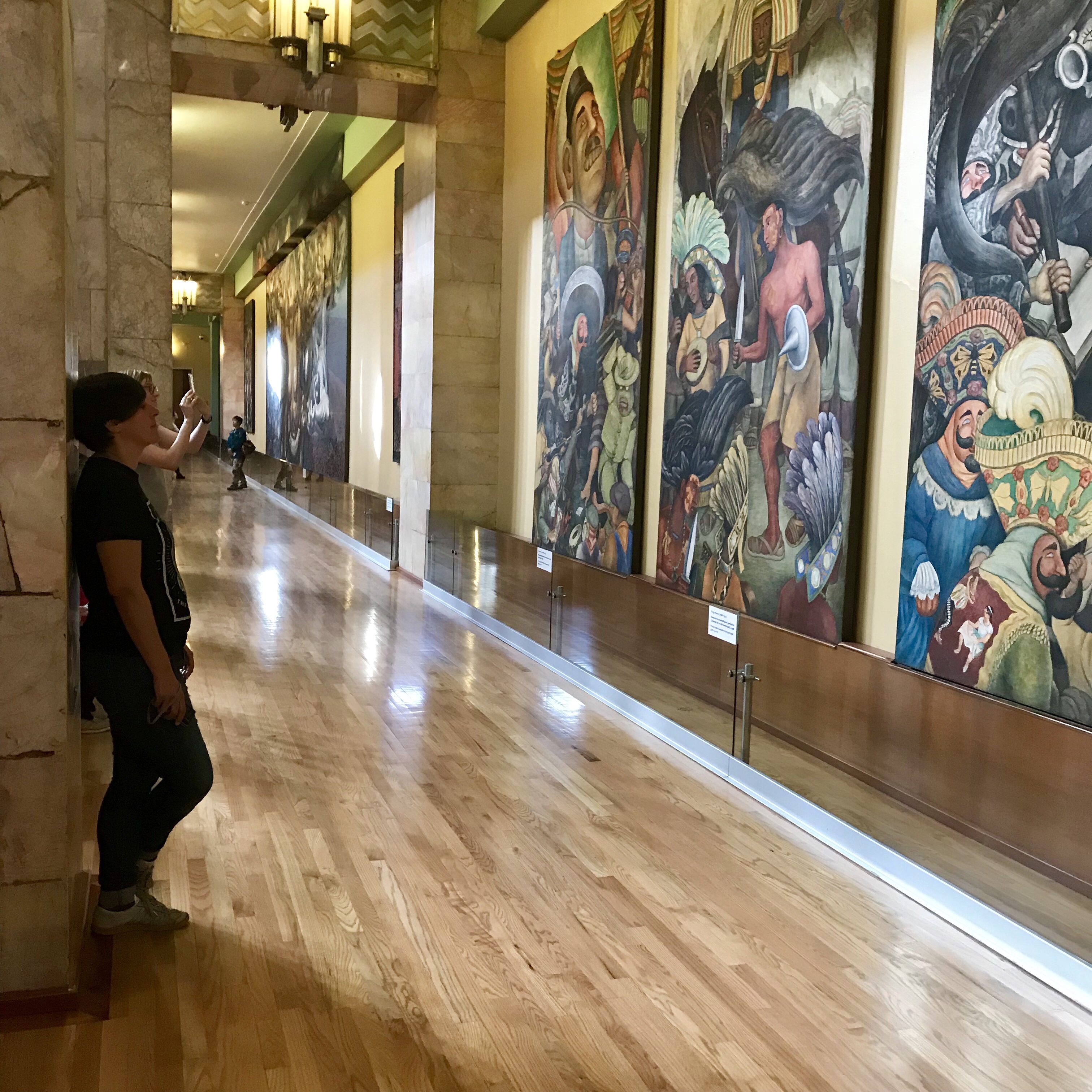
Where I had the chance to see Diego Rivera’s murals…

…and learn about the Rojo Mexicano (the red pigment from cochinilla bugs found inside the cactus fruits in Oaxaca, which was utilized in paintings around the world from the XV Century to the XIX) and see Van Gogh’s Bedroom At Arles with my own eyes (!!!).

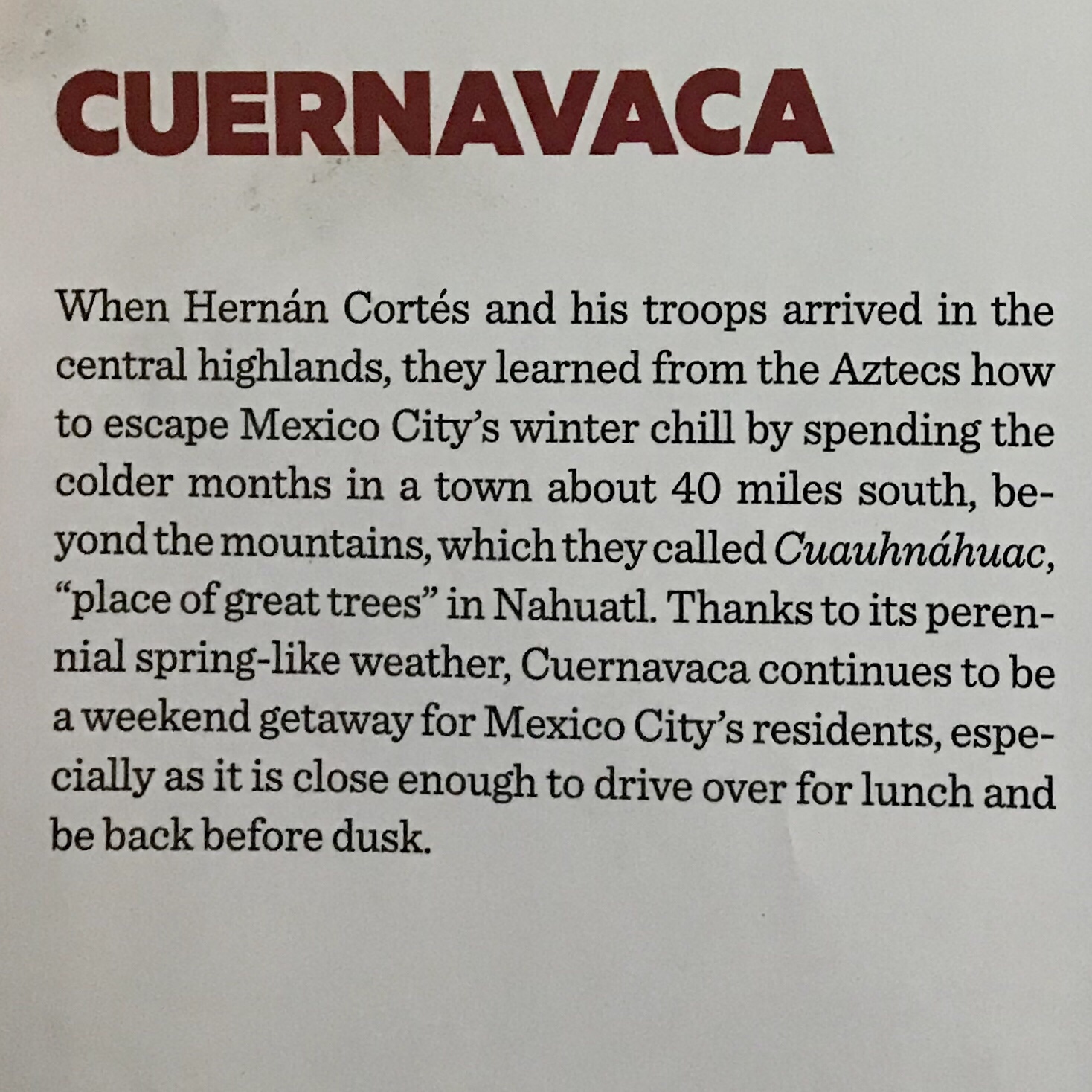
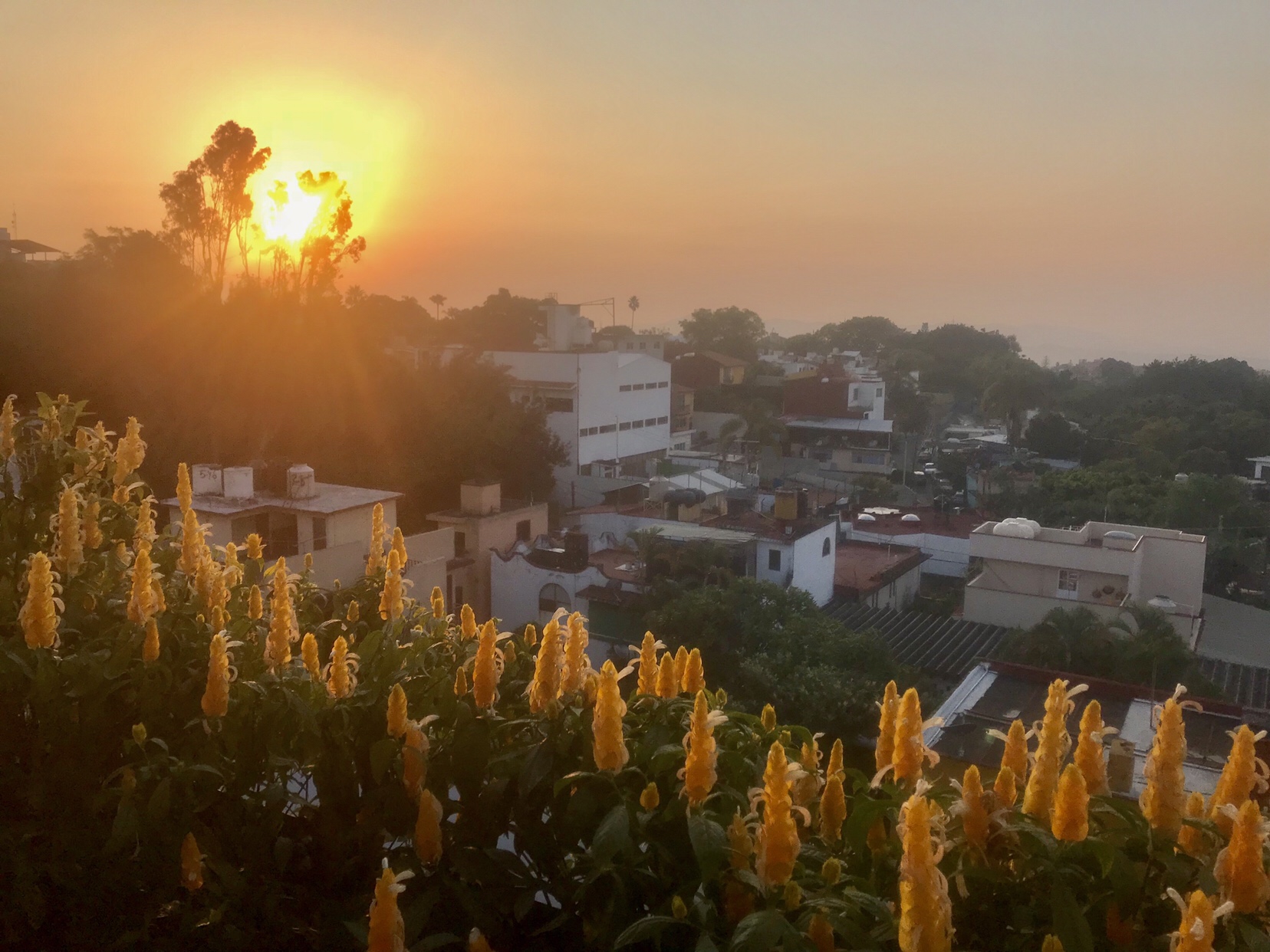
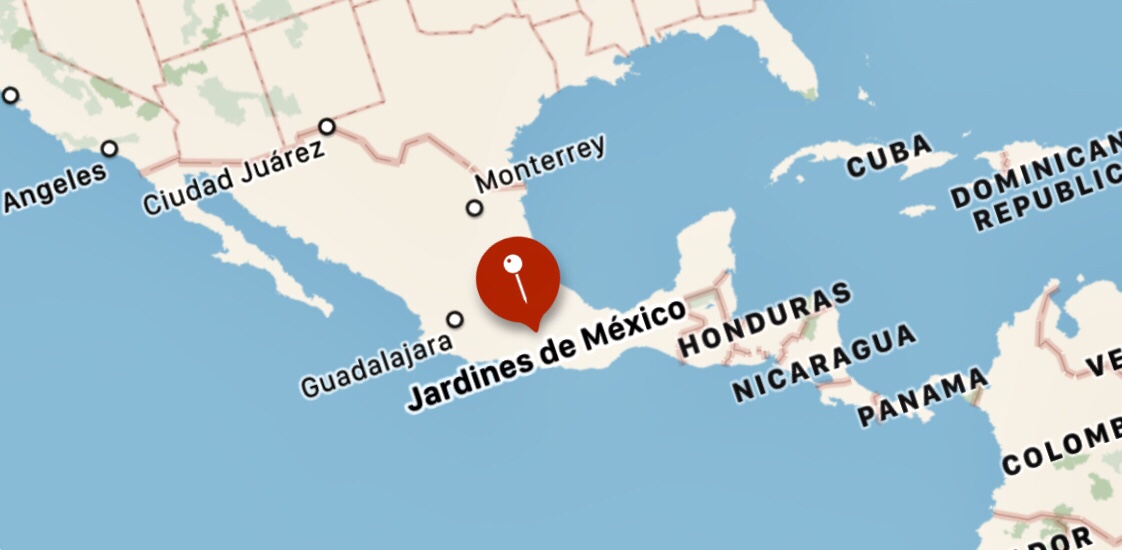
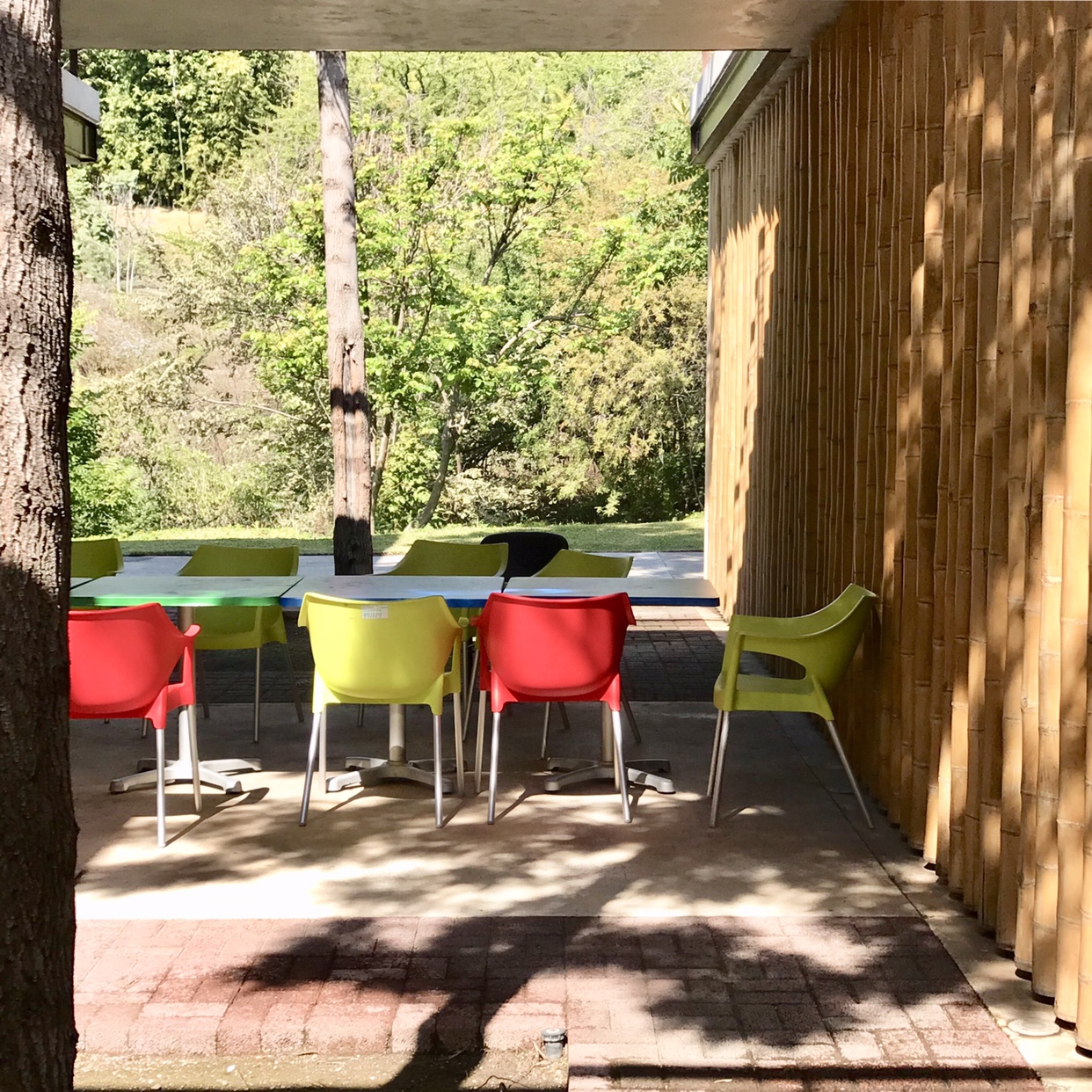
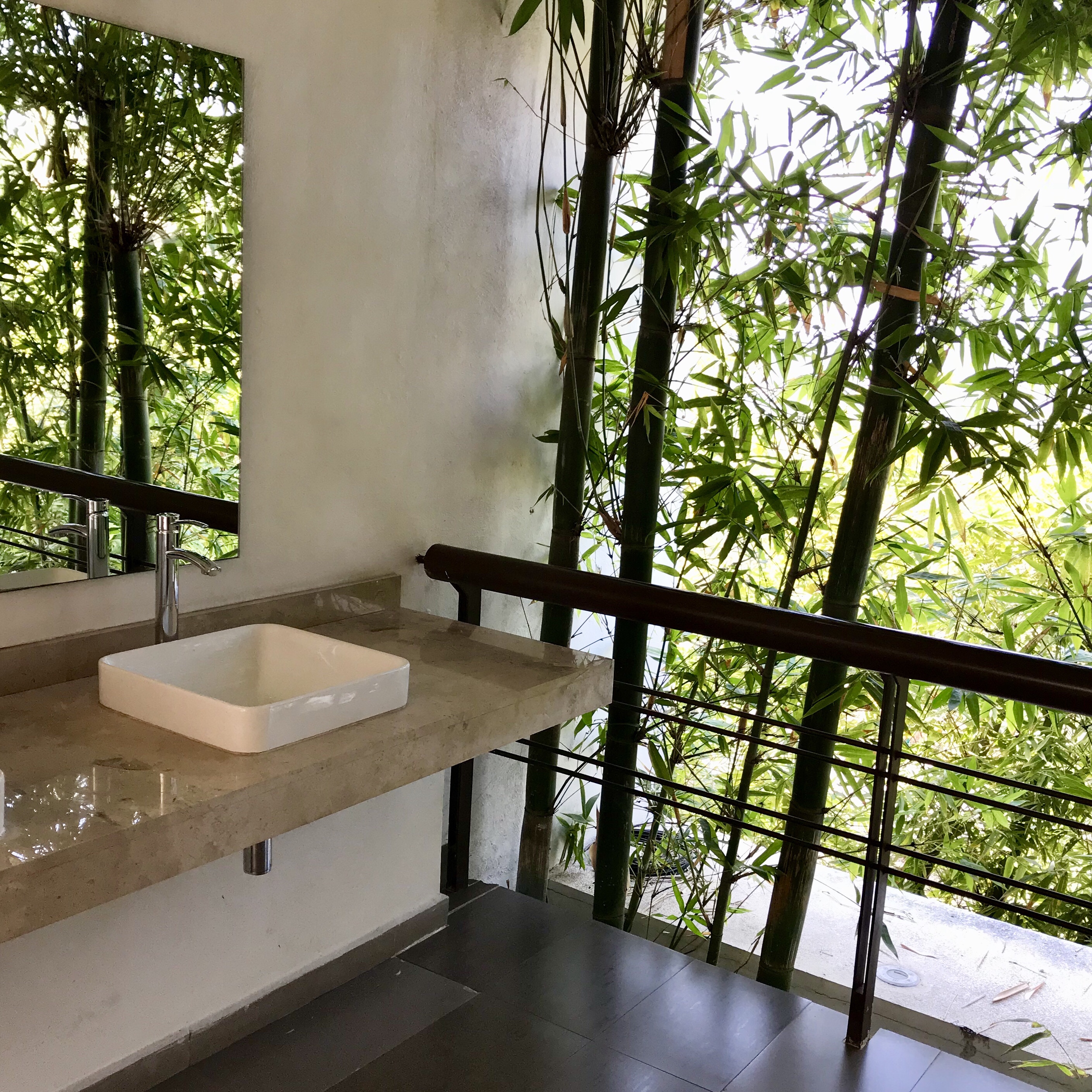
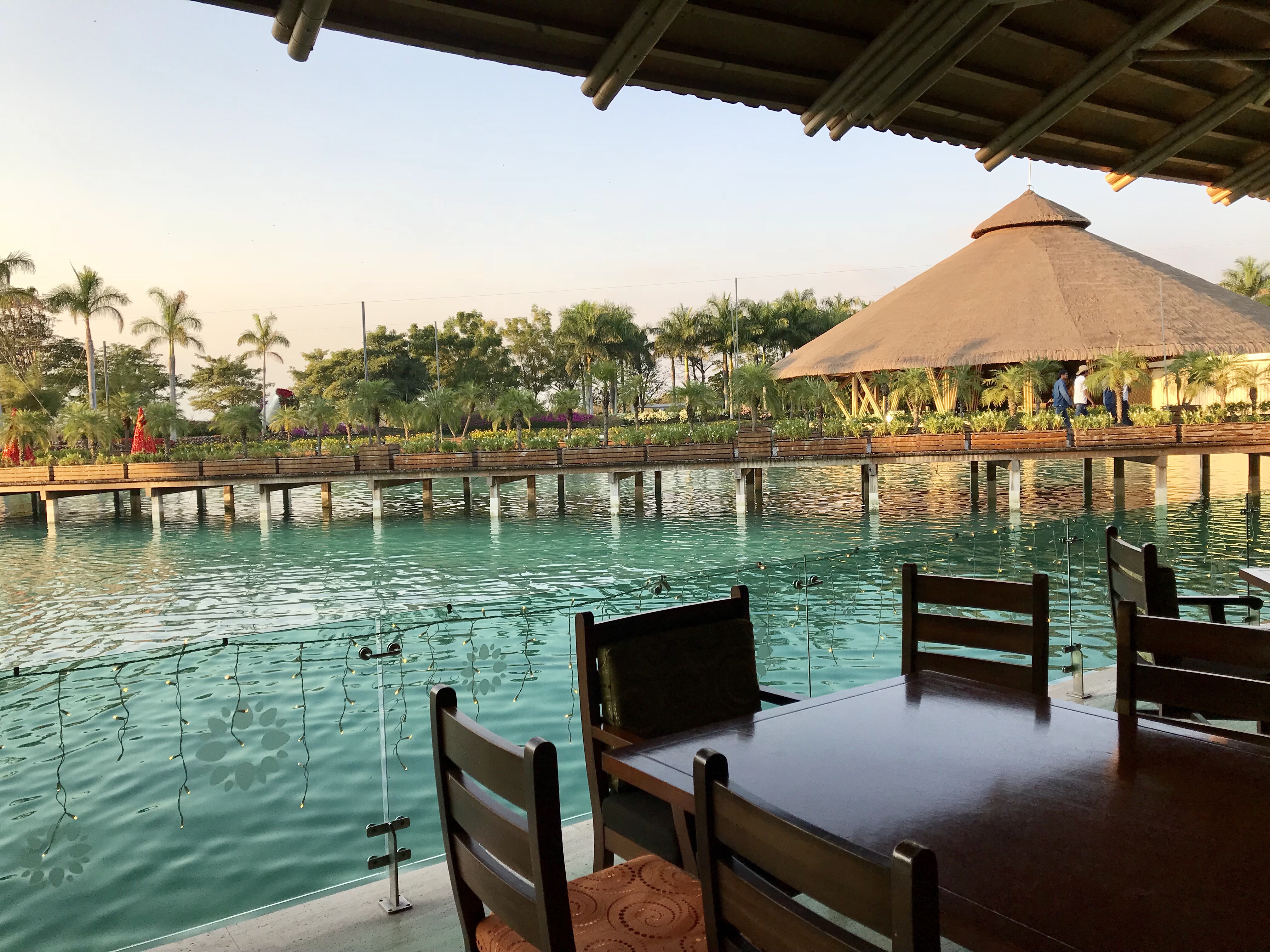
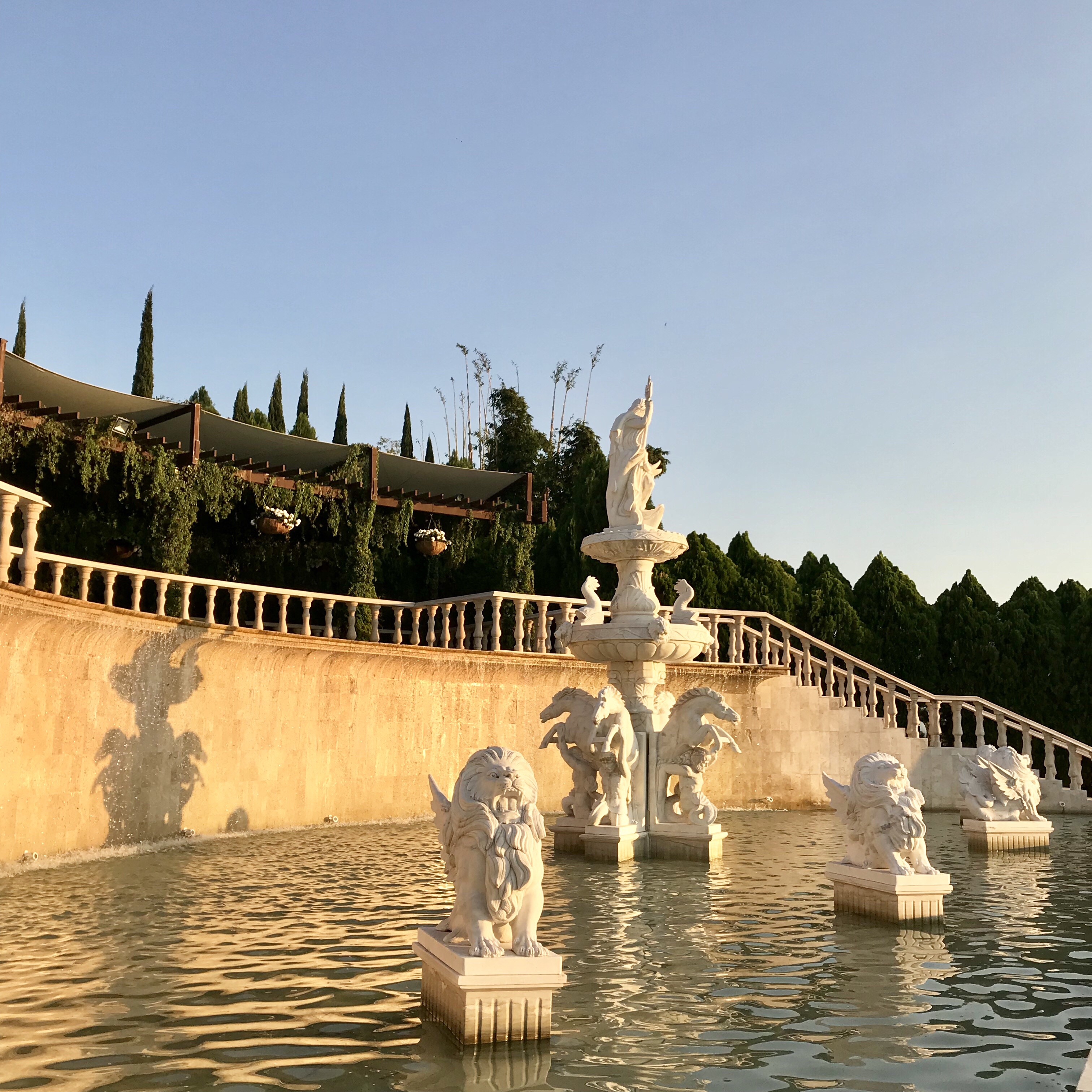
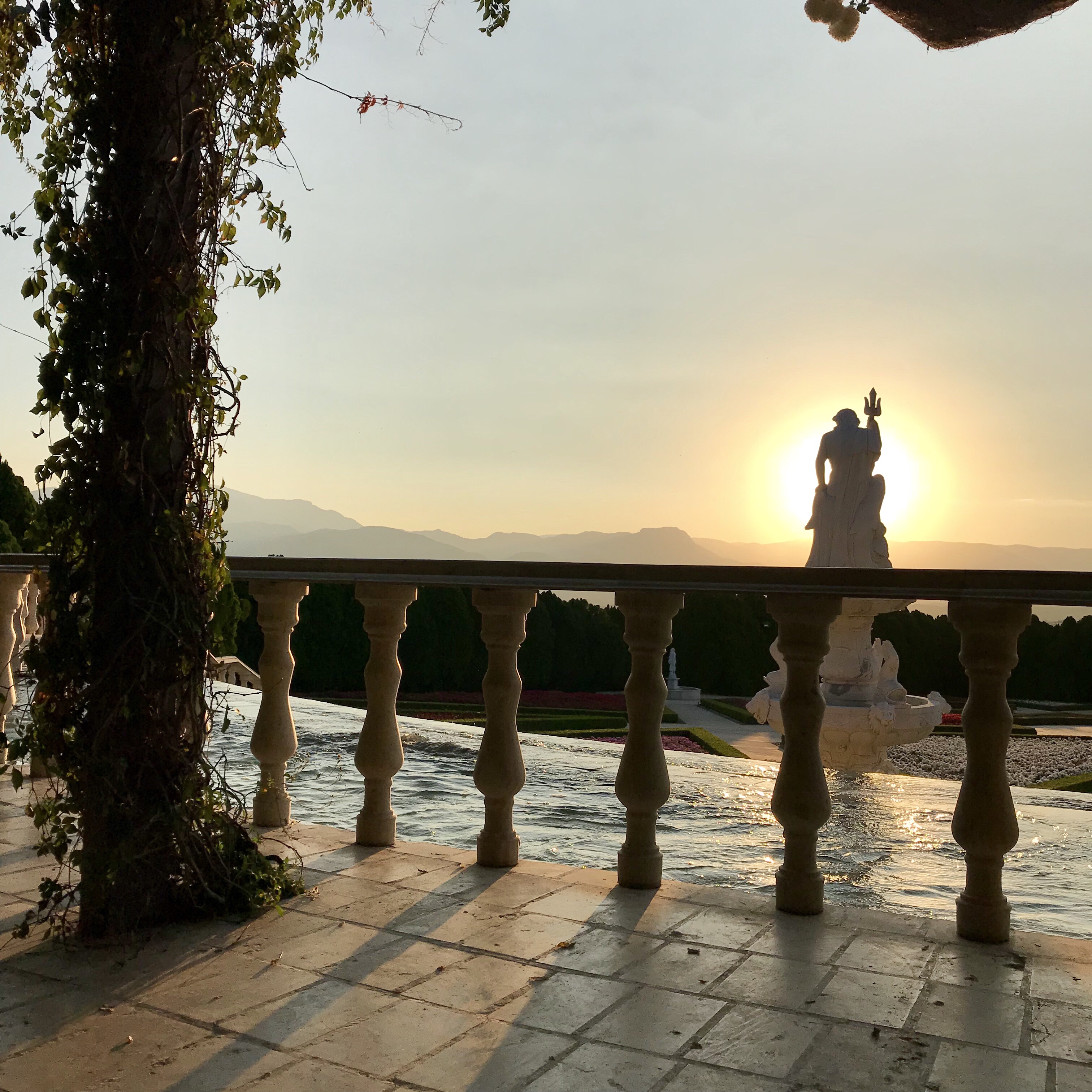
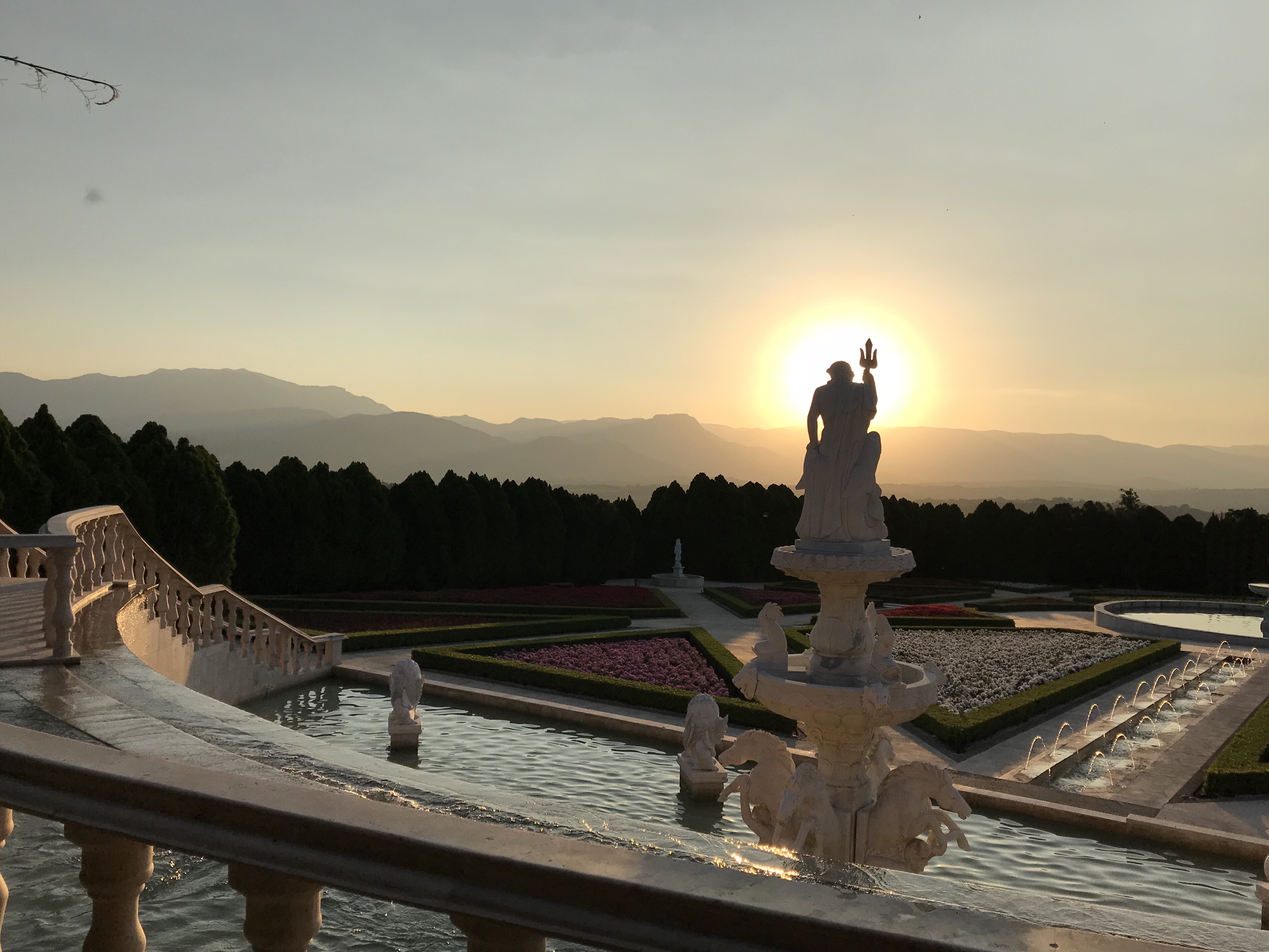
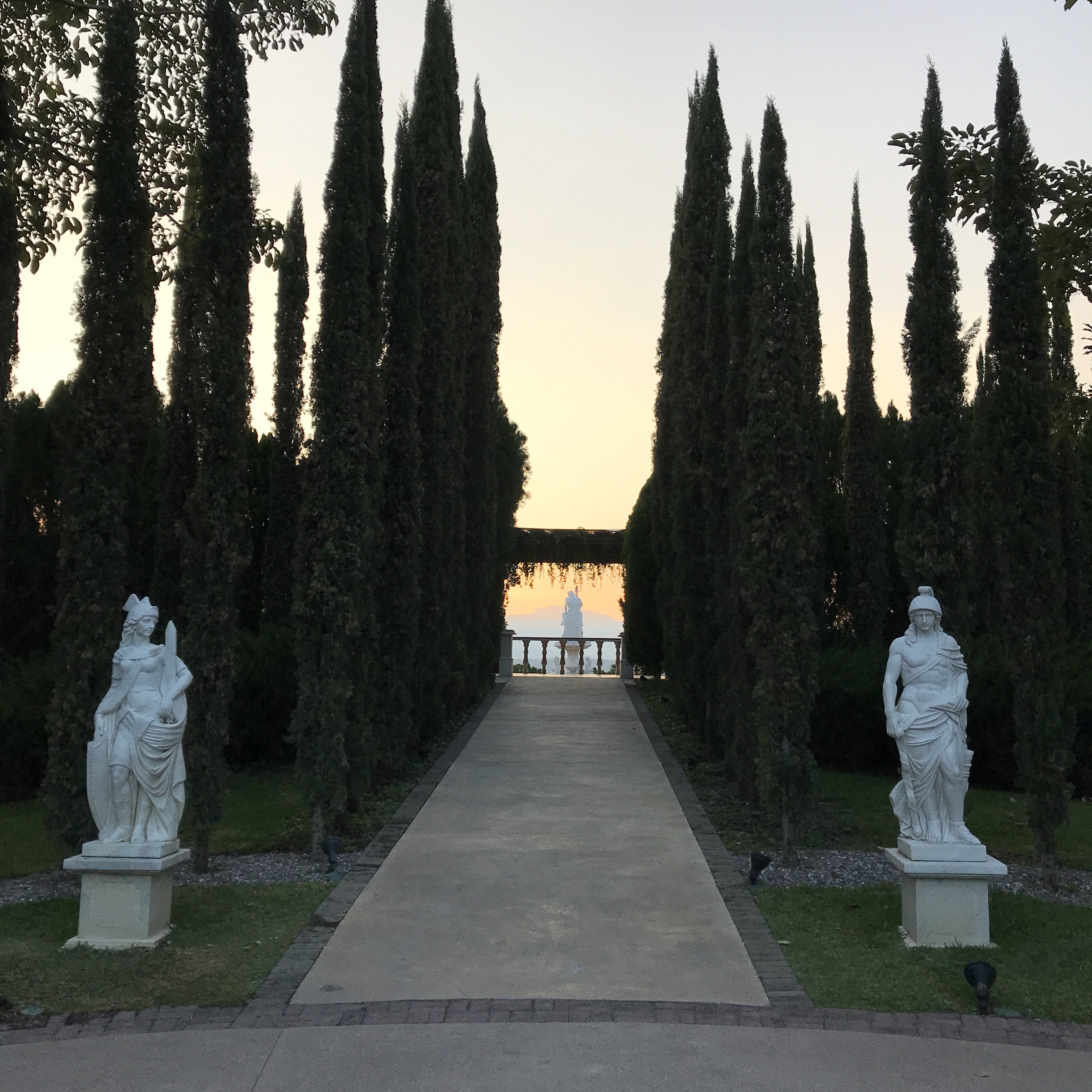
I also visited Cuernavaca, La Ciudad de la Eterna Primavera (The City of the Eternal Spring), where i completed my yearly self-evaluation for #work in a garden within Jardines de Mexico, surrounded by butterflies. Talk about INSPIRING.

Italian Garden at Jardines De Mexico (my favorite, obv)

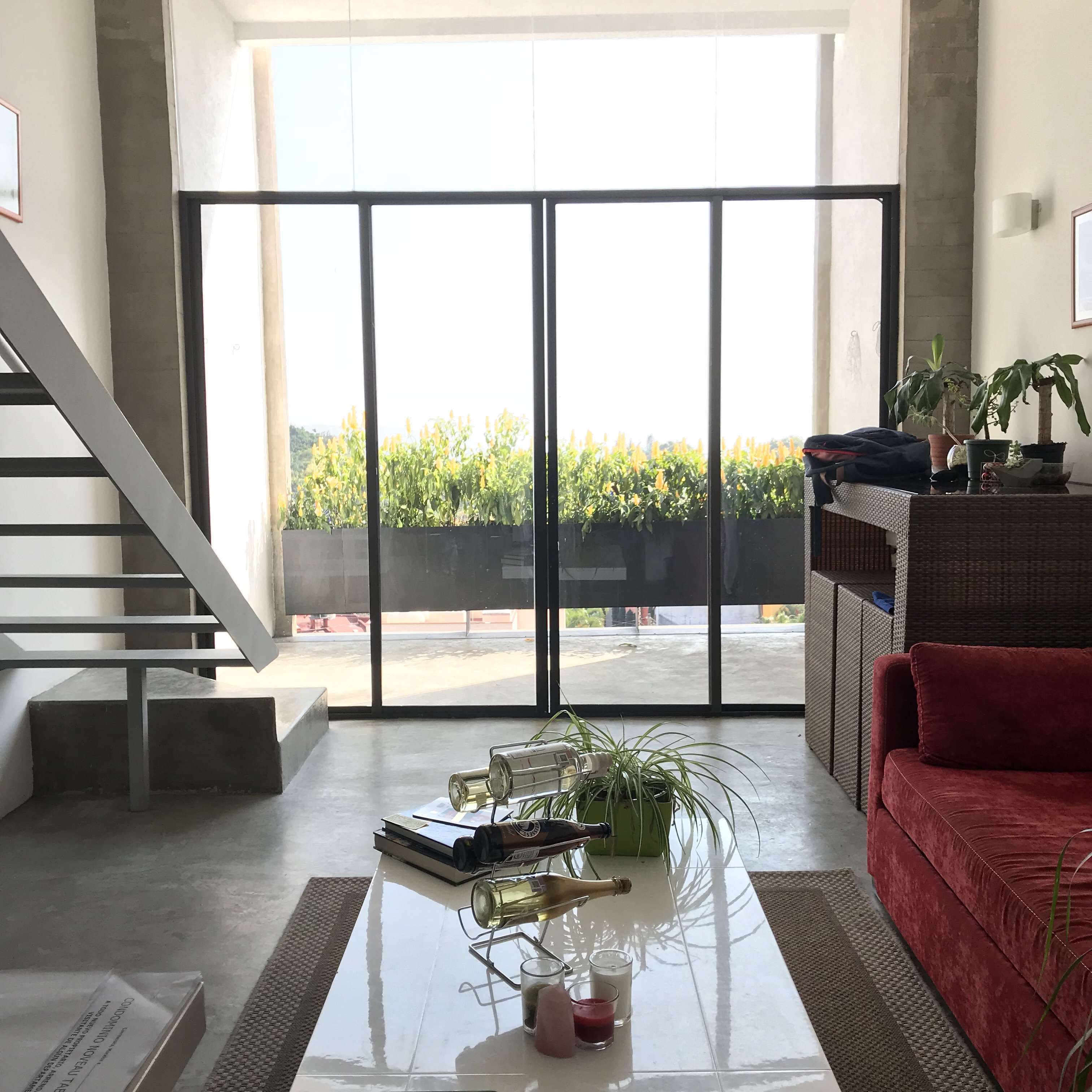
In Cuernavaca, I stayed in a copy of Unité d’Habitacion (but if you follow me on Instagram you already know this).

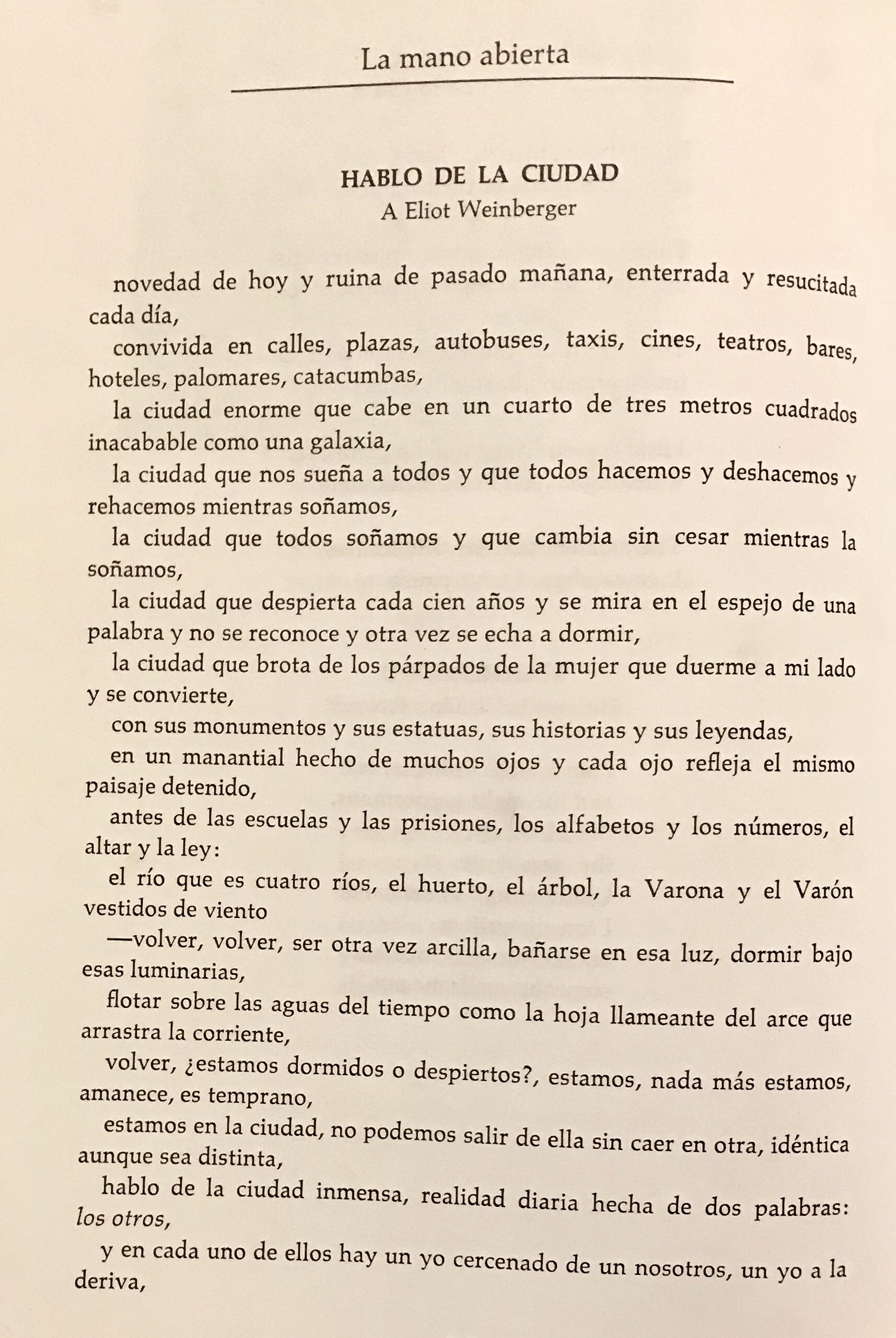
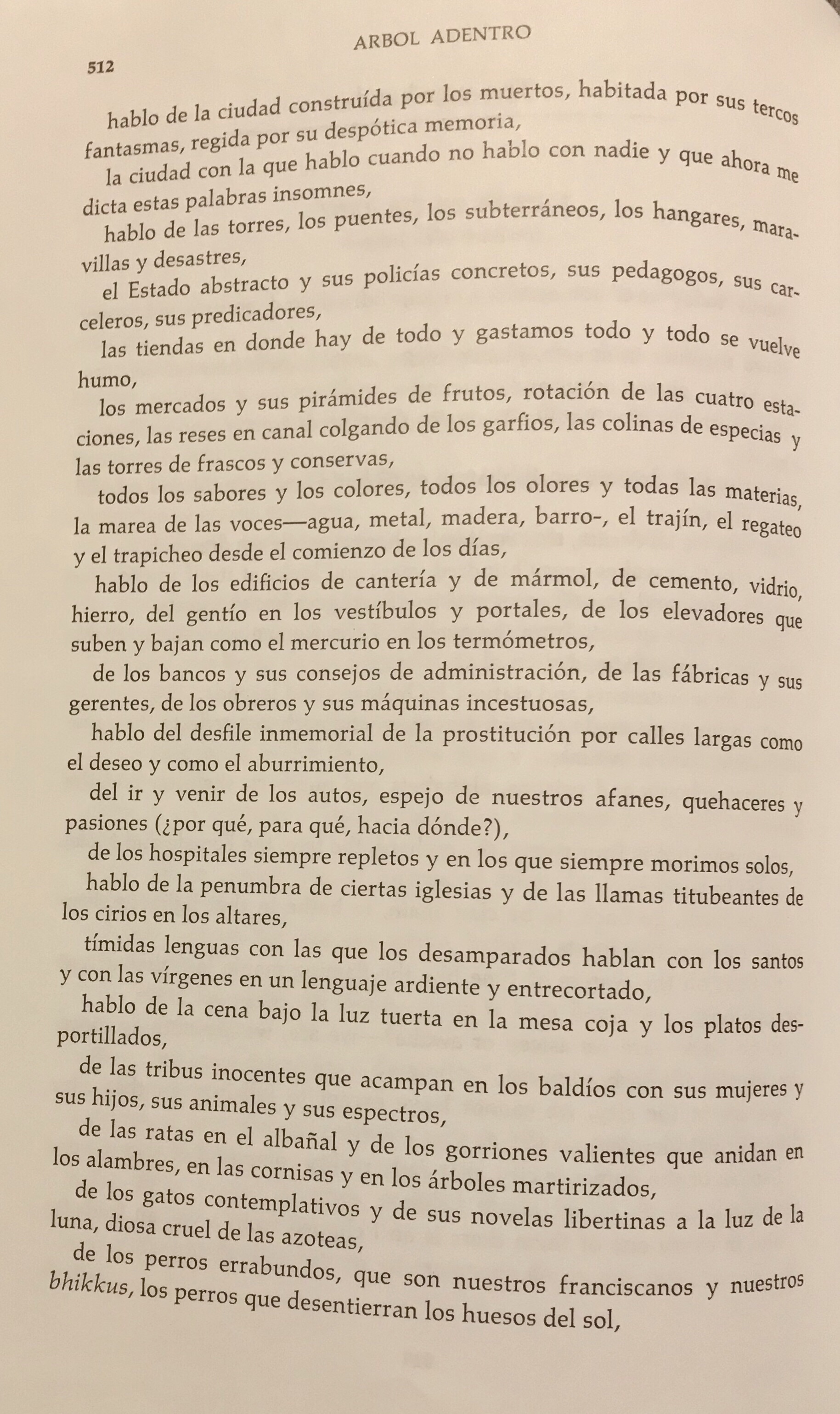
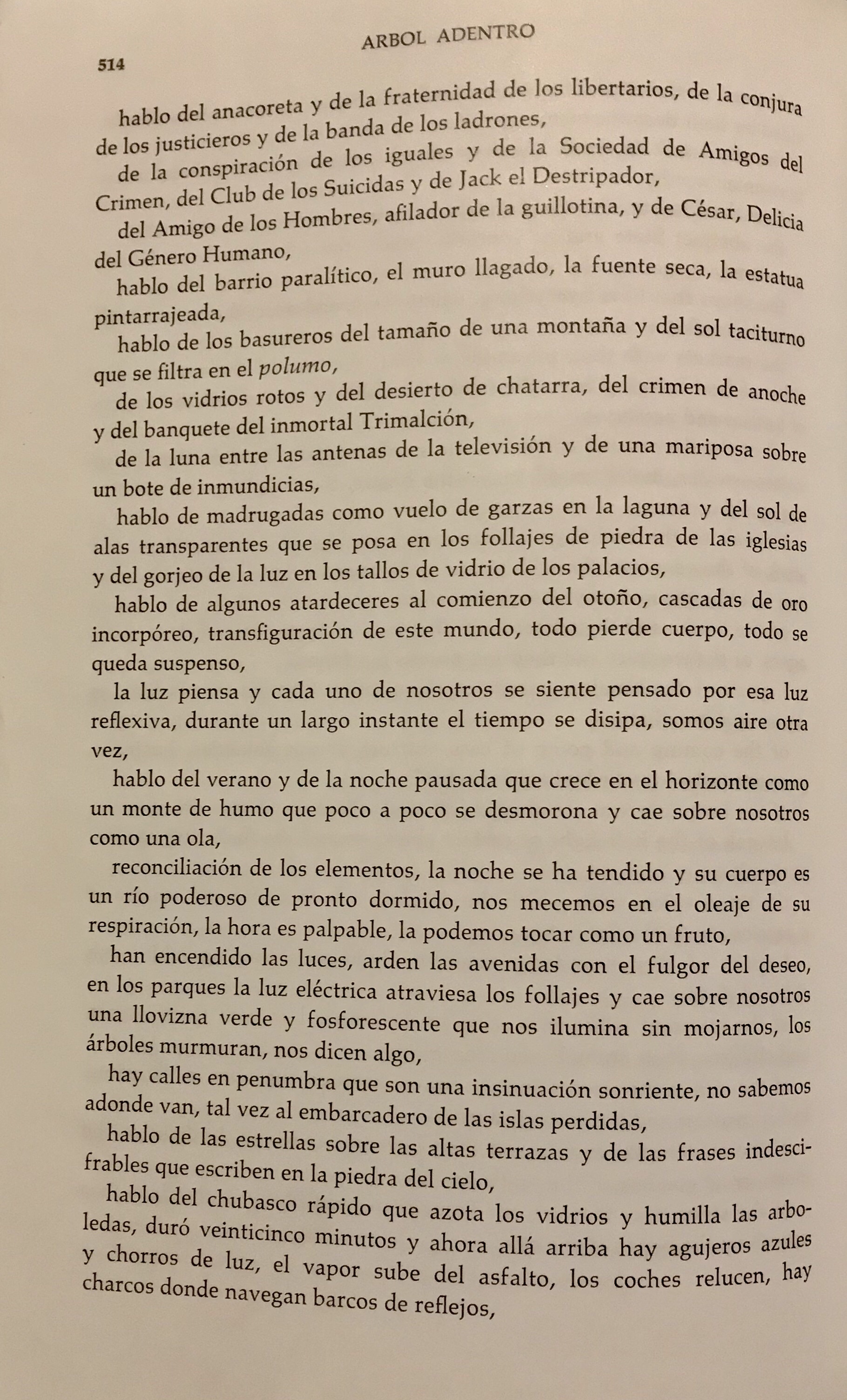
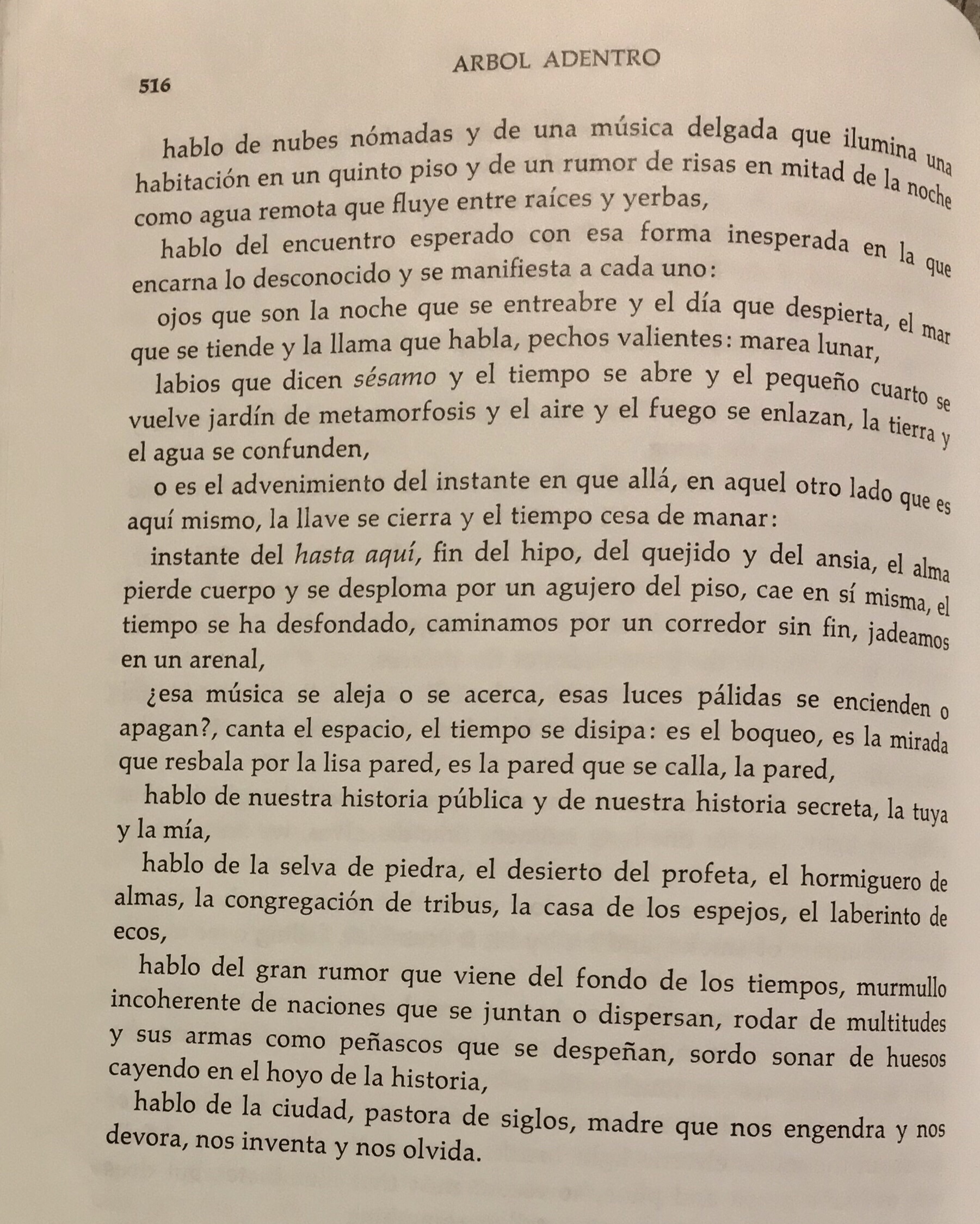
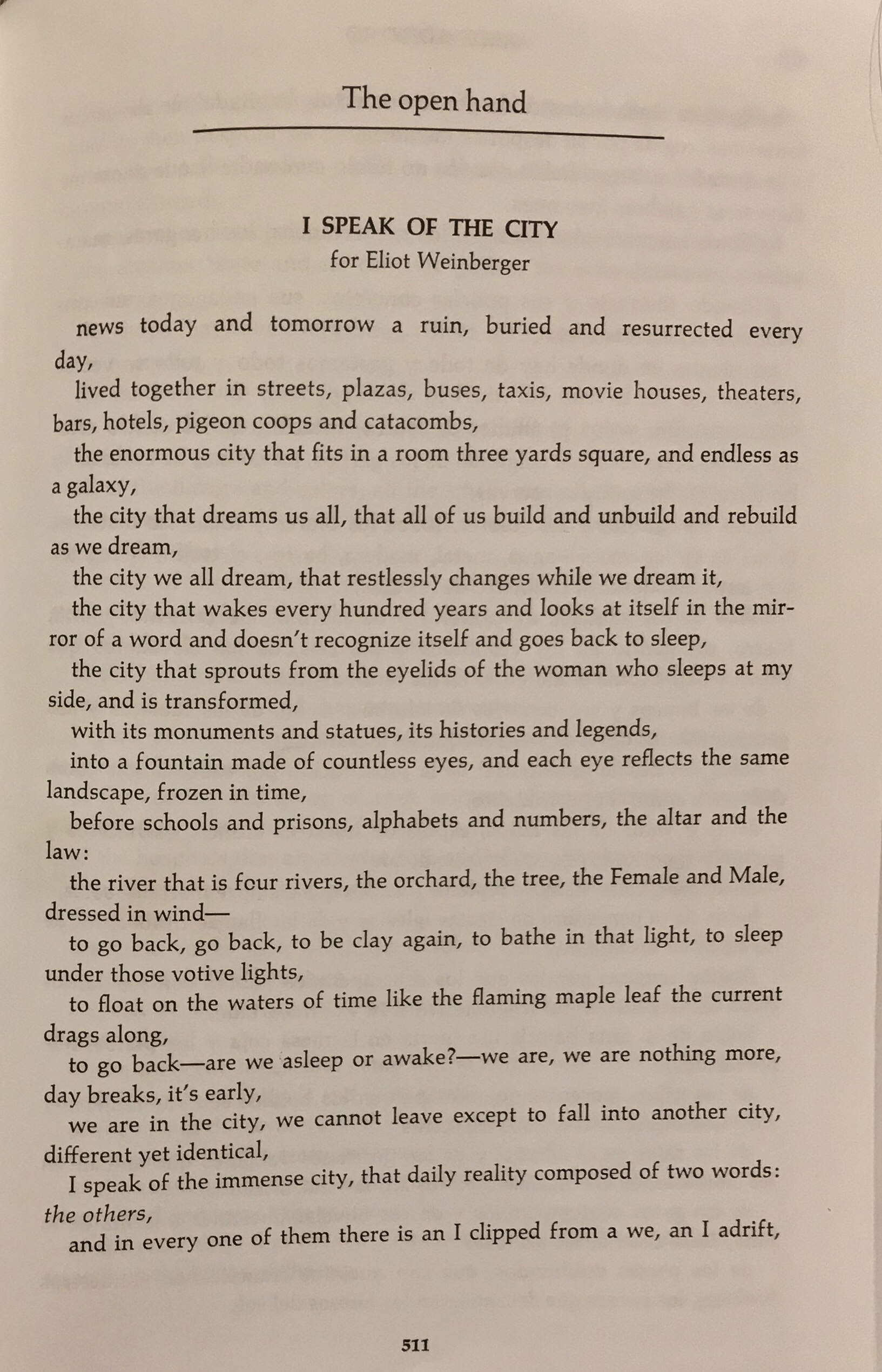
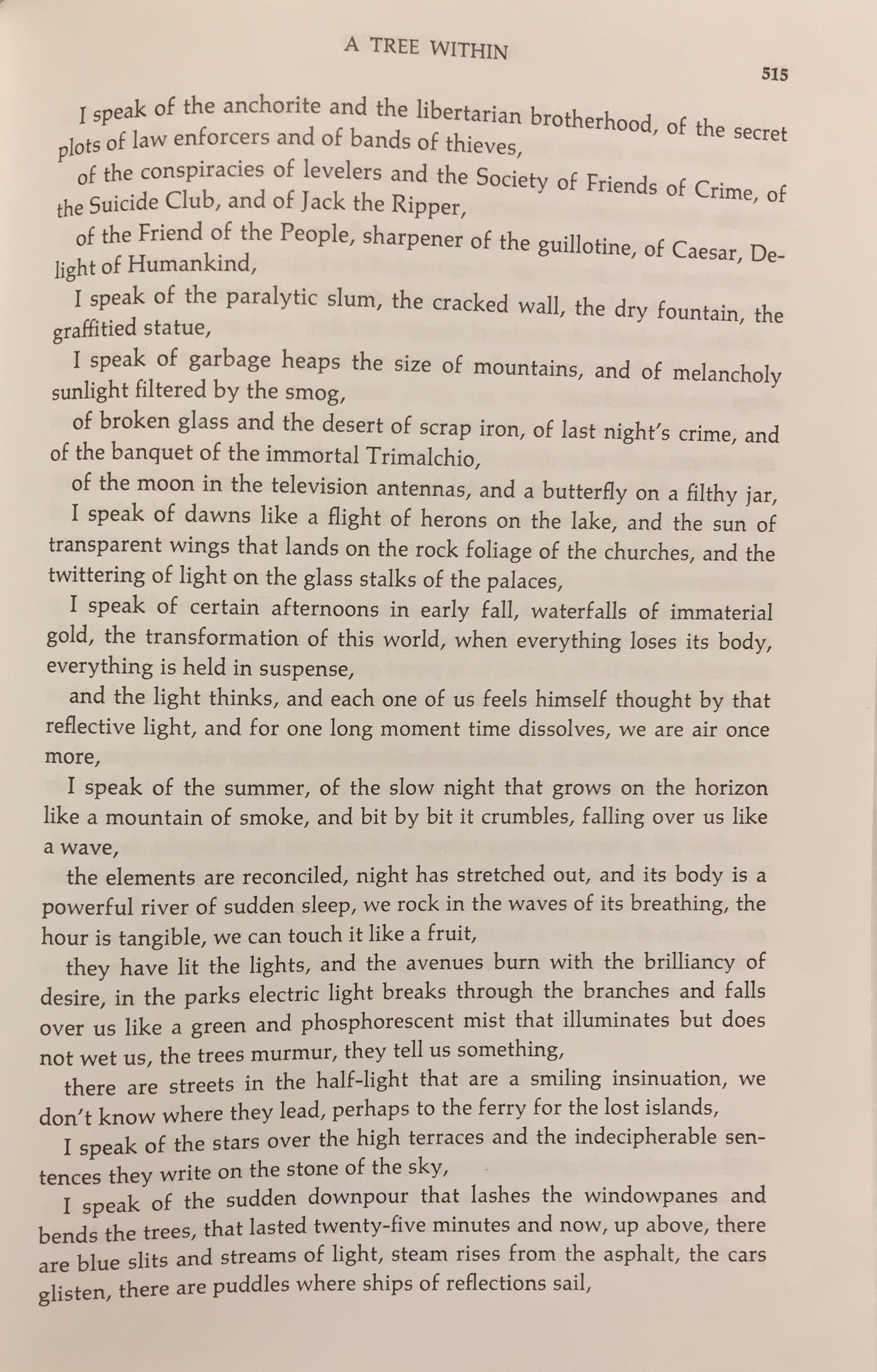
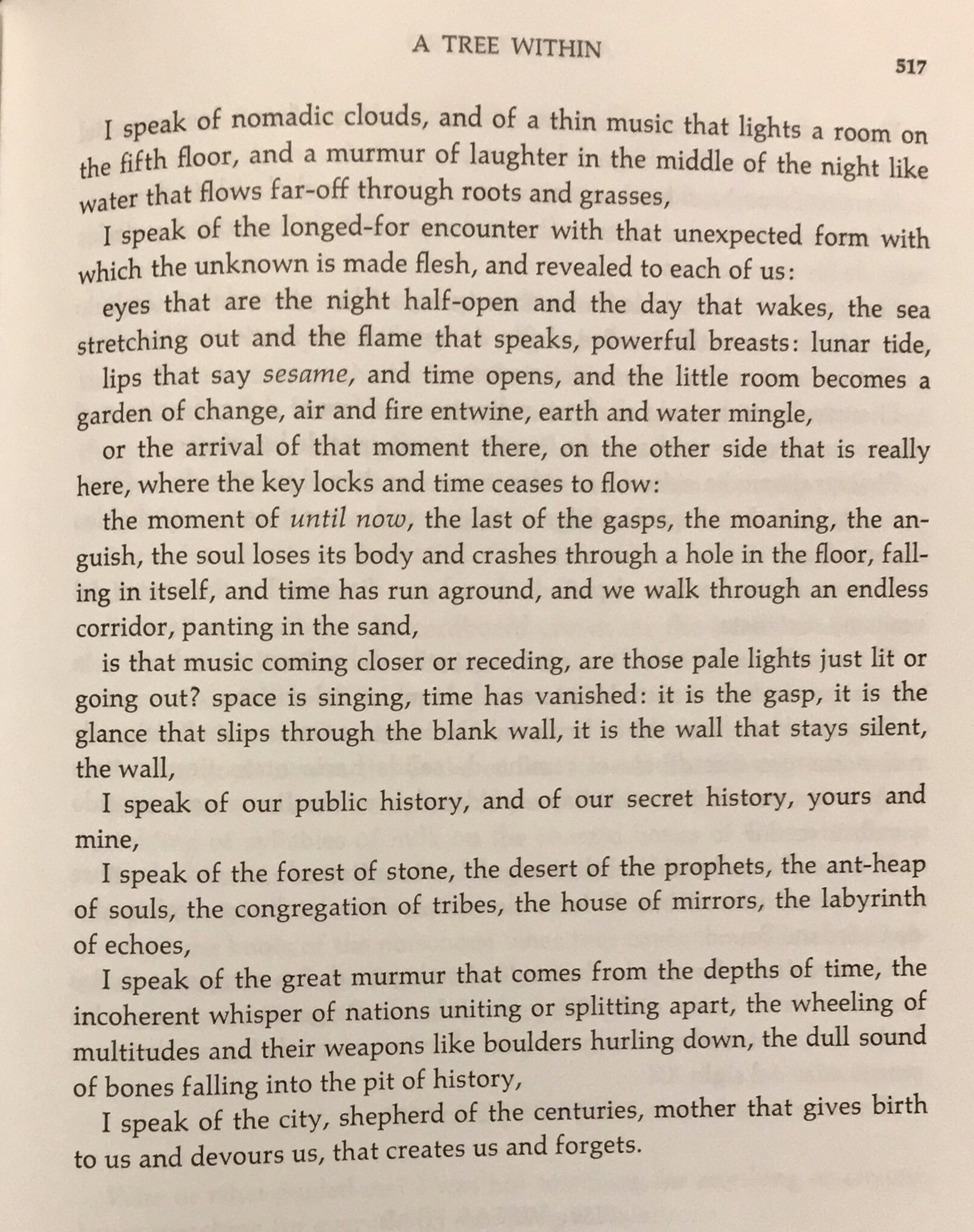
I want to close with a poem by Octavio Paz — who is considered the greatest Mexican poet and thinker — and, of course, was a native of Mexico City.

This is his poem Hablo de la Ciudad | I Speak of the City. Below the text in the original Spanish and the translation in English.

This poem perfectly encapsulates what Mexico City is. I have more posts on La Ciudad to craft, from my previous visits, and more poetry- but this shall suffice for tonight.

Here is to more gentle earthquakes and hurricanes in 2018, inner ones to bring soul renewals, and to a kinder year.

For the Aztecs, this was the bellybutton of the Moon.

Nos vemos pronto, Tenochtitlán.

Read Full Post »

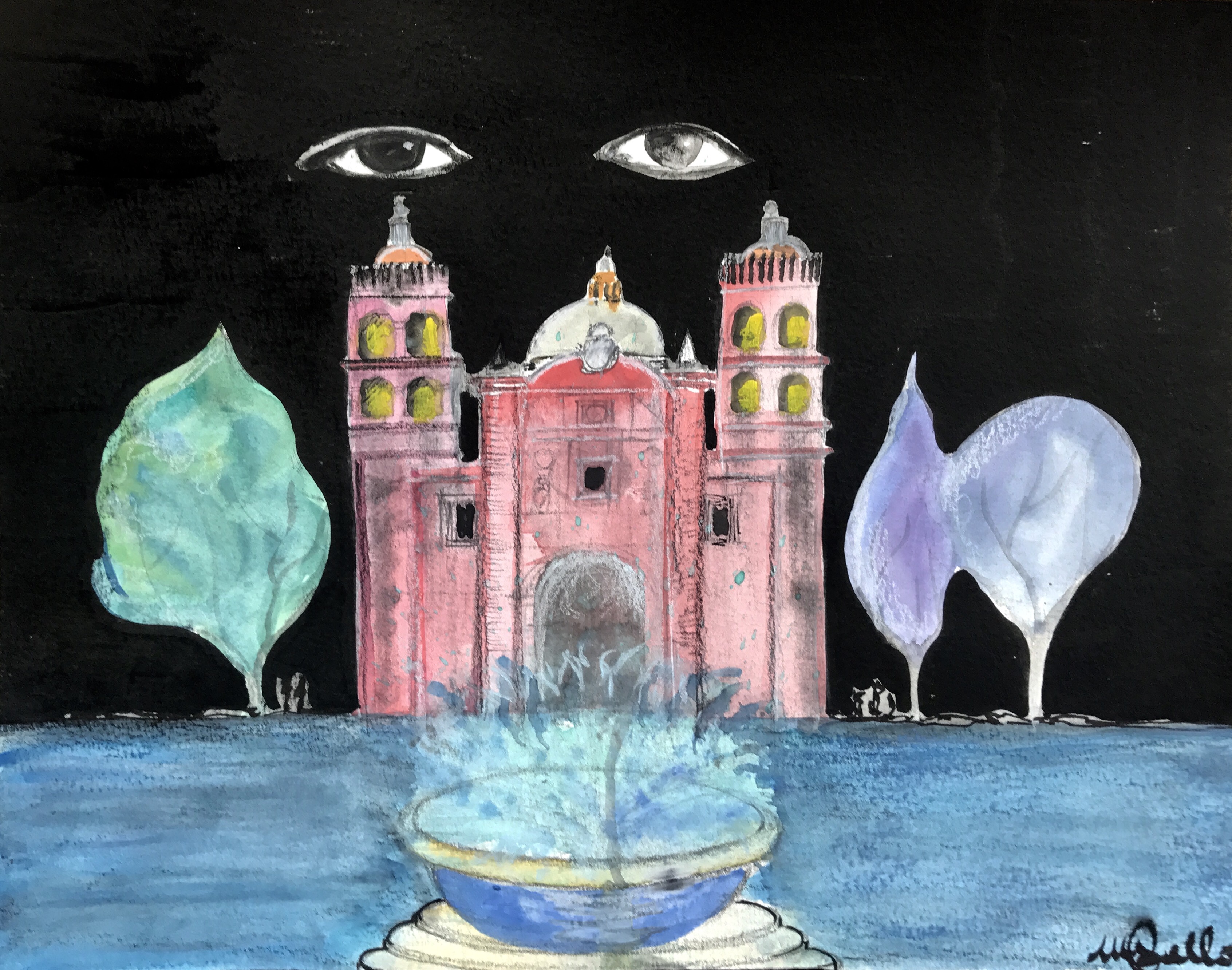
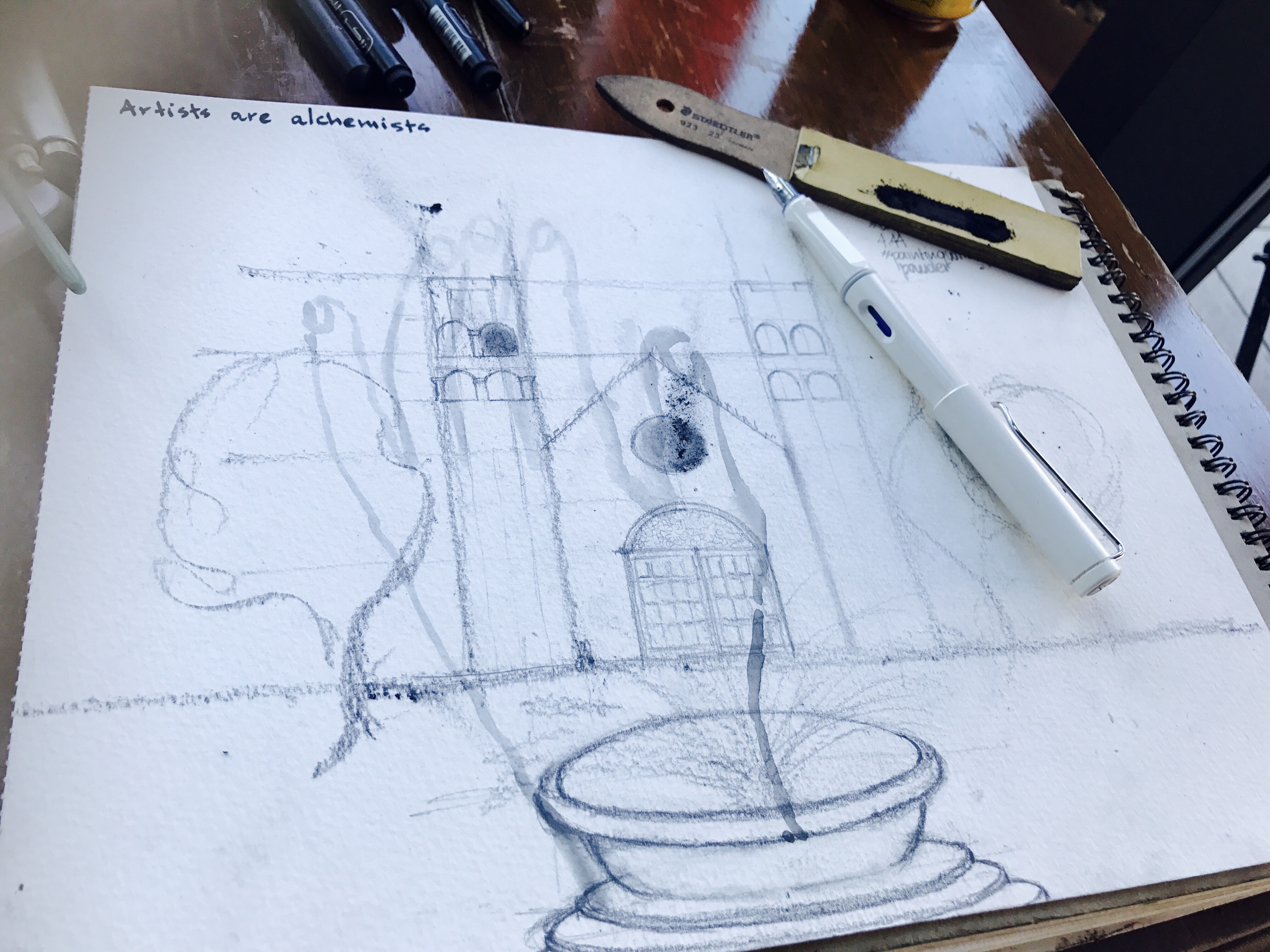
A Thousand Churches (Your Eyes). Graphite, Watercolor, India Ink. August 12, 2017.


Dear Single Reader,

You might have thought I had disappeared, and would be the third person in a week to ask me what happened to my sketchbloom…but I’m back for the summer.

An international conference in Hong Kong , research writing /presentations and academia have absorbed me until the end of June…not to mention that thing called life, and heart, and two moves in two months ( apartment renovation). It has been CRAZY. 

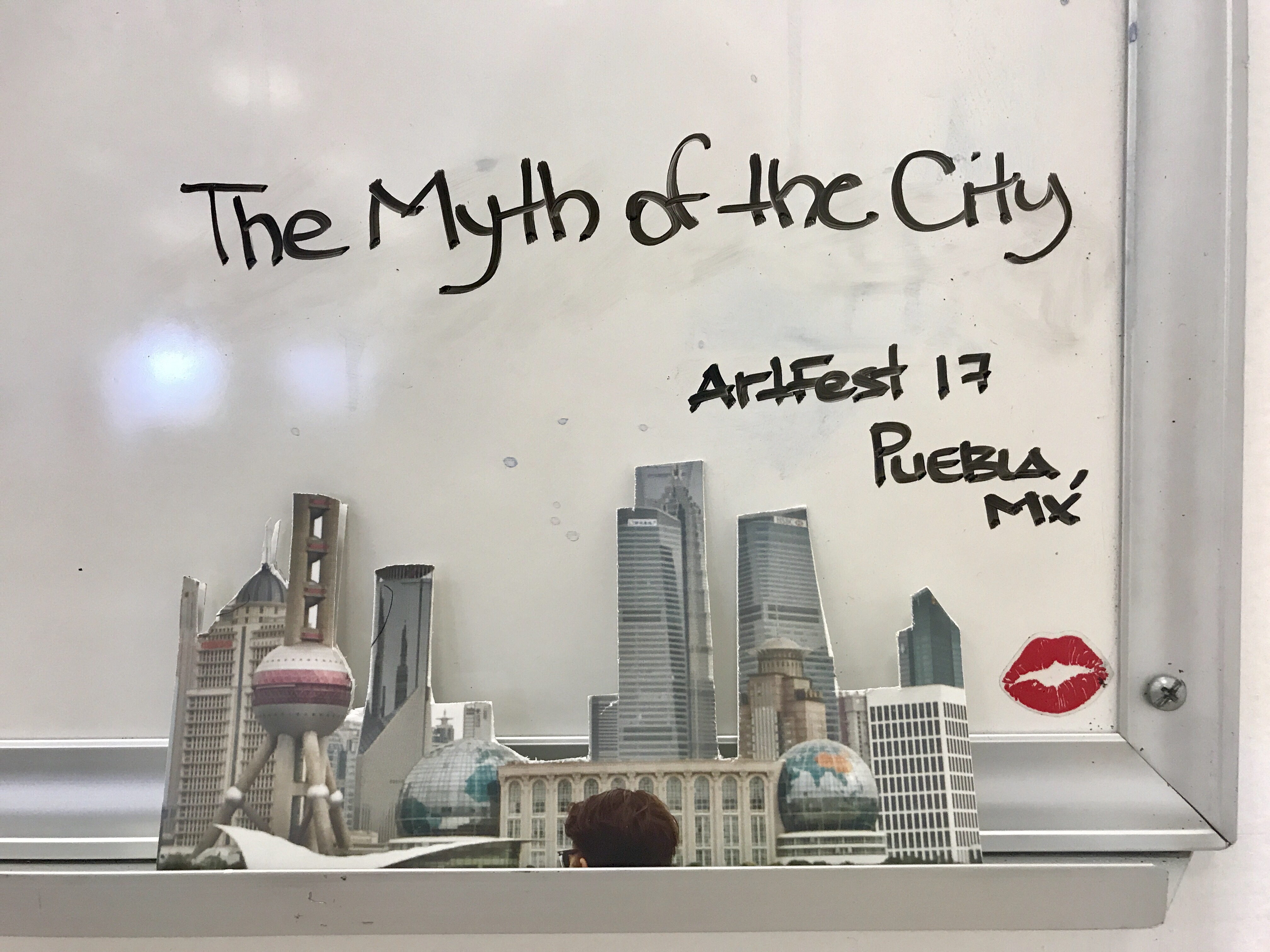
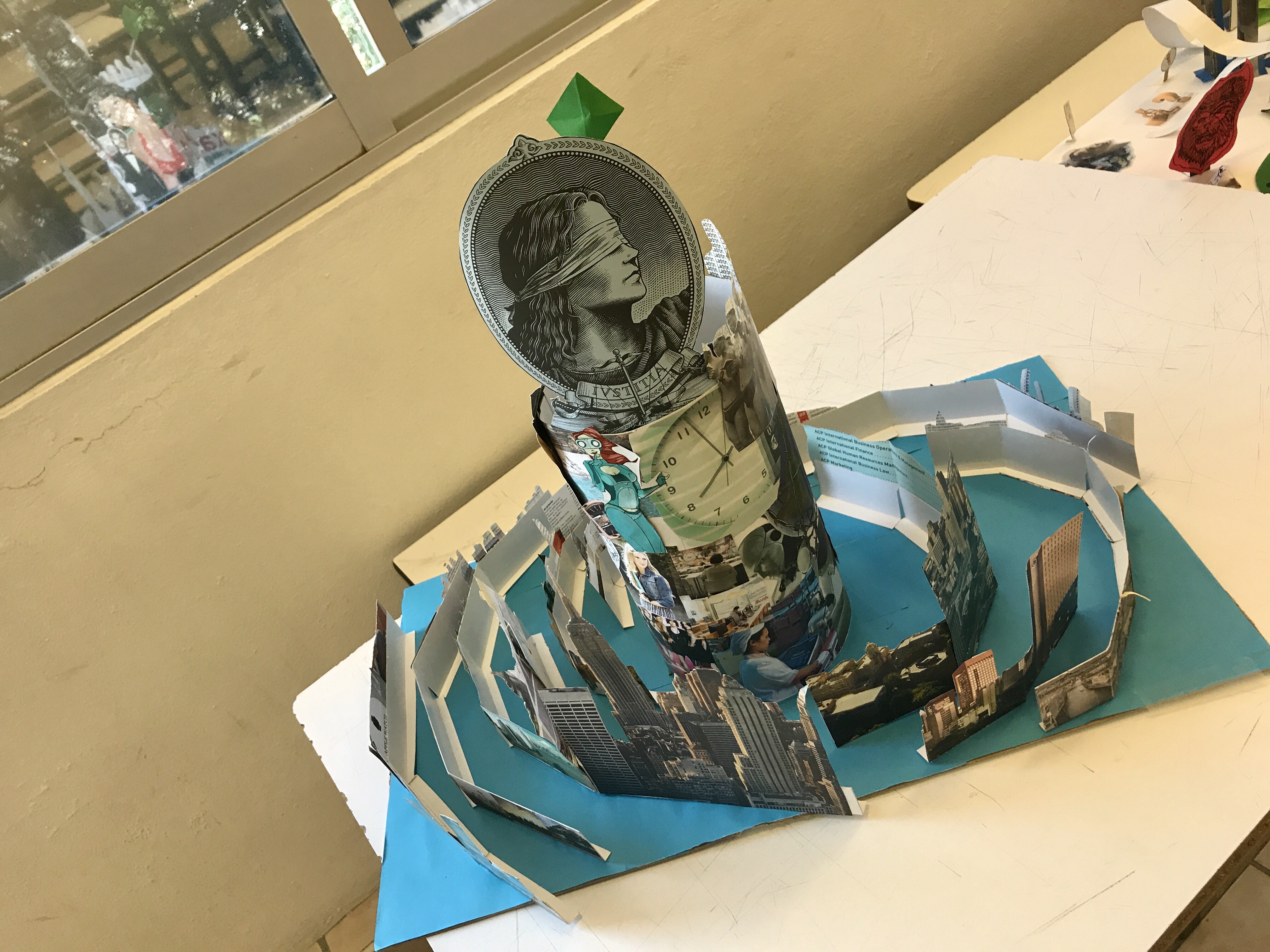
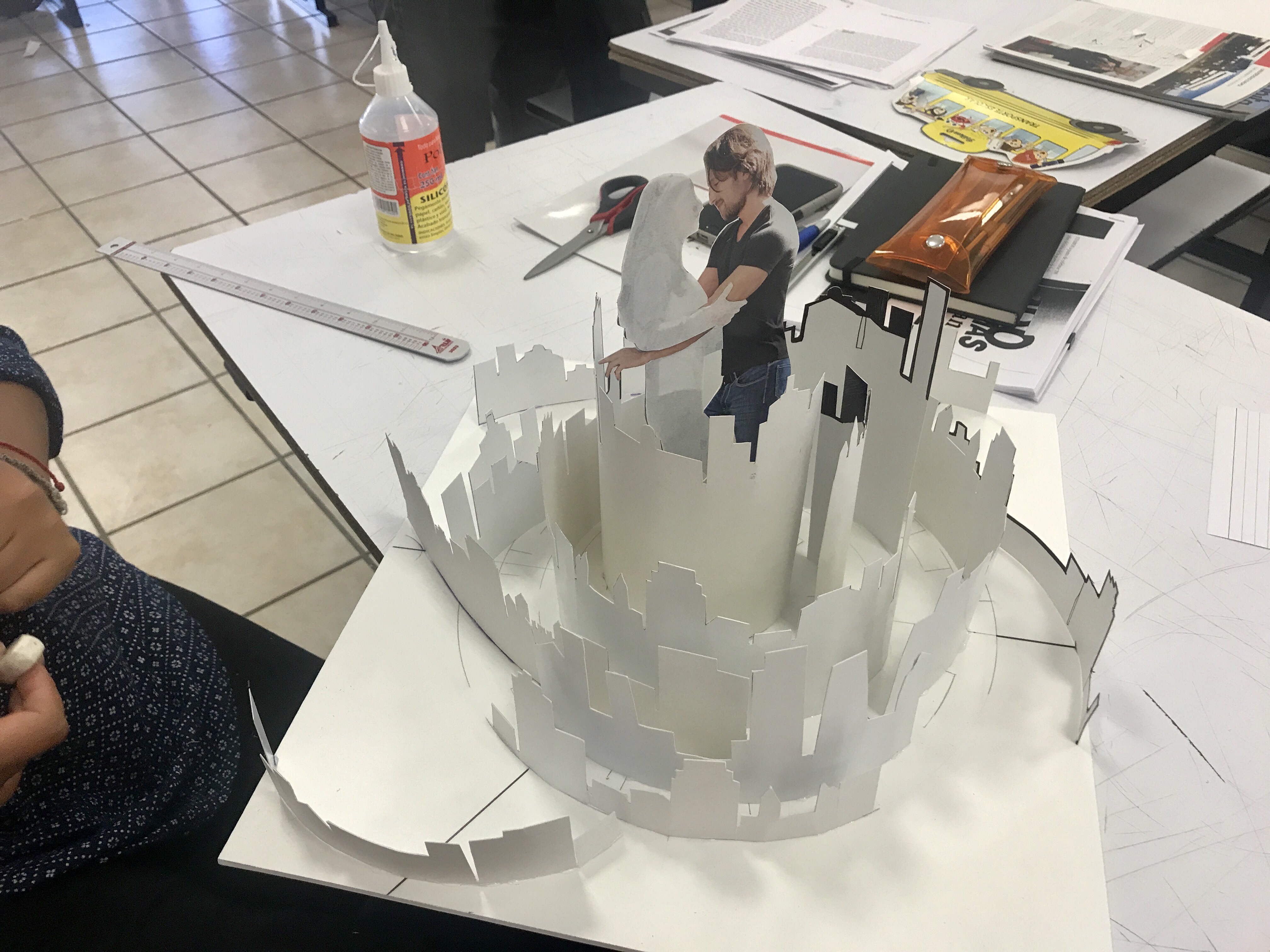
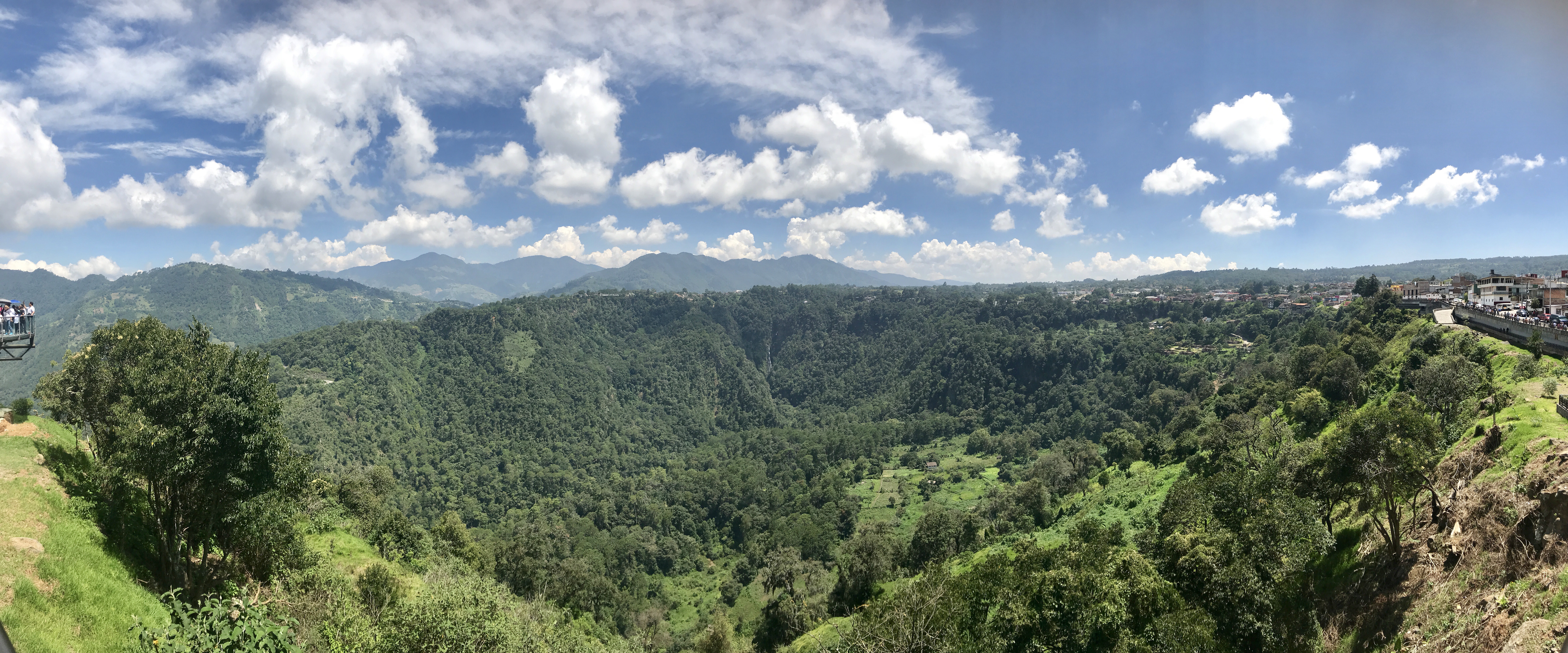
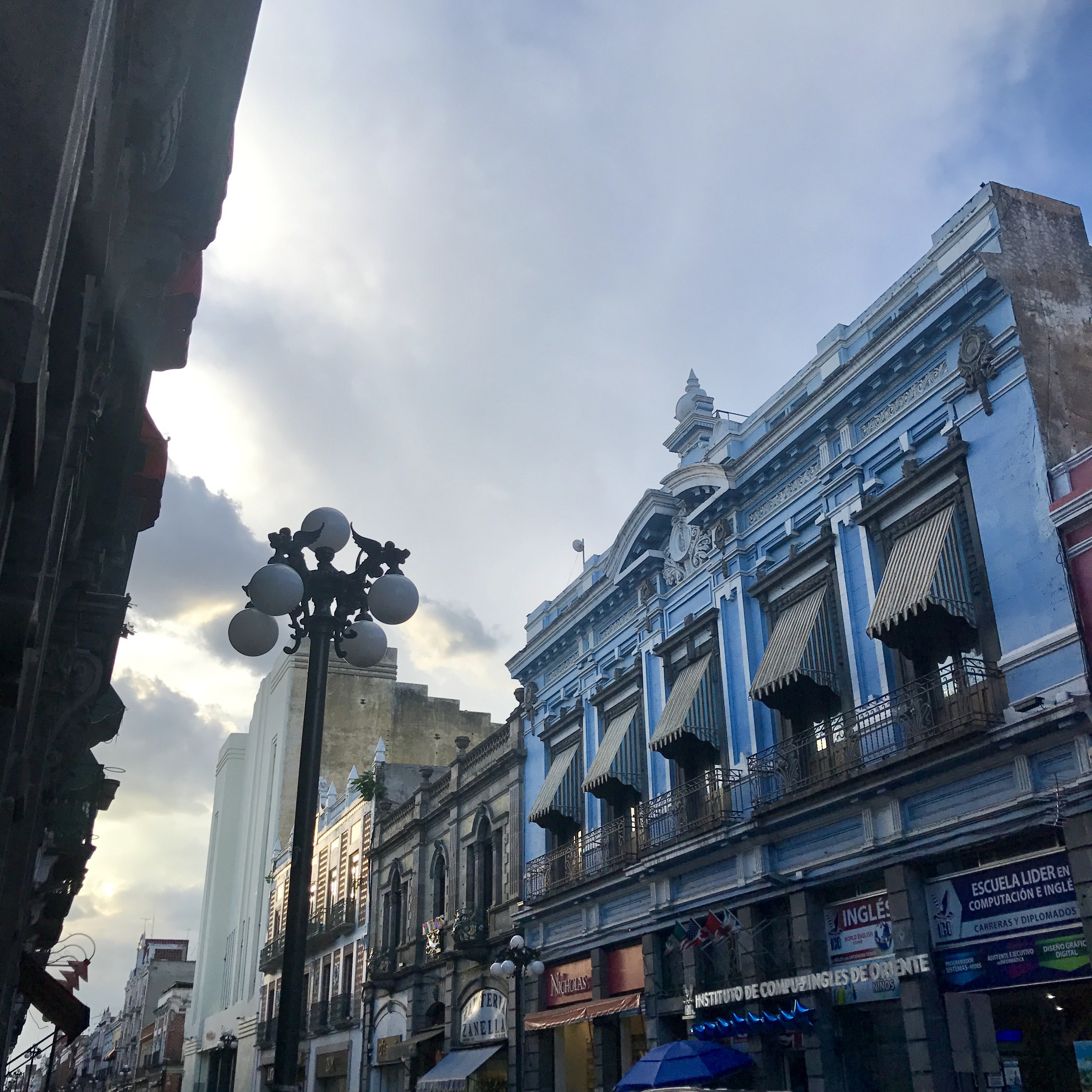
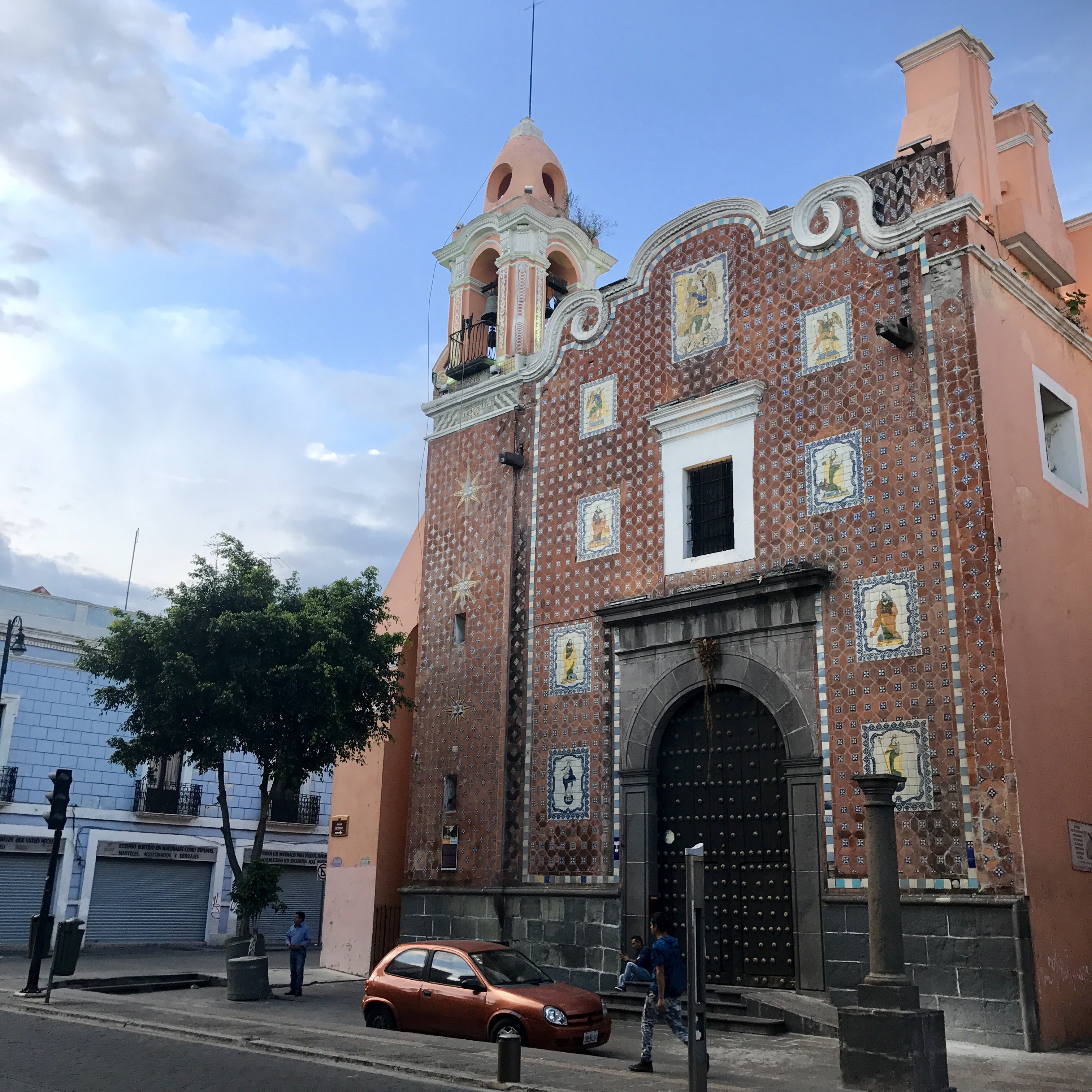
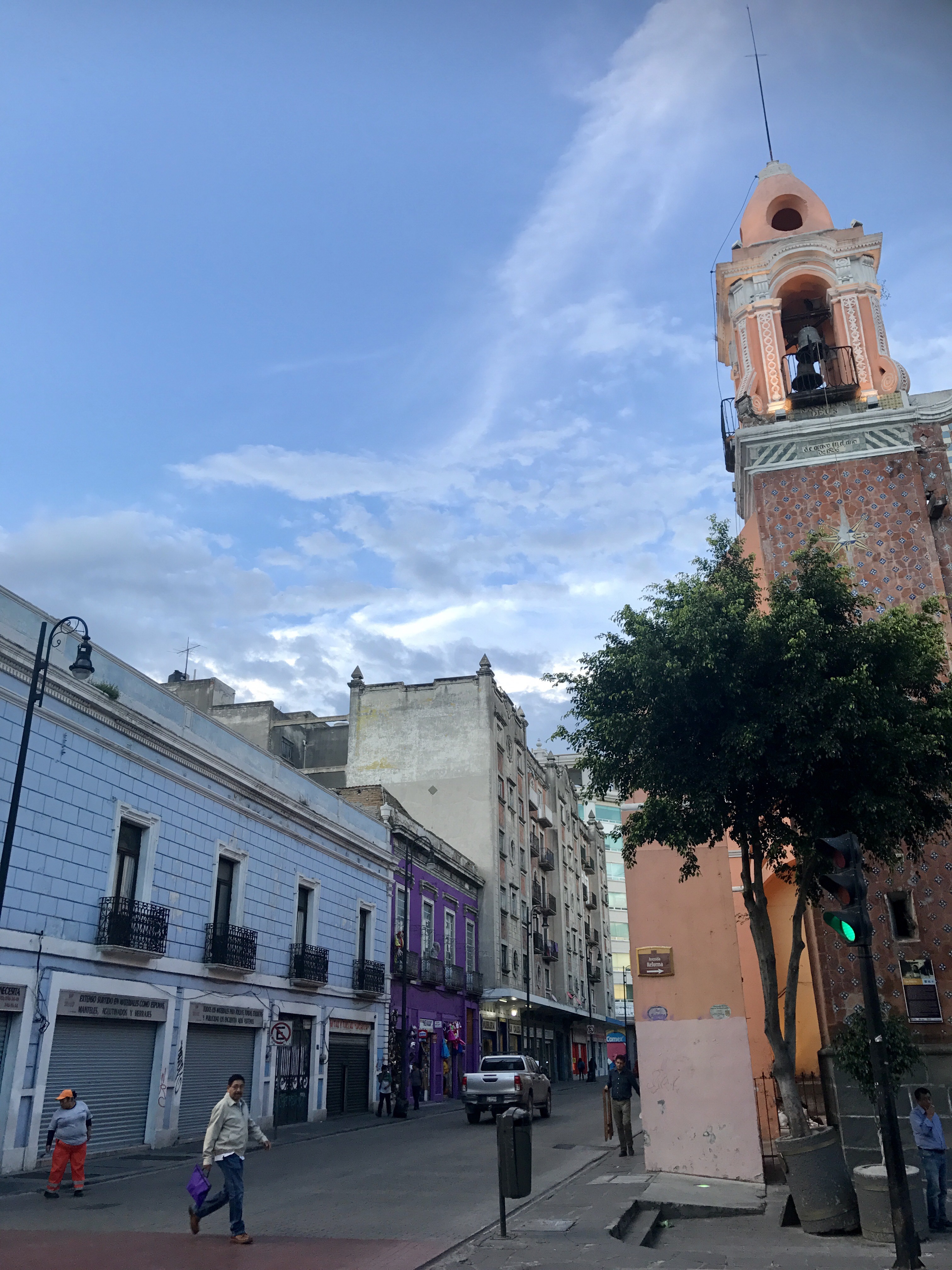
I just got back from two amazing weeks in Puebla, Mexico where I was part of ArtFest17 and went to teach at UVM (Universidad de la Valle México) a workshop called Myth of the City.  

Here you can see all the work done with my students and read about Puebla, the “Second” city – the first being of course, Mexico ( Ciudad de). It was an incredible experience, after having co-taught the course in Santa Fe, New México in 2013 and 2014. One could say I went from New Mexico to “Old” México with this.

In Puebla i was surrounded by “my people”, migente, artists, intellectuals..the bohemians and the romantics, and got back my creative juices!  Now, a new beginning…

I have lots of travel photography and new poetry to share so stick around 🙂 

Thank you for reading me and not forgetting about me ❤️ your support means everything to me, as art is and always be my first love- and the true love of my life. 

I am on an art-recovery program but I don’t know what to do about those pesky writing deadlines…#thestruggle. Life is so full, and exciting new design opportunities –like being a juror for Orchids and Onions in San Diego and a Pecha Kucha presentation on Storage Cities — keep presenting themselves. It’s accelerated, beautiful life…yet art needs the half-time of dreams.

Well, wish me good luck, there are some posts in the pipelines so I will see you soon and… work in progress as usual! 

I do hope you are having a glorious summer.

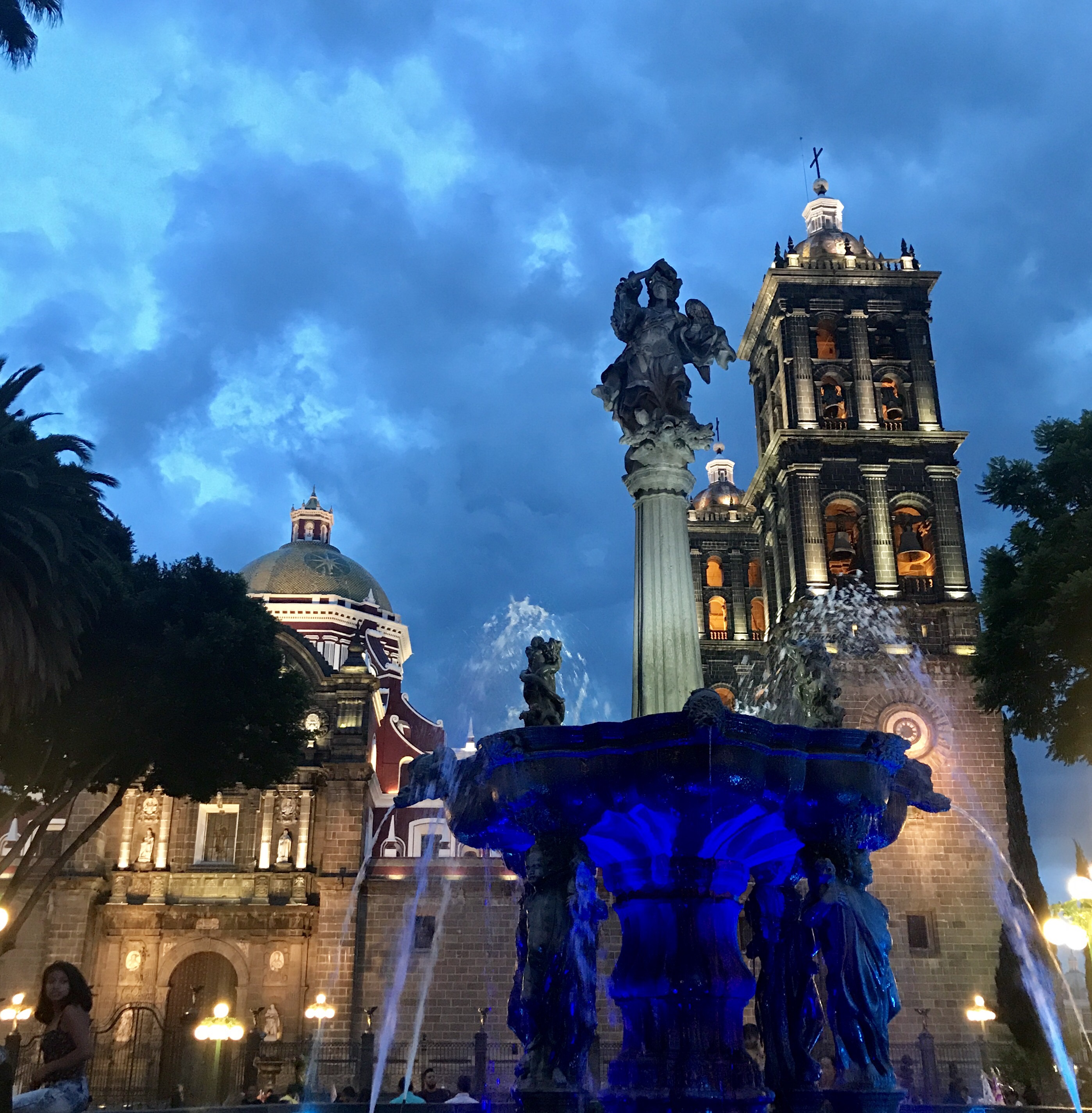
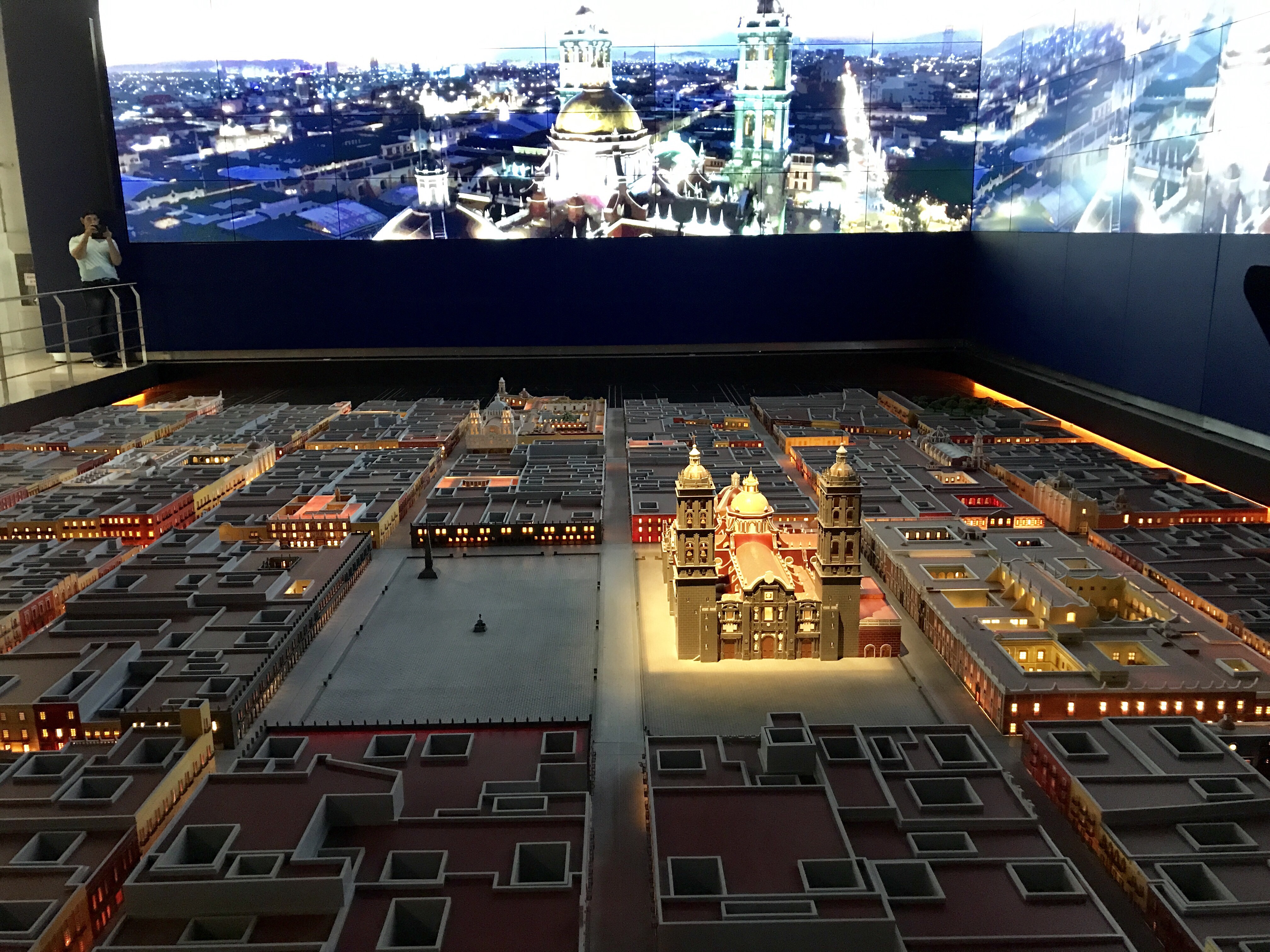
Below are some photos from lovely, lovely Puebla… two of my students’ models and the City that is home of so many incredible riches. A true treasure of humanity/ patrimonio de la humanidad. 

PS: I have been posting on Instagram but have to confess I always feeel guilty if I don’t post drawings/sketches/watercolor/collages… after all it is called Sketchbloom not Photobloom ( but you can follow me [@sketchbloom] there and it would make me so happy😊.) 


Puebla, Estado de Puebla, México:

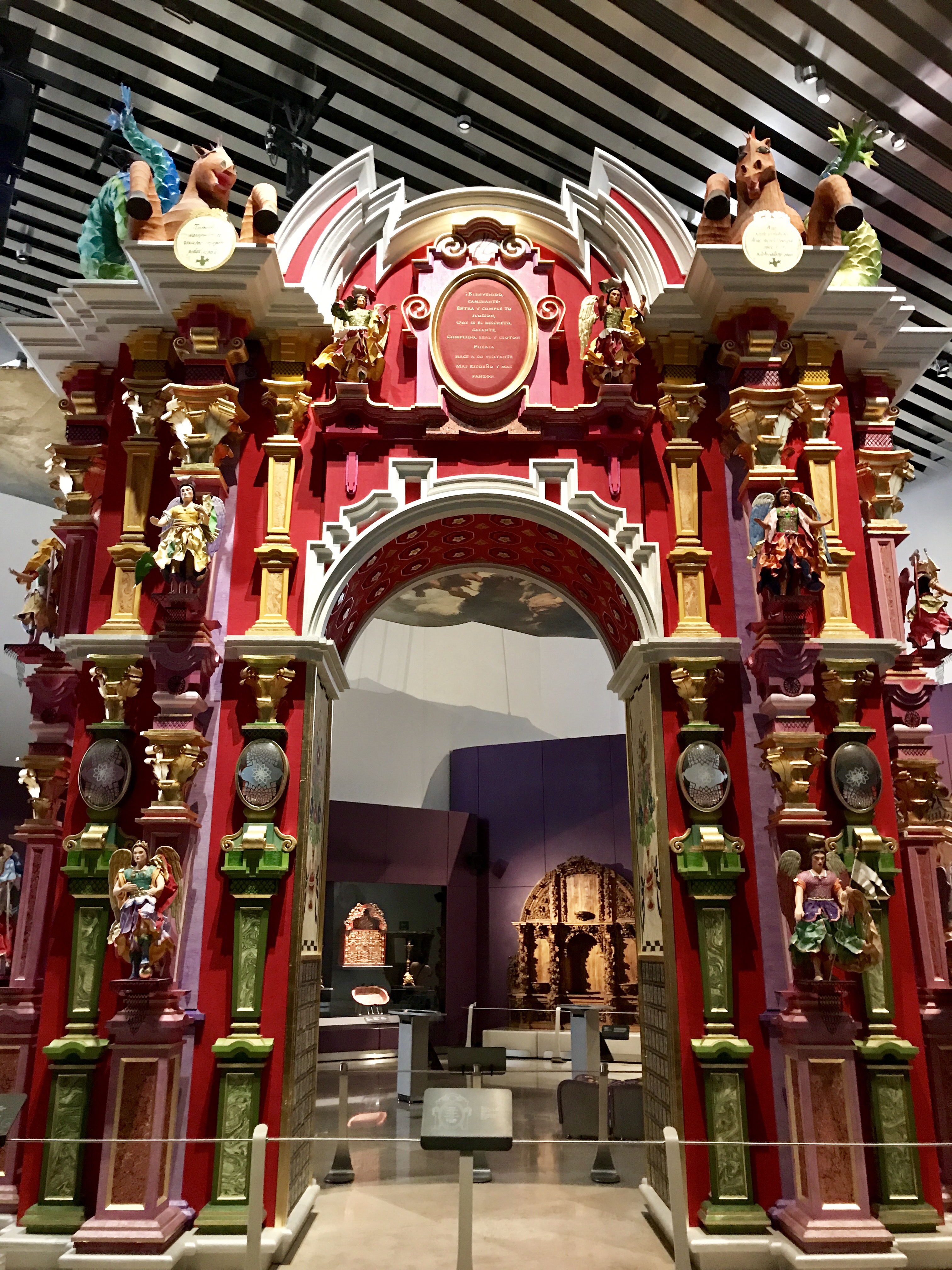
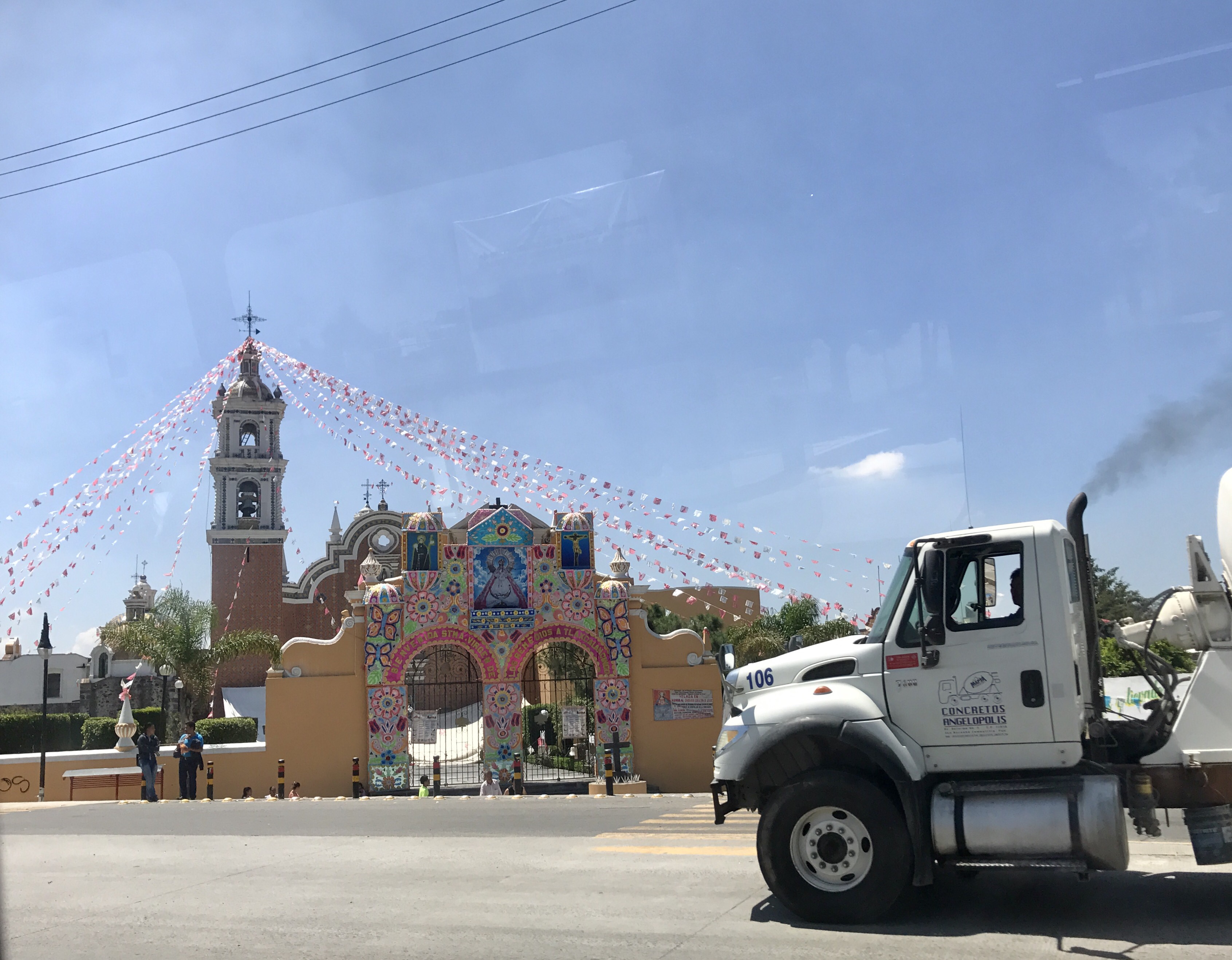
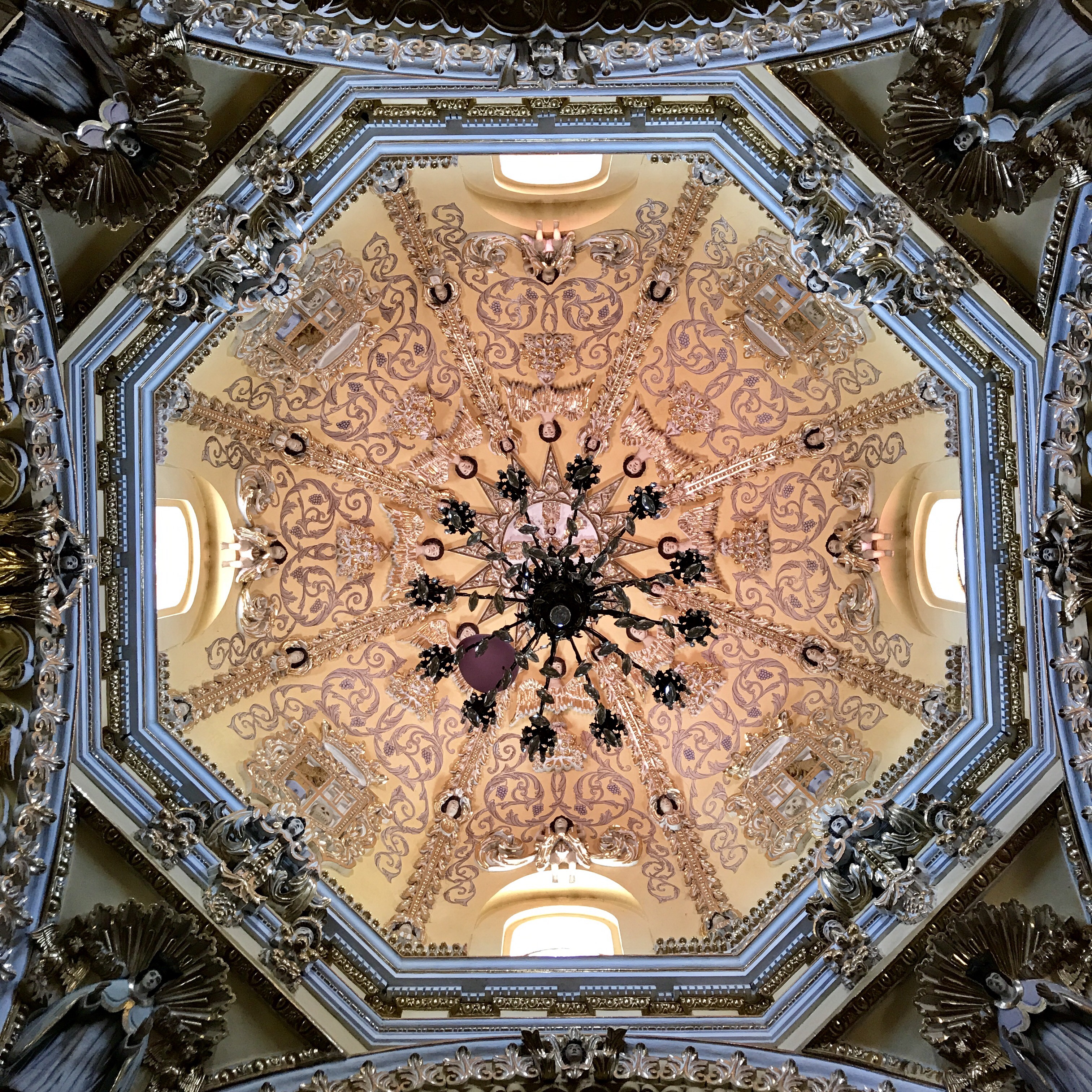
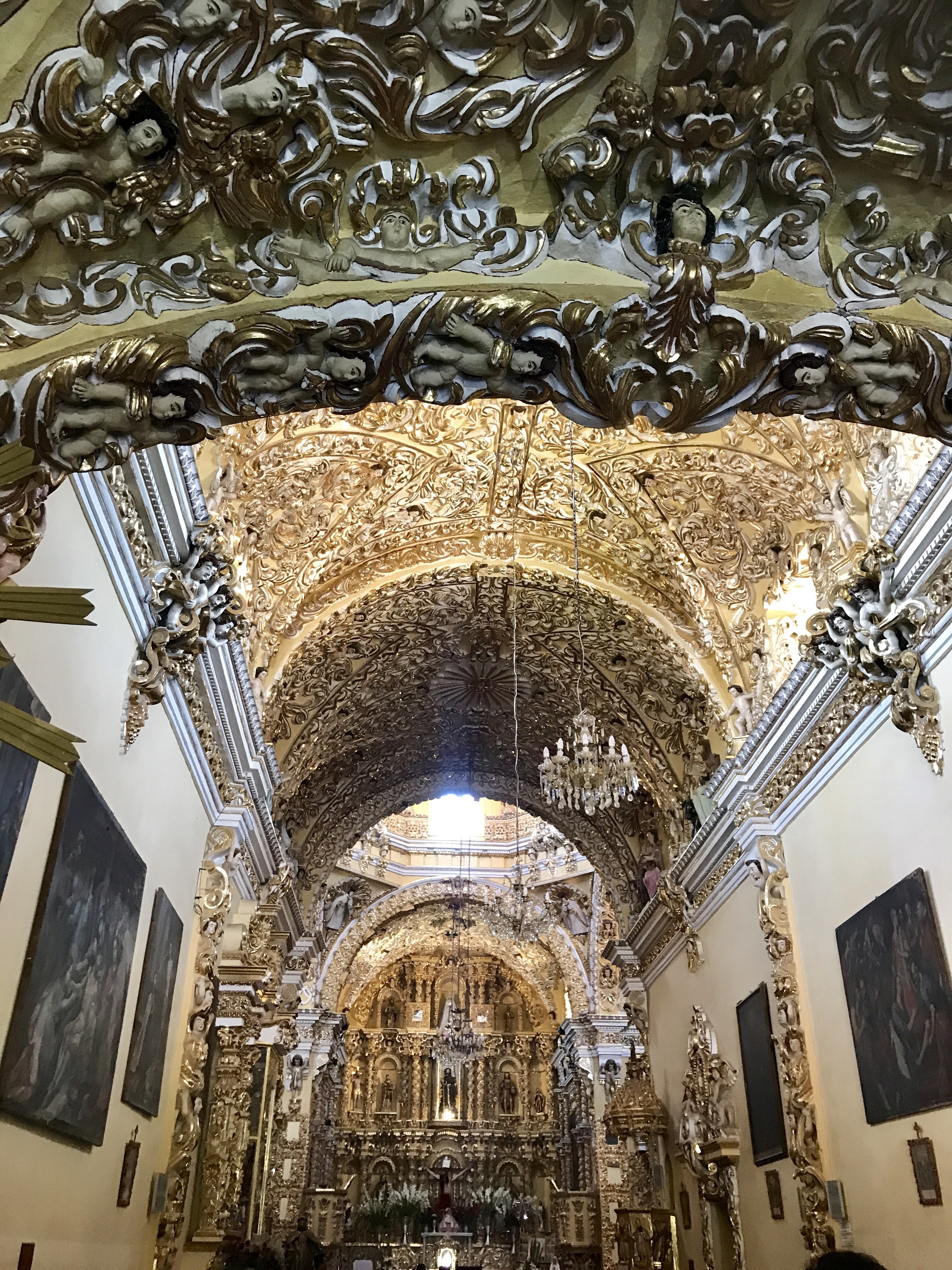
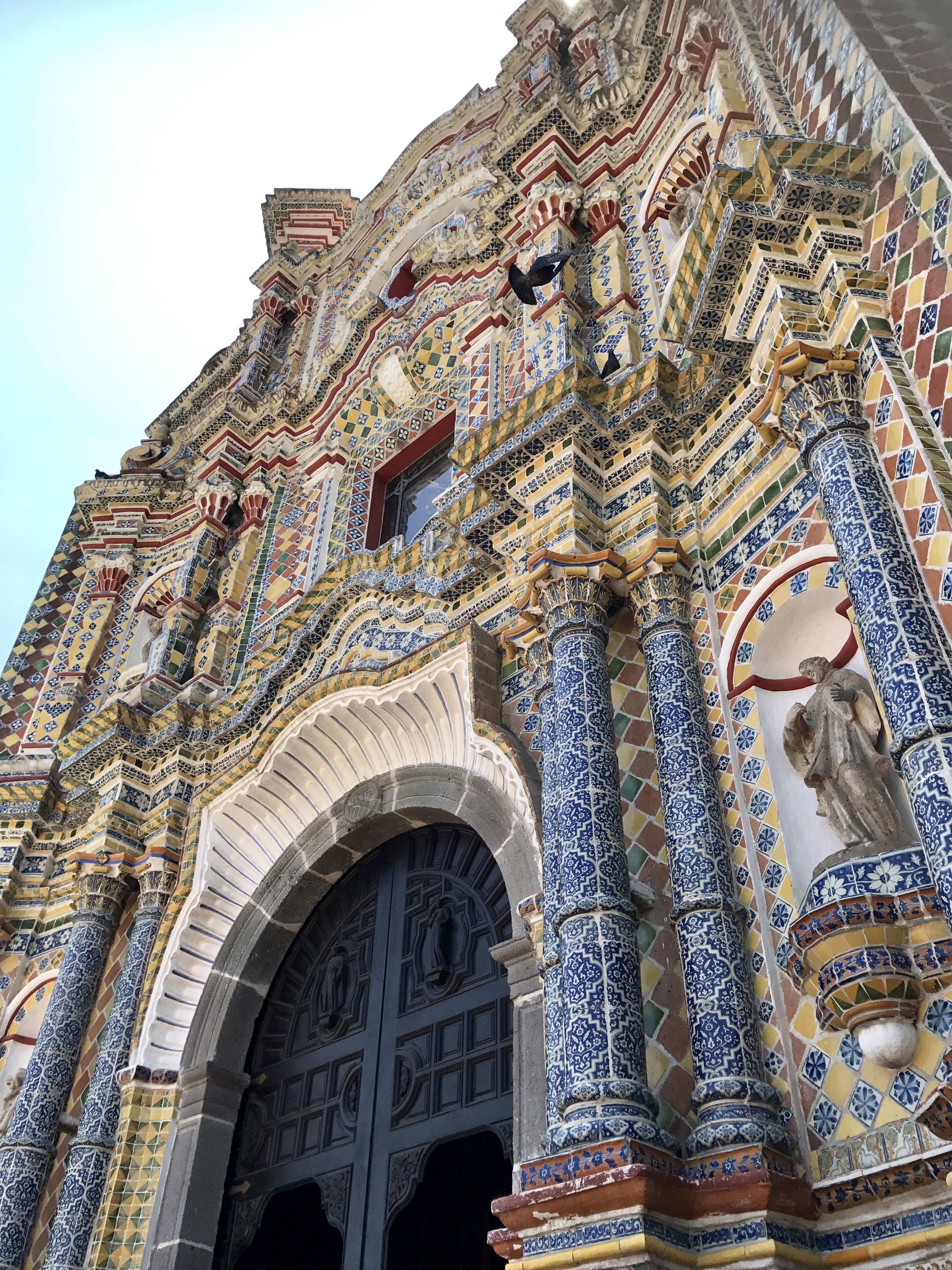
What a magical city: Baroque churches where Tllaloc and Quetzacoatl are venerated, the fusion called Barroco Indígena ( San Francisco de Acatepec and Santa María de Tonantzintla – Barragán’s favorite church), Aztec temples and cities, 400 year old stone buildings, the tallest church towers in Mexico and the greatest covered stepped pyramid in the world ( Teocalli de Cholula)…finally the oldest public library of the Americas. Puebla is where the battle celebrated during Cinco de Mayo took place and where the Mexican Revolution started. Wow. 

Take a look…


Read Full Post »

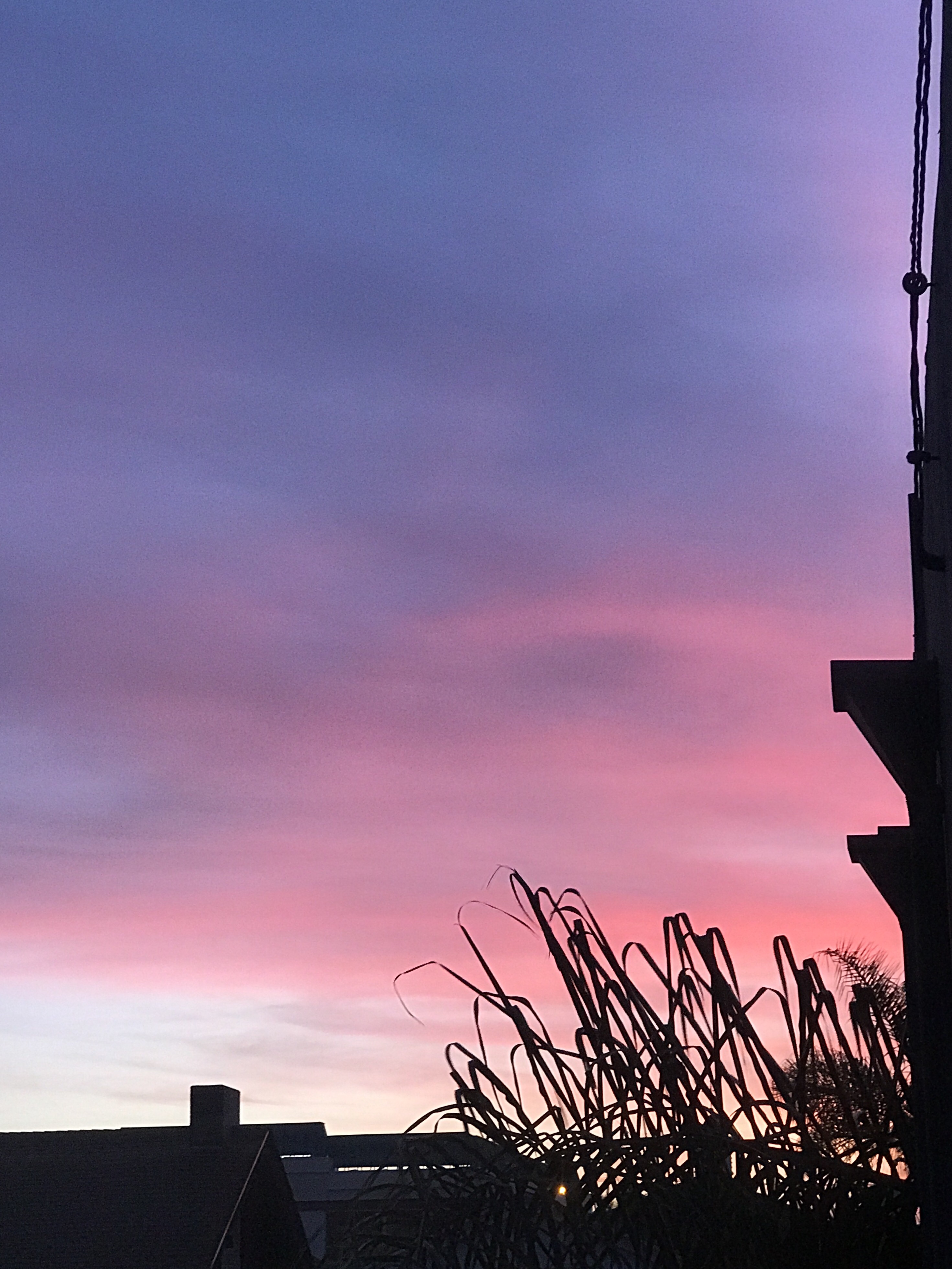
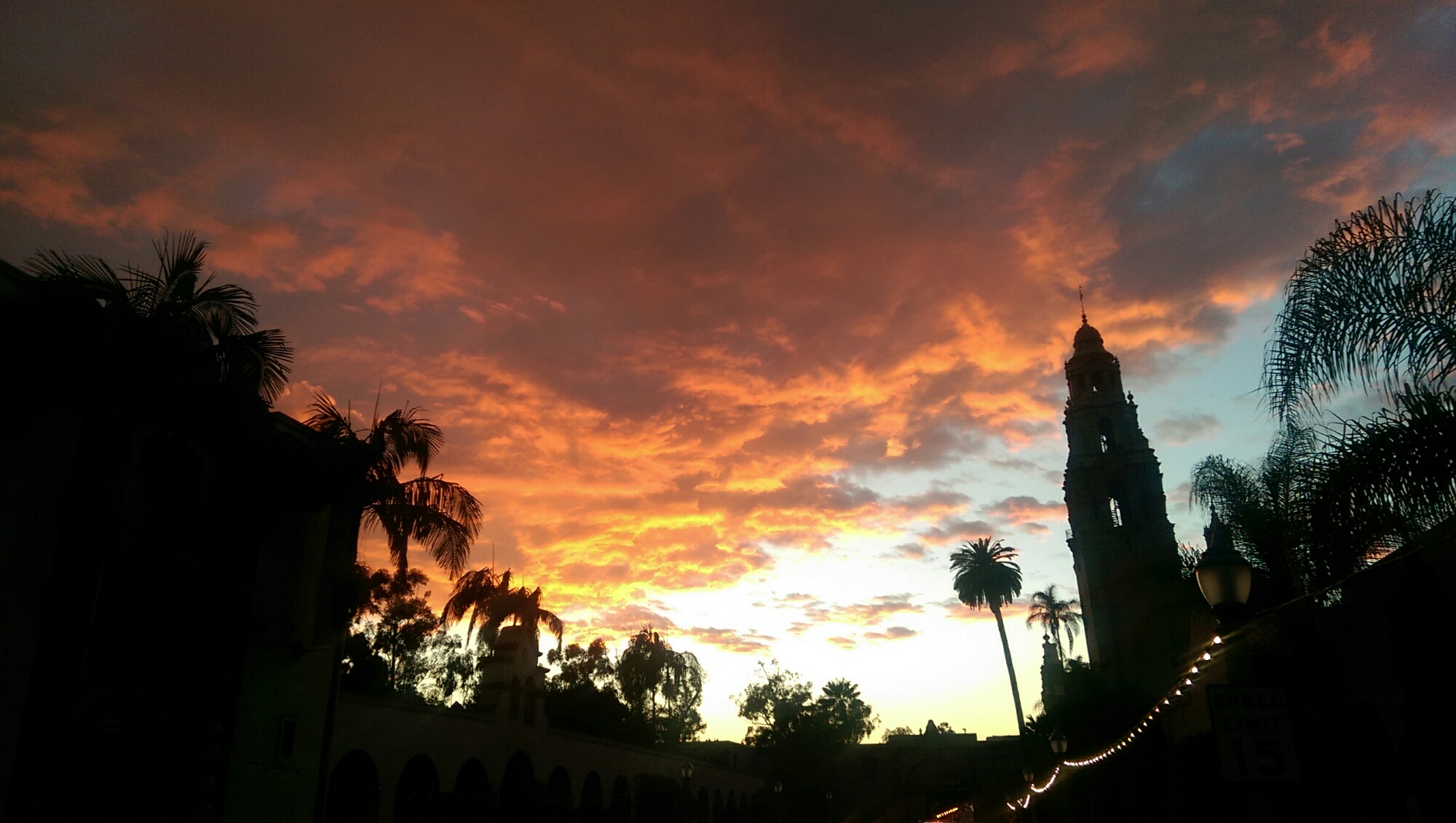
The Tuscan/Pomegranate sky in San Diego right now. Absolutely no filter.

Pomegranate

By Kevin Pilkington


A woman walks by the bench I’m sitting on

with her dog that looks part Lab, part Buick,

stops and asks if I would like to dance.

I smile, tell her of course I do. We decide

on a waltz that she begins to hum.

We spin and sway across the street in between

parked cars and I can tell she realizes

she chose a man who understands the rhythm

of sand, the boundaries of thought. We glide

and Fred and Ginger might come to mind or

a breeze filled with the scent of flowers of your choice.

Coffee stops flowing as a waitress stares out the window

of a diner while I lead my partner back across the street.

When we come to the end of our dance,

we compliment each other and to repay the favor

I tell her to be careful since the world comes to an end

three blocks to the east of where we stand. Then

I remind her as long as there is a ’59 Cadillac parked

somewhere in a backyard between here and Boise

she will dance again.


As she leaves content with her dog, its tail wagging

like gossip, I am convinced now more than ever

that I once held hundreds of roses in my hands

the first time I cut open a pomegranate.

Read Full Post »

Read Full Post »


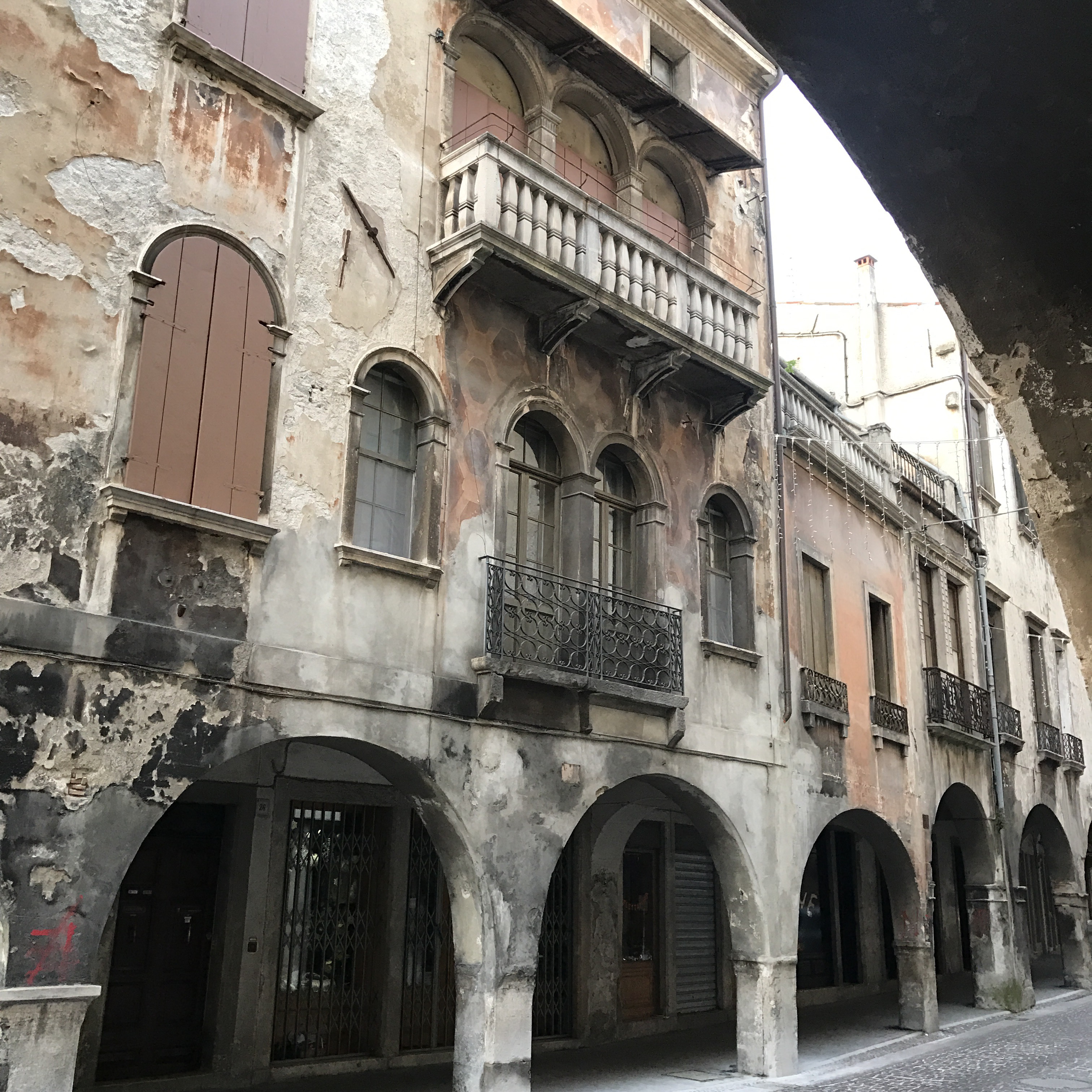
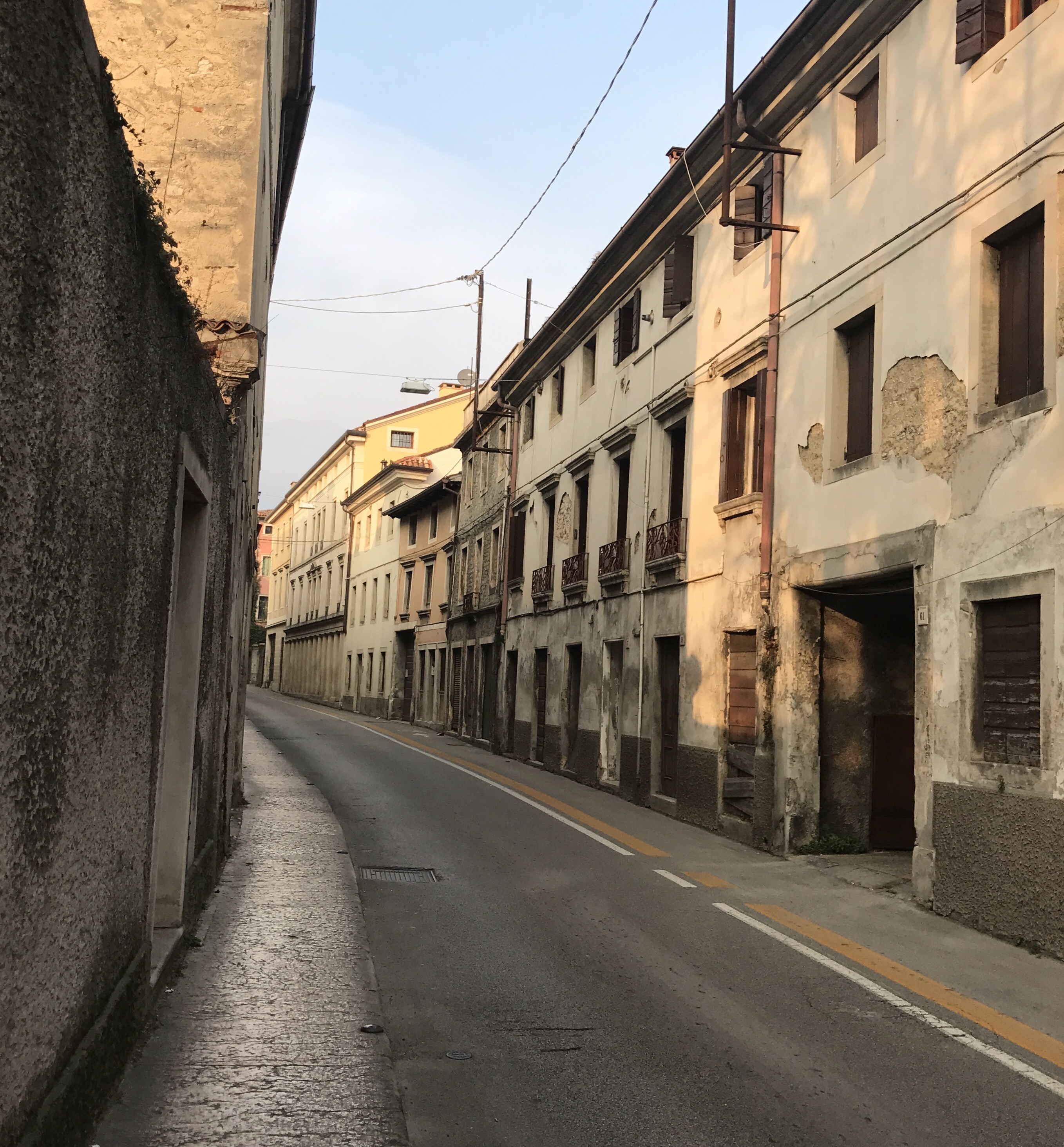
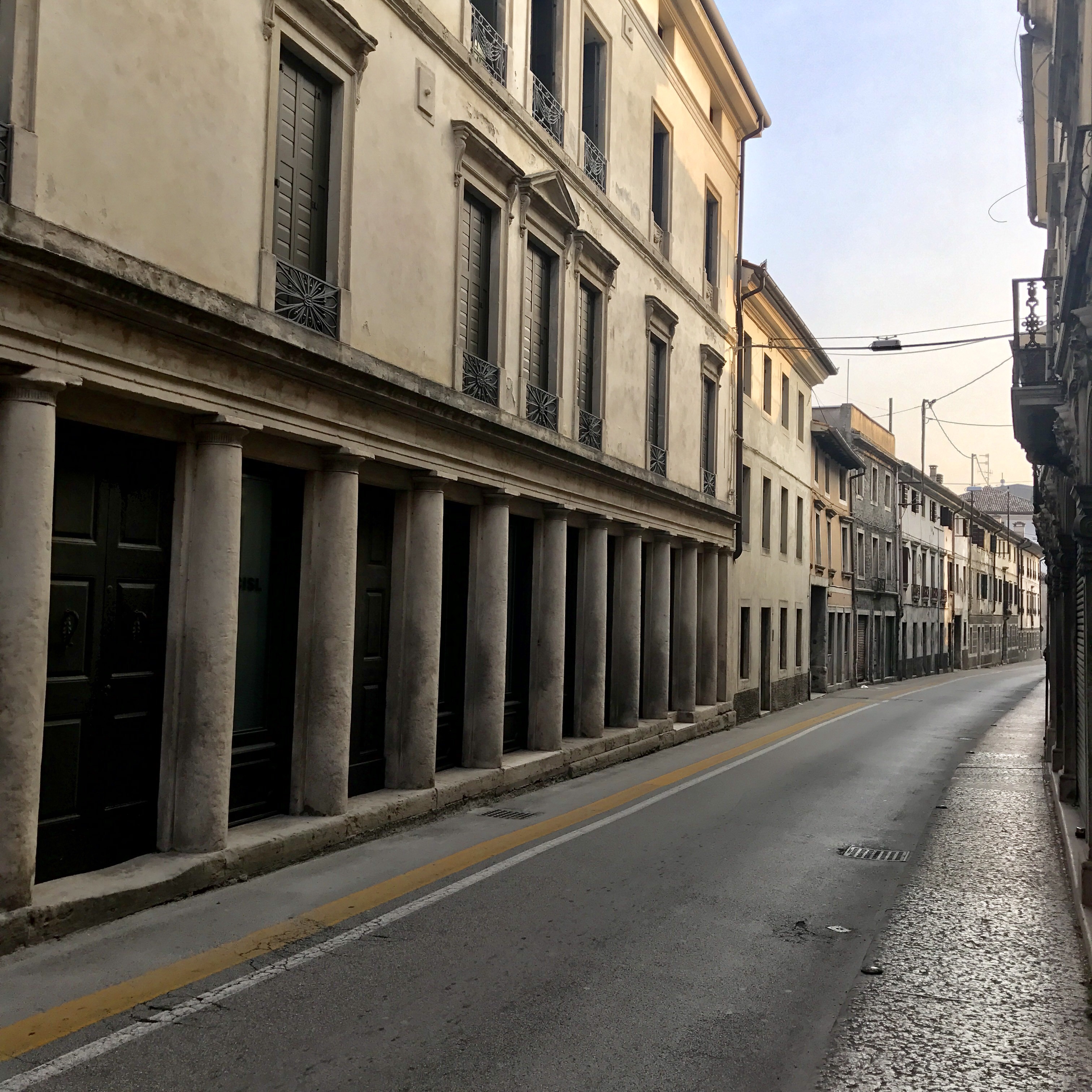
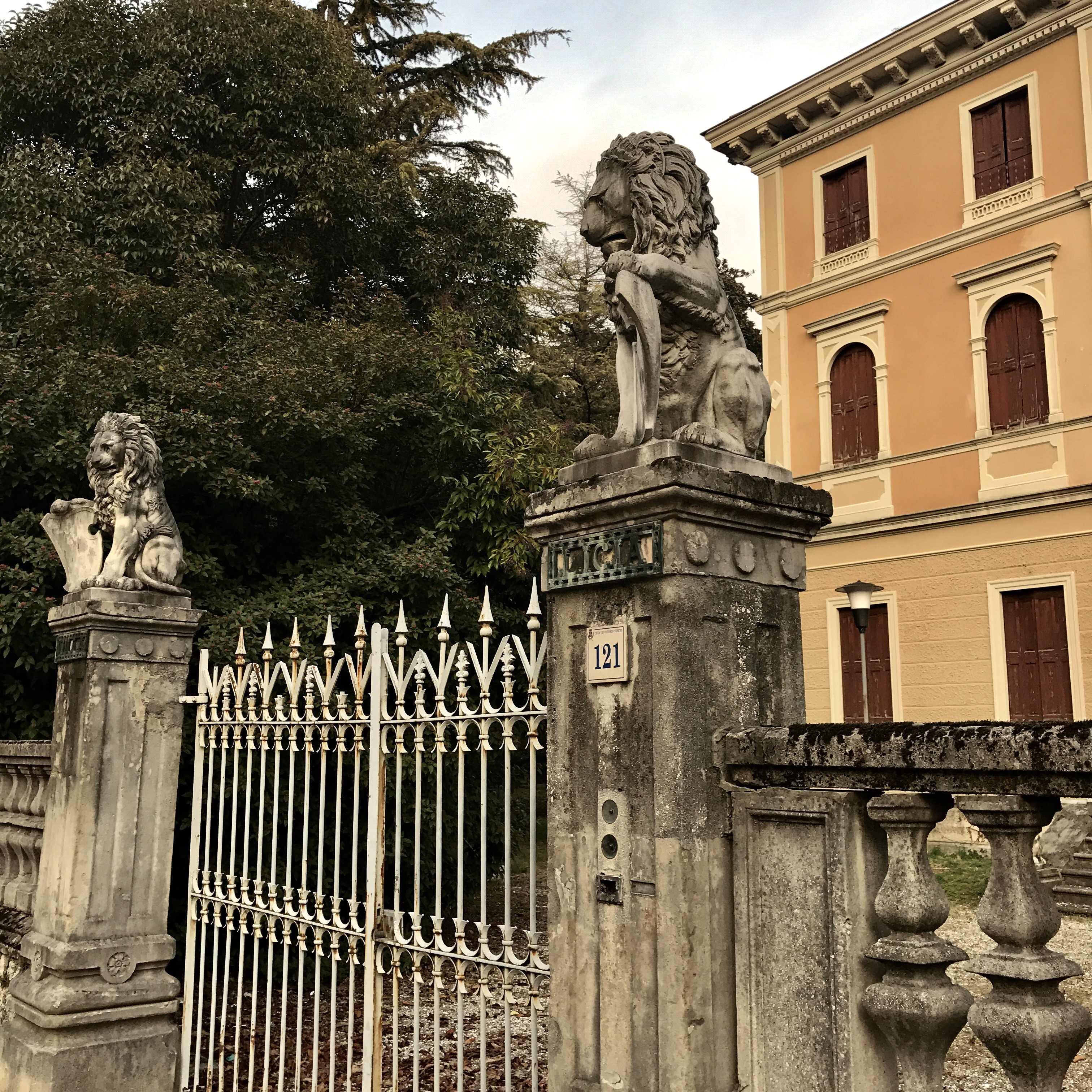
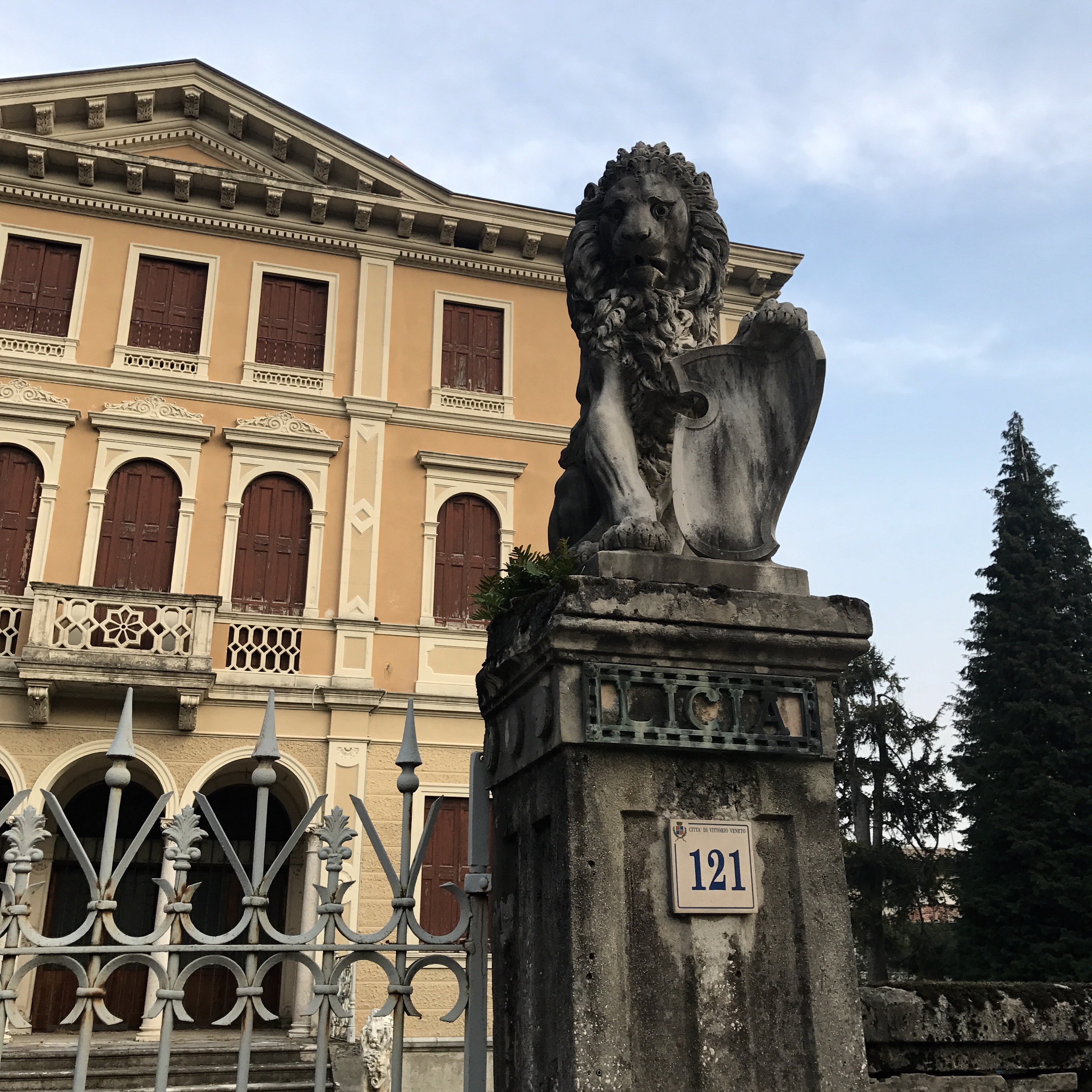
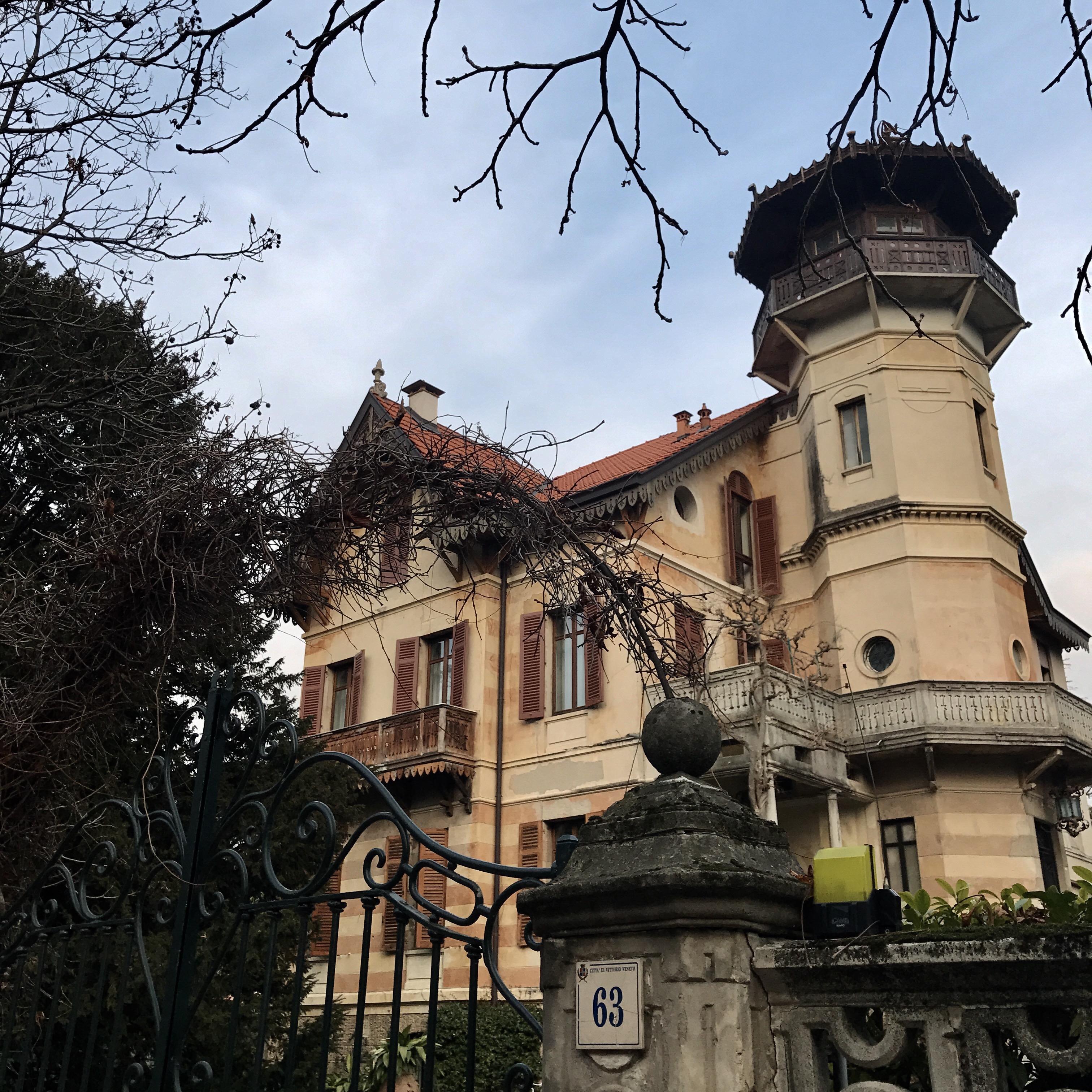
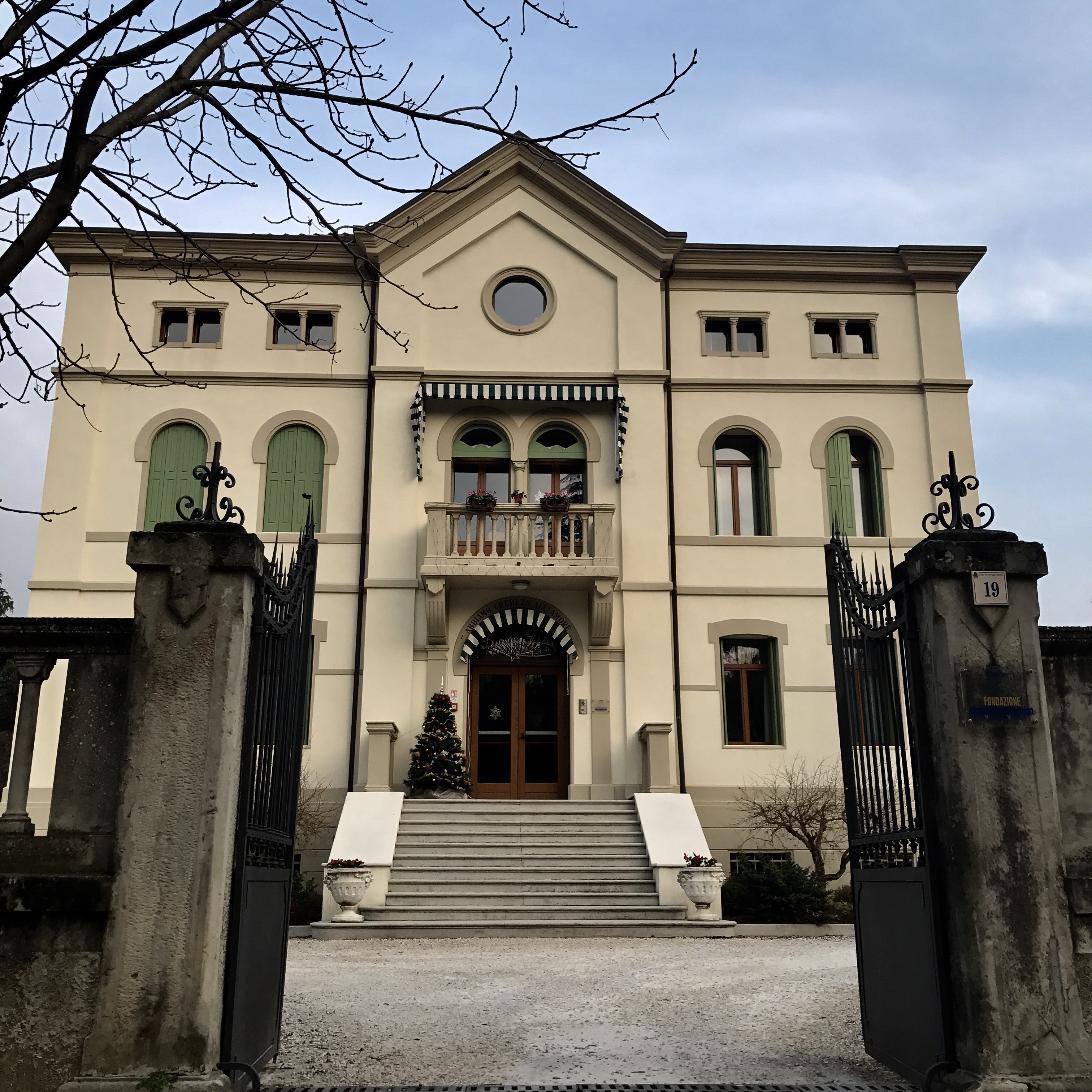
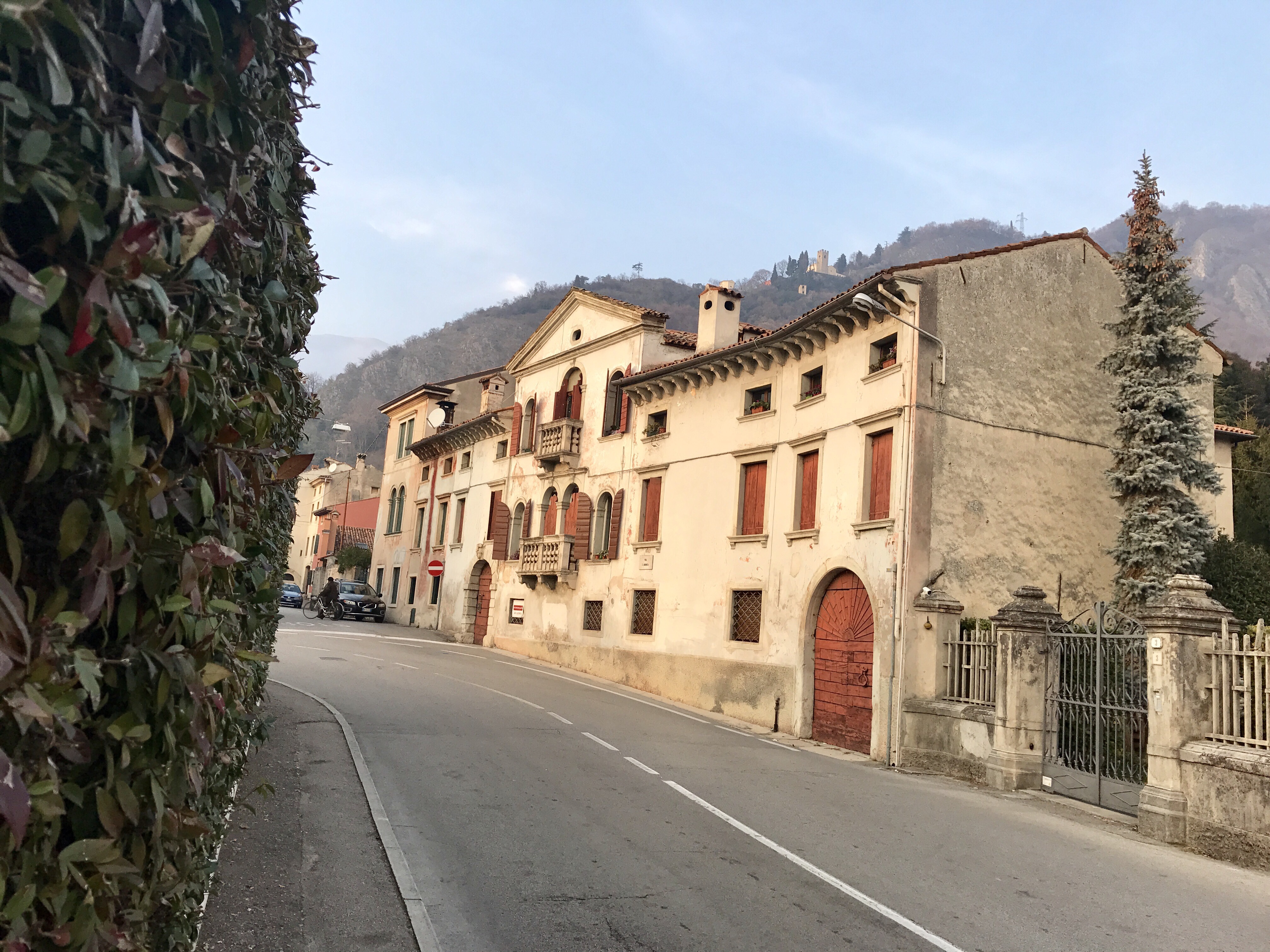
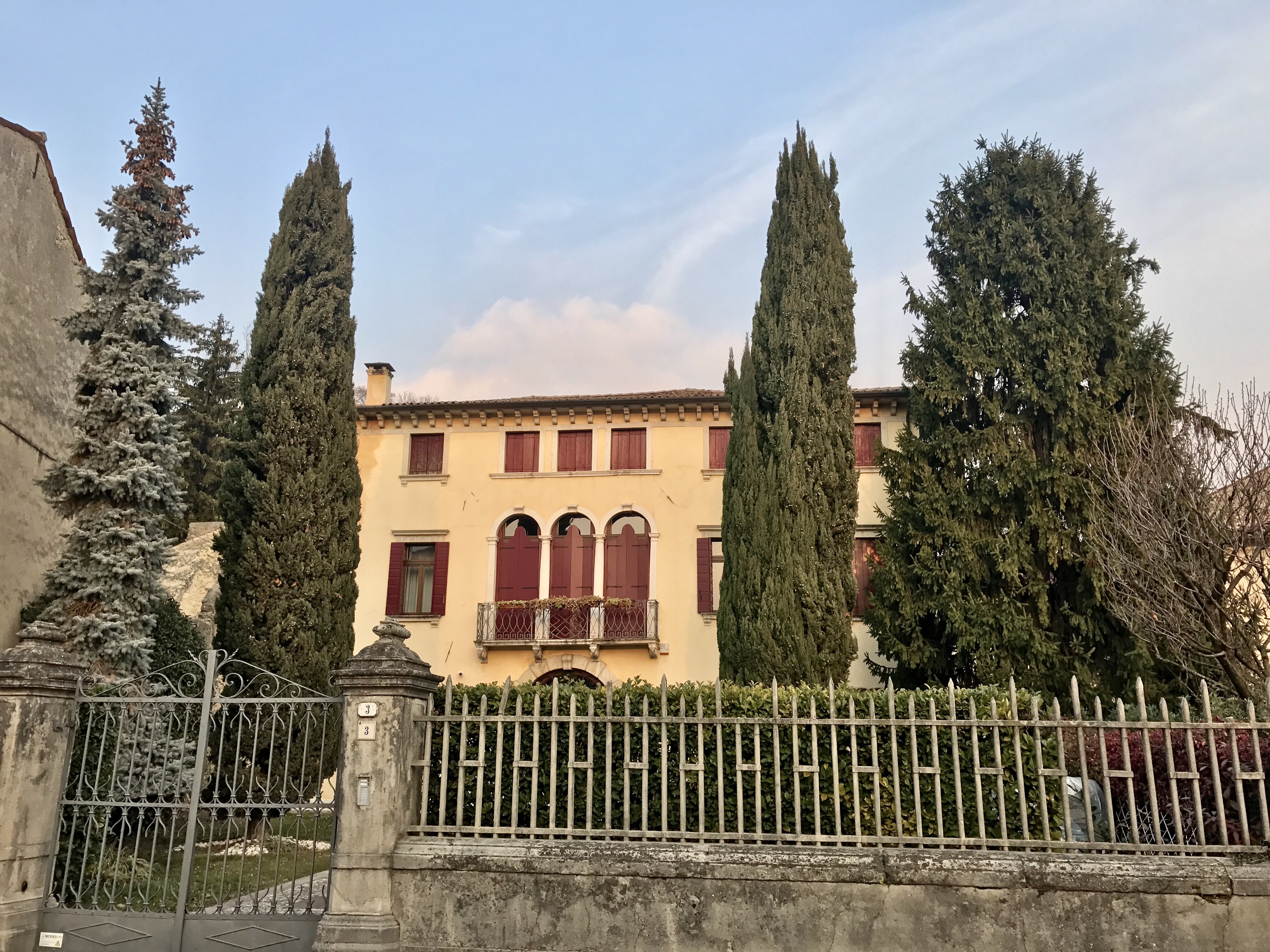
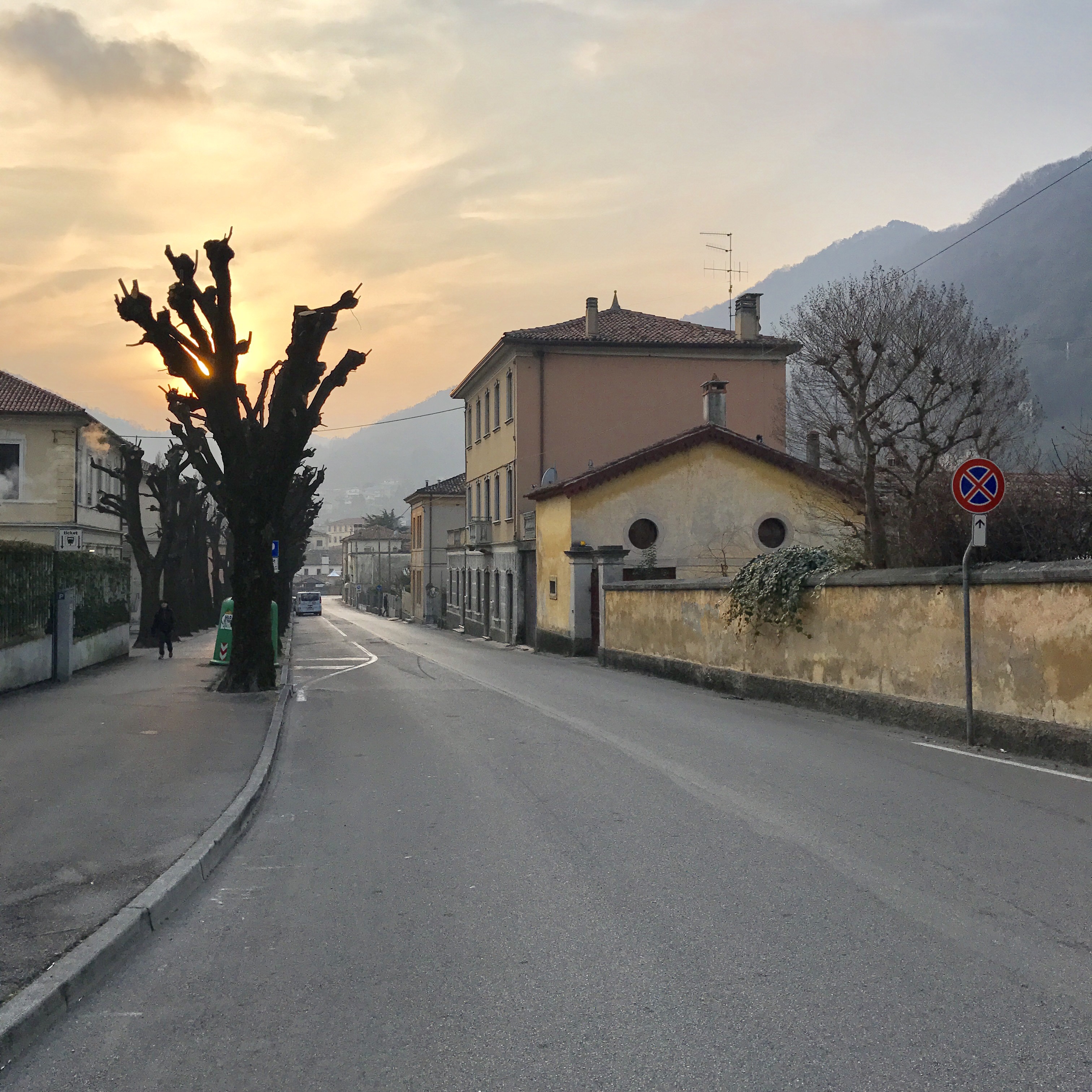
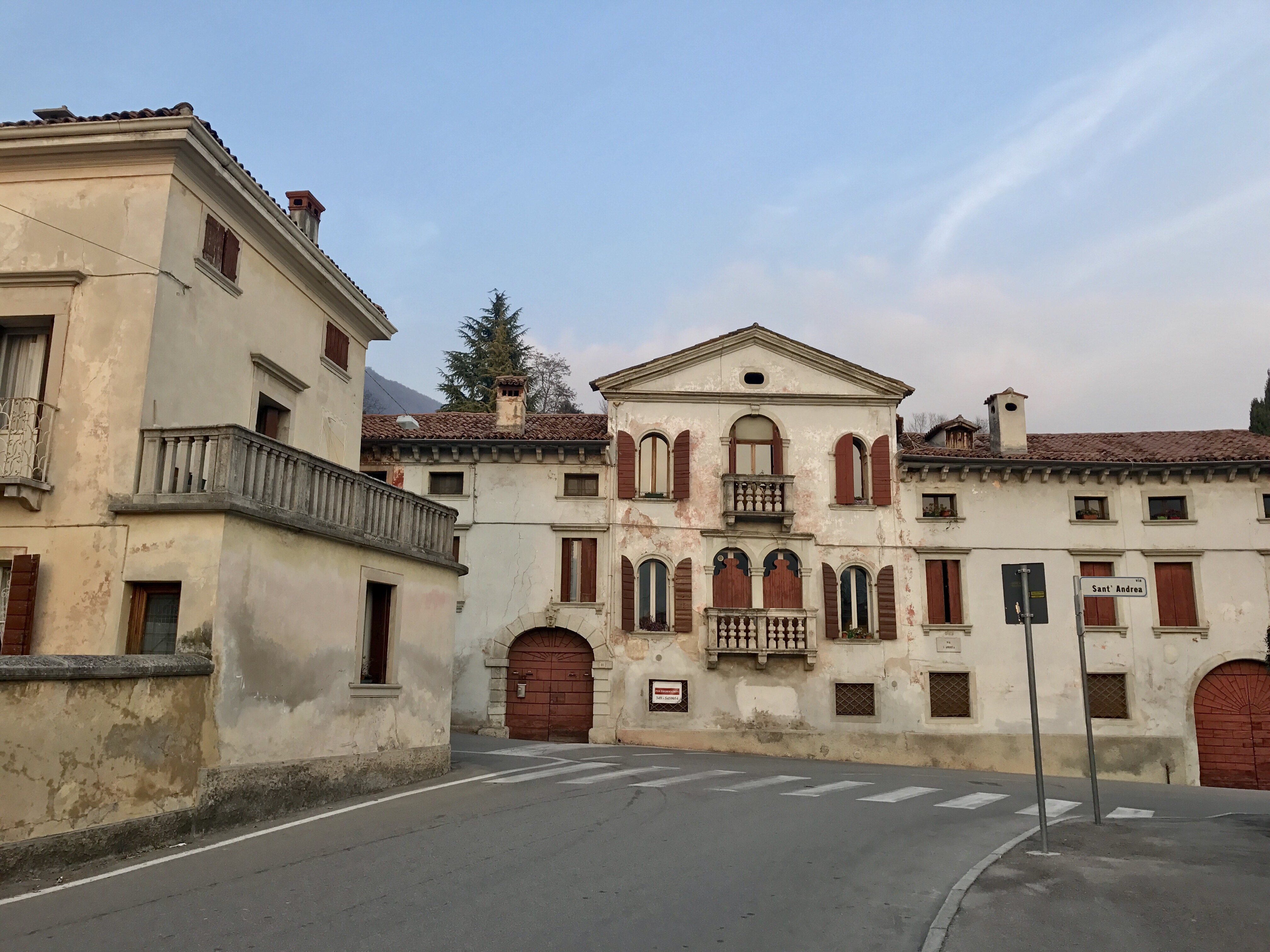
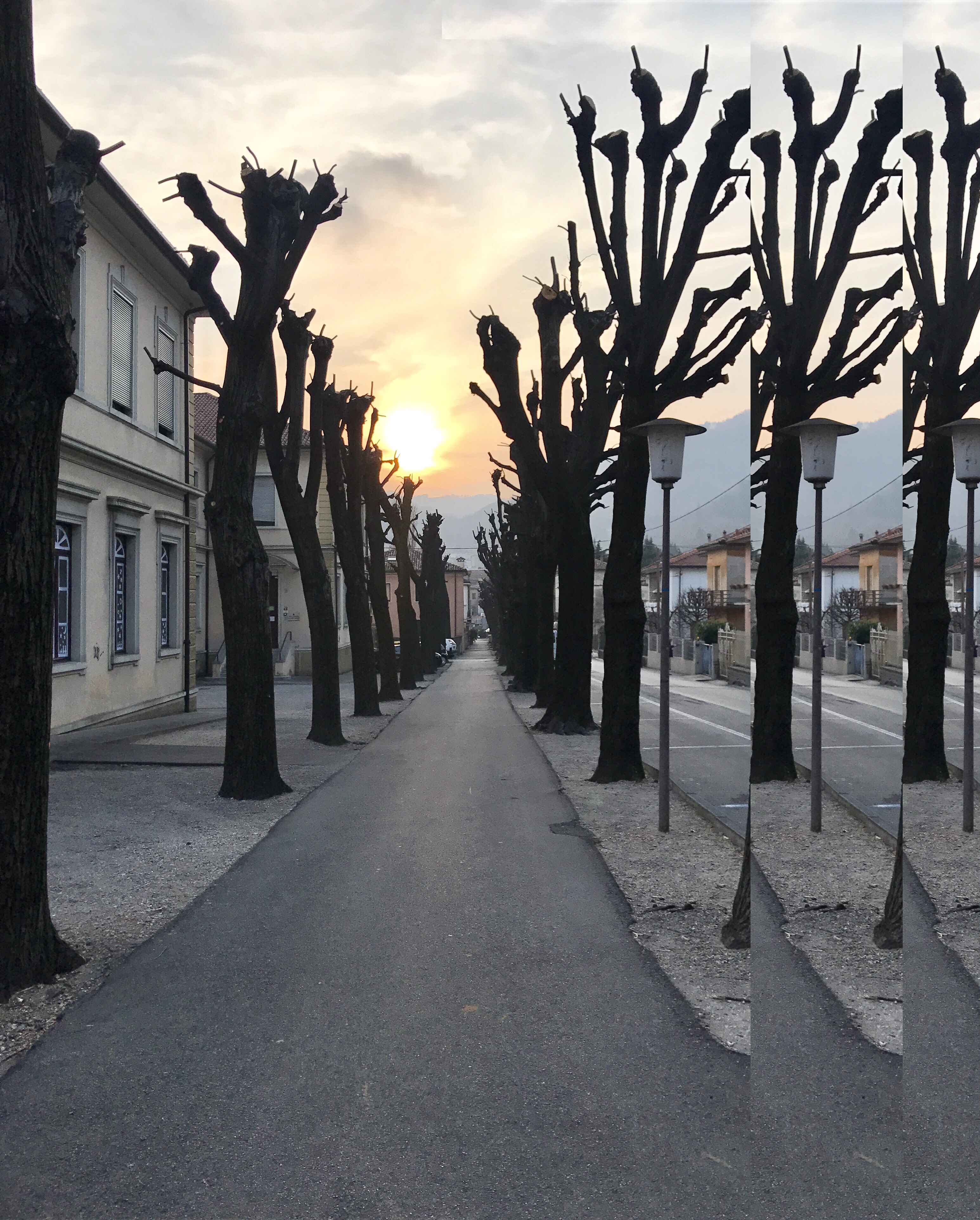
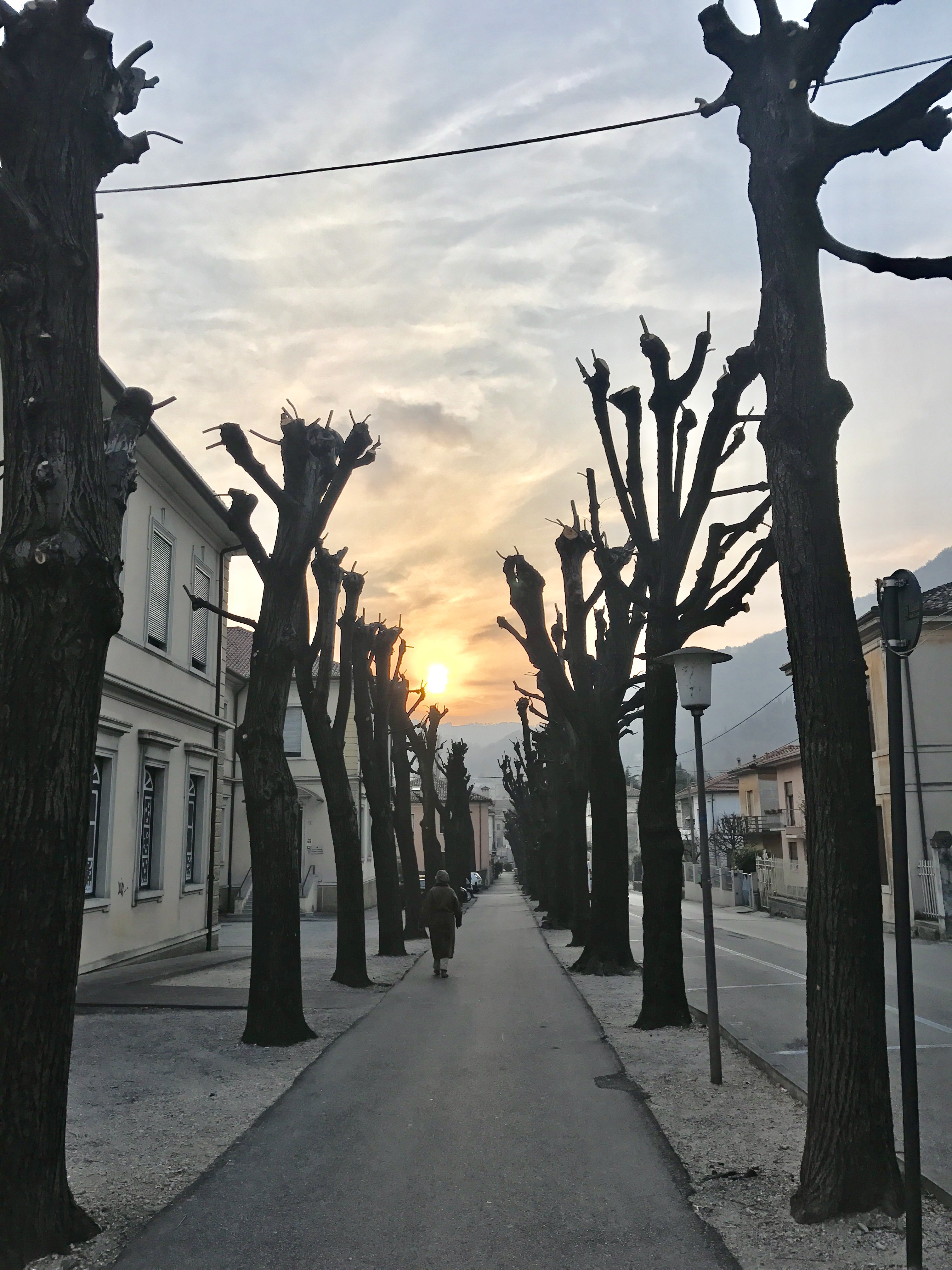
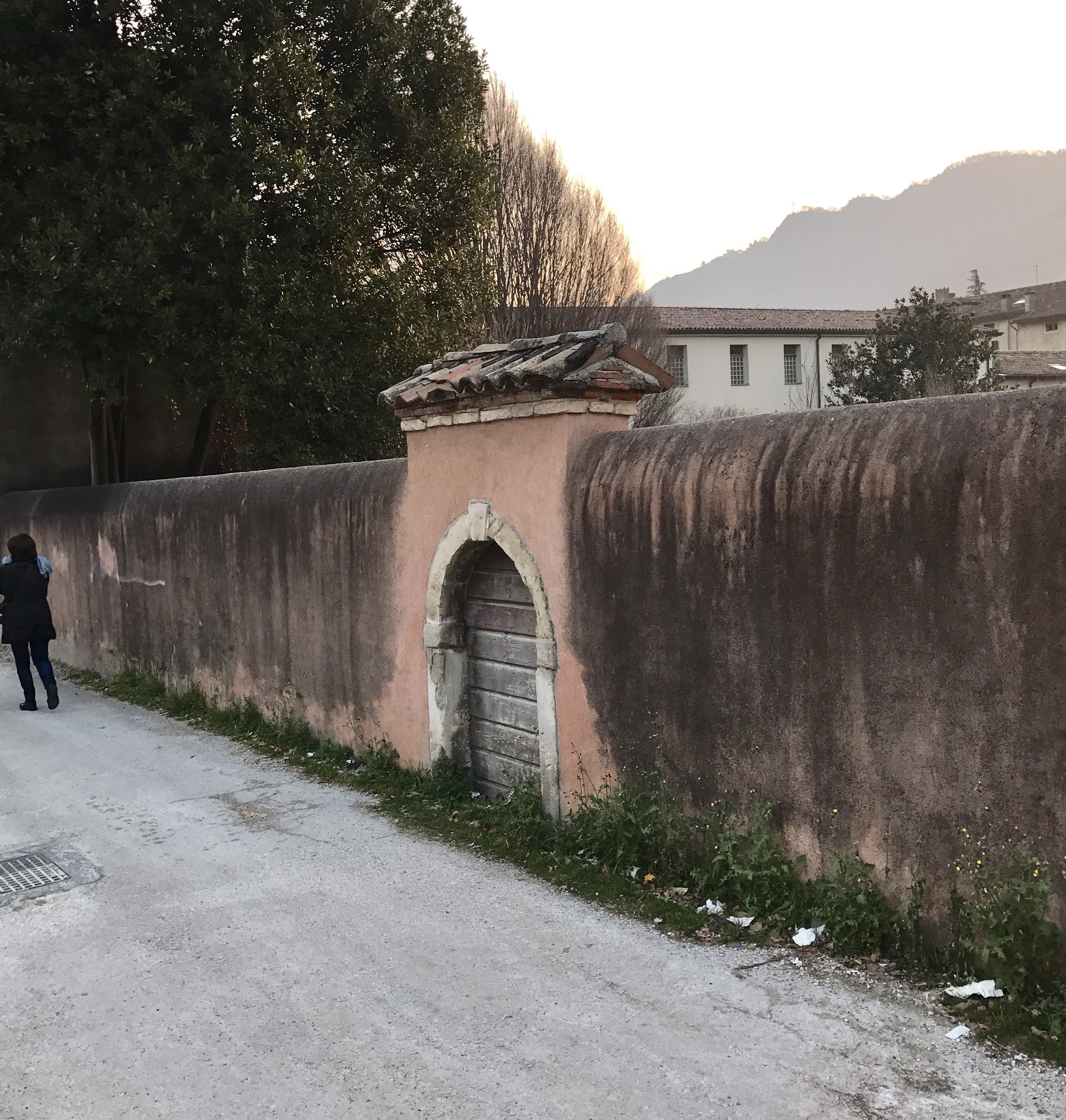
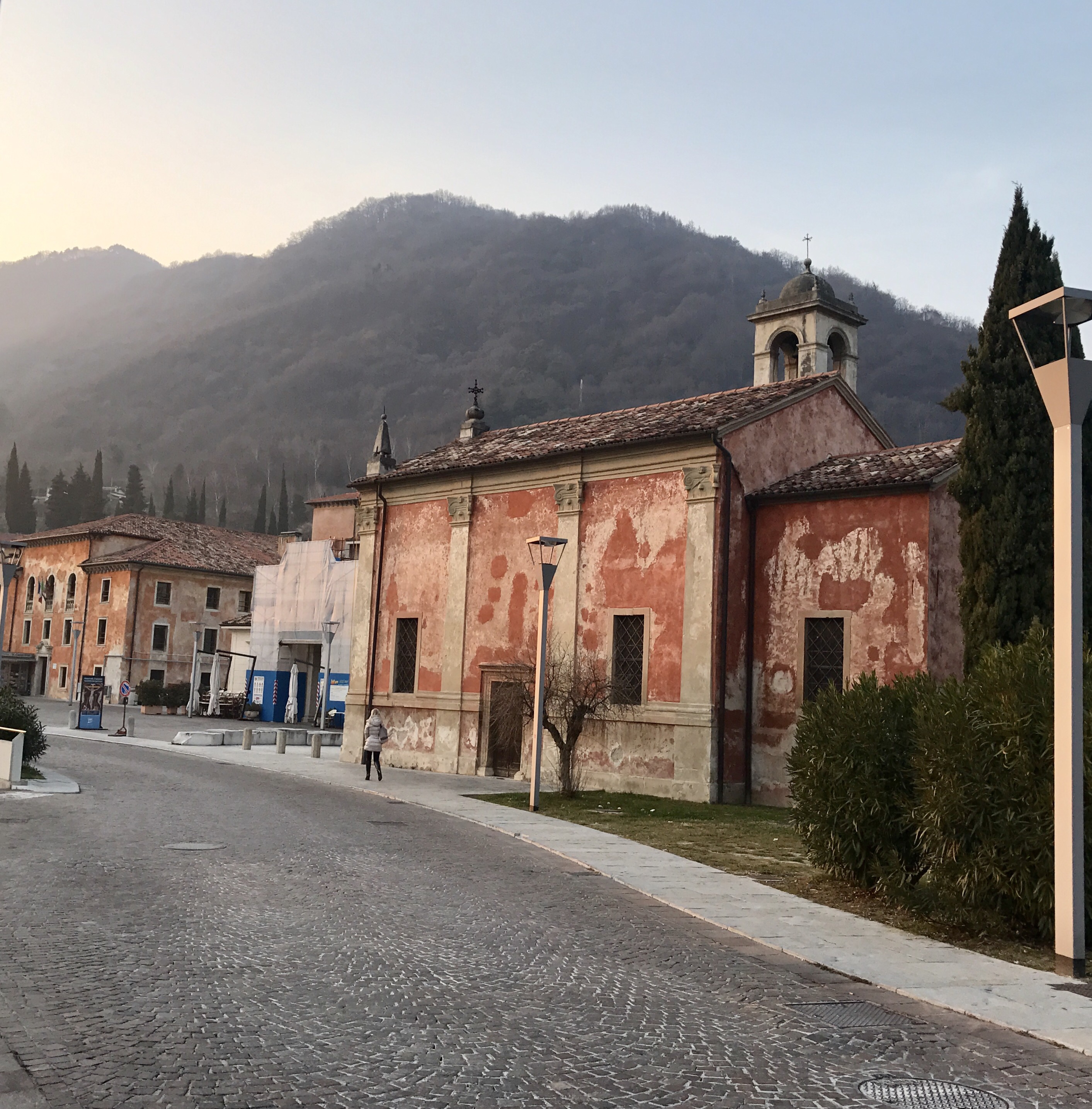
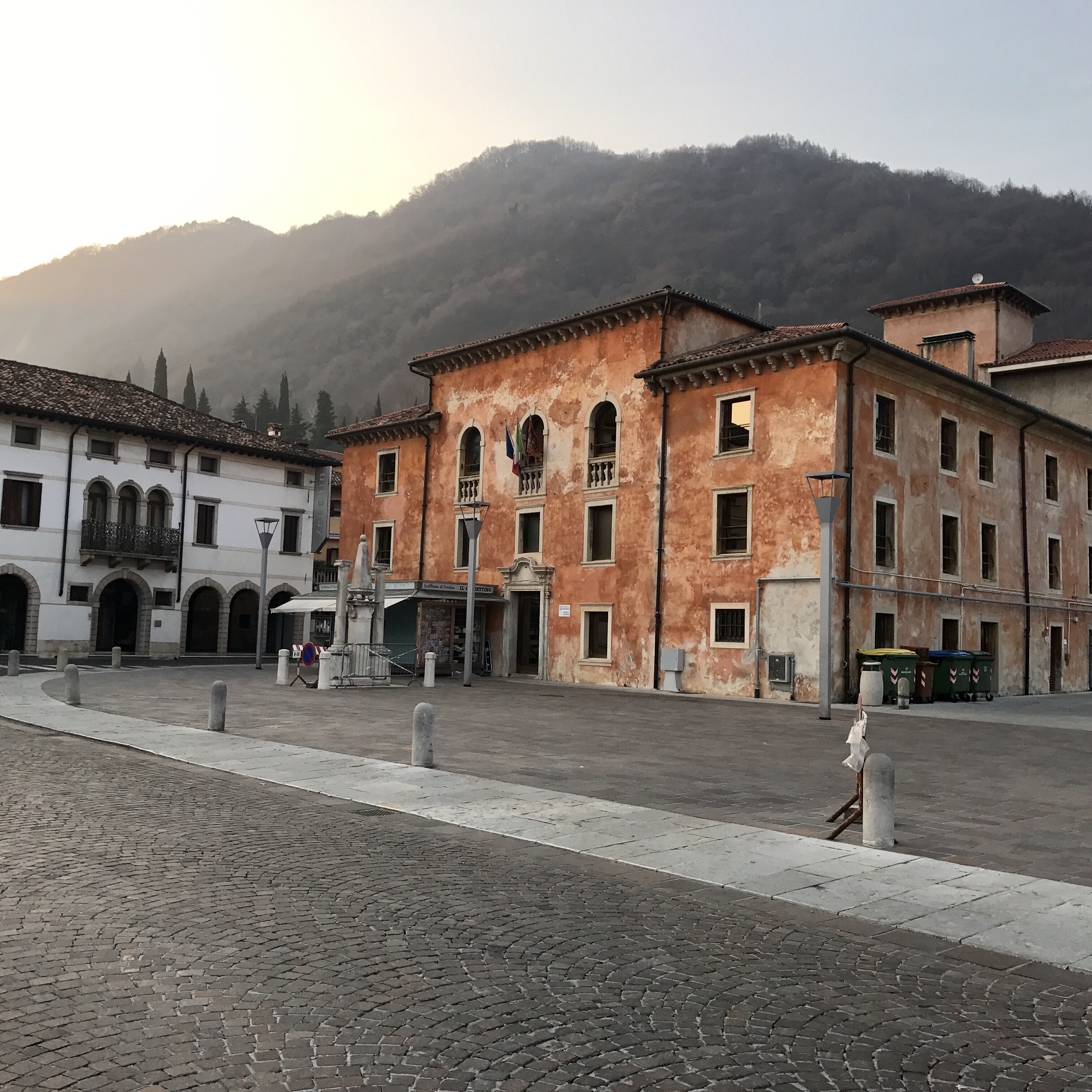
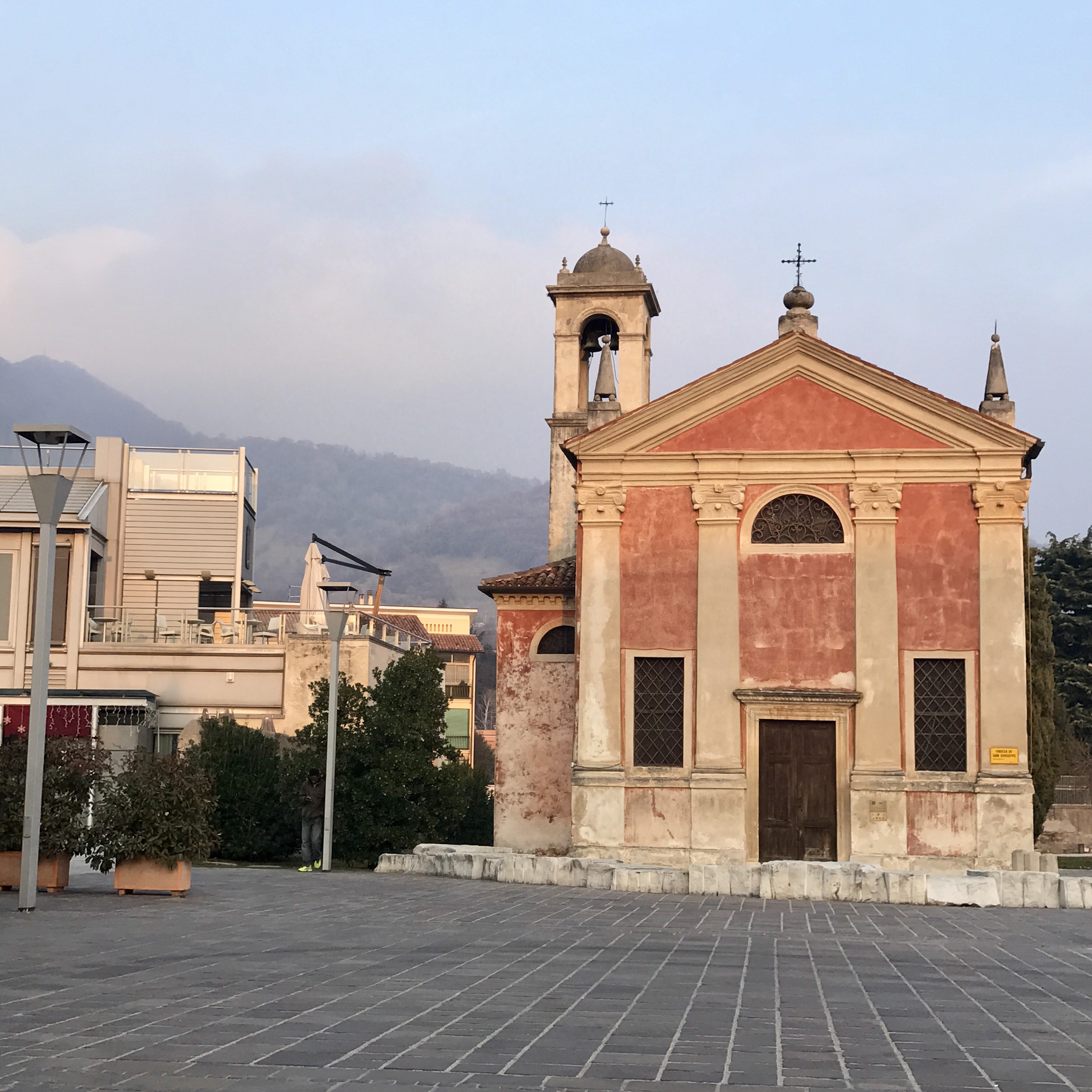
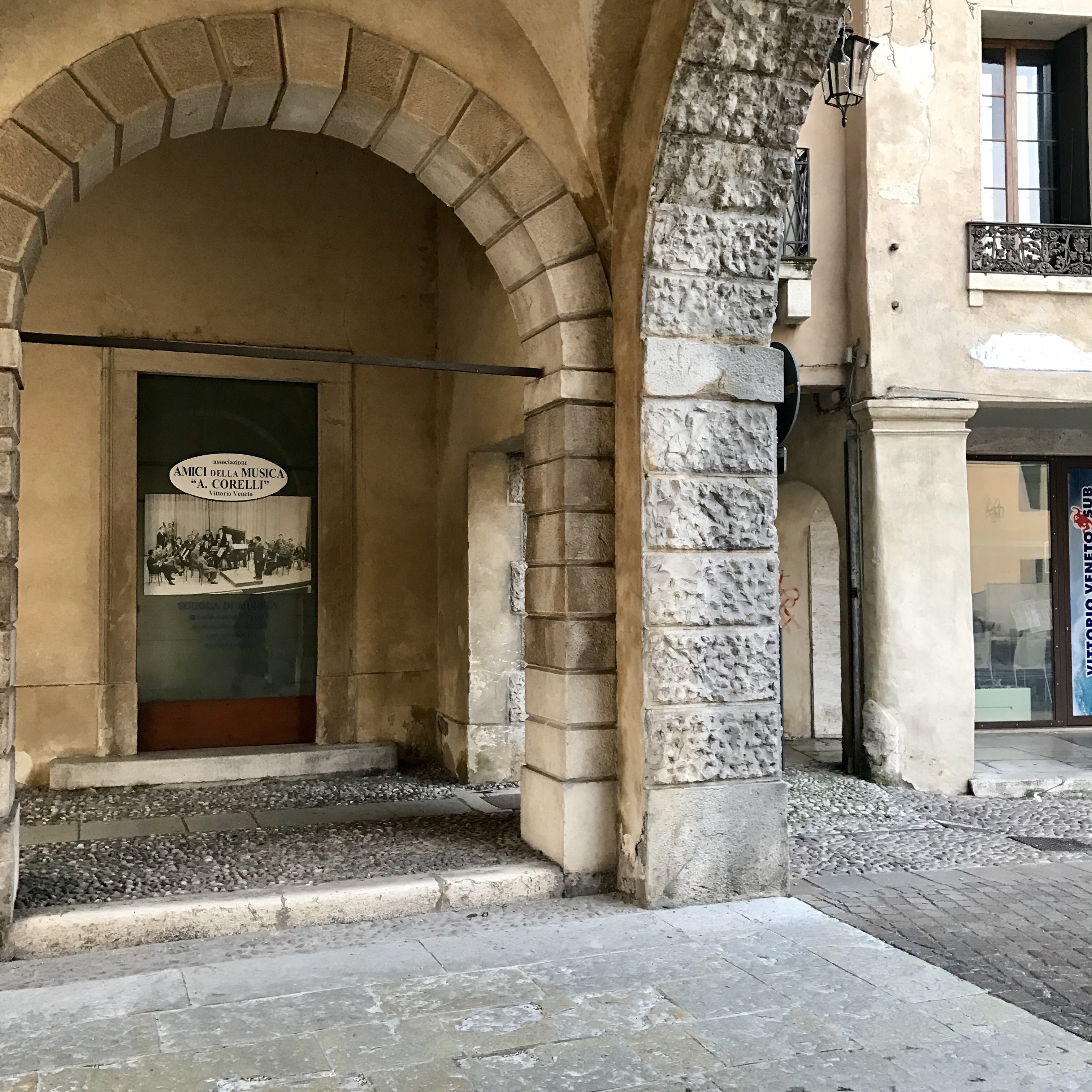
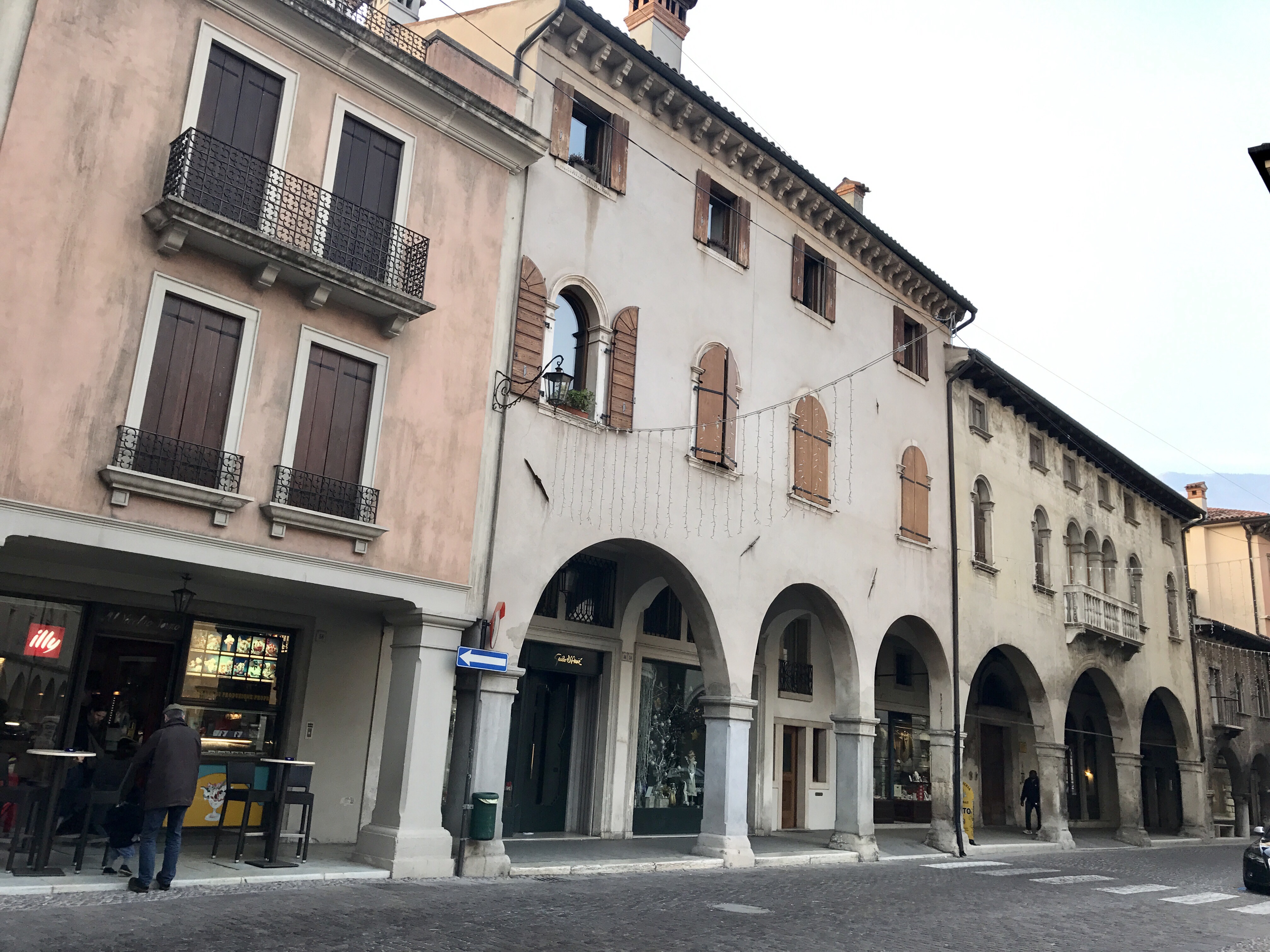
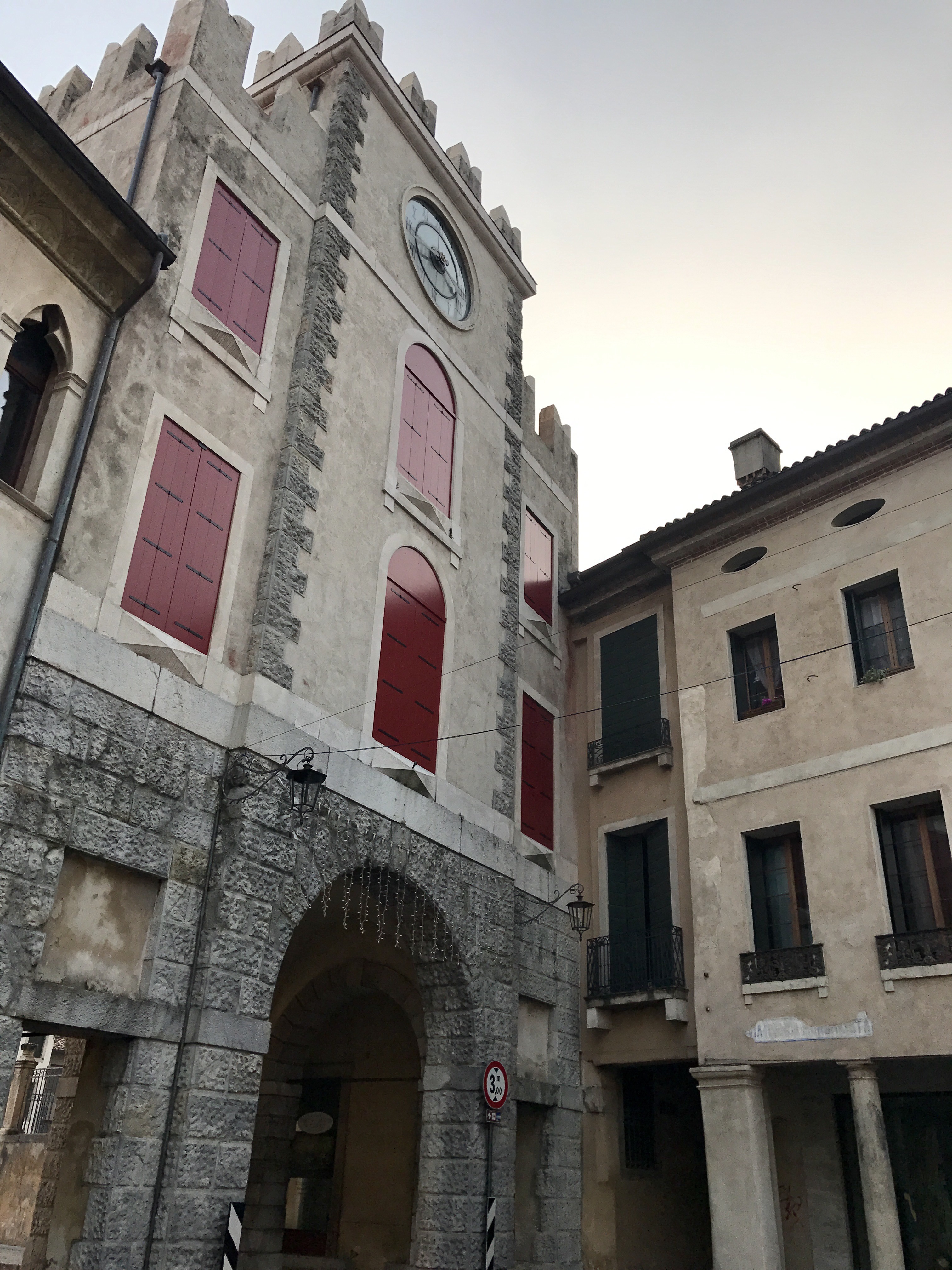
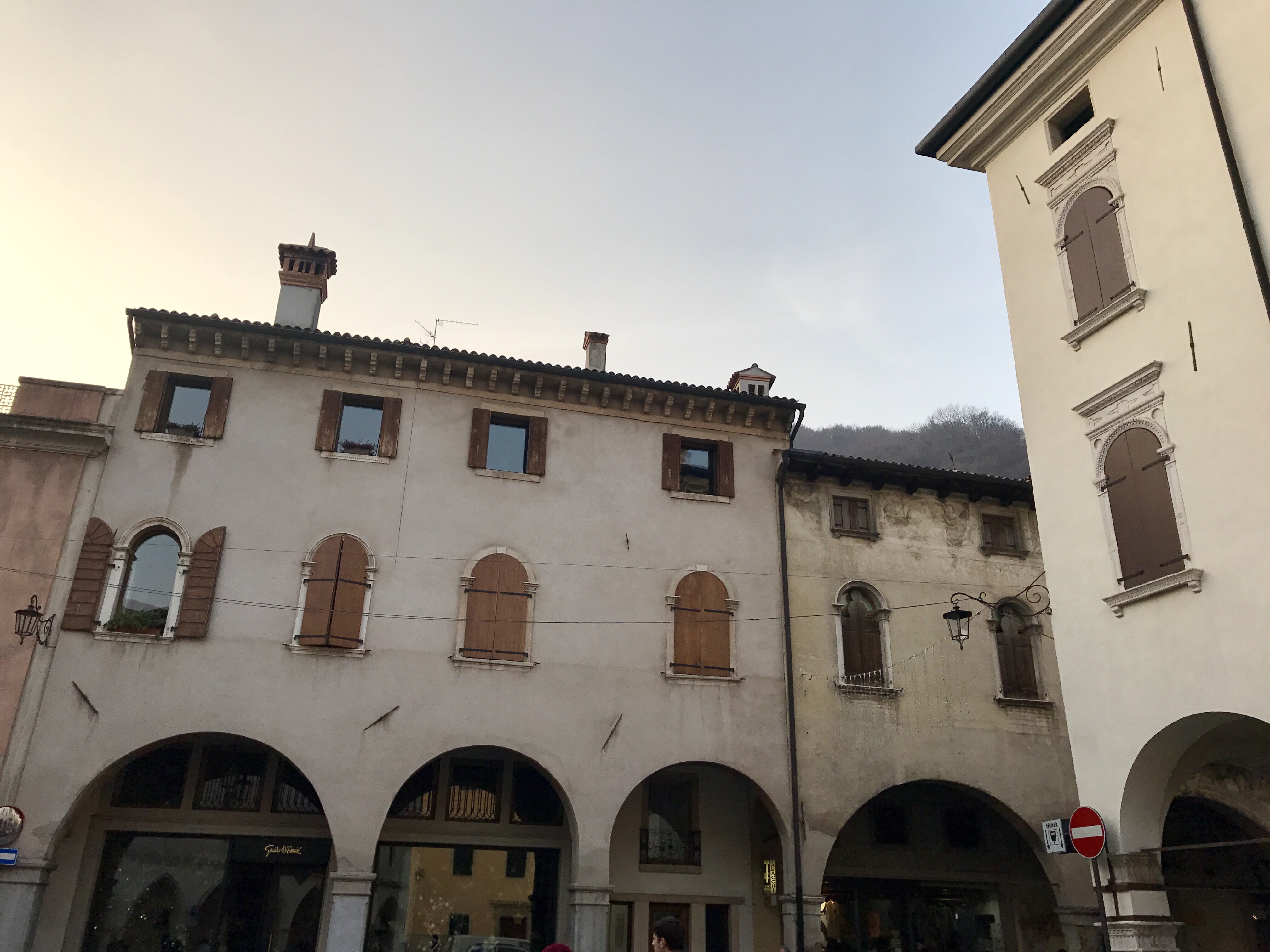
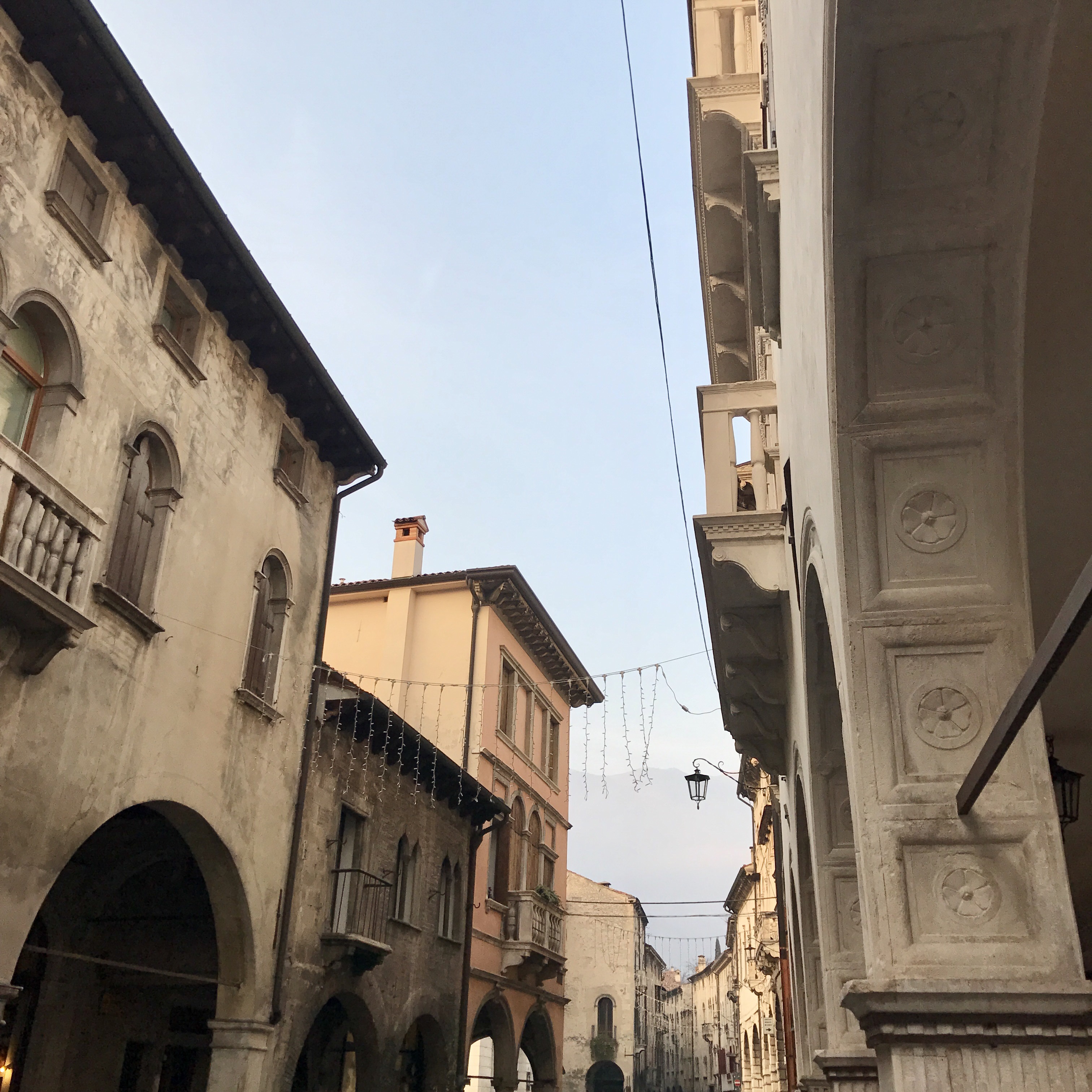
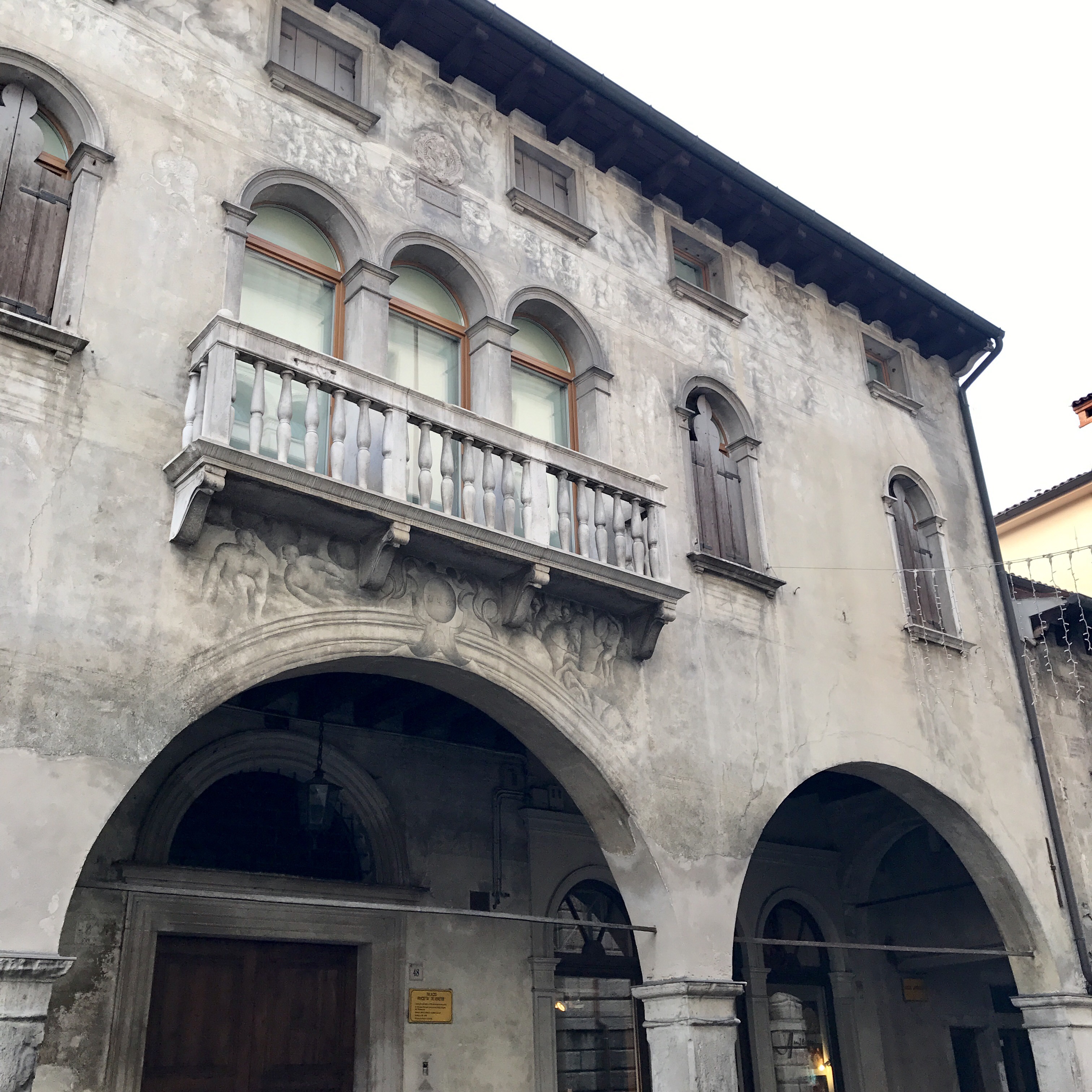
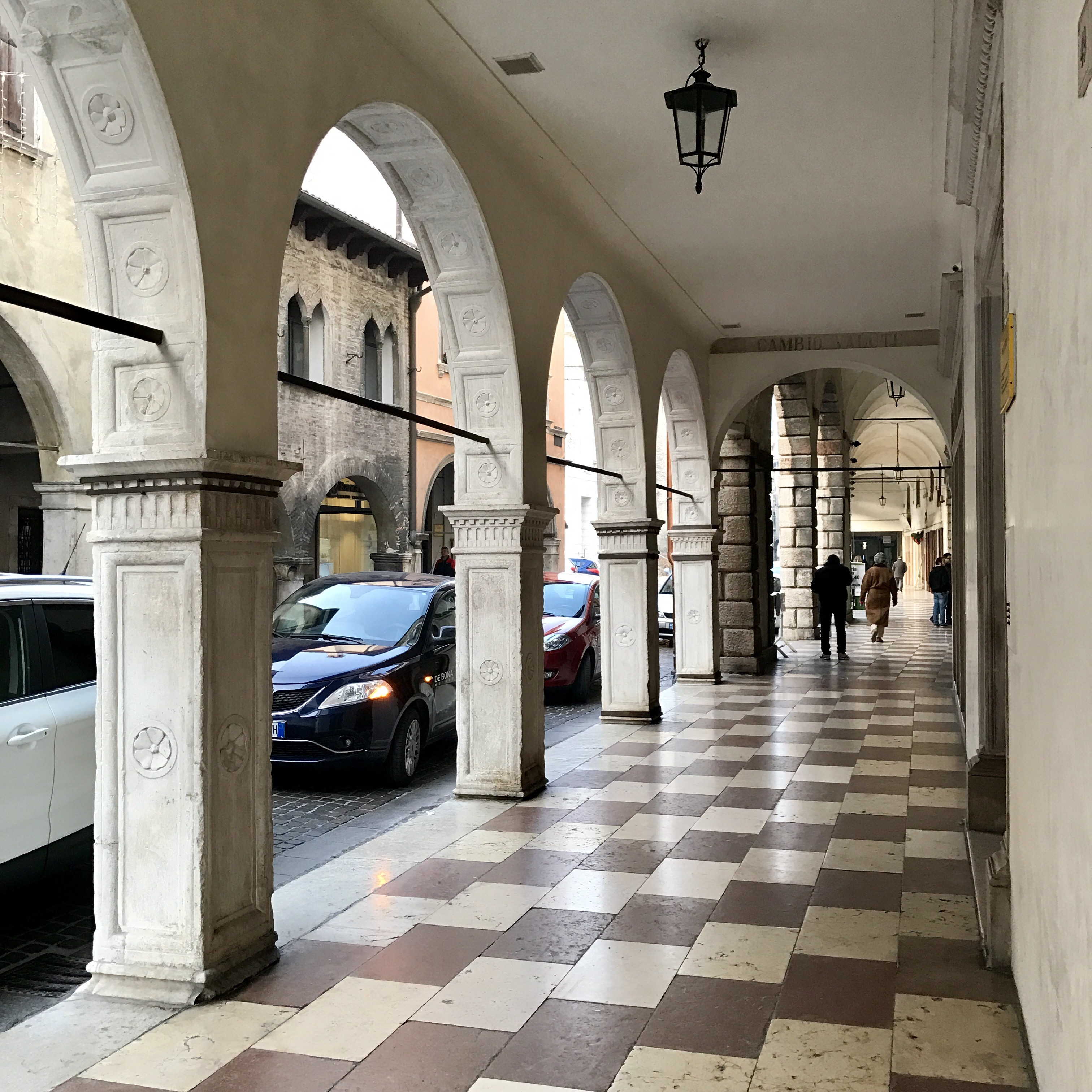
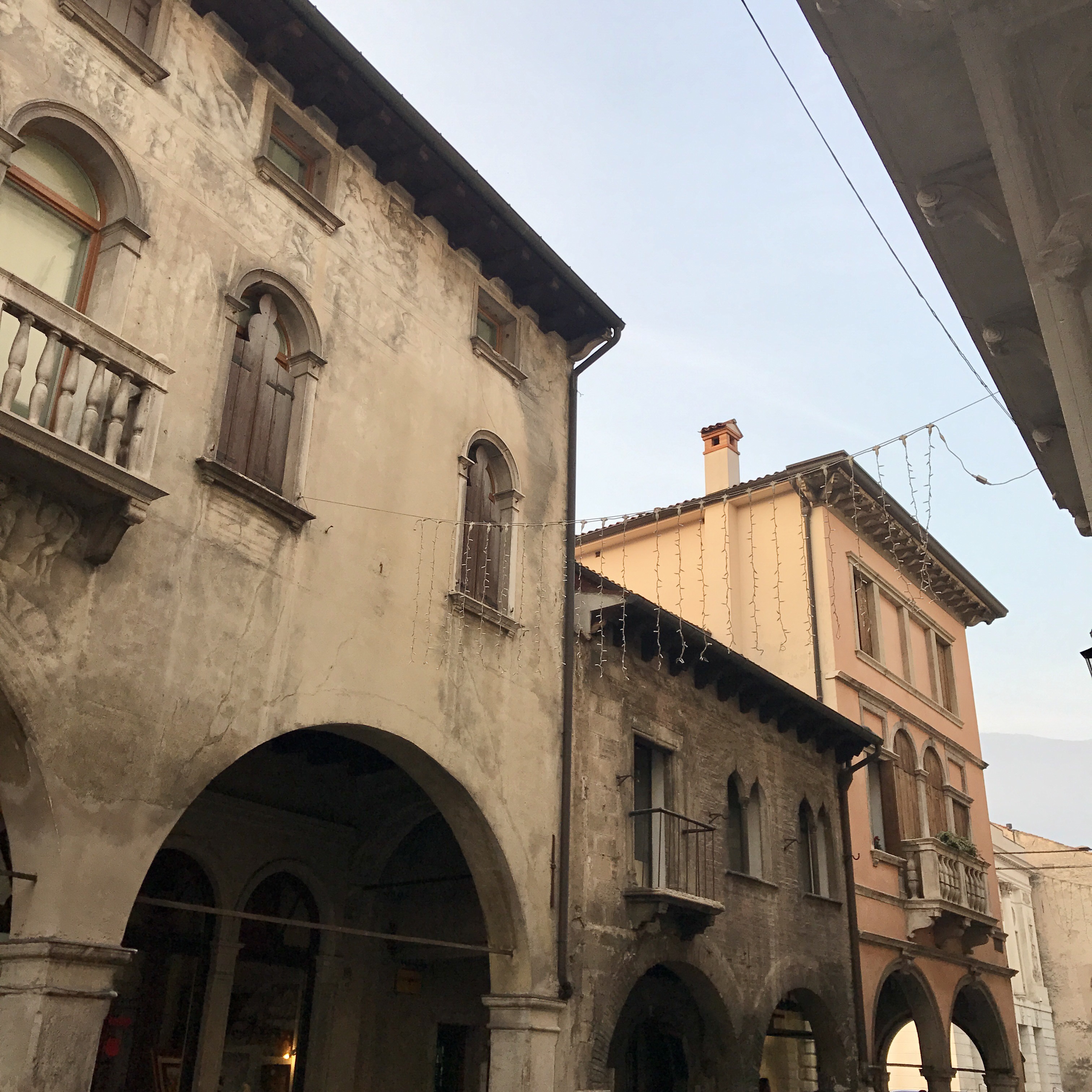
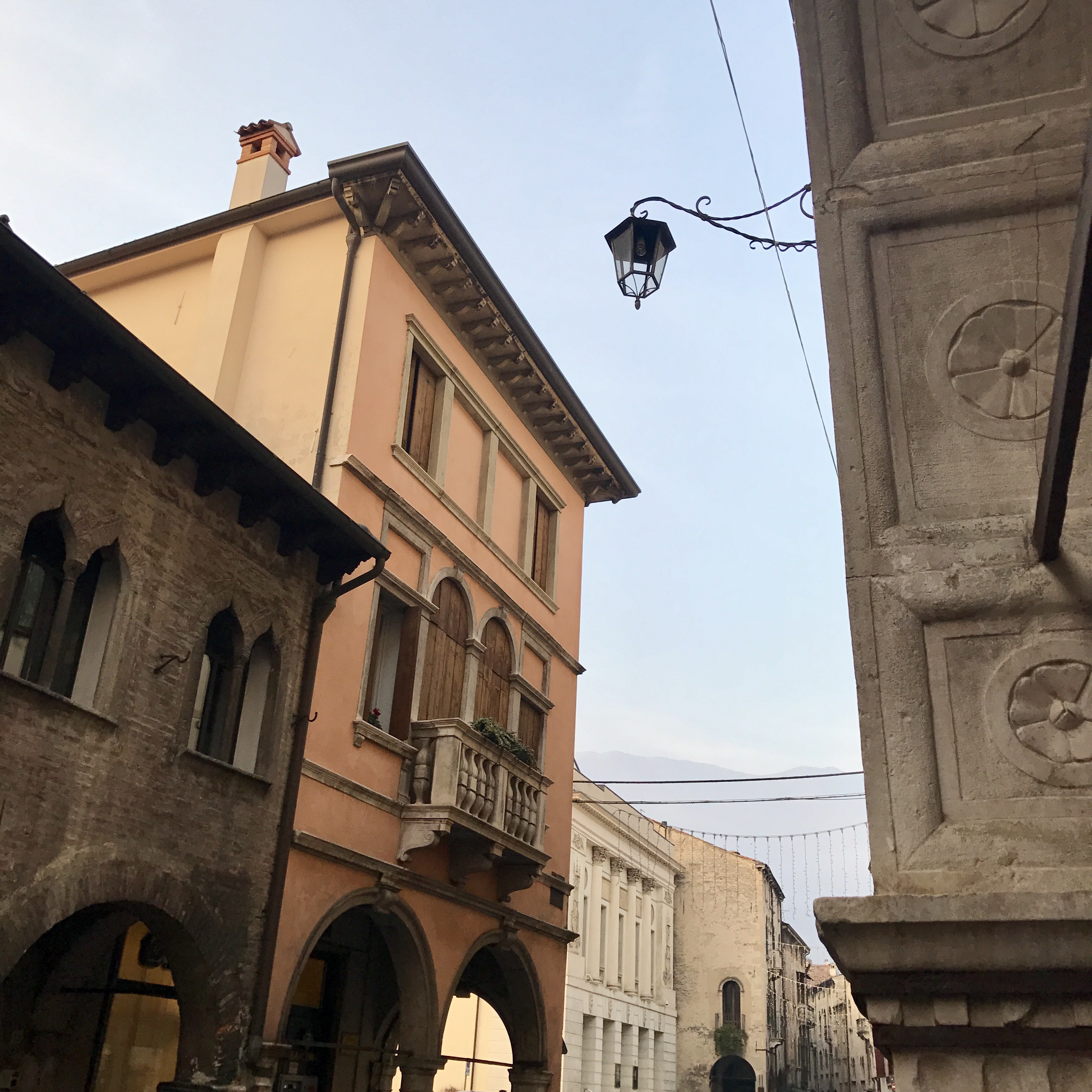
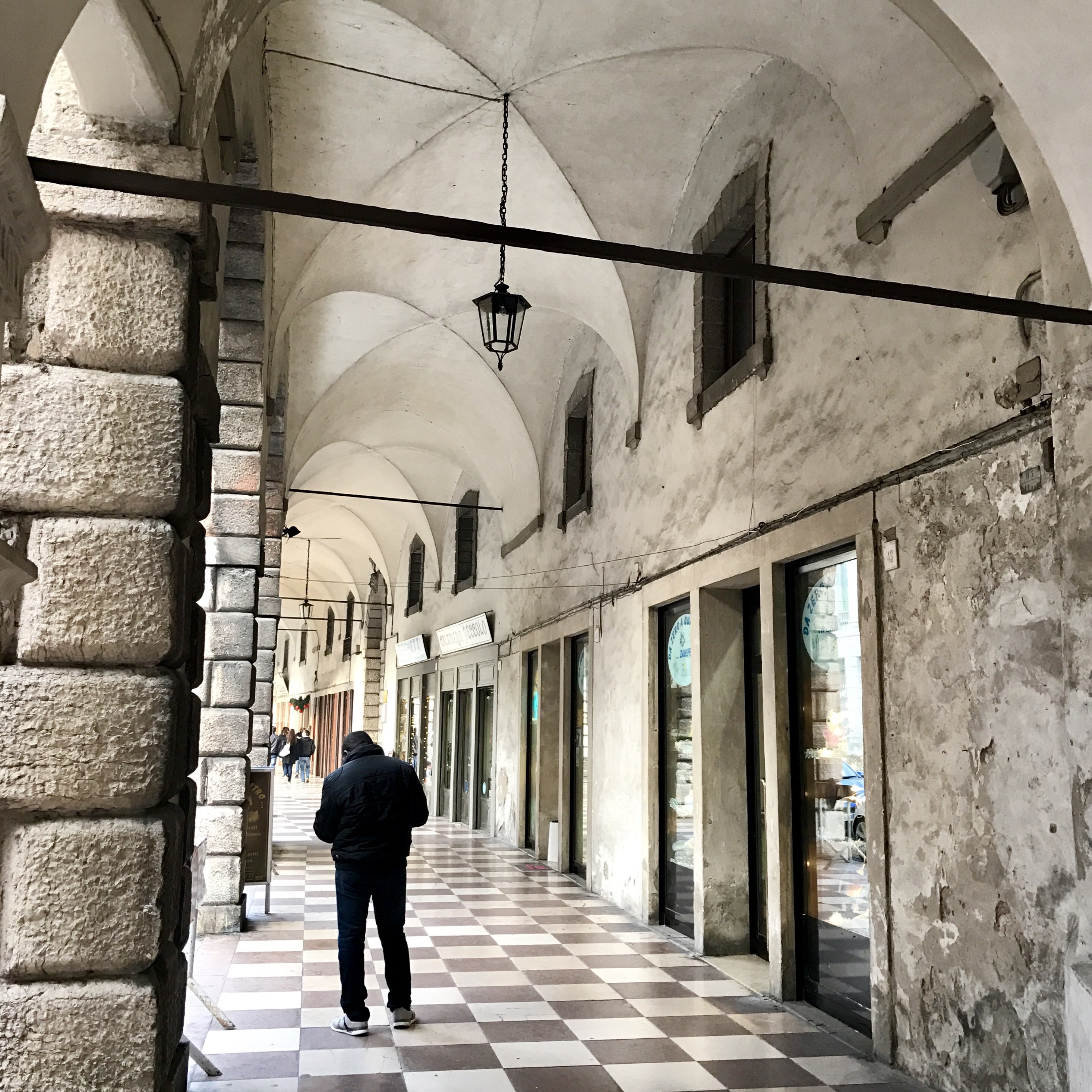
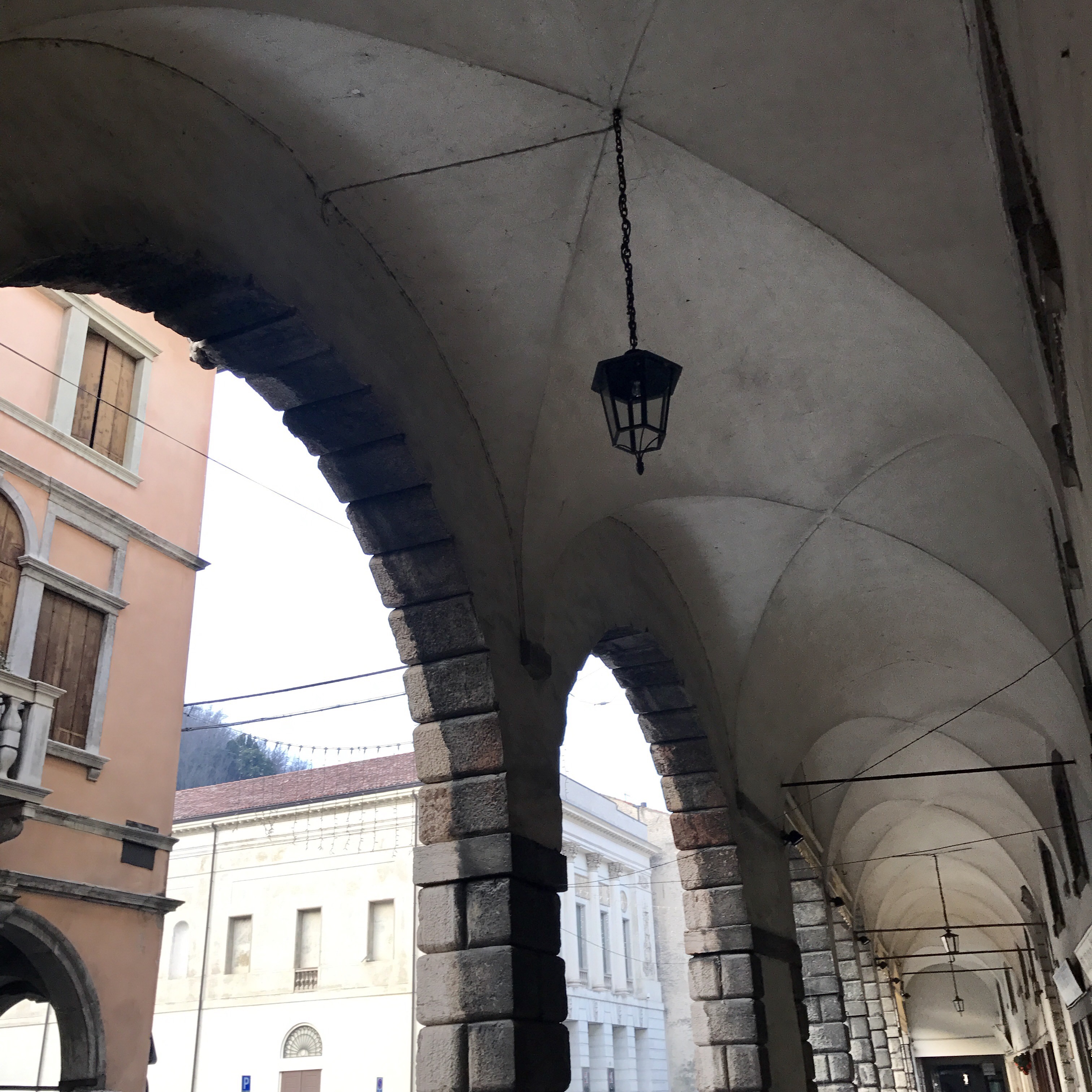
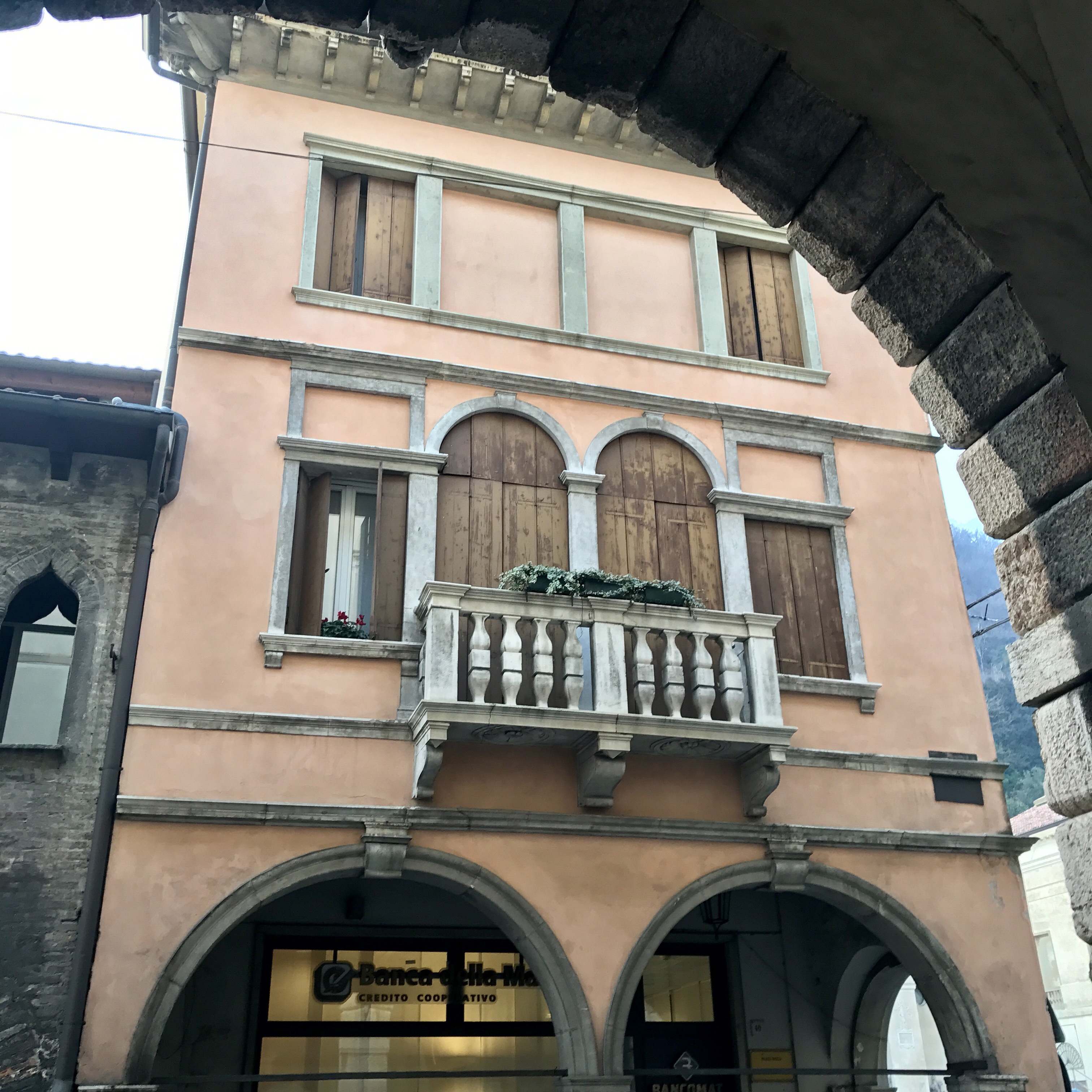
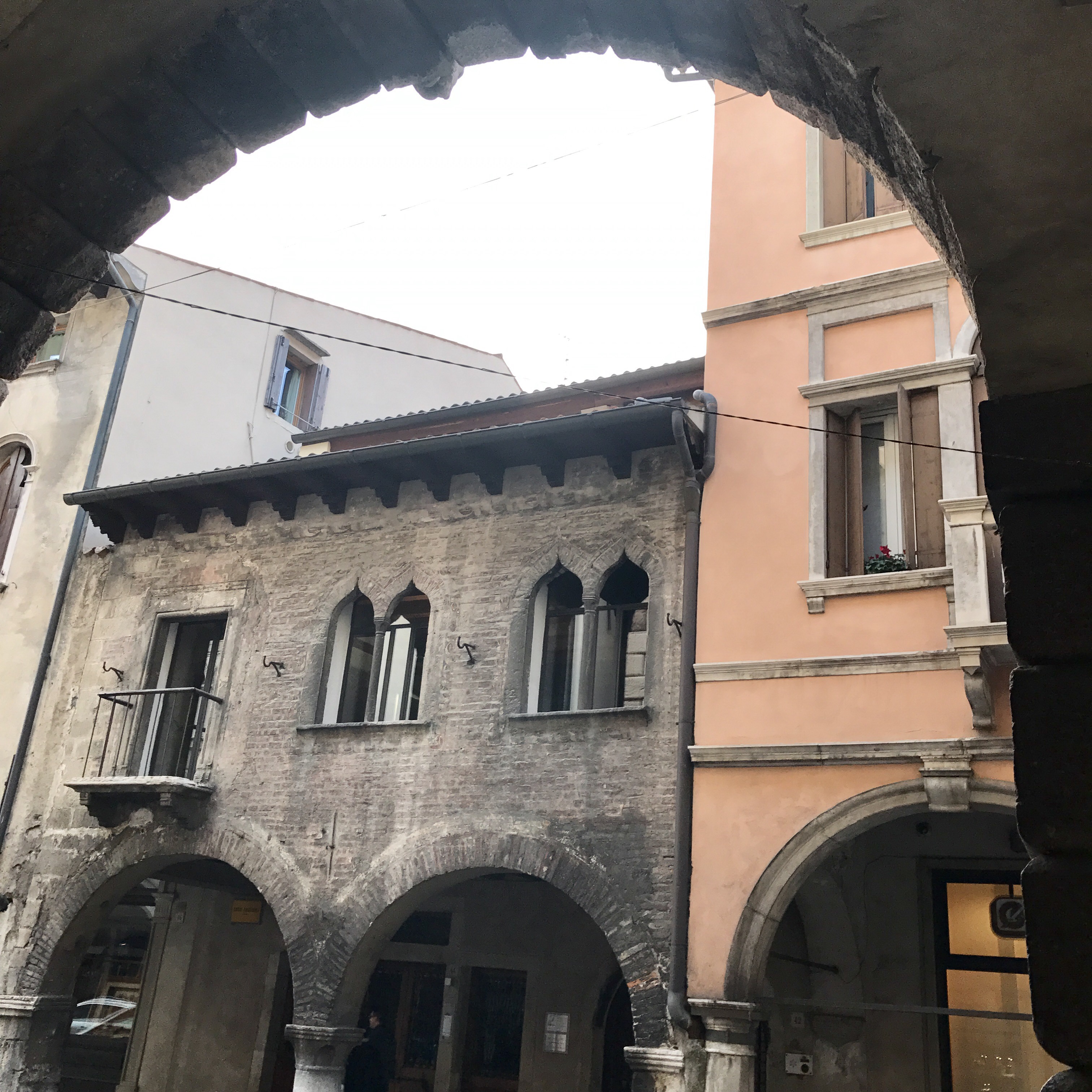
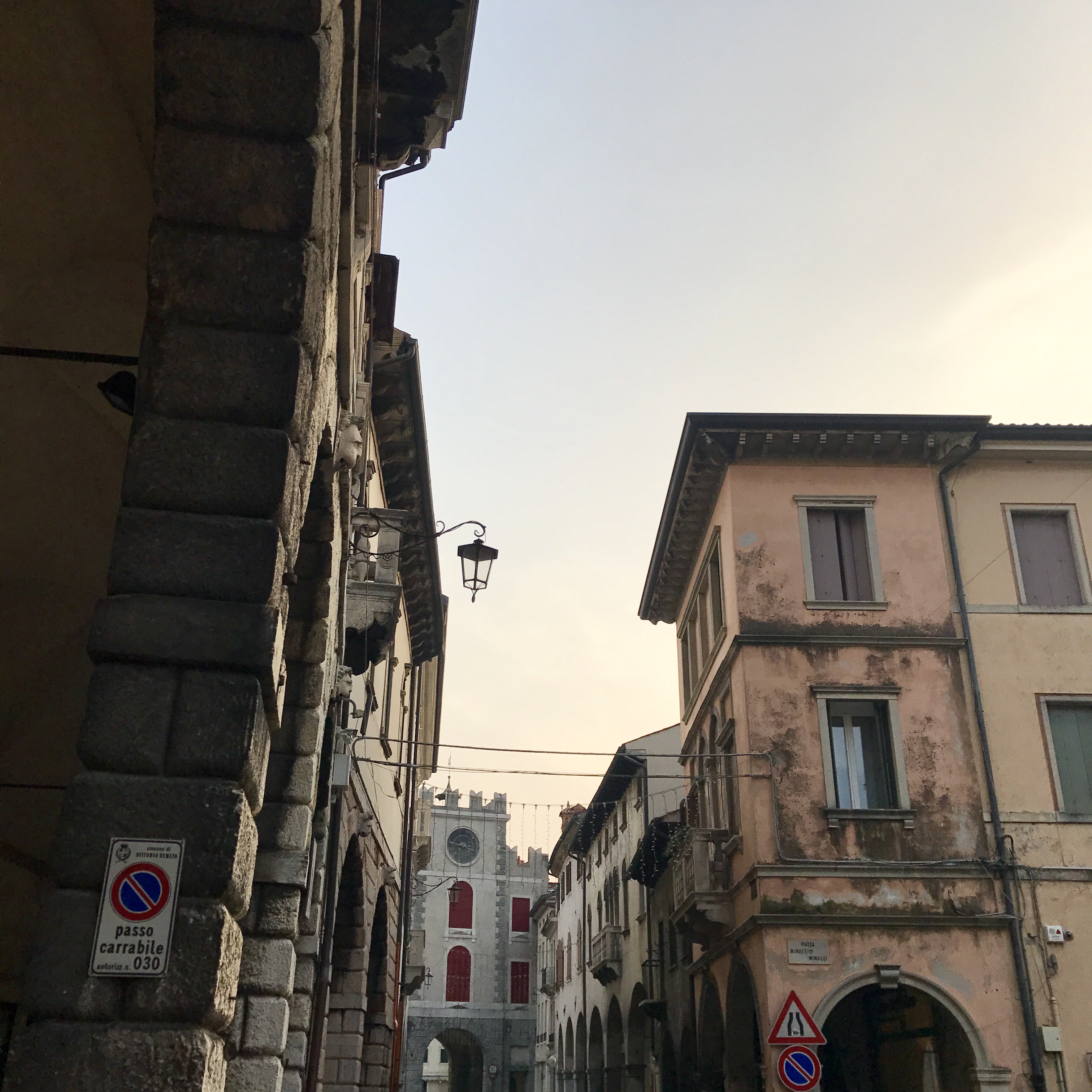
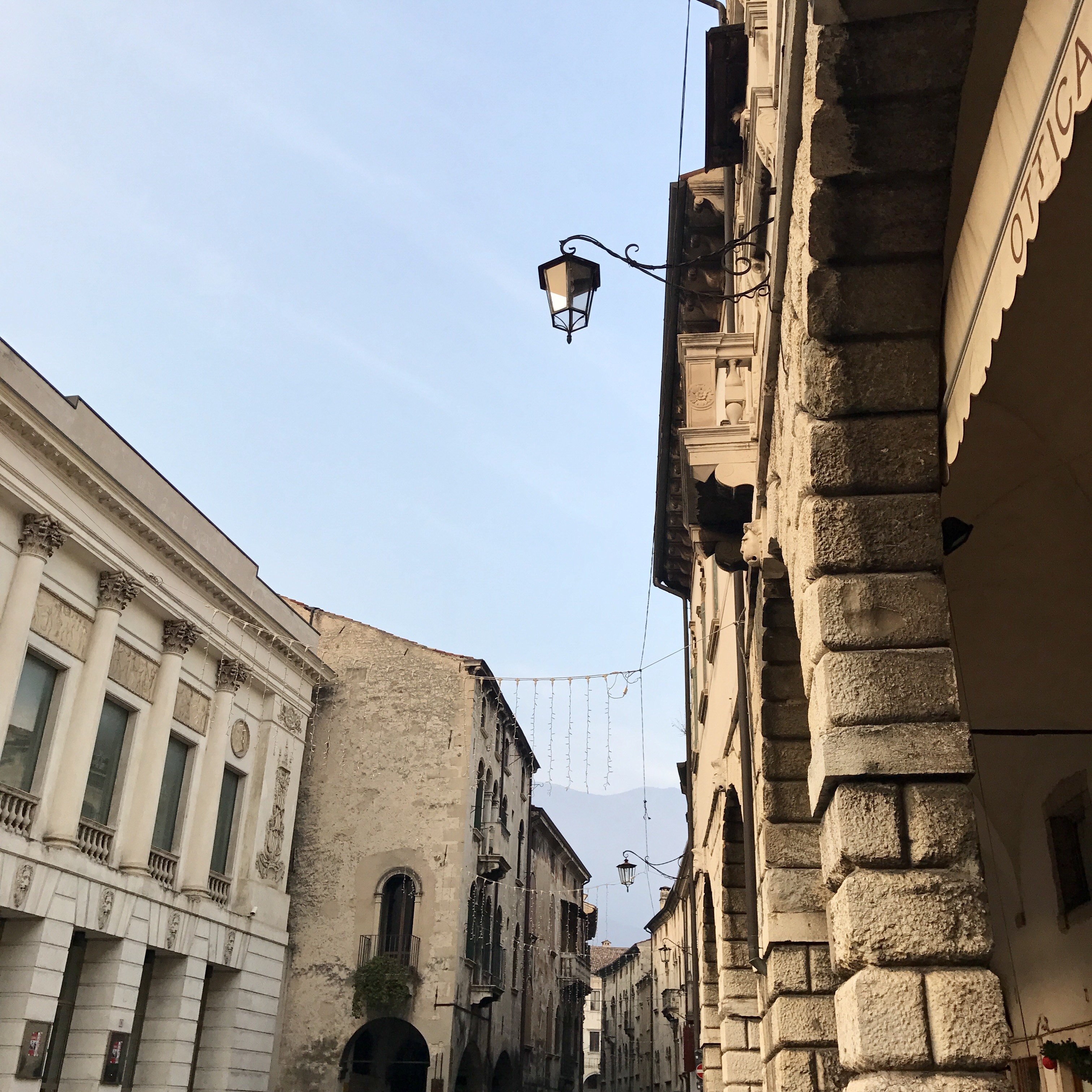
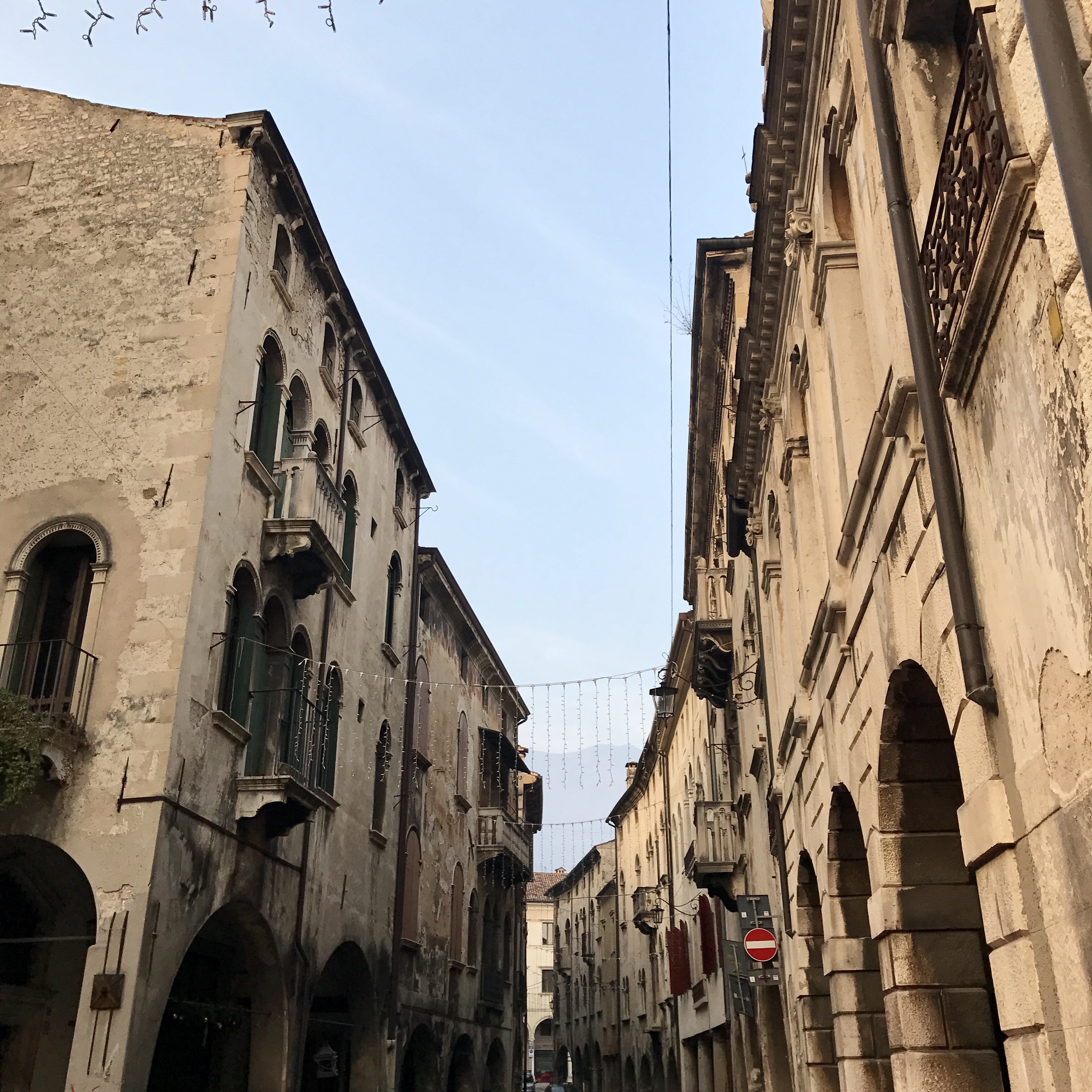
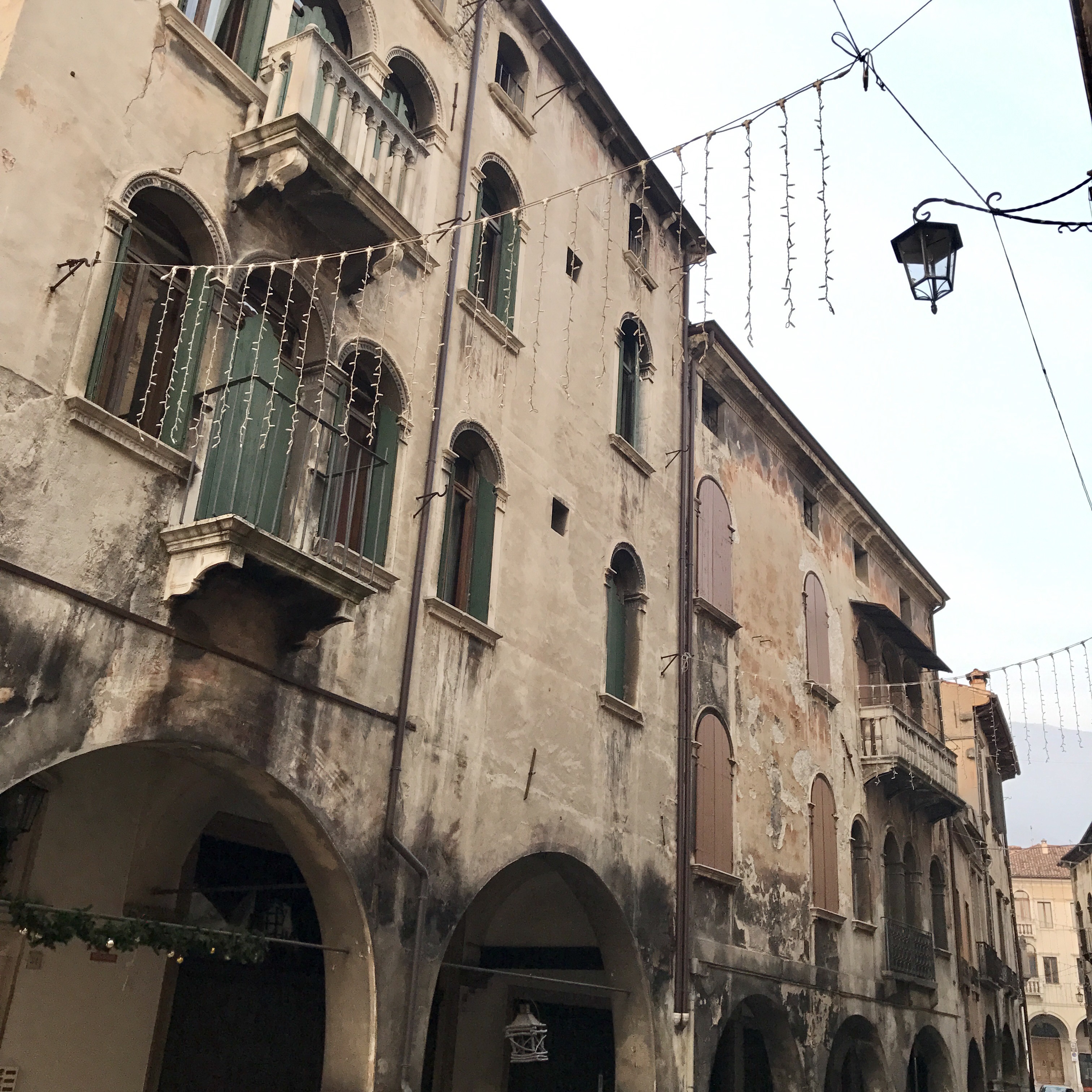
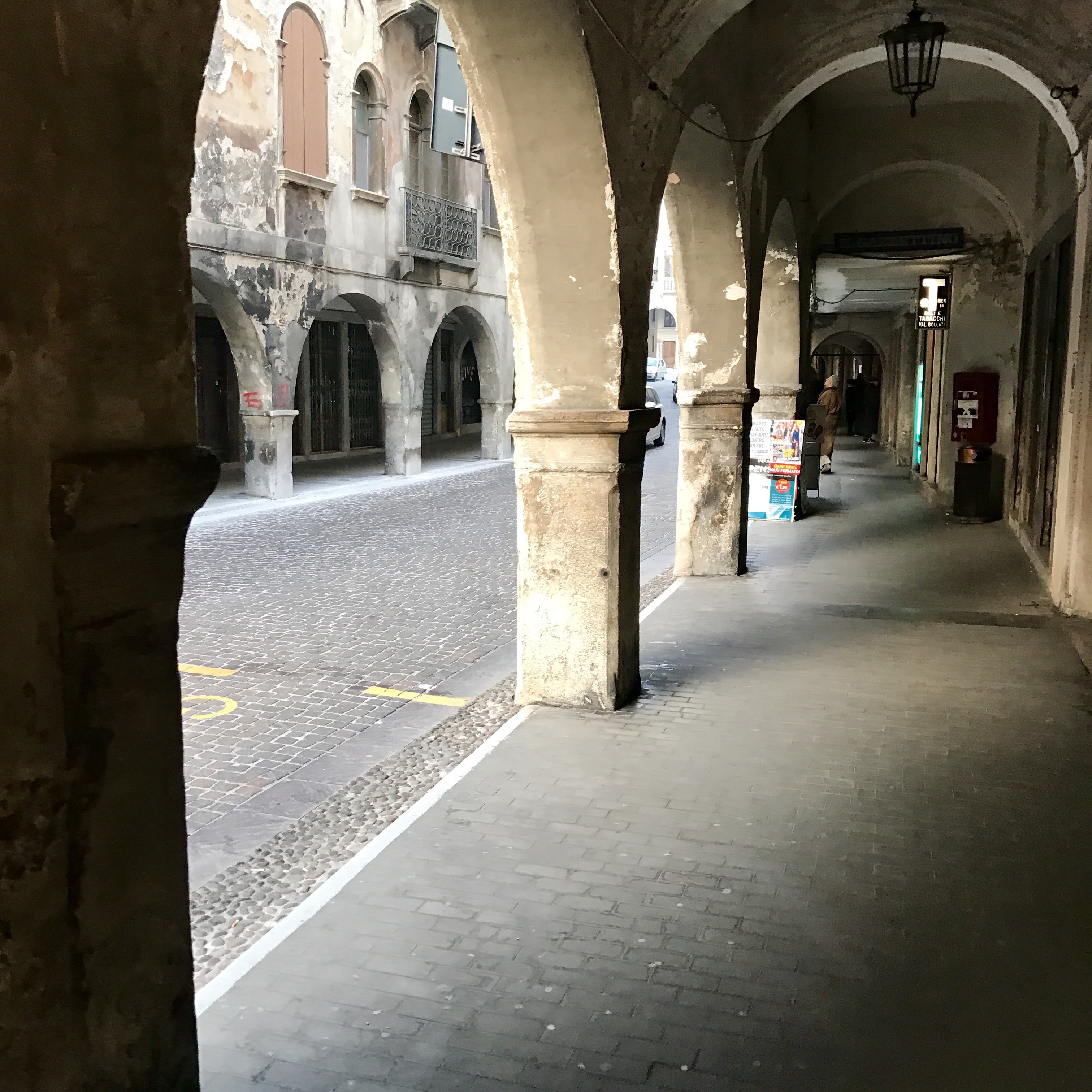
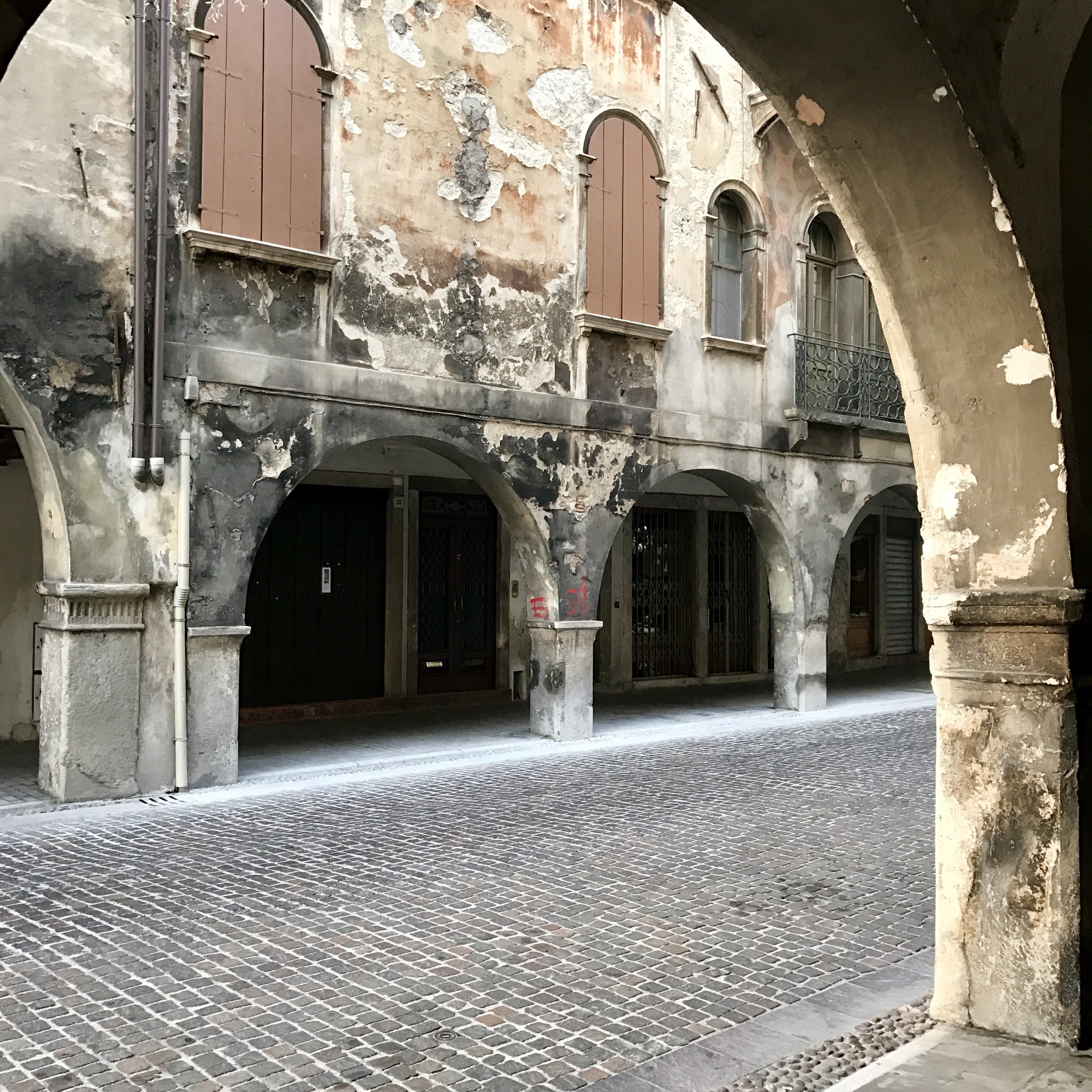
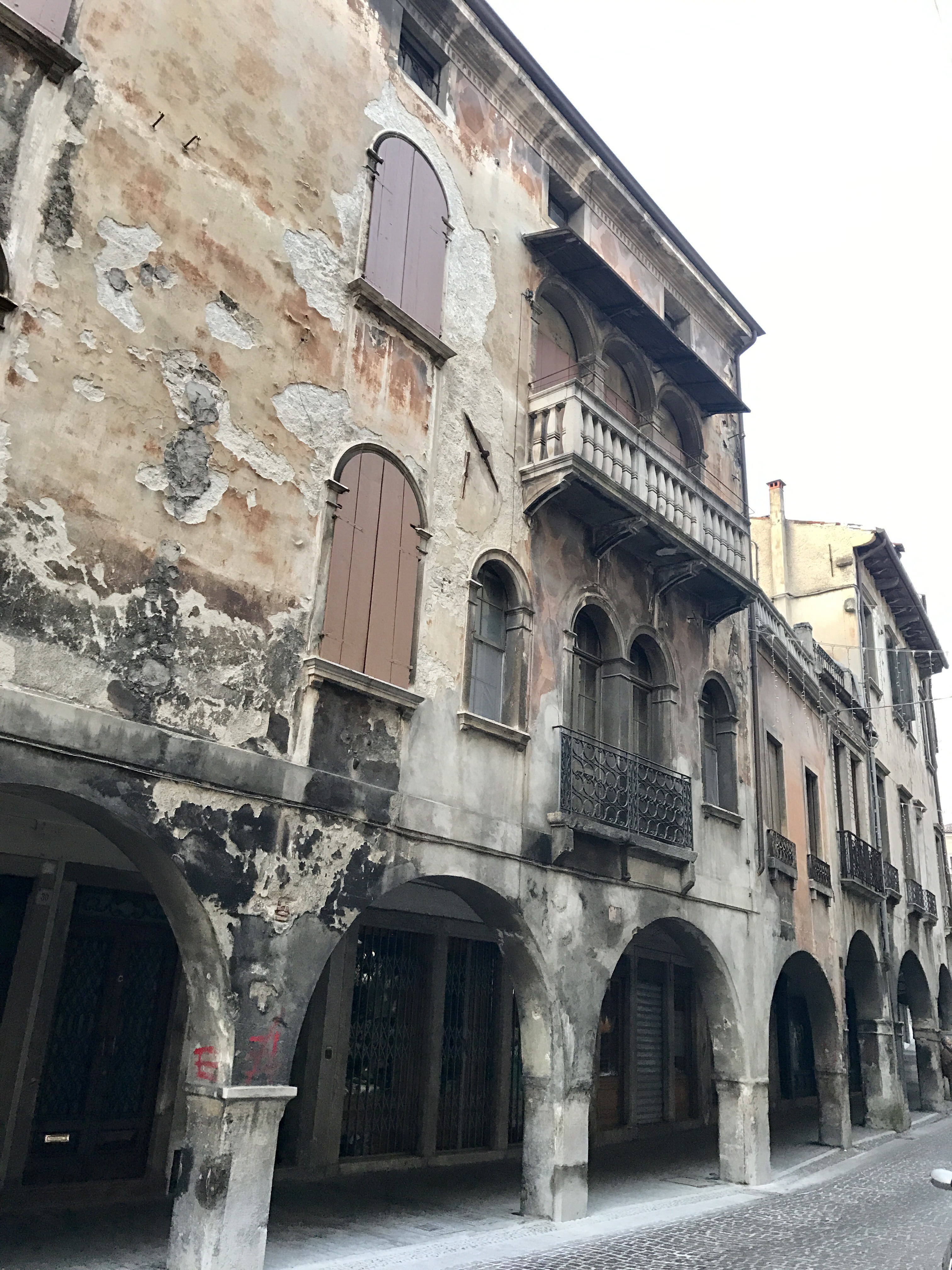
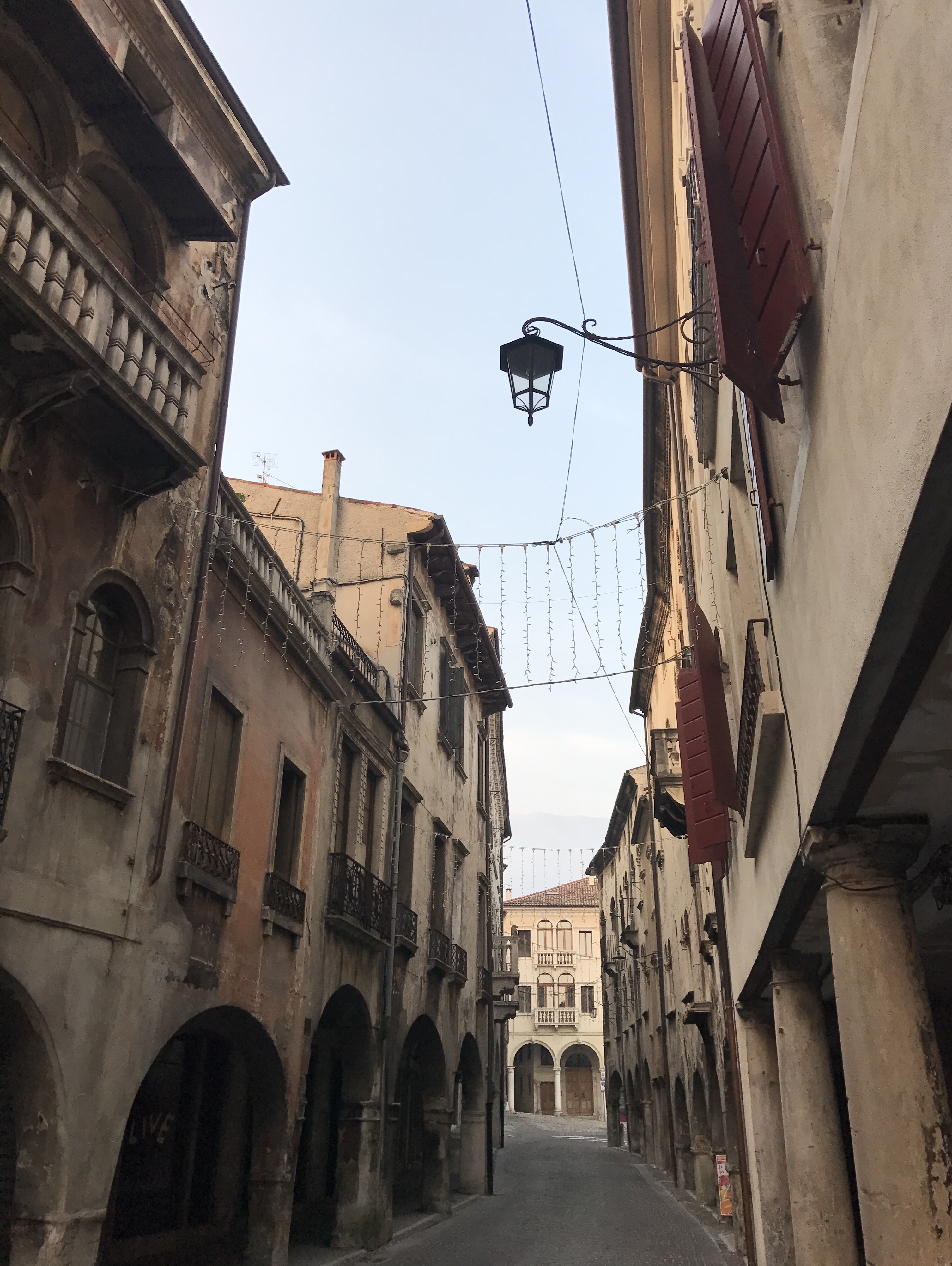
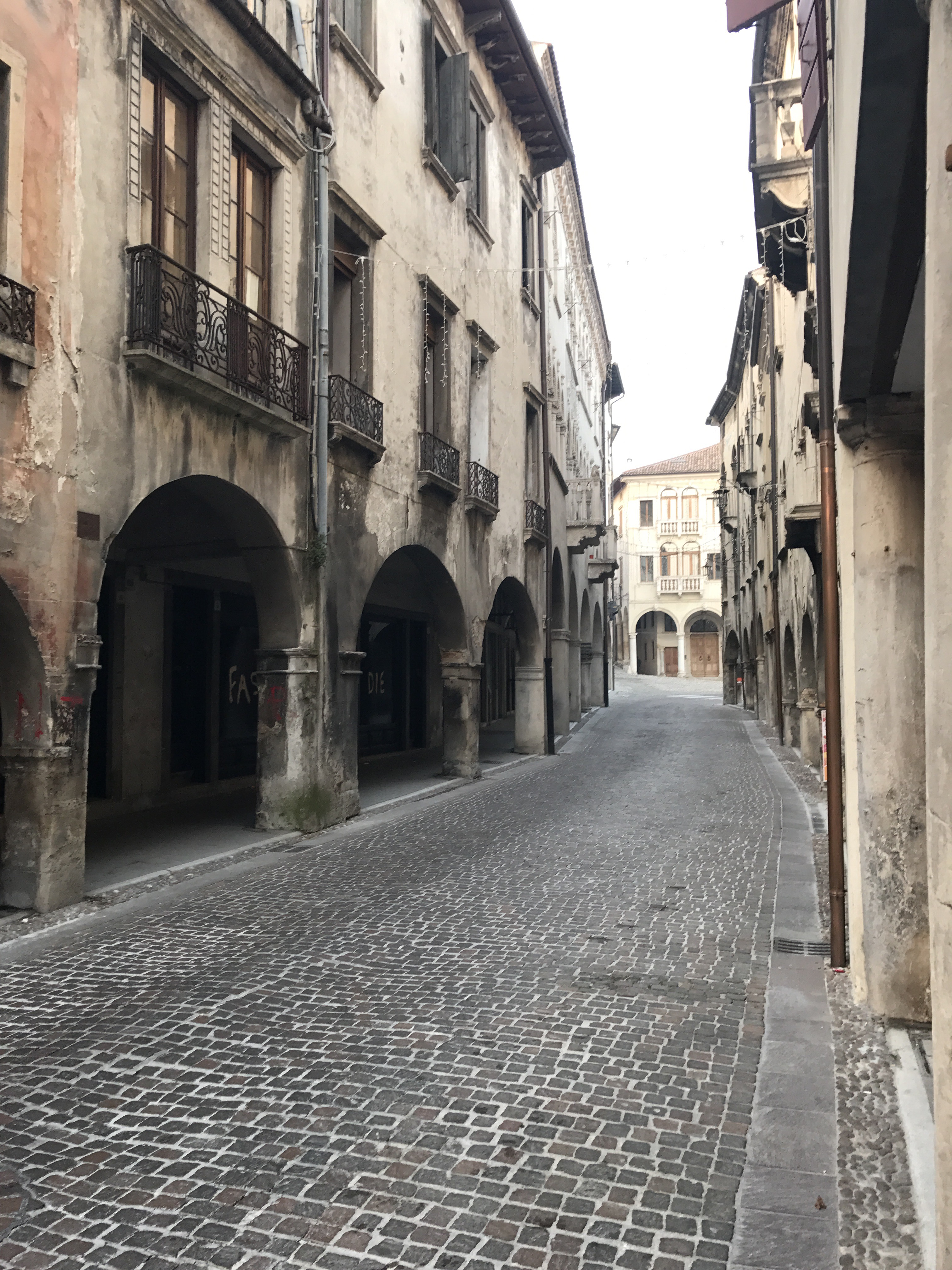
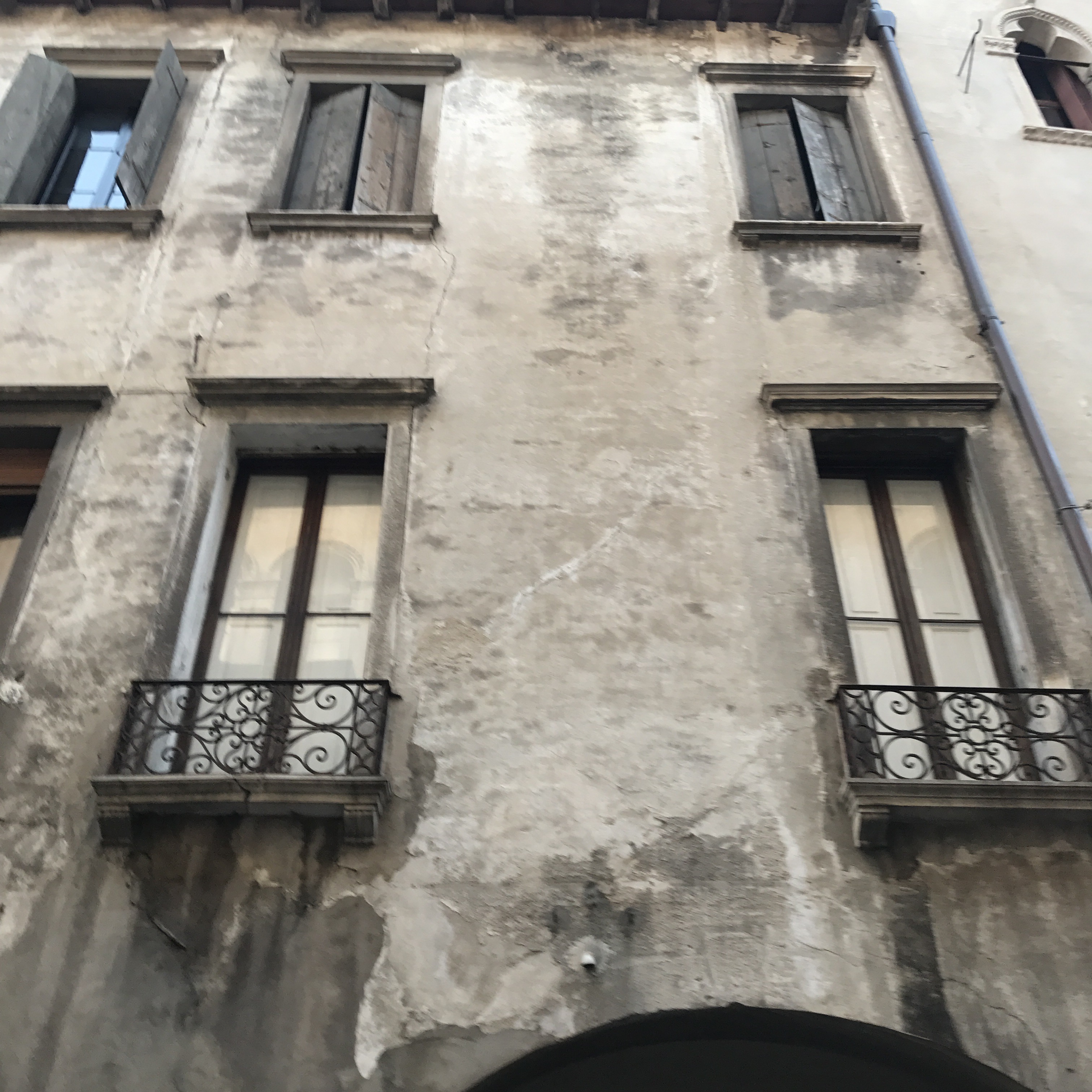
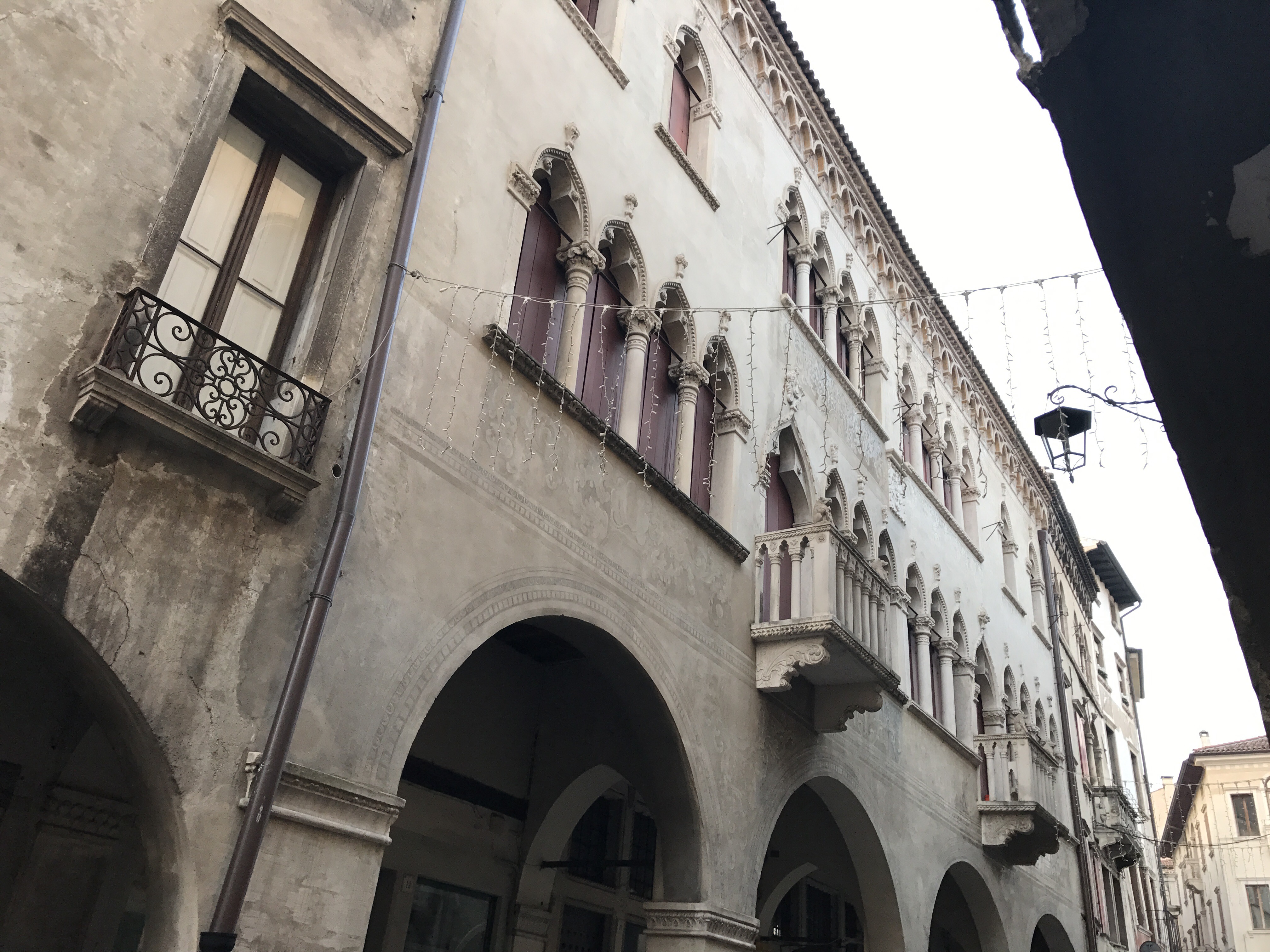
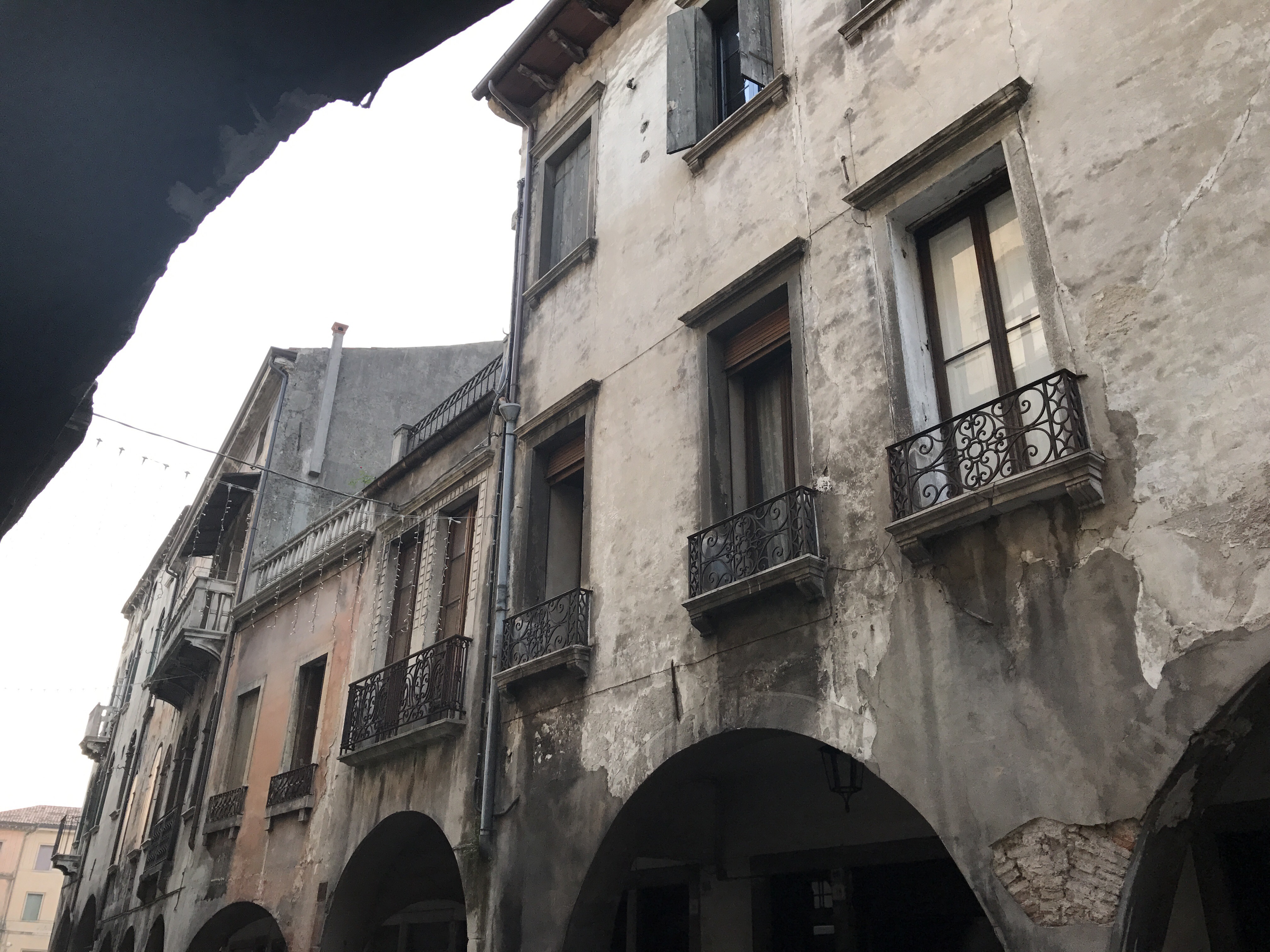
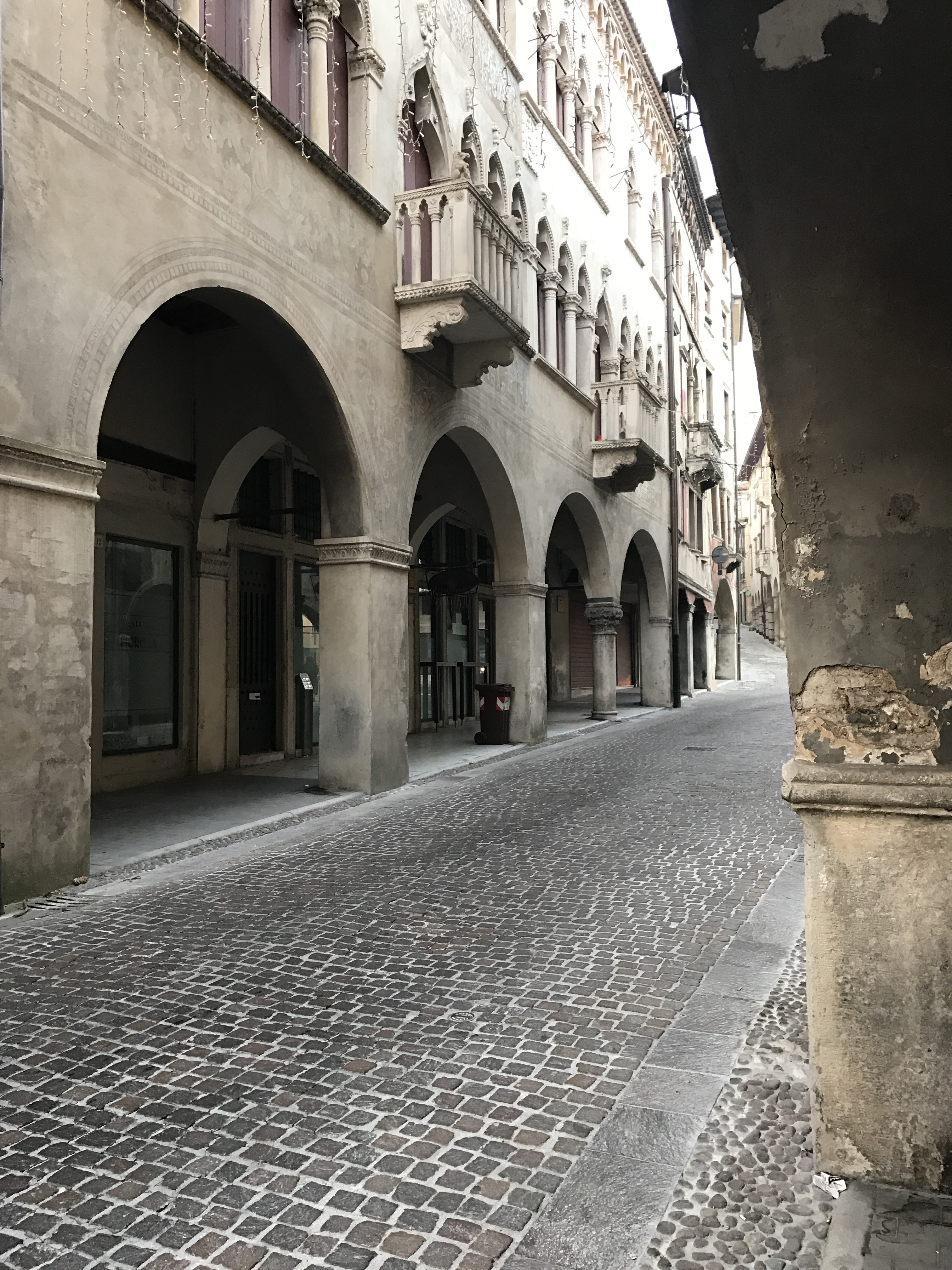
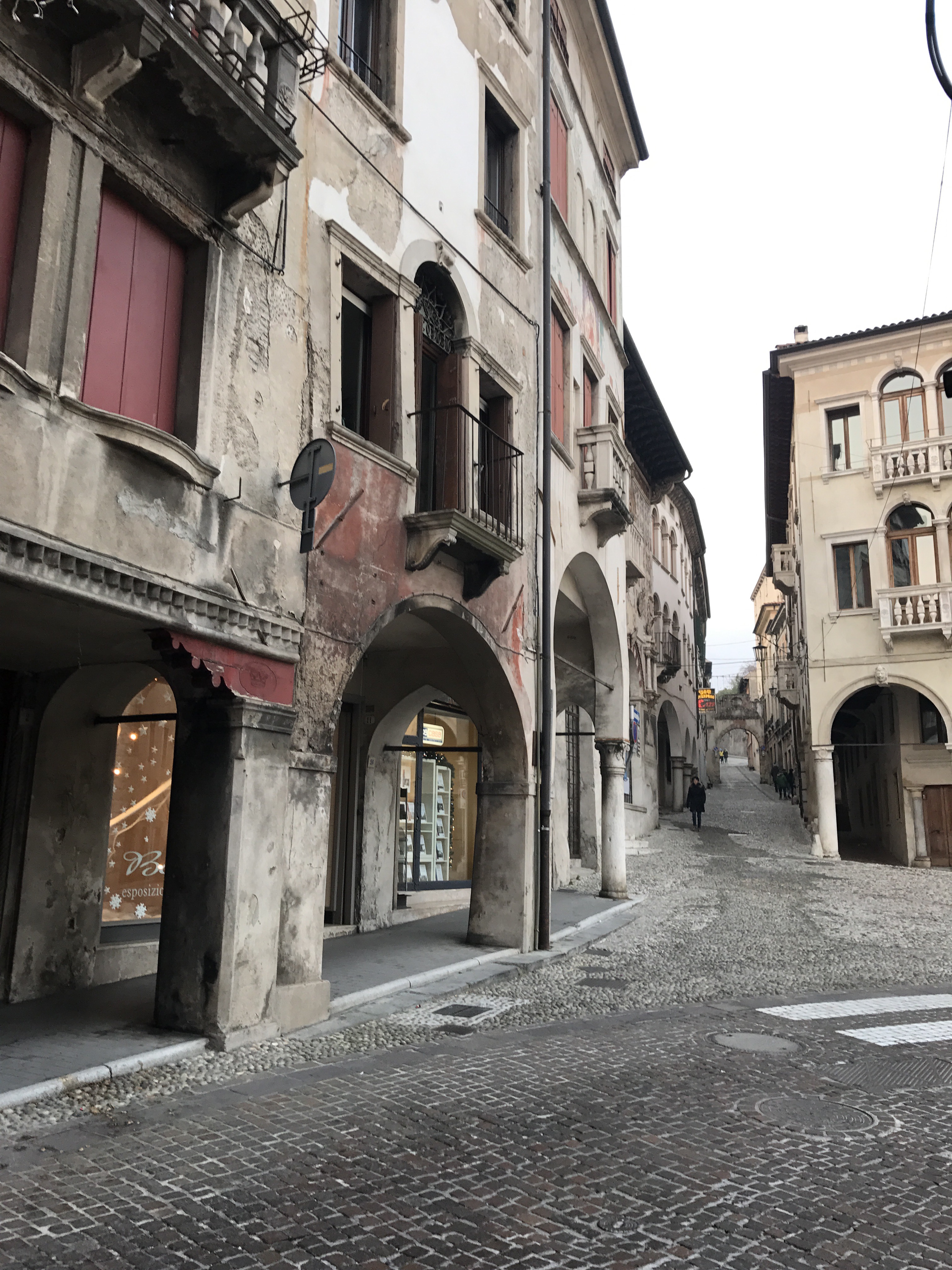
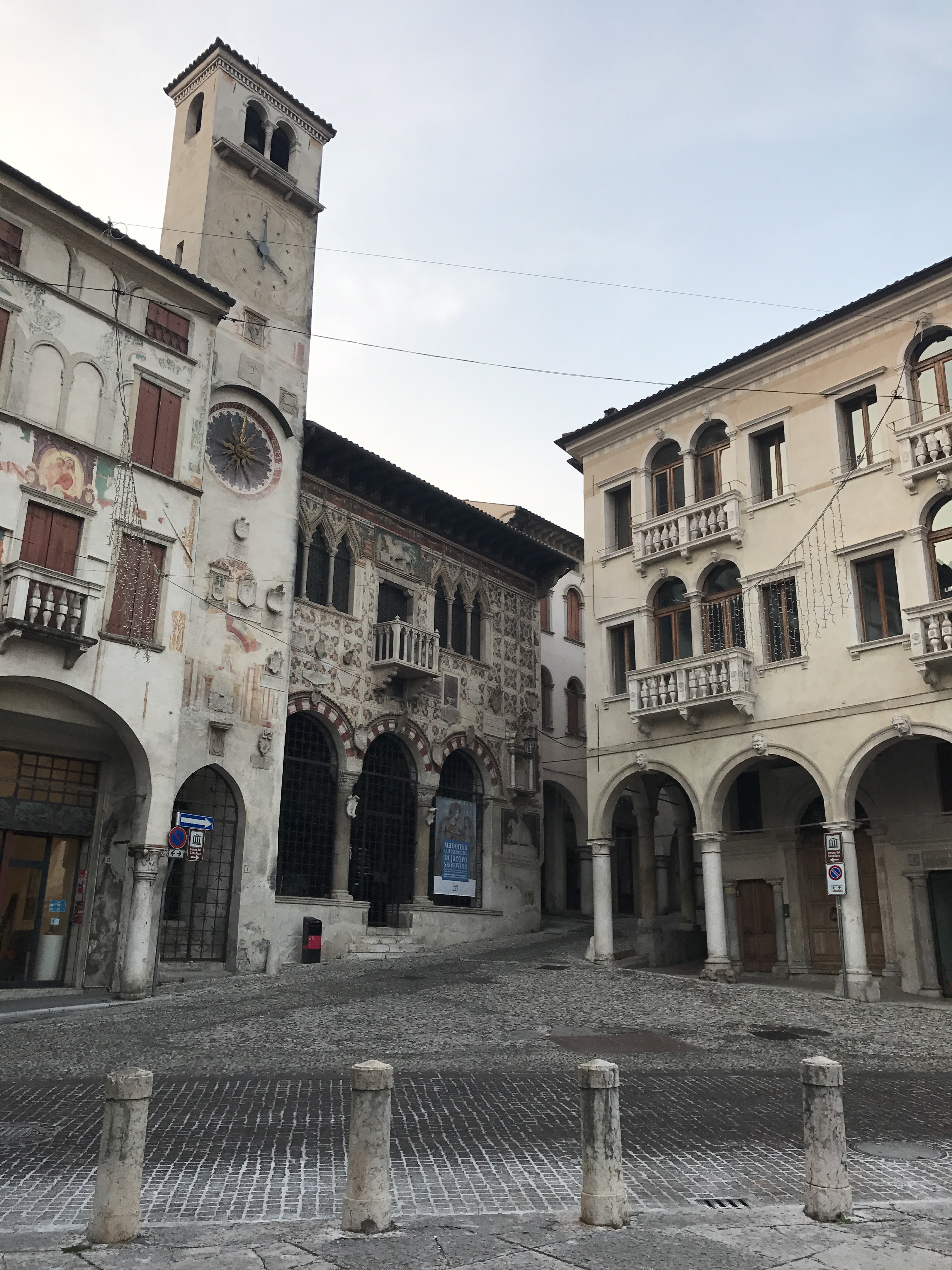
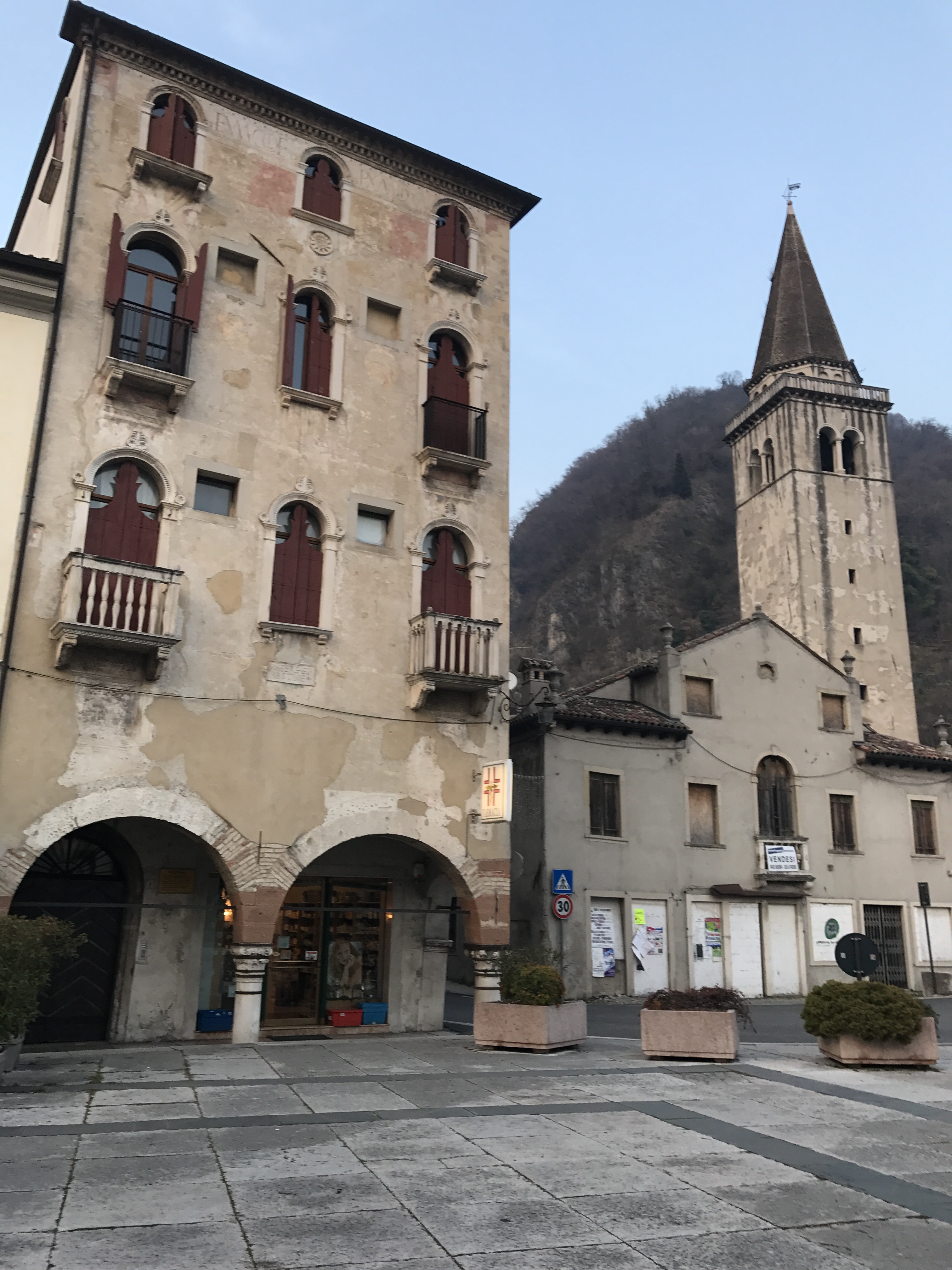
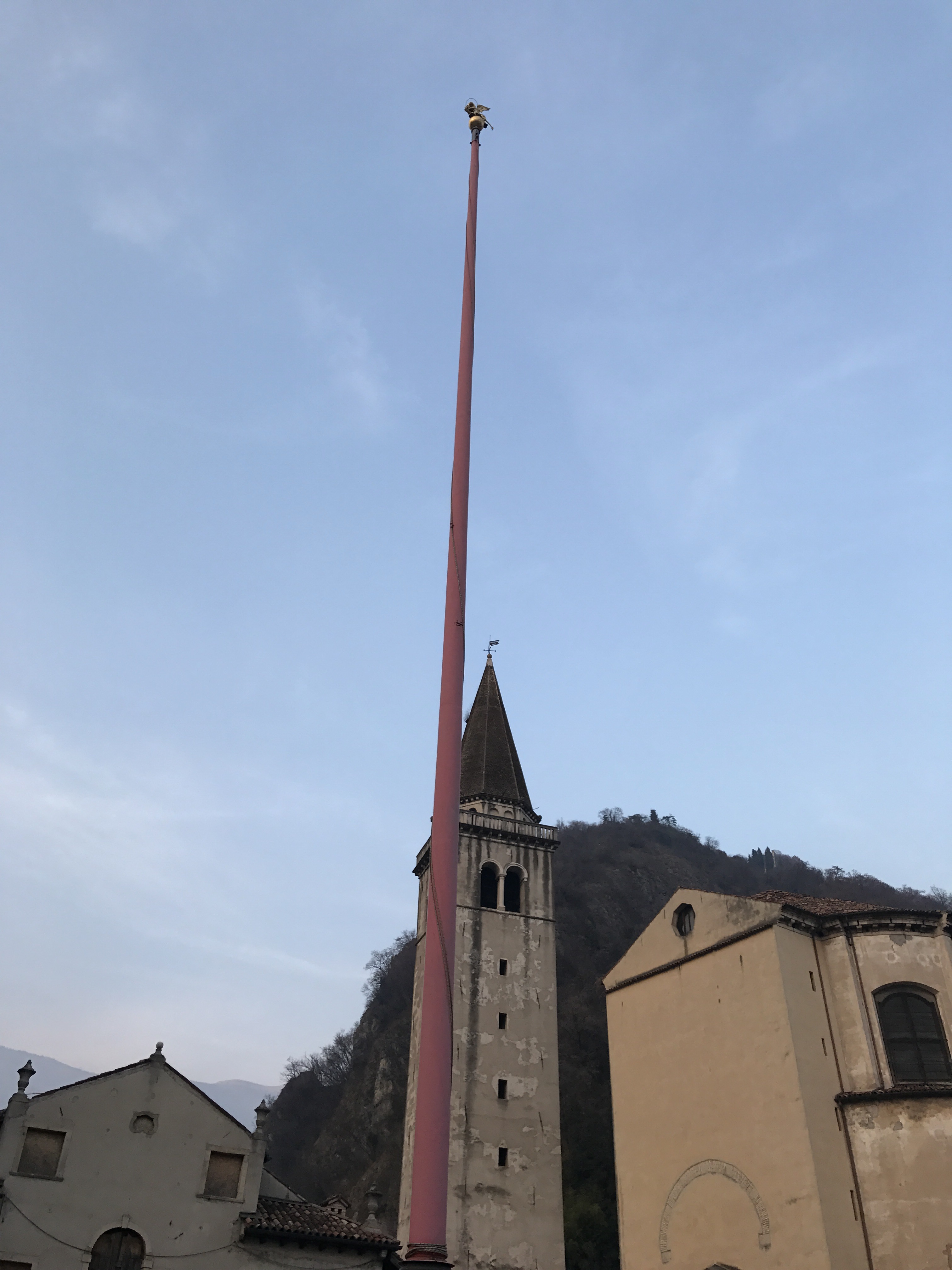
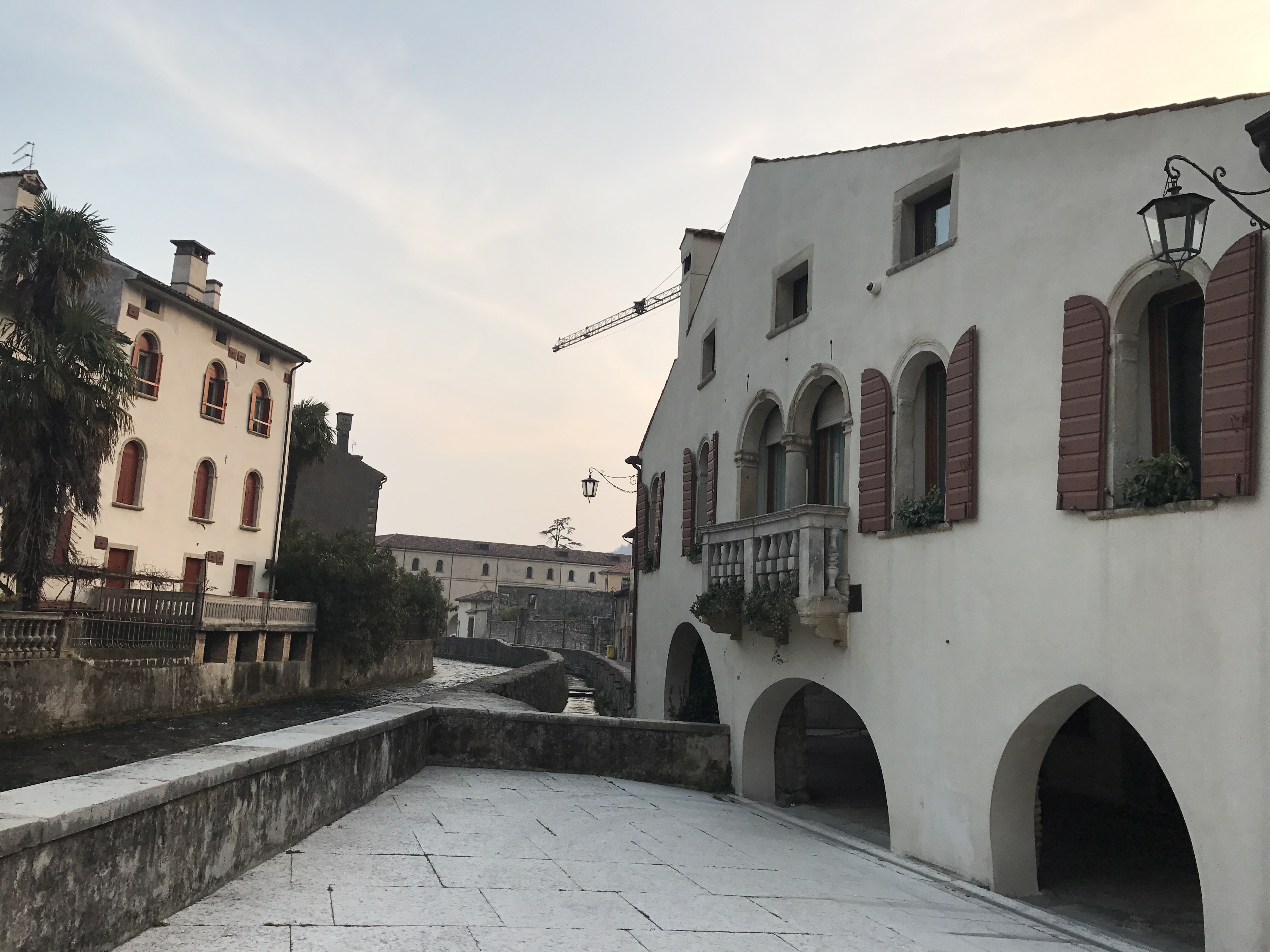
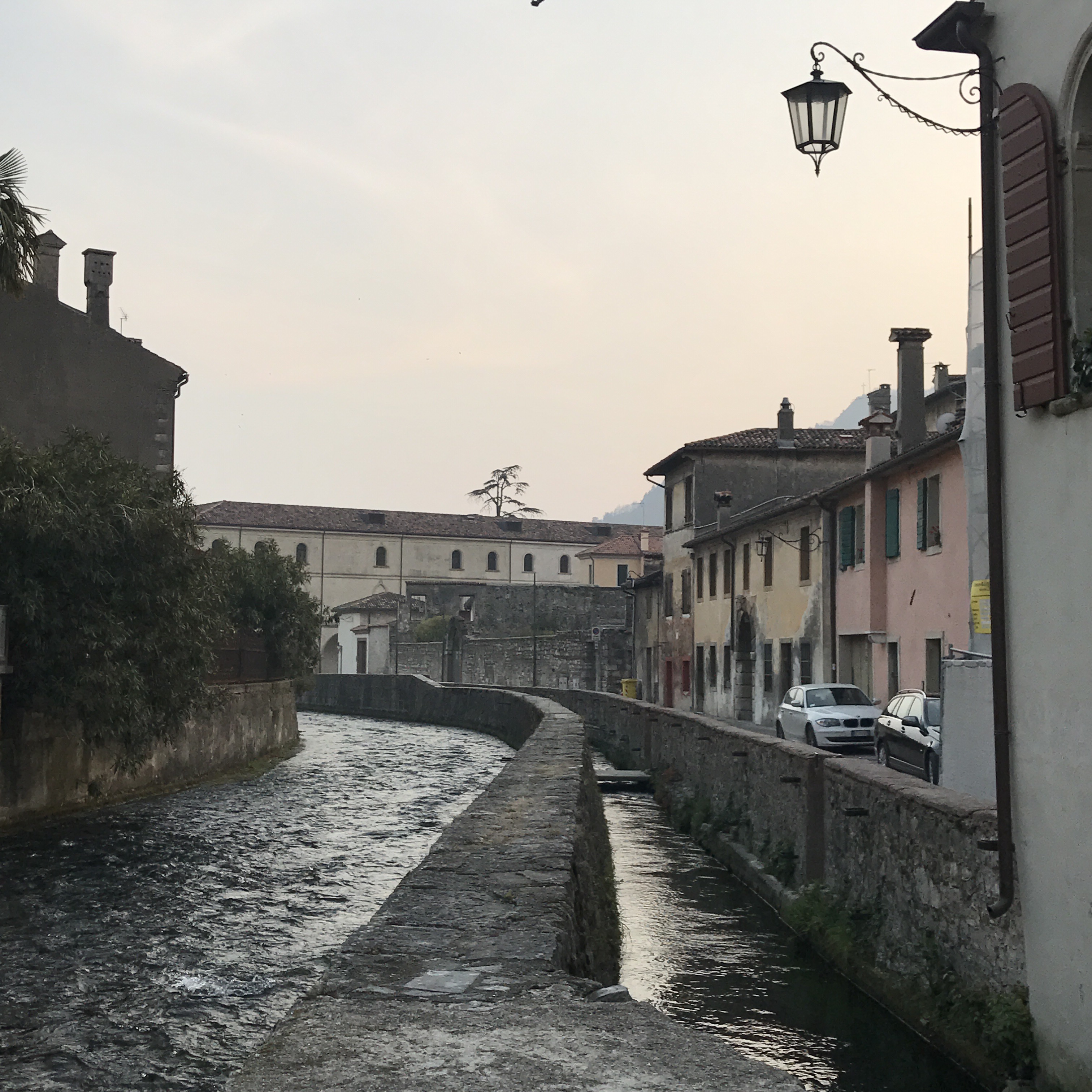
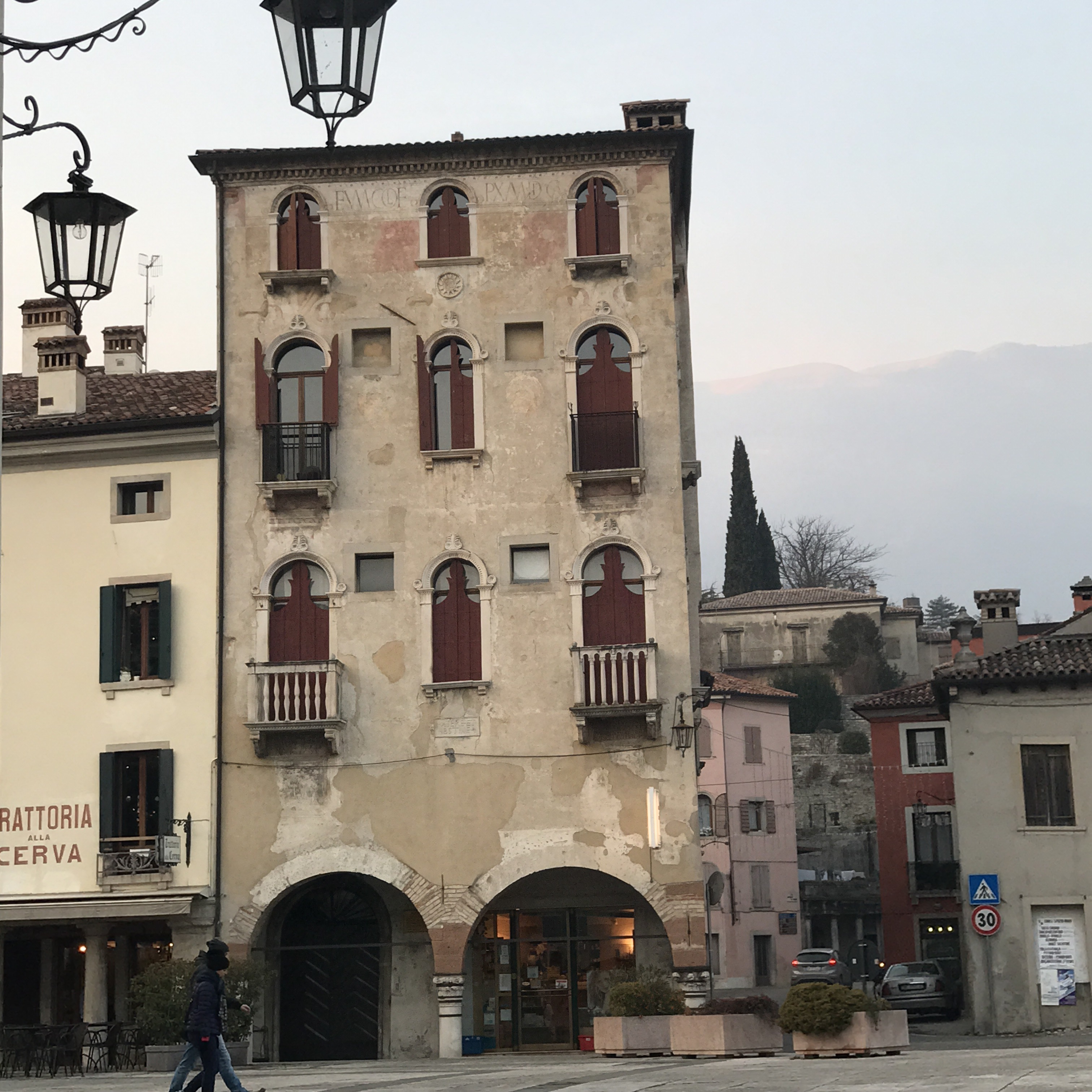
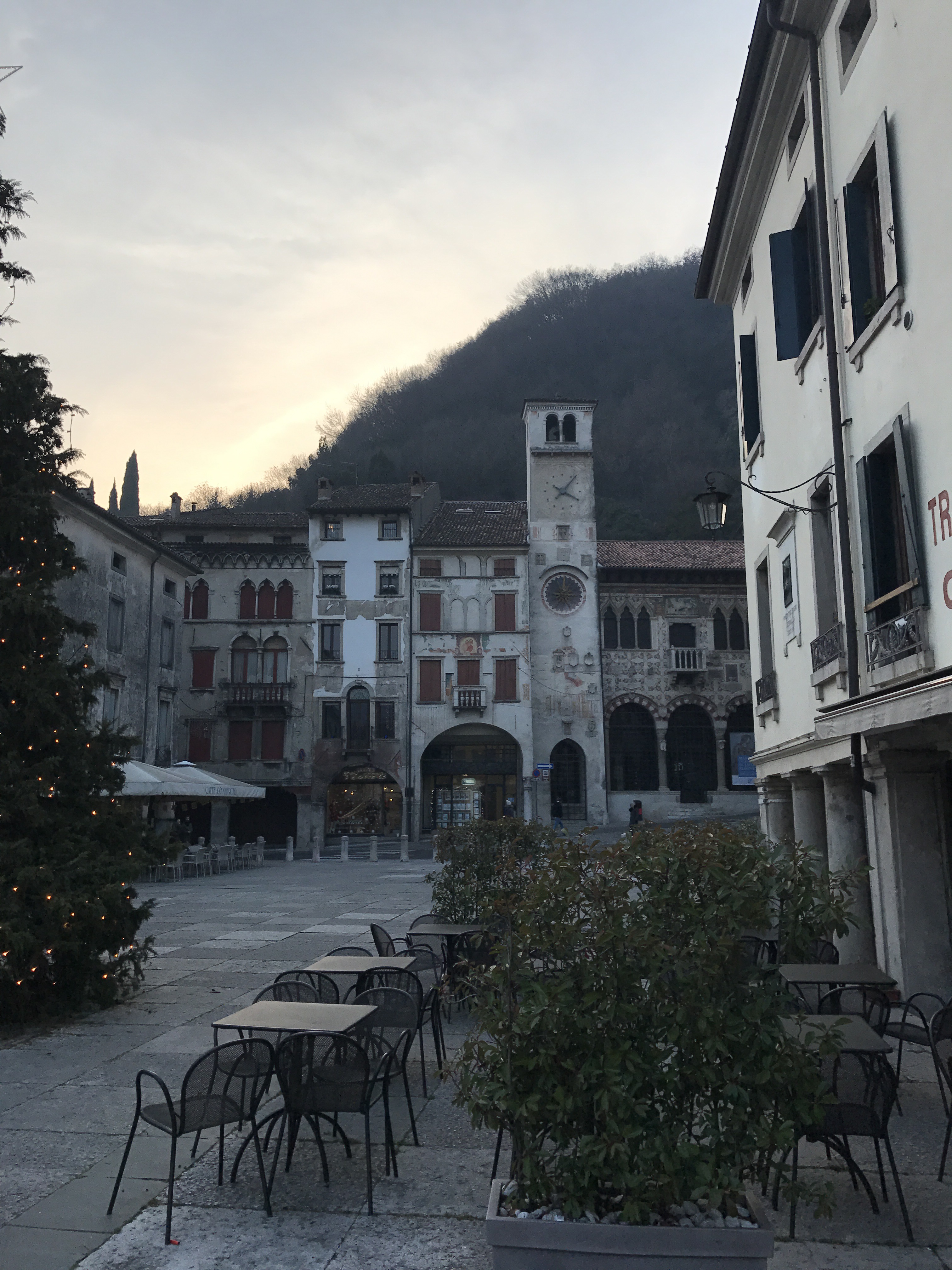
Yesterday I was lucky enough to visit the old section of the town of Vittorio Veneto, in the region of Veneto, in Northeastern Italy. Present-day Vittorio Veneto is the result of the fusion of the municipalities of Ceneda and Serravalle after WWI. 
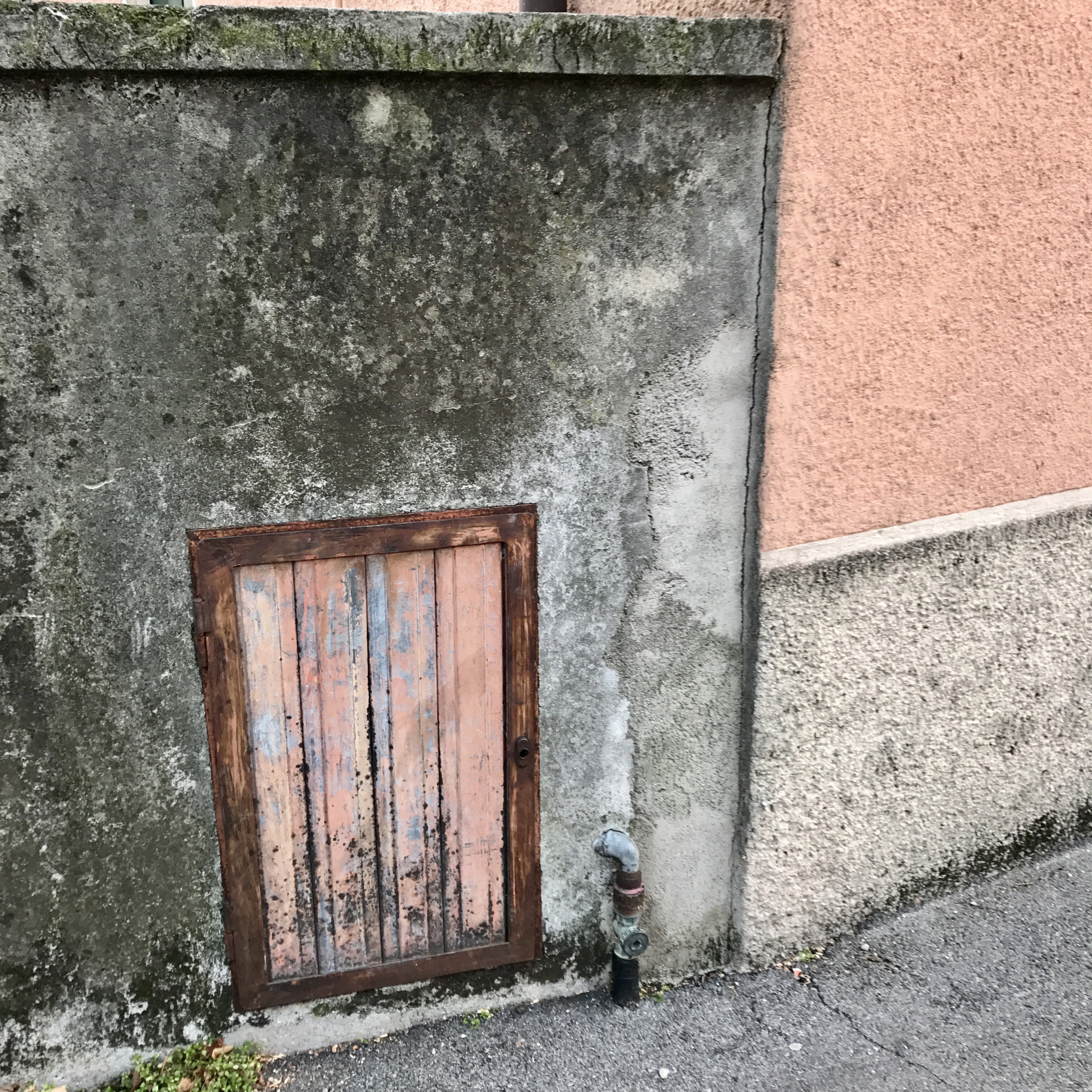
The photos below are of the old Jewish ghetto of Ceneda, and the centro ( center or downtown) with its villas, park and piazzetta ( small piazza). 


The Church pictured just below was a surprising find: it is the oldest churchsite I have ever visited, and dates from the IV century (!!!).  The Church you see was rebuilt in 1400, a millennium after the first structure was erected. The timing boggles the mind: in 313 CE Constantine declared Christianity the official religion of the Roman Empire with the Edict of Milan, and on this site a church was built shortly thereafter. 


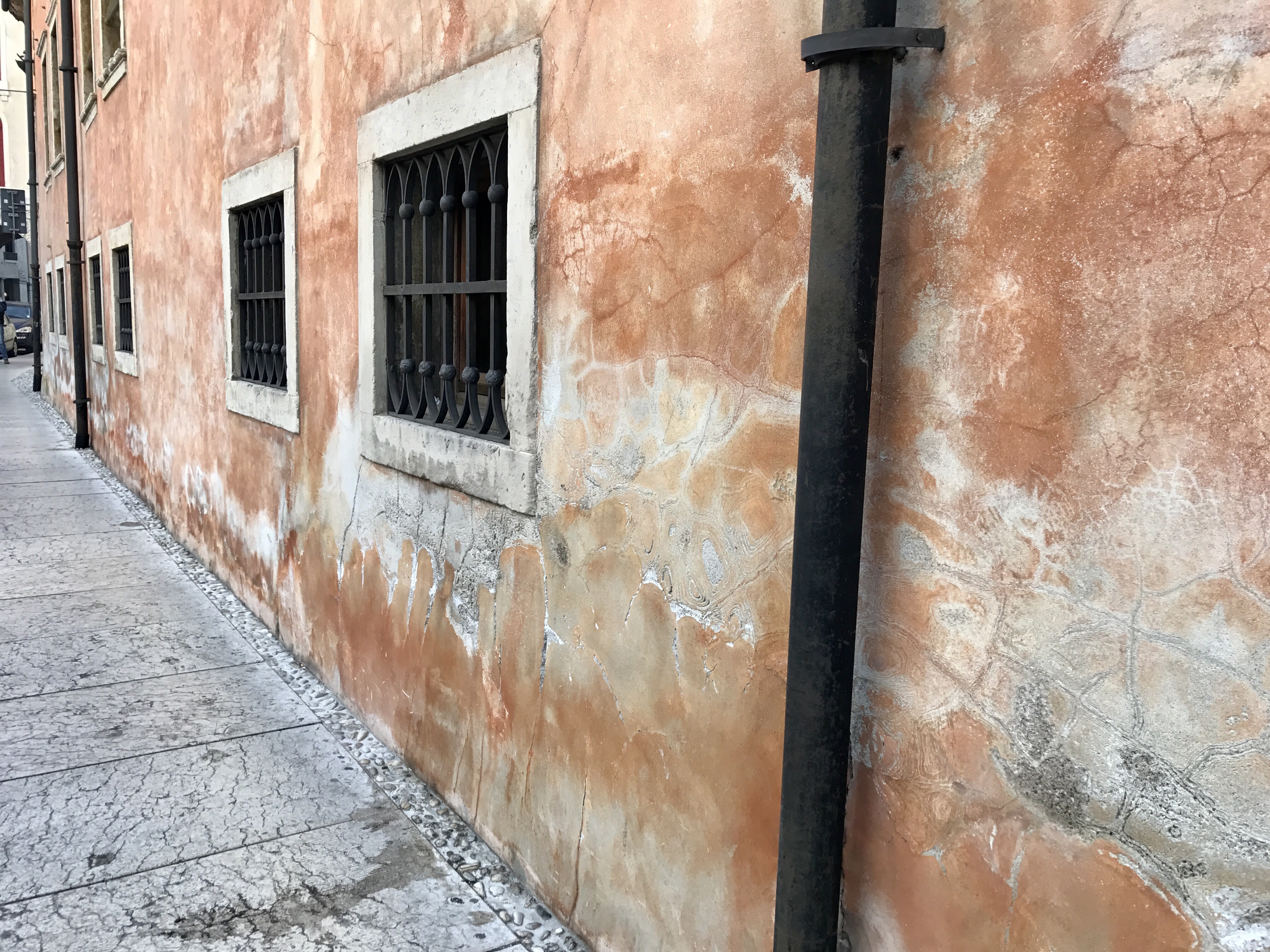
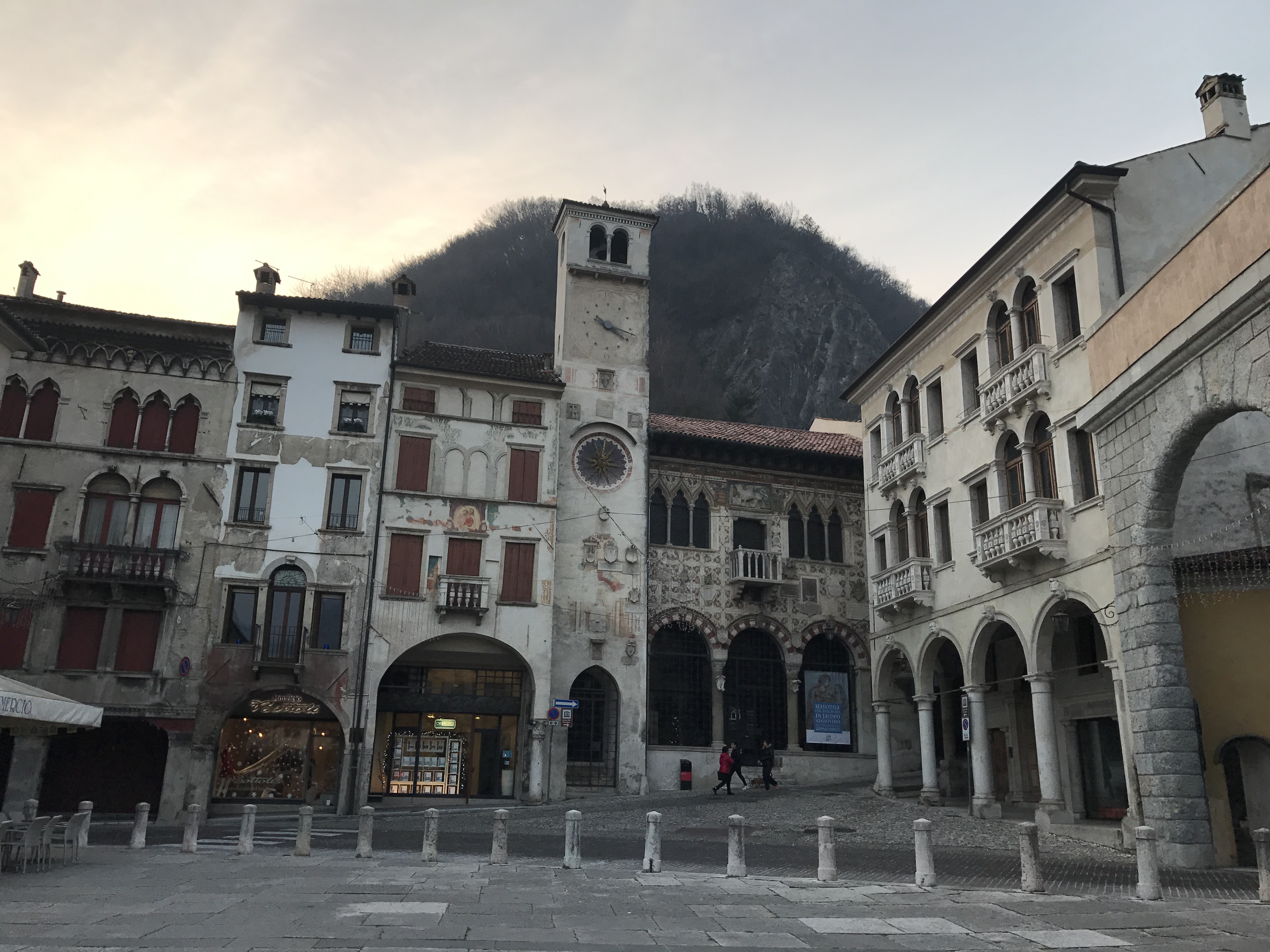
Serravalle, like Treviso, the regional center of the prosperous region of Veneto, features frescoes on the façades of buildings. This is something fascinating that I learned during this trip (from my mom, who is from Treviso) Frescoes in Serravalle- a town of Roman origin-were not just relegated to the interior of churches, but graced the buildings’ street elevations and were painted by notable local artists. Most of the palazzi date from the 1400’s. What was depicted on them? Hard to say from what remains in Serravalle. I could discern some courtly scenes  and patterns/coat of arms. Both here and in Treviso, the frescoes were plastered over during one of the bouts of the Plague, in a misguided effort to ‘disinfect’ homes. 

One of the photos depicts the winged lion of Venezia (Venice) on top of a tall pole. This whole area was indeed part of the inland empire of La Serenissima (the most serene) Republic of Venezia.

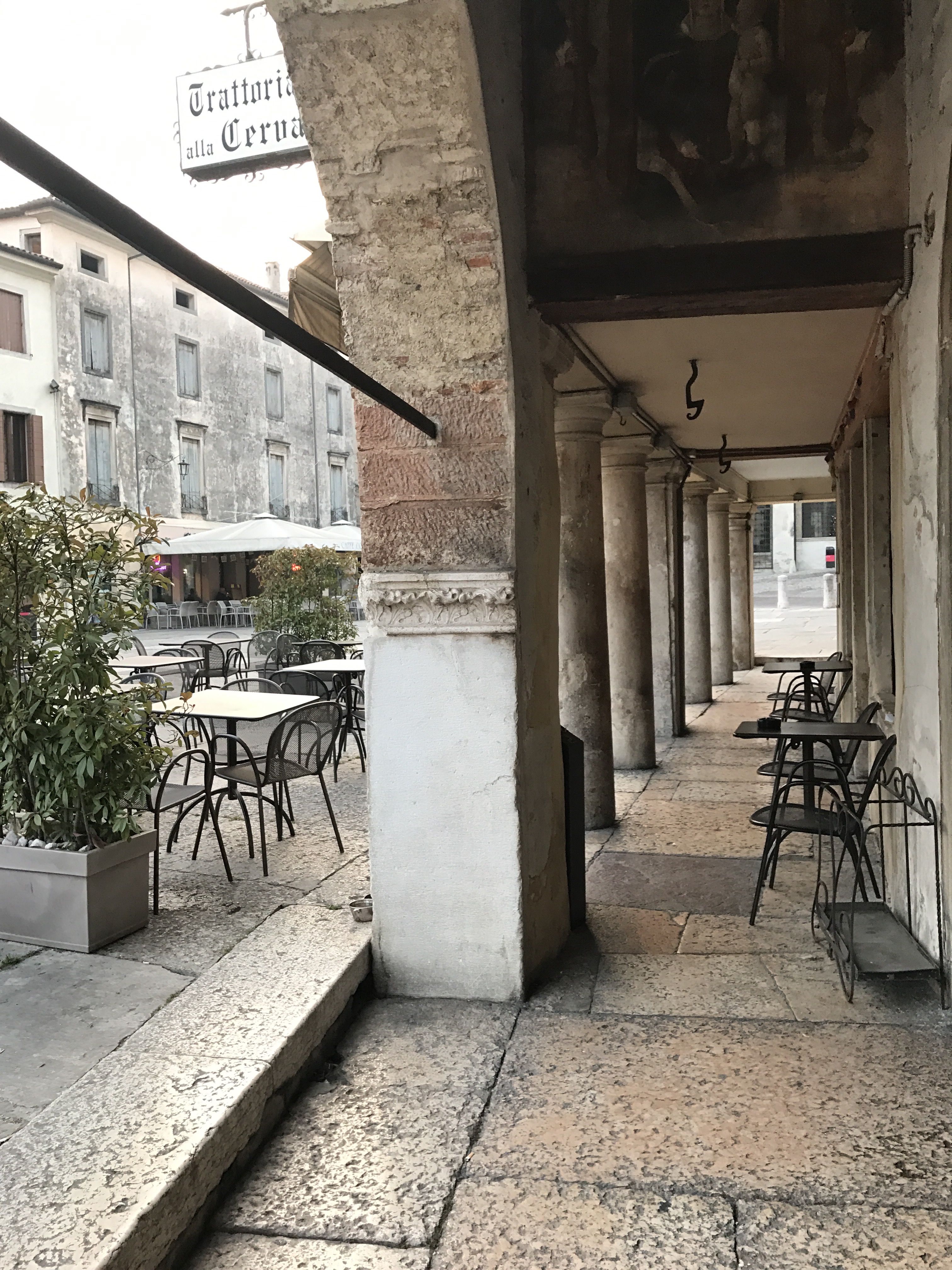
The best part for me, as a flâneuse was walking through the many porticoes of Serravalle. Enjoy my flâneuring..

Read Full Post »

And, suddenly, you are gazing at the eternal sublime. Venice’s borders are the dream realms. This is a city that starts on water and ends in the soul. Venice is a portal between reality and myth. A city that is real, but also impossible. My little cousin declared, at ten years old, that ‘this is the most beautiful city in the whole world.’ In no other country man-made and natural Beauty is so entrenched with the national psyche and identity. Beauty is elevated as the greatest national virtue, privilege and asset. Beauty is Italy’s doctrine and her true religion. We are, after all, Il Bel Paese.
Venezia, Italia, January 1, 2017.


‘There is still one of which you never speak.’
Marco Polo bowed his head.
‘Venice,’ the Khan said.
Marco smiled. ‘What else do you believe I have been talking to you about?’
The emperor did not turn a hair. ‘And yet I have never heard you mention that name.’
And Polo said: ‘Every time I describe a city I am saying something about Venice.’

Italo Calvino, Invisible Cities


Error
This video doesn’t exist


Read Full Post »


Sketch2_B

Road_to_Surreal_1_miti

Infinity_1_miti

Su_Tierra_1_miti

The_Supplicants_miti

Arms_to_Sky_1_miti

Baja_companero_1_miti

Las_cuatros_princesas_miti

On_stone_on_wood_1_miti

map


This slideshow requires JavaScript.

Read Full Post »

image

Hello Stranger!

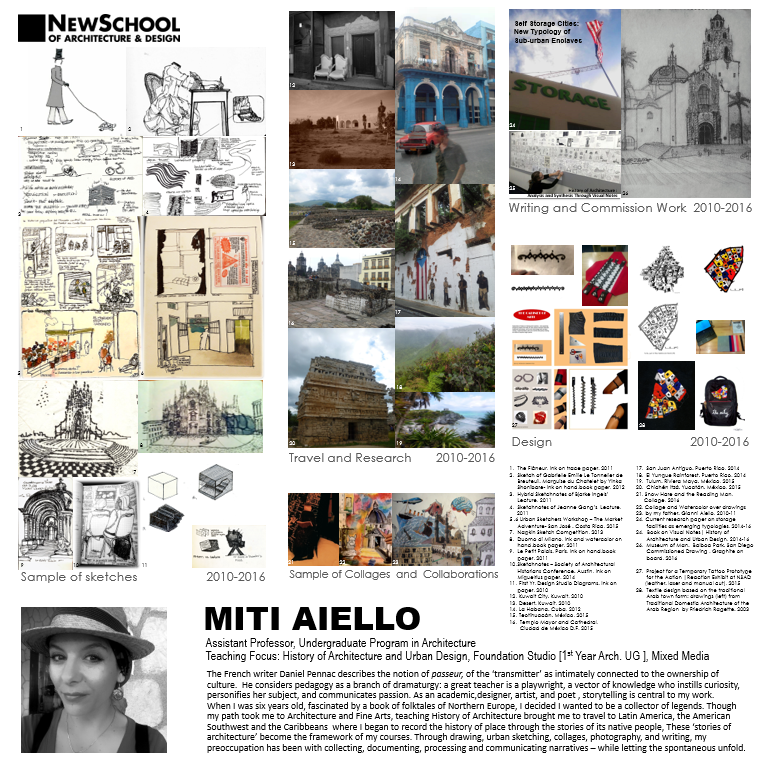
In case you are wondering what happened to me and why I’ve gone M.I.A during the month of February and most of March, the board above is one of the reasons. As it happened in 2010,
our school underwent an enormous accreditation visit, which meant preparing for months collecting, documenting and providing evidences.

One of the best things to come out of the work leading to the Accreditation was that Faculty was once more asked to prepare a record of what we have been doing – outside of teaching- the past five years.
It is a monumental task to audit, select and curate five years of life, work, art – yet I welcome the chance to take stock of where I have been, for it points to where I want to go. This process of self-evaluation is a privilege not afforded to many professions, and I was thankful for the challenge.
We were also asked to write a brief narrative. I worked on this more hours than I care to admit and I am happy to now share this with you: words, drawings and travel photography — some of which hasn’t been seen here yet! Hope you enjoy it.


“The French writer Daniel Pennac describes the notion of  the passeur, of the ‘transmitter’, as intimately connected to the ownership of culture.  He considers pedagogy as a branch of dramaturgy: a great teacher is a playwright, a vector of knowledge who instills curiosity, personifies her subject, and communicates passion. As an academic, designer, artist, and poet , storytelling is central to my work.

When I was six years old, fascinated by a book of folktales of Northern Europe, I decided I wanted to be a collector of legends. Though my path took me to Architecture and Fine Arts, teaching History of Architecture brought me to travel to Latin America, the American Southwest and the Caribbeans  where I began to record the history of place through the stories of its native people, These ‘stories of architecture’ become the framework of my courses. Through drawing, urban sketching, collages, photography, and writing, my preoccupation has been with collecting, documenting, processing and communicating narratives – while letting the spontaneous unfold.”


Miti Aiello, San Diego, March 2016

Writer Update:

My abstract on my research on Storage Cities has been accepted by one of the two main Architecture academic bodies here in the U.S for presentation at their International Conference! They are sending me to Santiago, Chile in June, and will publish my academic paper. Too excited for words. If you want to get a sneak peek and read my abstract check out my academia.edu page.

This is likely a hello/byefornow.
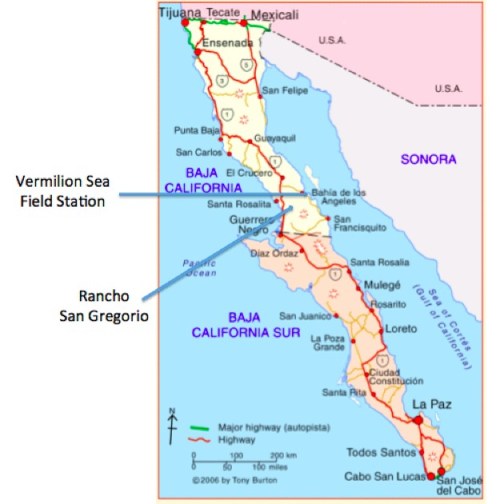
I wanted to update my blog now that classes have ended for the quarter, and before once again leaving for Mexico, this time in Baja California Sur for a week of volunteering. Faculty and students of my school are going to help build a healing center using natural architecture in a location that is three hours away by car from the closest road. It will be very remote, challenging and, I am sure, transforming. I will document everything.

Few weeks ago I wrote that, sometimes, we don’t have time to do art because we are too busy living a life that is art itself.
That is a true blessing, amidst the inherent challenges.

Although I have not posted here, I have not stopped taking photographs, seeing, collecting, thinking. My hope of hopes is to get caught up with my posts this summer…Promises we have heard before…

“You don’t need motivation.
What you need is discipline, young lady!”

Joe

Read Full Post »

image

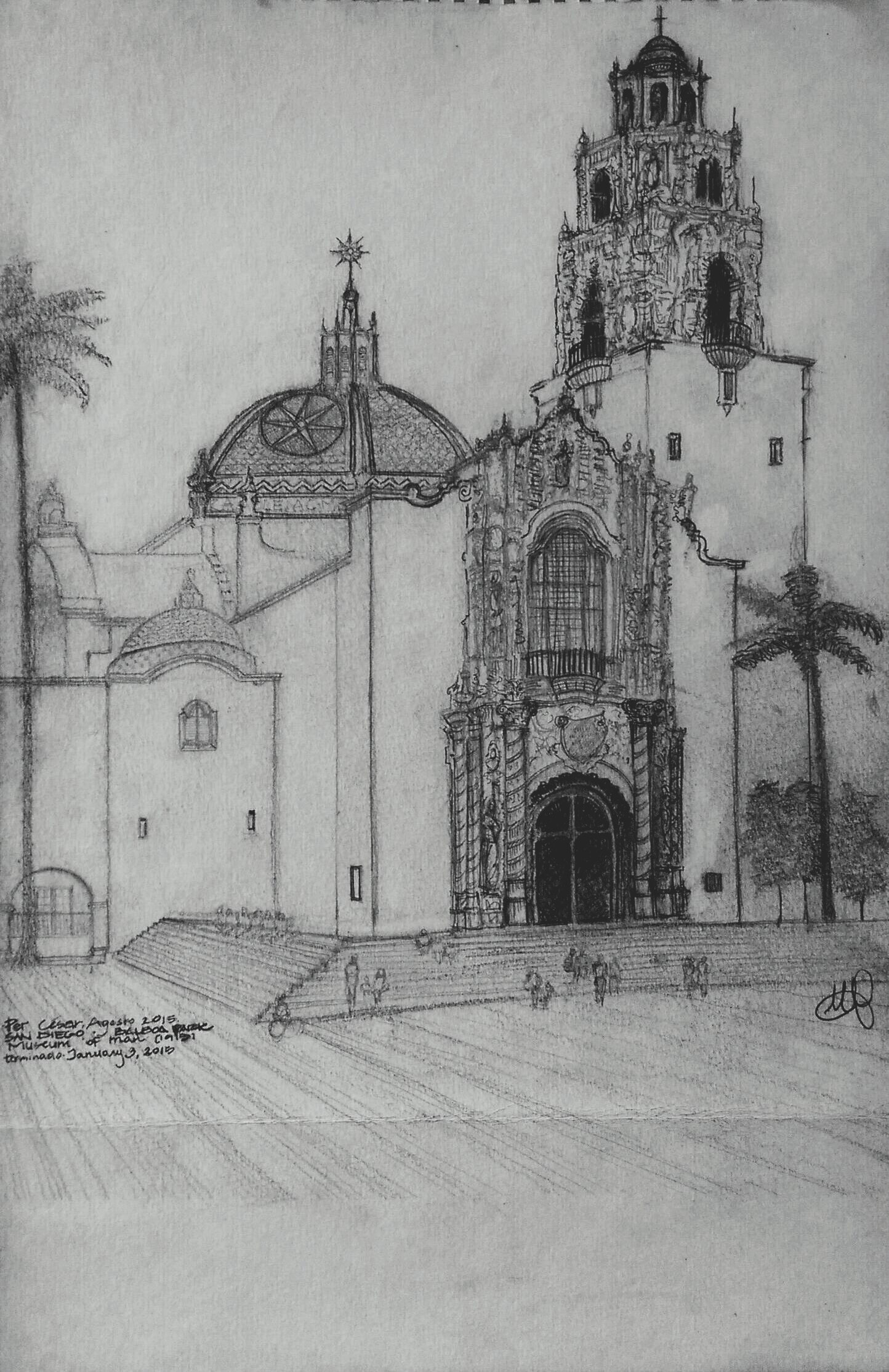
You might remember this drawing from November.
I finally finished at the beginning of January, on a cold (for San Diego) night, sitting in front of this 100-yearY building, under a portico.
Balboa Park always takes me back home. This entire drawing was done plen air and took me few sessions over several months to complete.
It will be on its way to San José, Costa Rica soon.

This is a quick photo, but i have a piecemeal scanned version ( sheet too large for my scanner, and the wide format at work is not very kind to graphite).I will try to compose the image and sub for it soon – but it has already been a whole week since this post languished in the draft purgatory and i want to get to my next night photography post.
Clouds make nocturnal old San Diego heartbreakingly beautiful.

By the way, i hope you all had a fantastic Holiday Break.
I just got back from another trip to México, and i have Mayan pyramids,cenotes, colonial towns and caribbean waters to share. I cannot believe i haven’t had the chance to share my two trips to Ciudad de México D.F from last July and November (¡Frida!) ..yet.
So next there will be a series of posts on México “lindo y querido”.

Read Full Post »

image

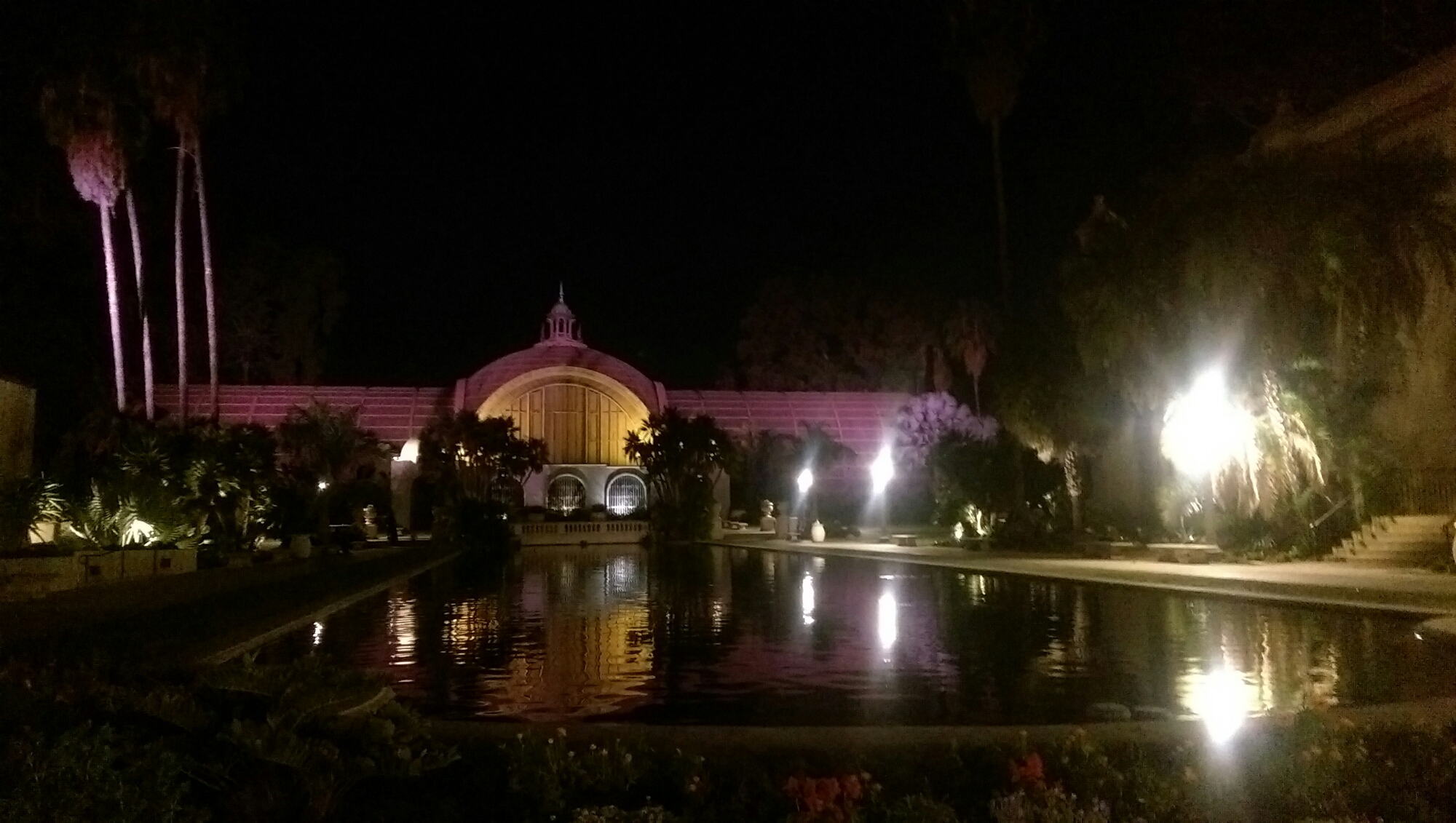
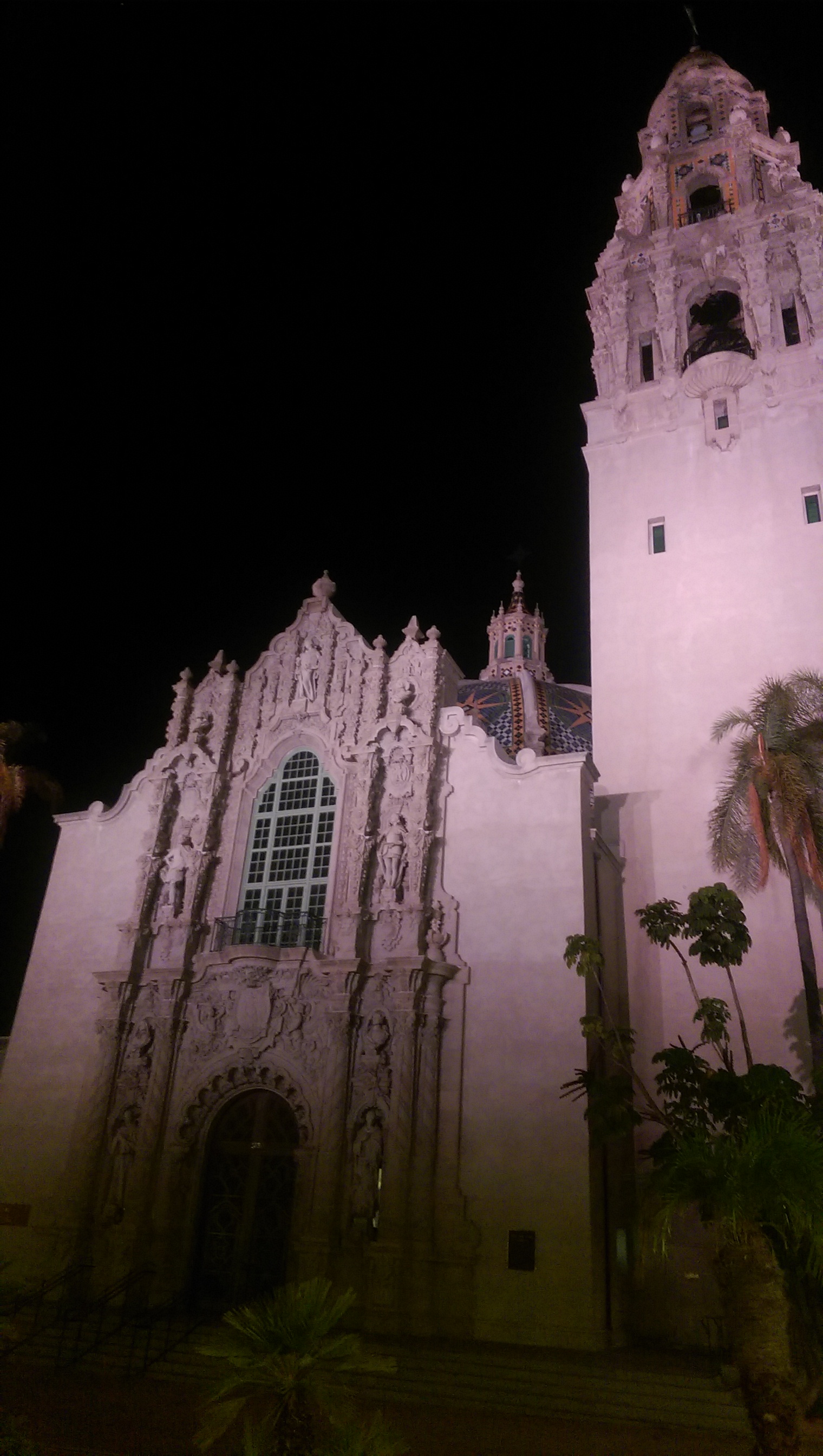
California Building Tower. Balboa Park, Uptown San Diego. January 2015.


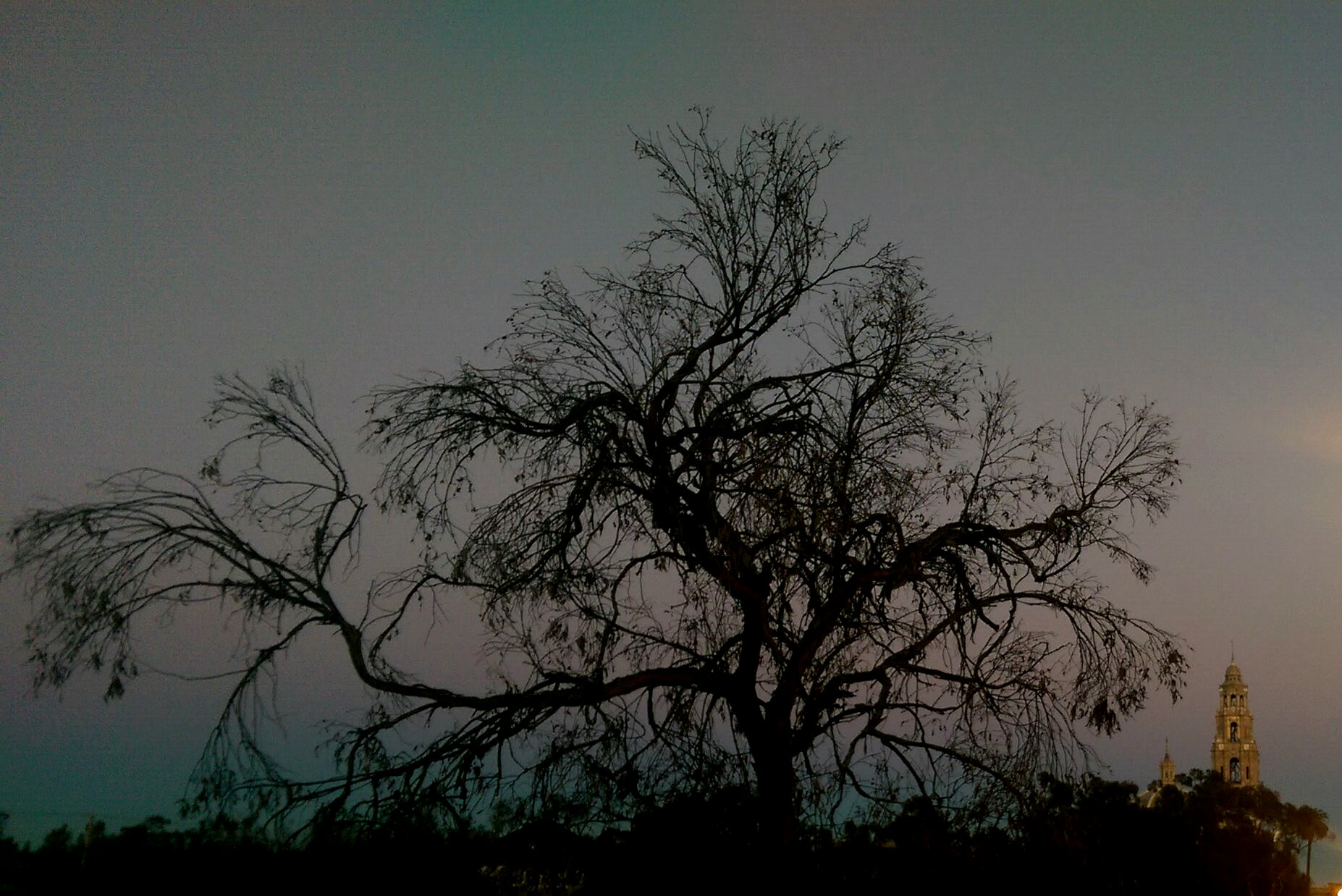
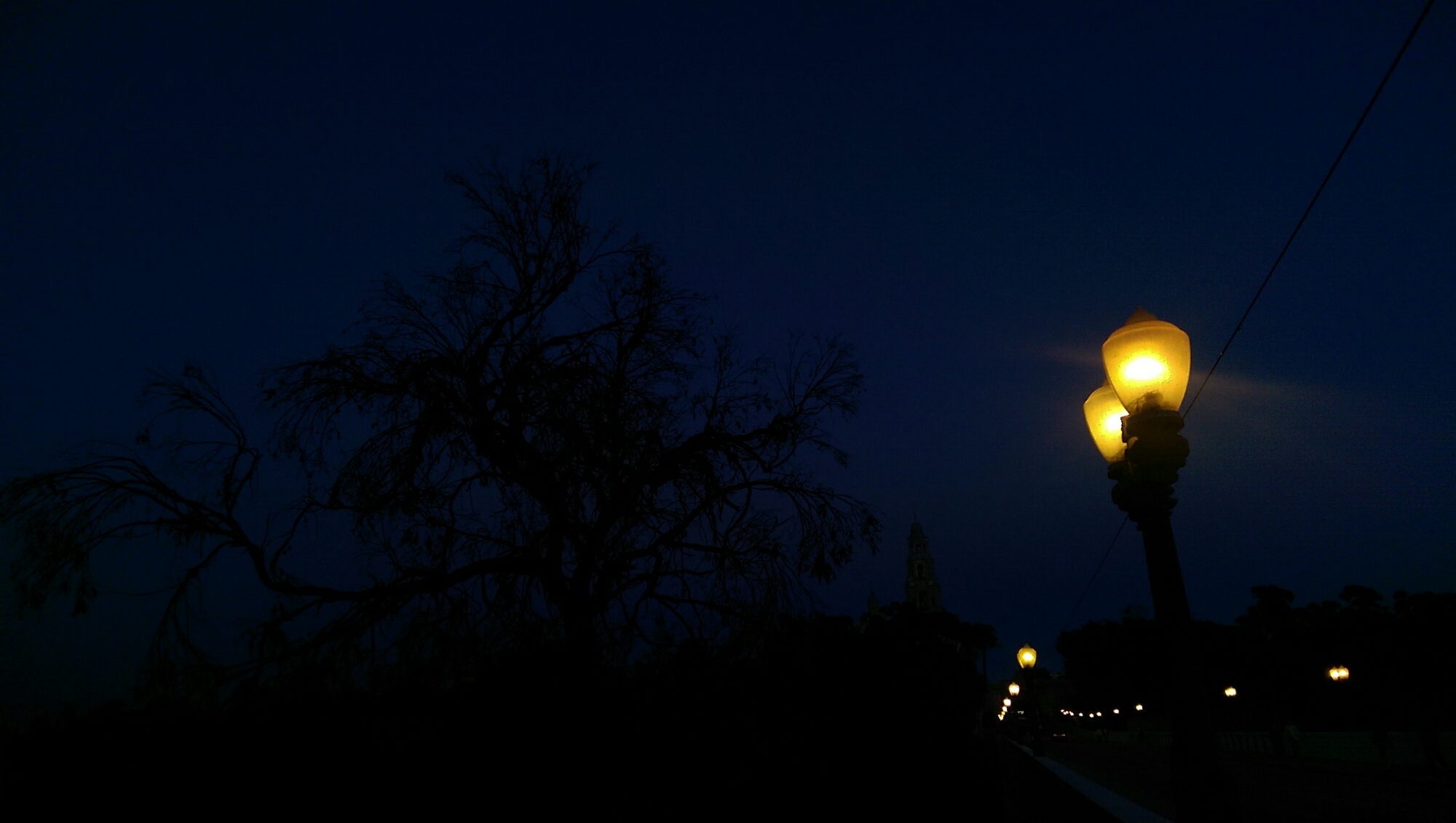
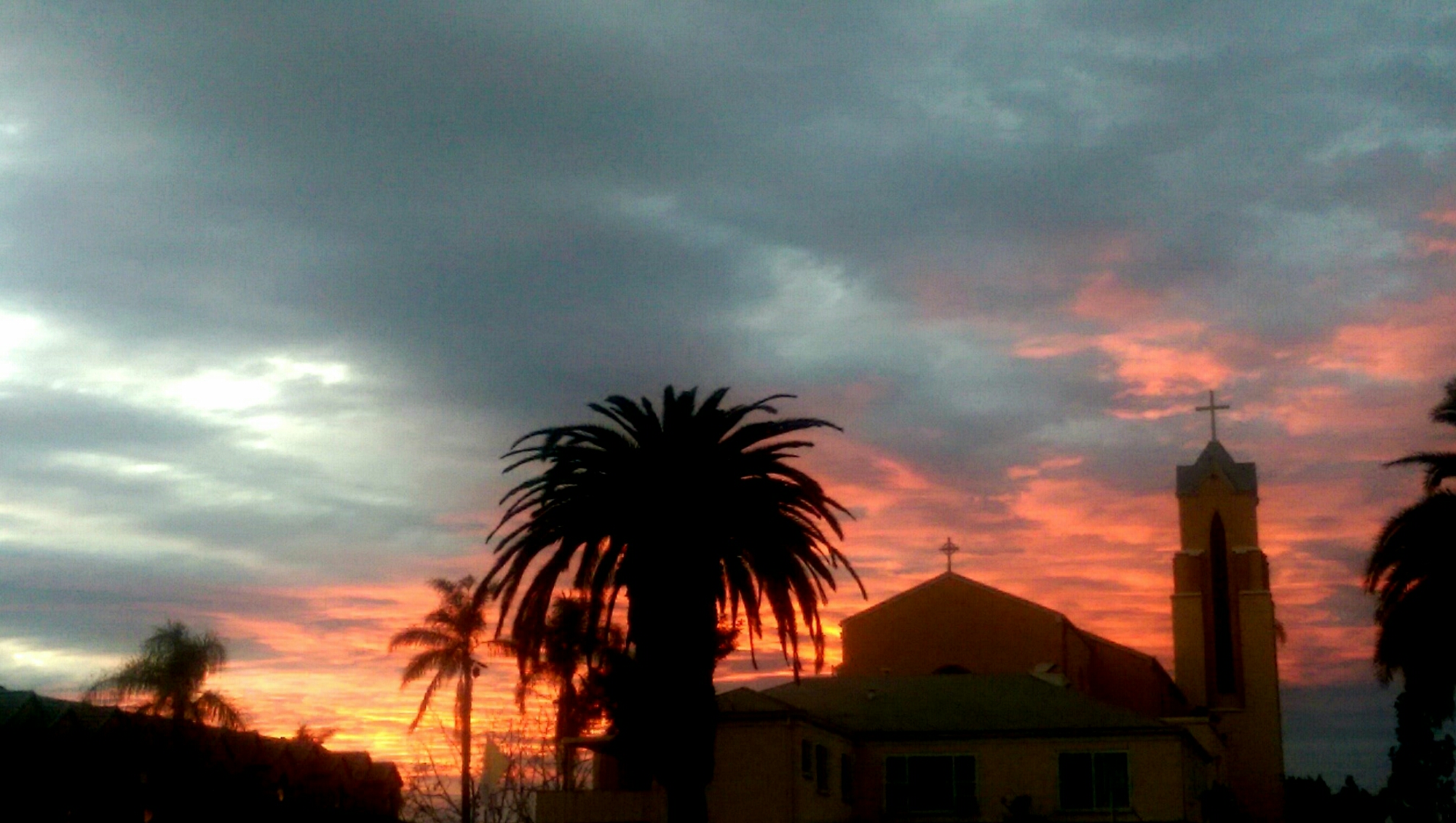
In the past couple of months, we’ve had the most spectacular sunsets – the most magnificent skies, really.

In addition, balmy, magical nights.

I don’t know if it’s just me, but San Diego and Southern California are becoming more and more lovely and precious each day.
It is like falling in love, all over again.

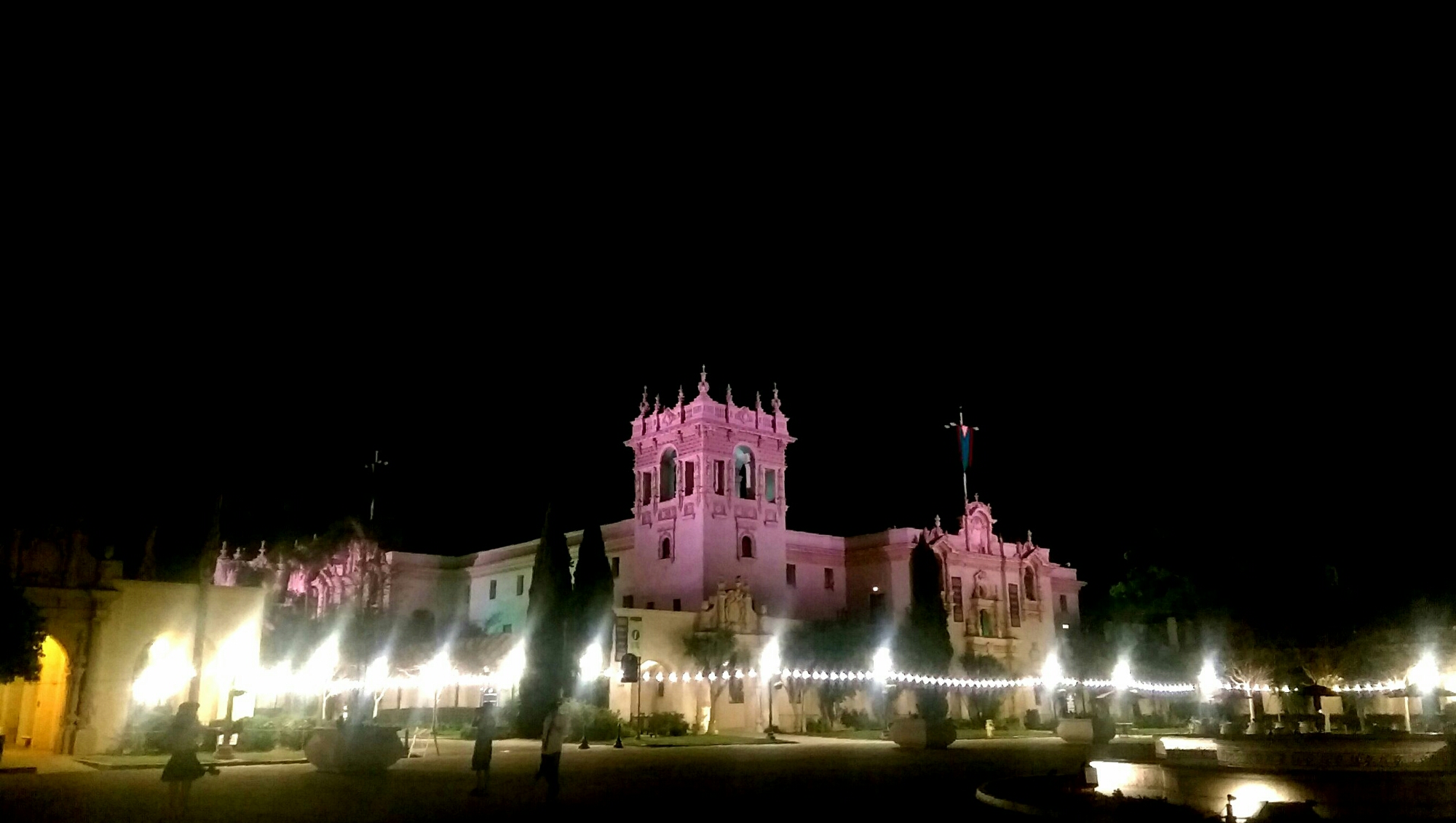
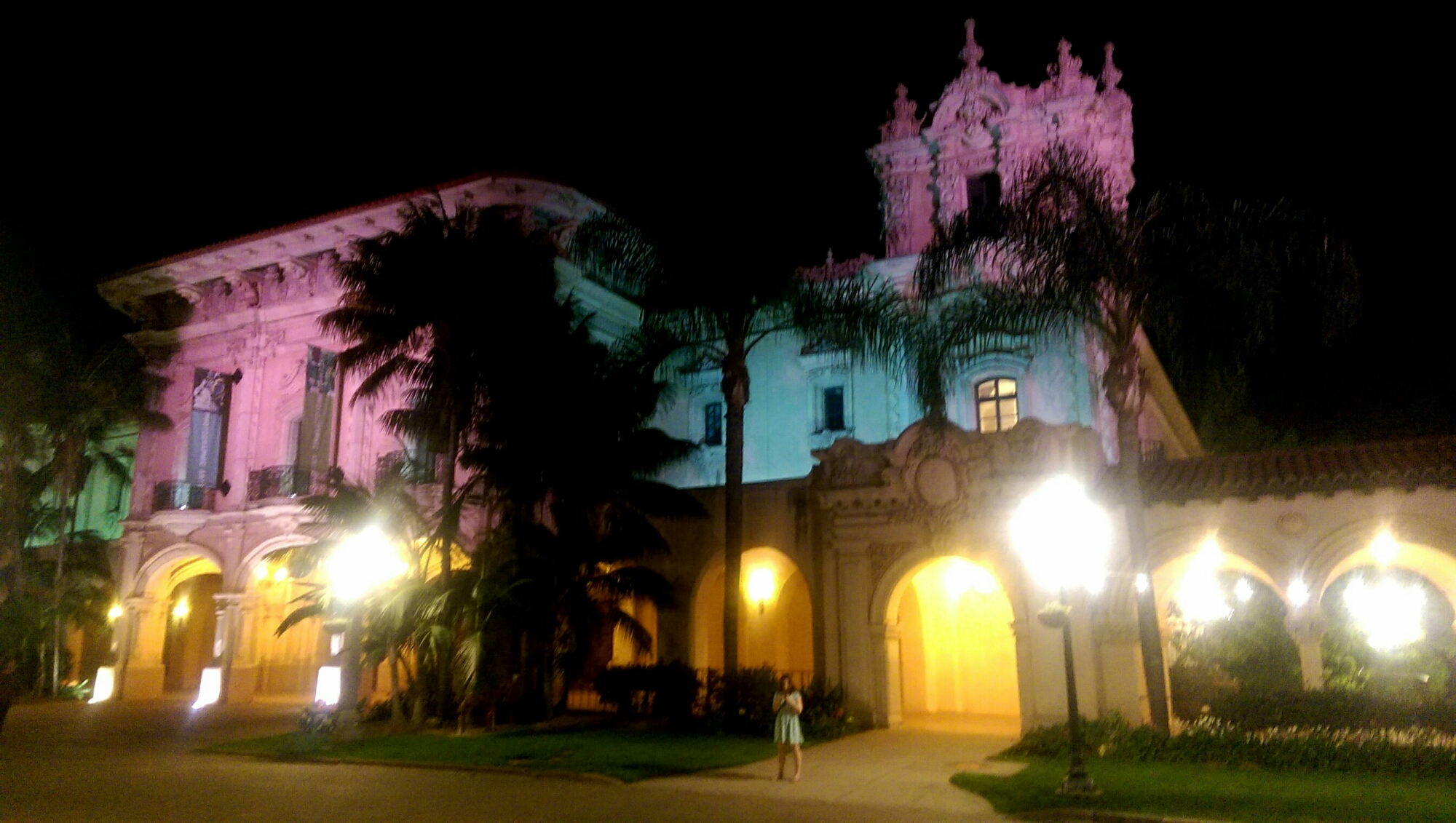
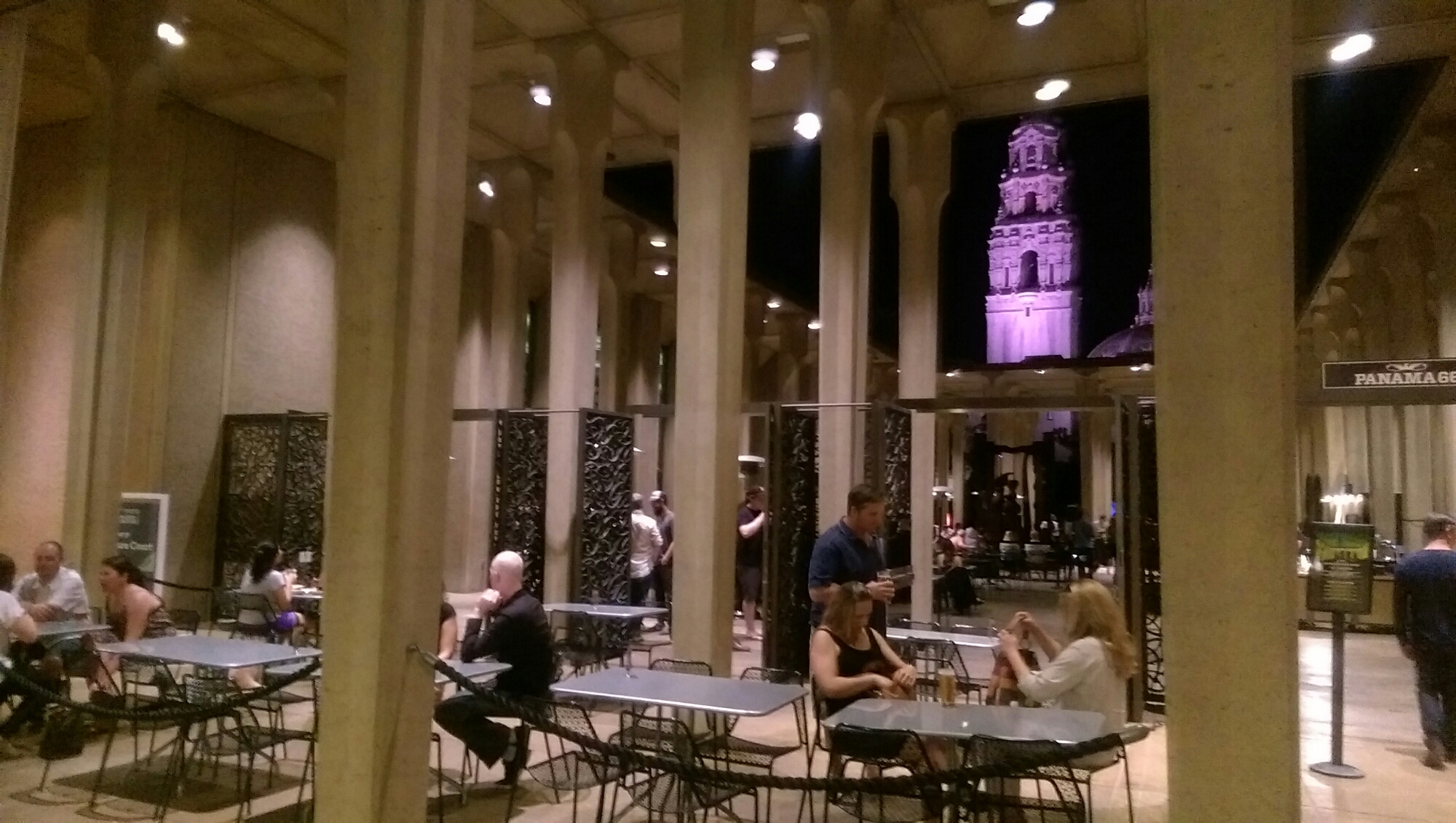
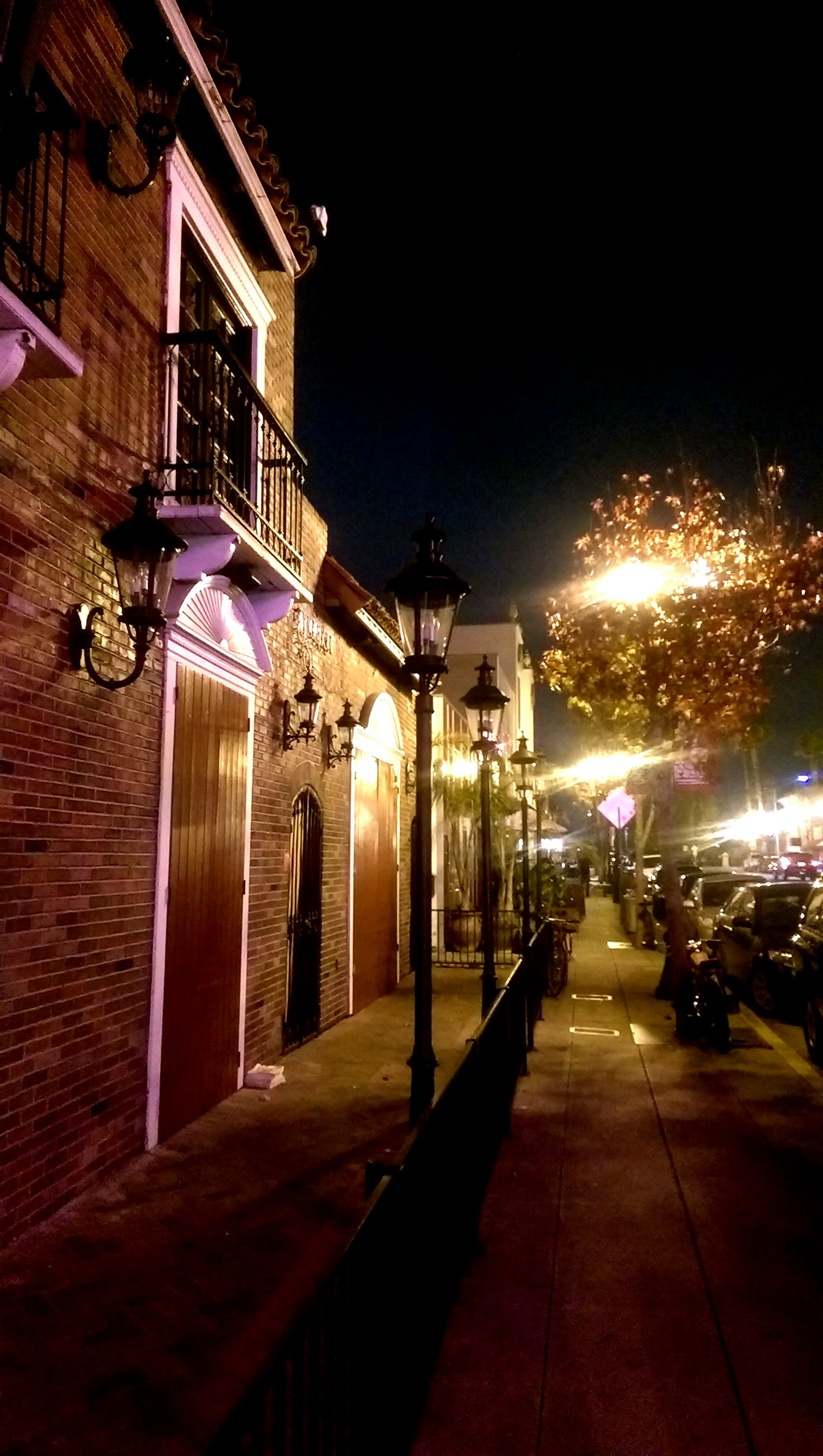
Tonight I want to share some night and sunset shots, reserving the day skies for another post.
These photos have all been taken and corrected on my HTC One camera, hence the sometimes annoying light ‘spilling’, low res and graininess.
I will start carrying my Panasonic camera again, and correcting on Photoshop. I realize that my photos look better on a small screen…
One day I would like to invest in a proper Digital DSRL, but for now accept these artisanal shots.

I have taken to making nightly pilgrimages to our Balboa Park.
This is our cultural park, with more than twenty art museums and Spanish Colonial Revival architecture. The pairing of Spanish architecture and tropical greenery take me to Cuba, to Puerto Rico…to the Caribbeans. Balboa Park was built in 1915 for the Pan-American Exhibition, and is celebrating its Centenary this year!

The central plaza, Plaza de Panama, is now restored as the living room of the city.

To my eye, the park is more and more beautiful each month that goes by.

image

View from Cabrillo Bridge. Balboa Park, Uptown San Diego. January 2015.

image

Night view from Cabrillo Bridge. Balboa Park, Uptown San Diego. January 2015.

image

View of Plaza De Panama. Balboa Park, Uptown San Diego. March 2015.

image

Balboa Park, Uptown San Diego. March 2015.

image

Arboretum. Balboa Park, Uptown San Diego. March 2015.

image

Sculpture Garden. Balboa Park, Uptown San Diego. March 2015.

image

Museum of Man. Balboa Park, Uptown San Diego. March 2015.

And here are other end-of-day scenes from San Diego.

image

Normal Heights, San Diego. January 2015.

image

Bankers' Hill, San Diego. January 2015.

image

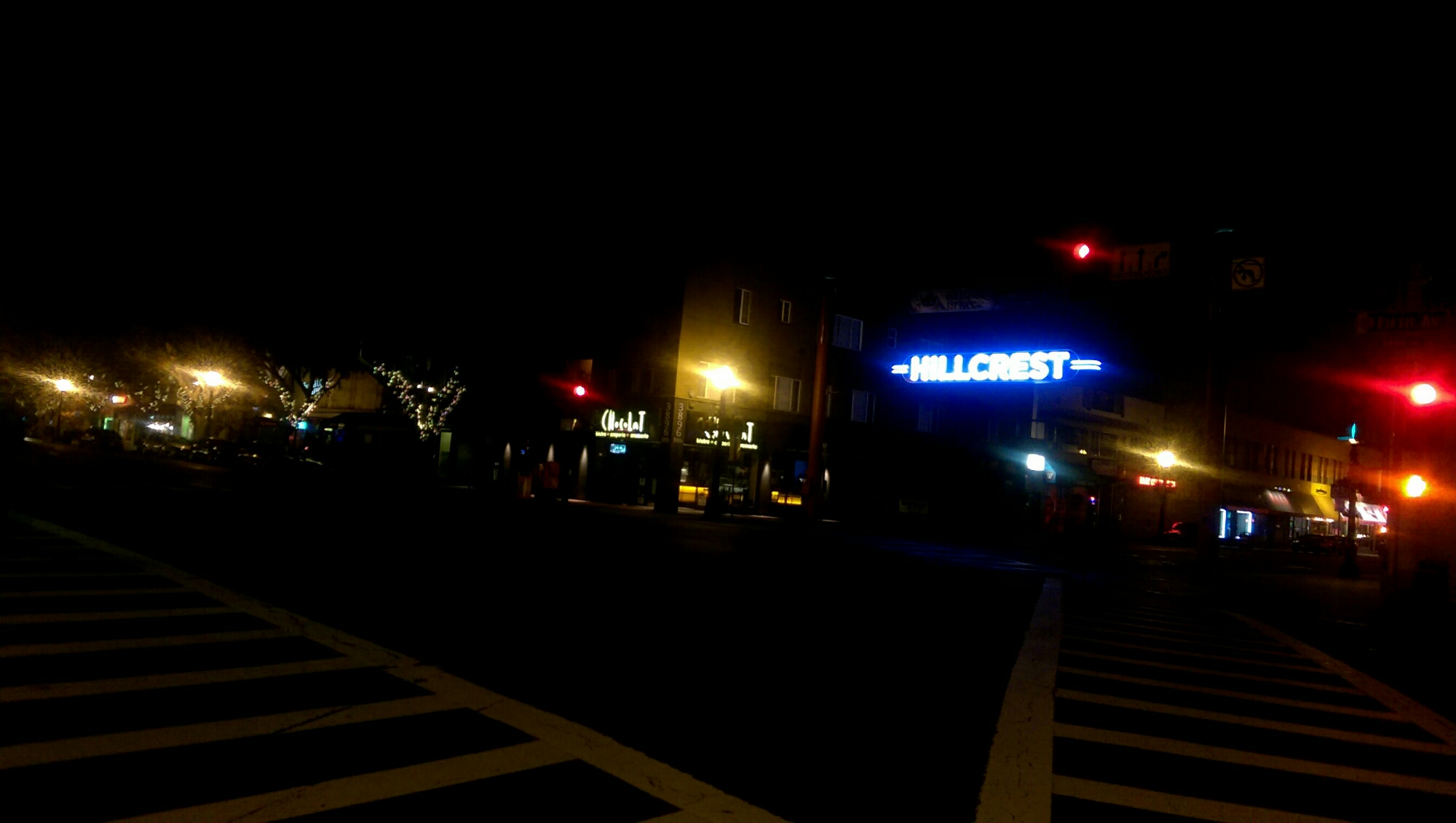
Hillcrest, San Diego. February 2015.

image

University Heights, San Diego. February 2015.

image

Hillcrest, San Diego. February 2015.

image

Downtown San Diego, Gaslamp Quarter, Horton Plaza. December 2014

image

Downtown San Diego, Gaslamp Quarter, Horton Plaza. December 2014.

image

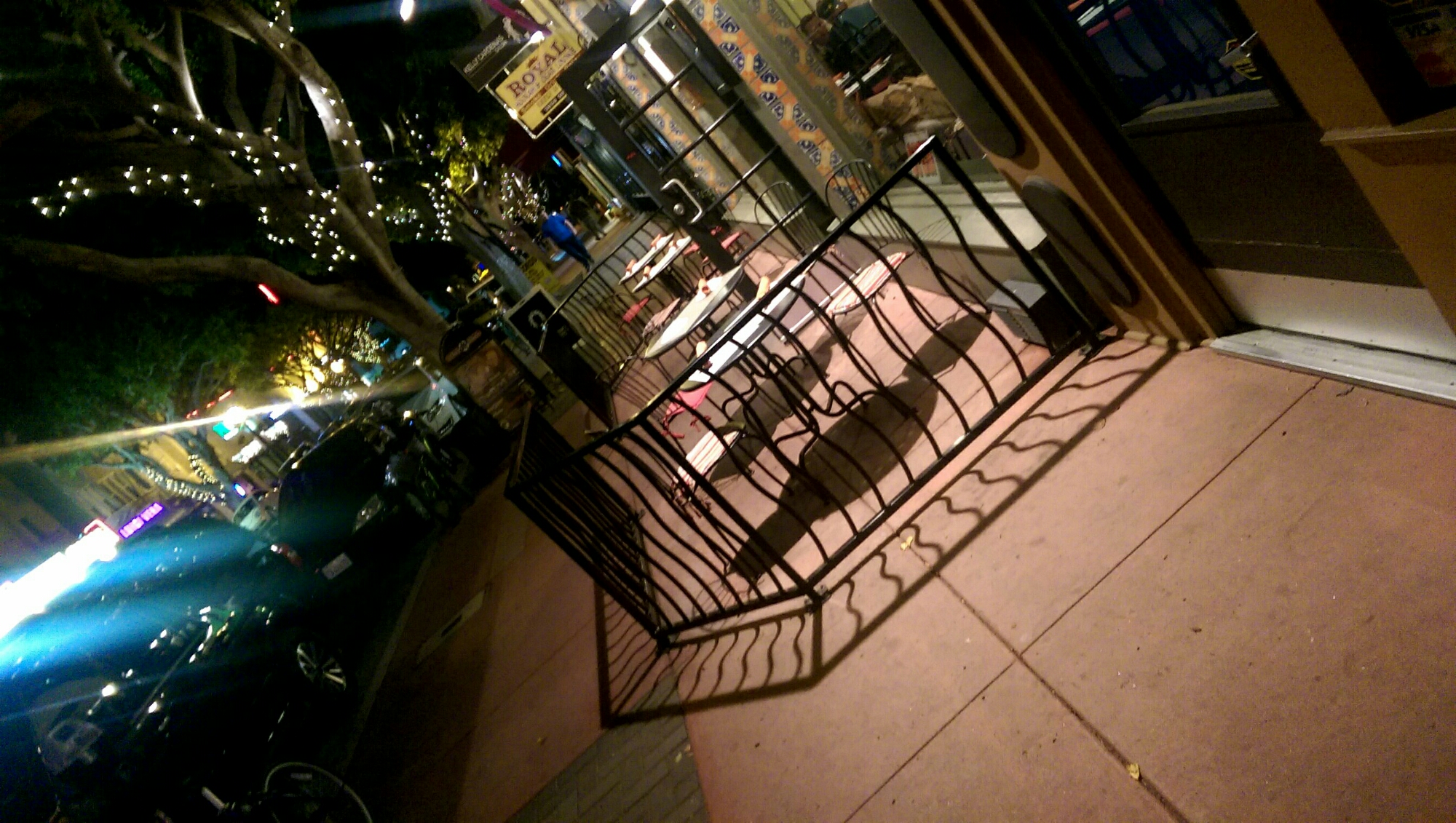
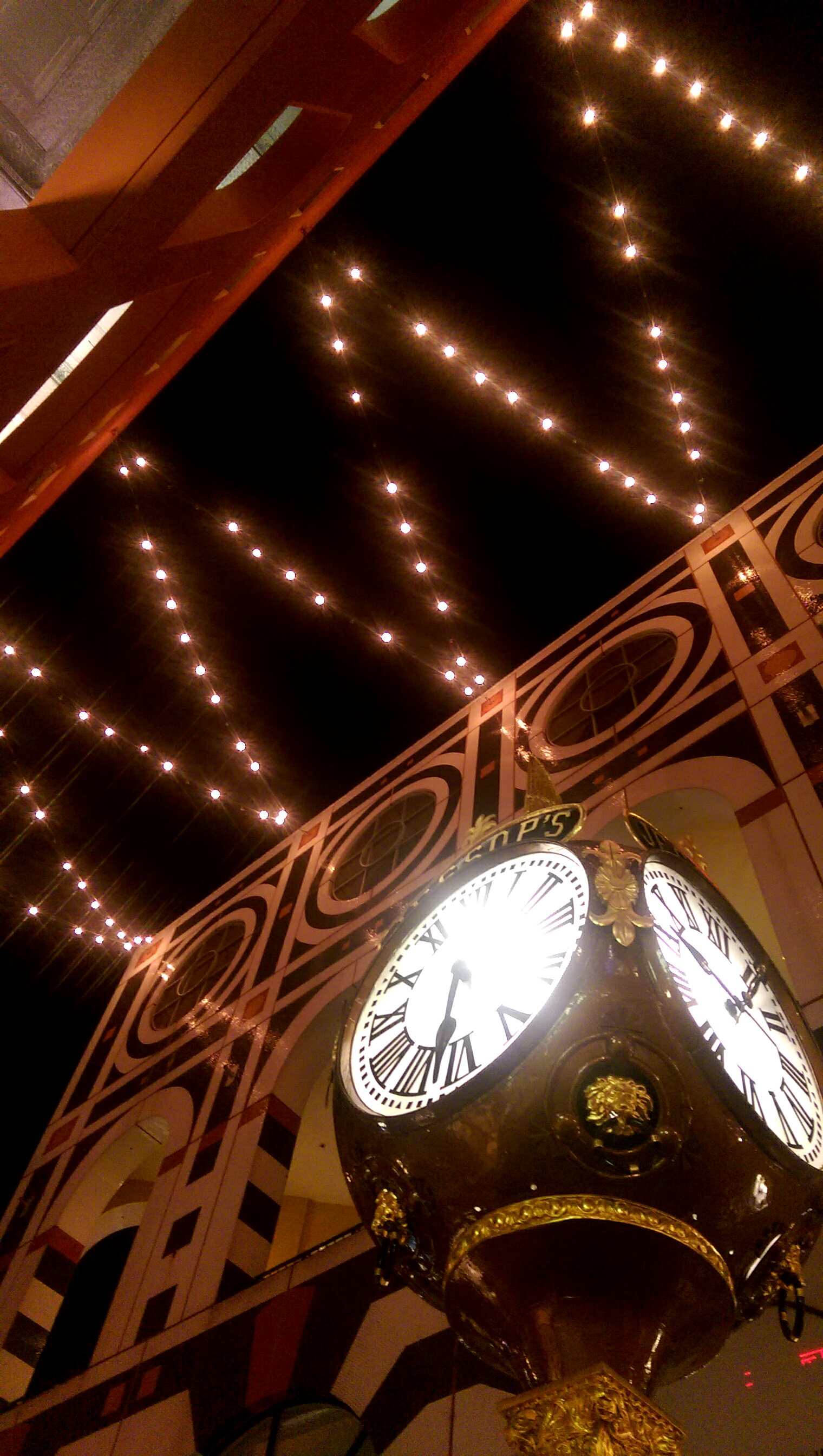
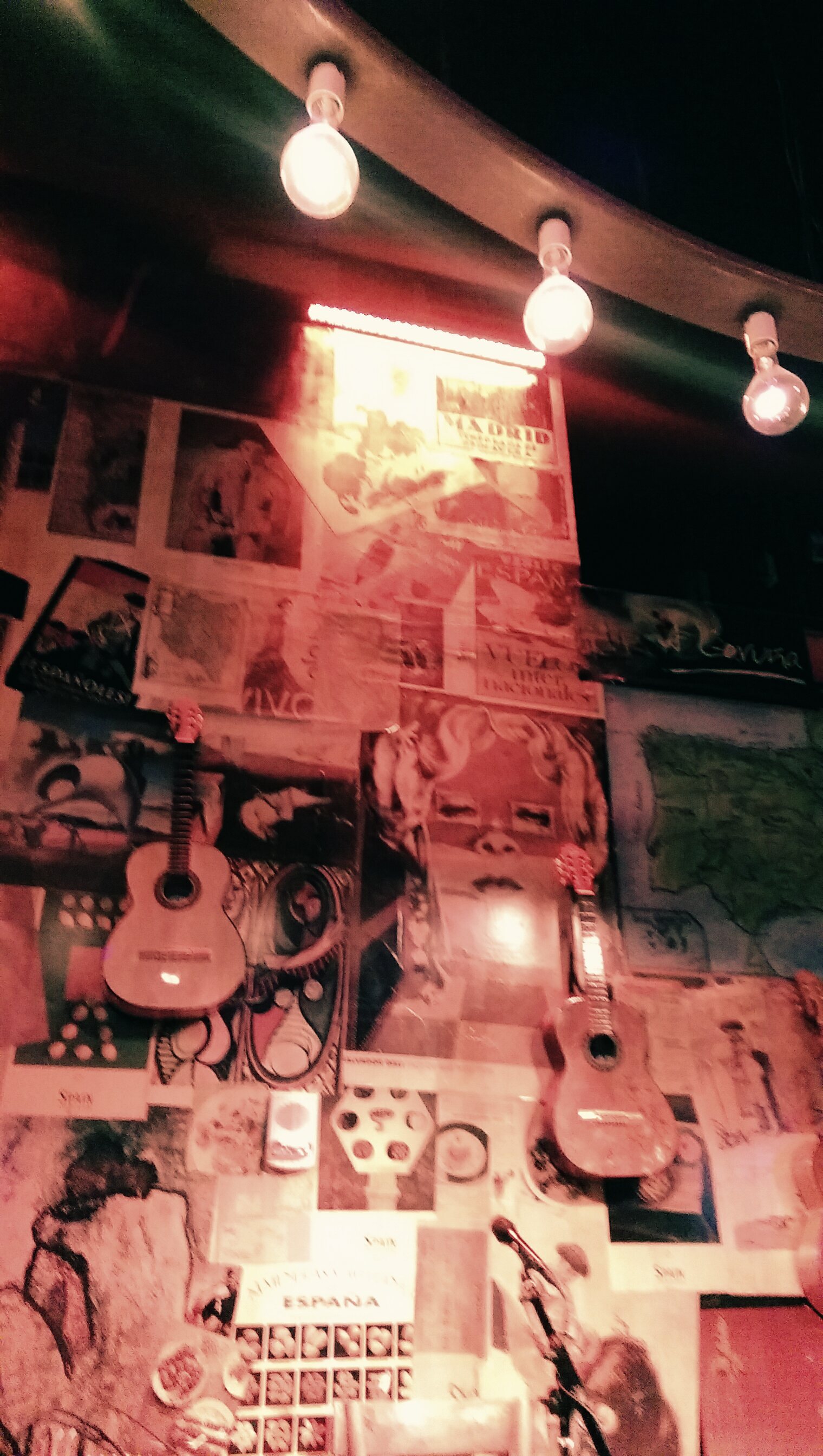
Gaslamp Quarter, San Diego. Cafe' Sevilla. January 2015.

image

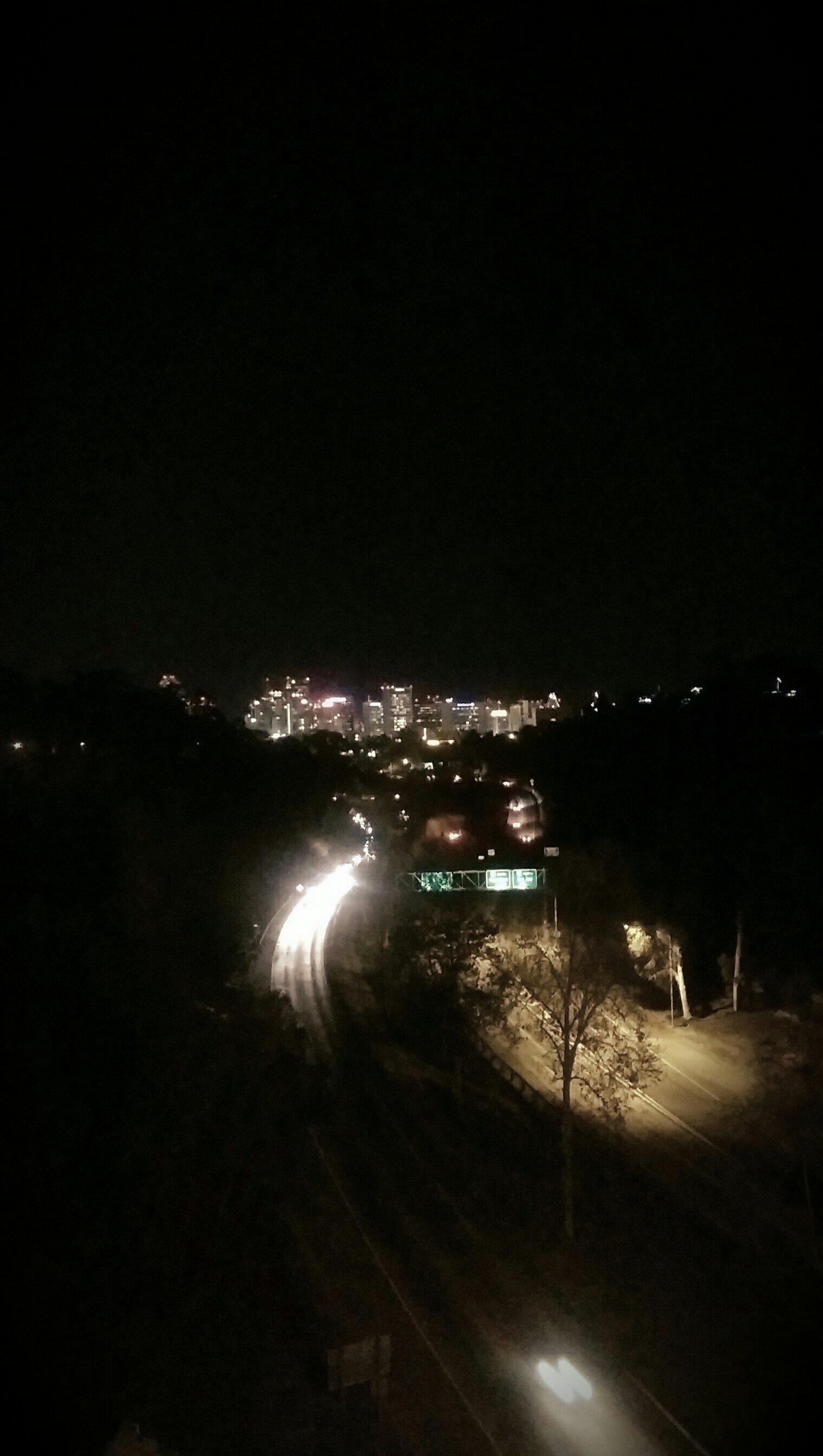
163 South Highway towards Downtown San Diego. View from Cabrillo Bridge, Balboa Park. March 2015.


And now, two poems to the Night.

The Night is Still

by Edith Matilda Thomas


The night is still, the moon looks kind,
The dew hangs jewels in the heath,
An ivy climbs across thy blind,
And throws a light and misty wreath.

 
The dew hangs jewels in the heath,
Buds bloom for which the bee has pined;
I haste along, I quicker breathe,
The night is still, the moon looks kind.

Buds bloom for which the bee has pined,
The primrose slips its jealous sheath,
As up the flower-watched path I wind
And come thy window-ledge beneath.

The primrose slips its jealous sheath,—
Then open wide that churlish blind,
And kiss me through the ivy wreath!
The night is still, the moon looks kind.

….

A Gift

by Leonora Speyer


I Woke: —
Night, lingering, poured upon the world
Of drowsy hill and wood and lake
Her moon-song,
And the breeze accompanied with hushed fingers
On the birches.

 
Gently the dawn held out to me
A golden handful of bird’s-notes.


Read Full Post »

image

Lapis Azules

image

My next painting 🙂

image

image

image

image

Home....

image

image

image

image

image

image

image

image

image

image

image

image

image

image

image

image

image

image

image

image

image

image

Lei’ que San Juan, Cadiz y La Habana son la misma ciudad, pero en otros lugares

I read that San Juan, Cadiz, and Havana are all the same city, just in different places.
V.

Read Full Post »

image


Shift #5

Ali Liebegott

for Seamus Heaney


a box of coconut water
two cans of coconut milk

so many looking for help

some people care when a poet dies

a poem is a conscience
a report card, a confession:

today my lies were a motor that spun the Earth

how can you get truth from a hill
when I am the continent that drifts?

how can I taste what I’m mourning
when soon everything will be salt from the sea?


—8/30/13, Register 6
1 PM—5:15 p.m.

Read Full Post »

image

image

image

image

image


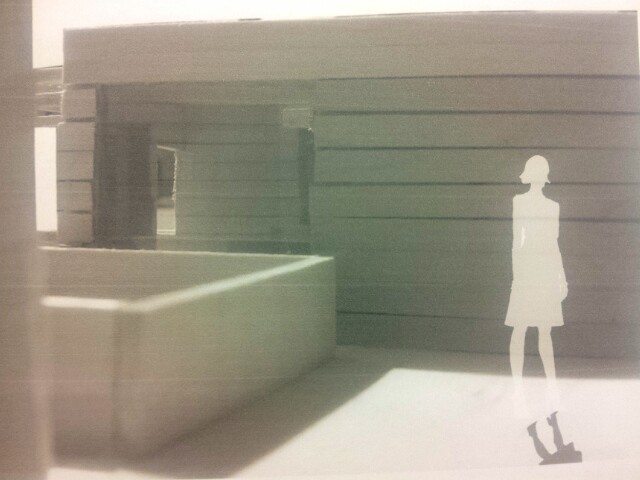
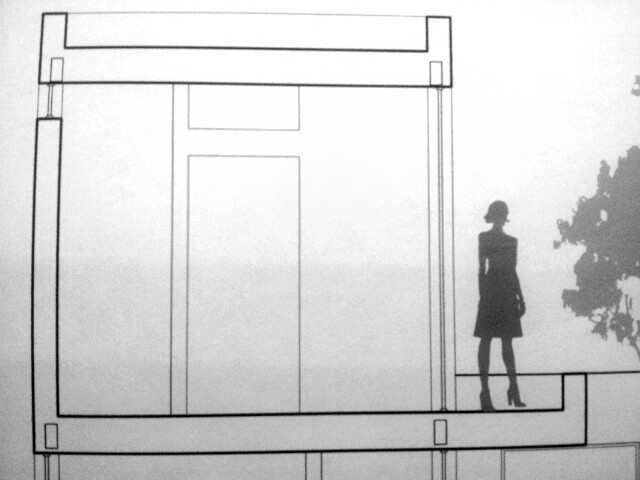
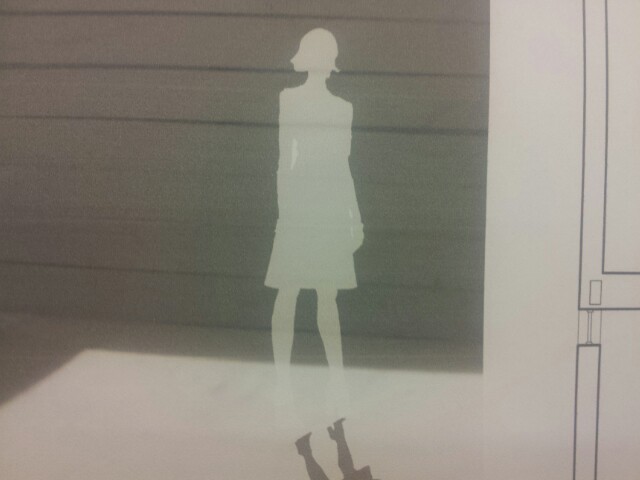
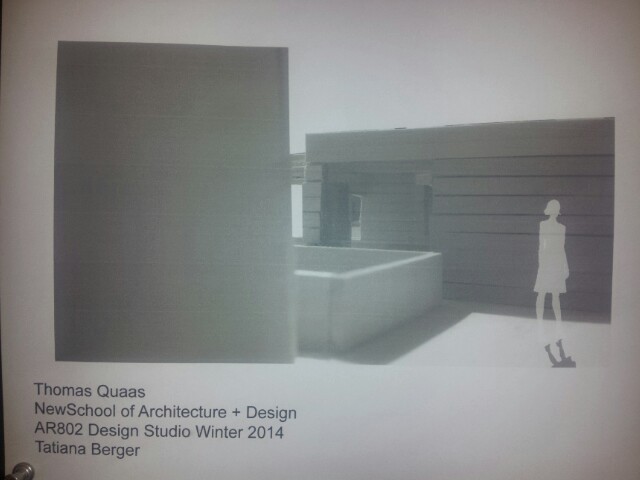
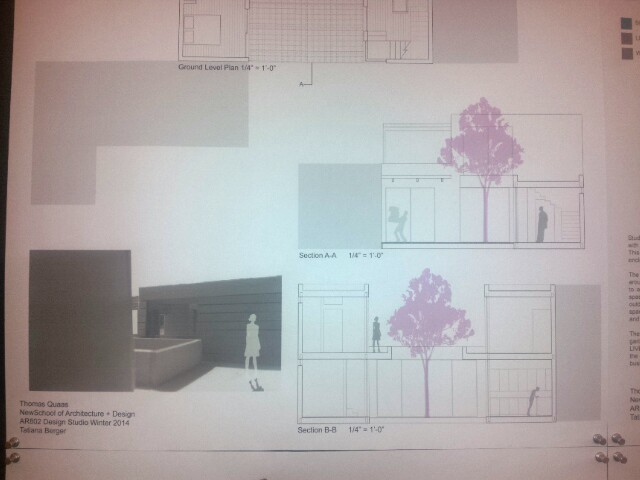
Thom, one of my past students, showed me his project during our school’s Finals’ Exhibit –where the best projects from each year were showcased.
He had found a silhouette that happened to look like me and placed it in his final rendering. 🙂

Read Full Post »

image

The Parker. Palm Springs. December 19, 2013.

image

image

image

image

image

P1040219web

image

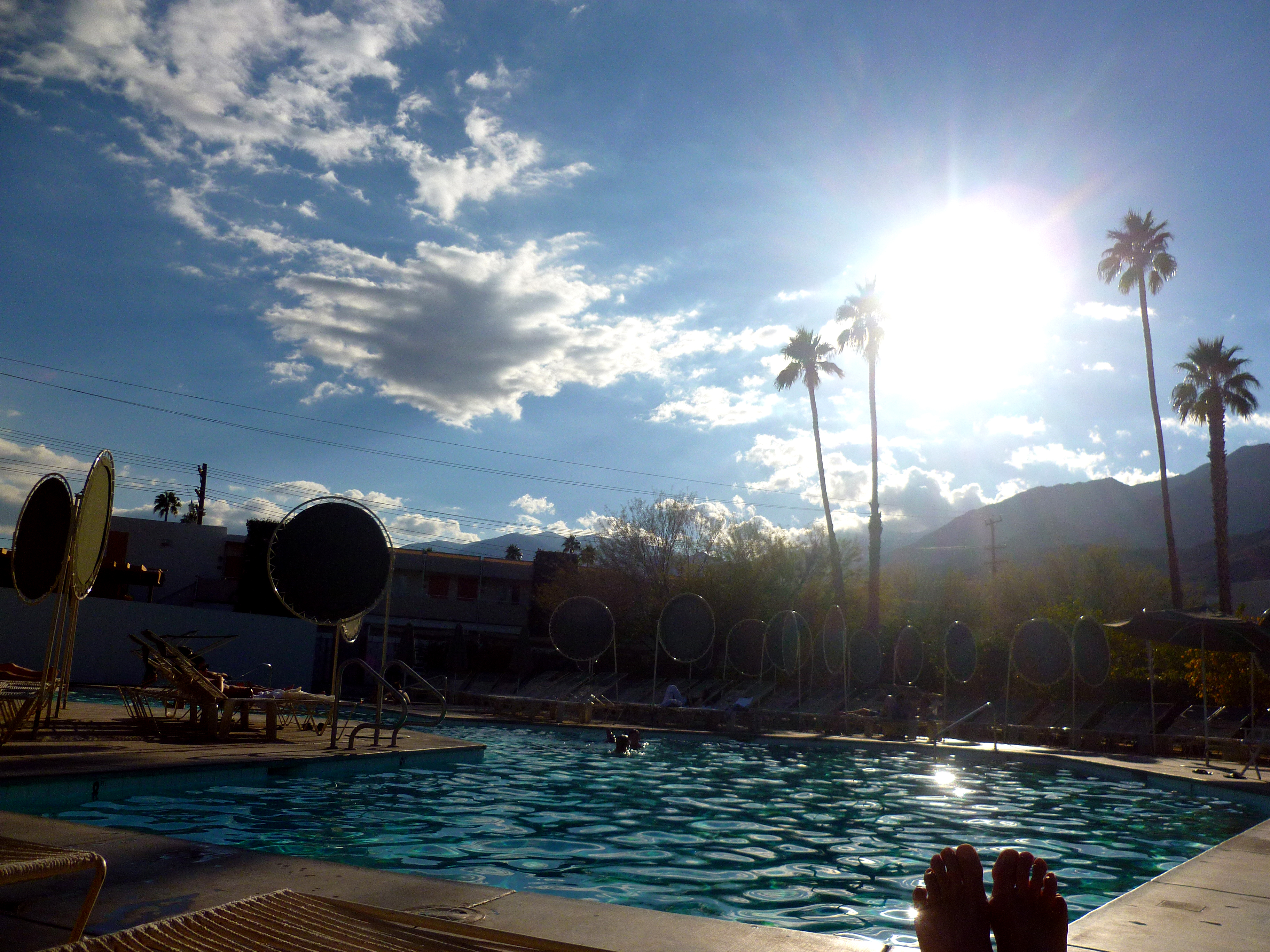
The Ace hotel in Palm Springs. December 19, 2013.


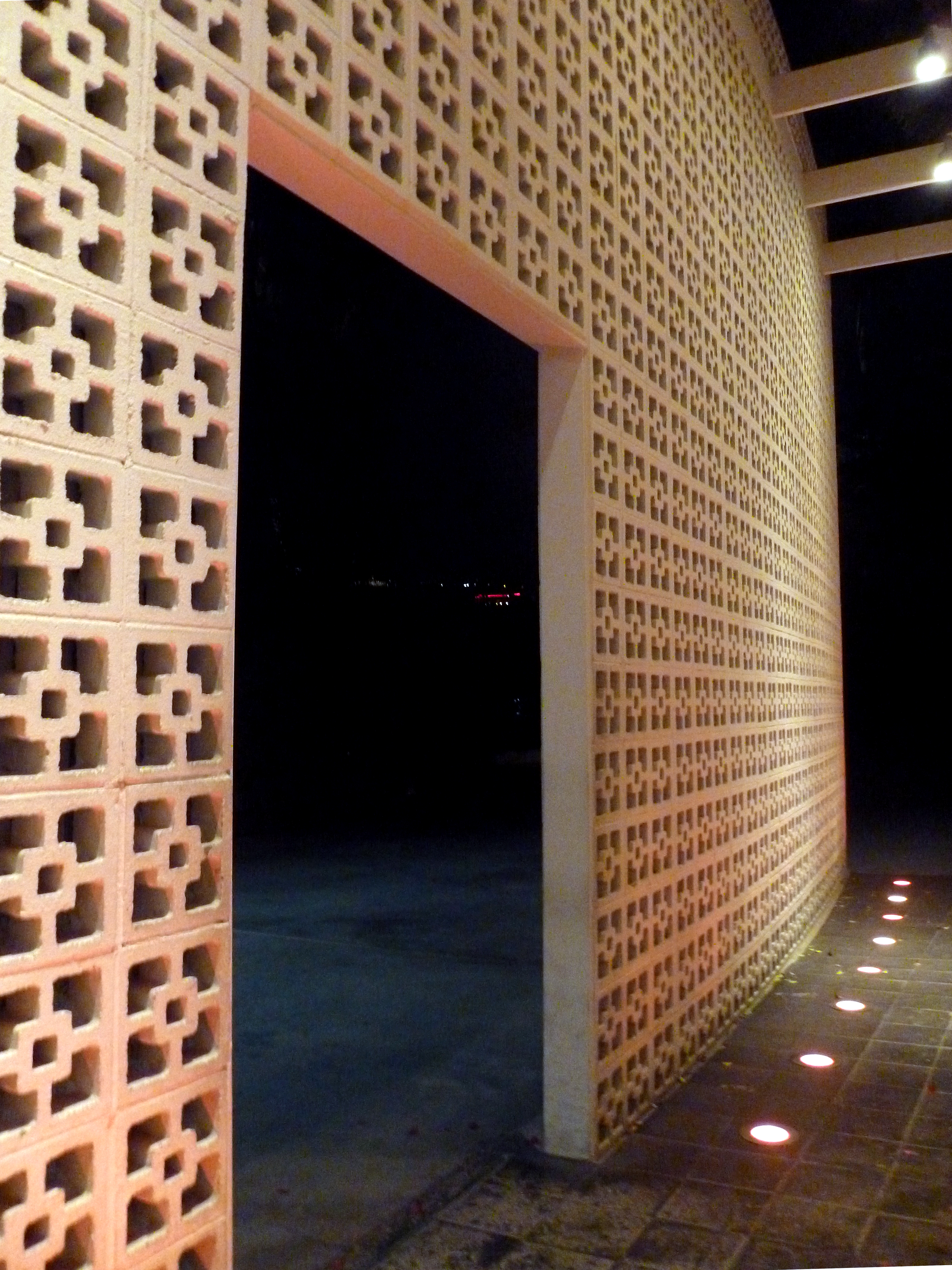
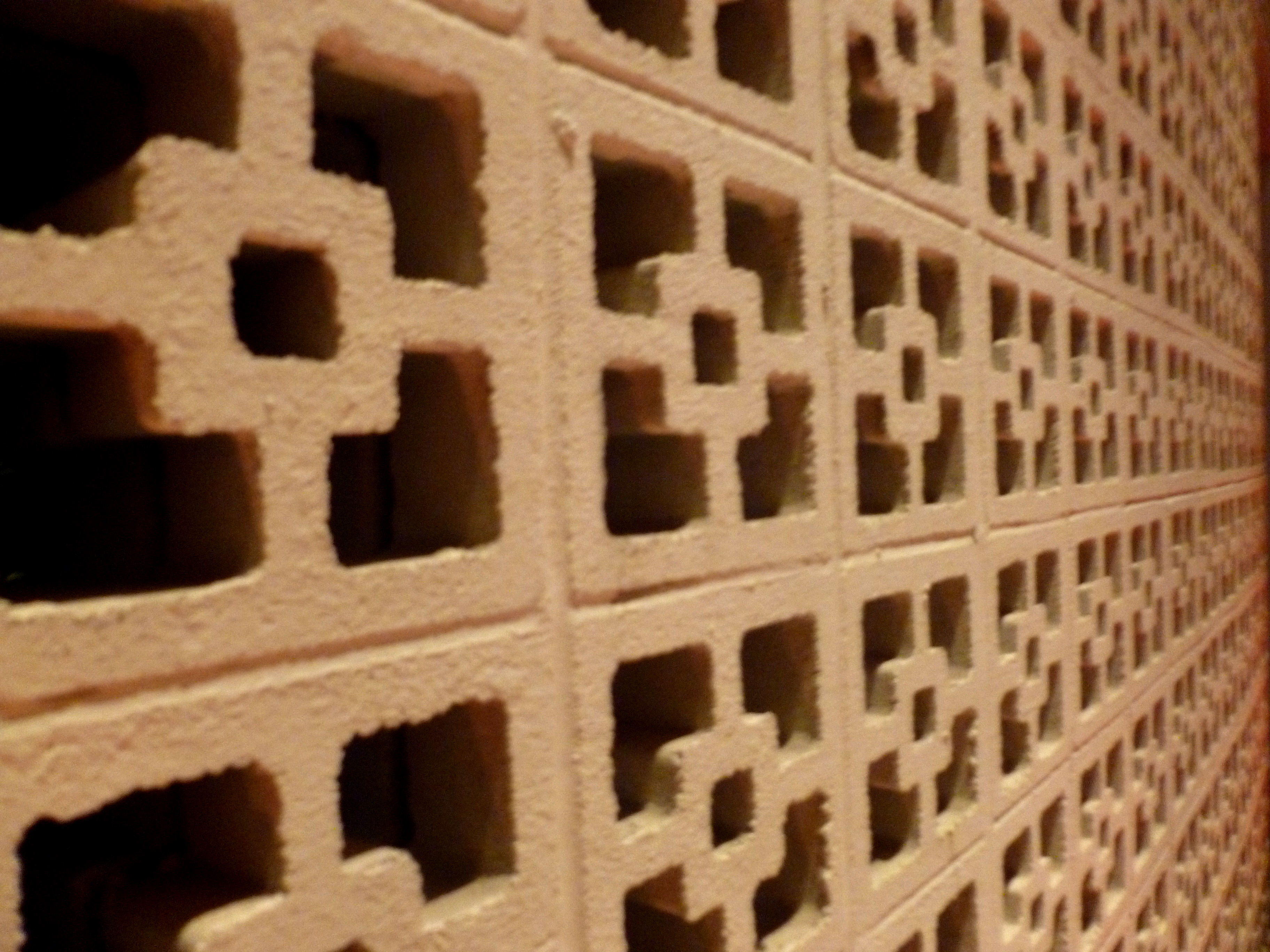
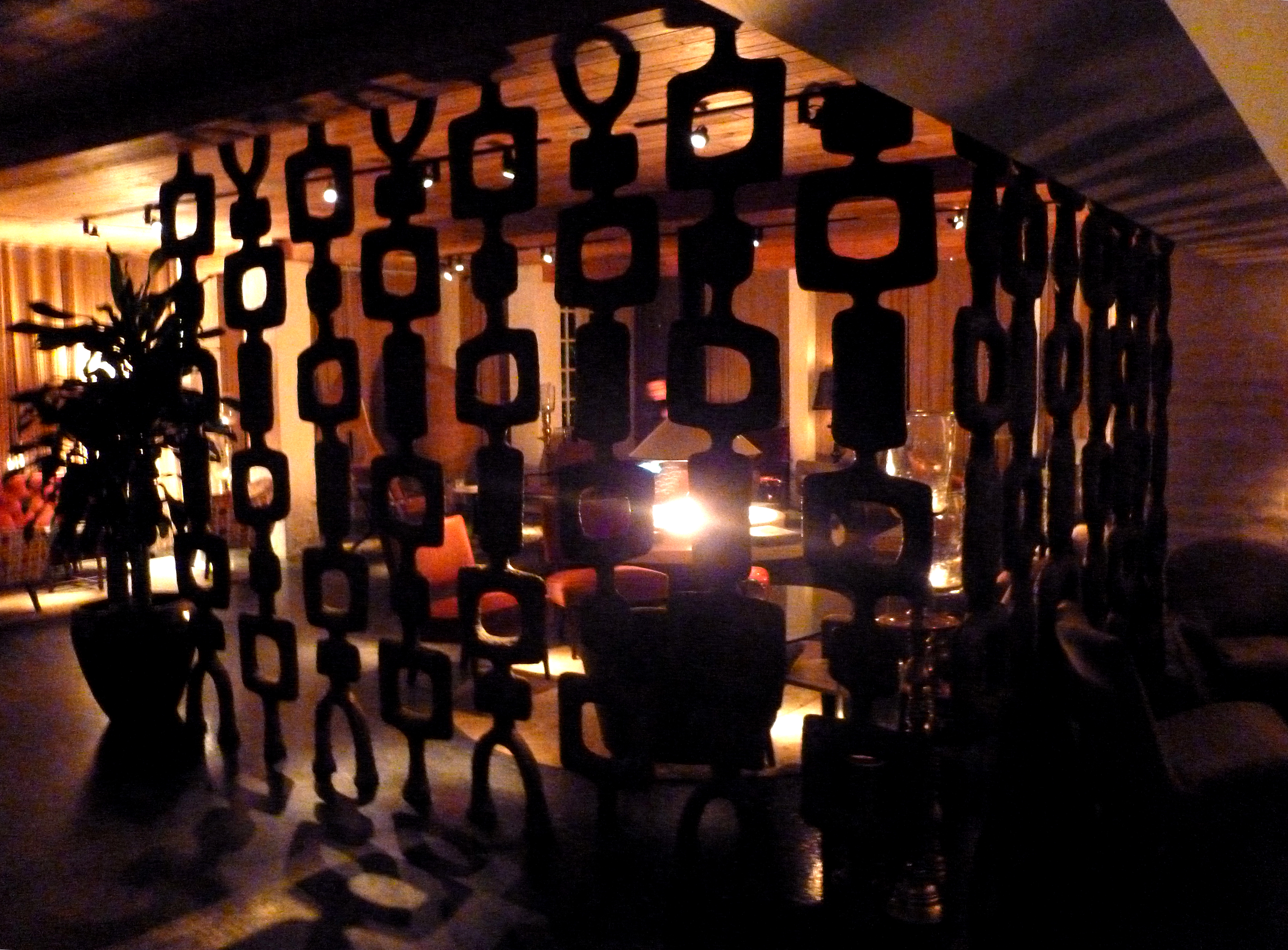
We came to Palm Springs
in search of the sun and found desert modern design,

image

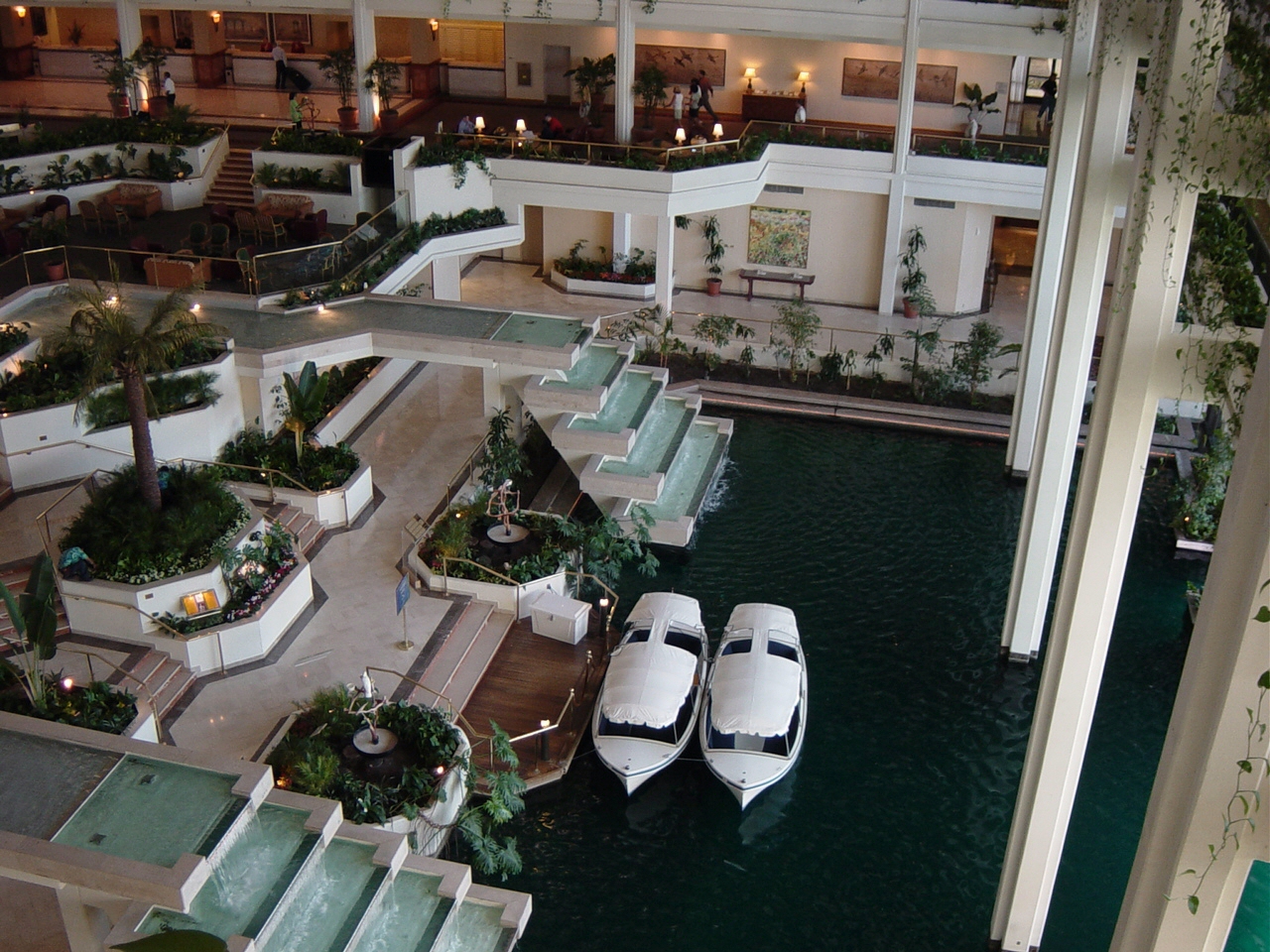
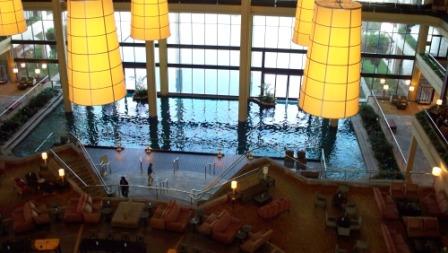
Desert Springs. The Canal @The Marriott.

perforated walls and floors that become water.
image

Read Full Post »

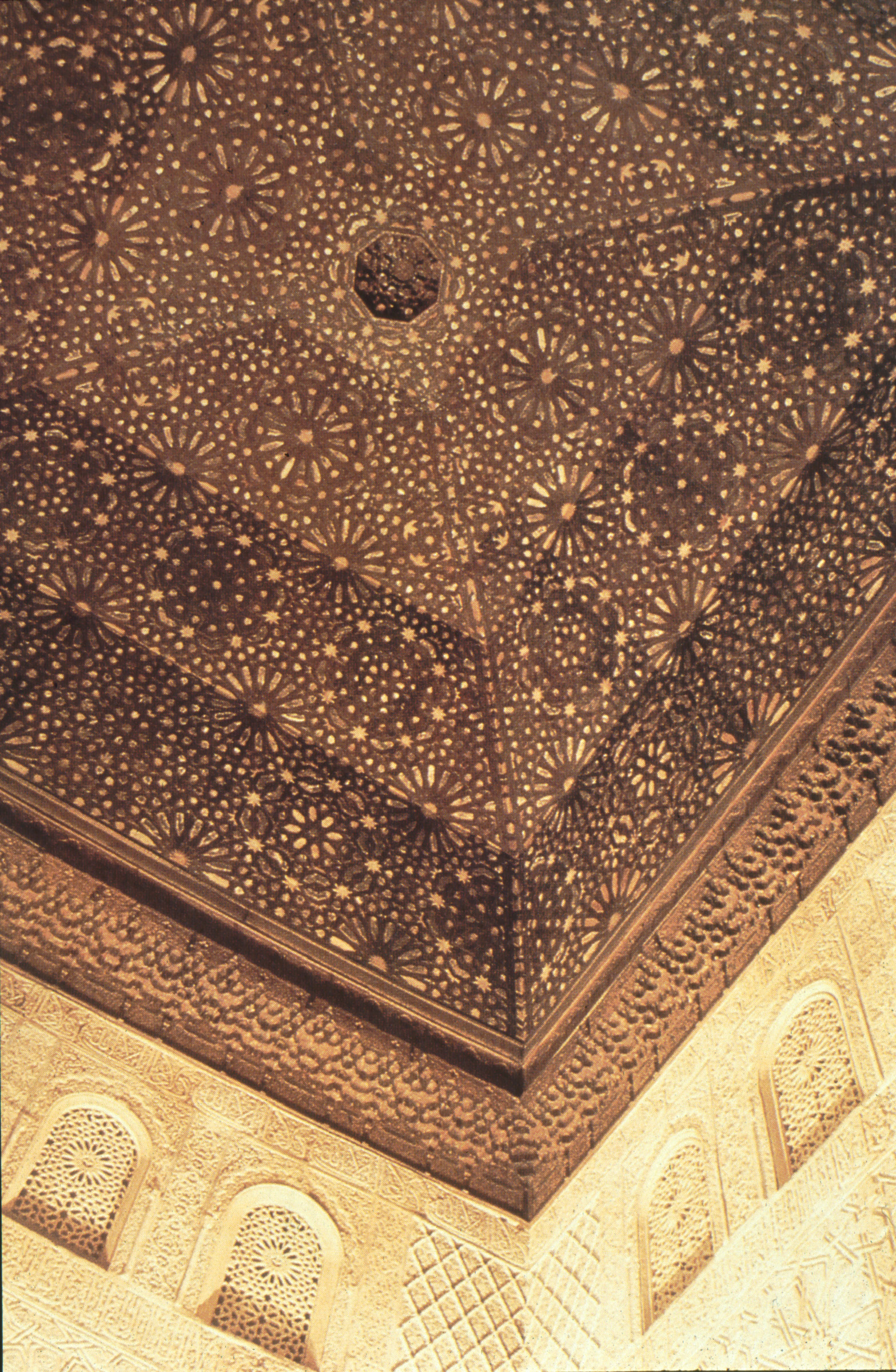
Alhambra: Hall of the Ambassadors.1370. Granada, Spain.

Alhambra: Hall of the Ambassadors. 1370. Granada, Spain

I have not been doing much art, obviously.

What I have been doing is lots of community outreach, poster design and design thinking, and an inordinate amount of  history of architecture presentations :).

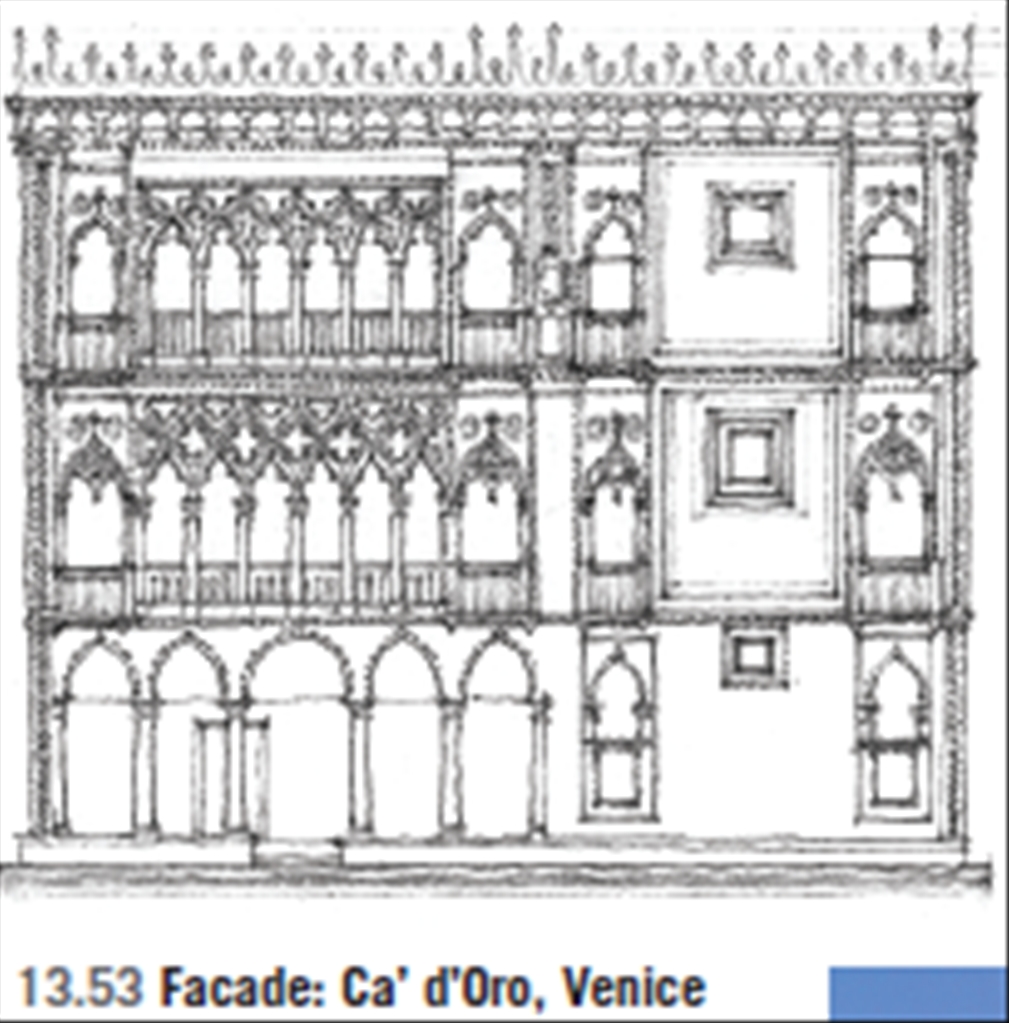
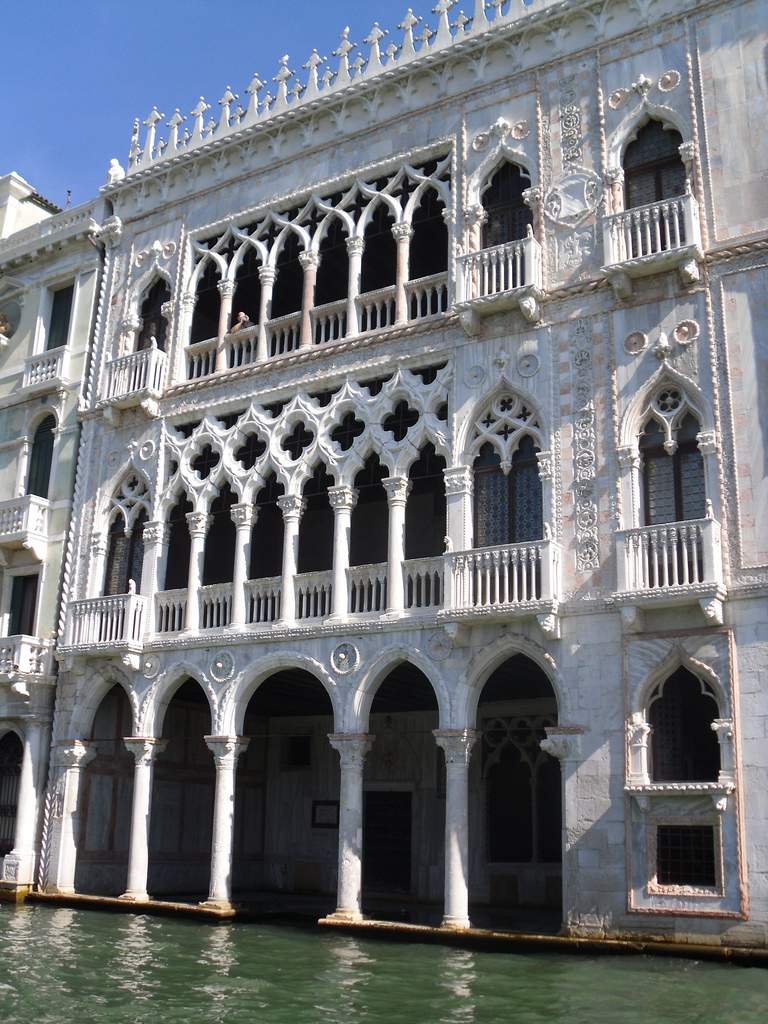
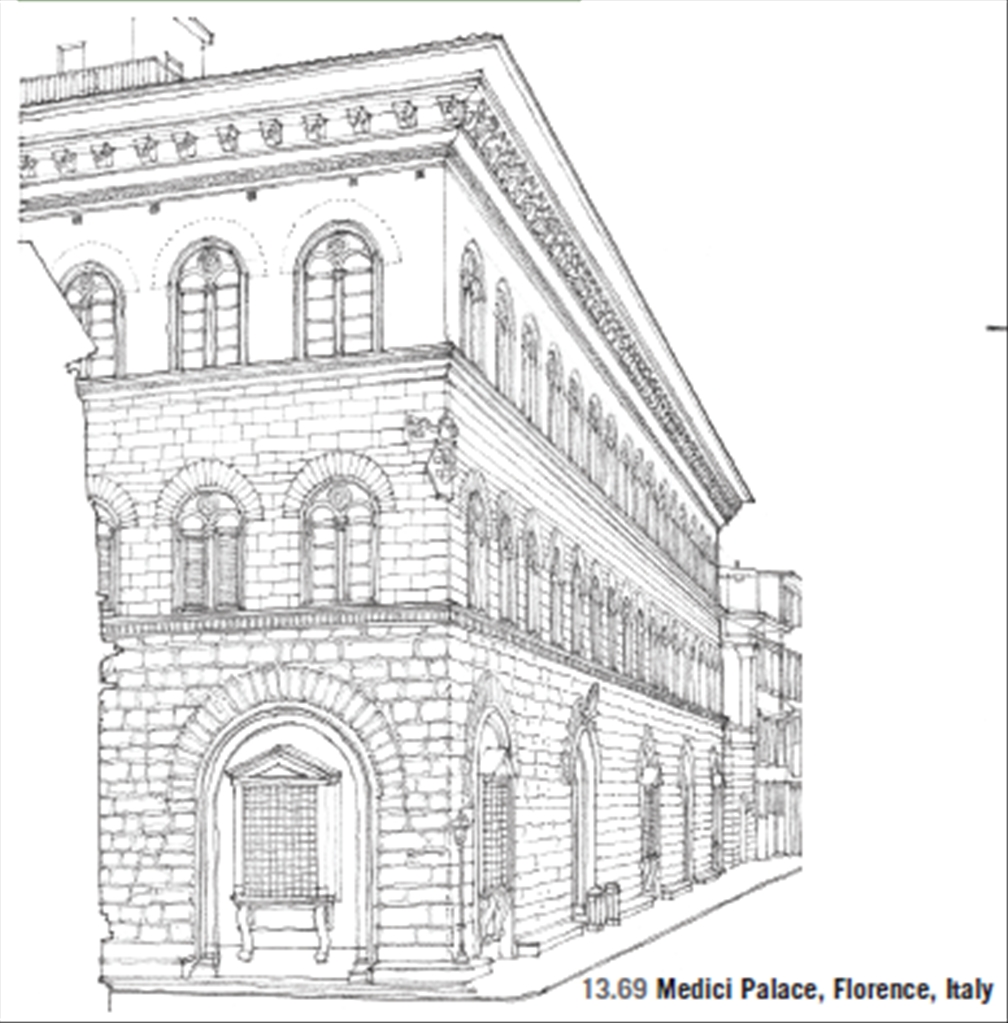
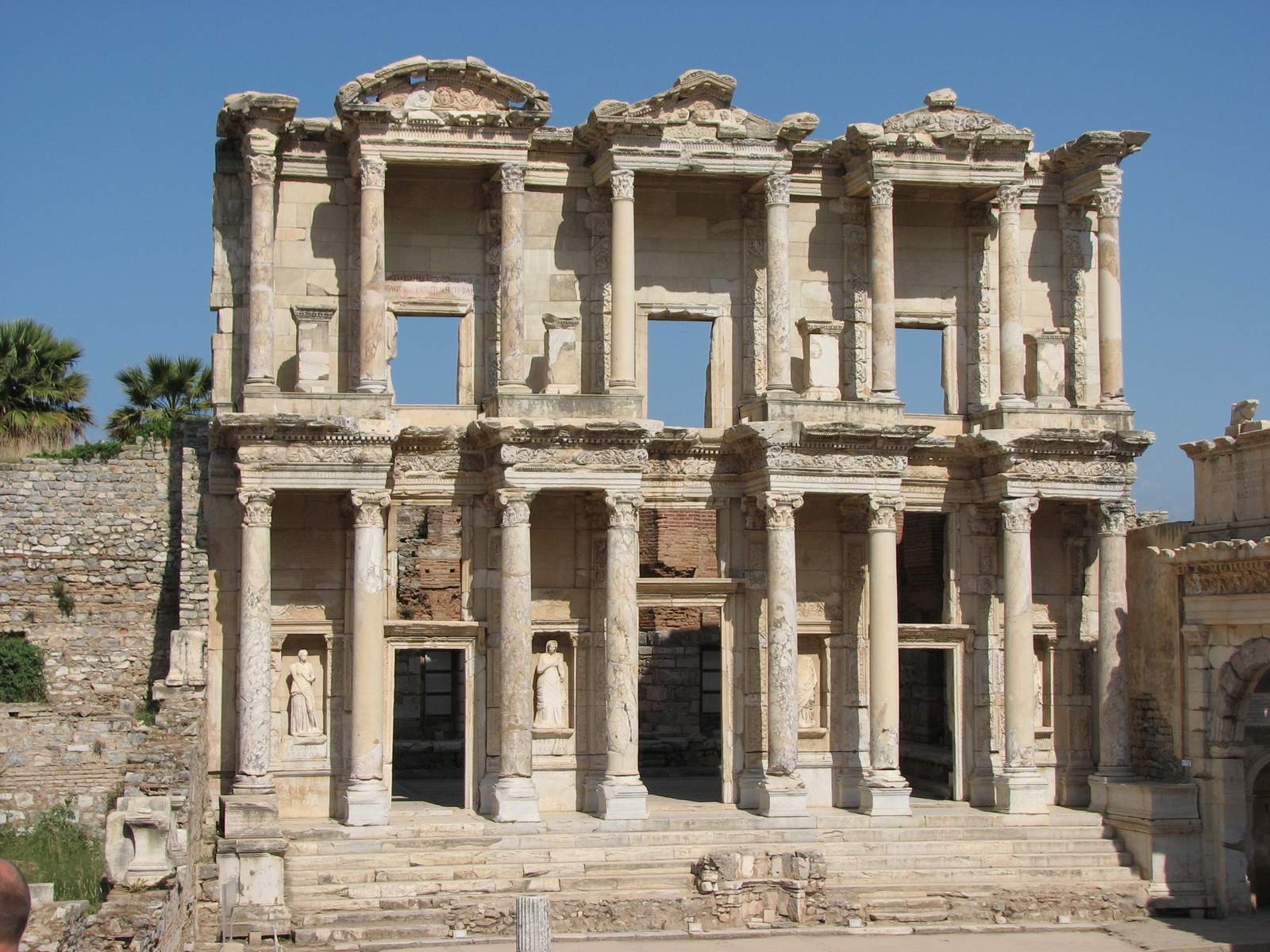
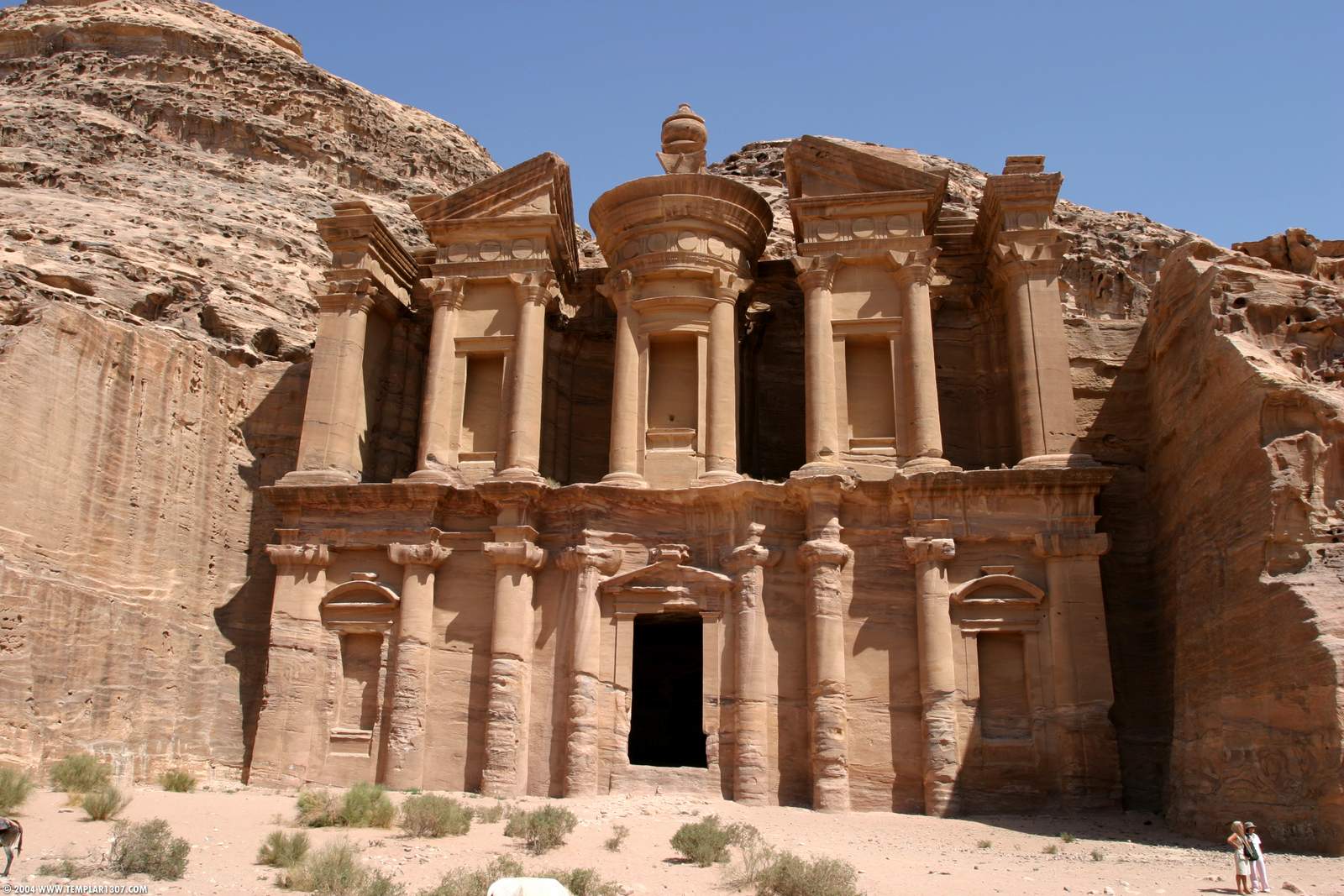
In my research, I found these beautiful, strange images.

I organized them in a narrative.

13-53

Ca'D' Oro, Venezia.

Ca’D’ Oro, Venezia.

13-69

Library of Celus.

Library of Celus. Roman building in Anatolia (Turkey).

El Deir. Petra. Jordan.

El Deir. Petra, Jordan. 1st Century CE.

Taos Pueblo.

Taos Pueblo.

Hassan Fathy. New Gourna Village, Egypt. 1945-1948.

Hassan Fathy. New Gourna Village, Egypt. 1945-1948.

14-66

Hindu Mandala

Hindu Mandala

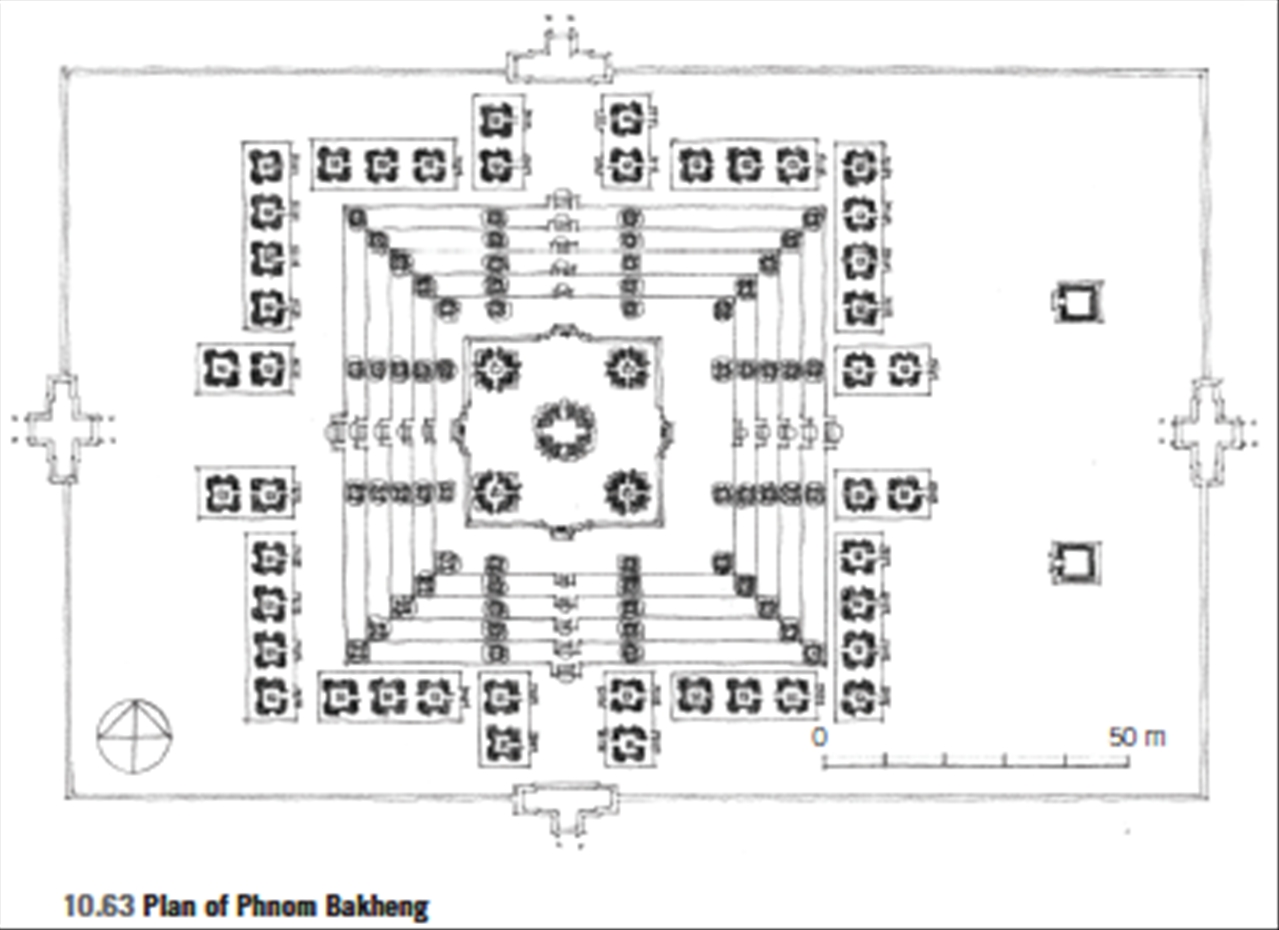
10-63

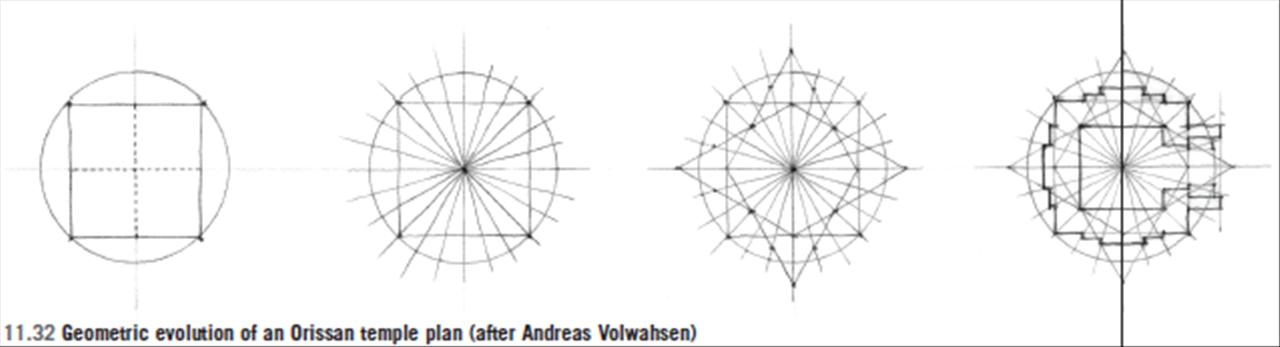
11-32

8-41

7-85

Sigirya. A giant turtle?

Sigirya Lion Rock. Sri Lanka. It should be called Turtle Rock.

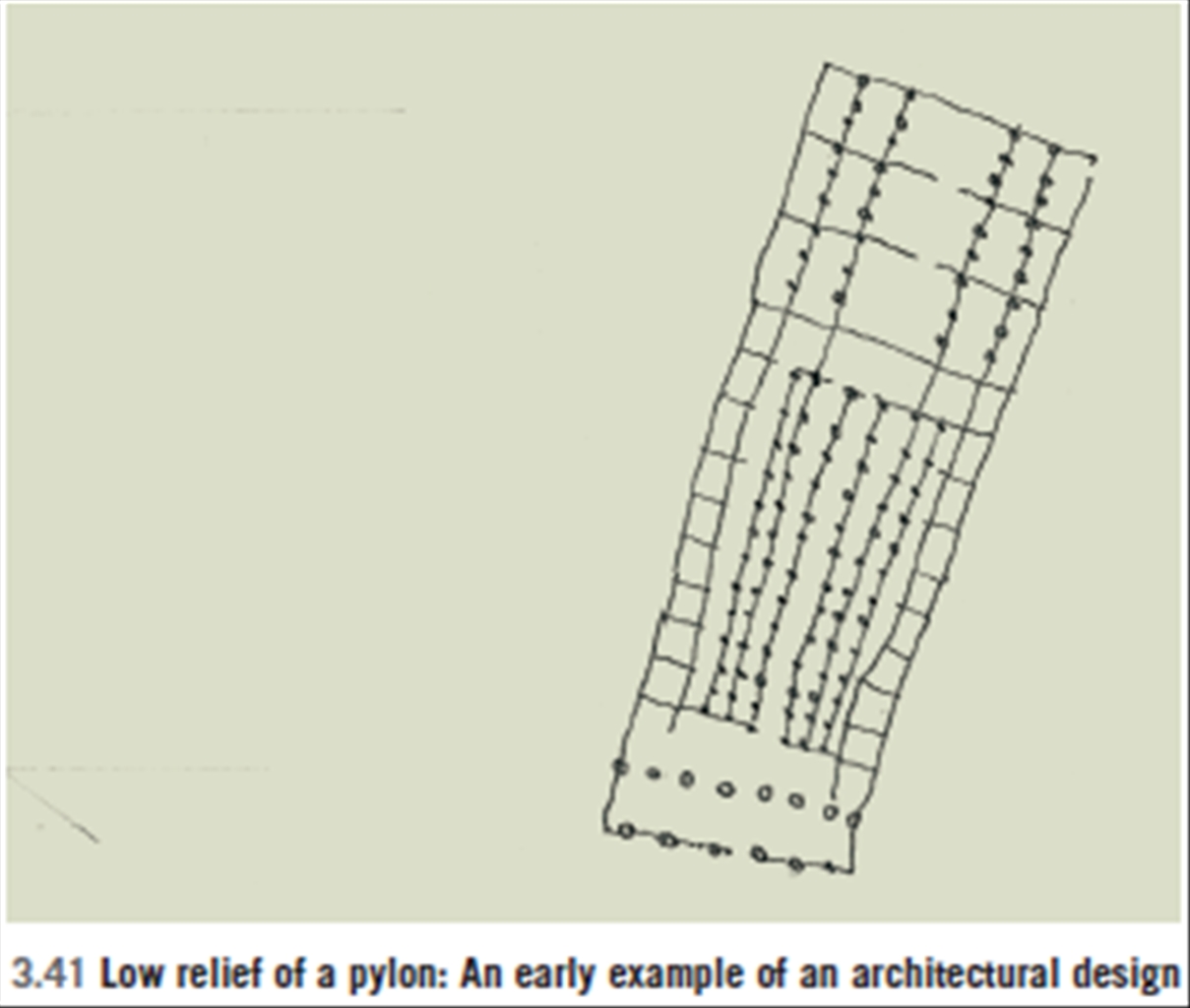
3-41

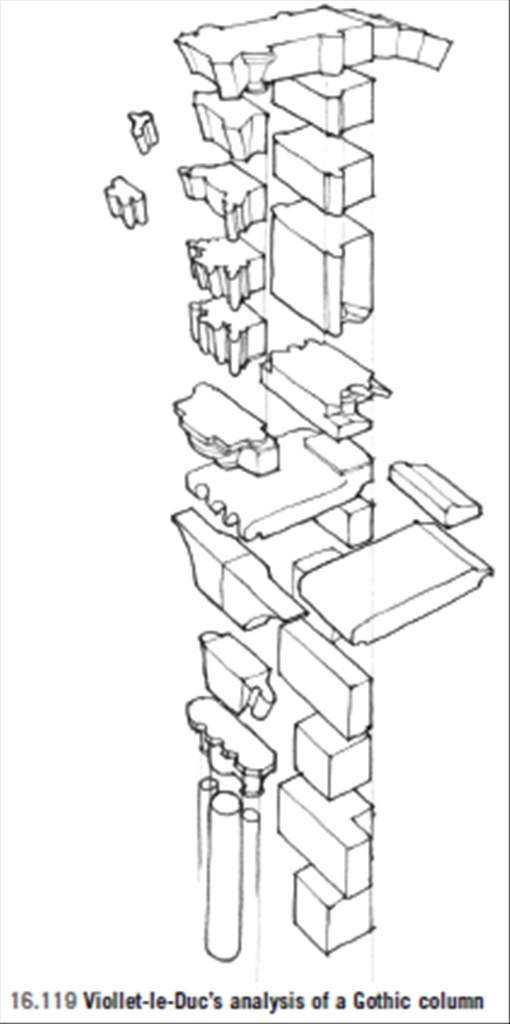
16-119

William Morris. Textile Design.

William Morris. Textile Design.

15-11

…this one is dedicated to Thom.

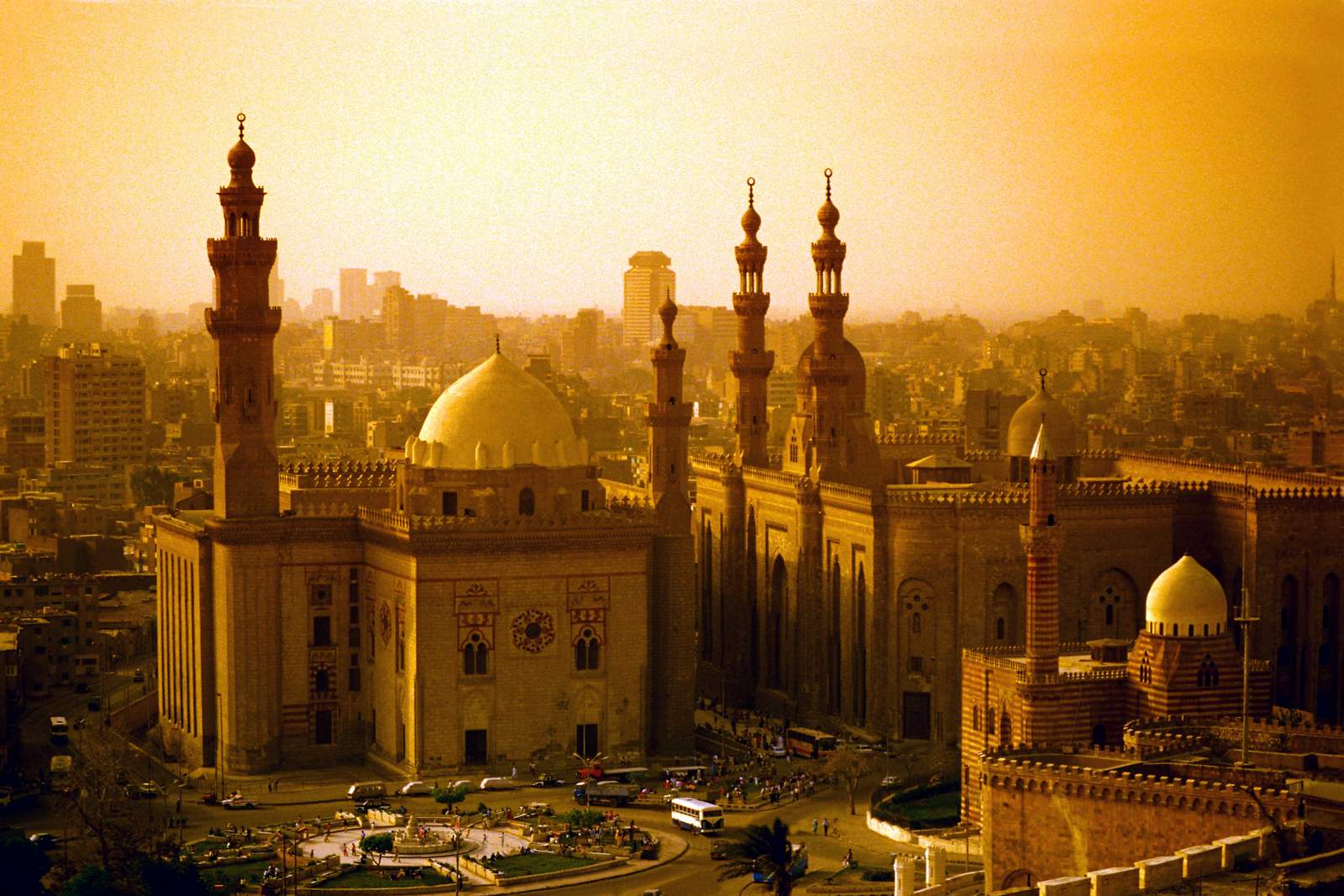
Sultan Hassan Mosque.

Sultan Hassan Mosque, Cairo.


View eastward into the Roman Forum.

View eastward into the Roman Forum.

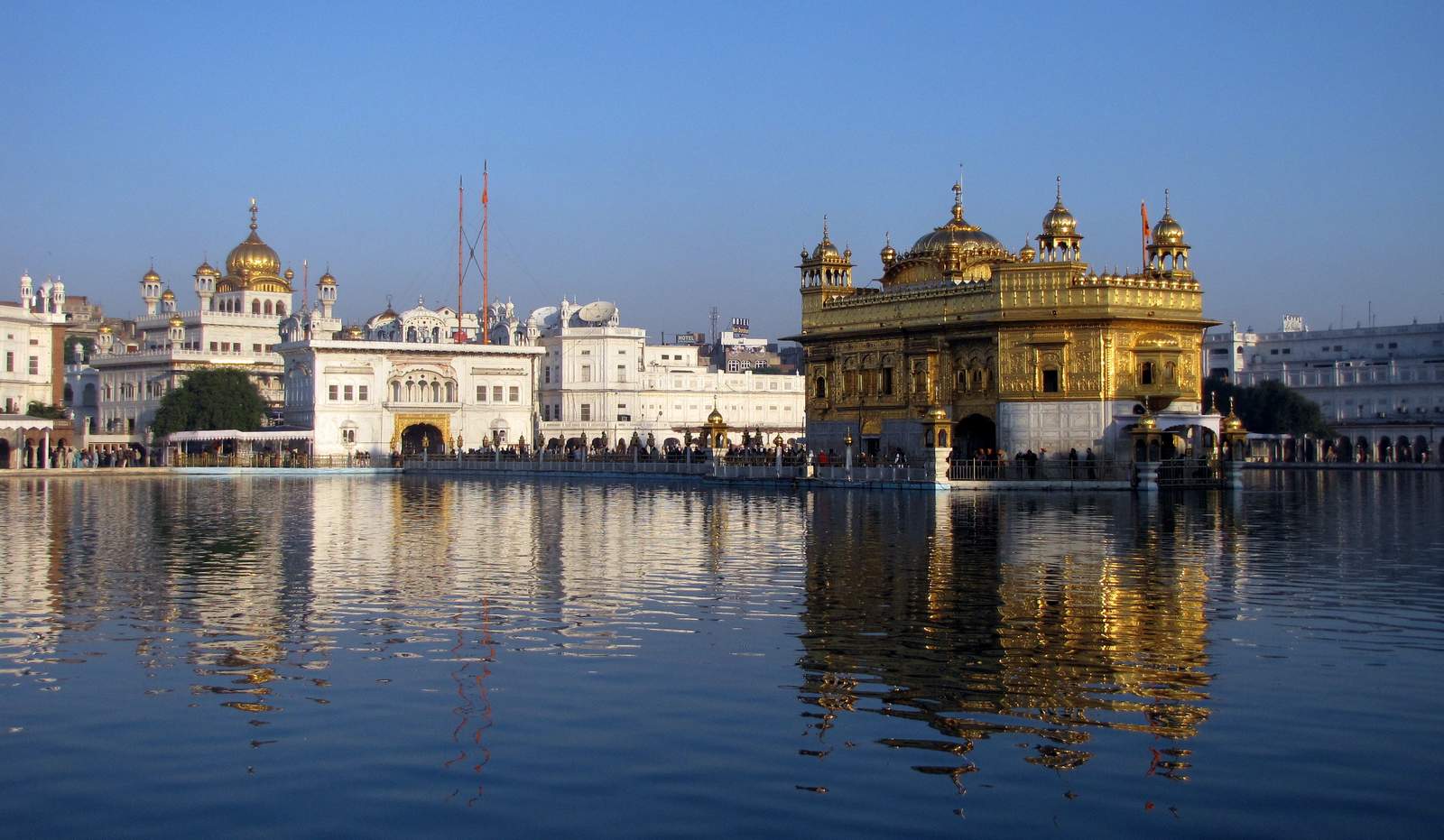
Darbar Sahib. Sikh Temple. India, 1764.

Darbar Sahib. Sikh Temple. India, 1764.

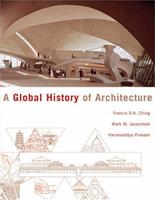
All images from Global History of Architecture, by Ching et Al.

Read Full Post »

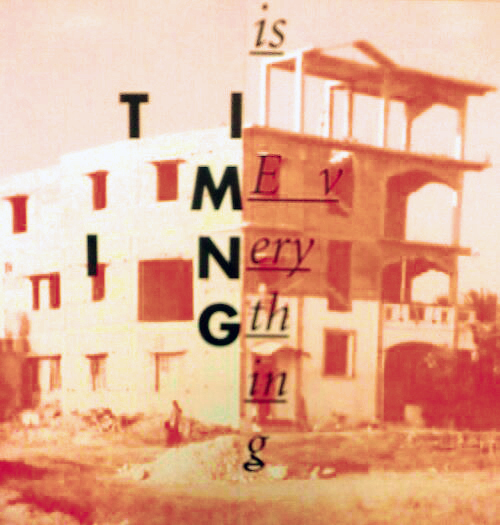
Timing Is Everything Exhibit Poster- digitally modified.

Timing Is Everything Exhibit Poster- digitally modified.


An apropos message from the Universe tonight- in form of a collage.

This is a promising exhibit at the UCSD University Art Gallery-
up until December 6.

In my non-teaching/working hours (very few since October) I have turned from an artist to a professional architecture/art/urban design event goer, organizer, supporter, disseminator and even instigator.

I was even called a ‘charming mistress of ceremony’ yesterday {blush}.

I miss my art, poetry languishes, yet I am galvanized by the many opportunities for interconnectedness between the non-profit sector,art,architecture and public space. The potential for a seachange in the urban landscape of San Diego is finally palpable.
It is so exciting to be contributing from the Academic angle, and involving my wonderful, patient students.

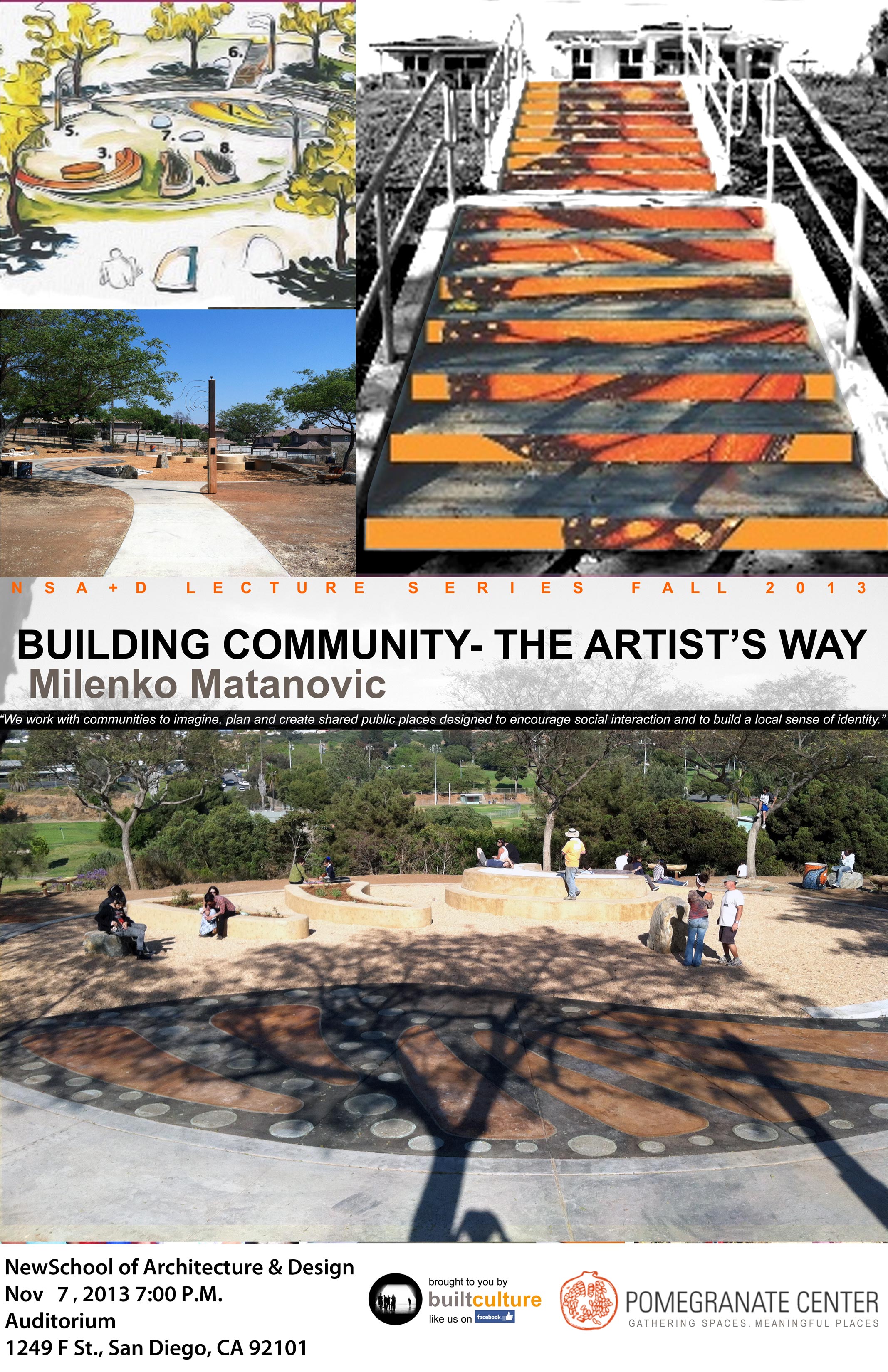
Yesterday Milenko Matanovic of the Pomegranate Center spoke about the difference between cleverness and creativity, and of being an artist, and an artist who is a community organizer.

Being clever involves prioritizing one goal above others, often the furthering one’s artistic vision. It is a solo flight.
True creativity contains a collaborative element, and is welcoming and sensitive to the goals of others. It is Mindful of the collective good, of timing, and rhythms.

Creativity is like farming.

Read Full Post »

bukhoor_logo_contrast

bukhoor_logo3_final

Builtculture logo. Digital Manipulation. October 2013.

Happy November!

If you have been wondering what I have been up to, I have been here.
Builtculture is a project I have started last year with a graduate student, Samar Sepehri. It is finally taking off.
(If you are so inclined, and feel like Liking our page, please do so!).
I designed our logo, starting from an image of bukhoor, and overlaying over an image of San Diego.
The creative juice have been applied to community outreach, still I was happy to be making something art-like.

Related to this, I have been working on bringing speakers and workshops in the field of community and activist design, such as this:


postermilenko_web

Also related to this, I went over the border, to Tjiuana to work on an international project, make connections and do a bit of wine tasting and cultural sightseeing.

I also went to Deer Park Monastery for a Day of Mindfulness.

Photos coming soon.

Read Full Post »

image

Graphite on Grumbacher paper. Calabria, Italia. August 2013.


image

Read Full Post »

image

Photograph, digital manipulation. Calabria, Italia. August 2013.

Read Full Post »

IMAG1835-1

IMAG1799

IMAG1813

IMAG1819

IMAG1825

IMAG1804

IMAG1795

IMAG1831

IMAG18371

IMAG18371_3

IMAG1837-2

IMAG1789

Read Full Post »

image

image

image

image

image

image

image

image

You have to keep breaking your heart
until it opens.
Rumi

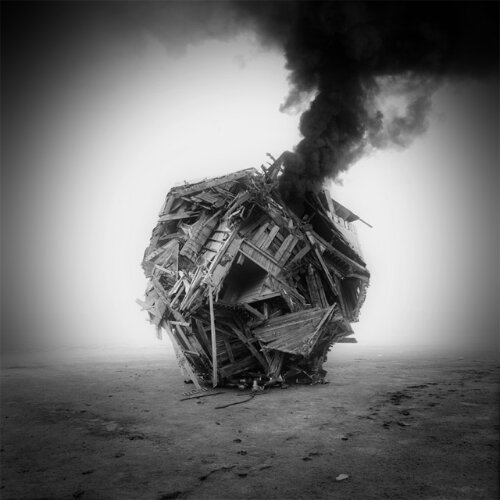
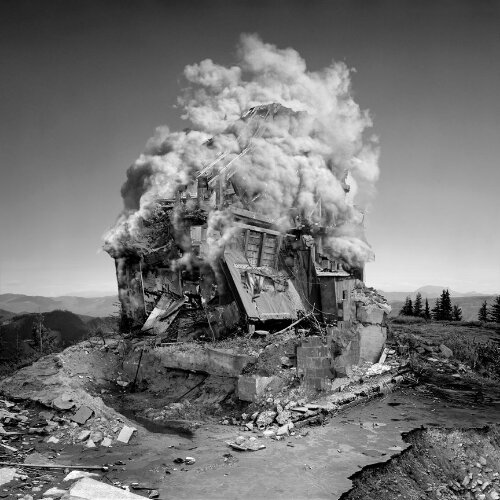
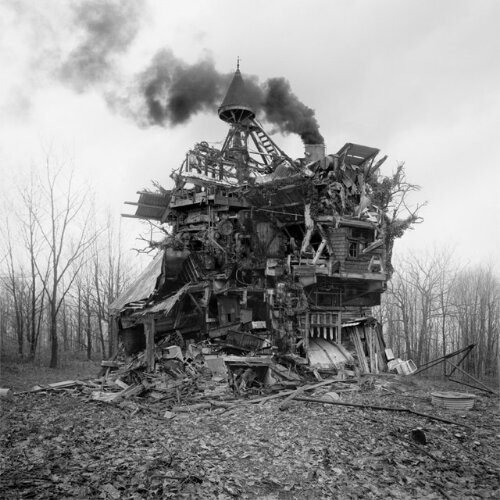
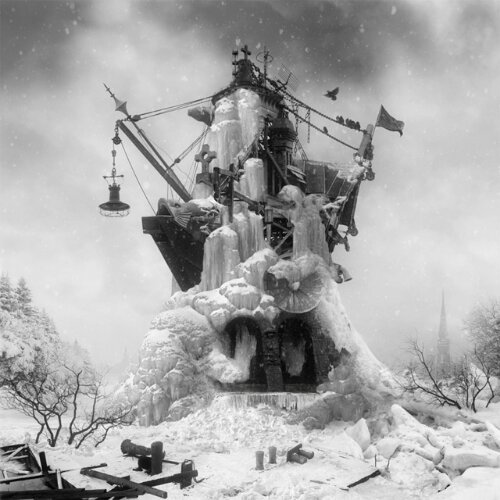
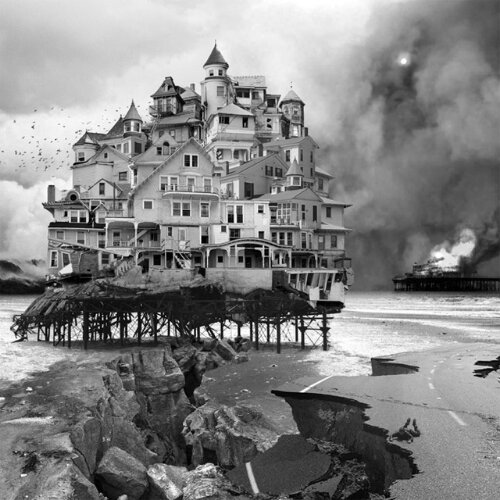
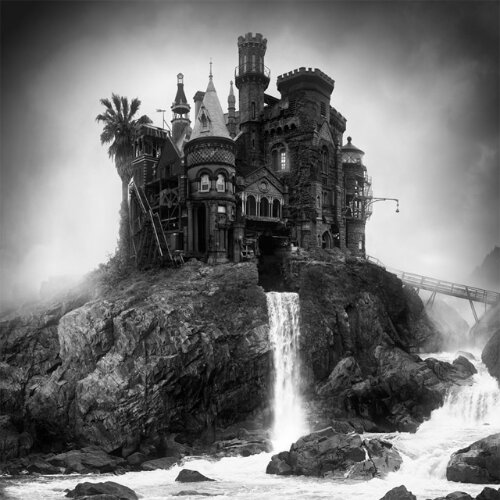
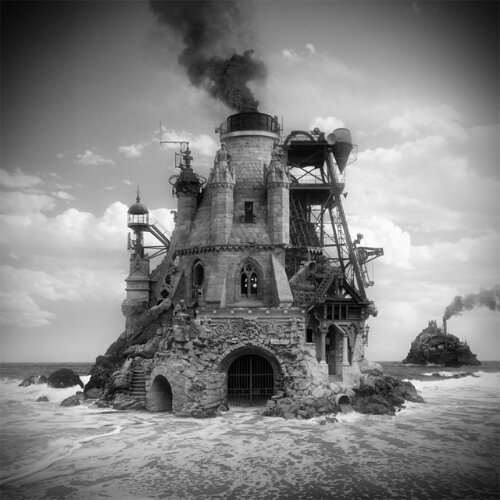
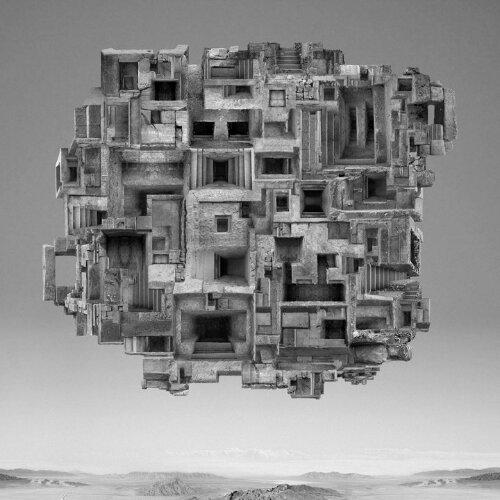
Without the use of a camera Portland-based artist Jim Kazanjian sifts through a library of some 25,000 images from which he carefully selects the perfect elements to digitally assemble mysterious buildings born from the mind of an architect gone mad. While the architectural and organic pieces seem wildly random and out of place, Kazanjian brings just enough cohesion to each structure to suggest a fictional purpose or story that begs to be told.
Reblogged from here.

Read Full Post »

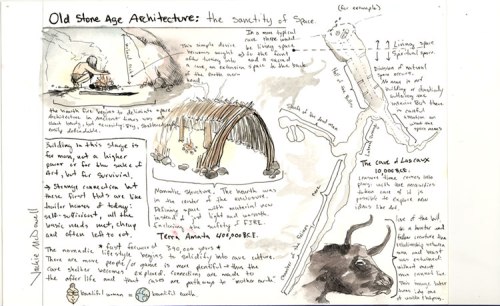
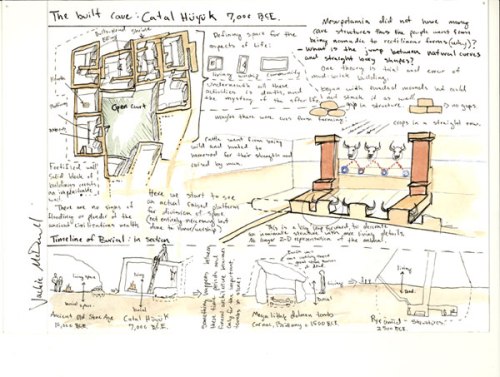
Drawing by Jackie McDowell.

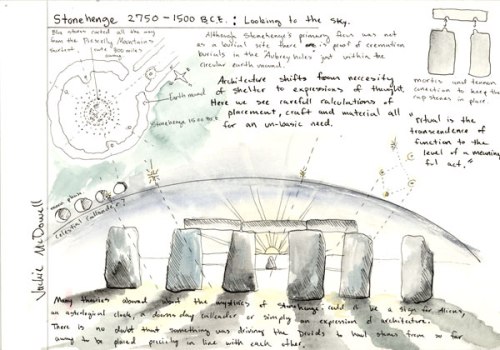
I am posting the first of a series of samples of student work from the exhibit  History of Architecture: Analysis and Synthesis Through Visual Notes. Moving chronologically, today we start with the Beginnings of Architecture.  This body work was completed for the Graduate History of Architecture sequence, comprising of three courses, which i taught during the 2011-2012 school year.

I will also post some photos from the Exhibit.

These visual notes are by Jackie McDowell.

Drawing by Jackie McDowell.

Drawing by Jackie McDowell.

And here is the  paper abstract summarizing the project objectives and research purpose.  The full paper will be presented and published next Spring. 

History of Architecture: Analysis and Synthesis Through Visual Notes

Miti Aiello, Full-Time Faculty

NewSchool of Architecture and Design, San Diego, California

The need to update and make relevant the study of History of Architecture in an evolving profession and academic environment has never been more urgent: our discipline demands not only an expanded scope (mandatory inclusion of global or ‘non-western’ traditions and architecture of the vernacular), but new methods of delivery and course projects that are interdisciplinary, that bridge the divide between studio courses and history and that educate the young practitioner in reading history utilizing the same
methods learned in design practice.

Spiro Kostof, the legendary UC Berkeley architectural historian, advocated giving students “something tangible to carry away to the drafting table”.

It is possible to adopt an educational methodology that questions monumental architecture of the past and the traditional, vernacular “architecture without architects” in the same way as students approach a design problem in studio. Hans Morgenthaler’s “Chronology versus System: Unleashing the Creative Potential of Architectural History” – which served as this paper’s catalyst- denounced the inadequacy of relying on the chronological organization of history and suggested designing the History course as a series of design problems or buildings/events, illustrated through architectural drawings (the language of our profession) and not photos. History of Architecture instructors are encouraged to “occupy themselves simultaneously with the study of the past, with critique, and with invention”.

The argument for learning history through drawing, in this case in the form of student-generated visual notes based on textbook reading is related to the ‘invention’ mentioned above and supported by Morgenthaler: “This approach derives from the understanding that a drawing is capable of communicating information about buildings impossible through other means. In addition, as a subjective record, drawings could become part of the history of ideas, as opposed to photographs, which are only evidence. Moreover, drawings express the “belief in architectural precedent and typology which gave relevance to history.” Rachael McCann in her “Exploding the History Survey” also introduced ‘graphic summary pages’ as active inquiry in her course at Mississippi State University, breaking down her large lecture course in smaller sections which would investigate a question brought forth by a particular building, through visual analysis. It is clear that History of Architecture lecturers are seeking novel, more critical models to articulate the course, and better narrate “a story of architecture”.

Read Full Post »

Another month rushed by, seemingly accelerating towards the end, as though sprinting to the finish line. The year’s end. Another year.

This past month brought also new beginnings and renewals. Just like accountants, professors measure years differently from the general public.

So this, other, new year that starts with the fall -the harvest- brought Spring in October : experimental mixed media and history courses, new energy, enthusiastic and curious students, expanded involvement, new projects and many welcome social occasions…and always, the company and camaraderie of my gentle and wise kin.
I love my job and feel so blessed. (I have just been given a Service Award for Five Years of outstanding contribution to the school, celebrate good times..)

I hosted my very first reception for my Graduate students’ work in the History of Architecture course this last week. The title of the exhibition was

‘ History of Architecture: Analysis and Synthesis through Visual Notes’.
My past students’ critical, and sometimes lyrical and poetic work –their beautifully rendered drawings, sketches and diagrams–have been gracing the halls of my school and received much acclaim. This body of work and research into this alternative method for teaching history is the topic of a forthcoming paper, which I will present in the Spring.

I am also launching a project called Builtculture, which I will be editing. This is something I have been working on for few months along with a stellar Graduate student of mine, Samar Sepehri. Builtculture is a repository for lectures and cultural events happening in San Diego and the So-Cal region, for the architecture and urban design discriminating aficionados. It exists in form of a facebook page for now, but will soon morph into a simple yet useful calendar site–as soon as I can catch my breath.

Planning to post photos of the Visual Notes Exhibit next week -need to scan few more examples and ‘teasers’- and to share Builtculture when it is ready too. I am thinking about adding an Academic section to my work site, Archistdesign, for such endeavors.

All of this to say, really, is that my full-time job and volunteering [ for community build and garden build projects , I have learned to build a deck and plaster, aka architecture for social purpose … yes!] have taken ahold of my heart and days  lately, and my art has had to wait.
I also (also!) will have my poetry published. New poems have been brewing and blooming, maybe I will share one later tonight.

I know that there are few of you who follow these ramblings of mine , who gently coax me when I have not posted for a while, and wanted to reach out and declare that I do not want this to be a ‘ travel blog’ , a dalliance…but that I also have to make peace with the fact that I am nor cannot be a a full-time writer, poet or artist, (although I would embrace these lives and crafts in a heartbeat, teaching is my calling) and that I cannot post or work on my art everyday. Life itself needs to be explored, precious work completed, books need to be read, and body, soul, and spirit nurtured daily. Perhaps, I have been given too many passions for just one life. These are heavy gifts and Chet Baker sings ‘I fall in love too easily’…

Before biding my hopefully brief adieu, here is a poem that I recently found among old correspondence.
It is nice to be old enough to have that.. Speaking of correspondence, see ‘ Young Goethe in Love’. I died.


The Undertaking

The darkness lifts, imagine, in your lifetime .

The darkness lifts, imagine, in your lifetime .

There you are — cased in clean bark you drift through weaving rushes, fields flooded with cotton.

You are free.

The river films with lilies, shrubs appear, shoots thicken into palm.

And now all fear gives way: the light looks after you, you feel the waves’ goodwill as arms widen over the water;

Love, the key is turned.

Extend yourself —it is the Nile, the sun is shining, everywhere you turn is luck.

Louise Glück

Read Full Post »

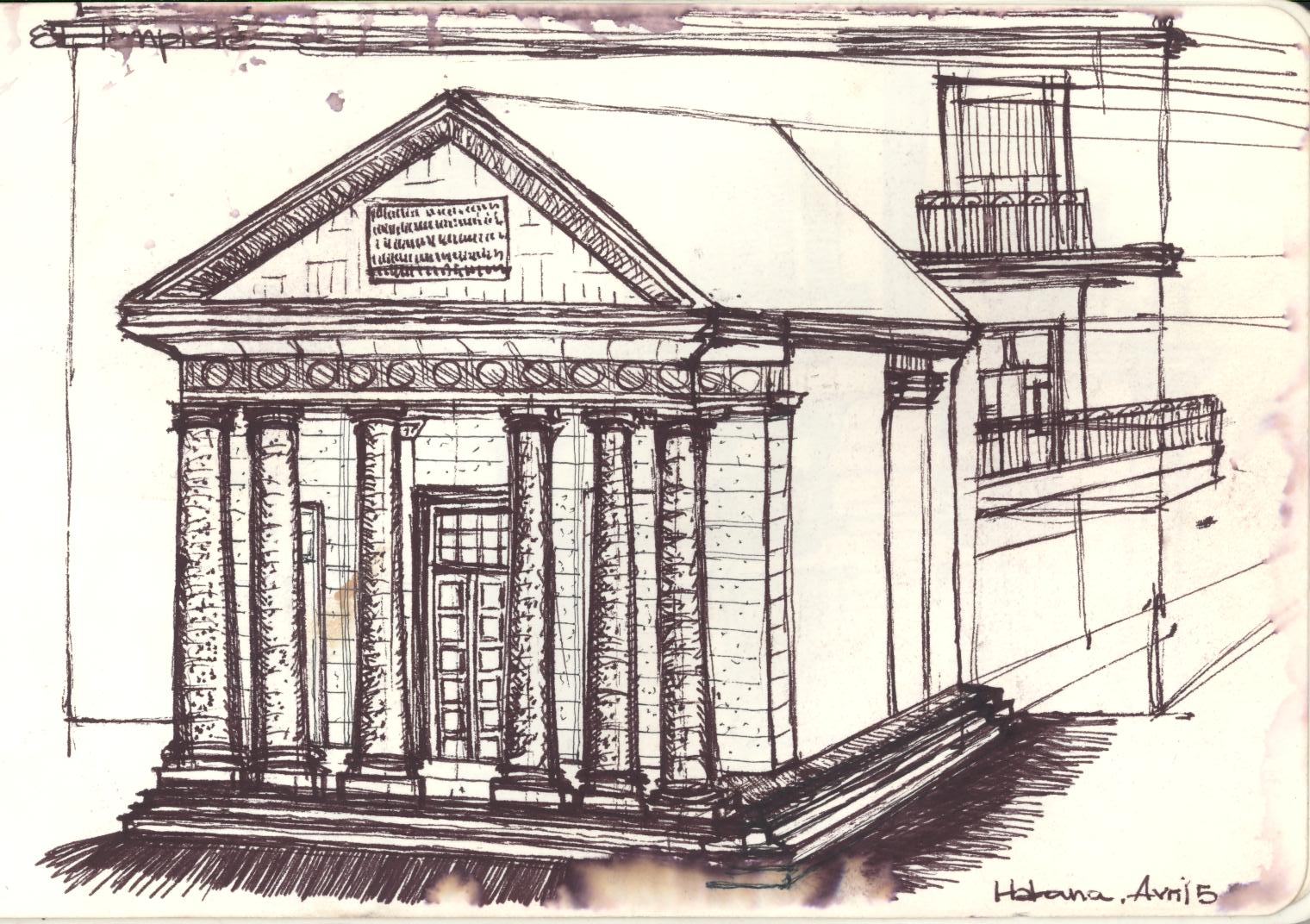
El Templete, Habana Vieja (with water from the Malecon).
Ink on hand.book paper. Habana, Cuba. April 2012.


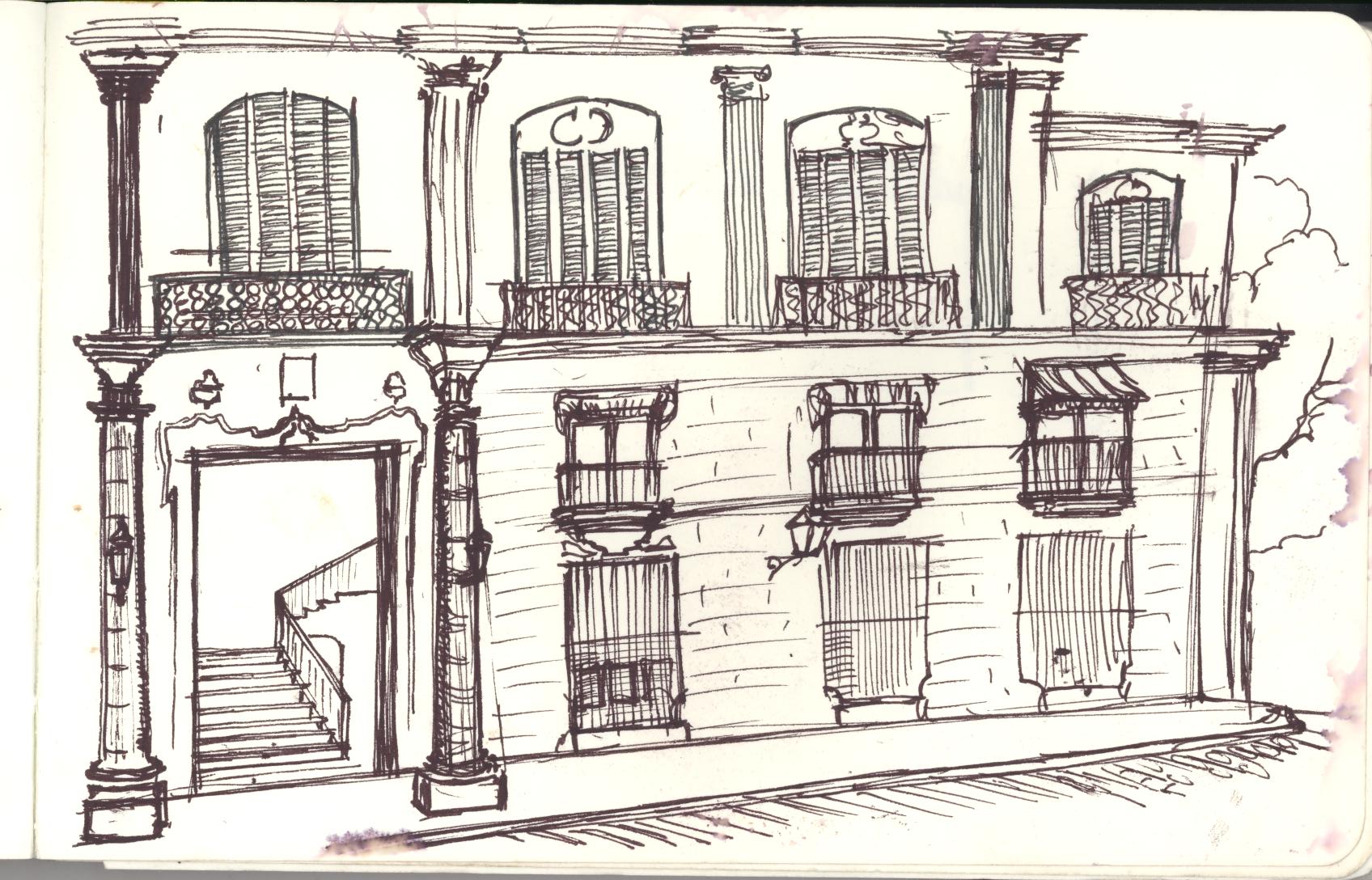
Example of Moorish (Mudéjar) Architecture in Habana Vieja.
Ink on hand.book paper. Habana, Cuba. April 2012.


….

image


Music is a total constant. That’s why we have such a strong visceral connection to it, you know? Because a song can take you back instantly to a moment, or a place, or even a person. No matter what else has changed in you or the world, that one song stays the same, just like that moment.”

Sarah Dessen, Just Listen

Read Full Post »


‘Habana is very much like a rose,’ said Fico Fellove in the movie The Lost City,

‘it has petals and it has thorns…so it depends on how you grab it.

But in the end it always grabs you.’


“One of the most beautiful cities in the world. You see it with your heart.”

Enrique Nunez Del Valle, Paladar Owner

Habana’s real essence is so difficult to pin down. Plenty of writers have had a try, though; Cuban intellectual Alejo Carpentier nicknamed Habana the ‘city of columns,’ Federico Llorca declared that he had spent the best days of his life there and Graham Greene concluded that Habana was a city where ‘anything was possible.’

ARCHITECTURE

Habana is, without doubt, one of the most attractive and architecturally diverse cities in the world. Shaped by a colorful colonial history  and embellished by myriad foreign influences from as far afield as Italy and Morocco, the Cuban capital gracefully combines Mudéjar, baroque, neoclassical, art nouveau, art deco and modernist architectural styles into a visually striking whole.

But it’s not all sweeping vistas and tree-lined boulevards. Habana doesn’t have the architectural uniformity of Paris or the instant knock-out appeal of Rome. Indeed, two decades of economic austerity has meant many of the city’s finest buildings have been left to festering an advanced state of dilapidation. Furthermore, attempting to classify Habana’s houses,palaces, churches and forts as a single architectural entity is extremely difficult.

Cuban building – rather like its music – is unusually diverse. Blending Spanish colonial with French belle epoque, and Italian Renaissance with Gaudi-esque art nouveau, the over-riding picture is often one of eclecticism run wild.

Brendan Sainsbury


This slideshow requires JavaScript.

Read Full Post »

Click to see my architectural shoots over at ArchistDesign | Studio. All projects by Architectural Concepts in San Diego, CA.


Apparently this is my year. The year of the Water Dragon.
I am happy to say, I am finally completing my architecture website.

This other digital studio has been on the back burner for about a year , but it looks like 2012 is the antithesis of  procrastination.

A year that quickens…like a strong sun that vanquishes the fog.

I have added some photography work for my friend and mentor Margit Whitlock at Architectural Concepts. Photographing these well-executed design projects was a joy.

Still few portfolio items to add to the site (and three new projects on the boards!)
Will keep posting updates as they happen, and hope to finish in few weeks.


Read Full Post »

image image

image

image

image

image

image

image

Read Full Post »

Venice makes you question the idea of “impossible”.

This slideshow requires JavaScript.

Read Full Post »

image

image

In the winter, Venice is like an abandoned theatre. The play is finished, but the echoes remain.

Arbit Blatas

To build a city where it is impossible to build a city is madness in itself, but to build there one of the most elegant and grandest of cities is the madness of genius.

Alexander Herzen

There is something so different in Venice from any other place in the world, that you leave at once all accustomed habits and everyday sights to enter an enchanted garden.

Mary Shelley

It is the city of mirrors, the city of mirages, at once solid and liquid, at once air and stone.

Erica Jong

I stood in Venice, on the Bridge of Sighs;
A palace and a prison on each hand.

Lord Byron

A train-ride takes you from Milano to Venice..whose real name is Venezia, the Most Serene city and splendid, golden Republic. On the train you think about Byron, his letters written on trains, his Venetian Countess.

Through frozen fields and dormant earth, through fog and long-gone rice paddies , you deboard to the Sublime.

At dusk the lights from bars and cafes shimmer on the dark waters, and you start thinking in cliches, such as temporarily inhabiting an Impressionist painting.

Yet the feeling is fresh and true: each visit to this surrealists’ dream had its poignant moment of suspension of disbelief.

Each time the city grabs you and takes you away with her.

Here’s a taste of today’s acts of flanerie in La Serenissima.

Read Full Post »

e

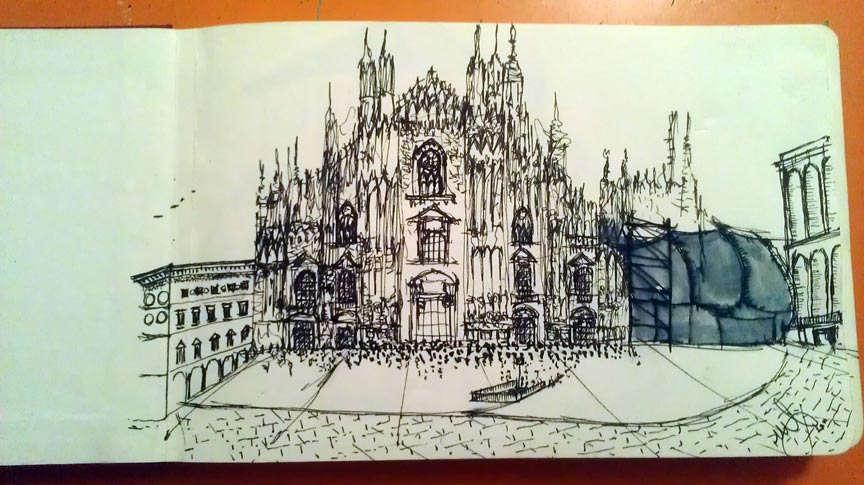
Crocheting Cathedrals. Il Duomo with parasitic architecture (stage for New Year's festivities). Ink and watercolor on hand.book paper. December 31, 2011.

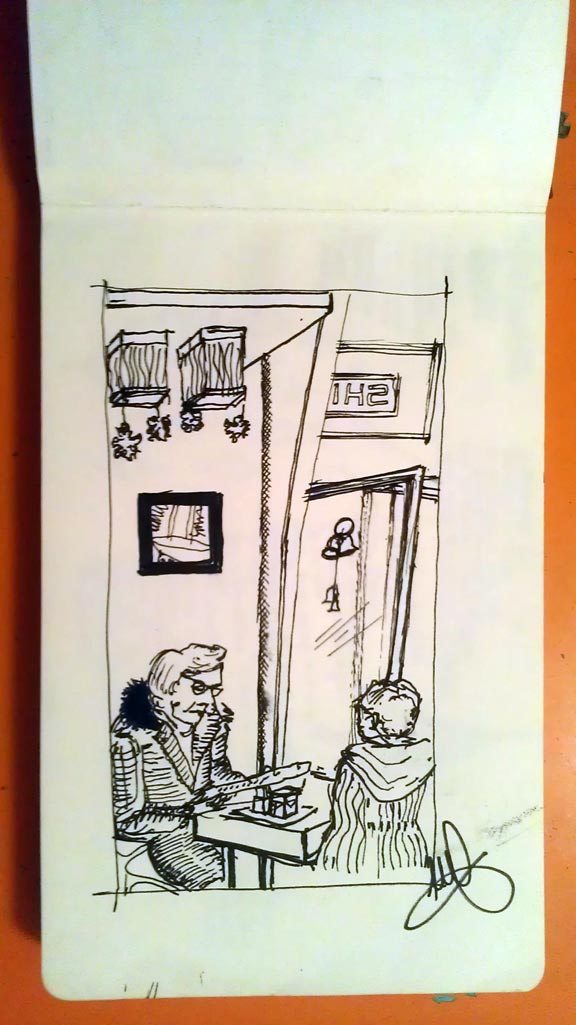
Aperol and Spritz. Most of the older ladies in my neighborhood are incredibly fashionable, decked in the latest trend winter coat. Here's two enjoying a mildly alcoholic aperitivo at 11 AM. Ink on hand.book paper. December 31, 2011.

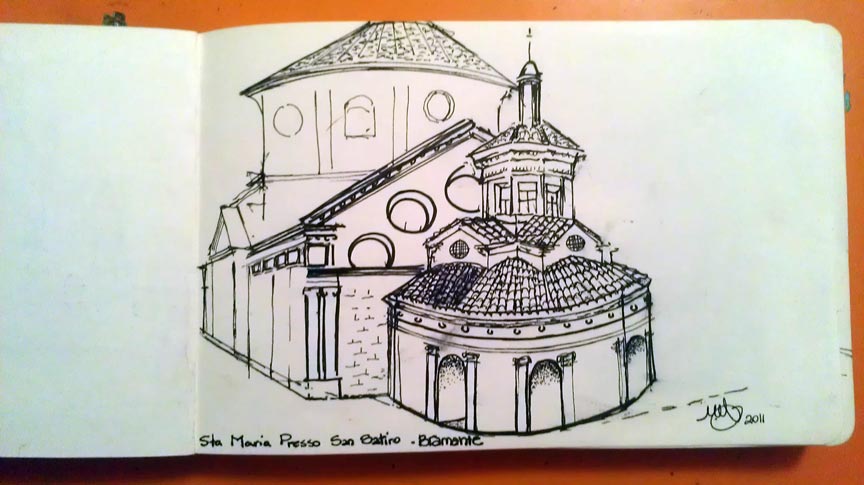
Santa Maria Presso San Satiro. The obligatory pilgrimage to the second Bramante's church. Last year I drew Santa Maria Delle Grazie, which is near to my place. I am always amazed by the playfulness and modernity of the oculi (round windows) on the Northern Romanesque facade. I found out that the space in front of the church is called 'Largo Jorge Luis Borges'. Can it get better than this?
Ink on hand.book paper. December 31, 2011.

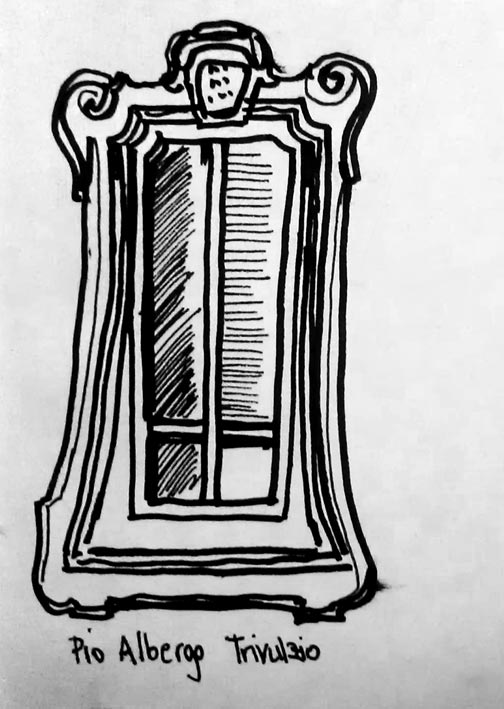
Window of the Pio Albergo Trivulzio. In an act of Flanerie, I got lost trying to reach the Roseto, and found these whimsical, almost Gaudi-like windows on a palazzo I had not seen since my childhood, painted in the typical warm 'Milanese Yellow' (think saffron rice and add a patina of melancholy, smog and time). Ink on hand.book paper. January 1, 2012.

Read Full Post »

image


San Diego, December 14, 2011.

Read Full Post »

image

San Diego, November 25, 2011. Third Avenue Pedestrian Bridge.

image

San Diego, November 25, 2011. Third Avenue bridge and context (canyon).

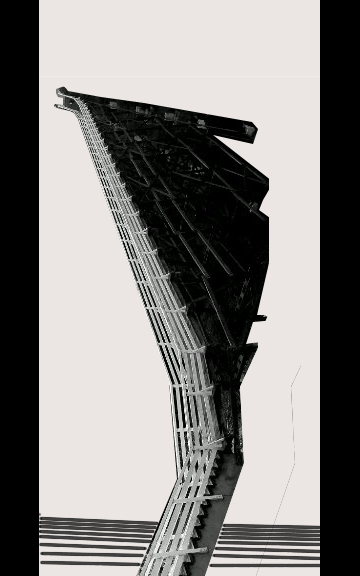
Bridge, De-constructed.

” In recent years , the modern understanding of social responsibility as functional program has been superseded by a concern for context. But contextualism has been used as an excuse for mediocrity, for a dumb servility within the familiar. Since deconstructivist architecture seeks the unfamiliar within the familiar, it displaces the context rather than acquiesce to it. What makes it disturbing is the way deconstructivist architecture finds the unfamiliar already hidden within the familiar context. By its intervention, elements of the context become defamiliarized. In one project, towers are turned over on their sides, while in others, bridges are tilted up to become towers.”

Mark Wigley

Read Full Post »

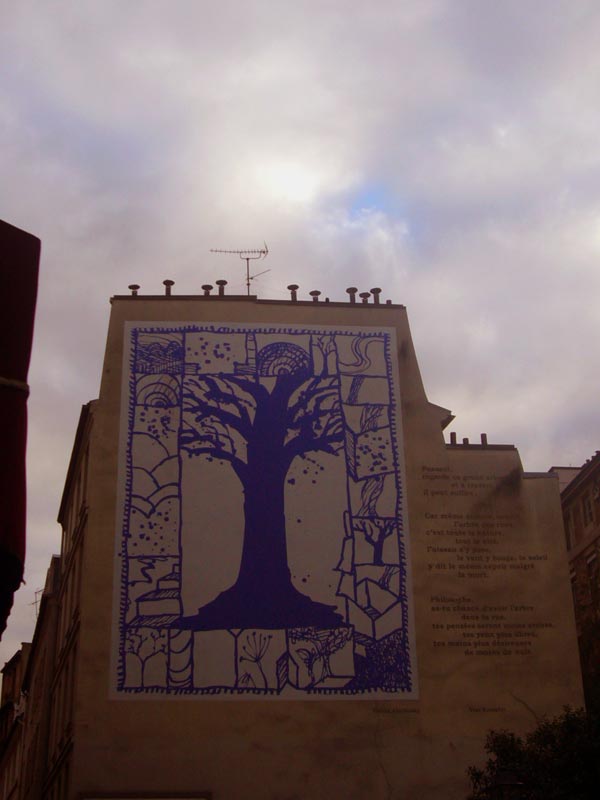
No blind facade allowed. Paris, 2011. Intersection between Clovis and rue Descartes. Mural by Belgian artist Pierre Alechinsky, poem by French poet and writer Yves Bonnefoy (2000)

Passant,
regarde ce grand arbre
et à travers lui,
il peut suffire.Car même déchiré, souillé,
l’arbre des rues,
c’est toute la nature,
tout le ciel,
l’oiseau s’y pose,
le vent y bouge, le soleil
y dit le même espoir
malgréla mort.

Philosophe,
as-tu chance d’avoir arbre
dans ta rue,
tes pensées seront moins ardues,
tes yeux plus libres,
tes mains plus désireuses
de moins de nuit.


Yves Bonnefoy


Passerby,
look at this great tree
and through it,
that could  be enough.For even torn up, sullied,
the tree of the street is
all of nature,
all the heavens,
the bird alights there,
the wind moves there,the sun there expresses
the same hope
in spite of death.

Philosopher,
if you are lucky enough to
have trees in your street,
your thoughts will be less arduous,
your eyes more free,
your hands more desirous,
at least at night.


My own translation based on this one.

-.-.-.-.-.-.-.-.-.-

L’arbre bleu: A concrete poem to Paris

By Cara Waterfall


A luminous, blue tree explodes above the Paris rooftops of the 5ième arrondissement. L’arbre bleu (or the blue tree) is the flâneur’s reward for roaming the streets of Paris in reverie and without a map.

This 2000 mural by Belgian artist Pierre Alechinsky, completed in situ, is at the intersection of rue Clovis and rue Descartes. At Alechinsky’s request, the painting has been accompanied by a poem by his friend and renowned French poet and writer Yves Bonnefoy.

The tree’s radiance is in stark contrast to its metropolitan environment: it is a bright blue column with only a few errant splashes to mar its clean lines; the branches emanate from the trunk like an open palm, fingers outstretched. The image reminds the observer that nature still has a place here – although it is somewhat camouflaged by the crowds and the congestion of buildings.

But the border of this central motif tells another story: Alechinsky, 84, delights in imperfection and the margins provide a narrative of their own. Each block in the border of l’arbre bleu reveals the troubled fragments of this urban world: charred trees have succumbed to civilization and now wilt against the concrete backdrop; bursts of royal blue spatter blemish the other blocks of the frame.

Bonnefoy, 87, has written extensively about the meaning of spoken and written words. His style is unembellished with a simple use of vocabulary that can be misleading: he manages to imbue a sensuality into this sparseness of language. As such, it is the ideal complement to Alechinsky’s l’arbre bleu.

The poem gently intrudes on the individual’s consciousness and suggests that this image is sufficient to begin a dialogue about how humans interact with their environment and specifically, how art can bring us closer to nature. The poet further explains that although it is only the image of a living tree, this “torn, soiled tree of the streets” is vivid enough that a bird perches on it, the wind moves it – even the sun shares its hopeful rays with it.

L’arbre bleu was a natural sequel to Alechinsky and Bonnefoy’s initial collaboration: in 2009 Bonnefoy had written a book about the artist’s pictorial method of expression in Alechinsky, Les traversées (The Crossings). He was well prepared for this text having written numerous essays on the subject. The book also explores his involvement with the CoBrA Group, a radical art movement from 1948 to 1951, of which Alechinsky was one of the founders.

Alechinsky is the sole surviving member of the CoBrA Group. (The name was coined by one of the founders, Christian Dotremont, from the initials of the members’ hometowns: Copenhagen, Brussels and Amsterdam.) The Group was inspired by primitive art and children’s drawings. Their painting is characterised by vibrant colours, and vigorous brushstrokes; this liberty of movement is evident in l’arbre bleu. Critics have dismissed Alechinsky as “the man who grew up to be a child” and his art as infantile scribbling, but this spontaneity is representative of the CoBrA movement.

In the early 1950s Alechinsky became enamoured with oriental calligraphy: this highly stylized way of writing with an ink-wet brush allowed for greater variations in the curve and thickness of the lines he used in his work. His experience as the Paris correspondent for the Japanese journal Bokubi (The Joy of Ink) further informed his artistic methods. But the overriding trait of his art remains the combination of writing and pictorial signs.

The Blue Tree mural in Paris

L’arbre bleu differs from “standard” graffiti in that it was not created under cloak of darkness, but was commissioned; however, it still fits into the category of street art as a political vehicle that is countercultural. The painted tree explores our relationship to nature and underscores the fact that the concrete jungle can be fertile ground for the imagination.

But the real strength of l’arbre bleu lies in its economy: the painted image and the poem are layered with meaning. They articulate that nature can be accessible anywhere. Alechinsky and Bonnefoy have redefined the concrete poem: its lyricism unfolds amid the circuitry of the city – the painted tree no more out of place than a real one would be.

From indietravelpodcast.com.

Read Full Post »

image

image

image

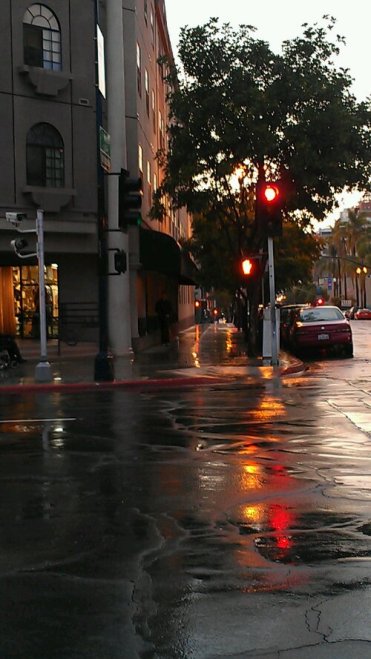
Everytime it rains in San Diego, I get giddy.

I used to dislike rainy days but now, they are just…”Paris days.”

The city acquires a new depth, a warm, poetic melancholy.
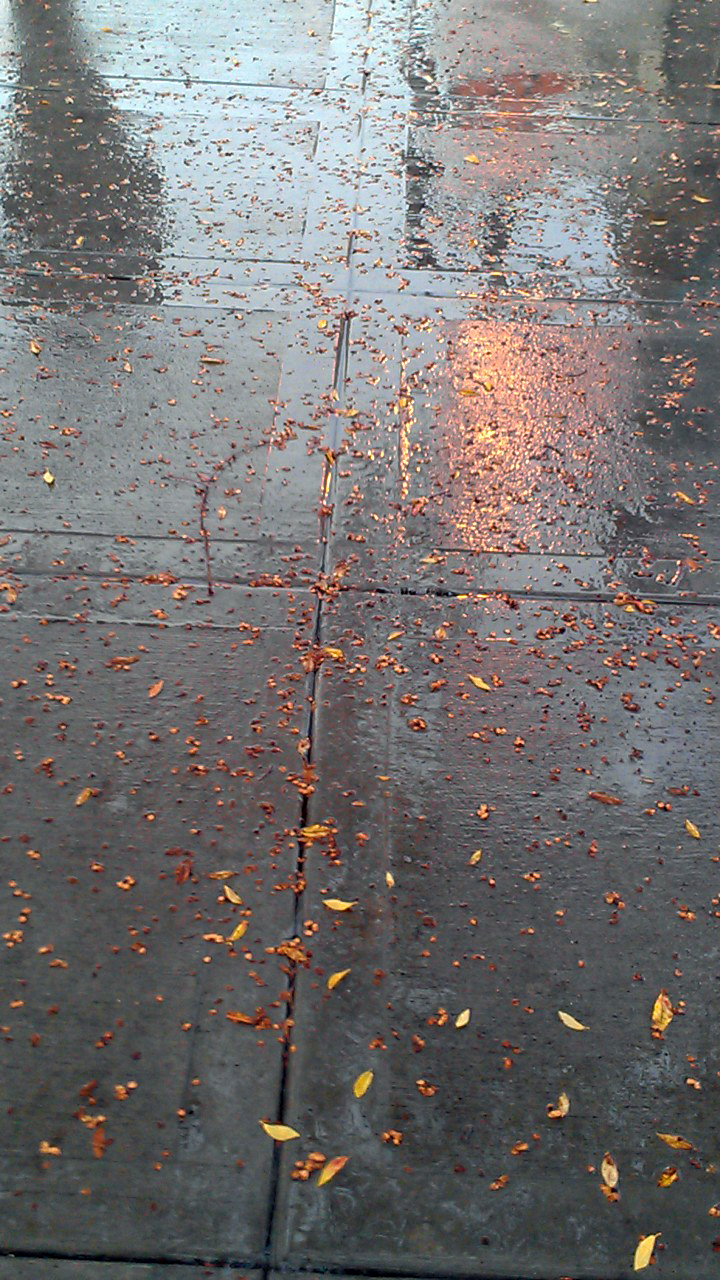
That feeling of being inside a Caillebotte painting, where the real city, what I see, what i inhabit, what i fall into, is the image in the water; that wet,beautiful canvas. The rain on the asphalth, rivulets, currents, puddles become a mirror that scrambles, abstractizes, seduces….

The rain on the windows when you are sitting in a literary cafe’, and the place becomes a haven not only for the soul (as it usually is), but a toasty, welcoming,peopled orange-glow that will shelter the body in the intemperate, stormy weather. So seeing the sign of the cafe’ in the rain, in the mist,  is what the ship, no longer wreck-bound,  feels at the first glimpses of  the watchtower in the fog, keeper of her dreams and saviour.

It is as though the rain is inside the cafe’. The window panes are frosted and dewy. We could be anywhere. We could be in Paris.

Or all of it sunk in an ocean, a majestic  ruin overgrown with algaes and debris. All of it, wooden tables and chairs from Lebanon, credenzas and tapestries from Jordan. The wine, the coffee, the tea jars. They are all tubling down. And us with them.

It is as though we are sinking in a sweet, decadent oblivion. We drink in the atmosphere while we happily drown in a vague past with no memories. Where everything is possible, allowed, forgiven. And everywhere else, outside of this retro submarine, is desert.

Read Full Post »

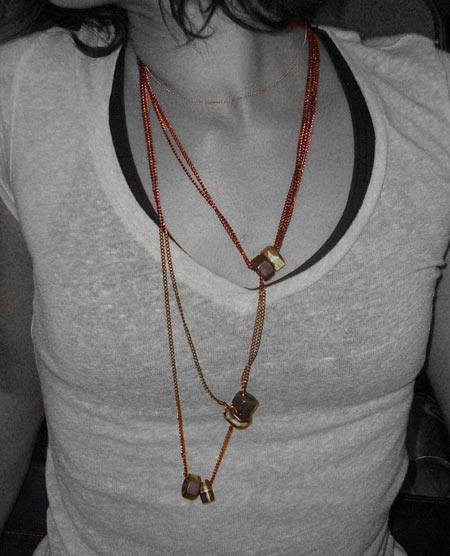
Three Talismans|Nodes necklace by Archist Design Studio © . I used Industrial Chic spacers.

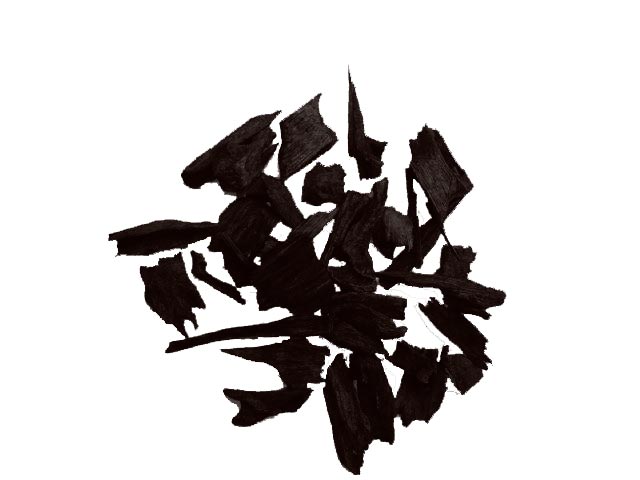
A talisman (from Arabic طلسم Tilasm, ultimately from Greek telesma or from the Greek word “telein” which means “to initiate into the mysteries”) is an amulet or other object considered to possess supernatural or magical powers. (thankyou wiki.)

Each spacer/bolt has the word intre·pidi·ty embedded on it.

Susan Lenart Kazmer, of Industrial chic ,gives us this definition of a talisman:

tal·is·man \ˈtælɪzmən\: objects worn to bring specific qualities into your life, such as strength, happiness and protection.

She considers herself a “contemporary builder of talismans utilizing objects of her own culture”. As soon as I saw her rugged and evocative spacers I was immediately inspired to create an industrial/architectural piece.


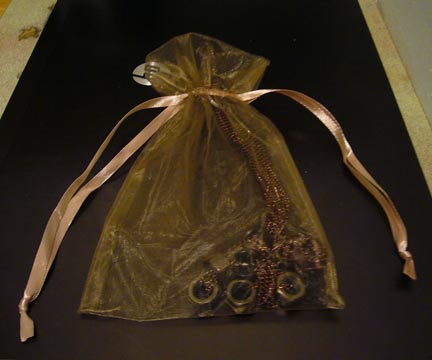
A pretty package containing rugged things.

Read Full Post »

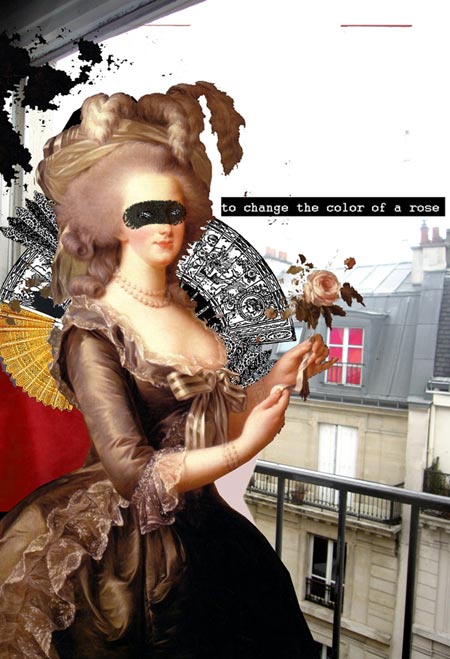
Digital Collage. October 2011.

Read Full Post »

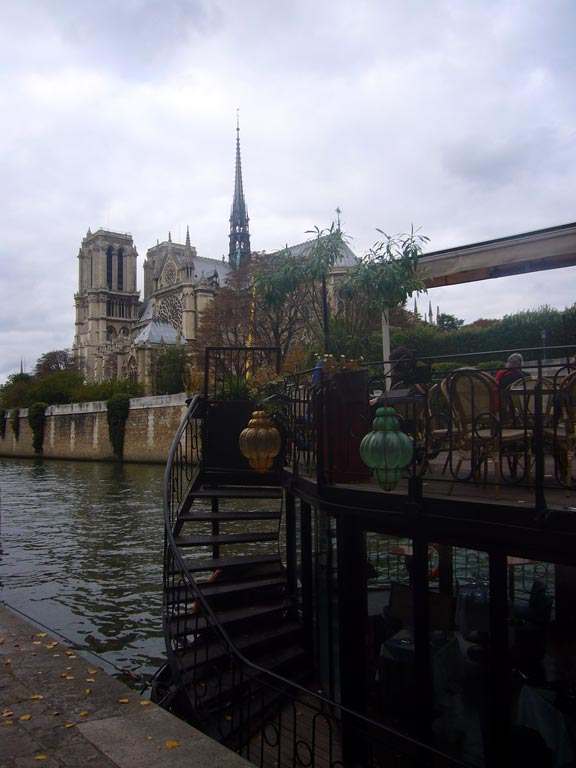
Lanternes et Notredame. Paris. 2011


To walk in Paris is to behold, and be part of, a living and continuously changing painting.

Read Full Post »

Ink on hand.book paper. Paris, 2011.

Read Full Post »

image

“Inside a lover’s heart there’s another world, and yet another.”

        Love

        rests on no foundation.

        It is an endless ocean,

        with no beginning or end.

        Imagine,

        a suspended ocean,

        riding on a cushion of   

        ancient secrets.

        All souls have drowned in it,

       and now dwell there.

        One drop of that ocean is

        hope,

        and the rest is

        fear.

        Rumi

Read Full Post »

It has been ten long days since my last post, ten days of travels, of letters written and not sent, of (re) search.

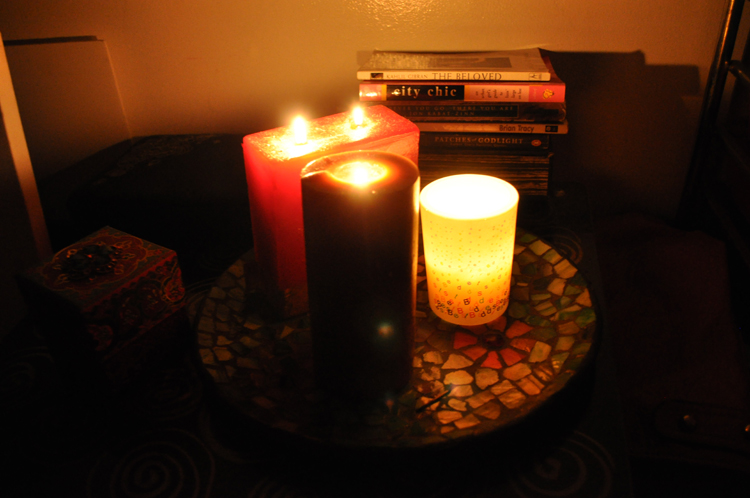
In the middle of it all, I experienced the ‘biggest blackout in the history of San Diego county’. Thursday, September 8th, 2011, power went off for millions of people in Southern California, Baja California and Arizona. No ATM’s , shuttered stores, nowhere to buy food or water in a world where, when the machines stop, the city stops. The blackout lasted for almost nine hours, from 3.30 Pm till just before Midnight, and it was all it took to plunge my two neighborhoods in an atmosphere that was at times apocalyptic, at others, surreal, magical, “european”. Beyond the novelty, even excitement, felt by some there were people trapped in high-rise elevators, in trolley cars over canyons, in mid-rise buildings without water. It was a time where everything stopped and a battery radio and candles (my only emergency preparedness) help whiled away the hours. It was a movie. And a dream.

Before I share what I have been working on in the past few days, here is my dispatch from the Blackout and some urban moments caught on camera.

PS: From http://www.nakedtranslations.com/en/2004/entre-chien-et-loup  nakedtranslations.com:

Entre chien et loup is a multi-layered expression. It is used to describe a specific time of day, just before night, when the light is so dim you can’t distinguish a dog from a wolf. However, it’s not all about levels of light. It also expresses that limit between the familiar, the comfortable versus the unknown and the dangerous (or between the domestic and the wild). It is an uncertain threshold between hope and fear.

This slideshow requires JavaScript.

The night we saw the stars.

Full moon, venus, motherlight.

Flaws and flames

Not multiplied

It is so quiet

we can hear ourselves

If the end of the world comes

I want you to know

We are fine.

By Moon Light.


Read ”La Noche que Volvimos a Ser Gente”or “The Night We Became People Again” by José Luis González, a short story on the big blackout in New York City.

If you are left with a battery powered CD player when the world ends- and speak italian- you could do worse than listen to Caffe’ Letterario.

Read Full Post »

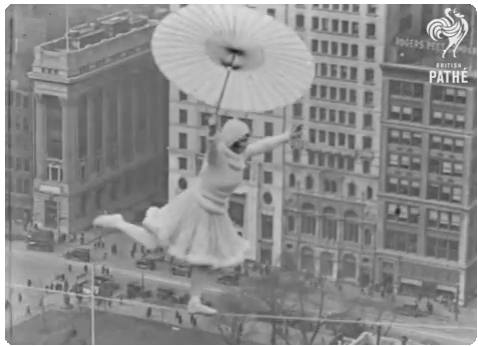
The funambulist. Ink drawing + digital collage. August 2011.


Nets

To Rietta Wallenda

Tightrope acrobats dance above safety nets

(or not)

Nerves taut like violin chords

Pulsing on neck, tendons stiff.

/

The fisherman spreads his father’s nets

Repaired a thousand times, damaged again

He sews his wounds on the beach

Fastens the corks

The old man with the young eyes

who listens to Mina and

–faraway look toward his sea,

a cigarillo in his mouth–

dreams of America.

/

Or, once a young girl

with a butterfly net

out to catch impossible sprites on hilly fields

Between highways

On the outskirts of the city.

You don’t know where I have been

and what I have seen.

/

The spider crochets his architecture

His gothic cathedrals

With divine geometry

With infinite patience

Behind the mirror.

 August 2011

From British Pathe':'This 1931 video shows a woman dancing on a high wire suspended 300 feet in the air. We think this was shot in an American city possibly New York. Click to vertigo.'


Addendum September 5, 2011:

A search on the term ‘funambulist’ and inquiries about Moussavi’s “Function of Ornament” led me to find an incredible blog and post:

 The Funambulist [Architectural Narratives]: Computational Labyrinth or Towards A Borgesian Architecture

The editor is a fellow ‘literary architect’ interested in theory, film, art, books.

Won’t you join me down the rabbit hole of Borgesian architecture for a read of ‘Aleph’?

This could be the beginning of a beautiful friendship.

Read Full Post »

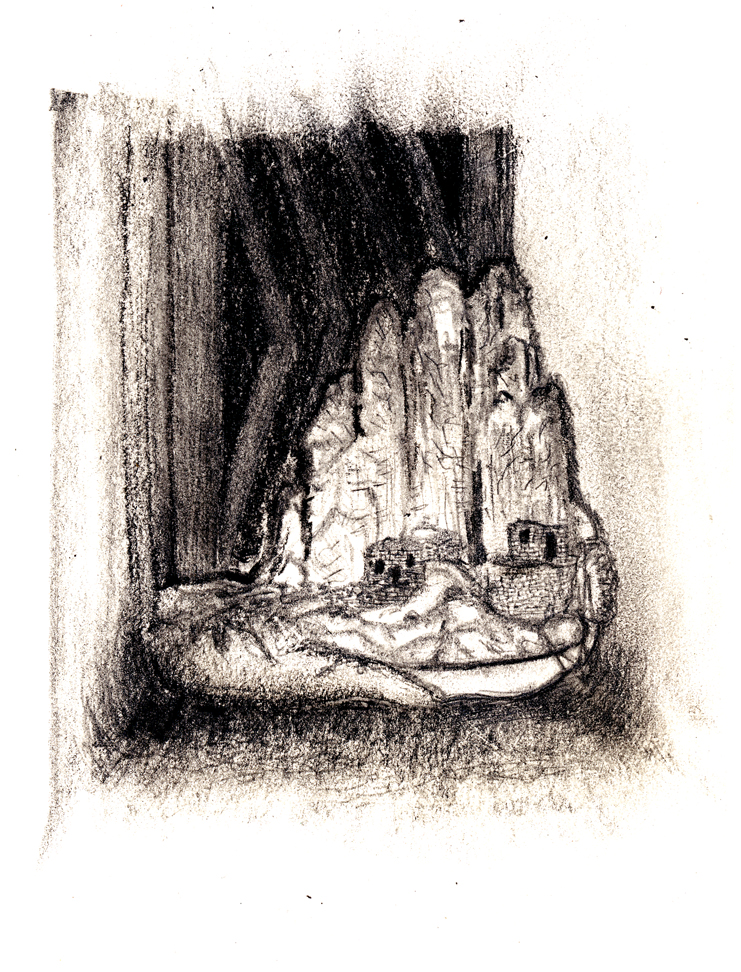
Various Graphite Media, depicting 'Dwelling for Imaginary Civilization of Little People,1998' by Charles Simonds. Made in clay, adobe, paint and housed in the New Mexico Museum of Art. August 2011.


Wabi-sabi is a beauty of things imperfect, impermanent, and incomplete.

It is a beauty of things modest and humble.

It is a beauty of things unconventional.


From
Wabi-Sabi for Artists, Designers, Poets & Philosophers


Photo via minecaching.tumblr.com. Click for source.


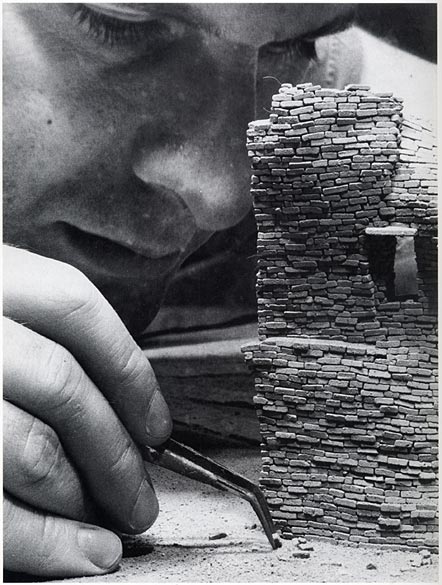
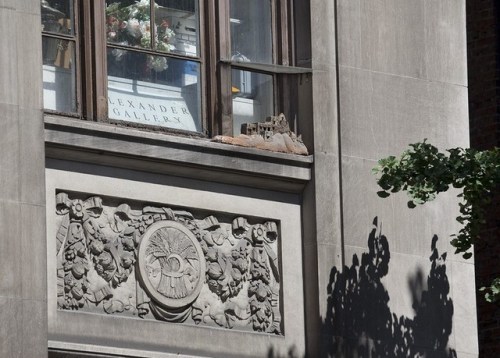
Charles Simonds began building clay villages, ruins and what he termed ” dwellings for imaginary civilizations of little people” in the 70’s, in New York.

His microscopic urban interventions at one point could be found, among others, in Paris, Venice, Shangai, Dublin.

They are now housed as prestigious artifacts in art collectors’ homes and museums (like the Whitney in NYC).

Photo via whitney.org. Click for source.

Photo via whitney.org. Click for source.


Click for more Charles Simonds’ dwellings

Watch the video: Dwellings 1972

.                         .                         .                       .                          .                          .                       .


Simonds and Sarah


Salmon kisses,

I knead  essays at night

dream perfect poems–

lost silver strands become your hair.

I make collages of languid bathroom quotes,

images and cities.

Night drunk with words,

your eyes are full of them–

nestled in the cup of your arms

like Simonds’ tiny city in a new york warehouse.

A word thief,

of raspberry essence–

the poetry of portugal:

“Your toes are

little ducks

Sita to Shiva…”


You say I’m used to you like my mandatory doppio cappuccino,

Sarah’s velvet voice,

heaven in Corcovado nights.

You say my poems always have three words:

almonds, apricot, oil.

Here you go:

Downtown is on fire

Your almond eyes float like moons

Your skin is oil on water,

Apricot lips.


Berkeley, August 2011

Read Full Post »

Entry for ONE LIFE | An International Photography Competition.

I decided to participate ( characteristically last-minute) to ONE LIFE, an international photography competition, in the ‘City Imagery’ category.

Click here (or on the image above) to see the entry at a higher resolution and, if you like what you see, vote and share my photograph.

The prize is $10,000 or a trip around the world. Guess what I would pick.

Read Full Post »

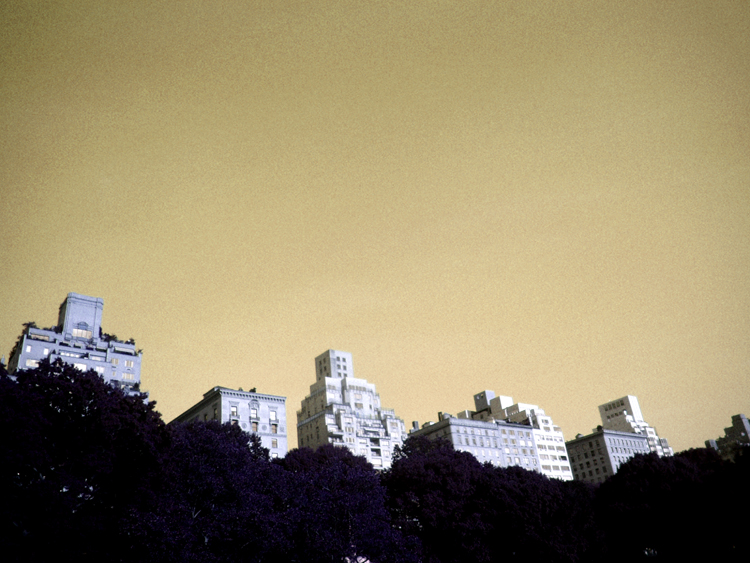
View from Central Park, Manhattan. Lumix camera + Digital Alteration. Summer 2011.


The Greeks had two different interpretation  for the word “Utopia”.

The first one  (pronounced U-topos) meant “the good place”.

The second, pronounced Ü-topos, meant “the place that cannot be”.


Paraphrasing  Mad Men.

Read Full Post »

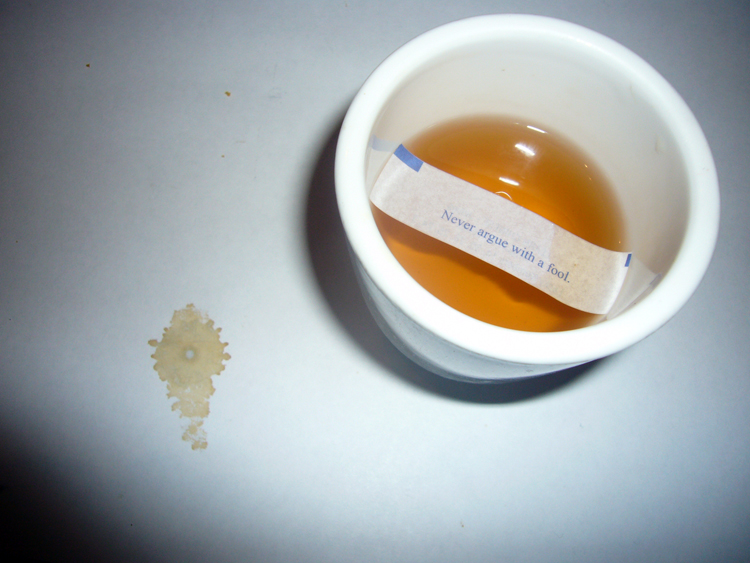
In Tea Veritas. New York City. June 2011.

Well, this is no good! August is almost here and once again balmy summer days flew by with traveling, urban escapades and some R&R…while the postings have been mighty sparse.

I have been a curious tourist in my own city and state, and, in between summer courses,  the roamings included a visit to Joshua Tree National Park, Much Ado Abouth Nothing, a tour of the Getty Villa in Malibu, an evening dreaming of Cuba and its Architecture and finally, a retro movie under the stars. There have also been some further experiments with jewelry design. And many caffe’ shakerato’s. And many of foreign movies.  And declutterings, of tangibles and intangibles. I have been busy.

I am back from my adventures for good now, just in time to be blindsided and crushed by Amy Winehouse’s death (more on this later).
I have some shots to share from my travels, the challenge now is not to turn this into a photography blog (after all it is called *sketch* bloom) so i will be back tomorrow with more sketches and plan to alternate photos with drawings and collages for the next few posts.

It’s good to be back, renewed and energized.  I hope this month was good to you too.

Read Full Post »

Today I want to stray from the visual and go back to words (even though visual work is piling up by the scanner, waiting to be shared.)

The visual permeates every aspect of a designer/artist life…it is the expected outcome: something that all can see. Here in sketchbloom I share works and progress/process in form of JPEG images, pixels on the screen. Even my words are translated as pixels and a visual experience as I type. To truly appreciate words one needs to go back to audio, in a dark room, eyes closed, and listen to the sound…absorb its meaning. Listen to the words, embrace their message, intensity. In the visual world we hear people’s voices translated into impersonal pixels (emails, texts and, for those who partake, chats). The visual has become an acid which burns the eyes, making it challenging to sit still with a (pictureless) theory book, so dependent on visual candy have we become. The world of ideas, that I am so incredibly fortunate to inhabit as a profession, is threatened by the constant stimula and incessant buzzing of the digital revolution, which rides on the visual. The digital revolution that was supposed to connect us all (and it does, superficially) but in reality has made us feel alone in a different, emptier way. The comfort that one gets from the words of an author, from a book with paper and weight, is to me the comfort of flamenco guitar music on an analog cassette tape. Billie Holliday on a scratchy record, as opposed to the robotic voice of online text.

So today I just want to turn off and just listen- going back to dear words, words that imagine Bruce Mau reading to me, and to you.

  • Allow events to change you.
    You have to be willing to grow. Growth is different from something that happens to you. You produce it. You live it. The prerequisites for growth: the openness to experience events and the willingness to be changed by them.
  • Forget about good.
    Good is a known quantity. Good is what we all agree on. Growth is not necessarily good. Growth is an exploration of unlit recesses that may or may not yield to our research. As long as you stick to good you’ll never have real growth.
  • Process is more important than outcome.
    When the outcome drives the process we will only ever go to where we’ve already been. If process drives outcome we may not know where we’re going, but we will know we want to be there.
  • Love your experiments (as you would an ugly child).
    Joy is the engine of growth. Exploit the liberty in casting your work as beautiful experiments, iterations, attempts, trials, and errors. Take the long view and allow yourself the fun of failure every day.
  • Go deep.
    The deeper you go the more likely you will discover something of value.
  • Capture accidents.
    The wrong answer is the right answer in search of a different question. Collect wrong answers as part of the process. Ask different questions.
  • Study.
    A studio is a place of study. Use the necessity of production as an excuse to study. Everyone will benefit.
  • Drift.
    Allow yourself to wander aimlessly. Explore adjacencies. Lack judgment. Postpone criticism.
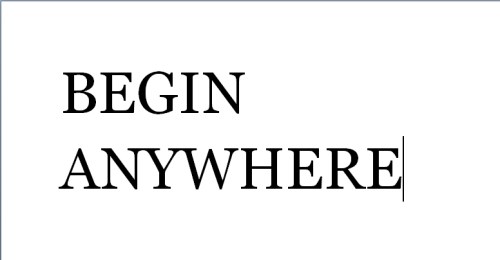
  • Begin anywhere.
    John Cage tells us that not knowing where to begin is a common form of paralysis. His advice: begin anywhere.
  • Everyone is a leader.
    Growth happens. Whenever it does, allow it to emerge. Learn to follow when it makes sense. Let anyone lead.
  • Harvest ideas.
    Edit applications. Ideas need a dynamic, fluid, generous environment to sustain life. Applications, on the other hand, benefit from critical rigor. Produce a high ratio of ideas to applications.
  • Keep moving.
    The market and its operations have a tendency to reinforce success. Resist it. Allow failure and migration to be part of your practice.
  • Slow down.
    Desynchronize from standard time frames and surprising opportunities may present themselves.
  • Don’t be cool.
    Cool is conservative fear dressed in black. Free yourself from limits of this sort.
  • Ask stupid questions.
    Growth is fueled by desire and innocence. Assess the answer, not the question. Imagine learning throughout your life at the rate of an infant.
  • Collaborate.
    The space between people working together is filled with conflict, friction, strife, exhilaration, delight, and vast creative potential.
  • ____________________.
    Intentionally left blank. Allow space for the ideas you haven’t had yet, and for the ideas of others.
  • Stay up late.
    Strange things happen when you’ve gone too far, been up too long, worked too hard, and you’re separated from the rest of the world.
  • Work the metaphor.
    Every object has the capacity to stand for something other than what is apparent. Work on what it stands for.
  • Be careful to take risks.
    Time is genetic. Today is the child of yesterday and the parent of tomorrow. The work you produce today will create your future.
  • Repeat yourself.
    If you like it, do it again. If you don’t like it, do it again.
  • Make your own tools.
    Hybridize your tools in order to build unique things. Even simple tools that are your own can yield entirely new avenues of exploration. Remember, tools amplify our capacities, so even a small tool can make a big difference.
  • Stand on someone’s shoulders.
    You can travel farther carried on the accomplishments of those who came before you. And the view is so much better.
  • Avoid software.
    The problem with software is that everyone has it.
  • Don’t clean your desk.
    You might find something in the morning that you can’t see tonight.
  • Don’t enter awards competitions.
    Just don’t. It’s not good for you.
  • Read only left-hand pages.
    Marshall McLuhan did this. By decreasing the amount of information, we leave room for what he called our “noodle.”
  • Make new words.
    Expand the lexicon. The new conditions demand a new way of thinking. The thinking demands new forms of expression. The expression generates new conditions.
  • Think with your mind.
    Forget technology. Creativity is not device-dependent.
  • Organization = Liberty.
    Real innovation in design, or any other field, happens in context. That context is usually some form of cooperatively managed enterprise. Frank Gehry, for instance, is only able to realize Bilbao because his studio can deliver it on budget. The myth of a split between “creatives” and “suits” is what Leonard Cohen calls a ‘charming artifact of the past.’
  • Don’t borrow money.
    Once again, Frank Gehry’s advice. By maintaining financial control, we maintain creative control. It’s not exactly rocket science, but it’s surprising how hard it is to maintain this discipline, and how many have failed.
  • Listen carefully.
    Every collaborator who enters our orbit brings with him or her a world more strange and complex than any we could ever hope to imagine. By listening to the details and the subtlety of their needs, desires, or ambitions, we fold their world onto our own. Neither party will ever be the same.
  • Take field trips.
    The bandwidth of the world is greater than that of your TV set, or the Internet, or even a totally immersive, interactive, dynamically rendered, object-oriented, real-time, computer graphic–simulated environment.
  • Make mistakes faster.
    This isn’t my idea — I borrowed it. I think it belongs to Andy Grove.
  • Imitate.
    Don’t be shy about it. Try to get as close as you can. You’ll never get all the way, and the separation might be truly remarkable. We have only to look to Richard Hamilton and his version of Marcel Duchamp’s large glass to see how rich, discredited, and underused imitation is as a technique.
  • Scat.
    When you forget the words, do what Ella did: make up something else … but not words.
  • Break it, stretch it, bend it, crush it, crack it, fold it.
  • Explore the other edge.
    Great liberty exists when we avoid trying to run with the technological pack. We can’t find the leading edge because it’s trampled underfoot. Try using old-tech equipment made obsolete by an economic cycle but still rich with potential.
  • Coffee breaks, cab rides, green rooms.
    Real growth often happens outside of where we intend it to, in the interstitial spaces — what Dr. Seuss calls “the waiting place.” Hans Ulrich Obrist once organized a science and art conference with all of the infrastructure of a conference — the parties, chats, lunches, airport arrivals — but with no actual conference. Apparently it was hugely successful and spawned many ongoing collaborations.
  • Avoid fields.
    Jump fences. Disciplinary boundaries and regulatory regimes are attempts to control the wilding of creative life. They are often understandable efforts to order what are manifold, complex, evolutionary processes. Our job is to jump the fences and cross the fields.
  • Laugh.
    People visiting the studio often comment on how much we laugh. Since I’ve become aware of this, I use it as a barometer of how comfortably we are expressing ourselves.
  • Remember.
    Growth is only possible as a product of history. Without memory, innovation is merely novelty. History gives growth a direction. But a memory is never perfect. Every memory is a degraded or composite image of a previous moment or event. That’s what makes us aware of its quality as a past and not a present. It means that every memory is new, a partial construct different from its source, and, as such, a potential for growth itself.
  • Power to the people.
    Play can only happen when people feel they have control over their lives. We can’t be free agents if we’re not free.

Read Full Post »

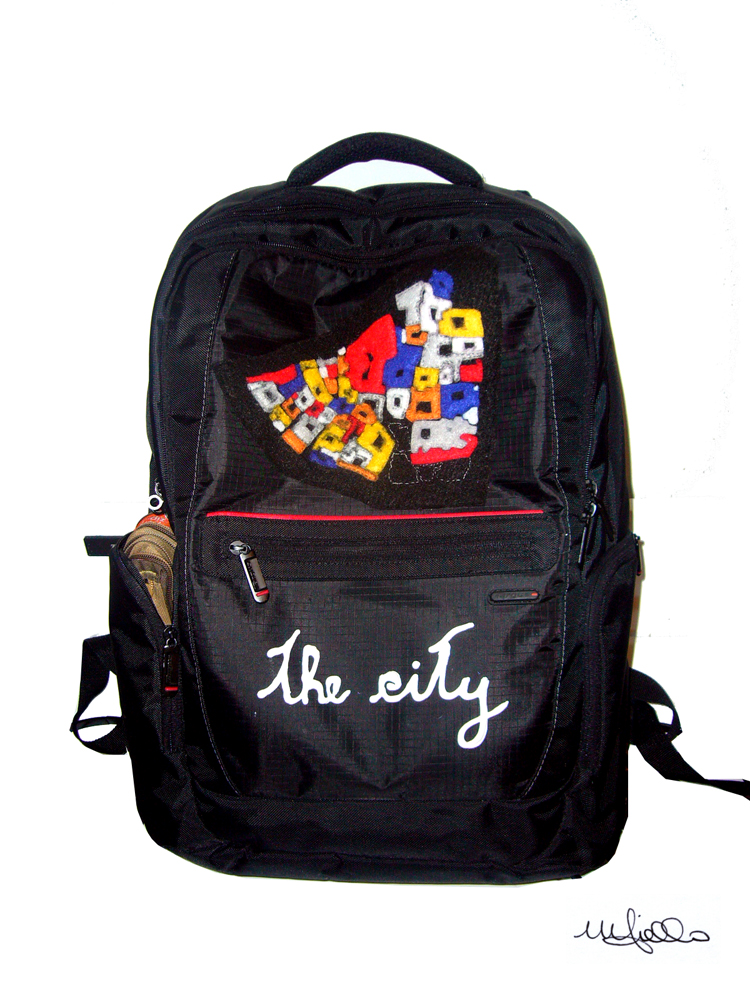
C'est fini! Here is the Fabric City on a backpack. The writing was done with 3D Fabric paint. June 25, 2011.

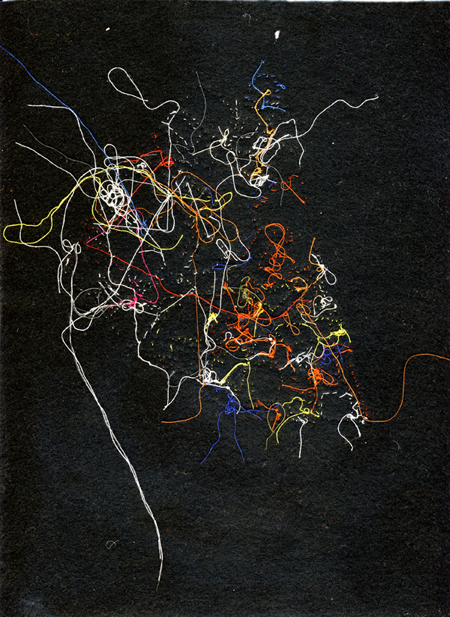
Back of The City. Fabric and thread. June 2011.

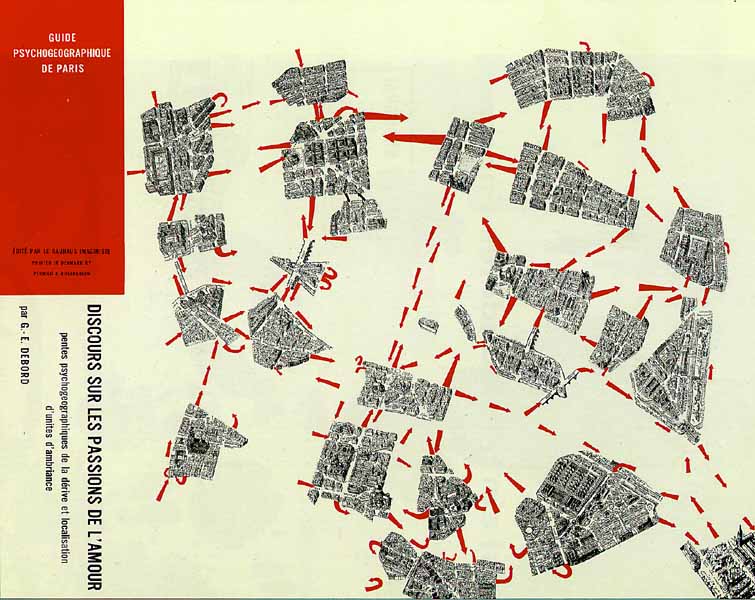
The reverse side of “The City” reminds me of a Situationist psychogeographic map. I toyed with the idea of letting go of all the work on the map and apply this abstract work on the backback. This would have been the gutsy thing to do but, in the end , i couldn’t let go of the work.

Guy Debord, c. 1955. Psychogeographic guide of Paris.


Read Full Post »

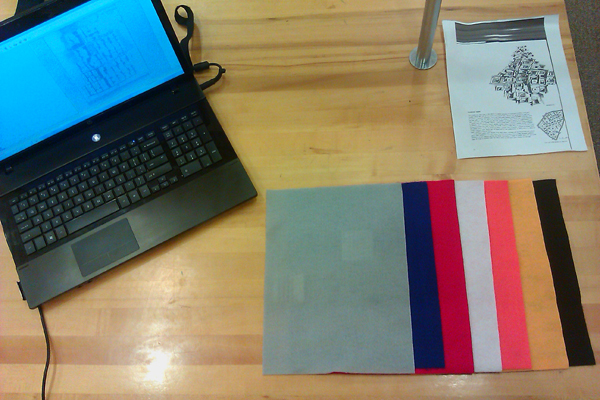
The Fabric City is finally finished! Yay! Back to collages and sketches now.

From this…

…to a process of cutting and puzzle-making…

to this:

The Invisible City|La Gitane. Fabric and colored yarn, sewn by hand. June 24, 2011.

Tomorrow the ‘city’  will be cut and applied to a presently plain backpack and signed.

I also want to share this impromptu jewelry design, my second, kindly modeled!

Earth and Water. Ceramic beads and yarn. June 24, 2011

Finally, work inspired by New York in form of a guest post:

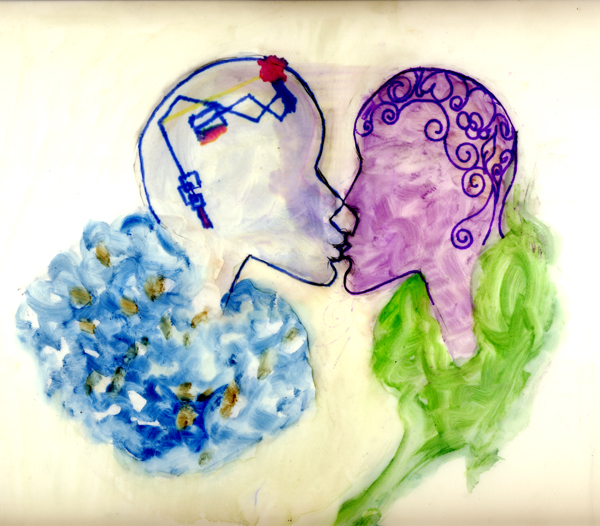
Winter Kisses. Ink and Watercolor on translucent Yupo watercolor paper. By Amina Alkandari. June 2011

Read Full Post »

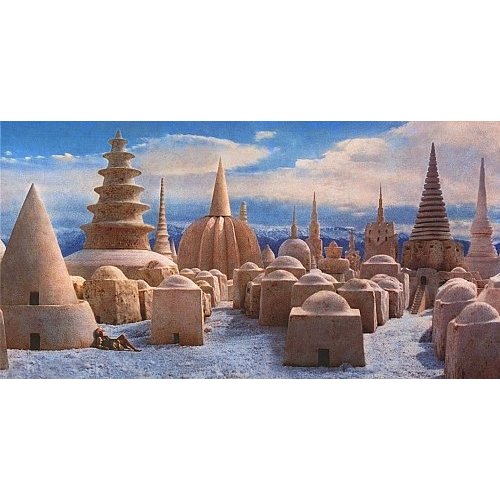
City of Salt by Nicholas Kahn and Richard Selesnick. Image via amazon.

“Here is a splendid volume from the Terry Gillam school of fictional photography… The book comes in a sturdy slipcase and features complex landscapes, painstakingly created, and digitally peopled by actors playing out scenes which conjure up a mystical Middle Eastern civilisation. Enigmatic, but beautiful.”
AG Magazine

“This is a beautifully structured text with an imaginative use of words and photography. This wondrous book of tales is a complex work of art that will be read throughout our generation.”
Focus: Fine Art Photography Magazine

“City of Salt… creates and documents alternate realities in miniature, accompanied by narratives inspired by Sufi tales, Italo Calvino and more.”
Michelle Wildgen –Publishers Weekly


The City. Image via kahnselesnick.com. Click to enlarge.

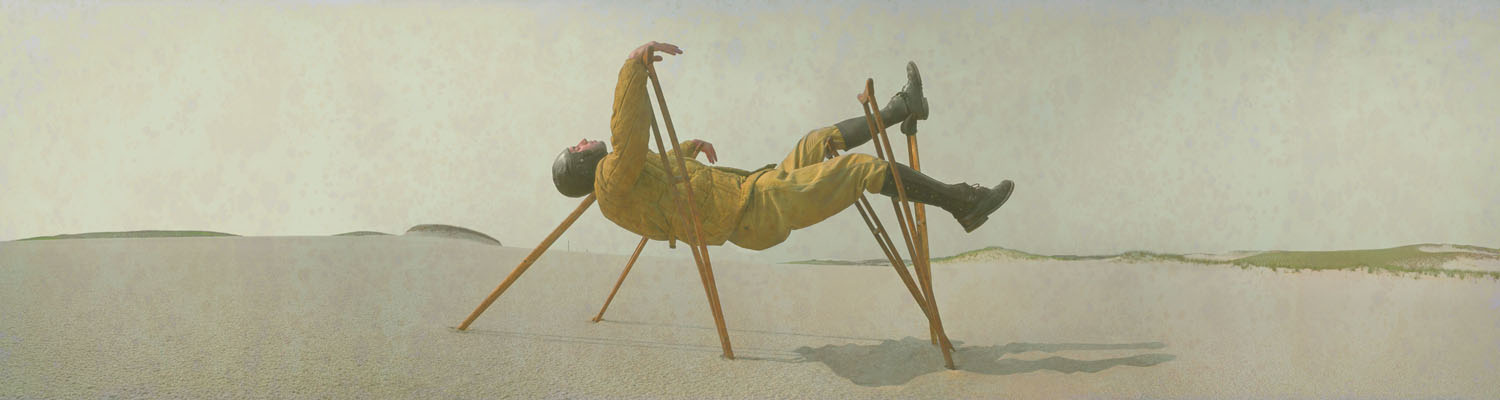
Suspended! Image via kahnselesnick.com. Click to enlarge.


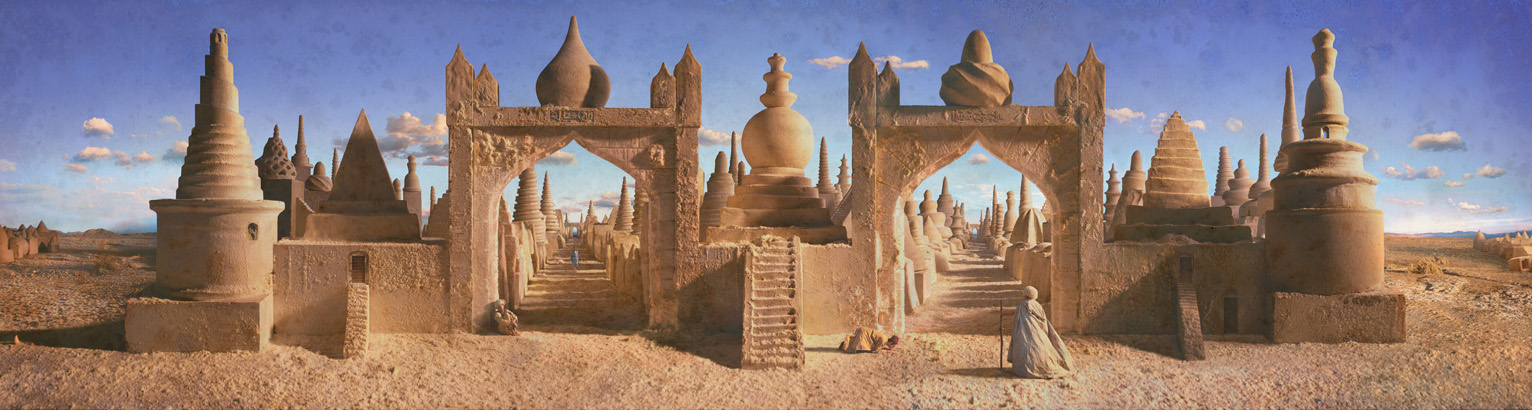
Two Streets. Image via kahnselesnick.com. Click to enlarge.


The Flyer. Image via kahnselesnick.com. Click to enlarge.

 
From Amazon:
 
Panoramic photographs of fantastical landscapes make a bizarre Baedeker to alternative realities in City of Salt, by Nicholas Kahn and Richard Selesnick. The second volume, after Scotlandfuturebog, in an intended trilogy of such otherworldly guides juxtaposes those scenes with similarly inspired texts: Sufi tales, the writings of fabulist Italo Calvino, and parables by the artists themselves. The strange deserts, marshes, sandy shores, villages, and fields are often traversed by wandering figures, frequently in peril or precariously alone. Kahn and Selesnick’s process combines sculptural and photographic media. The artists first construct the intricately detailed worlds in three-dimensional miniatures and dioramas, then digitally photograph the scene and populate it with characters in allegorical, though intriguingly puzzling, tableaux.
…………………………..
 
I ran into this gorgeous, oversized, substantial book few years ago while visiting UCSD’s excellent Architecture library. Words and images weave imaginary tales and create an escapist landscape. May days verge on the surreal, time is suspended, perhaps in a cruel, paradoxical loop. To travel through time, for once forward instead of backwards…to harness the days as though wild horses, bridle their energy. May seems to slip through my fingers, each time. I am lulled by the calm (before the storm? No, before more tense calm.)
Dreams and collages await. I find the only cure for restlessness is mindful awareness, in brilliant execution of each undertaking- as small as it is, as humble as it is. Ambition can paralyze you in May, when mid-year approaches and mental harvests take place. Each day we need to reconcile heaven and hell within us. Refusing to attemp the feat, or lack of acceptance of our opposite instincts,  is the only way the battle is lost. In numbness lies defeat.

Read Full Post »


Architecture Depends by Jeremy Till Book cover

On April 08, 2011 I attended Till’s  provocative  lecture on his new book ‘Architecture Depends’. Here is a review from The Architects’ Journal (UK).

Here are some quotes from that day, from my notes, which i hope to be as faithful as possible:

The book was initially titled ‘Architecture and Contingencies’. The publisher made me change it to ‘Architecture Depends’. There are problems changing the title of a book once it is finished- and structured around a different title.

This book is a polemic. Architects detach themselves.  This detachment starts here in academia. Architecture students go in as humans and come back as architects.

Architects are separate from life. Autonomy in architecture is detachment.We witness the treatment of buildings as though they are detached objects, displayed in the media as something apart. This detachment is a dissolution.

All we got is Vitruvius: commodity, firmness, delight. Recycled through the ages!

Of all the impossible task that modernity sets for itself, order stands out. How does modernity achieve order? By exterminating ambivalence. Modernity is behind the Holocaust.

Corbu didn’t invent modernity. He was a symptom of it.

Modernity cannot get rid of contingency.

Contingency is getting rid of the idea that things may turn out differently. In architecture contingency is inevitable.

Architects would be banished by Plato.

Contingency makes us have to make choices.

Abstract vs. situated knowledge.

“All architecture is waste in transit.” Peter Guthrie

Le Courbusier tried to banish domestic inhabitation.

Parametric people are as conservative as the New Urbanists, the latter caught in an aggressive past, the former in a progressive future .

Modernity: concerned with purity, the color white…modernity is this gleaning table with this aesthetic of getting rid of dirt.

‘You don’t know how wonderful dirt is.’ James Joyce’s last words, from Gideon’s biography.

Architects ‘make space’…negative space…what does that even mean?

‘Social space is a social product’. Henri Lefebvre

The production of space is not the agency of architecture alone!

Sustainability=sustain the status quo. This word has become meaningless.

Elvis Costello and Lo-Fi architecture: I heard Elvis Costello once in an interview saying that when you record in the studio you get caught up in a certain kind of environment. He would ask to have the record played back on a cheap transistor radio, because that’s how the music is going to be experienced by most people. The same with architecture. We have to have in mind low-fi, transistor radio architecture as we stay in front of the computer, believing what we see. The more it looks real the less real it is.

Architecture cannot be about aesthetic alone: it deals with the social and ethical. It has to be alert to the context.

I don’t like to use pictures in my presentations because, as soon as I provide pictures, the argument becomes about aesthetic.

Professions set themselves apart by setting up problems they are the only ones able to solve. Professors do the same.

‘Architecture and Agency’ will be my next book.

Sensemaking vs. problemsolving.

In architecture we have created phony ethics, we have associated ethics with aesthetics, morality with beauty…God is in the detail, etc.

Doing good by doing beautiful buildings?

Professional codes of conducts are an example of phony ethics: these are not ethical guidelines, they are principles for relating to the client.

You can’t be ethical by doing beautiful buildings! You have to assume an ethical stance, a responsibility for the other. If we start thinking that every line on a piece of paper is an act of social responsibility, then every line assumes significance.

I am against ‘Anyone is Anyone’ conferences.

From the paper ‘Lost Judgement’ from the 2003 EEAA Prize by Jeremy Till – and referred to during the talk:

The Other for architects is the one or ones who will be part of the social space our buildings help construct. In this way we can be the architects Unger would wish us to be, “enabling people as individuals and as groups to express themselves by changing their situations. …(the architect) lives out his transformative vocation by assisting someone else’s.”

An ethical person is a person who gathers discordant opinions and makes the best decision. Hope is with given given circumstances. Stop investing in objects.

The next project I will do will be on scarcity. Scarcity is much more interesting to me.

Architects sold out the profession to the agency of Capitalism. In building Dubai they forgot it was going to be built by slave labor. If all you offer is commodity you have got nothing to offer. Spatial intelligence will get us away from the cul-de-sac we got ourselves into. We should be gathering contingencies and make the best possible solutions.

I like to think of architects as angels with dirty faces.


Read Full Post »

Ink on Paper. January 2011.


As designers, architects, artists, we use the ability to first visualize then communicate  a desired outcome. Implementation means having the courage, discipline and perseverance  to  bring that vision into the physical realm. I love to write, and to write lists, but this year I am doing something different with my 2011 resolutions. I am drawing them. It sems to be working. On good days, and they are abundant here in San Diego, you can find me in the park, chasing the sun and reading. An old-school physical book.  The previous specifications is now necessary due to the variety of reading options we have (what is your pleasure, or rather, your poison: smartphone, kindle, ipad, TMZ on your laptop?). These are my immediate, must-finish charges: 

Ink on paper. February 2011.

Books:

Inchoate: An Experiment in Architectural Education. Angelil, Marc and Liat Uziyel, eds.

The Architect: Chapters in the History of the Profession by Spiro Kostof

Sketching and meditating. Two resolutions, perhaps one and the same.  

Ink on Paper. January 2011.


Pondering on drawing, as opposed to writing, resolutions led me to think about visual vs. written and oral communication.

While drawing-or diagramming-a goal may help provide us with clues, visual or other, that help us actualize it, I don’t buy the argument that ‘visual’ people can only best communicate their intent through images. This is also known as ‘a picture is worth a thousand words’ syndrome. By the same token, I refuse to accept that ‘visual’ people only understand material if it’s accompanied by images and therefore should be excused if they are poor readers or listeners. That is plain laziness. There are notions and topics  in this world that cannot be boiled down to neat Powerpoints (even though, heaven knows, we have tried to even run wars through the ubiquitous slide application), but require flight of the imagination, suspension of disbelief, and the ability to follow (picture-less) complex arguments. In trying to explain critical thinking, images run the risk of appearing like obtrusive clip-arts, obfuscating rather than enlightening.

The tyranny of the visual often lets us  get away with having inferior written and oral communication skills. I don’t buy the ‘visual’ doctrine (or fallacy) with my students or my architecture colleagues. Maybe it’s because I come from a linguistic lycaeum, was an English Minor, and come from Italy, but the way a person speaks or writes is more important to me, or revealing of their character, than any imagery or composition she or he can conjure up on a board. And here I need to say that, lest I behave like a whitened sepulcher, I know I have failings when trying to communicate: typos due to late night writing, listitis (I make too many lists), lectures that tend to go on a tangent and probably what is called mild A.D.D in this country (or severe A.D.D…depending on what day you ask my students;)). Lastly the fact that, no matter how many years I live here, my soul is Italian and so is the way to express myself, and we do use lot of what here are called ‘run-ons’ in writing, and perhaps even talking. We are peripatetic, scenic-route communicators.

Ok, so I am not perfect: let the flawed still admire and aim at beauty.

I ask the person I listen to to paint a convincing, even seductive picture with their words, to evoke the sense and meaning of their process. Of course exact,clear words go well with exact, clear drawings and diagrams, but seductive images without substantive explanations or clear, logical statements leave me dry. The literary arts are for the most part lost to modern architecture students, beyond the required ‘humanities’  and enticing (but seldom frequented) advanced elective courses. The result is professionals who are literate in CAD, codes, building, or even ‘architecture’, but illiterate in the sense of the global collective written word, and therefore culture. Shouldn’t the designers of shelters for the human race understand its most lyrical expressions?  Shouldn’t they design for man and woman’s highest aspiration, rather than the lowest common denominator? We ask architects to create places of Beauty, places that inspire, to design poetic aedifices. Without knowing what poetry is, without at least having been exposed to it, that is an impossible feat. If architecture is the Mother of all the Arts, should it not contain them? Literature, philosophy, liberal arts, music…Where are you Muses in our curricula? We have modified –and are moving towards transforming–the academic requirements for the make-up of the future architect based on the needs (vocational at best ) of field practice, a large number made up by corporate building farms, where architecture is just a sign on the door. Of course we aim for graduates ready to enter the profession, but hopefully we are also aiming for critical thinkers, whole individuals who can inspire, not just perform.  What should lead, follows. The trend can only go downward. I am talking about cad monkeys, or people who are paid ‘to draw, not think’ –I was actually told that many years ago. Call me irrational,  but I call for mandatory poetry courses (mandatory poetry! an oximoron). Call me utopian, but world literature should be as much part of an architecture curriculum as world architecture. When you know, you cannot unknow. I always say that. When you are exposed to possibilities and ‘big questions’ you cannot accept passively that things are just the way they are because they have always been. Poetry and literature are democratic expressions, highly dangerous to the status quo. And therefore highly desirable.

In my quest, I ran into this book. I am collecting a body of critical readings (for myself!) and this book will definitely be included.

Downcast Eyes: The Denigration of Vision in 20th Century French Thought, by Martin Jay

Read Full Post »

Bjarke Ingels came to speak to our school Friday night.

The venue was the Museum of Natural History in scenic Balboa Park.

I am still blown away by the lecture and, more importantly, the message.

It was truly (r)evolutionary.  The fact that BIG’s insanely brilliant concepts not only get built but a) give back to the community in terms of urban interaction b) are socially and ecologically responsible and c) are giving him fame and making him a household name is galvanizing.

Expanding the collective idea of what is possible through architecture: this is the optimism we need after years of gloom, in face of all the naysayers and ‘pie-in-the-sky’ disablers.  Something is blooming in the state of Denmark.

What an event. My friend Alan Rosenblum told me it would be as if  ‘Lady Gaga came to San Diego’.

And. It. Was.  The students loved it. Three days later, and we are all still giddy.

I could not agree more.  Thank you Mr. Ingels.
You intensified the dialogue between students and educators, and showed us how the ‘crazy’ ideas that are developed in studio and propose new typologies for the city are not only possible but timely and welcome. This creates a better learning environment, where pragmatism actually means being part of the solution, not propagating the problem.

I had the same dilemma when working in traditional, corporate offices and found refuge in academia. BIG showed us that there is a third way, the ‘Bigamy’ way. You can have it all. You can be good and successful. You can be extremely famous
and not be arrogant. He spoke of pragmatic idealism, and hedonistic sustainability. He demonstrated how to create building that are fun to experience as inhabitants and city neighbors and yet are sustainable. He showed us the intellectual approach and use of hybridization of traditional typologies to achieve new functions and forms. To wit: the Garbage to Energy plant in the middle of Copenhagen, which will be the city’s tallest structure and will house a ski slope (!) and blow smoke rings each time one ton of CO2 is burned. These are usually ‘crazy’ projects that we see coming from the upper studio division, when we ask the students to ‘dream big’ (pun intended) and question the drab, anti-interactive reality of center cities such as San Diego. The students, deep inside, try to dream but are conditioned to think that projects such as the one we saw in the lecture could never be built due to various factors such as financial interests or politics of control, or even lack of relevance of our role as architects.

We have been liberated from all of this because we can now point to BIG’s projects. Here it was demonstrated that the only limits we have as architects and human beings are those self-imposed, or those we feel ‘reality’ has burdened us with. I know that as faculty we felt validated by BIG’s successes ( does it make sense?). The music and videos, the whole presentation and BIG’s  infectious enthusiasm, warmth and positive energy were, in the words of a student ‘AWESOME’. Another student told me he learned a lot about diagrams from the lecture.
The lecture also was a model for engaging presentations. I have been toying with the idea, but now I am committed to use music and pop references in my History of Architecture classes; I ran the idea with few students and they were all for it. 🙂 I will quote Ingels when he says that we need to ‘cease to consider the building as objects but focus on what they do for the city’ : this informs and generates a new approach to ‘sacred architectural monsters’ and teaching history of architecture (or as I like to think, architectural stories).

A big thank you to Allen Ghaida, the AIAS and all my colleagues at the NewSchool Arts Foundation for making this dream of an event a reality.

I sketched feverishly- and took down all the provocative quotes. Here are my hybrid/computer-augmented notes.

I will add all of the proper building names and location as soon as possible.

click to enlarge

…..and this was my present 🙂

Read Full Post »

The Flâneur: A Radical-Chic Icon

The Flâneur. Ink on trace paper. February 26, 2011

The Flâneur and his turtle in the streets of Paris. Digital collage. February 26, 2011. Background photo from San Francisco’s artist David Blumin. Click for his website.

Post updated 11.01.2021


Then I heard the phrase ‘Walk with a turtle’ on NPR, during an interview with Council of Dads’ author Bruce Feiler–and had an epiphany: I, too, had been a flâneuse in my early years. When I was 9 years old I used to tie a red ribbon to the shell of my turtle Stefania/Stefano (we are still not sure) and take her for ‘walks’ around my building and in the field of olive trees nearby. This cannot just be explained by mere coincidence or a sense of equanimity (i would take my giant schnautzer Zorro for walks- or rather, he would take me- and treated Stefania/Stefano to the same). By walking the city (ok , in my case the field of olive trees) at the pace of a tortoise, we are bound to pay attention to life around us, to read the city–not just skim it from the wheel of our car or glancing up from smartphones while we traverse sidewalks. Having a turtle as a guide nudges us to stop rushing. I am reminded of the buddhist monk in the documentary ‘Baraka’, slowly pacing the street with small steps , at the sound of a bell–in the midst of a hyperactive Japanese metropolis. The realization of possible multi-layered readings on the figure of the flaneur prompted a small research. Here is a documentary on Walter Benjamin’s Flâneur and Paris.

Historical evidence of The Flâneur? Or just man waiting for his wife? Undated image from: storify.com/virtualdavis/flaneur

The  Flâneur

The term comes from ‘flâner’, which means to stroll in French. From this verb Baudelaire coined the word  flâneur, a person who walks the city in order to experience it.  The flâneur is driven  by an  insatiable  hunger  for  passion; he  seeks  the  streets and  the  city  life  for they  provide  inspiration  and  cure him of the malaise and loneliness  of  being human. He practices mindfulness, or conscious dilly-dallying. In US they would call him a ‘loiterer’, surely shoo him away…or perhaps fine or even jail him (I always tell my students there is no such thing as the word ‘loitering’ in Italian….what else would we do in Piazzas!?). My friend Bruce and I were discussing the flâneur few days ago and he reminded me of  the symbology of the turtle and this quote from Rumi:

The soul needs as much time to wander as the feet.

Rumi


Baudelaire writes of the flâneur:

 The  crowd  is  his  element,  as  the  air  is  that  of  birds  and  water  of  fishes.

 His  passion  and passionate  spectator,  it  is  an  immense  joy  to  set  up  house  in  the  heart  of  the  multitude, amid  the  ebb  and  flow  of  movement,  in  the  midst  of  the  fugitive  and  the  infinite.

To  be away  from  home  and  yet  to  feel  oneself  everywhere  at  home;  to  see  the  world,  to  be  at the  centre  of  the  world,  and  yet  to  remain  hidden  from  the  world

impartial  natures which  the  tongue  can  but  clumsily  define.  The  spectator  is  a  prince  who  everywhere  rejoices  in  his  incognito.  The  lover  of  life  makes  the  whole  world  his  family,  just  like  the lover  of  the  fair  sex  who  builds  up  his  family  from  all  the  beautiful  women  that  he  has ever  found,  or  that  are  or  are  not  -­‐  to  be  found;  or  the  lover  of  pictures  who  lives  in  a magical  society  of  dreams  painted  on  canvas.


A Process of Navigating Erudition

From Wikipedia: Flâneur is not limited to someone committing the physical act of peripatetic stroll in the Baudelairian sense, but can also include a “complete philosophical way of living and thinking”, and a process of navigating erudition as described by Nassim Nicholas Taleb’s essay on “Why I Walk” in the second edition of The Black Swan (2010).  A Sunday Time review called The Black Swan  one of the twelve most influential books since WWII.

Benjamin  in his Arcades further describes the flâneur utilizes the city,  which becomes an  extension of  his residence:

The   street   becomes   a   dwelling   for   the   flâneur;   he   is   as   much   at   home   among   the facades  of  houses  as  a  citizen  is  in  his  four  walls.  To  him  the  shiny,  enameled  signs  of businesses  are  at  least  as  good  a  wall  ornament  as  an  oil  painting  is  to  the  bourgeois  in his  salon.  The  walls  are  the  desk  against  which  he  presses  his  notebooks;  news-­‐stands are  his  libraries  and  the  terraces  of  cafés  are  the  balconies  from  which  he  looks  down on  his  household  after  his  work  is  done.


Some of the questions I have been thinking about are : Can the flâneur be a flâneuse? Must he or she always haunt the city aloof and alone, or is ‘Flâneurie’ an activity that can be enjoyed in small groups, maybe of separate actors, each with his or her own turtle?

The flâneur is enjoying immense popularity on the Internet and blogosphere, among the hipster and (pseudo)intellectual crowd.  He is radical chic, a gentleman stroller whose eccentricity is afforded to him by indipendent wealth. He is a man of leisure who can make a statement about the bondage of work and busyiness: he is above it and does not need it.
On the other side of the coin, we might re-evaluate the ‘homeless’ people, the figure of the clochard (sounds better in French doesn’t it) as flâneurs without means, but with the same intellect and intent.  They also make the city their living room and library.

In “American Flaneur: The Cosmic Physiognomy of Edgar Allan Poe“, James V. Werner describes how ‘ highly self-aware, and to a certain degree flamboyant and theatrical, dandies of the mid-nineteenth century created scenes through outrageous acts like walking turtles on leashes down the streets of Paris. Such acts exemplify a flâneur’s active participation in and fascination with street life while displaying a critical attitude towards the uniformity, speed, and anonymity of modern life in the city.’

Hmm…Sounds like The Situationists.

A new interpretation of the activities of the flâneur appear in the writings of Guy Debord, the dérive also being a protest against the processes of consumption and capitalism:

One of the basic situationist practices is the dérive [literally: “drifting”], a technique of rapid passage through varied ambiances. Dérives involve playful-constructive behavior and awareness of psychogeographical effects, and are thus quite different from the classic notions of journey or stroll.

In a dérive one or more persons during a certain period drop their relations, their work and leisure activities, and all their other usual motives for movement and action, and let themselves be drawn by the attractions of the terrain and the encounters they find there. Chance is a less important factor in this activity than one might think: from a dérive point of view cities have psychogeographical contours, with constant currents, fixed points and vortexes that strongly discourage entry into or exit from certain zones.

–Guy Debord

While the flaneurs practiced ‘aimless wandering’, the Situationists devised processes to purposefully get lost.

There is no English equivalent for the French word flâneur. Cassell’s dictionary defines flâneur as a stroller, saunterer, drifter but none of these terms seems quite accurate. There is no English equivalent for the term, just as there is no Anglo-Saxon counterpart of that essentially Gallic individual, the deliberately aimless pedestrian, unencumbered by any obligation or sense of urgency, who, being French and therefore frugal, wastes nothinincluding his time which he spends with the leisurely discrimination of a gourmet, savoring the multiple flavors of his city.

Cornelia Otis Skinner.

Elegant Wits and Grand Horizontals, 1962

Watching is the chosen pleasure of flâneur. He is an ‘urban stalker’, as Susan Sontag defines him in her 1977 essay On Photography.  Modern flâneurs, let’s arm ourselves with cameras or a moleskine . Let’s pretend we are all ‘The Sartorialist’ and many, many other envoys on particular missions. Would you enjoy the streets of your city if you thought you were spying on someone, an urban detective, privy to secrets no-one else can know? What would the intelligence gathered from today? What stories could you tell(or draw)? What stories would the city reveal to you. There is so much life out there. And buildings are lessons.

Let the urban voyeurism begin.
Here are some useful links:

And, finally, my very own books for Parisian flanerie.

Read Full Post »

image

image

image

image

image

Before the first day of the month comes to a close…

Read Full Post »

Ink and coffee on paper.

One more post before the month is over. I still have a lot of sketches to share and  am working on finding time to do some more collages (wow, the previous sentence needs to have more conviction to it!). Lots of changes going on around the world…. I am just sitting and seeing it all turn.
Wanted to share some words I received today:


Events of these past weeks remind us that as designers, faculty, engineers, authors, landscape architects, students, and architects we build landscapes and cities that fuel revolutions. Of knowledge and of hope…..Act of civil disobedience in Tunis and in Cairo are fueled by the spark of indignity. And in their Main Squares, we are reminded that Cities are embodied energy too. Below are words on cities. There are many.
 
Come, let yourself fall with me into the lunar scar of our city, scratched by sewers, crystal city of vapor and mineral frost, city witness to all we forget, city of carnivorous cliffs, city of immobile pain, city of immense brevity, city of the motionless sun, city of the long burning, city of the slow fires, city up to its neck in water, city of playful lethargy, city of black nerves, city of three umbilical scars, city of yellow laughter, city of twisted stink, city between air and worms, city of ancient lights ,old city nested among birds of omen, new city next to sculpture dust, city reflection of gigantic heaven, city of dark varnish and stonework, city beneath glistening mud, city of guts and tendons, city of violated defeat, city of submissive markets, city reflecting fury city of anxious failure, city woven with amnesia….
 
Carlos Fuentes
See you in February!

Read Full Post »

Santa Maria Delle Grazie with Bramante's apse. Milano. Pilot pen on paper. January 2011

 In the monastery adjacent this church, just a few minutes’ stroll from my house, one can find Leonardo Da Vinci’s ‘Last Supper’. The apse (widely attributed to Donato Bramante, and dated around 1490) is significant as it signals a crucial transition from the Late Gothic style of the nave to a splendid Northern Italian Renaissance in the apse, the choir and cupola.

.25 technical pen on cardstock. January 2011.

Photoshop manipulation of pen drawing. January 2011.

MITI’S RECIPE FOR SKETCHING:

Day One: Look. (First Encounter)

Day Two: See. (Visual Analysis;walkaround…resist the urge to take photos. Training your eyes will not only lead to better sketches, better lessons learned from the Architecture itself, it will lead to–if you are so inclined–even better photography in the end. Notice, examine and mentally record -on the exterior- connections, details, rhythms, proportions, materials; on the interior: spaces, rituals, light, sequences, apertures, passages…)

Day Three: Sketch. (even quickly…by now you learned the lessons, you acquainted yourself with the building. You begin to understand.) Use the verb ‘to draw’ as in drawing water from a well, draw information (this last advice comes from Travelling the World with an Architect’s Eye)

Tips for cold-weather sketching: stop when your legs fall asleep. Wear half (I call them ‘homeless-style’) gloves to keep the hands free. Listen to warm music on your ipod. Bring a thermos or mug with hot, organic, unsweetened english breakfast tea.

And…

for impromptu urban sketching, carry your pens with the very handy penholder by Muji (did I mention before that I love Muji?)

Sketchbook by hand book, penholder clip by muji.

Read Full Post »


Milano, where window shopping is elevated to an art form. Here is a Louis Vuitton window inside the Galleria Vittorio Emanuele, with paper lanterns shaped as luggage. The inspiration comes from the Indian Festival of Lights.


El Prestin Del Cantun: a paradise of focaccine and pizzette...dreams do come true.

Read Full Post »

Photograph, December 19, 2010

This is my piazza, do you want to join me? We can walk inside the Battistero and talk about Islamic influences in the architecture of the Rinascimento in Firenze…or maybe just stroll about like tourists. Let’s take that via,the one on the left, do you want to come with me?

Every time I consider  imaginary spaces, my mind wanders to The Forgetting Room, that magnificent book.

Should we build a forgetting room for this year (to let bitter memories flow onto Oblivion)? Or a remembering one (to extract poetry and melancholy …even, ah, wisdom…out of hardship? – the feeling of seeing a familiar river in winter). God knows I built enough altars, and burned enough. I haven’t yet learned if sadness is better than anger.
2010, what a stubborn, bittersweet, impenetrable year you were….I release you, since I could never reach you, no matter how hard I tried, or how much I mentally applied myself to understand you.
Perhaps you were never meant to be comprehended. Perhaps you were not worthy.

Read Full Post »

This has started to be a weekly blog, and I am not too happy about it. This Quarter has been so intense in a stupendous way: I am involved in a myriad of exciting projects at the school and became involved in new committees – and that has meant less free time, but an overall brand new meaning in what I do. And did I mention the books ? In my studio class we are talking about designing negative space and casting shadows and in history we are in the Golden period of Classical Times : Greece (what have the Greeks done for you lately) and Rome. Who could ask for more?

Throughout it all, we have ‘got to keep the heart’ as Wanda, my sweet ex-neighbor said. Brain food needs to be augmented by daily spirit-food, soul-food…heart-food. As fully-realized human beings we have to ask an incredible amount from each day, but I believe it’s the only way to go…or you could just go on auto-pilot and become numb. Art and what happens here is just that for me, an outlet and inlet of pure ‘heart-stuff’, to balance the facts and seductive theories I’m immersed in everyday. Could we say this is my Dyonisian to the Apollonian? The days that I don’t get to post or practice are somewhat overcast, a bit stuffy, as though not enough light or air was let in.

I finally completed my Viva La Revolucion post and a related ‘revolutionary’ piece {see previous}. It took FOREVER. I don’t know why I keep giving myself homework. But I hope you enjoy that line of thinking, always trying to put it all together in a somewhat cohesive way that has to do with the nature of this forum.
The Holidays are coming and I am looking forward to post more frequently and produce more work. And I have a long list of things/topics so definitely stay tuned!
I finally had some time to do a new collage today.

It all started with this catalog of this year’s Arab Film Festival in San Francisco, and an image of the Salk Institute in San Diego.

I knew I wanted to make a collage using the two for some time, and the inspiration came from a dream last night.

I did not know the word part would materialize. Using the titles of the movie in the Festival, I created a game for myself, a sort of stream-of-consciousness poem generator. Here is one of the early results.

Here is how it all came together, unwritten an unspeakable words, fragments of poems, figments of my imagination…

Read Full Post »

Students in Roma protest using 'literary shields' and have given rise to the so-called Book Block.

Students revolts have spread in Italy and England in the past few weeks. The images that I see coming from my country remind me of interactive urban installations organized by Coop Himmelblau in the 1960’s and 1970’s .

These are called ‘soft explosions’, such as the covering of a street in Vienna with foam,or the appearance in the streets of Paris of habitable ‘bubbles’.

Soft Space. Coop Himmelblau. Vienna, 1970.

Bubbles.Coop Himmelblau. Paris, 1968.

Coop Himmelblau’s approach,according to the pleasantly subversive Spatial Agency, is similar to that of Haus-Rucker-Co, based on the Austrian heritage of Freud’s psychoanalytic approach– this led them to explore the relationships between the architectural environment and our individual perceptions of it. Their early work leading up to the late 1970s consisted of performative installations and actions involving the spectators as participants. [read more at
Post-traumatic Urbanism ]

Italian students today put the art in revolt.

During the Book Block protest in Rome (so called by the collective writers Wu Ming— see Black Block for reference ), which took place November 24, 2010 in Rome, University students fashioned ‘literary shields’ to defend themselves against the riot police (members of the Italian police have been charged with murder in several cases involving student demonstrators, sports fans rioting outside of stadiums and G-8 protesters in recent years). The shields become what the students are fighing for: the right for education against drastic government cuts. What better symbol of the predicament Italian Universities are in, than to take to the streets books relevant to today’s Italian young adults. A plank of wood sandwiched between two sheets of cardboard become the book covers. Here are some of the texts, and the titles are sometimes surprising:


Tropic of Cancer
by Artur Miller
The Little Prince by Antoine de Saint-Exupéry
The Italian Constitution
Decameron by Boccaccio
Naked Sun by Aasimov
A thousand plateaus: Capitalism and Schizophrenia by Deleuze
Gomorrah by Saviano
Don Quixote by Cervantes
Moby Dick
by Melville
The Prince by Macchiavelli
and…my favorite book of all time: One Hundred Years of Solitude by Garcia Marquez

From Studenti.it

As the students recount, it was a spontaneous process started one November afternoon at the University. Each student proposed titles of books;they wanted to represent that ‘ culture is the only defence against a government who wants to demolish it’.

Gian Mario Anselmi, professor of Italian Literature at the University of Bologna says: : “These kids used culture as shield, our true and only identity. We defend ourselves with classical texts. The titles they chose are incredibly diverse, fruit of who knows what advice and suggestion, but it does not matter. It is the smbol that matters. And on these shields told of utopia, history, courage and love.”
The Book Block protest plans to make an appearance again on December 14 in Rome.

The writer Roberto Saviano, in his open letter to the newspaper ‘La Repubblica’ –written to condemn the violence emerged in some recent student revolts –praises ‘intellectual’ and creative demonstrations such as the ‘Book Bloc’. He writes:
‘C’era allegria nei ragazzi che avevano avuto l’idea dei Book Block, i libri come difesa, che vogliono dire crescita, presa di coscienza. Vogliono dire che le parole sono lì a difenderci, che tutto parte dai libri, dalla scuola, dall’istruzione… La testa serve per pensare, non per fare l’ariete. I book block mi sembrano una risposta meravigliosa a chi in tuta nera si dice anarchico senza sapere cos’è l’anarchismo neanche lontanamente.’
The kids who had the idea of th ‘Book Block’ did so in good spirit, books as defense, books that signify growth, self-awareness. Books are there to say words come to our defense, that everything starts with books, school, learning…Your head is there for you to think , not to use it as a battering ram. I think the Book Blocs are a wonderful answer to those who call themselves anarchic, wearing black overalls, without even knowing what anarchy even means.’

As I was preparing this post, I collected these quotes and thoughts on revolution and books:

Promise yourself to live your life as a revolution and not just a process of evolution.

Anthony J. D’Angelo

Do not read, as children do, to amuse yourself, or like the ambitious, for the purpose of instruction. No, read in order to live.
— Gustave Flaubert

“There is not a particle of life which does not bear poetry within it”
— Gustave Flaubert

“The poet or the revolutionary is there to articulate the necessity, but until the people themselves apprehend it, nothing can happen … Perhaps it can’t be done without the poet, but it certainly can’t be done without the people. The poet and the people get on generally very badly, and yet they need each other. The poet knows it sooner than the people do. The people usually know it after the poet is dead; but that’s all right. The point is to get your work done, and your work is to change the world.”
— James Baldwin

“The whole dream of democracy is to raise the proletariat to the level of stupidity attained by the bourgeoisie.”
— Gustave Flaubert

“Be regular and orderly in your life, so that you may be violent and original in your work.”
Gustave Flaubert

Read Full Post »

Reissued Dec.10, 2010


From the Museum of Contemporary Art San Diego site:
For the first time in history, the majority of the world’s population lives in urban communities. The urban setting and its corresponding lifestyle are major sources of inspiration in contemporary culture. This is an historic revolution in visual culture, in which the codes and icons of the everyday—found on the streets in graffiti, signage, waste, tattoos, advertising, and graphic design—have been appropriated and used as an integral part of contemporary art-making. The urban landscape inspires and serves as both a platform for innovation and a vehicle for expression for many artists. The city itself, its buildings, vehicles, people, and advertisements, are not only the surface where the art is applied. The city fuels the practice.

A multifaceted exhibition that explores the dialogue between artists and the urban landscape, Viva la Revolución: A Dialogue with the Urban Landscape features works both in the Museum’s galleries as well as at public sites throughout downtown San Diego.

The exhibition includes a diverse range of 20 artists from 10 countries that are linked together by how their work addresses urban issues — Akay (Sweden), Banksy (U.K.), Blu (Italy), Mark Bradford (U.S.), William Cordova (U.S.), Date Farmers (U.S.), Stephan Doitschinoff [CALMA] (Brazil), Dr. Lakra (Mexico), Dzine (Puerto Rico), David Ellis (U.S.), FAILE (Canada), Shepard Fairey (U.S.), Invader (France), JR (France), Barry McGee (U.S.), Ryan McGinness (U.S.), Moris (Mexico), Os Gemeos (Brazil), Swoon (U.S.), and Vhils (Portugal).

Viva la Revolución: A Dialogue with the Urban Landscape is curated by guest curator Pedro Alonzo and MCASD Associate Curator Lucía Sanromán.

Bologna-based Blu took 10 days to film the stop-motion graffiti film 'Combo'. If you enjoyed the opening animation of the Monthy Python movies, you will LOVE this.

If you only see TWO works from this show, lucky you, they are only a click away. You MUST check out these videos. Guaranteed to blow your mind.

1. Blu. Combo. 2009
2. Blu. Big Bang Boom. 2010


Thursday, December 2. Thursday always seems a good day to start a revolution. And we are already in December, so why not set to flame this problematic year?

I have taken an unjustified leave of absence for sketchbloom, but life and the mind have been in a state of ‘good’ intensity. Lots of good words, good books…hopefully good thinking… GREAT conversations.

So I missed Nablopomo, Nanowrimo, annhilated my phone (hence no internet)…but I am still here. New replacement phone is here, and I am plugged in.

There are lots of possible revolutions. There is one going on right now (subject of next post), maybe I was waiting for just this.

I am going for a revolution of the mind.

Two weekends ago  I went to see ‘Viva La Revolucion’, the incorrectly titled but intriguing show at MCASD. That is our museum of contemporary art in downtown San Diego. GO.

This show will last till January…then it will be gone.

SO what is it all about? Well, the relationship between urban (graffiti art) and the built environment. SO here you see, there is a nexus of what I am trying to do (or say) occasionally.

What do you think of the Space Invader project?

The Space Invader Walk. Video. 10 Minutes. Invader, best known for his use of ceramic tiles to recreate the Space Invader video game. The walk in downtown San Diego, once mapped, reveals the outline of a Space Invader. A sort of Urban Etch-a-Sketch. The artist uses GPS tracking technology.


Here is a trailer of the Space Invader Walk.

Banksy. West Bank barrier, Bethlehem. 2007

I would be remiss if I didn’t mention the uber-famous Banksy. Always eye opening to see his provocative work.

Just really wanted to poke my head in and say ‘ I’m back, have a nice ‘night’- because more than two weeks of silence (and silent art) pain me.

Then leave.


This slideshow requires JavaScript.

Read Full Post »


John Hejduk. Sketch from Lake Baikal, part of the Vladivostok oeuvre

John Hejduk. Sketch from Lake Baikal, part of the Vladivostok oeuvre

John Hejduk. Sketch from Lake Baikal, part of the Vladivostok oeuvre

John Hejduk has been called one of the most influential architects and educators of our time..
He was also a poet, an artist and the Dean of the Irwin S. Chanin School of Architecture of the uber-prestigious Cooper Union in New York.

I am reviewing couple of his books, Vladivostok and The Mask of Medusa and thought I would share some of the ear-cornered pages.  Like Marco Polo, John Hedjuk’s travels start from Venice. Some of you may know my mother is from the Venice region, Treviso to be precise, and it was endearing to find the Serenissima in this book, a fascinating fusion of East and West, and even Milano, my birthplace. From the foreword:


The journey I have been on for the past ten years followed an eastern route starting at Venice, then moving north to Berlin through Prague, then northeast to Riga, from Riga Eastward to Lake Baikal and then on to Vladivostok. This has been, and is, a long journey.

Bodies of water mark the trek. Venice of the Adriatic, the lagoons, the Venetian canals, the river Vitava of Prague with its echoes of Rilke and Kafka, the waterways of Berlin, the Gulf of Riga, Lake Baikal, and the Sea of japan in Valdivostok. The elements giving off their particular atmospheres, and sounds, impregnate my soul with the spirit of place, place actual…place imagined.

The works from this journey are named and form trilogies.

In Venice;

The Cemetery of Ashes of Thought                                                                                                                                  

The Silent Wtnesses and

The 13 Watchtowers of Cannaregio

In Berlin;

Berlin Masque

Victims, and Berlin Night

In Russia;

Riga,

Lake Baikal, and

Vladivostok

[  ]

I state the above to indicate the nature of a practice.

[ ]

I have established a repertoire of objects/subjects, and this troupe accompanies me from city to city, from place to place, to cities I have been to and to cities I have not visited.  The cast presents itself to a city and its inhabitants. Some of the objects are buit and remain in the city; some are built for a time, then are dismantled and disappear;some are built, dismantled and move on to another city where they are reconstructed.

I believe that this method/practice is a new way of approaching the architecture of a city and of giving proper respect to a city’s inhabitants.

It confronts a pathology head-on

John Hejduk, 1989 

Hejduk’s work is provocative, political, polyedric. Read Errand, Detour, and the Wilderness Urbanism of John Hejduk, part of  Paroles d’Architects, an excellent collection of writings on architecture.

Also Sorkin on the Mask of Medusa, in Exquisite Corpse: Writing on Buildings.

Reading this book, at the nexus between literature and architecture reminds me of Italo Calvino’s Invisible Cities. One of the future anterior projects: to illustrate Calvino’s cities. But it’s been done.

Cultural Minister

The Minister of Culture reads the works of Hawthorne, Flaubert and Hardy.What impresses him is the extraordinary love of women by these authors. Somehow the three writers are related through the strenght of Zanobia,Madame Bovary, and Batsheba. The Minister of Culture is aware of their seductions. He imagines, fabricates, and sews the dresses they had worn. He folds each garment and places it in an oblong box and waits for sundown. He precisely selects his victim, follows her, commits his crime, redresses herin the dress from the box, and places the body at the edge of the water. At Dawn he reads from the appropriate passages in a trembling voice.


Read Full Post »

Made on Illustrator and Mac

My second board for the faculty display wall. I now have a list of new art to add to my portfolio tabs, as this was a great opportunity to curate my artwork.

It feels great to be done (for now). Happy Halloween!

Read Full Post »

Practice+Pedagogy. October 28, 2010. Made on a Mac. Click to enlarge.

The board is done and up on the faculty display wall.

In the process, I refined my skills with Illustrator, pondered philosophy, practice, pedagogy,and  crystallized what I am, do, stand for — in a tangible format.

A welcome tall order.

Read Full Post »

Stonehenge. Detail of trabeation (Post and Lintel). Considered one of the foremost examples of Megalithic Architecture (Mega+ Lithos, or Colossal Stone)Salisbury Plain, England. C.2750-1500 B.C.E

From my Friday’s History Class.

The Beginnings of Architecture covers Stonehenge, the caves at Lascaux and Altamira, and what we consider the beginning of the urban revolution in our hemisphere, the proto-cities of Catal Huyuk and Jericho. I will share weekly  my History powerpoints, well, okay, the ones I consider complete…next I want to sharpen up the lecture on Pre-Columbian|Precontact Architecture of the Americas and will then share it here.

See/Download the Presentation:

Week2_AR761_Beginnings_Stonehenge_Final

…and don’t forget to hear Eddie Izzard’s take on Stonehenge. My students always love to hear from this ‘expert’ 😉

Eddie Izzard on Stonehenge

Click to Stonehenge (Before Stonehenge there was Woodhenge and Strawhenge...)

These are the texts I use in my History of Architecture class:


Architecture: From Prehistory to Postmodernity
. 2nd ed. Marvin Trachtenberg and Isabelle Hyman. New York: Harry N. Abrams, Inc. Publishers, 2002

A History of Architecture: Settings and Rituals. Spiro Kostof. Second Edition. Revisions by Greg Castillo. New York and Oxford: Oxford University Press, 1995.

A World History of Architecture. Michael Fazio, Marian Moffett, Lawence Wodehouse. McGraw|Hill.

A Global History of Architecture. Francis D.K. Ching, Mark M. Jarzombek, and Vikramaditya Prakash. Wiley, 2006.

Read Full Post »

The beginning of an urban scenario collage. Oct.19, 2010.

I have been thinking and wanting to explore collages again since this summer, when I was so inspired by Hector Perez and his students’ work with SoCal Ex–but not until today I finally acted on that impulse. I have two works done and one almost complete. Two to share, and one part of a larger, more ambitious project that will have to wait for a bit.

What I love about collages is their sustainability (this below was made for prints that were to be thrown away), and their serendipity. There is a magic about collages, finding enough materials or copies of subject to bring a piece to completion, or that sudden inspiration that constitutes the ‘aha!’ factor of the collage. I am referring to old-school paper, scissors and exacto knife collages, glue-messy ones….there is nothing like digging through your collage material container and unearth and reassemble a work you didn’t even know existed or could compose.  The root of the word collage is the same as the  French verb ‘coller’ or to glue (a latin verb, in italian ‘incollare’). Collages are associated the the Cubist and Surrealist art movements in the last century. Picasso and George Braques are said to have coined the term. In Surrealism, we find more three-dimensional assembly/collages that resemble nonsensical machinery. There is a very fine line between sculpture made of found objects and three-dimensional ‘collages’. The key being, in my opinion, the spontaneity and uplanned process leading to the finished product, which, really, is never meant to be finished.

The exploratory aspect is the most attractive component of the collage process to me, the element of surprise, play, even psychological discovery that all contribute to give life to a work. It is quite extraordinary how when the mind lets go the art takes over (you can call it soul), and such a welcome relief from too much art that is planned and executed like a project. Collages keep the wander, let us, like sketching, solve ourselves. There is no right or wrong because the destination is never known in collages. How utterly liberating.

Yet the best collages, like the best works of art, appear undeniable in the end, as if the piece just ‘made sense’;  they acquire layers of meaning with passing of time, age well, even acquire a certain patina. More than anything, they became more lovely or intense with each time your gaze falls on them. The personal fragments embedded in the collages will echo throughout the years; they will forever signify a time, place and emotion captured, crystallized, amplified.

In architecture, collages are extremely useful right-brain experimentation, and we see the Situationist using them to chart new maps of possible cities. We see collages in the 1960’s and 70’s in the works of  Archigram, Superstudio, Coop Himmelblau and others.  Richard Meier is a starchitect and collager. Whether or not you favor his brand of architecture I think that we all, as architects and academics, ought to have, like him,  a way and time  to let our innate sense of creativity develop, A time to use our hands (not the mouse, not the tip of our finger)and remember how to let our mind play and discover itself. Build something with our hands, an alternate reality, even if  paper-thin.  Collages are where we can dream, using pieces of reality. I suspect that regular collaging would open us (and our art/design)  to  inspiration, mental flexibility, maybe even brilliance. 

Richard Meier’s collages complement his architecture. Unlike his architectural drawings, they are nonrepresentational; like these drawings, they record process.  Like his architecture itself, they study relationships in space and seek difficult reconciliations of the opposed conditions of “found” discord and ideal order.

“A single collage is not begun and finished by itself,” says Meier. “On the contrary, works in various stages of evolution are left in notebooks and on the shelves of my studio, left sometimes for months or even years to await their own period of development.  A collage is often the result of many revisions.  Each must be seen as an element in my total work; they are, for me, an adjunct and a passion related to my life as an architect.”

“Meier has an eye, and a mind to use it,” the architect John Hedjuk has written.  “He doesn’t create all those collages at night at home for nothing.  The collage making is his midnight boxing ring.  It keeps the hand and the eye trained.”

This is what I have been working on, all material from extra pages from printing this blog for my mom in Italy (I send monthly installments via mail because she refuses to make friends with computers. Mamma, when you read this, know you killed a tree ;)).

I applied an ‘antiquing’ crackling glaze to the glazed canvas so we’ll see how it develops. I dig the diagonal/chainlink texture which resulted from the juxtaposition of the pieces. The celling adds an architectural/design reading to the piece. What do you think?

Read Full Post »

Steel frame poetry. Click for more info ore read below.

Choi+Shine, a Massachusetts-based design studio has recently received the Boston Society of Architects Unbuilt Architecture Award for their creative concept Land of Giants™, transforming the generic steel-framed electricity pylons across the Icelandic landscape into unique, individual humanised forms.

Read the World Architecture News article here.

In contrast to the poetry of the unbuilt, and whenever I see vision in design and architecture, there are the missed opportunities of the city around me. In my History of Architecture class I like to tell students that Architecture is built politics. By this I mean that the architecture of the civilizations we study, even the built environment around us, is the embodiment of a people’s values, belief system, socio-economic conditions (or agendas). Architecture can literally be considered ‘the body politik’.
During a recent conversation with a colleague the meaning of absence came up, that is, the absence of benches or piazzas in downtown San Diego. America’s Finest City enjoys the perfect temperate weather, is gifted with a beautiful natural setting, and yet its downtown does not invite enjoyment, people watching, outside of commercial establishment. This is a city that is, peculiarly, not urban at all, but fragmented, servile to cars, at times alienating. In the heart of its historical quarter, the Gaslamp, the city does not yield; no place to sit and pause to take it in.

There could be such place: Horton Plaza.

Downtown San Diego. Horton Plaza is in the 'Core'. Balboa Park is visible on the upper right corner. from onlinesandiegohomes.com

Horton Plaza/Fountain Side is a potential piazza whose use is twarthed by the deliberate use of ‘discomfort’ tactics: rough landscaping and the absence of benches, or seating at human-being level. I see tourists crouching down on curb edges everytime I walk by. There is a plan by the CCDC to ‘reenvision” the public park to make it more attractive‘.

Horton Plaza, facing the U.S Grant Hotel. San Diego, 1910. Fountain and plaza design by Irving Gill, who proposed four tiled walks (the city approved two, not tiled). Notice the cordoned-off lawn, and the absence of benches, even back then. sandiegodailyphoto.blogspot.com

Horton Plaza before 2008, with fountain still operable. It is flanked by a mall by the same name ( I love when malls appropriate the names of public space they displace, names such as 'Plaza', 'Avenues', 'Boulevard' etc.). Tall, unattractive plantings and no benches make the use of this piazza impossible. From http://sdhs1960.org/photos/yesterdaytoday.html. Adding ugliness to infamy, the fountain has remained fenced and inoperable for two years with no immediate plans for restoration. From signonsandiego.com

Horton Plaza/’Farmer Market’ Side is an open space eager to be a piazza, yet at the stage of ‘Piazza. Interrupted’. Why? The absence of seating, appropriate lighting, or a focal point in this location (a fountain? a modern sculpture?) renders this an open space to be traversed as quickly as possible, day or night, where spontaneous gathering is not encouraged (except for the commercially-viable weekly Farmers’ Market half-days or the inescapable ritual of the holiday ice-rink).

Horton Square, between the Horton Plaza Mall and the NBC building in Downtown San Diego. From shindohd@ flickr.com.

But Horton Square has potential, at least it’ s not a permanently-in-shade, unusable ‘public space’ such as those found among high-rises in financial districts nation-wide. You know what I’m talking about.

Wells Fargo 'Plaza', Financial district, San Diego. from frwl @ flickr.com.

Upon reading ‘ Why Public Spaces Fail’, it seems like San Diego has used this article as a blueprint to eschew its public responsibility and alienate the public sphere.
Of course anytime public space is brought up, the issue of the homeless is dragged out like a decaying corpse from the cellar, to once more make an appereance in trite arguments. The refrain goes ‘ We cannot have any public space in San Diego because of the homeless’. Meaning, if you build it, they (the homeless) will come. And we can’t have that. It’s as if the city, to paraphrase Ani di Franco’s words, instead of curing the disease, is bent on suppressing any evidence of the symptoms.
Of course we have the public, but touristy, Seaport Village and our cultural, manicured, Balboa Park. Both are not integrated with the urban fabric of downtown San Diego, that is they are destinations, not generators (can I say incubators?) of urban moments within the streets/flow of the city.
Balboa Parkis a wonderful (or maybe just pretty, depends on the days and my mood) public space, also designed by Irvin Gill,  and yet it is a place apart, an idyllic, bucolic, museum-filled oasis . I have not tried to go there at night, but I suspect that, in addition to dangerous, the park closes at night (like most American parks, something that doesn’t happen for public spaces in Europe). There are no night activities encouraged in Balboa, except for going to eat at The Prado restaurant, which stops serving food around ten. This could also says something about San Diego early bird ethic, and limited vision when it comes to cultural events. Balboa Park could be made an integral part of Downtown by better, more frequent transportation and by its transformation into a cultural hub, with stores and museums open at night. There are already good news: the main plaza of the park, originally designed as a public space and made in recent decades into an ugly valet parking lot is to be restored to its original use (!!). San Diego will finally have a true piazza (hopefully with seating opportunities) and I for one plan to go there sketching as often as possible.

The lack of piazzas or urban public spaces is not of course a San Diego phenomenon, or a Southern Californian one, but a North-American one. Why criminalize the act of spontaneous gathering, why call it ‘loitering’? We do not have this word in the Italian language, not with the negative connotation. What else but healthy loitering and thinking is done in piazzas in Italy? We can speculate, get political, be conspiracy theorists. We could talk about the privatization of public space. We could wax poetic about missing piazzas and the public consciousness of European cities.

Or we could-maybe- all agree on the beauty of (un)built poetry.

Read Full Post »

Toolenburg- Zuid. Steven Holl

All images are from a research project completed by my student, Mariam Thomas, on Architects as Artists and their rendering/design techniques.

The relationship between architecture and art, and the study of practitioners who are also artists (with the mindframe of artists), whose design process transcends design practices and pragmatism to include enlightment, discoveries and art- wonderings is of immense interest to me. Not only because I come from Italy , where the greatest architects of ‘our’ Rinascimento where first and foremost artists, but because I believe Architecture (with the capital A) is meant to embody Art and , in the best cases, become visual poetry (or frozen music). The relationship between the word and the built, i.e, literature and architecture, and architects/artists who are poets and writers…all these are dynamics that not only fascinate me, but give me hope and recharge me. I would love to one day explore these themes through one of more courses.

It’s fantastic to see the relationship between Steven Holl’s initial sketches and watercolors and his buildings, which preserve intact the spirit of their inception. I saw one of his works on the water in Amsterdam: it was similar to an e. e cummings poem, minimal and undeniable.

The line is so thin between his grayscale watercolors (an obsession of mine lately) and his white-grey walls. Holl’s book ‘Written on Water’ is one of my favorite books in our library, I steal it often.

Beautiful, Beautiful, Beautiful. I need to complete some collages soon, semi-architectural, archigram-style.

I have only been collecting ‘collage material’ for eight years. I hold on to fragments that could one day be part of a piece, it is time to justify these attachments.

I can hear the words in my future memoir:

At the end of the aughts, beginning of the twenties, there was no work. We were all doing collages….they were beautiful. We had time to think, sometimes not, but we still had books, and paper, and ink.


Kiasma Contemporary Art Museum(1992-1998). Steven Holl

Kiasma Contemporary Art Museum(1992-1998). Steven Holl.

Nanjing Museum of Art & Architecture (2002-2009). Steven Holl.

Nanjing Museum of Art & Architecture (2002-2009). Steven Holl.

Knut Hamsen Museum (1994-2009). Steven Holl.

Knut Hamsen Museum (1994-2009). Steven Holl.

Knut Hamsen Museum (1994-2009). Steven Holl.

Chapel of St. Ignatius (1994-1997). Steven Holl

Simmons Hall, Massachusetts Institute of Technology (1999-2002). Steven Holl.

Simmons Hall, Massachusetts Institute of Technology, CAD drawing. (1999-2002). Steven Holl.

Simmons Hall, Massachusetts Institute of Technology (1999-2002). Steven Holl.

Toolenburg- Zuid. Steven Holl

Toolenburg- Zuid. Steven Holl

Read Full Post »

image

image

image

image

image


The measure of a good book is its ability to haunt us. I have been delinquent; the past few days’ in-between moments, usually dedicated to art and this blog, stolen away by a classic charmer of a book, Jane Eyre.

Yet I have been thinking, almost pining, for another book –and the time and the place of its reading. This particular story begun for me on a train to Nice, on my way to Provence, during a fall where everything changed.
A  book, unlike anything read online, is forever tied to its place of discovery and unfolding. This alone speaks to the mindfulness of reading books.

The images, feelings before words, that keep coming back to me like a calling are from an exquisite, excruciating novel by Marguerite Dumas (of ‘The Lover’ fame- if you have not read the book or watched the movie, you are in for a ride) called, simply, Blue Eyes, Black Hair. In Italian though, it does sound better, more poetic, and less like a description of a convicted felon: Occhi blu, Capelli Neri.

The story, and premise of the book are meant to be forgotten, but not the feeling, the soul state (stato d’anima). The book is filled by silent presences and vocal absences; the words, the dialogues take place in the mind of the two main characters, but alas, they are never uttered.

Occhi Blu, Capelli Neri is about longing, isolation, deprivation and a love/passion/dependence that is meant to be measured out and sipped slowly (the italian word I am thinking of is centellinare); each moment, each degree of ‘closeness’, each kindness, must be begged for. The object of this liason is the breaking down of any vestige of pride till all is left is naked, raw need.

At least this is my interpretation of the book: while I do not remember all the particulars, I see ‘shots’ of the book as if, in reading it, I was already seeing the movie. If this ever became a film, it would be one of those French movies where the waiting replaces the action, where the climax is anticlimatic but intense. It would be a difficult, anxious, art house  movie that would no doubt not work for the majority of the moviegoing audience in this country (hard to eat popcorn to this, Eddie Izzard docet). But it would be a poignant, bittersweet movie that would leave a beautiful lingering sadness. Well, beautiful if you happen to believe that there is something arresting about sadness.

I read this review of the book, and have translated some sentences from the original Italian. I found the words used to describe the book intoxicating. Is it possible to get drunk on prose?

I enjoyed the nod to Dumas’ architectural awareness, I enjoyed finding in this essay a communion of feeling for the book, which became for me a shared human experience. It is surprisingly comforting to discover that I am not alone in the feelings elicited by this strange novel, and that there are people walking about, being haunted by the same imagery, poetry, longing.

 I owe this post to St Loup, a literary inspiration. Thank you, flâneur . And to these word I accompany some grayscale objects from my life, some recent watercolors (wanting chiaroscuro).

Here are some excerpts from the excellent review of Occhi Blu, Capelli Neri {Blue Eyes, Black Hair} by millenovecentosettantatre on ciao.it.

..Libro d’arte. Espressione vera di capacità e sensibilità, oscillanti tra le tre stoffe di prima. Una pièce, più che un romanzo

Arthouse book. True expression of ability and sensitivity, fluctuating between the swaths of fabric aforementioned. A pièce , rather than a novel.

Una concentrazione di parole fluide e belle, strutturate con la parola del narratore ad interferire e le intenzioni espresse a chiarire, spiegare, provocare.

A concentration of words, beautiful and fluid, structured with the narrator’s voice to interfere, and expressed intentions to clarify, explain, provoke.

Finta sceneggiatura di qualcosa, tra teatro e recitazione astratta e pensata con personaggi predefiniti, semplici nelle iconografie, fortissimi, tremendi, assurdamente complessi nelle logiche individuali.

Fake scenography of a something, between theatre or abstract acting with predefined characters in mind, simple in their iconographies, powerful, tremendous, absurdly complex in their individual logic.

L’amore è il Nuovo Romanzo francese, di cui l’autrice è figlia legittima. Quella struttura che in Alain Robbe-Grillet vede il fautore della nuova comunicazione scritta, che passa negli oggetti, nelle fantasie degli oggetti, nelle descrizioni paranoiche e reiterate, nell’immobilità e arriva al marchio finale, provato anche dal lettore alla chiusura del libro.

Love is the New French Novel, and the author is its legitimate daughter. That structure which, in Alain Robbe-Grillet witnesses the proponent of the new written communication, which traverses objects, fantasies of objects, paranoid, reiterated descriptions, stillness, and reaches the final stage, the selfsame felt by the reader at the closing of the book.

E’ l’amore mio per esso e per quel senso di configurazione deciso che prescinde dalla trama del racconto per lasciare un’orma, un’impronta, come se il libro fosse un album di foto personali, che non si riapre più ma che impolvera nel diritto di essere stato e avere dato.

It is the love I have for [this book] and for that impression of deliberate configuration which transcends the plot of the novel and leaves a footprint, a fingerprint, as if the book was an album of personal photos, which is meant to be open no more, yet gets covered in dust with the right of having been, and having given.

Località di mare. Non è nuova l’Autrice a parlarne. Spazia dall’Indocina alla cittadina francese dal mare freddo e bianco, tra architetture nate apposta per essere fuori stagione e spiagge testimoni di passeggiate silenti.

Seaside resort. Nothing new to the author. She ranges from Indochine to the French town endowed by a white,cold sea, to architectures born to be out-of-season, and beaches witness of silent walks.

Pareti, finestre, pensieri, silenzi, pensieri mentre l’altro o l’altra dorme. Nuovo romanzo puro. Silenzi. Dovrebbe essere pieno di pagine bianche, un libro come questo. Ne rimango sempre tramortito. Sempre.

Walls, windows, thoughts,silences, thoughts while the other (woman or man) sleeps. A New pure Novel. Silences. A book like this should be full of blank pages. I always end up stunned. Always.

Le pagine scorrono mentre montano le storie. Il distacco iniziale si fonde in una miscela densa che prende corpo e dona il sapore della trama, senza in realtà che ci sia mai stata.

The pages run as the stories mount. The initial detachment coalesce into a thick mixture which takes form and lends the  flavour of a plot, without a plot actually ever having been there.

Grande la Duras, in questo. Il romanzo corre via e sembra accompagnato da una musica di piano, leggero, struggente, assolutamente non enfatico o retorico. Neanche Chopin, forse Mahler per quel che ne so io.

Duras is great in this work. The novel spirits away and seems to be accompanied by the notes of a  piano, light, poignant, absolutely not emphatic or rethorical. Not even Chopin; for all I know it could be Mahler.

Sembra accompagnato da balli senza senso, modello maliarda, tra effluvi e movimenti di veli di seta, come nella descrizione della ragazza, spesso si legge. Un tourbillon di dorsi di mano e lacrime e sonni precari, tra “ieri ero lì” e “ieri era lì…” e così via con ogni coniugazione e meditazione possibile. Senza dolcezza sprecata, assolutamente.

[The novel] seems accompanied by senseless dances, as if by sorceress, betwixt efflusion and movements of silk veils, as we often read in the descriptions made by the girl. A tourbillon of backs of hands and tears and precarious sleeps, between “yesterday I was there” and “yesterday [he/she was there] and so on with every variant of conjugation and meditation possible. No wasted sweetness, whatsoever.

Un giorno di nubi diventato libro, con la stagione presumibilmente in decadenza e la noia che abbraccia e bacia le ore, una per una, come fossero tutte figlie sue, conosciute per quel che possono dare e odiate per quel che danno.

A cloudy day which becomes book, with the high season presumably decaying and boredom embracing and kissing the hours, each by each, as if they were all her own daughters, known by what they can give and hated for what they do give.

Il romanzo è complesso, intollerante di distrazioni o scivolate inerti. È un libro per persone sveglie e zitte, leste di emozioni nel torpore di un dolore qualunque.

The novel is complex, intolerant of distractions or inert slides. It is a book for those alert and quiet, quick of emotions in the torpor of any given sorrow.

È un cortometraggio breve di vita e di proibito di essa, girato e concepito dentro i privilegi tipici delle realtà durasiane, senza ipocrisie.

It is a short-lived, forbidding short, filmed and conceived within typical privileges of Durasian realities, without hypocrisies.

Un attacco ai piani alti dell’esistenza, condensati nelle bramosità e nelle ovvietà più inconfessabili. Condito ad arte dentro le attenzioni meravigliosamente femminili che l’Autrice dispone con senso teatrale, quasi da architetto d’interni oserei dire, che dispongono negli occhi blu a pelle chiara e capelli scuri, il fenotipo perfetto per la rappresentazione così disagiata di sentimenti forti e originalità estreme.

[It is] an attack to the lofty spheres of existence, condensed in the most inconfessable longing and obviousness. Artfully seasoned with wonderfully feminine attentions arranged by the author with theatrical sensibility, almost as an architect of interiors I dare say, which display in the blue eyes with fair skin and dark hair, the perfect phenotype for a most uneasy portrayal of strong feelings and extreme originality.

La passione, unico motore in un contesto straordinario dipinto d’arte, come è il libro, frutto di enorme talento. Se ne prova distacco e attrazione insieme. Antipatia per il fulgore di quei caratteri somatici così caldi e freddi insieme, tanto da far innamorare o incazzare senza  vie di compromesso. Il titolo ne enfatizza l’antitetica possibilità contenuta.

Passion, sole engine within an expertly painted, extraordinary context is, as the book, fruit of enourmous talent. One feels detachment and attraction at the same time. Antipathy for the blinding light of those somatic traits together so hot and cold, such as could make one fall in love or in a fit of rage without any way of compromising.
The title [of the book] underscores the antiethical possibility contained therein.

Niente di scomodo. Niente di decisamente scostante. Le pieghe scomode sono nell’essenza stessa semmai. Nella cerchia ristretta degli identificanti possibili: personaggi a parte, il mondo durasiano è fastidiosamente elitario a volte. Di quell’élite da sturbo, ideologica e strutturata nei salotti, di cui mi lamento ovunque. Una selva di cose belle per persone belle che ad una lettura profonda si immaginano poi neanche così belle. Alla francese più che altro.

Nothing uncomfortable here. Nothing decidedly unsettled. The uncomfortable folds are, if anything, the very essence of the story. Within the narrow circle of the possible identifiers: aside from the characters, the Durasian world is bothersome in its elitarianism at times. That self-numbing elite, ideological and designed around parlours, which I complain about everywhere. A moltitude of beautiful things for beautiful people who, upon further analysis, we imagine, are not even that beautiful. In French fashion, more than anything.

Il libro avanza, si srotola e finisce. Passando per la Duras, va letto assolutamente. Non passandoci, si può anche regalare e basta.
Un libro da donna non più giovane ma lontana comunque da tutte le donne possibili.

The book advances, unravels, then comes to an end. A must read, if your literary wanderings traverse Duras. In case they don’t, this book can be given as a gift. A book suited for a woman no longer young, yet invariably far from all possible women.’


The intricacies of the human heart, the complex workings of our minds are the true subject of Occhi Blu, Capelli Neri.

Catharsis: intense hatred must invariably stem from intense love; they are but two sides of the selfsame coin. I am humbled.

‘Never worry
About things
That you are unable
To change
Change your own way
Of looking at truth.’

Sri Chinmoy

Read Full Post »
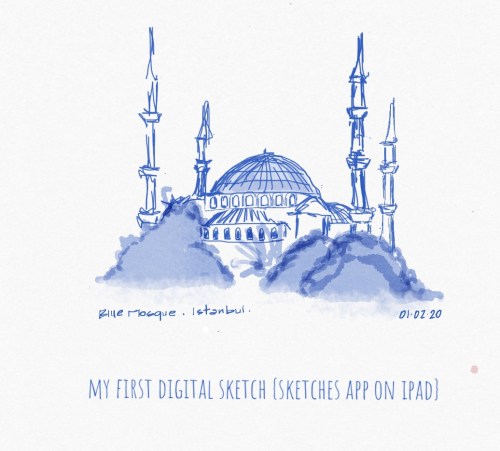
Ink (Pilot Pen) on paper. 2008

Felt Tip Pen and Sharpie on paper. 2008

Read Full Post »

Platonic Solid Exercise. Graphite on Paper. 2007

Happy September. Post coming late today, but it is a new month and I hope this, my birthday month (yay) will be better than the last- and all summer for that matter.  Lots of challenges and growth but…they don’t call them growing pains for nothing.

In my classes today we shared links on artists, visual notes, wonderful quotes, and great books.  I can’t wait to tell you all about it.  Things are getting really exciting and we are all growing by leaps and bounds. Good stuff and a great feeling of accomplishment at the end of this intense summer quarter. 

Few unrelated topics that I have been mulling over lately:

1.  Working out shadows in axonometric settings, like solving algebraic equations, helps to solve ourselves and gives us mathematical certainties (certainties that cannot be so cleanly and clearly found in real life).  I always heard math is not an opinion, and I am appreciating its impartiality, its justice even. I know now its compassion.

Still, a solution is relative to the light angle  we construct a priori, a philosophical question if there ever was one.

Shadows, like math, are either ‘wrong’ or ‘right’ relative to the established angle of light;  no room for fuzzyness, approximation, guessing. How refreshing. How pure the solution.  These (platonic) objects exists in an utopian airtight chamber or world, and the light is absolute, the light of truth.

The ‘real’ world (and ‘real’ shadows), like all matters of architecture and design and their ‘solutions’, are much more subtle, nuanced, grayscale— as opposed to black and white.
And so even truth is relative in our confounded orb.

2.  I am thinking of ways to design the freehand drawing classes to transcend drawing as transposing what we ‘see’ and help it become a design tool (depicting what may be, or possible scenarios).

It is a challenge, because the basic drawing techniques still need to be mastered, but the course could be imbued with and define a research path, becoming not only a stronger vehicle for learning, but generating material for publication. Exciting stuff, now it’s just a matter of  tightening up my interest areas and plan for action.

The Freehand Drawing and Rendering and Delineation classes will meet again next summer, and I have held some meetings to design its contents(more on this on coming posts) . Some words buzzing in my head are collages/assemblages, words, poetry, architecture, grayscale abstracts, visual notes/sketchnotes, inventories, data gathering quests, urban scavenging, pattern and in-formation.

3.   The more I grow as a passive designer- passive because I have been in an observing, absorbing mode for a while now…just storing information until the right moment comes- the more drawings i do, I am realizing that the challenges of design are not additive ones, but subtractive.

Learning what to remove, what to take away, leaving just the essential, is the challenge. Architecture is a matter of reduction, not addition.    Let me try to explain myself better. During our architectural education and pedestrian work experiences we are taught to include so many details, turn in complete drawings, complete construction documents sets etc. All of this is techniciams’ stuff. It is the drafter’s realm, or the CAD operator’s realm. It is not the Architect’s or designer’s province, which should aspire to loftier expressions. Design is abstraction of thought and ideas. It is reducing your concept to your most pure expression, cutting away all the fat and the unnecessary. Even the best art, I am finding, is painfully created by reducing your concept, feelings, ideas, to the most clear image, the prime number, the denominator. Significant work is created through ruthlessly leaving out all unnecessary data, information. Including too much is just self-indulgence; the disciplined designer pursues truth as she or he defines it and does not or cannot have time for self-indulgence. The purity of the idea is what one needs to be faithful to, everything else is interference by bureaucrats, technicians, pencil pushers.

Am I sounding like Howard Roark? WellI am in the process of defining a design philosophy and given the person that I am, this definition comes first in words , which will guide the action.  As my dear friend Lamees said, one is not to do without being first.  Be first–then do– then have…it all happens spontaneously.

Part of being an architect is accepting an elitist role, necessary not to set apart one from the rest of humanity, but to preserve the purity of the design idea, its drive and execution. Part of being an architect and an artist is learning to let go of many things once thought necessary and just rendering our work in the most pure, direct, potent way.

Finally, a quote that is driving my days, these days:


“What we think or what we know or what

we believe is, in the end, of little

consequence. 


The only consequence is what we do.”


John Ruskin


Read Full Post »

Marker Test @ Queen Califia's Magical Garden

Initial Sketch. Felt tip on heavy bond (sketchbook) paper.

Felt Tip on Marker (Rag) Paper.

Applying Watercolor 1.

Applying Watercolor 2.

End of ession at site. 20 Minutes. Wanted to have a loose base of color.

Adding Pencils (Albrecht Durer- Made in Germany), texture, few days after.

Do you remember Niki St. Phalle’s ‘Queen Califia’s Magical Garden’?

Well, I went back with my students for some loose watercolor and pencil renderings.

Share

Read Full Post »

Lamp. Kan Zaman Restaurant, San Francisco, Haight-Ashbury. Charcoal, Graphite and Ink. August 2010.


Serendipity: a stop at Amoeba Records, to buy some CD’s. Then dinner. Drawing *the same* subject as the CD cover, which I did not stop to look at, but my brain obviously recorded. As someone said, ‘ Everything’s connected.’

Musical Journeys:

Click to Andalucia

Click to teleport

Bought from Amoeba Records. Freshly imported for your pleasure.


Share

Read Full Post »

A rare Renée Magritte. La Poitrine. 1961

Renée Magritte. Irene.

Renée Magritte. Le tombeur des lutteurs. 1960

Renee Magritte. Eulogy of the Dialectic.

Renée Magritte. Personal Values. 1952

In my search, I stumbled upon Myriam Mahiques, who shares some thoughts on Magritte, and Immateriality in Painting and Architecture.

Instances of Surrealist Architecture and Urban Design:

Click on the images for more details and to see source.

"39GeorgeV" is an urban surrealism manifesto. It sheltered the renovation of an Hausmannian building in Paris, during year 2007. It's a life-size photographic work based on the original building, printed on canvas, enhanced with bas-relief.

The Manifesto of the 39GeorgeV project.

Royal Museums of Fine Arts of Belgium, Brussels. Installation of the new Magritte Museum 2008/09

From the exhibition:Painting the Glass House: Artists Revisit Modern Architecture.The Aldrich Contemporary Art Museum,Ridgefield, CT.

“]“]

Frankfurt's Bockenheimer Warte Subway Station. From '10 Of The World’s Most Impressive Subway Stations'

Iphone painting by Steve John.

Son Of Mac. Magritte-inspired Apple Macbook art vinyl decal.

Magritte-ispired art vinyl decal for Apple Macbook.

Book : Surrealism and Architecture edited by Thomas Mical


Share

Read Full Post »

After some meetings today I stopped by the library, Futo coffee in hand, and indulged in my favorite Architecture periodicals: Domus, Architectural Review and Harvard Design Magazine. An article on Surrealist Houses launched an expansive search on the Architecture of René Magritte; will share some of the findings here.

I've had Magritte (and collages) on my mind. Digital Manipulation on a photograph by Vijay Raghavendiran.

I am also thinking about watercolor these days: in both Freehand Drawing and Rendering and Delineation classes we are working with loose techniques. Here are some images that stopped me in my track during my quest.

Winter in Florence-La Pioggia- Watercolor and Ink. Professor George S. Loli, Dept. of Architecture, University of Louisiana-Lafayette.

Starry Night over the Rhone. Vincent Van Gogh. 1888.

Share

Read Full Post »

Something eye-opening occurred at my school yesterday.

I attended the exhibit for SoCal -Ex : Exploratory Design Workshop, completed by Professor Hector Perez and his students.

Here are the specific of the Workshop:

6 Explorers

Andrea Benavides/Alfredo Melly/Henry Palomino/Charles Santamaria/Nancy Tariga

25 Days

July 12-August 5

10 Field Trips

San Diego/La Jolla/Del Mar/San Juan Capistrano/Los Angeles/Santa Monica/Culver City/Venice/Pasadena/Palm Springs

9 Progressive Practices

Daly Genik Architects/Eric Owen Moss/Estudio Teddy Cruz/Gehry Technologies/Luce Et Studio/Michael Maltzan Architecture/Morphosis/Sebastian Mariscal Studio/Smith and Others

15 Extraordinary Residences

Charles and Ray Eames/Craig Ellwood/Christine & Russell Forester/Albert Frey/Frank Gehry/Greene and Greene/Coop Himmelblau/Alberto Kalach/Ed Killingsworth/Sebastian Mariscal/Kathy McCormick & Ted Smith/Richard NeutraRudolph Schindler/Don Wexler

I spoke with Professor Perez and he told me that the analysis of the case study residences and projects were concentrated on the ‘crown’, ‘body’ and ‘feet’ of the aedifices.

Through collages, reminiscent of Superstudio and Archigram, the field trips become a venue for envisioning alternative architectural and urban scenarios (Design Workshops). I hope you’ll enjoy these images just as much as I did; each collage read like a miniature work of art, and the juxtaposition of architectural drawings and bold hand-drawn colors created fantastic, detailed, abstract constructs.  What a wonderful way to illustrate architectural drawings, and bring to life photographs.  The collages, done by hand, using cutouts, colored pencils and paint had a physical presence, a texture that a purely digital (photoshopped) images invariably lack.

I am inspired to create some more collages of my own and…can’t wait for the book 😉

This slideshow requires JavaScript.

Click on an image to enlarge.

Share

Read Full Post »

Happy August!

Ever the optimist, here is the first post of the month. I’m giving a shot at posting daily (again), we’ll see how it goes.

Here is the happy Nablopomo August Badge. The theme of this month is ‘Green’.  For me, it will mean renewal more than sustainability (a sort of spa for the mind), but I might find some interesting green homes to feature. Of course green is the color of envy, but we shan’t talk about that 😉 Here are couple of badges for good measure.

So as promised, here is my surprising discovery in the environs of Newport Beach (Costa Mesa): The LAB Anti-Mall.

I loved it! Local public art, local businesses and public spaces.

The Gipsy Den, which I covered in a previous post (it’s updated with photos now, yay), lies therein.

Enjoy, and I hope you get the chance to visit.
By the way thank you for all the views (dear readers :)), I am striving to post more often and it’s great to know this thing I do is being followed and shared.

This slideshow requires JavaScript.

Read Full Post »

image

image

image

image

image

image

image

I found these architectural lamps at Ikea today. Reminiscent of origami and folding facades, these inspired me to explore layering simple forms and materials into complex compositions. I heart Ikea…and here’s to democratic design!

Read Full Post »


Love Beyond the Seen. Amina Alkandari. Ink on Paper. July 2010

Posting from the road, The Gipsy Cafe’ in Los Angeles. The surrealist drawing is by Amina Alkandari, part of her series ‘Love behind the Seen’. This bohemian cafe’ is located within the alternative Anti Mall in Costa Mesa.. a place uniting local businesses, local artists and designers and clever public space. Love at first sight- and more on this soon.

Here are some shots.  I could go back everyday.

Lastly, drawing my students drawing.

Read Full Post »


There is nothing that God hath established in a constant course of nature, and which therefore is done every day, but would seem a Miracle, and exercise our admiration, if it were done but once.

 John Donne


The Roots of Violence


Wealth without work,

Pleasure without conscience,

Knowledge without character,

Commerce without morality,

Science without humanity,

Worship without sacrifice,

Politics without principles.


Mahatma Gandhi


 As quoted by Dean Gil Cooke in his keynote address.

Read Full Post »

Explaining (imperfectly) the joy of sketching/vignette and perspective making to a student. Graphite on paper June 11, 2010

Drawing is thinking. Hand-eye coordination is essential not only to accurately render what you see, but to bring forth and execute what you see in your mind’s eye, i.e designing. I read once that we should use the word ‘draw’ as in ‘drawing information’, as from a well. To draw a building  or space is to understand it, to make it our own –to impress it on our brain’s matrix.  Photography, while wonderful and an art form in itself, leaves the lessons of buildings on the camera’s hard drive, not on ours.

Not to mention the warmth and ‘tactability’ , as my friend Luisa says, of a sketch or a vignette, the volumes it adds to a presentation, the process it unveils. Revit has the capability to render photorealistic imagery, with incredible texture and lighting. But it is in the process that a project is appreciated in all its nuances, that poetry can happen, that the design and the architect eye, mind and hand can be sipped, like fine, expensive wine. Without process architecture becomes a shot of cheap wiskey, vulgar.  Design, like diamonds, has no mercy… “They will show up the wearer if they can,” says one character in The Sandcastle, an early novel by the famous British author, Iris Murdoch. (I borrowed this bit on diamonds here).

Drawing is analysis. It is a deliberate act of  interpretation, and abstraction (as in capturing the essential).  In the book ‘Compositions in Architecture’, Dan Hanlon says:

‘I have found that since the act of drawing requires a high degree of graphic editing, each drawing emphasizes a particular quality of composition. Therefore, the information in each drawing is highly selective. This is what I mean by a work of interpretation.’

A drawing can be tuned to reveal and emphasize certain characteristics, and not others. It is a process of selection, of sharpening the way our brain takes notes of details. It is never alienating, never mindless, never automatic (unless as automatic art/ flow of consciousness), never repetitive, never listless as drawing on a computer can be.

In the introduction of book Non-places: Introduction to an anthropology of supermodernity, Marc Augé mentions the many devices that, by keeping us ‘connected’ at all times, alienate and separate us from the place we physically occupy. Drawing keeps us grounded (in the here and now?), and is an exercise in fully experiencing our surroundings, of mindfulness.

And after the alarming The Shallows: This is Your Brain Online , on the ability to train our brain (and affect its physical make-up) by our daily habits, anything that can help with the collective scattered focus we are ‘learning’ from too much technology should be a worthwhile endeavor.

So yes, the Zen of Drawing, or drawing as meditation (architectural therapy not just art?). Like yoga, unplugging and plugging in at the same time. By drawing we fully inhabit this place, this body, as architect and artists.

My blogfriend Suzanne Cabrera at [An] Open Sketchbook turned me onto Michael Nobbs, a Blogger/Artist into time management,who advocates drawing everyday. Here is his free, fun and inspiring e-book.
I already started drawing loved objects before I ‘release’ them.

Here are the books mentioned:

And here, the first part on the importance of drawing.

Share

Read Full Post »

Mango. Watercolor. June 6, 2010.

Read Full Post »

Dr. Gregory House. Watercolor on Paper. June 3, 2010

I am a huge fan of House, MD, not only because the writing is refreshing and clever  (Cuddy:  I have a case! House: Beer? )and the ‘hero’ is an anti-herowith serious flaws but a rugged, sarcastic way of caring — I love the show because there is a link between House and Sherlock Holmes – and you all know how much I love the British sleuth (no, not the recent ‘action’ movie…eek).  Sir Arthur Conan Doyle fashioned the character of Sherlock after his mentor, an eminent surgeon in Britain: with House, MD (whose name reminds us of Ho(l)mes)  we come full circle.

As I watched the Season Finale last night (go Huddy :)) I caught a bit of the making of the stage of the collapsed building. MMM…models! You can never get away from architecture.

PS. If you have never seen House in your life ignore the writing and enjoy the painting of the strange man above.

The Set Design in House’s Season Finale

Image via official website of House, MD. Is that a model??

Image via official website of House, MD. Yes, that's a crane. It would be fun to recreate movie or show sets in studio.

Image via official website of House, MD. Building the set.

Image via official website of House, MD. The final disaster scene.

If you like this sort of thing, here is a fantastic book, or three, on the relationshio between architecture and TV and movie set design.

Share

Read Full Post »

My beloved 120GB ipod and a new present, Aerial TANK headphones from Urban Outfitters. Ink on stolen notebook paper. June 2, 2010


NaBloPoMo writing prompt of today:

What is your favorite poem?

#1

By the Ionian sea

You pick fresh fruit and seeds

From orchard and underwood nearby

I fetch seashells

Starshaped

For you

I build a nest of leaves–

We spend warm nights with street artists

Flame-eaters and sages

Fall asleep with fire

Yours and mine

Gipsy ballads


I wrote this in 1999.

Read Full Post »

Diagrams from Graphic Thinking for Architects and Designers by Paul Laseau


The image above aptly illustrates the process behind diagramming, which is one of summarizing and and rendering a concept more abstract, more immediately communicable. Abstract in this sense is intended as ‘ reduced to the essential’.  Diagrams are, according to Joe Nicholson:

1. a simple drawing showing the basic shape, lay-out, or workings of something

2. a chart or graph that illustrates something such as a statistical trend

3. a line drawing that presents mathematical information

A leap of faith here, and some poetic license, can bring you from the diagrams above to these sketches, inspired by yoga poses.

The link? The day after my landscape /yoga explorations, Joe showed the above slide on a presentation. Serendipity.

Ink on Paper, digital manipulation. May 2010

At-one-ness. Ink on paper, digital manipulation. May 2010


Using CAD as human landscape generator. May 18, 2010


Share

Read Full Post »

Bracelet, ring and necklace made of koa wood, bone, string. May 4, 2010

Still thinking about the versatility of wood, building material and jeweler’s materia prima.

This is the drawing (soon watercolor) I mentioned, long time coming, but, also, lots of slanted plumerias…I had to keep at this drawing , for some reason I kept leaving it and coming back to it, and carrying this wooden artifacts in my messenger bag everywhere, looking to finish the work. Perhaps I felt it like an ‘assignment’ and part of me rebelled to it, working on other drawings and ideas instead (which I am happy to say gave me material to now go back and post more regularly.) Perhaps it was the repetition that disturbed me, or it taking longer than i thought. Do you ever give yourself artistic assignment you regret but complete out of discipline–or stubbornness? It is very strange how art is a dichotomy between what is enjoyable and what is necessary, or what we arbitrarily consider necessary. I guess it is a way to give some sense of structure to our work.

I did not allow myself to post anything until I finished this blessed necklace, so you might see a series of plumerias, but I see a struggle XD.

Some say you should not do it once it ceases being fun. I think I would like to set a record for finishing what I started, and this is just an outward offering.

Speaking of flowers, here is walking around Mission Hills in San Diego, with my friend Theresa. Beautiful homes, canyons (we do live in an enchanted land- afternoon light through leaves-shimmering like a blessing), juxtaposed to sceneries right out of the incorporated town of Majestic/Agrestic. Passing by an It’s a Grind at the bottom of a horrific ‘Mediterrenean-Style’ condo on the way to Hillcrest made me chuckle and made me sad at the same time. I am sure the name contains the word ‘Tuscan’ somewhere.

The walk was a spontaneous one, not one of my photo expeditions, so here some unorthodox shots from my cell.

Read Full Post »


'I'll Carry You, You'll Carry Me'. ArtWalk in San Diego, Little Italy. 2005

Daydream, delusion, limousine, eyelash

Oh baby with your pretty face

Drop a tear in my wineglass

Look at those big eyes

See what you mean to me

Sweet-cakes and milkshakes

I’m a delusion angel

I’m a fantasy parade

I want you to know what I think

Don’t want you to guess anymore

You have no idea where I came from

We have no idea where we’re going

Lodged in life

Like branches in a river

Flowing downstream

Caught in the current

I’ll carry you

You’ll carry me

That’s how it could be

Don’t you know me?

Don’t you know me by now?

Street Poet from Before Sunrise


With San Diego , it is often all or nothing.

ArtWalk took place this weekend in Little Italia and some lucky folks got to witness the Chihuly Exhibit at the Salk Institute, which is San Diego’s strongest claim to architectural relevance..

Photos courtesy of Professor Joe Nicholson.

Here is The Sun lit up at night.

Read Full Post »

UPDATE 06.04.2010: See no.5
1. You can build a cuff that becomes a coffee sleeve.
image via thedesignblog.org

image via thedesignblog.org

Made by Contexture from reclaimed architectural veneer offcuts….

can I just say W-o-W

2. You can make wooden rings and jewelry.

image via contexture

These here are bentwood rings,  wedge-shaped bands made with contrasting Benge and Maple layers. Also made with reclaimed architectural veneer offcuts glued cross grain for strength -from Contexture

image via coconut jewelry

Wood and Nautilus ring from Coco Loco Jewelry

Or you can have a beautiful parure of Koa Wood and Bone jewelry, shaped into plumerias, the flower of Hawai’i.

(I do have the three above-i with chord ties instead of clasps, which I think are more in harmony with the wood-…watercolor coming soon:))

3. You can take a hint from the Renassaince painters and make a painting made in wood.

Images from Renaissance: Brunelleschi to Michelangelo

Yyou can build a cuff that becomes a coffee sleeve.


4. You can use a barrel (!) and make furniture with it – give it up for local San Diego artists:)  Check out barrellymadeit.com, their store is located in my very own neighborhood of Hillcrest, Uptown San D.

The concept behind barellymadeit.com

all images via barellymadeit.com

4. You can create a unique Vespa!

Made in Portugal. Click on the image for the site of the artist + more photos.

Do you know of other interesting use of wood in architecture, art, furniture and industrial design?

Do share!  I will keep updating this post.

Read Full Post »

Third Street Homes. Final. Watercolor, graphite, Prismacolor pencils. March 16, 2010


I finished my Third Street Homes ‘portraits’  (thankyou
Planetary Folklore for the great quote).

Since the last iteration I refined ground and sky, went over the watercolor with Prismacolor pencils to give the homes some texture, bumped up the contrast, pushed the darks a bit and, finally, worked on the vegetation and added the framing branches. You can see the first and second step here. C’est fini.

Speaking of buildings, here is an artist who goes around the world fixing crumbling buildings with Legos. (!)

The topic of these first three Artuesdays has been watercolor, and I would like to share the work of some very talented folks who are inspiring me for future paintings, in subject matter or technique:

Small Oil Paintings

Linda Halcomb

A Painting Today

Art and Design Studios

Share

Read Full Post »

I always used to say to my students ‘Architecture is constructed politics’, but lately, after (re) reading Le Corb’s Vers Une Architecture, I have been known to spur on my students with my rallying whispher of  ‘Architecture is built poetry’.  As in Le Corbusier’s assertion that the plan is an expression of the spirit, as in architecture with the capital A, as in not mere construction (ok. I think by now you know my very own windmills, which I am  battling, no need to get riled up again – except to dream of a tee which says Technicians, maybe someone over at Archinect is listening)

Tees Designs. March 08, 2010. The 'tyranny of the straight line'.

In my quest to find a link between poetry and architecture, I came across some gems, and wanted to pass on my finds. As I mentioned, I have been reading Gaston’s Bachelard ‘Poetics of Space’, and there seems to be a certain zeitgeist focused on poetry and its relationship to created (architectural) space.

William Stout, the reknown historical bookstore in San Francisco dedicated to Architecture, recently published Poems for Architects: An Anthology, by Jill Stoner.

From William Stout Publishers:

This unusual anthology of twentieth century poetry is arranged into sections of poems that address issues of domesticity, urbanism, formal concepts and form itself. Each section is introduced with a provocative essay by Stoner, an associate Professor of Architecture at UC Berkeley (where else?), that develops the argument for the relevance of poetry to architecture today. Twenty-nine varied authors such as Mark Strand, Wallace Stevens, Eavan Boland, Adrienne Rich and Rita Dove, help to illustrate the point.

This is definitely on my wishlist…maybe they desk copies for faculty available ?

Make buildings that are poems.


Antoni Gaudi

I also came across this gem of a book: Le Corbusier: The Artist The Writer, by Lucien Herve (1970).

As the story goes, Le Corb was an artist in the morning, an architect in the afternoon and, at night, he would write poetry.

I have also been pointed towards John Hejduk,  an accomplished architect (his are the Wall House projects), artist, Dean and Faculty of the School of Architecture at Cooper Union (<3), author and poet.  His is  Such Places as Memory: Poems 1953-1996, 1998.

John Hedjuk said:

” I believe in the social contract therefore I teach. I believe that the University is one of the last places that protects and preserves freedom, therefore teaching is also a socio/political act, among other things. I believe in books and the written word, therefore I fabricate works with the hope that they will be recorded in books. I am pragmatic and believe in keeping records. I believe to record is to bear witness. The book I wrote, Victims is to bear witness and to remember. I believe in the density of the sparse. I believe in place and the spirit of place.”

Speaking of writing, I am going to my first ever writers’ workshop and will report back 🙂

Share

Read Full Post »

” I have to more or less trip over work before i touch it”

John Wesley

(thankyou Karen for giving me The Times Magazine every month, full of literary/art pearls-see pg.147)

It has been a rainy, blustery weekend–albeit mentally invigorating.
I noticed my posts come after some sort of revelation, or rumination, or happenstance. It is almost as though I cannot wait to have ephiphanies, or discover new things and share them here. But one needs to live life before commenting on it, thus the days of silence. When I am not here, I am charging, like a battery, and keeping my eyes and ears open for interesting stories, art, individuals.

Friday night I meet an oceanographer/historian of Maltese origins with a penchant for adventure, who shared a video from his version of ‘Motorcycle Diaries’.  In 2001 (or 2002, I do not remember exactly, there was wine involved) he and few companions rode from San Diego to the end of Baja California, crossing a stretch of land, called Punta San Carlo, which has never been crossed before, by literally asking some fishermen to load their bikes on their little boats. The fishermen in the boat proceeded to wear lifesaver jackets and I thought about what my father’s reaction would be if someone asked to load a motorbike on his fishing boat. Even though he has a Suzuki street bike, I chuckle at his reaction. He would take on the challenge for sure. We discussed how the oceanographer (now living in La Spezia, Italy, with his gracious wife) should put the video online: if he indeed went ‘where no man rode before’ I am sure hundreds of fellow bikers would be interested. His video was titled ‘Lawrence of Baja’ (from the oceanographer’s love of Lawrence of Arabia) and set to some pretty interesting music. Through him I also learned about Malta, the Knights, the Crusades and a book that Lawrence of Arabia wrote for his thesis ‘ The Influence of the Crusades on European Military Architecture‘ (see, architecture follows me everywhere, no rest for the weary, along with discussions about Arab architecture, civilization in Spain etc.).  I had the occasion to meet some other Maltese citizens here in San Diego and I always love to discuss how Malta is so close to Italy, yet the language contains lots of Arabic words. A land truly between two worlds.

Something to ponder upon : Gibraltar (in Italian made into the latin-sounding Ghibilterra) actually comes from the Arab word Gib’ Al- Tareq, or Mountain of Tareq, who was a condottiero, or conqueror, responsible of the ‘Opening of Spain’, or the cultural invasion of Spain which lasted for 800 years and left us some of the most beautiful Moorish architecture in the world, such as Grenada and Alhambra.

SO you might think that a motorcycle journeythrough the deserts of Baja, in a completely self-sustaining fashion (and I am talking about plastic bottles containing gasoline strapped on bikes), inspired by Lawrence of Arabia (who himself died in a motorcycle accident) is pretty adventurous, right? Well on the very same night I also met a visiting British comedian who decided to move back to England from Australia, with his girlfriend, by biking (as in bicycle) across this land, camping (as in tent) on RV camps and refilling on fuel for the gas stove by asking RV’s to share their gas —since it was sold in five-gallon canisters and impossible to carry on bikes. I do meet the most interesting people and now officially feel the need for some adventures of my own.

My own brush with Motorcycle Diaries (my long dreamed-of trip to Cuba) did not happen this Spring, due to creative accounting on the part of the IRS– apparently I made just enough money to pay more and not receive a refund, call my tax bracket a financial Bermuda Triangle…So I have been pondering how it would be to walk throughout California, from San Diego to San Francisco…and what would be my cause?

These are the thoughts that go through my head as I walk home from school, usually in the evening, usually a 45-minute quiet, starry  walk, full of dreams, prayers and stories.

These days we are fed imagination  through the media. We are not really given a lot of opportunity in our day-to-day lives to exercise our imagination– most of us aren’t–and dreams are purer imagination, pure creation: it’s as if we are producing a movie every single night, all of our own, it is completely self-created and instantly created..

Groks Science Show

Dr. Veronica Tonay

Read Full Post »
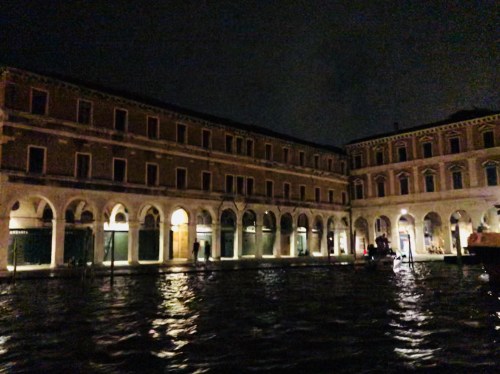
I can't wait to design a home with a sunken garden and a wind tower. Or the italian tradition of operable windows. Both would be ideal for San Diego's breezy and sunny summer weather. Look ma, no HVAC!

Last week I had the privilege to attend two remarkable lectures. The first, on Vernacular Architecture in Persia by the Architect Simi Razavian of MSA&Associates, Inc. Architecture, was a guest lecture part of my Non-Western Traditions seminar class. Simi masterfully shared with us passive-solar techniques used in her native Iran, the lyrical wind towers of Tabas and the use of natural elements in residential design, such as adobe for construction, wet straw and water for convective cooling (in conjunction with wind towers) and gardens and fountains as evaporative cooling channels and elements of sensorial delight.

I wonder how Leed points would work for buildings that seek to return to Nature, since Simi commented that , in all the Leed lectures she attended, Passive Solar was not even mentioned (but the lates triple glazed glass was, along with ways to maneuver the artificially calculated Leed ‘points’).

Through this lecture I was reminded of of my interest in school in adobe and Pueblo construction, and of two of my favorite books, Thermal Delight in Architecture (which incidentally contains an incredible description of a Persian hanging garden) and Earth to Spirit : In Search of Natural Architecture. Notions such as these, plus genius loci and architecture as humanities-based discipline is what initially drew me to Architecture (this and Antoni Gaudi). Yet I found in practice, with very few precious exceptions, what Le Corbusier calls ‘Construction. Not Architecture’ .

Where is the poetry?

Which brings me to the other lecture I attended later that day: James Brown  of Public, one of the most ‘soulful’ architecture firms in San Diego ( I have been aware of the reputation of Public for years, and James had me at hello with his phrase on ‘spirituality of material‘, his graceful demeanor and humble approach to defining architecture and process).  The courage of design conviction, the dedication to values such as meaning and pushing, nay, nudging boundaries is the best cure for the Nothing (yes, as in Neverending Story) that is swallowing the practice here in the US.

Share

Read Full Post »
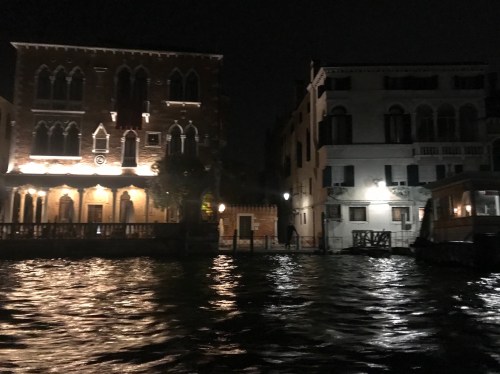
Third Street Homes. Graphite and Watercolor. Feb. 25, 2010.

Well, here is the finished (first) watercolor layer.   One more iteration is needed, as much as I am ready to move on to the next project.

Contrast and shade and shadow, ink and lineweight, and perhaps a layer of color pencil for texture.  What I am looking for is for these homes to ‘pop’, and come alive – just as the first house on the left begins to do; perhaps one more targeted watercolor wash is needed (just on the areas of shade and shadow), perhaps just going over with ink.  Perhaps more art, less architecture.  I am proceeding with caution as there is a hair of a difference between a watercolor and a muddy mess.  Somewhere in between there is a rendering that satisfies.   I will keep you tuned.

Speaking about the Impressionists in class last Thursday, we discussed how they believed that an object, painted in a different light, becomes a different object altogether, imbued with a changing feeling, a changing ‘impression’.

Perhaps we, as viewers become different people too.

As I was completing the watercolor I met Wanda, a neighbor, who kept me company for my plen-air session. I told her how Monet painted the same cathedral and haystacks about a hundred times, and we pondered how much persistence and dedication it would take. Would familiarity become comfort after a while, a sort of therapeutic, zen-like activity?

Read Full Post »
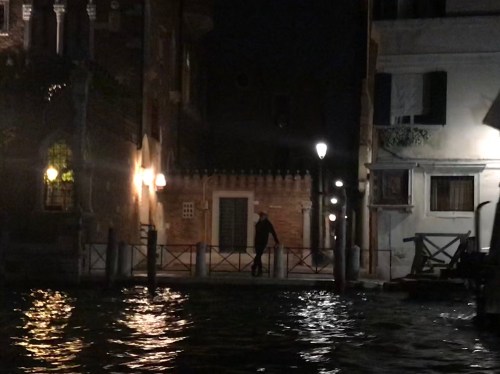
Third Street Homes- Ink on trace. February 24, 2010

Third Street Homes - Graphite and watercolor. February 25, 2010

I have been squeezing some plein air drawing/watercolor-ing in between classes, lectures and sketchbook exchanges.

This is the continuation of the project started last week. I inked the pencil drawing to use for a future marker rendering, and started to give it some lineweight, while I continued with some washes on the original- now finished- pencil drawing. Hope to finish to the watercolor tomorrow.

Read Full Post »
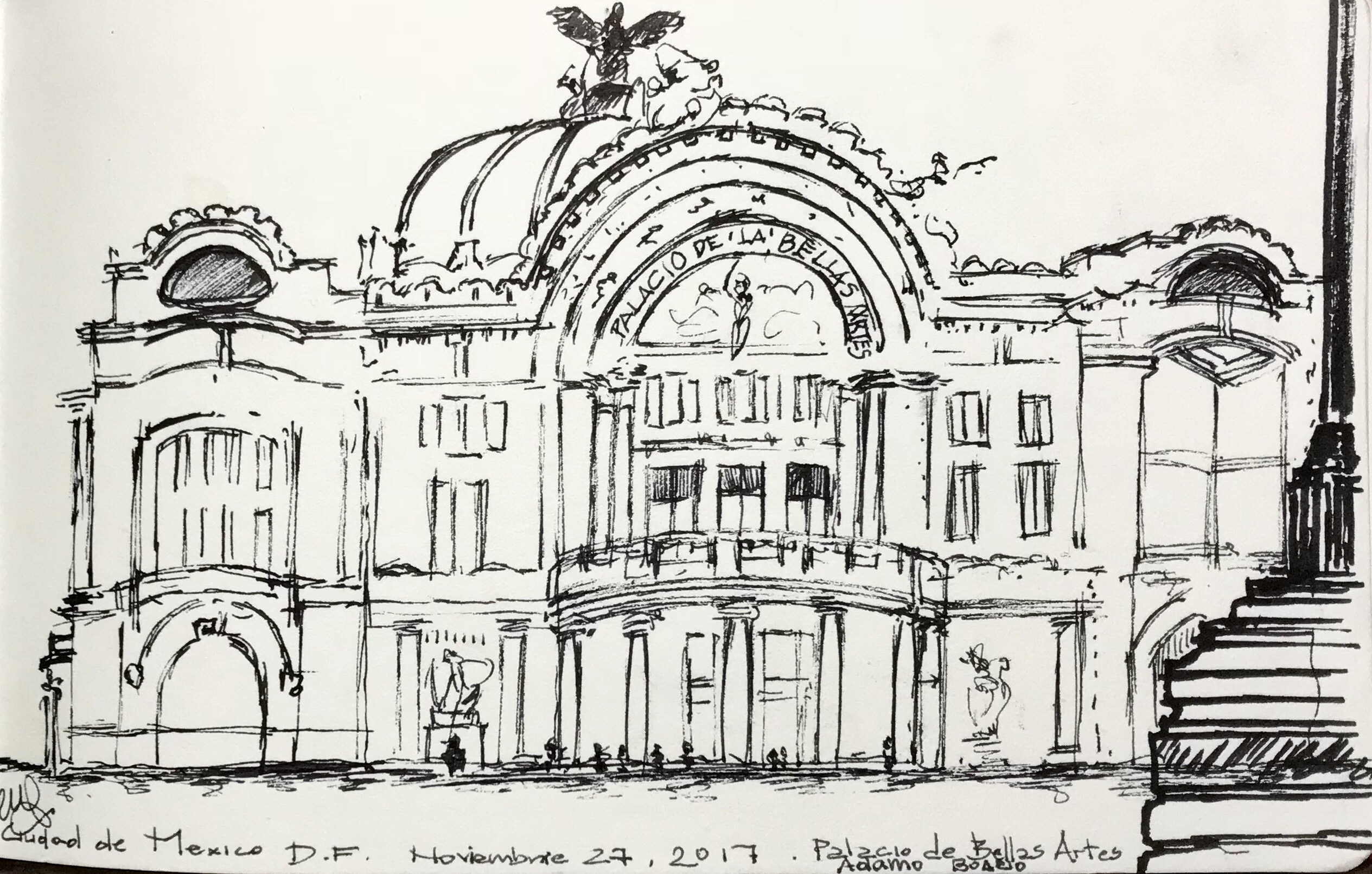
Last week I was reeling from hearing a contractor repeatedly referring to Architecture projects as ‘products’ (can you please stop talking about Architecture as a manufacturing industry? thankyou) and from seeing this noble profession hijacked by what one student referred to as ‘technicians‘.

Vitruvius, Le Corbu, are your tired bones  spinning in your graves? They will soon design a software that, given site parameters and local codes will design the building by itself (look ma, no architect!). If they are not about to launch it already. As my friend Andrew Duncan said, we are looking at a software company deciding the future of architecture projects in this country, in form of who owns the -increasingly more sophisticated- computer models/simulations of buildings. And thus the nail in the coffin, the relevance of our profession is eroded, while we just sit and watch, and clap at the latest computer wizardry. What is it called when people clap at their impending demise?

I am so tired of seeing the creativity of our young architects being sapped by the grueling process it takes to be a ‘licensed architect’ here in U.S. And yes, it is just here and Canada, because everywhere else in the world you are an architect after having proven worthy of an architecture degree and after a standard, brief, state exam. So we/you are all architects in my eyes.

So as I was saying, I was a bit demoralized.  But then, during our Le Corbusier’s seminars, my students put these quotes up (underlining is mine):

I repeat: a work of art must have its own special character.

Clear statement, the giving of a living unity to the work, the giving it a fundamental attitude and a character: all this is a pure creation of the mind.

This is everywhere allowed in the case of painting and music; but archtiecture is lowered to the level of its utilitarian purposes: boudoirs, W.C’s, radiators, ferro-concrete, vaults or pointed arches, etc., etc.

This is construction, this is not architecture.

Architecture only exists when there is a poetic emotion.

Art is poetry: the emotion of the senses, the joy of the mind as it measures and appreciates, the recognition of an axial principle which touches the depth of our being.  Art is this pure creation of the spirit which shows us, at certain heights, the summit of the creation to which man is capable of attaining.

And man is conscious of great happiness when he feels that he is creating.


Le Corbusier, Towards a New Architecture. English Ed. 1931

Is it a coincidence that Le Corbusier uses the term Art and Architecture interchangeably?

Construction is for an architect what grammar is for a thinker; the architect should not vegetate there, Le Corb reminds us.

The desired effect is not a mass of grammatical rules, but prose,  or even better, poetry, which not only uses grammar, but trascends it.

Now look around you and tell me how many pedestrian masses of periods and exclamation points surround you, and where does poetry happen (does it at all)?

In class we talked about art being the product of the heart, and architecture the product of the mind.  I knew then these young men and women believe in Architecture, with the capital ‘A’ – not to be confused with building- and everything that it stands for, everything that our ‘architectural heroes’ tell us through the echoes of time, and whispher with their art, their sketches and drawings, their buildings, their irreverent portraits (just as Keating’s poets in Dead Poets Society).

More importantly, these students believe in themselves. Everything then went right in my world.

Share

Read Full Post »
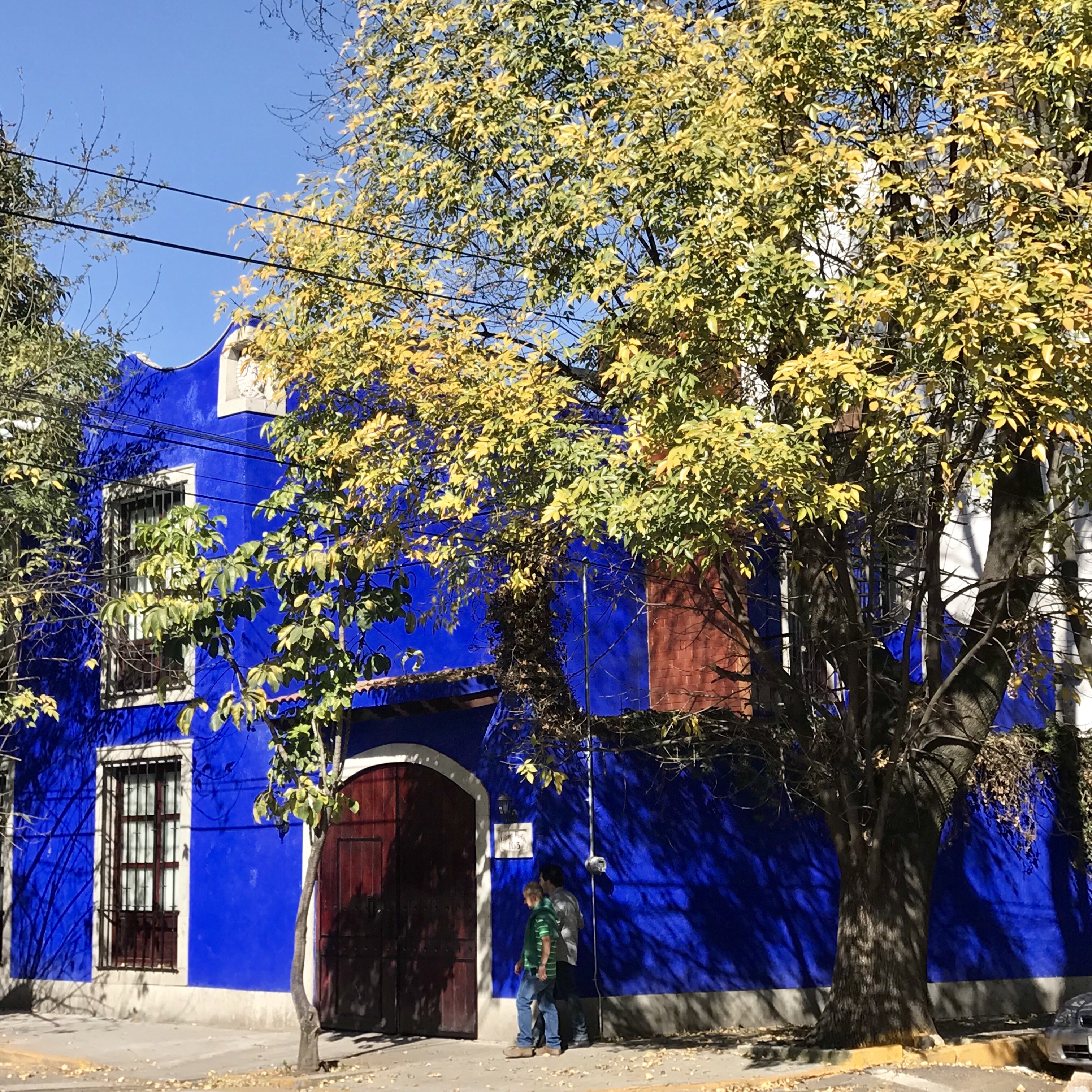
Happy Tuesday. Throughout my four years of teaching Tuesday has always been my ‘work at home’ day, the one costant in the changing tides of quarters, classes and schedules. Today I thought I’d start a special Tuesday section, when I have more time to start new projects. So here is the first artuesday: this is the view I wake up everyday to, small happy townhomes in earth colors. I always wanted to do a watercolor of these homes on the edge of urbanity and nature (they sit on a canyon in uptown San Diego). Yup, I live near a canyon, yet in the city, more on this later. So here is my progress, I started with some guiding lines and this is as far as I got today. The watercolor will be a simple wash.
[click to enlarge. Unfortunately, soft graphite drawings are infamous for not scanning well]

Starting the drawing with tree shadows, to warm up the hand. From stationary point on the ground, the proportions are lightly drawn.

Vertical guiding lines.

Vertical and horizontal guidinglines of doors and windows-

Drawing and leaning on car, then sitting on the curb or grass in front of each house in my neighborhood was fun, and different cause I *never* hang out near my house. I even met a neighbor who was an artist! Doing art outdoors can tell you so much about where you live, and I am so glad no paranoid people called neighborhood watch on me (:P)

I used a Derwent Sketching for roughing in the proportions, the (only) tree and the tree shadows. You can see my new Faber Castell mechanical pencil, bought in Kuwait. What a dream drawing tool, see how ergonomic it is? (ok I will stop showing off now).

Derwent Sketching 2B, Faber Castell Grip Matic 0.5, Staedler eraser, Kneading eraser (to tone down lines).

A thing of beauty. The eraser part twists to reveal the eraser stick.

Sometimes I see my students sketching from photos, and it breaks my heart: there is nothing like the training of the hand to succeed as a designer and architect. I like to tell them to use the verb ‘draw’ as in ‘drawing information’.

THE IMPORTANCE OF SKETCHING

Don’t get me wrong, I am not a dinosaur.  I love Sketchup, as a 3D modeler use 3D Max, have done my fair share of CAD and Revit and  Photoshop is my religion, but, as this article says, if you don’t know how to draw and sketch, and quickly convey your ideas through hand-eye coordination, your role as an architect will be very limited. Thank you to Andrew Duncan for sending me this.

Should rulers be outlawed when sketching? I believe in training your hand to be a plumb weight, creating straight yet ‘human’ lines.

Ah, the ‘Tyranny of the Straight Line’!

Share

Read Full Post »
House in the 'Beit Al-Badr' complex, in the old part of Kuwait City. January 2010


As they used to say in old time radio ‘ This concludes our series’.

From Lonely Planet:

A traditional mud-built house, with heavy carved doors, Beit al-Badr was built between 1838 and 1848 and is one of the last examples of pre-oil residential architecture in the city. It is located alongside Sadu House.

A new multilane rotatory car-belt is being built adjacent the complex; the sight of the construction crews left me forlorn, mourning a loss that was not mine, and yet affected me – the loss of worn pathways, the tyranny of cars.
Half around the world, once again, cities are designed around automobiles, and not people.

So yes, this is the last installment of my Kuwaiti photography (for now?)
I still have some drawings to share, and a way to hold on to this trip for a few more days.

Traveling begets traveling, and the only cure for the invariable melancholia that follows a return home is to plan the next escapade.

Goodbye Kuwait


The world is a book, and those who do not travel, read only one page.


Saint Augustine


Share

Read Full Post »
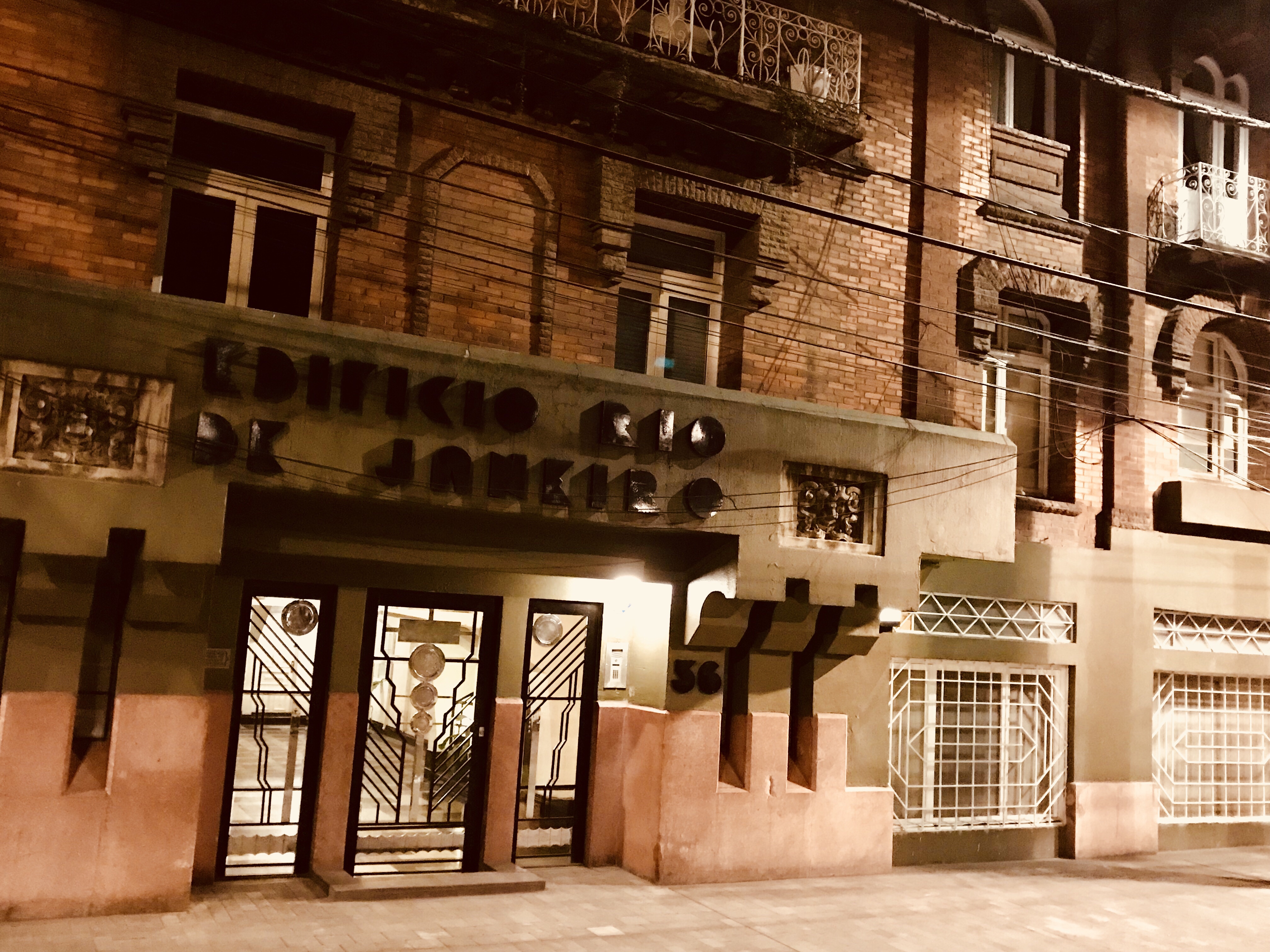
The local ‘Souq’ is called Mubarakiya, named after Mubarak, a leader who was the sheik (‘shehk’, family ruler) from the Al-Sabah family, which is still the ruling family of modern Kuwait. Kuwait combines ancient tradition with a democratic political system (Parliament), and is a melting pot of past and present, as I was able to see in the Mubarakiya.

Kuwait | The Present and The Present

Share

Read Full Post »
Lights from Kuwait City. Just before the new year, overlooking the Arabian Gulf.

Happy New Year.

I welcomed 2010 on a beach, overlooking the Arabian Gulf.

In Italy we say that what you do the first day of the year you will do all year, and I would love to continue doing art -and posting it- all of 2010. I am in Kuwait for the holidays and, feeling like a foreign correspondant, I offer these sights. I do not have my usual computer- and Photoshop, so here are these images, raw, unedited, uncropped, uncaptioned.  I hope you will enjoy them.

This is the Al-Boom and surrounding areas, my first sighting of Kuwait and its history. It is also called the Hashemi, a recent reproduction of the ancient vessel (Kuwaitis were sea-people, like my father, merchants and pearl collectors).

The Al- Boom is the biggest man made vessel constructed out of wood , its interior is used as a reception hall. I found it magnificent, and the details were exquisite, something to revel on.

Kuwait/ Hidden Eden/ Pearls in the Shell

Gallery Updated  Jan.2, 2010

Share

Read Full Post »
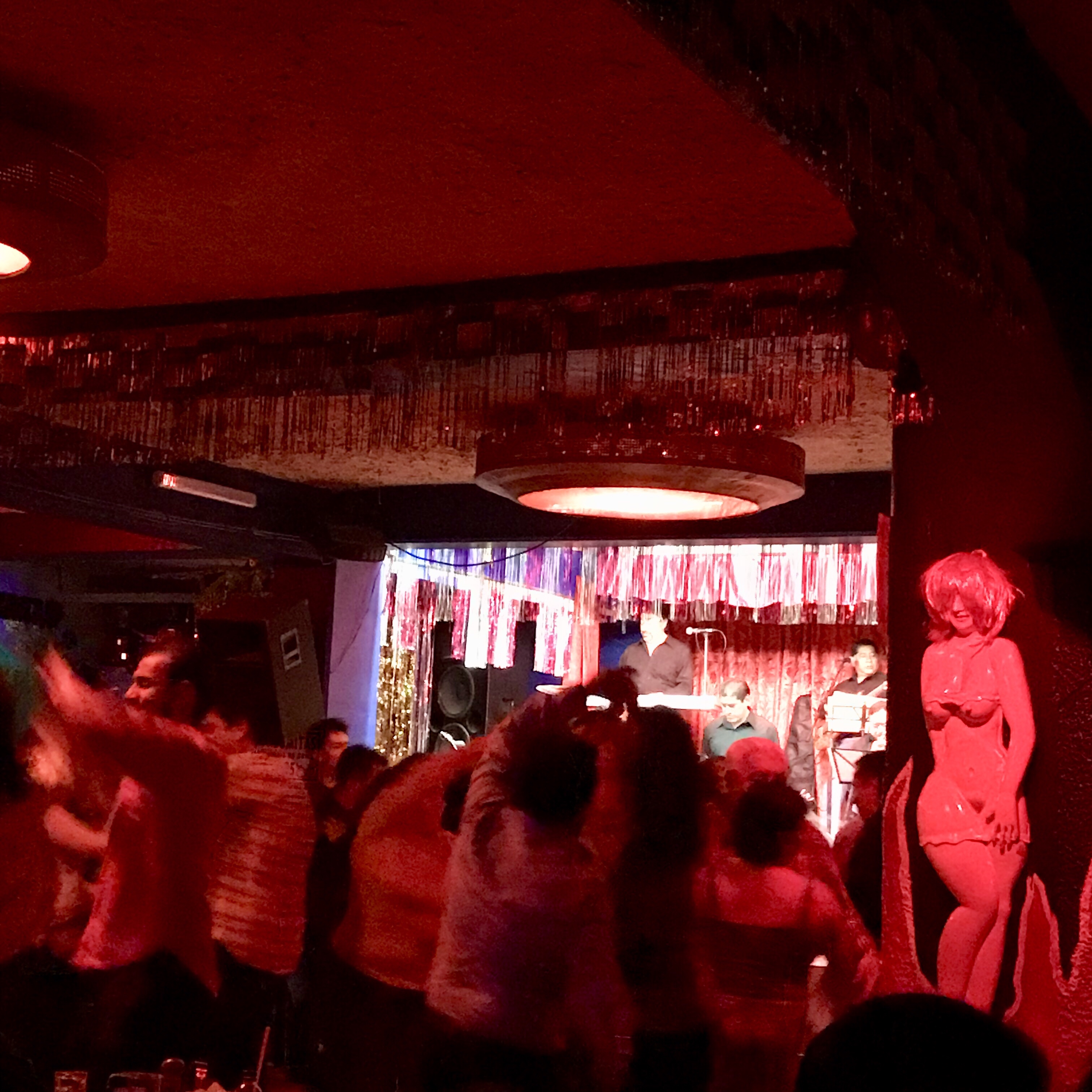
SketchUP Model. December 19, 2009

I have been observing and pondering the gossamer pieces, and more and more forms appear to be floating, swaying as if under water. A benign medusa of sort.

I would like to try my hand at creating a video with this images, and simulate motion. The only videos I’ve done are 3D animations, so working with stills should be interesting, the variety created by different scales, colors, and degrees of transparency/layering.

I also thought about these pieces being installed at such an overwhelming scale so that the image would encompass/engulf the viewer, and the illusion of being underwater or floating -or lost in a good way -could be more complete.

I had in the back of my mind to try out at some point a digital mock-up using SketchUP (since last time I used it I am simply astounded by the variety of resources available and realistic human figures- no more carton man). Then I thought, why not just do it now, and eliminate one item from the long list of ideas for my art and this blog. So here it is. How would it look in a club? It could substitute a whole wall and perhaps be lit from behind to preserve the luminous qualities seen on a computer screen. Perhaps these lights could change color and intensity with the mood, the time, the music.

You may say I’m a dreamer. But I am not the only one.

Read Full Post »
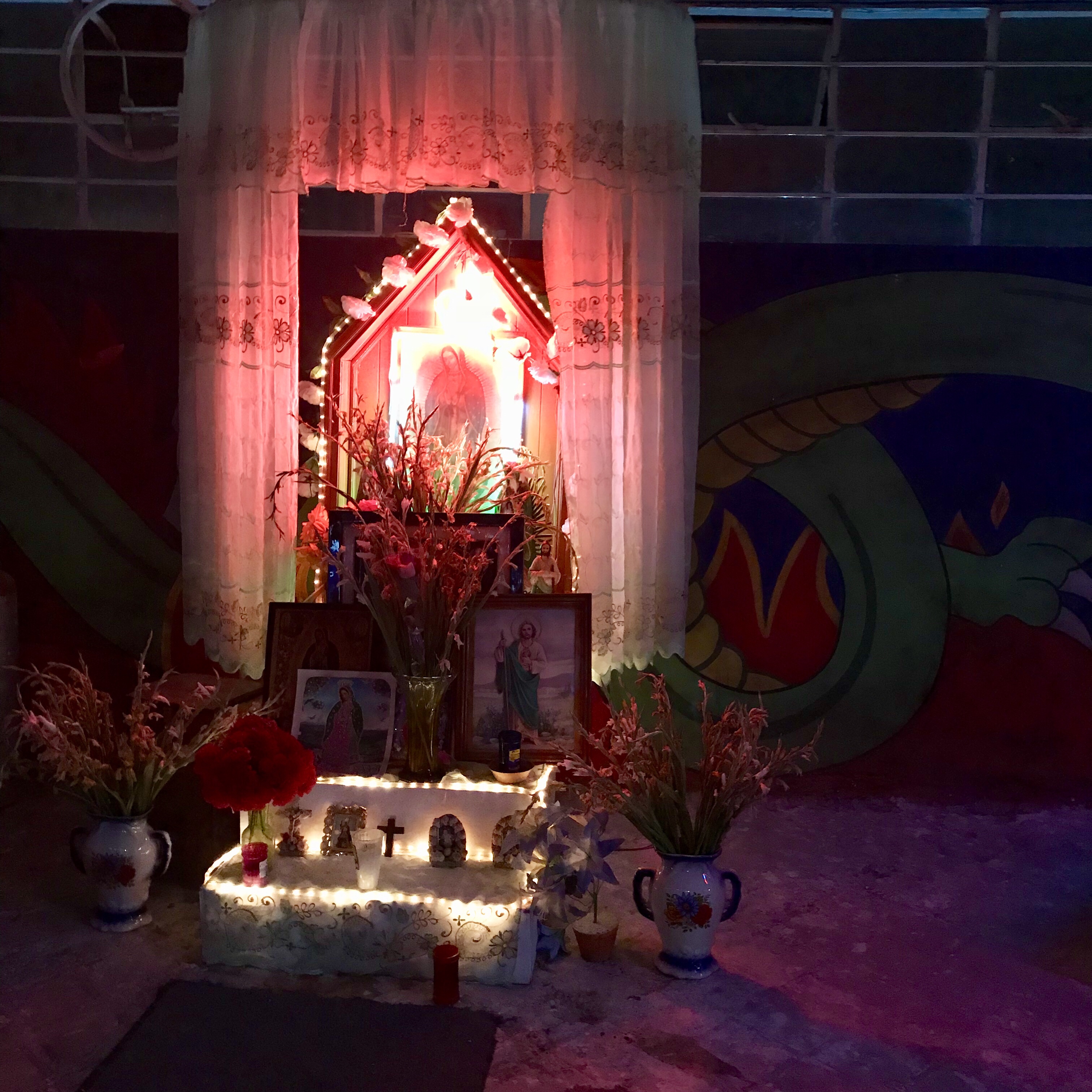
Suburban Landscape II- Digital Manipulation. 2005

Suburban Landscape I- Digital Manipulation. 2005

D-Evolution of Suburban 'Dream Home'- San Diego. Digital Manipulation. 2005

D-Evolution of Suburban 'Dream Home' III- San Diego. Digital Manipulation. 2005


I hope everyone was able to enjoy domesticity during the just past holiday. I indulged my inner  domestic goddess by cooking a pretty good ‘Pasta al Forno’, which actually gets better two days after baking, keeps well in the fridge and will feed you for half a week!

I have also been surfing the web and handpicking the best architecture and design sites the world over, thanks to the World Architecture Community– do check out the new blogroll .:Global Architecture:.

Must-See:
1. Architecture Lab, a fresh, young, visually captivating and insightful international online architecture and urban design magazine edited by Aline Chahine, an architect living and working in Beirut, Lebanon.
The Architecture bites offered here are just the right size, as a prelude to your favorite periodical or taken on their own.
Can Architecture be delicious? Well, check out Architecture Lab and let me know. Made me fall in love with A. all over again.
I love Aline’s chosen quote:
” A great architect is not made by way of a brain nearly so much as he is made by way of a cultivated, enriched heart.”- Frank Lloyd Wright

2. NotCot. They believe in ideas, aesthetics, and amusement. And they do it with stunning graphics and provocative by-lines. I’m a believer, too.

Read Full Post »
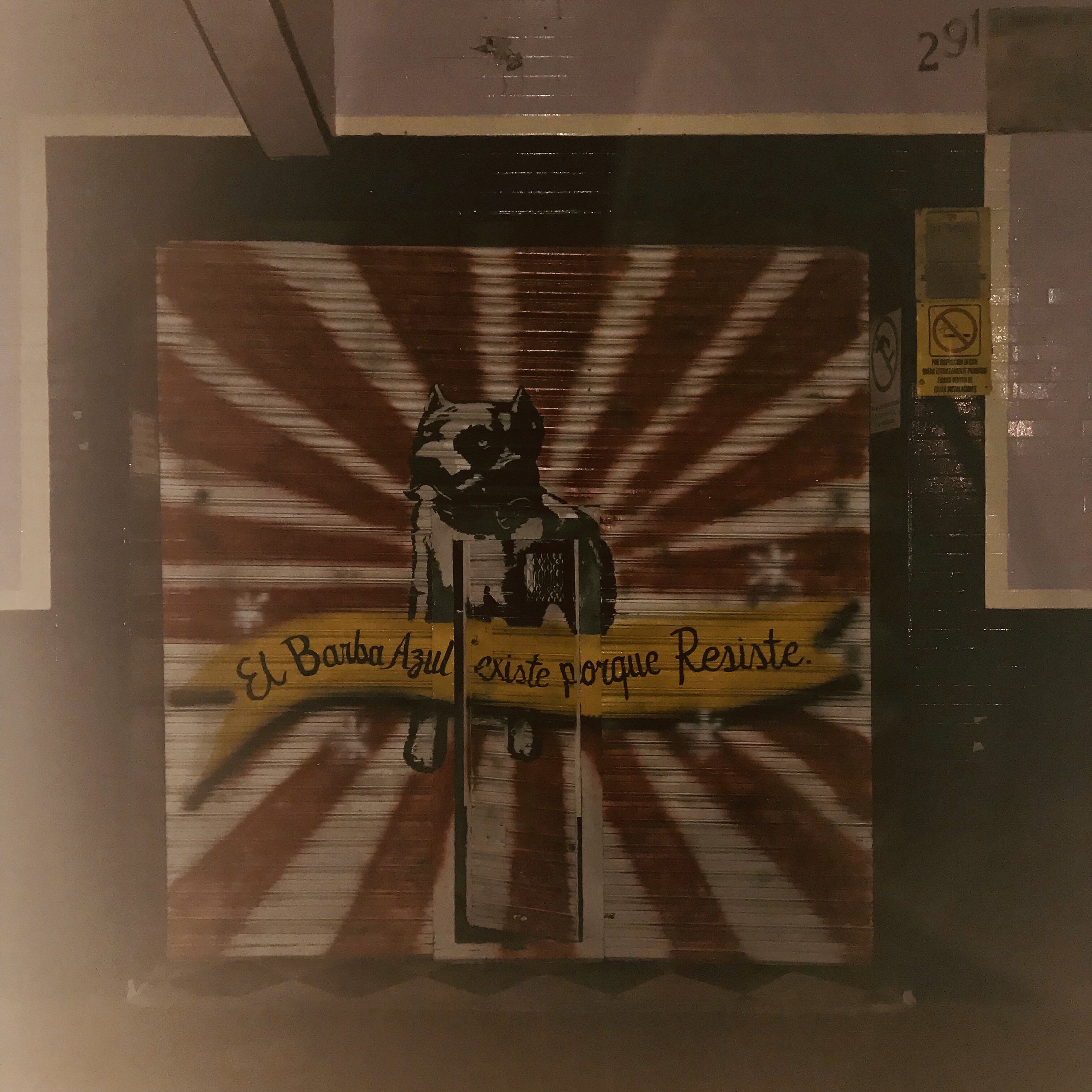
image via Octogon (Design and Architecture online from Budapest)


So here it happens, the siren of Architecture called, and I heeded.

Nay, I relinquished.

Architecture, that capricious muse, finally seeps in my art chamber- yet how could I have kept it at bay?

Architecture is, indeed, frozen music.

If this building was music, what song/genre would it be?

Sir Barry says that some architects of the Baroque era literally applied to their designs harmonic ratios learned from musical intervals and harmonic relations between notes.

I always thought Baroque was the music closest to the act of creating, to perfect mathematical equations, the music of the cosmos. Fractals’ music. Baroque and its clavichords is what I am listening to right now, as I finish a 3D digital model. The model dances and takes form. Digital sculpture.

You must pardon if I wax poetic. I just finished ‘Death in Venice’ and my heart is full of poetry tonight.

Read Full Post »