La nascita di un salotto poetico-artistico a Montepaone Lido ( Catanzaro)
[🇮🇹 🇬🇧]
Cos’è un Poetry Reading?
Il rapporto tra i caffè, il caffè, e la poesia.
Quando vivevo a San Diego, frequentavo degli eventi dove poeti professionisti leggevano le loro opere in un ambiente supportante e confortevole – che diventava non solo uno spazio di condivisione, ma una sorta di terapia di ascolto collettiva.
Si chiamavano “Poetry Readings” – letteralmente “Letture di Poesia”.
Erano sempre in coffee shops, cioè caffè in cui ci si dilungava molto di più dei nostri “bar”.
Sempre di sera o di notte.
I coffee shops sono naturalmente figli dei caffè letterari del Quartier Latin di Parigi, a loro volta figli dei caffè intellettuali di Vienna.
Il caffè – chiamato dalla chiesa cattolica “la bevanda del diavolo”.
Avevo fatto un po’ di fatica a trovarli, i poeti di San Diego. San Diego e il Sud della California non sono New York.
I poeti si nascondono, e, molte volte, eventi di natura artistica, in California come in Calabria, non hanno una cadenza regolare.
Ma il gruppo che avevo scovato su Instagram, grazie al mio amico scrittore ed esperto di coffee shops e caffè John Rippo, si incontrava ogni settimana, nel seminterrato (basement) di un grande coffee shop annesso a pub/ ristorante, con spazi interni ed esterni vicino ad un piccolo parco urbano.
Era nella zona est di San Diego (East Village), il vecchio quartiere degli artisti di San Diego, prima che arrivasse la gentrificazione.
I poeti, gli outsiders e i “disadattati” ( perché gli artisti sono sempre fuori degli schemi, fuori posto, e si sentono a casa solo nella loro testa e cuore) scendevano nel seminterrato scuro, dove c’era un barman, tavolini, sgabelli, un palco e luci.
Si chiamavano Poets Underground – i “Poeti Sottoterra”. Il progetto era stato fondato da una giovane coppia di attivisti e poeti di San Diego. L’arte è bellezza, e loro erano belli, intelligenti e fotogenici. L’avvenenza, dalla nascita della pubblicità, viene usata per lo più a scopi consumistici e manipolatori – ma in questo caso, era a servizio dell’arte. Non si sarebbe potuto chiedere campioni migliori per la poesia.
Durante i poetry readings domenicali, un giovane poeta al microfono, che si chiamava con un nome femminile, invitava gli artisti per nome, da una lista, e commentava le poesie lette con parole di seta, abbracci letterari.
C’era il mixer e il tutto era molto avanzato.
Una scultrice locale era stata chiamata a provvedere la scenografia.
In prima fila, un pittore dipingeva ritratti estemporanei di tutti i poeti – li connetteva alle immagini che ognuno evocava. Li regalava, queste opere su cartoncino per acquerello di 15cm x 20, ad ognuno.
Faceva parte di un gruppo di artisti a cui avevo aderito anche io, si andava a dipingere i musicisti jazz ogni mercoledì sera a Balboa Park.
Questa ultima frase sembra l’inizio di un racconto, di un libro. Forse era tutto un sogno…
—
L’idea di organizzare un salotto poetico / poetry reading qui in Calabria, nella mia zona, mi è venuta lo scorso Settembre, il mese più dolce, quando ho organizzato la festa di compleanno alla mia Baracca del Bucaniere – e ho chiesto a tutti gli invitati di portarmi poesie sulla Calabria, se mai volessero portare un regalo.
La Baracca si è trasformata per una sera in uno spazio di poesia per la nostra terra; la sua magia di scultura, di sale e di storia, si è unita alla magia delle parole, al calore del dialetto Calabrese.
Abbiamo anche avuto l’intervento di un poeta Calabrese “deportato” al nord, Tito Truglia, che ci ha regalato il suo canto sul pane; la sua voce arrivata via messenger, come le registrazioni del mare nel film “Il Postino”- solo con mezzi più sofisticati.
Non potevo chiedere un compleanno più bello.
“I poeti sono pittori di parole,
la voce umana il più antico modo
per imparare”
Come continuare questo momento d’incontro in versi quando il tempo non permetteva più di riunirsi sotto le stelle, accanto al rumore delle onde?
È nata la necessità di trovare un rifugio, una casa per incontri di poesia e arte per la stagione più fredda.
Da quando sono arrivata in Calabria cerco un coffee shop dove lavorare e incontrare; un salotto, come lo era per me Cafè Bassam a San Diego. Non c’è niente da fare, si cerca sempre di sostituire ciò che si è perso. Visitavo bar e caffè locali come se facessi colloqui di lavoro, per scegliere il mio candidato. L’atmosfera è tutto. Come la simpatia e disponibilità dello staff.
Da quest’estate facevo sopralluoghi a Calabrian Bakery; un giorno sono andata a sbirciare la locanda del seminterrato (da architetto e artista, sono sempre curiosa dei vari spazi proposti e situazioni di bar e caffè).
Ho capito immediatamente che quello spazio era perfetto per un incontro di poetry reading : intimo, nascosto, isolato ma accessibile- come tutti gli artisti – generoso in misura giusta e accogliente.
Un riparo perfetto dal mondo, la stiva di una barca, un rifugio anti-bomba.
Parentesi : Gli artisti amano e hanno bisogno di attici e scantinati, poesie e grotte.
Grotte? Si. Avete visto il film “ Carpe Diem”?
I ragazzi si riunivano in una grotta, di notte, a leggere a lume di candela poesie di “poeti morti”.
Perché sempre isolati?
Perché Sebastian leggeva il libro della Storia Infinita in una mansarda polverosa della scuola, chiusa? Perche’ io da adolescente quando “salavo” ( marinavo la scuola) andavo in case abbandonate vicino a Pietragrande o nei non finiti palazzi a leggere i libri di Stephen King, pensando a Sebastian?
Perché solai?
Perché è così. Perché gli artisti sono “strani” e diversi e sono sempre “altrove”. Forse hanno bisogno di isolarsi per ricreare e proteggere quel mondo interiore che portano dentro di loro.
Se mi vengono altre spiegazioni ve le dirò la prossima volta. Chiusa parentesi.
Lo staff di Calabrian Bakery è stato molto accogliente quando ho presentato l’idea di incontri artistico-poetici. La cadenza regolare era fondamentale.
Volevo combinare tutte le idee belle che avevo vissuto a San Diego: poesia e arte.
Un “open mike”, un “microfono aperto”, che invitava anche musicisti, cantautori, sessioni acustiche, unplugged.
Potremo fare anche jazz prossimamente, con un gruppo di artisti che li ritrae – così da rendere il trapianto “Calabriforniano” completo 🤭.
Si vive nelle città fuori per imparare, e poi si importano idee.
Da subito, ho proposto la collaborazione e co-creazione del salotto con Gabriele Ruggiu e Anna Lisa e il loro Collettivo Pamuk, un collettivo di artisti e creativi di cui sono co-fondatrice.
Gabriele e Anna Lisa sono entrati nella mia vita tramite il Professore Giuseppe Pisano, con cui ho cominciato a lavorare per il progetto MiA Calabria, un progetto arrivato dalla California e da Luisa Schultz. Questo per dire che la California, e Luisa, hanno cambiato la mia vita qui in Calabria, e ne saro’ grata per sempre. Questo per dire che il Basement Poets’ Cafe’ é Calabriforniano come me😉.
Il Collettivo Pamuk ha attivato le sue forze e reti ;
le locandine e i contatti che ho avuto la fortuna di creare in questo primo anno qui hanno fatto il resto,
fra proteste contro pale eoliche, cerchi di donne sotto la luna, attivismo per la Palestina, e la conoscenza di donne impegnate contro la violenza su altre donne.
Le mie reti sono fatte di pace, arte e protesta.
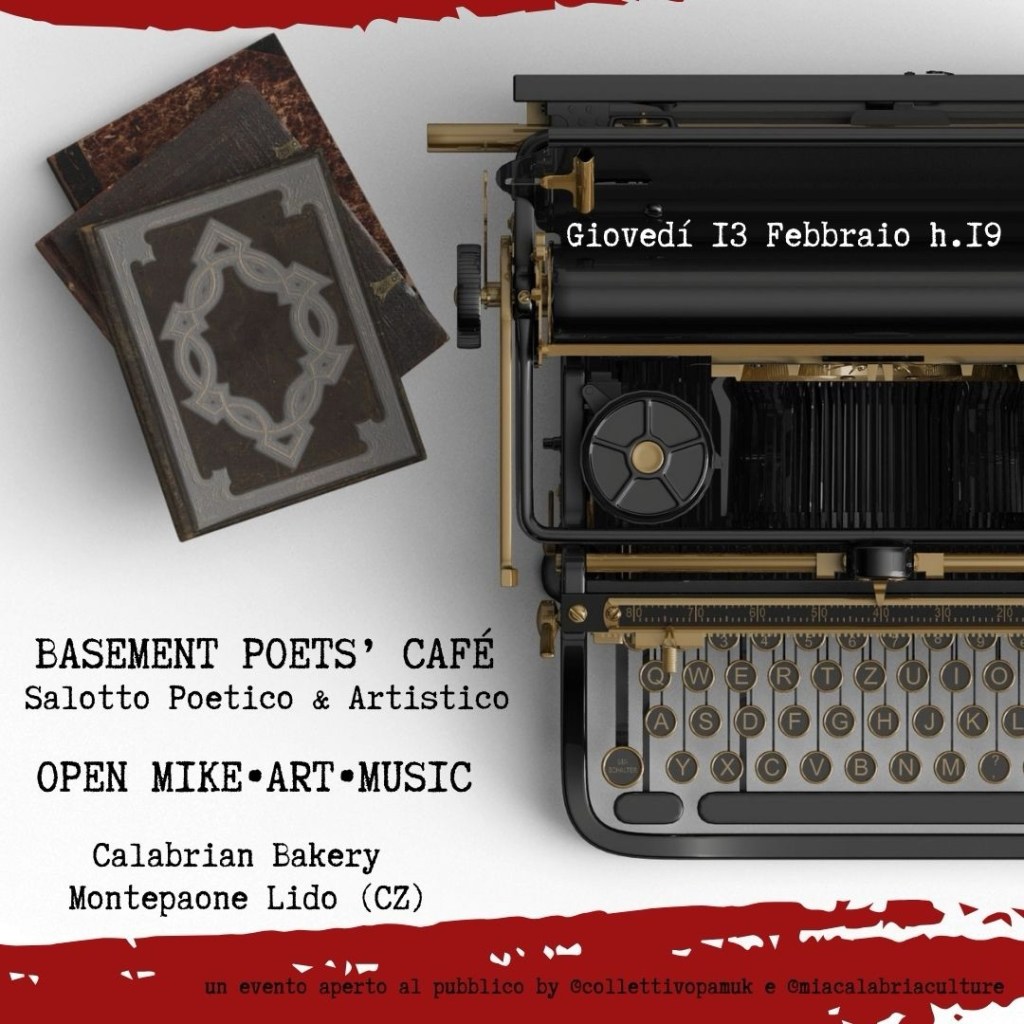
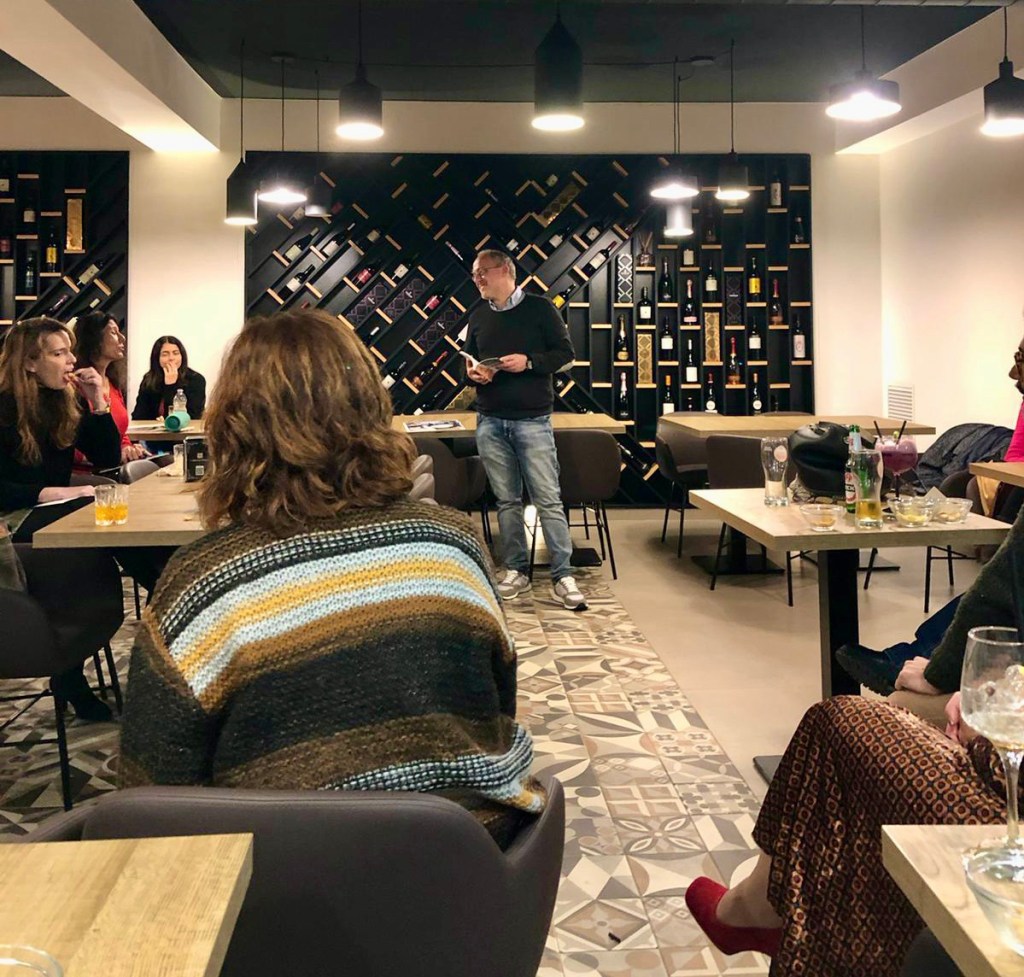
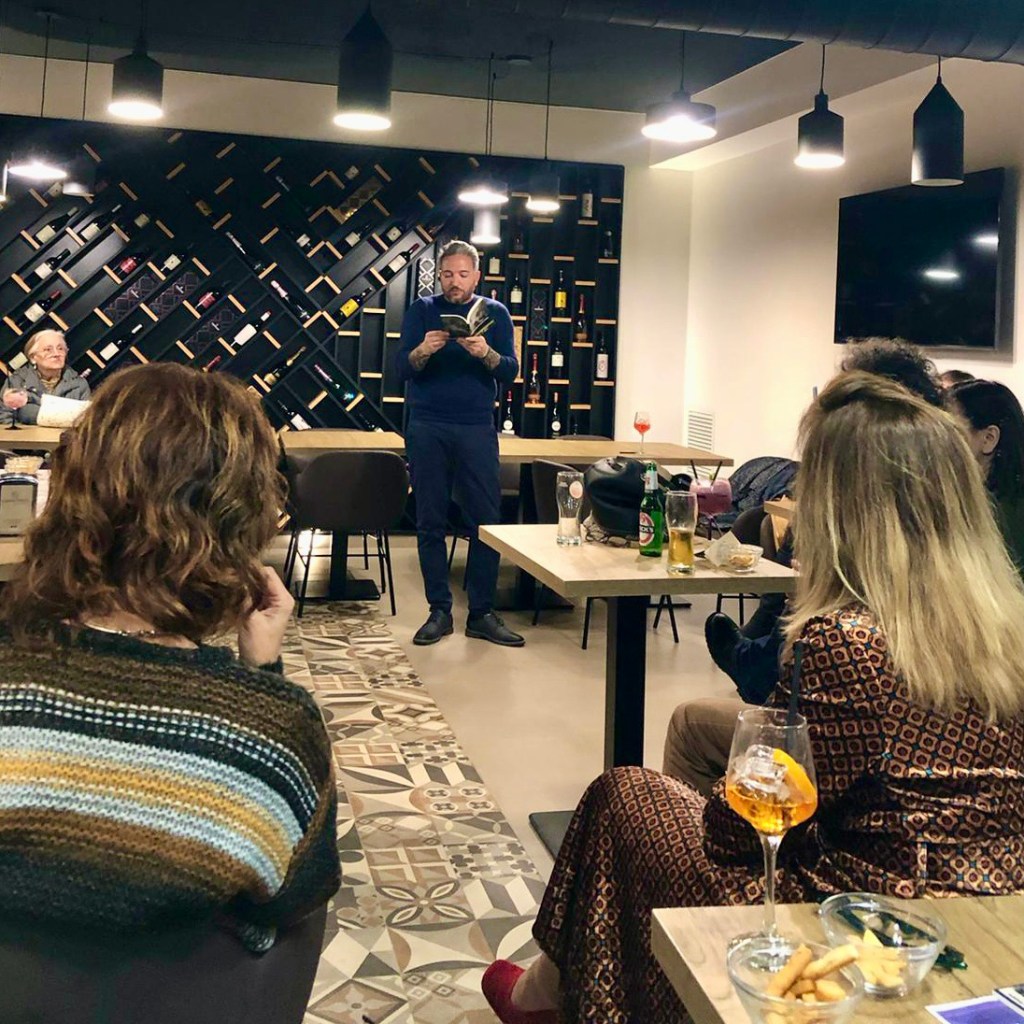
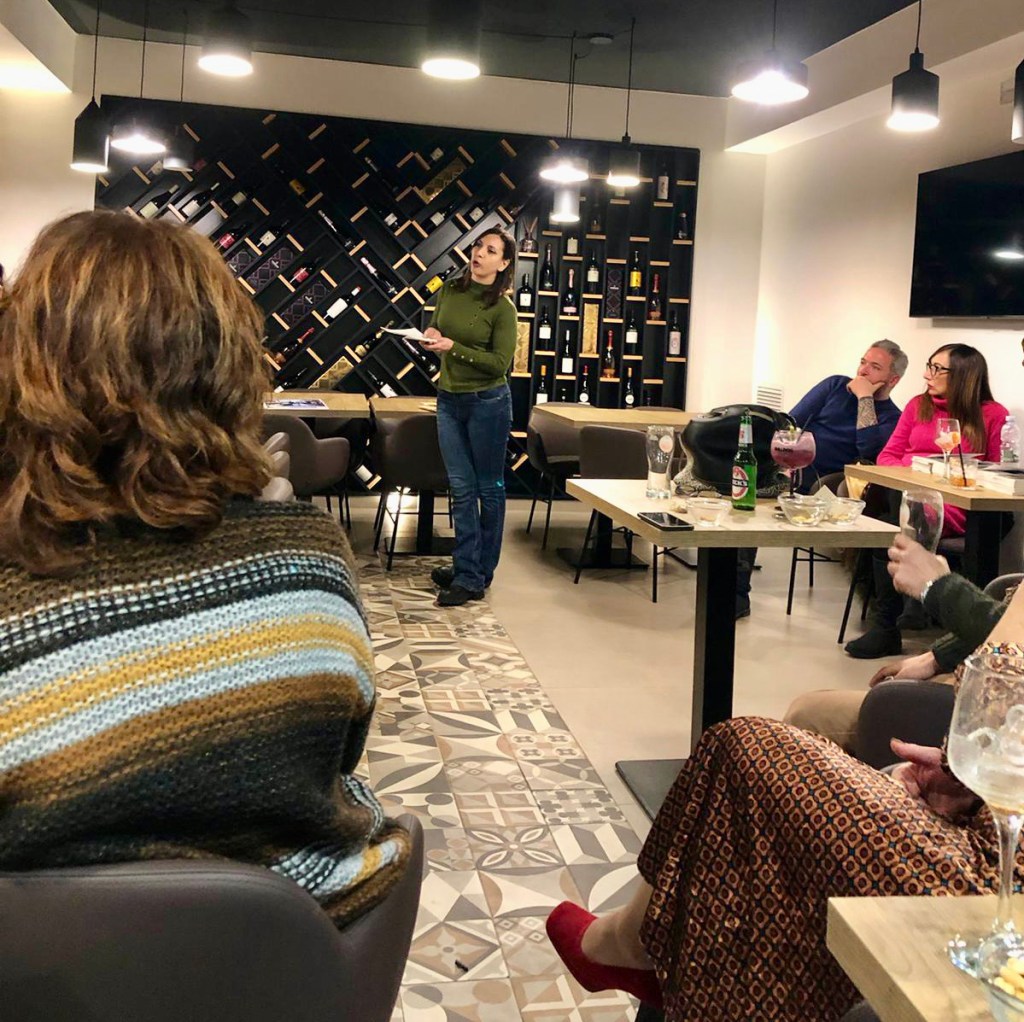
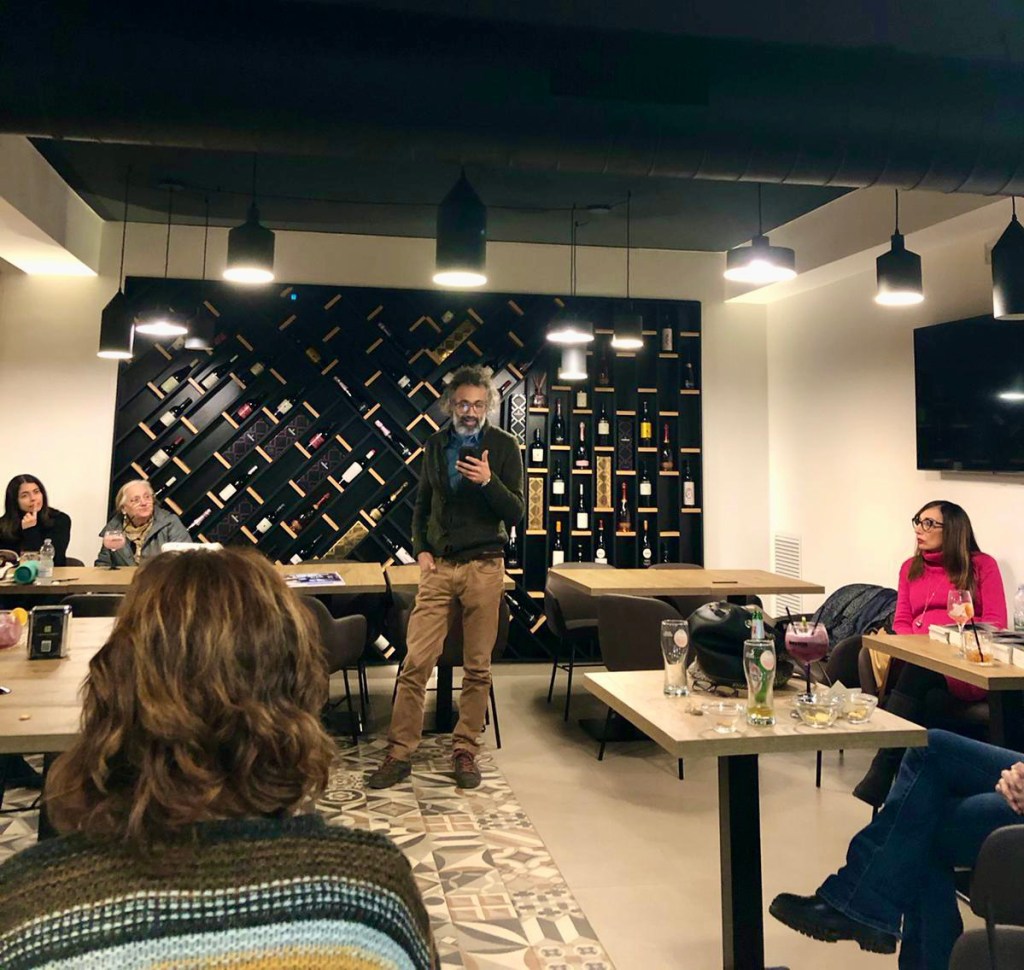
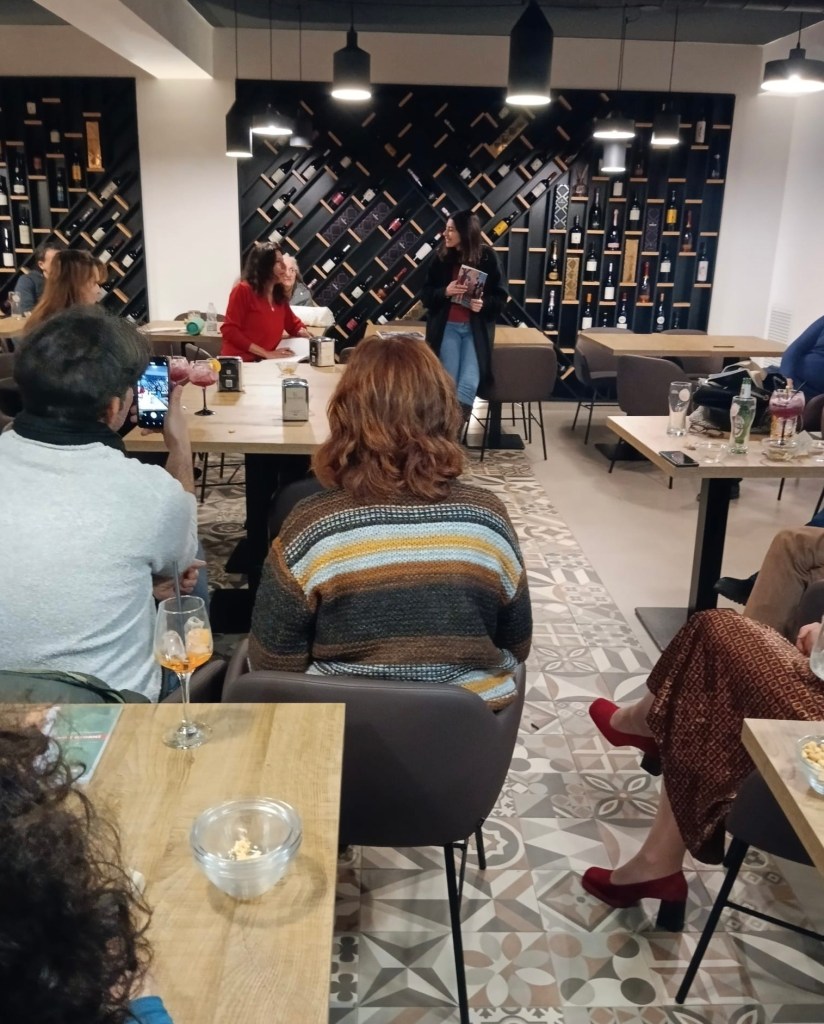
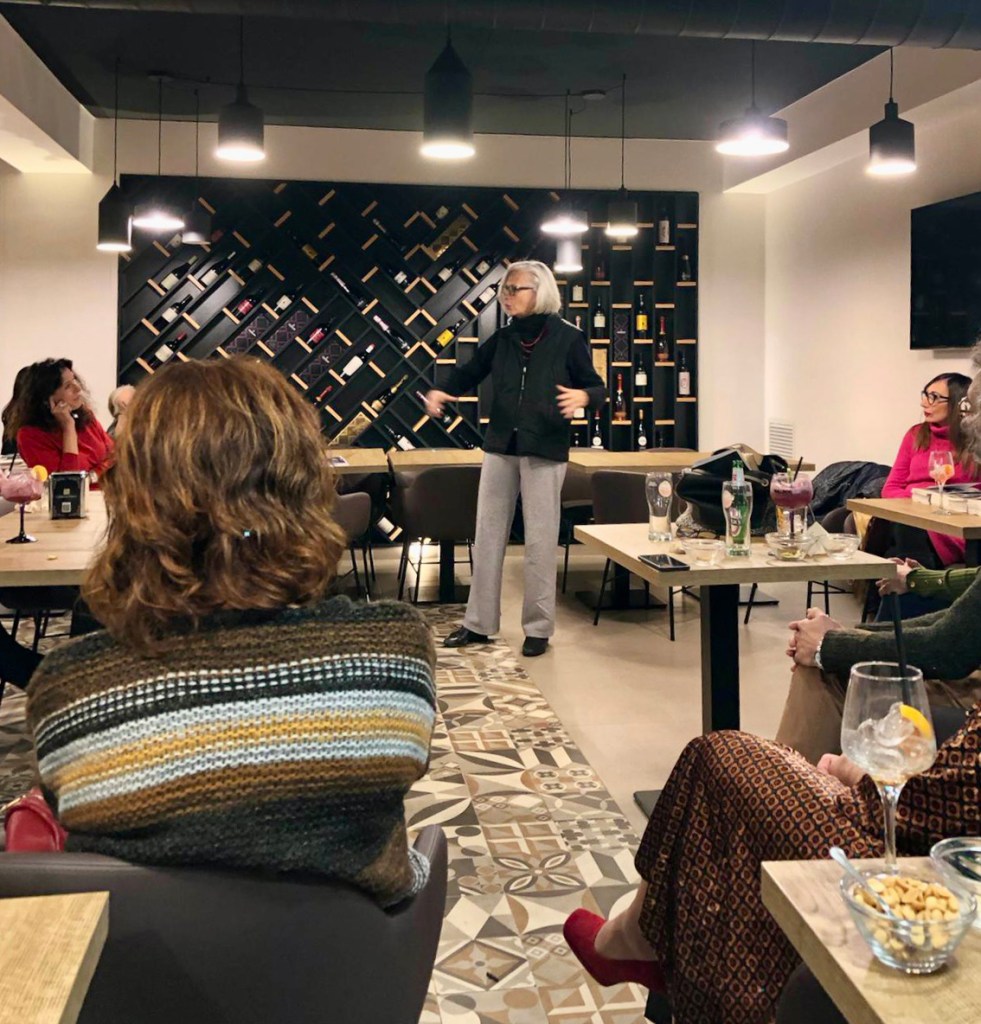
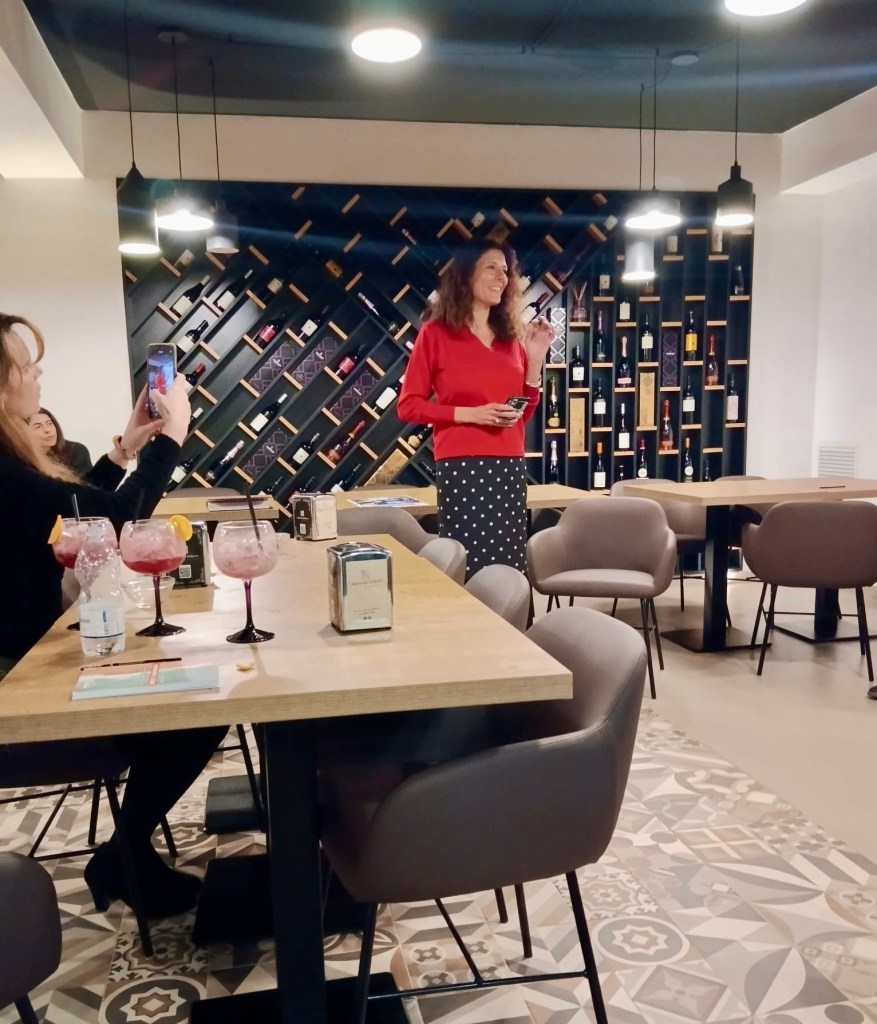
Così, il 13 Febbraio abbiamo avuto il nostro primo evento, il nostro esordio.
Ho scritto questo dopo essere tornata a casa :
“E’ difficile mettere a parole cosa è successo questa sera al primo incontro del nostro salotto poetico – artistico.
Dovevi esserci.
Ho fatto solo un paio di foto velocissime perché ero presente nel qui-adesso.
Ma posso dire che si è creato qualcosa di magico.
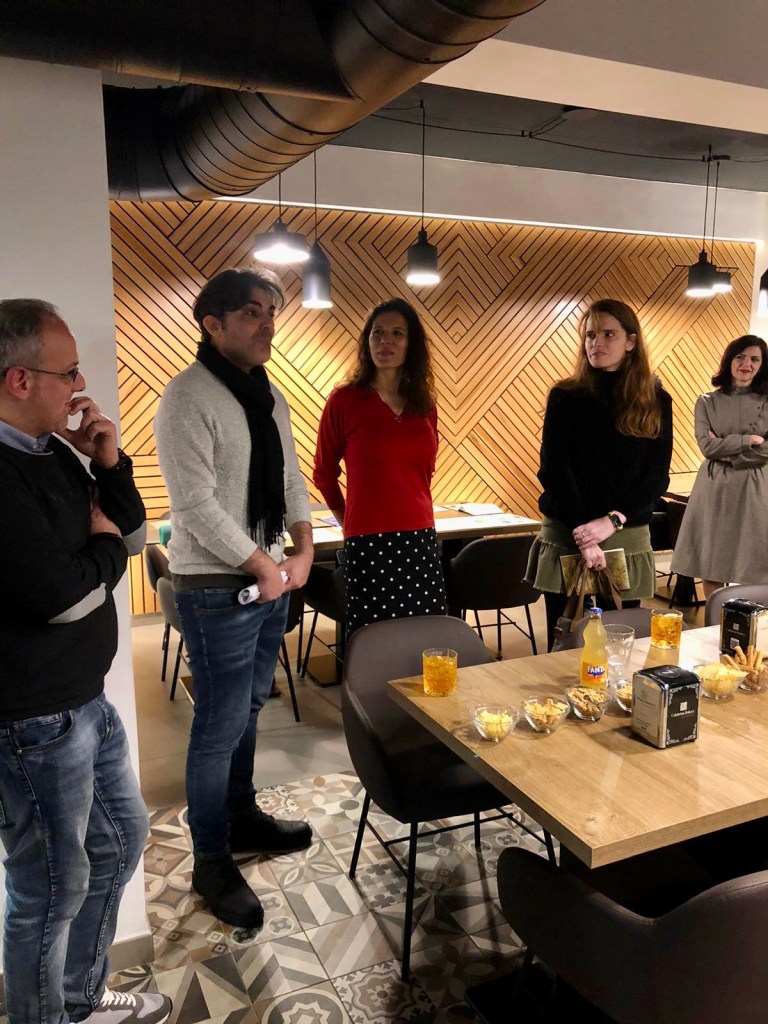
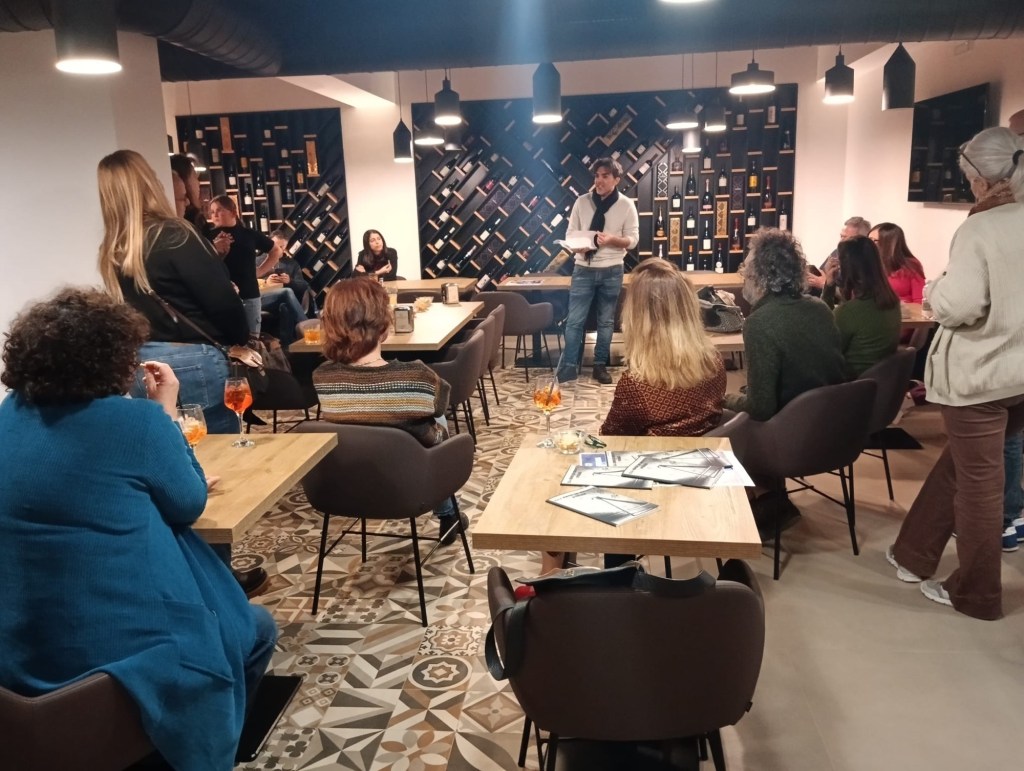
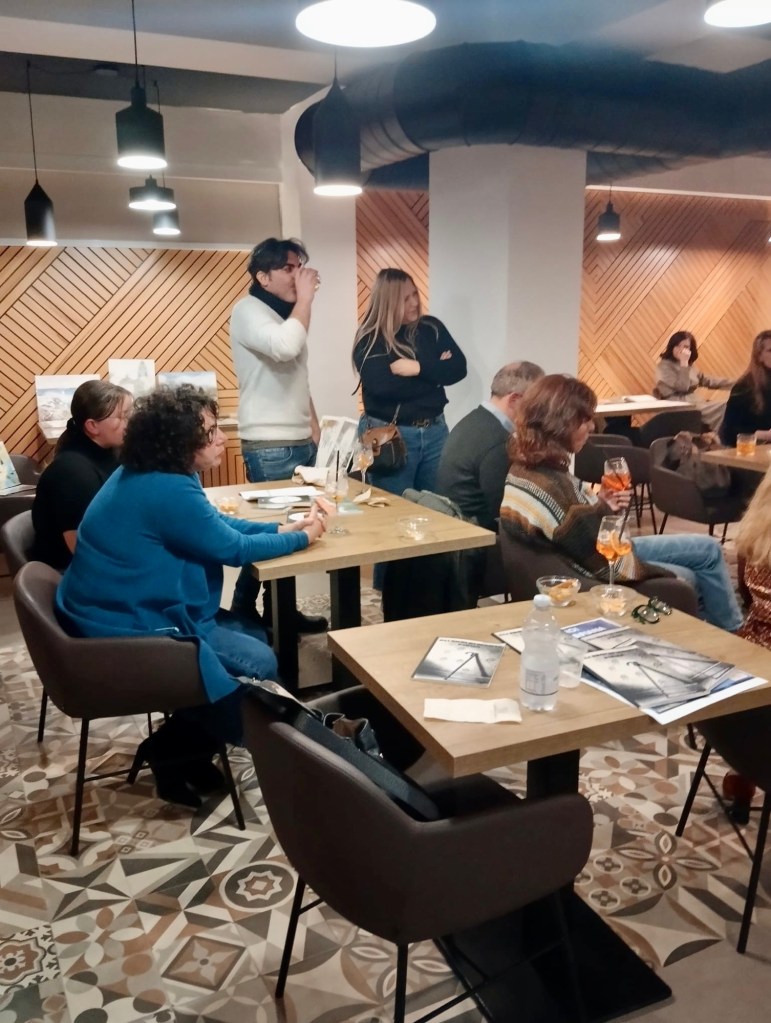
Trenta persone sono venute dai paesini e paesi vicino Montepaone Lido, e alcuni persino da Catanzaro, la capitale della Calabria- e ci hanno onorato .. si è scoperto che non hanno poetry readings a cadenza regolare lí.
Il talento dei poeti che hanno letto mi ha
LETTERALMENTE SPIAZZATO.
La Calabria mi spiazza sempre.
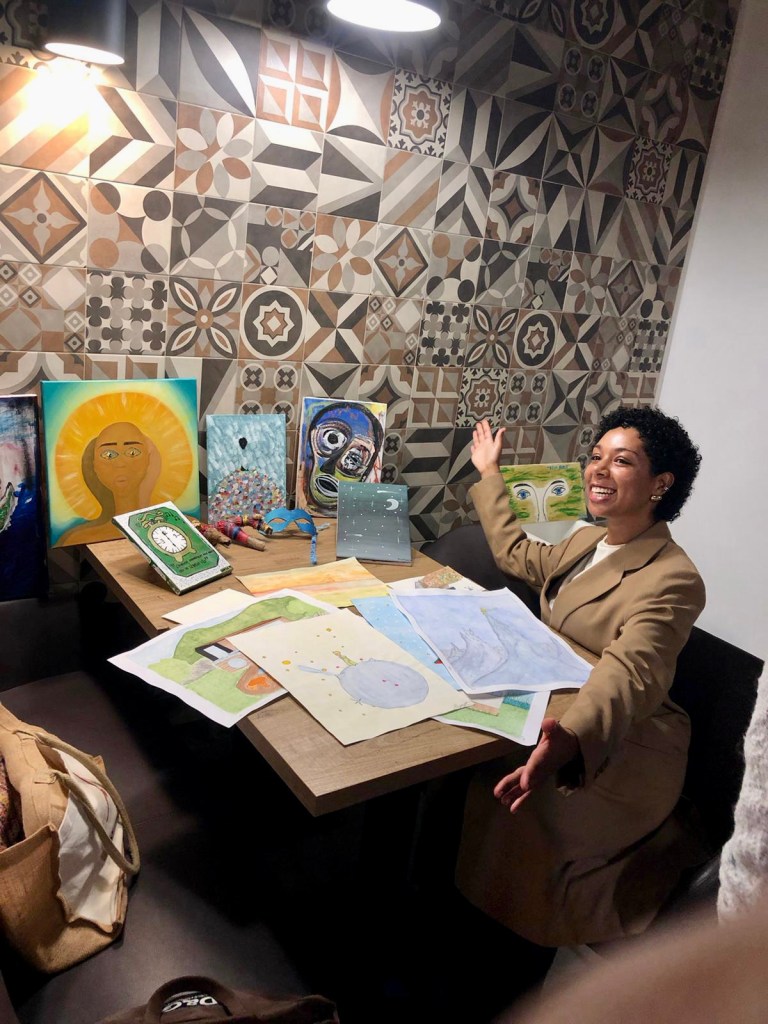
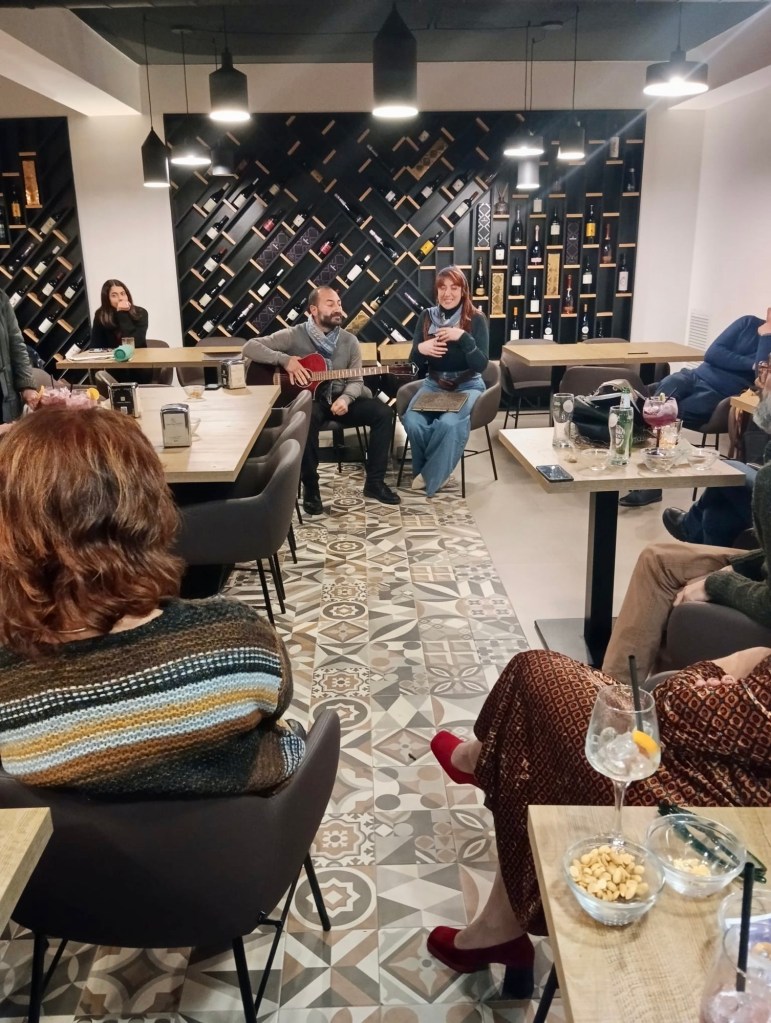
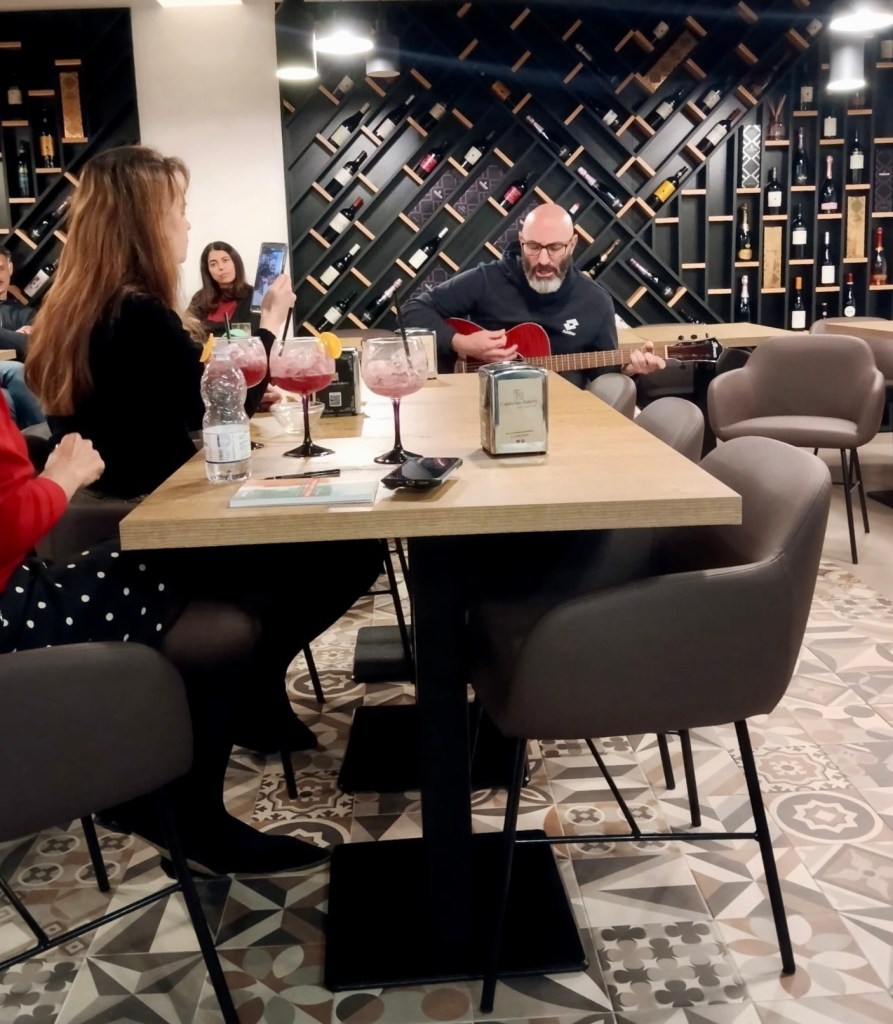
Abbiamo avuto arte, poesie ed estratti di libri, persino teatro— musica di pace, canzoni internazionali e canzoni italiane che sembravano già famose.
Ci siamo commossi, perché è vero, l’arte e la bellezza salvano il mondo.
Altra parentesi: qualcuno si è sorpreso per quanto l’evento fosse partecipato nonostante il Festival di Sanremo; ma gli outsiders non mettono eventi nazionalpopolari come priorità – e l’arte l’abbiamo vista dal vivo, senza schermi. Canzoni originali molto ma molto più belle di alcune presentate in Liguria.
Essendo Calabresi, si guarda solo per tifare per il nostro poeta di Cosenza, Dario Brunori Brunori Sas.
Chiusa parentesi.
I poetry readings ed eventi di arte non devono essere condivisi nella loro integrità- sono come cibo squisito.
Le riprese di una cena indimenticabile non renderanno mai cosa vuol dire aver avuto la fortuna di assaporare e vivere quel pasto.
La poesia tradotta, insegna il film Paterson, è come fare la doccia con l’ impermeabile. Non si può spiegare l’essere insieme ed essere toccati da tutte le Muse in contemporanea.
I poetry readings vanno vissuti, come i baci, come la musica dal vivo, non rendono ad essere raccontati. L’arte va vissuta sulla pelle.
E questa sera le nostre anime si sono riempite perché questa terra che tutti dicono in emorragia di abitanti, ha energie nascoste- ha diamanti se li sai cercare…
è proprio perché le luci sono più rare che sono ancora più belle quando le trovi.
Mai sottovalutare la Calabria e i Calabresi.
Abbiamo avuto un’ospite speciale a sorpresa,
l’antropologa e raconteur Patrizia Giancotti, che porta sempre storie da lontano.. ci ha trasportato in Brasile e ci ha fatto un regalo che non dimenticheremo mai.
Luci nella nebbia fitta, ecco cosa sono i salotti di poesia in Calabria, a Febbraio.
incongruenza in un mondo di produzione, eppure abbiamo VOLATO stasera.
Siamo stati a New York, in California, poi in Calabria con una bellissima poesia in dialetto, siamo stati nelle note di bellissime canzoni italiane e suoni di pace in Inglese.
Siamo radicati qui, ma abbiamo il mondo in testa.
radici ed ali.
Ho ascoltato per la prima volta poeti italiani e stanotte il mio cuore é pieno perché ha trovato casa, altri poeti e artisti.
Altre persone che parlano la mia lingua.
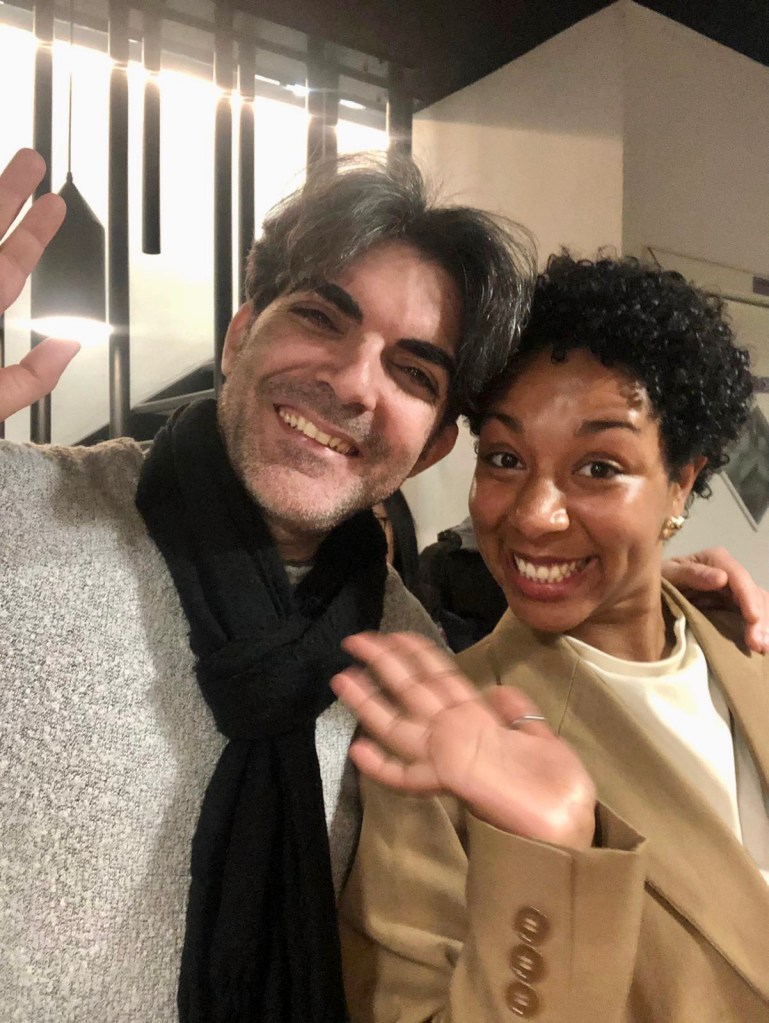
E la cosa più bella é stata vedervi parlare alla fine e conoscervi tutti, come naufraghi che si ritrovano, e non volevate andare via dopo che il bar aveva chiuso. Gli artisti, assieme, cambiano il mondo.
Forse sono una sognatrice, ma da ragazza ho letto del salotto di Madame De Stael, e poi da grande di Gertrude Stein, e degli artisti e scrittori che aveva riunito nella Parigi negli anni ‘20.
Poi ci sono stati i tanti poetry readings negli Stati Uniti. I poeti del Mercoledì ( Wednesday Night Poets) di Fargo.
Tutto nasce però prima dai libri e poesie di Gianni Rodari e la mia scuola a Milano, il liceo linguistico, con letteratura Romantica in Inglese, Francese e Tedesco ; il film “Dead Poets’ Society”- La Società dei Poeti Morti ( in Italiano Carpe Diem). Grazie a mio cugino Alexander Aiello che mi ha regalato la videocassetta l’ho visto fino ad impararlo a memoria.
Poi i miei grandi professori di letteratura negli USA, dove ho quasi preso una laurea minore in letteratura Inglese : Dale Hanneman, Steve Ward, David Martinson.
Tutti tasselli che spiegano parte del mosaico della mia vita.
Mi sono detta: se non c’è un evento a cui vuoi andare, crealo- e ho imparato da Marco Manfredini e Antonella Pascuzzo l’espressione italiana ‘fare rete’.
L’esordio del Basement Poets’ Cafe non sarebbe successo senza l’aiuto di Gabriele e Anna Lisa, i loro sforzi e risorse.
Il @collettivopamuk, figlio di Gabriele, farà grandi cose per la nostra zona e la Calabria – e per noi artisti.
É ora di andare a letto ma volevo catturare l’impossibile, la magia di una notte,
come catturare lucciole che illuminino la strada
fino al nostro prossimo incontro.
Il mio cuore é felice e sono tre metri sopra il cielo.
Le parole sincere che avete detto a me, ad Anna Lisa e a Gabriele per ció che abbiamo creato sono il nostro CARBURANTE.
É celebrando la creatività umana che ci guariamo e guariamo, un pezzettino alla volta, un mondo malato di tecnologia, violenze,
egoismo e apatia
Forse in tempi di tempesta
la cosa migliore
é essere faro.
🤍”
Grazie a chi ha partecipato con la sua essenza, grazie di averci regalato un po’ di voi— e grazie a chi ascoltato.
I pittori hanno bisogno dei vostri occhi, i poeti hanno bisogno di chi li legge e ama.
[🇬🇧]
Basement Poets’ Café
The birth and origins of a poetic-artistic salon in Montepaone Lido (Catanzaro).
What is a Poetry Reading?
The relationship between cafés, coffee, and poetry.
When I lived in San Diego, I attended events where professional poets read their works in a supportive and comfortable environment – which became not only a space for sharing but a sort of collective listening therapy.
They were called “Poetry Readings.”
They were always in coffee shops – places where one could linger much longer than in our “bars.”
Always in the evening or at night.
Coffee shops are naturally the descendants of the literary cafés of the Latin Quarter in Paris, which in turn are descendants of the intellectual cafés of Vienna.
Coffee – called by the Catholic Church “the devil’s drink.”
I had a bit of trouble finding them, the poets in San Diego. San Diego and Southern California are not New York. Poets hide, and often, artistic events, in California as well as in Calabria, don’t have a regular rhythm.
But the group I found on Instagram, thanks to my writer friend and coffee shop expert John Rippo, met every week in the basement of a large coffee shop attached to a pub/restaurant, with indoor and outdoor spaces near a small urban park.
It was in the East Village of San Diego, the old artist neighborhood of the city, before gentrification arrived.
The poets, outsiders, and “misfits” (because artists are always outside of the norm, out of place, and feel at home only in their heads and hearts) would descend into the dark basement, where there was a bartender, tables, stools, a stage, and lights.
They were called Poets Underground. The project was founded by a young couple of activists and poets from San Diego. Art is beauty, and they were beautiful, intelligent, and photogenic. Beauty, since the birth of advertising, has mostly been used for consumerist and manipulative purposes – but in this case, it was in the service of art. You couldn’t have asked for better role models for poetry.
During the Sunday poetry readings, a young poet, with a female name, would invite artists by name from a list and comment on the poems read with silky words, literary embraces.
There was a mixer, and everything was very advanced.
A local sculptor had been asked to provide the set design.
In the front row, a painter would paint impromptu portraits of all the poets – connecting them to the images each one evoked.
He would gift them, these works on watercolor cardboard 15cm x 20cm, to each poet.
He was part of a group of artists I had joined, and every Wednesday night we would go to paint jazz musicians at Balboa Park.
This last sentence sounds like the beginning of a story, a book. Perhaps it was all a dream…
The idea of organizing a poetry salon/reading here in Calabria, in my area, came to me last September, the sweetest month, when I organized my birthday party at my Baracca del Bucaniere – and I asked all the guests to bring me poems about Calabria, in case they wanted to bring a gift.
The Baracca transformed for one evening into a poetry space for our land; its magic of sculpture, rooms, and history merged with the magic of words, the warmth of the Calabrian dialect.
We even had the intervention of a Calabrian poet “deported” to the North, Tito Truglia, who gifted us his song about bread; his voice arrived via messenger, like the recordings of the sea in the movie Il Postino – just with more sophisticated means.
I couldn’t have asked for a more beautiful birthday.
“Poets are painters of words,
the human voice the oldest way
to learn.”
How to continue this moment of meeting in verses when time no longer allowed us to gather under the stars, by the sound of the waves?
The need arose to find a refuge, a home for poetry and art meetings for the colder season.
Since I arrived in Calabria, I’ve been looking for a coffee shop to work and meet in; a salon, like Café Bassam was for me in San Diego. There’s no denying it – we always try to replace what we’ve lost. I visited local bars and cafés as if I were doing job interviews, to choose my candidate. The atmosphere is everything. As is the friendliness and availability of the staff.
Since this summer, I’ve been scouting Calabrian Bakery; one day I went to peek into the basement inn (as an architect and artist, I’m always curious about the various spaces proposed and bar/café situations).
I immediately understood that this space was perfect for a poetry reading: intimate, hidden, isolated yet accessible – like all artists – generously just the right amount and welcoming.
A perfect shelter from the world, the hold of a boat, a bomb shelter.
Side note: Artists love and need attics and basements, poems and caves.
Caves? Yes. Have you seen the movie Carpe Diem?
The boys gathered in a cave at night, reading by candlelight poems of “dead poets.”
Why always isolated?
Why did Sebastian read the book The Neverending Story in a dusty attic of the school, locked? Because I, as a teenager, when I “skipped” school, went to abandoned houses near Pietragrande or unfinished buildings to read Stephen King’s books, thinking about Sebastian?
Why attics?
Because that’s how it is. Artists are “strange” and different, and they are always “elsewhere.” Perhaps they need to isolate themselves to recreate and protect the inner world they carry inside them.
If I come up with other explanations, I’ll tell you next time. End of side note.
The staff at Calabrian Bakery was very welcoming when I presented the idea of artistic-poetic gatherings. A regular cadence was essential.
I wanted to combine all the beautiful ideas I had experienced in San Diego: poetry and art.
An “open mike” that also invited musicians, singer-songwriters, acoustic sessions, unplugged.
We could even do jazz soon, with a group of artists who would paint them – thus completing the “Calabrifornian” transplant 🤭.
We live in cities to learn, and then import ideas.
From the start, I proposed collaborating and co-creating the salon with Gabriele Ruggiu and Anna Lisa and their Collettivo Pamuk, a collective of artists and creatives of which I am a co-founder.
Gabriele and Anna Lisa entered my life through Professor Giuseppe Pisano, with whom I began working for the MiA Calabria project, a project that came from California and Luisa Schultz. This is to say that California, and Luisa, changed my life here in Calabria, and I will be forever grateful. This is to say that the Basement Poets’ Café is Calabrifornian, just like me😉.
The Collettivo Pamuk activated its forces and networks;
the posters and contacts I’ve had the fortune of creating in this first year here did the rest,
among protests against wind turbines, women’s circles under the moon, activism for Palestine, and meeting women engaged against violence toward other women.
My networks are made of peace, art, and protest.
So, on February 13th, we had our first event, our debut.
I wrote this after returning home:
“It’s hard to put into words what happened tonight at the first meeting of our artistic-poetic salon.
You should have been there.
I only took a couple of very quick photos because I was present in the here-and-now.
But I can say that something magical was created.
Thirty people came from the little towns and villages near Montepaone Lido, and some even from Catanzaro, the capital of Calabria – and they honored us… it turned out they don’t have regular poetry readings there.
The talent of the poets who read literally BLOWN MY MIND.
Calabria always blows my mind.
We had art, poetry, and book excerpts, music of peace, international songs, and Italian songs that already seemed famous.
We were moved because it’s true, art and beauty save the world.
Poetry readings and art events should not be shared in their entirety – they are like exquisite food.
Footage of an unforgettable dinner will never explain what it means to have had the fortune of savoring and living that meal.
Poetry, translated, teaches the movie Paterson, is like taking a shower with a raincoat on. You can’t explain being together and being touched by all the Muses at once.
Poetry readings need to be lived, like kisses, like live music – they don’t translate well into being told.
Art needs to be felt on the skin.
And tonight, our souls were filled, and we were moved – because this land, which everyone says is hemorrhaging inhabitants, has hidden energies – it has diamonds if you know how to look for them…
it’s precisely because the lights are rarer that they are even more beautiful when you find them.
We had a surprise special guest,
anthropologist and raconteur Patrizia Giancotti, who always brings stories from afar, and stories of Calabria… who took us to Brazil and gave us a gift we will never forget.
Lights in the thick fog – that’s what poetry salons in Calabria are like, in February.
Incongruity in a world of production, yet we FLEW tonight.
We were in New York, in California, then in Calabria with a beautiful poem in dialect, we were in the notes of beautiful Italian songs and sounds of peace in English.
We are rooted here, but we have the world in our heads.
Roots and wings.
I listened for the first time to Italian poets, and tonight my heart is full because it found a home, other poets and artists.
Other people who speak my language.
And the most beautiful thing was seeing you talk at the end and getting to know each other, like castaways finding each other, and you didn’t want to leave after the bar had closed. Artists, together, change the world.
Perhaps I’m a dreamer, but as a young girl, I read about Madame De Stael’s salon in Paris Here’s the translation to English:
“Then, as an adult, Gertrude Stein, and the artists and writers she gathered in Paris in the 1920s.
Then there were the many poetry readings in the United States. The Wednesday Night Poets of Fargo. Ryan Trauman.
But it all begins earlier with the books and poems of Gianni Rodari and my school in Milan, the linguistic high school, with Romantic literature in English, French, and German; the movie Dead Poets’ Society (in Italian Carpe Diem). Thanks to my cousin Alexander Aiello, who gave me the VHS tape, I watched it until I memorized it. Then my great English teachers, poets, and literature professors in the USA, where I almost earned a minor in English literature: Dale Hanneman, Steve Ward, David Martinson.
All pieces that explain part of the mosaic of my life.
I told myself: if there’s no event you want to go to, create it—and I learned from Marco and Antonella the Italian expression ‘fare rete’ (building a network).
The debut of the Basement Poets’ Cafe wouldn’t have happened without the help of Gabriele and Anna Lisa, their efforts and resources.
The @collettivopamuk, Gabriele’s son, will do great things for our area and for Calabria—and for us artists.
It’s time to go to bed, but I wanted to capture the impossible, the magic of a night,
like catching fireflies that light the way to our next meeting.
My heart is happy, and I’m three meters above the sky.
The sincere words you said to me and to Anna Lisa and Gabriele for what we created are our FUEL.
It is by celebrating human creativity that we heal and heal, piece by piece, a world sick with technology, violence,
selfishness, and apathy.
Perhaps in times of storm
the best thing
is to be a lighthouse.
🤍”
Thank you to those who participated with their essence, thank you for giving us a bit of yourselves—and thanks to those who listened.
Painters need your eyes, poets need those who read them and love them.”













 sketchbloom.com